Cooper T39 Bobtail: The Chopped-Tail Racer Behind Cooper's F1 Rise
1956 Cooper T39 Bobtail

Images: Rafael Martin / RM Sotheby's
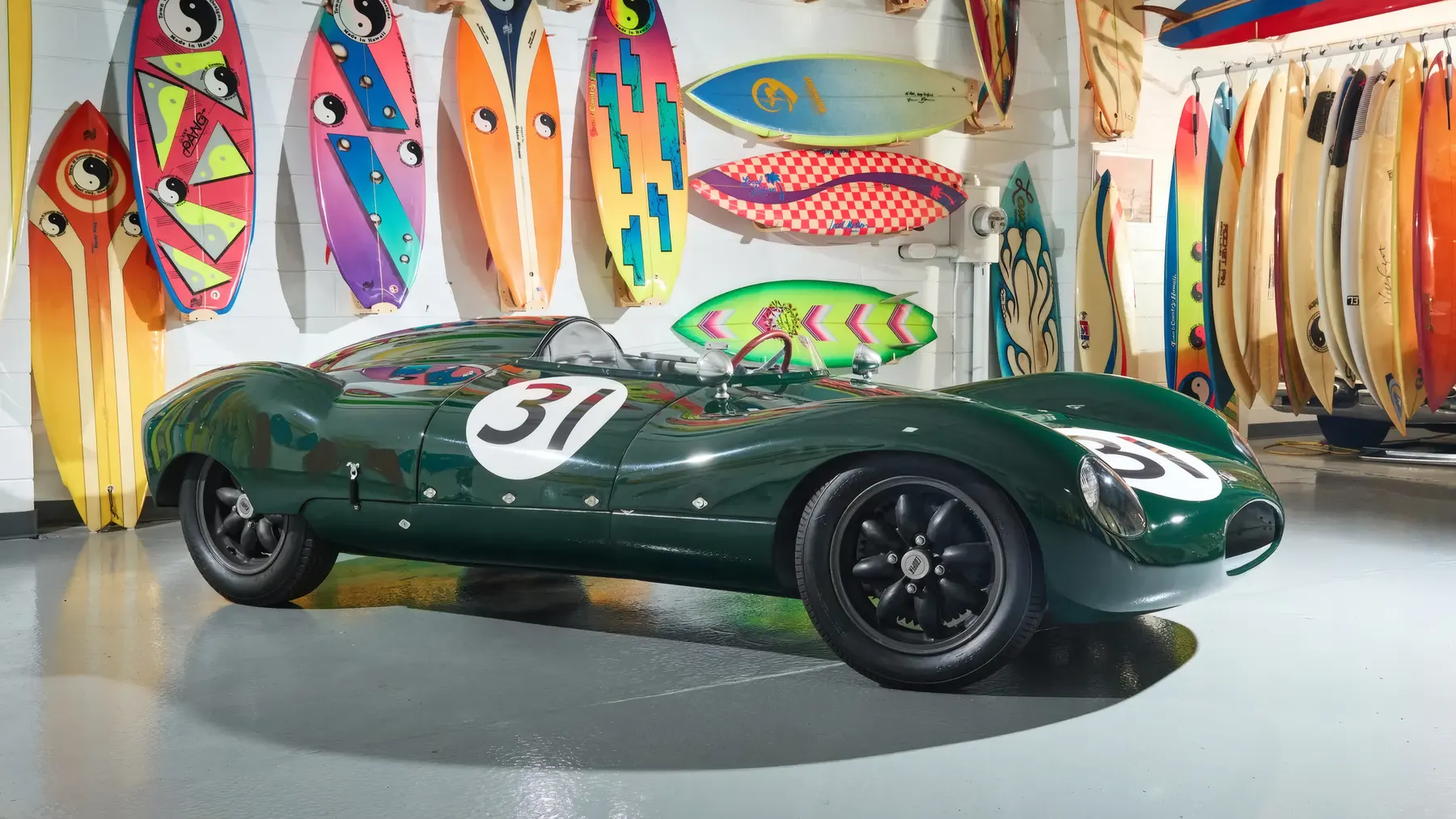
John Cooper was never entirely persuaded by the way his own sports car looked, and rather than defend the styling he kept a stock joke ready: the tail had been chopped off, he told anyone who asked, “we had to cut it off because it wouldn’t fit in the transporter otherwise.” The car in question was the Cooper T39, introduced in 1955 and almost immediately nicknamed the “Bobtail” - or, less often, the “Manx” - for the abruptly truncated rear bodywork Cooper found so hard to love. The joke undersold what was actually going on. Cooper’s designer, Owen Maddock, had been studying the aerodynamic research of the German engineer Wunibald Kamm and decided to apply the truncated “Kamm tail” principle to a small sports-racer, working with aerodynamicists from Hawker Aircraft to shape the car’s abbreviated back end. In the mid-1950s this looked odd enough that even the man whose name was on the factory gates struggled to explain it with a straight face; within a decade the same theory would be commonplace on everything from saloon cars to Le Mans prototypes.
The T39 emerged from a company that had already turned circuit racing upside down once. Charles and John Cooper had built Cooper Cars up from unpromising postwar beginnings - the firm’s earliest specials reputedly combined a welded frame, Fiat Topolino front suspension and a 500cc JAP motorcycle engine - before settling into a run of tiny 500cc Formula 3 racers, selling around 300 of them between 1951 and 1954 and winning 64 of the 78 major races held in that period. A young Stirling Moss started his career in one of these diminutive machines, itself a sign of how seriously the small cars were taken. By 1954, Cooper’s chief designer, Owen Maddock, had drawn up a new lightweight spaceframe intended for something more ambitious than another Formula 3 car: a proper sports-racer, built around Coventry Climax’s new FWA engine.
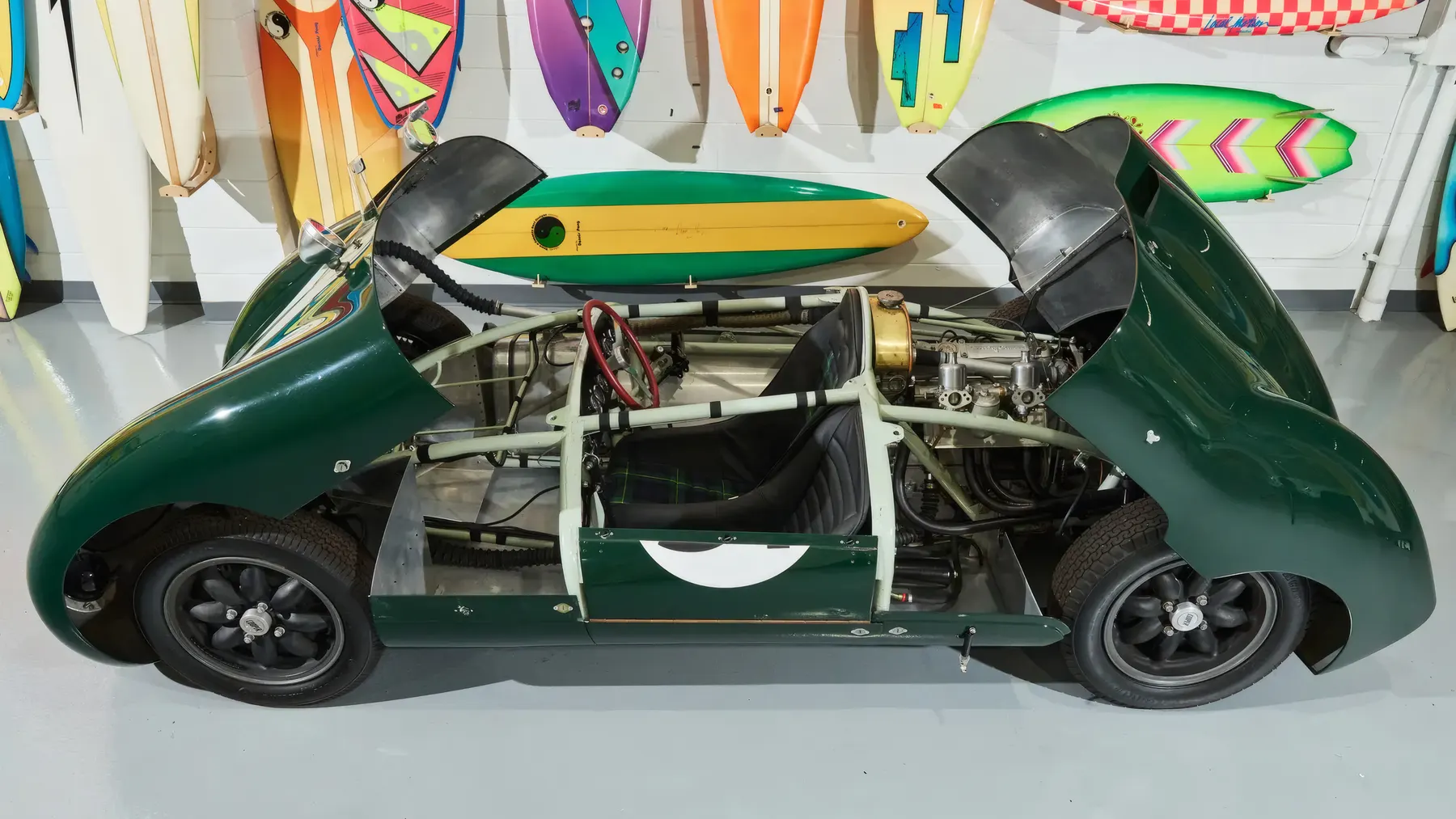
The FWA had an unglamorous past. Coventry Climax had originally engineered it, under Walter Hassan - the engineer later responsible for parts of Jaguar’s XK programme and eventually its V12 - to meet a Ministry of Defence requirement for a compact, powerful fire-pump engine, and it was this unlikely feather-weight unit, displacing 1,098cc, that caught the racing world’s attention when it was shown at the London Motor Show. Maddock and John Cooper adapted the existing Mark IX Formula Three chassis concept to take the larger engine, keeping the unit mounted behind the driver and the driver’s seat on the car’s centreline, exactly as they would for a single-seater. The resulting curved-tube chassis, with its longerons sweeping up and over the driver and engine before curling back down to the rear suspension, weighed only around 65lb - roughly 29kg - bare, a genuinely startling figure even from a company that had built its reputation on doing without anything unnecessary. Sports car regulations of the period demanded a nominal passenger seat, so Maddock gave the T39 one, mounted outboard of the chassis tubes on the driver’s left, entirely divorced from the car’s actual structure and never seriously intended to carry anyone at racing speed. It was, in effect, a single-seater wearing a two-seat costume for scrutineering purposes, and the arrangement said a great deal about how Cooper approached the rulebook: comply with the absolute minimum, and spend the saved weight and effort on everything that actually made the car go faster.
Underneath, the T39 borrowed heavily from Cooper’s single-seater practice: a spaceframe with all-independent suspension by wishbones and transverse leaf springs front and rear, 15-inch wire wheels, drum brakes at all four corners, and rack-and-pinion steering. Drive went through a four-speed gearbox adapted from a Citroën front-wheel-drive unit, turned back-to-front and fitted with special close-ratio gears for racing - a typically resourceful piece of 1950s British special-building, born of postwar parts shortages rather than a blank cheque. The body was hand-formed aluminium, and a complete new T39 from the factory cost around £1,350.
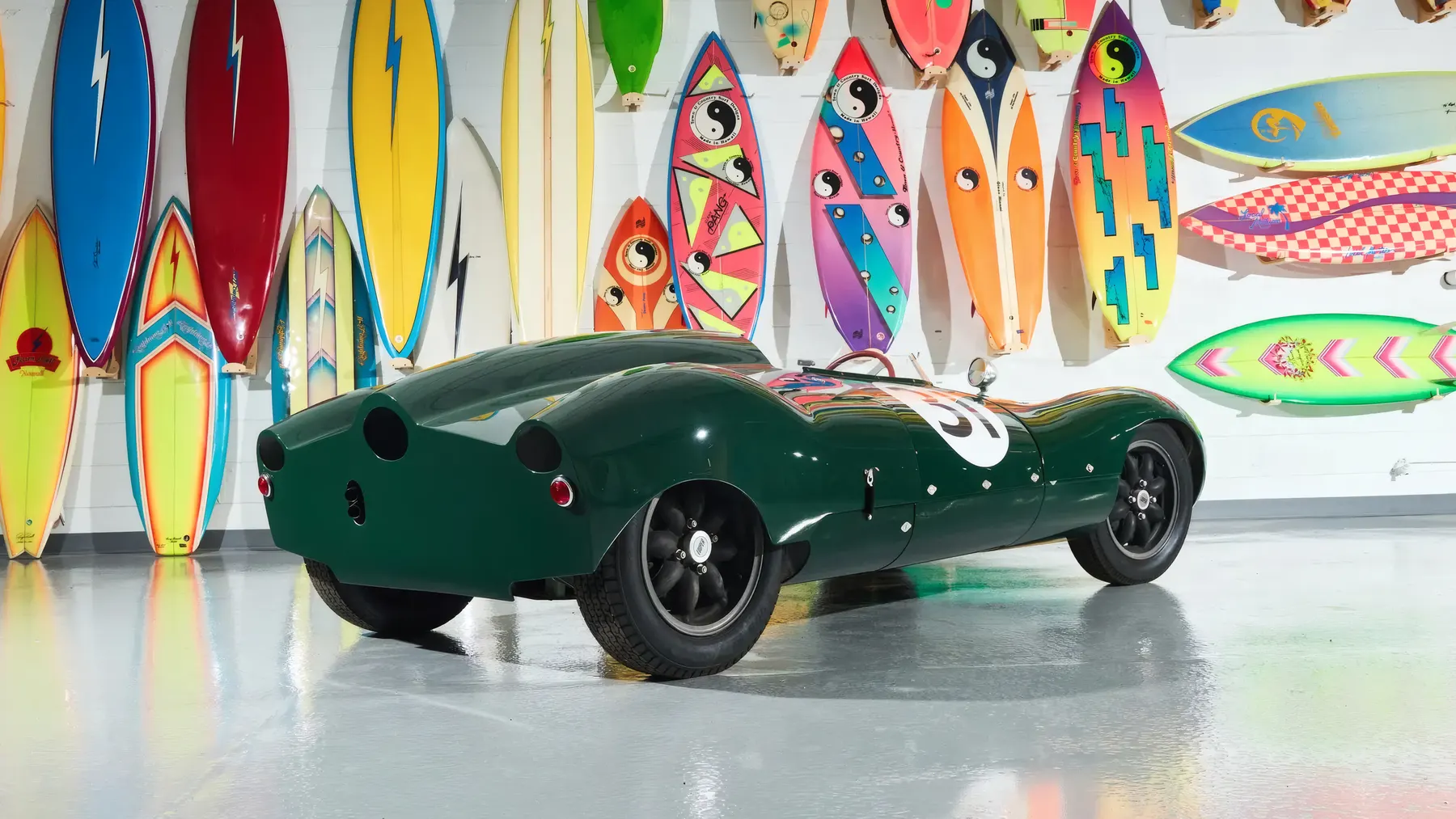
The Bobtail’s competition debut came at Goodwood on Easter Monday 1955, where works driver Ivor Bueb brought the new car home third, beaten only by two Connaughts, before winning outright at Brands Hatch a fortnight later. A second works car followed for Jim Russell, and customer orders arrived almost immediately, notably from Tommy Sopwith’s Equipe Endeavour team. The car’s first appearance at Le Mans came in the tragedy-marked 1955 24 Hours, where John Brown and Edgar Wadsworth’s T39 completed more than 200 laps but fell short of the minimum distance required for classification. Works and privateer T39s returned to the Sarthe in 1956, finishing eighth, and again in 1957, when Jack Brabham and Ian Raby brought a Climax-engined car home third in class and fifteenth overall - the model’s best showing at the race.
For 1956, Cooper offered the T39 with Coventry Climax’s larger FWB engine - quoted variously across surviving specification sheets as anywhere between about 1,450cc and 1,500cc - which lifted output to somewhere in the region of 108bhp, up from roughly 75bhp for the original 1,098cc FWA. The bigger engine also anticipated the new 1,500cc Formula 2 category due in 1957, and gave owners a genuinely potent small-capacity sports-racer just as Cooper’s own single-seater ambitions were accelerating. Some later cars, retrospectively identified by historians as a “Mark II” specification, gained a larger cockpit, revised wheels and brakes, and improved rear dampers as Cooper refined the design across its short production run. Works and customer Bobtails travelled far beyond Britain in these seasons: a Cooper works entry took a class win at the 1956 Sebring 12 Hours with Leech Cracraft and Red Byron sharing the drive, and that same year Charles Cooper asked Jack Brabham to ship a T39 to Australia for the Australian Tourist Trophy at Melbourne’s Albert Park, at the request of his friend, Melbourne car dealer and hillclimb champion Bill Patterson, who had a second Bobtail - fitted with the 1,460cc FWB - built for himself. Patterson’s car went on to a long career in Australian club racing and hillclimbs, part of a wider pattern in which the T39 became the car to beat in the smaller sports-racing classes across three continents. Privateers, never shy of experimentation, are recorded to have fitted a handful of surviving chassis with other engines entirely over the following years, including units sourced from Volvo and even Porsche’s flat-four boxer units - a testament to how adaptable, and how disposable in the eyes of later club racers, the humble spaceframe chassis had become.
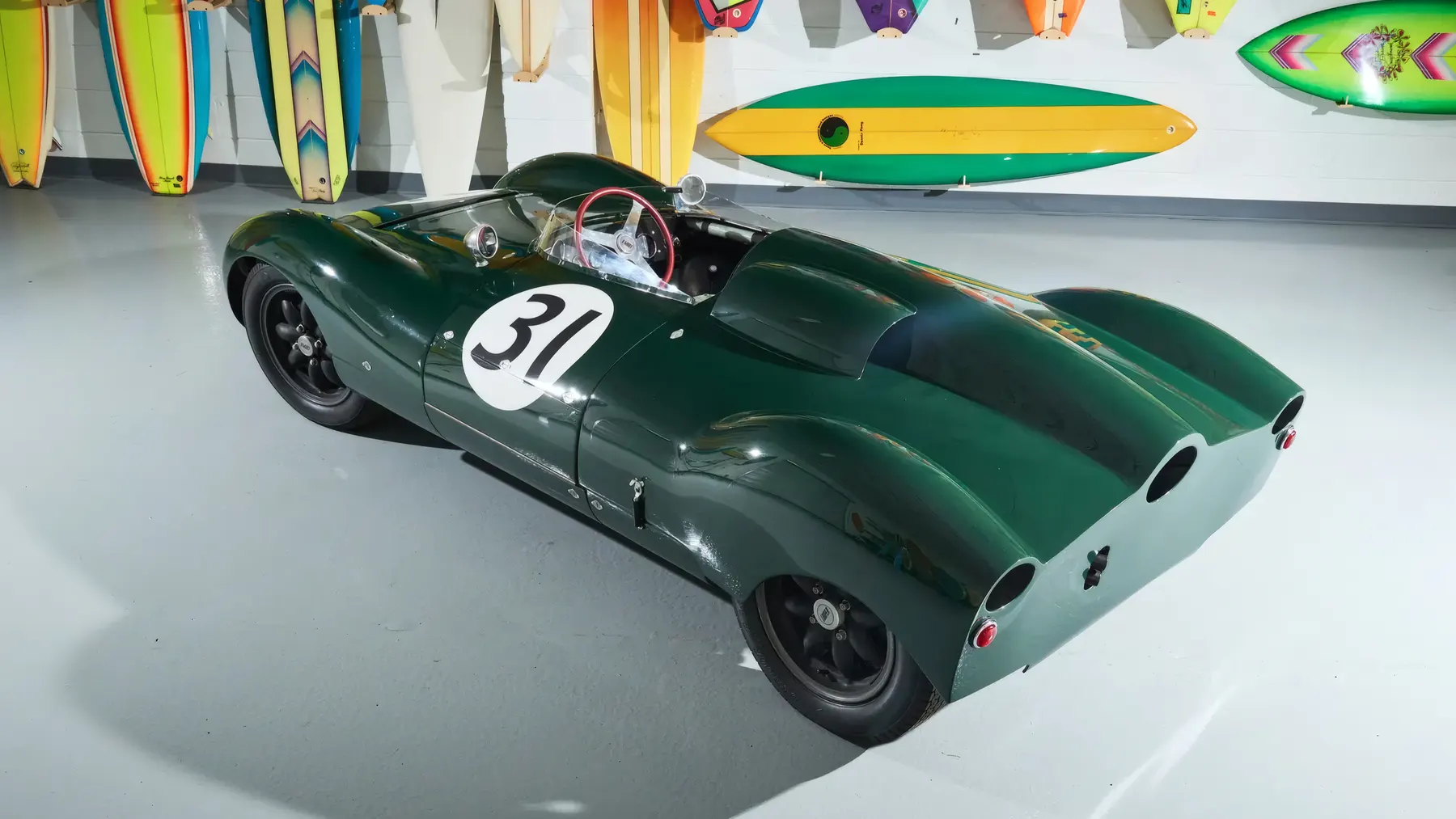
None of this racing success, on its own, would have made the T39 as historically important as it turned out to be. Its real significance lies in what it enabled. Jack Brabham, who had made his name in Australia driving a modified Cooper-Bristol he’d branded the “RedeX Special,” moved to Britain in early 1955 and quickly gravitated to Cooper’s Surbiton works, first for spares and then for a season racing a Cooper-Alta. Before that year was out, he had persuaded John and Charles Cooper to let him build a Formula One special based on the T39 platform, working on it largely by himself: a two-litre Bristol engine, a wheelbase stretched by roughly 50mm, and the same mid-engined, centre-seat layout as the sports-racer. Entered at the British Grand Prix at Aintree in July 1955 and generally identified in period records under Cooper’s separate T40 designation, the engine failed on its first outing - but the underlying idea, that a mid-engined chassis derived from a small sports-racer could compete with the conventional front-engined Formula One cars of the day, was quickly vindicated when Brabham won that November’s Australian Grand Prix in the same basic car. It set Cooper on the path to a full factory Formula One programme, and by 1959 and 1960 Brabham and Cooper had won back-to-back World Championships; no front-engined car has won the title since. The unglamorous little Bobtail, in other words, was the test mule for the layout that ended front-engined Grand Prix racing for good.
Contemporary and modern accounts of driving a T39 tend to agree on one thing: for a mid-1950s special built substantially from adapted parts, it handles with a coherence that belies its improvised origins. Mounting the engine ahead of the transaxle, rather than fully behind the rear axle line, gave the car markedly better weight distribution than the pioneering rear-engined efforts of Auto Union two decades earlier, whose cars were notorious for provoking sudden oversteer on the tyres and suspension technology of their day. One owner who has raced a restored example at speed has described the drum brakes as more reassuring than he expected, and the car overall as one of the more confidence-inspiring machines of that era that he has driven.
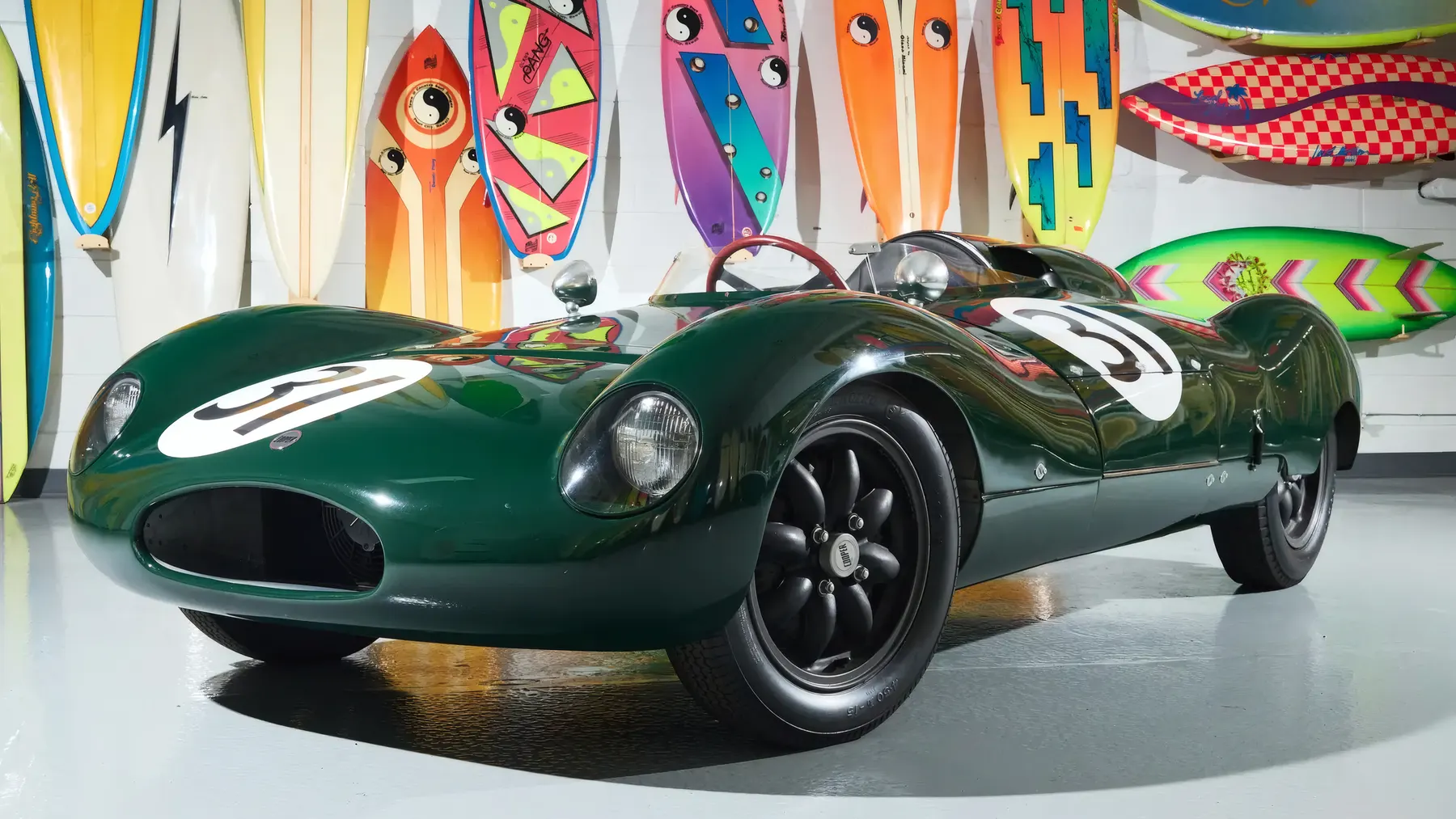
None of that should be mistaken for the T39 being a fully resolved design, and treating it as flawless engineering would do it a disservice. Drum brakes at all four corners were already beginning to look dated by the time Bobtails were racing at Le Mans and Sebring, where the more serious opposition - Jaguar’s D-type prominent among it - had already moved to discs, and a small, light car does not automatically compensate for brakes fading under sustained hard use over a twelve- or twenty-four-hour race. The adapted Citroën-based gearbox, a clever piece of improvisation in 1955, was never a purpose-built competition unit, and decades of hard use have left many surviving cars fitted with sturdier replacement transmissions rather than the original design. The chassis, for all its lightness, was built with the crude adjustability typical of a cash-strapped specialist rather than a properly resourced factory; one modern owner, arriving in a Bobtail fresh from a Porsche 356A, found the Cooper’s suspension offered no toe-in adjustment whatsoever, a basic setup facility even a mass-produced German sports car of the same period took for granted. The nominal passenger seat, meanwhile, was dead weight bolted to a car whose entire design philosophy was otherwise about shedding grams wherever possible - a compromise forced on Cooper by the rulebook, not one it would have chosen. And because the T39’s 1.1- and 1.5-litre engines gave away a litre or more to the 2- and 3-litre sports-racers it regularly lined up against, most of its results were class wins and strong overall placings rather than outright victories; more than one period account notes candidly that, in less experienced hands, the car’s limited engine capacity kept it from troubling the bigger-engined front-runners at all. Add to that a level of factory record-keeping so informal that even the total number built remains disputed seventy years later, and the picture is of a car that was brilliant in concept and often excellent in execution, but built quickly, cheaply, and without much regard for documentation or long-term durability.
Exactly how many T39s Cooper built is still argued over. Estimates among marque historians range from around 30 to 50 cars constructed between 1955 and 1957, with roughly half thought to survive today - again with estimates varying, from as few as 13 to around 15 known examples. The competition record compiled across those cars is reported with similar variation between sources: one accounting puts the total at more than 600 individual race entries between 1955 and 1962, with outright wins cited anywhere from the low eighties to as many as 91, and podium finishes numbering in the low-to-mid 200s. Whichever figures are preferred, the pattern is consistent - a small, cheaply built sports-racer that punched enormously above its weight in national and international competition for the better part of a decade.
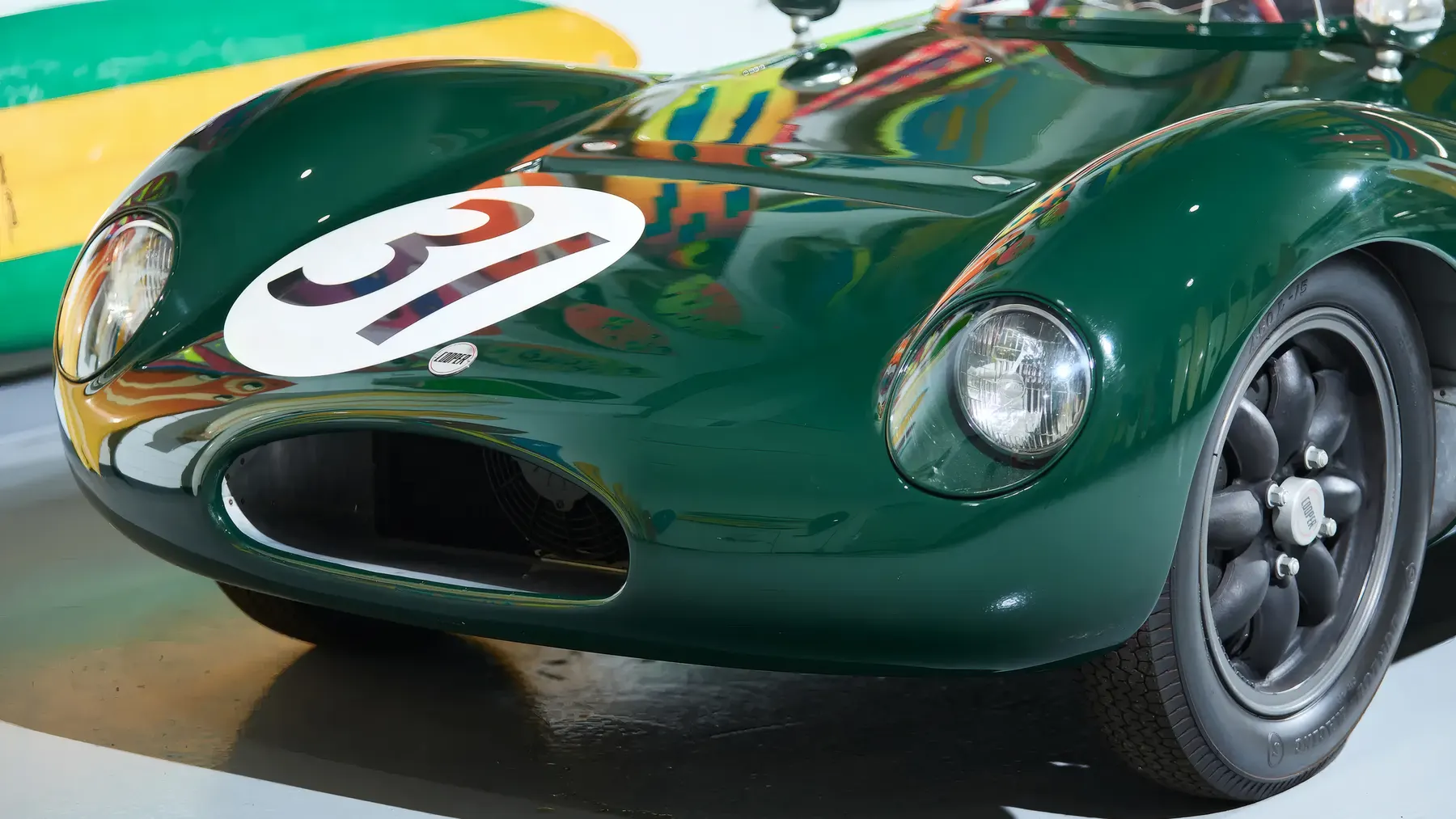
Today the Cooper T39 Bobtail occupies an odd but privileged place in the story of postwar motor racing: too small, too slow and too crudely finished to be mentioned in the same breath as the Jaguar D-types and Ferrari sports-racers it occasionally lined up against, yet more consequential to the sport’s future than either of them. It was never meant to be beautiful, and John Cooper never really warmed to its looks even after Kamm’s theories became industry orthodoxy. What it did instead was prove, in public, at racing speed, that putting the engine behind the driver was not a novelty but a genuinely better way to build a racing car - a lesson Cooper then carried, gearbox and all, into Formula One, and one the rest of the grid spent the following decade learning to copy.
Sources
- Wikipedia: Cooper T39
- Porter Press: Cooper T39 Bobtail
- Supercars.net: Bobtail - 1956 Cooper T39
- Racecarsdirect.com: Cooper T39 Bobtail
- Conceptcarz: 1955 Cooper T39
- Conceptcarz: 1955 Cooper T39 Specifications & Dimensions
- Bonhams: 1956 Cooper-Climax 1.5-Litre T39 ‘Bobtail’
- William I’Anson Ltd: 1956 Cooper T39 Bobtail
- Silodrome: Cooper-Climax Bobtail
- RM Sotheby’s: 1956 Cooper Climax Type 39 “Bobtail”
- Classic Driver: 1956 Cooper T39 Bobtail
- Primotipo: 1955 Australian Grand Prix
- Wikipedia: 1955 Australian Grand Prix
Join the discussion
Comments
Loading comments…
Leave a comment
Share a detail, memory, or perspective. Every comment is reviewed before publication.