Lancia Appia GTE Series II by Zagato: When Zagato Became a Factory Partner
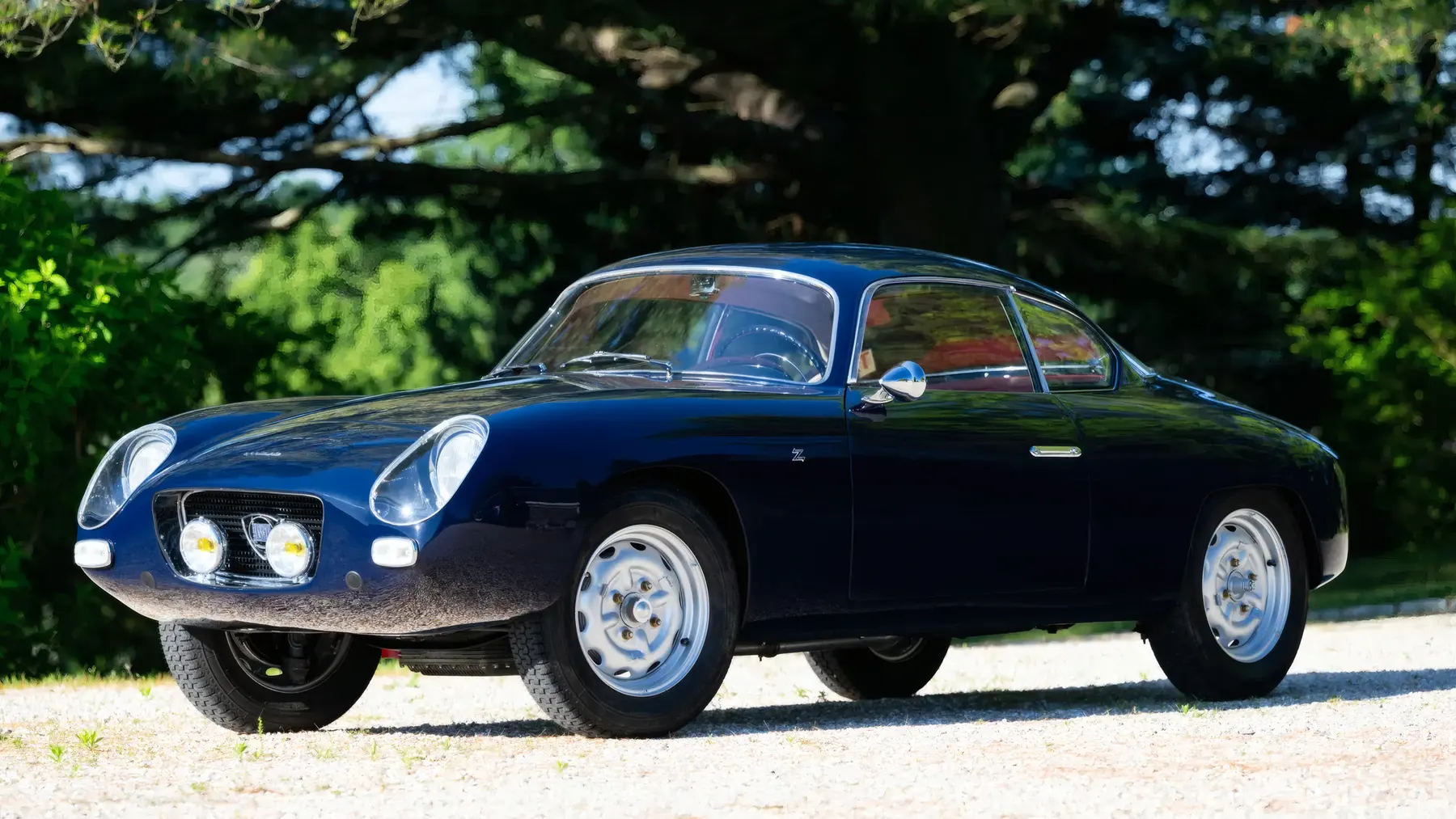
1959 Lancia Appia GTE Series II by Zagato

Images: Josh Sweeney / RM Sotheby's
Lancia never intended the Appia to be a sports car. It was drawn up as a small, dignified saloon for buyers who valued engineering integrity over outright pace, a car built to a philosophy rather than to compete with Fiat on volume. That makes it all the more interesting that this modest little platform ended up carrying one of the more significant shifts in post-war Italian coachbuilding’s business model, when Zagato’s aerodynamic GTE coupé became the first car the carrozzeria had ever sold through a manufacturer’s own dealer network rather than peddled independently on its own account.
The Appia itself arrived at the 1953 Turin Motor Show as Lancia’s replacement for the pre-war Ardea, and it carried the family’s usual insistence on doing things properly rather than cheaply. Engineer Vittorio Jano was responsible for its defining mechanical idea: an ultra-compact, narrow-angle V4 of just 1,089cc, its ten-degree bank of inclined overhead valves sitting in hemispherical combustion chambers and operated by twin camshafts set low in the block. The whole car sat on a rigid, self-supporting unitary structure descended from the pre-war Aprilia, riding on Lancia’s signature independent sliding-pillar front suspension. None of this made the original 38bhp saloon fast, but it made it sophisticated in a way few economy cars of the period could match, even if the contemporary Italian press was not immediately won over: the influential magazine Quattroruote had been openly critical of the first series before eventually pronouncing the revised second-series car “finally accomplished and convincing.” Praise did not translate into sales momentum, however, and as late as May 1958 the factory was still building around 27 cars a day against an anticipated 50, a telling sign that even Lancia’s home audience needed convincing. That revised second series arrived at the 1956 Geneva show under new technical director Antonio Fessia, with a stretched wheelbase, reworked combustion chambers, new pistons and camshaft profiles, and a modest bump to 43bhp. Lancia built 22,425 of these second-series saloons, only 3,180 of them in right-hand drive, and even then the factory struggled to hit its own production targets, a reminder that the Appia was always a niche proposition rather than a mass-market hit. Auction specialists have since observed that while the Appia’s engineering was never in doubt, the styling of the everyday saloon was, for all its neatness, rather conservative next to what Italy’s coachbuilders could conjure from the same mechanical package, which is precisely the gap Zagato set out to fill.
Zagato’s relationship with the Appia began the way most Italian coachbuilder relationships of the era did: buying bare or reinforced chassis from the factory and building its own bodies on top. The first result, in 1956, was a striking prototype nicknamed the “Cammello,” or camel, for its double-humped roof and matching bumps on the bonnet and boot lid. Finished in two-tone blue and white, it won its class at the Cortina concours before being repainted and entered in the 1957 Mille Miglia, where three Zagato-bodied Appias took the top three places in their class. Zagato followed with a handful of related derivatives through 1957 and 1958: the fin-tailed GTZ with its plexiglass-covered headlamps, of which only around thirty are thought to have been built, and the more series-produced GT and GTS models, the former offering 53bhp with open headlamps, the latter a streamlined 60bhp car with its own double-bubble roof, wood-rimmed wheel and optional bucket seats.
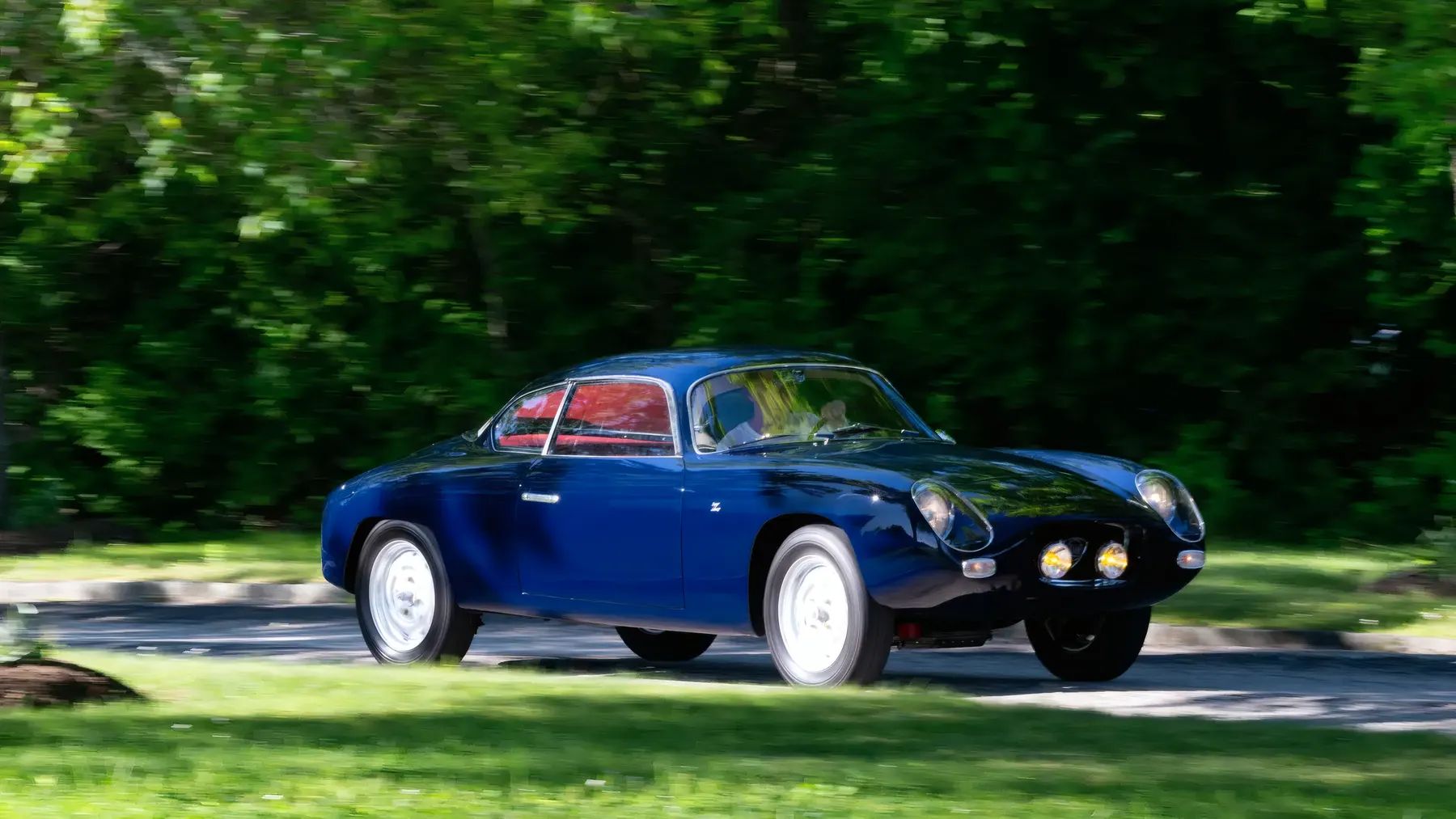
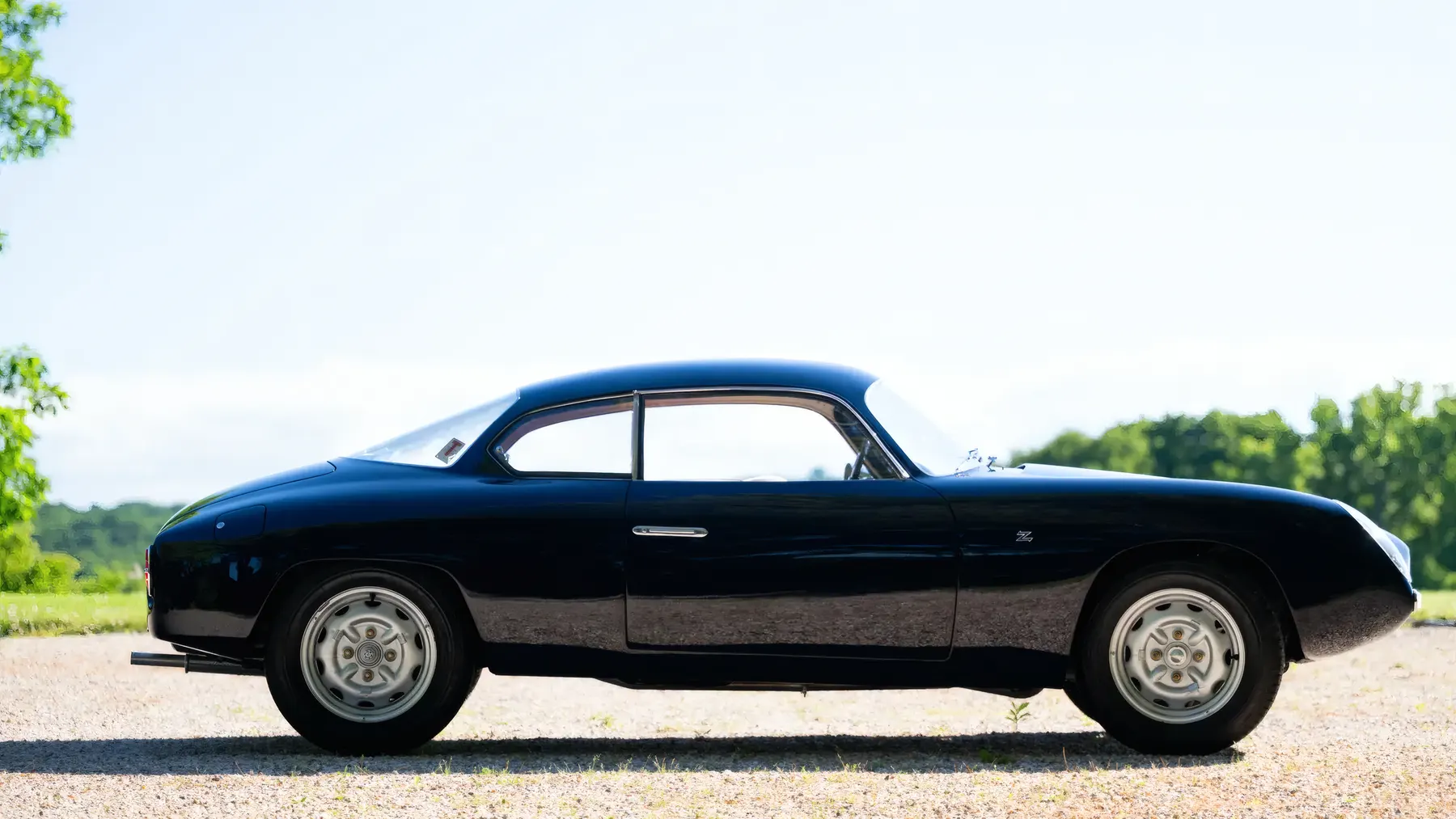
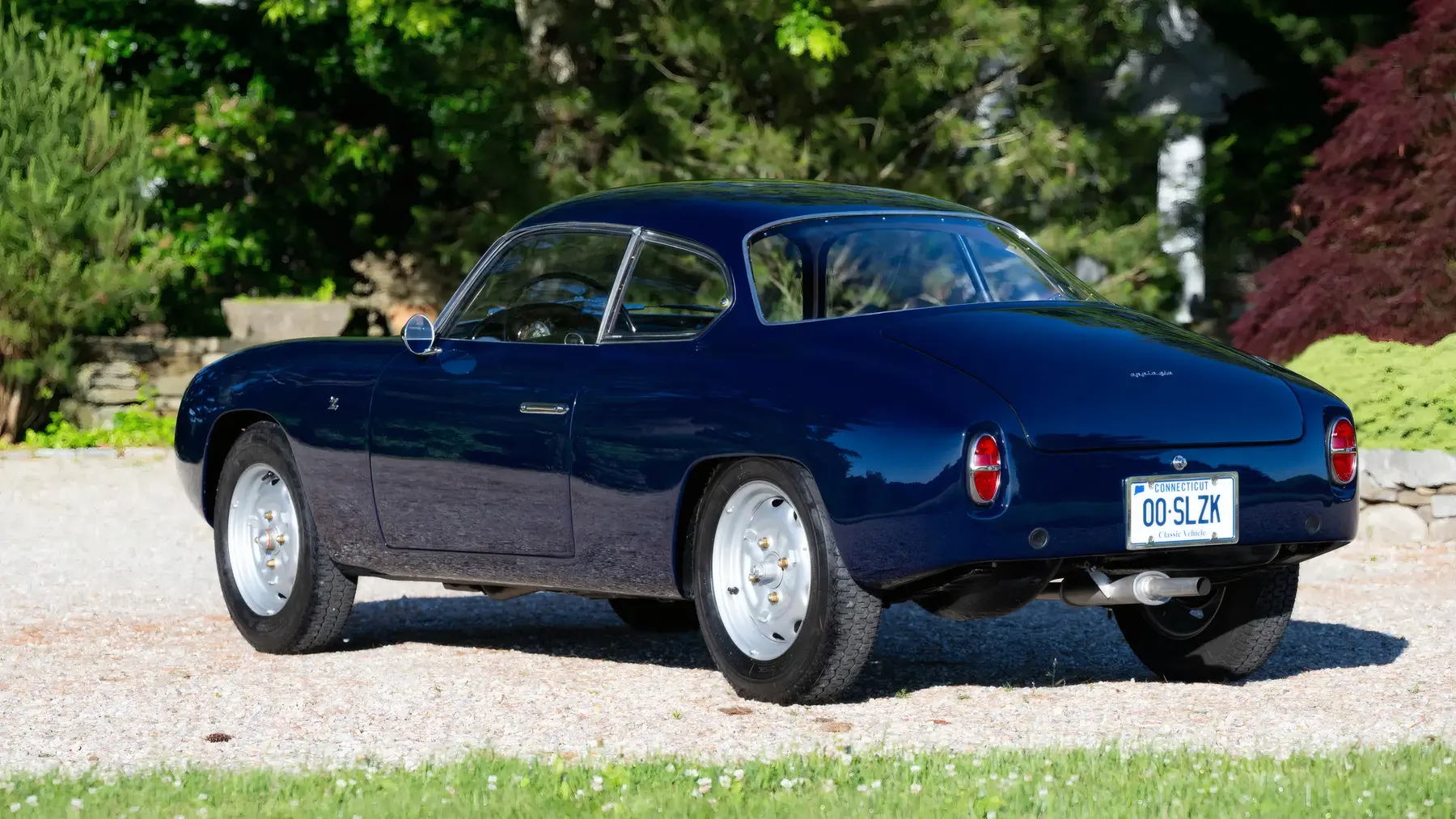
The Appia GTE, unveiled at the Turin Motor Show in November 1958, replaced the GT and represented a clean visual break from everything that had come before it. Zagato dropped the double-bubble roofline in favour of a lower, more tapered and altogether more aerodynamic shape, with a longer nose, headlamps faired in deeper under glass covers, and partially recessed tail lamps. The name stood for Gran Turismo Esporto, and the car’s real significance had less to do with its lines than with how it reached customers: for the first time, a Zagato-bodied car was sold officially through Lancia’s own dealer network rather than through the coachbuilder’s separate sales channel. It was, by the account of specialist owners who have researched the model, a genuine turning point for Zagato, generating real commercial traction for the car while nudging the company toward becoming an industrial partner to major manufacturers rather than simply a bespoke body shop working from purchased chassis.
The GTE built on the existing second-series Appia platform initially, and it’s this early run, fitted with the desirable covered headlamps, that carries the “Series II” designation and is believed to have amounted to somewhere in the region of 153 cars. From 1959 the model moved onto the revised third-series Appia platform, and almost simultaneously Italian lighting regulations outlawed covered headlamp treatments, forcing Zagato to abandon the faired lamps on the bulk of subsequent production. It’s a rare case of bureaucracy dictating a car’s face rather than its designer: the earlier, covered-headlamp cars are now generally considered the more resolved design, even though most surviving GTEs actually wear the later, plainer open-lamp treatment. A further mechanical update arrived in 1960, when the GTE’s output rose from an initial 53bhp to around 59 to 60bhp, before production wound down in 1962.
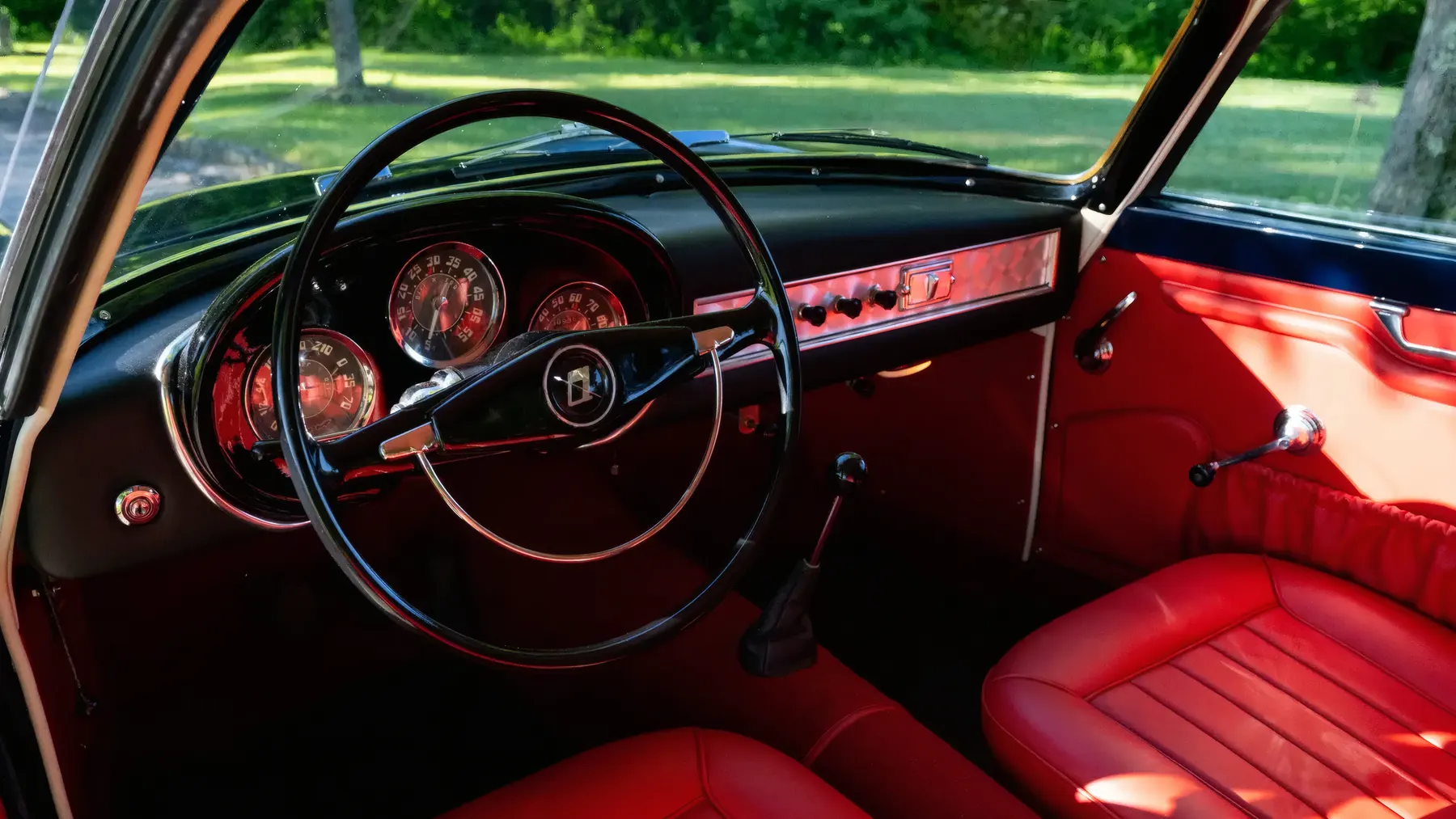
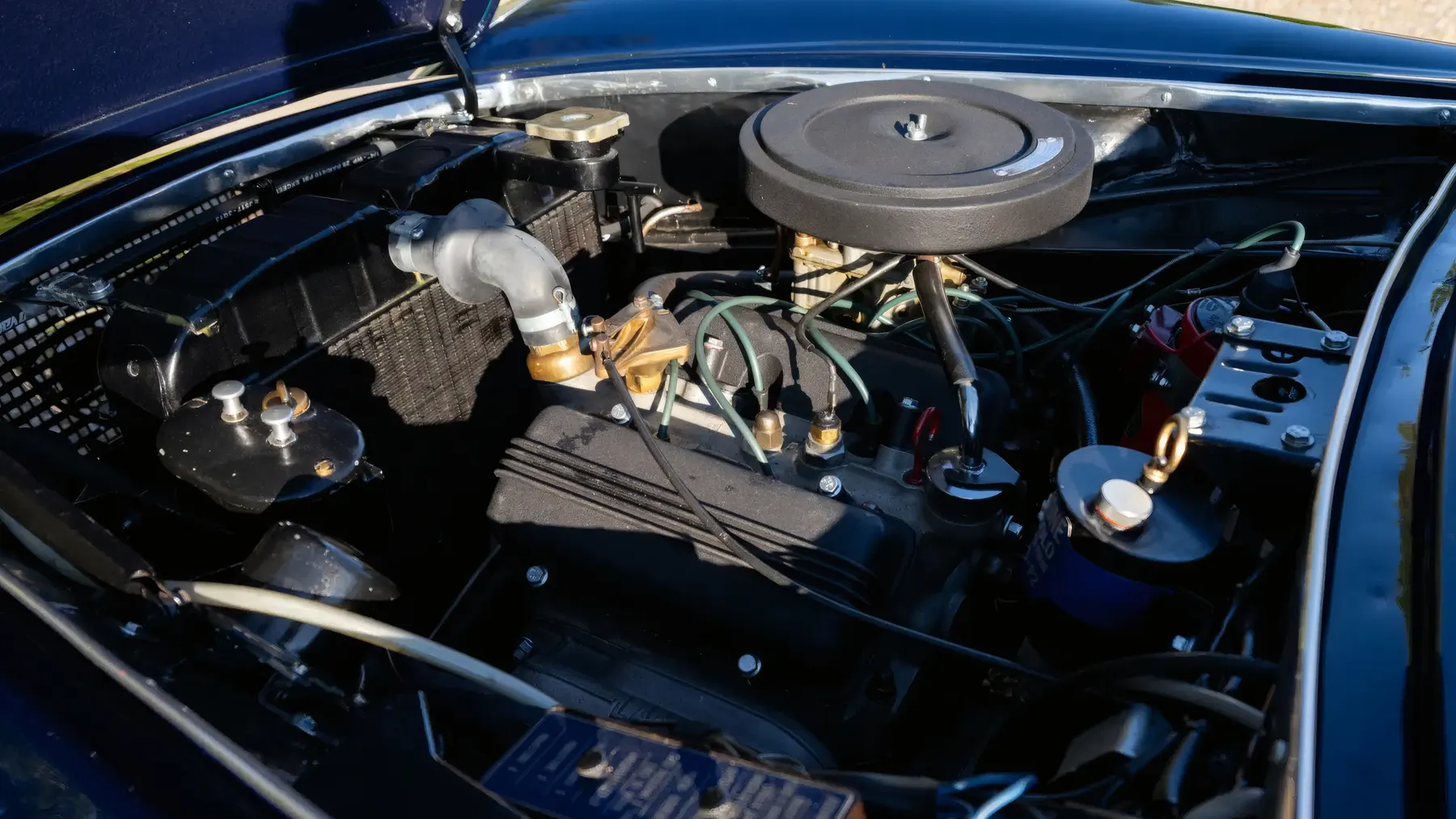
Mechanically the GTE carried over the familiar Appia narrow-angle V4, now in its most highly tuned road-going form for this family of cars: a single twin-choke Weber 36DCD5 carburettor, a bore and stroke of 68mm by 75mm, and a compression ratio of around 8.8:1, good for roughly 60bhp at 5,400rpm and about 62 to 63 lb-ft of torque at 4,400rpm, driving the rear wheels through the familiar four-speed manual gearbox. The chassis retained Lancia’s sliding-pillar independent front suspension and a live rear axle on semi-elliptic leaf springs, with hydraulically operated drum brakes at all four corners. What changed most was the bodywork: Zagato’s hand-beaten aluminium panels, wrapped over a boxed and lightened version of Lancia’s steel structure, brought kerb weight down to somewhere around 830 to 840kg, meaningfully lighter than the standard saloon. Combined with the later engine’s extra power, that was enough for a genuine top speed close to 99 or 100mph in the definitive cars, against roughly 93mph for the earlier 53bhp examples, brisk enough to embarrass a great many contemporary saloons even if it never threatened the era’s proper sports cars.
The GTE also found its way to America relatively quickly for such a small-scale product, with the first small batch of cars brought in by Max Hoffman, the legendary New York-based importer who served as Lancia’s US distributor of the period. That the GTE found a place in his showroom at all says something about how the model was perceived at the time: not as a curiosity, but as a genuine, sellable European GT in miniature, aimed at American buyers who wanted something more distinctive than a badge-engineered saloon.
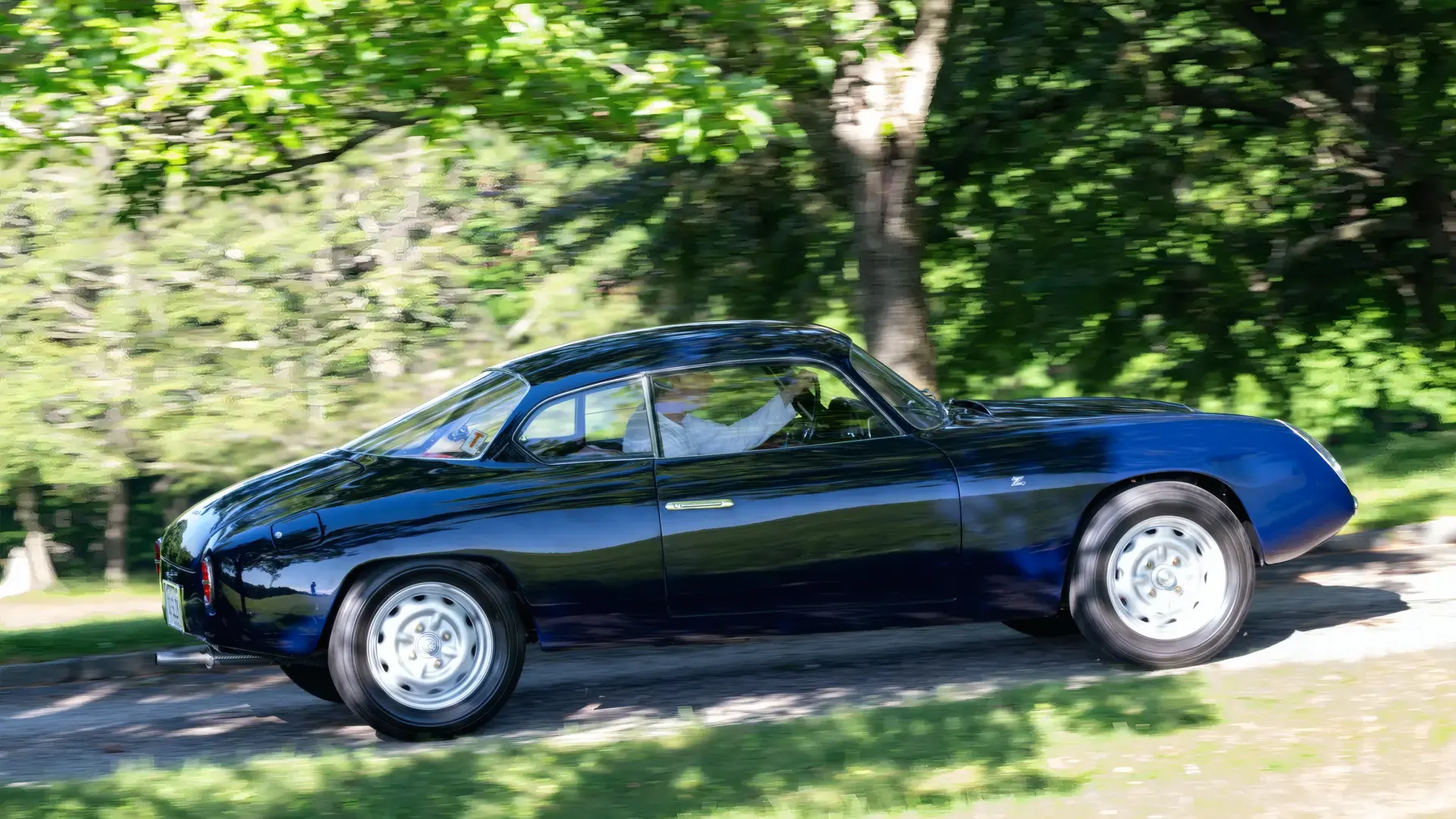
On the road, what the GTE offered was less about outright pace than about the sensations Lancia’s engineering made possible in something this light: direct, well-weighted steering through the sliding-pillar front end, a low centre of gravity for the class, and a delicacy that comes from a hand-built aluminium body on a chassis never intended to be heavy in the first place. Owners who have driven these cars describe them as agile and genuinely enjoyable rather than outright quick, and that distinction matters: this was always a car sold on finesse and character rather than a stopwatch.
The GTE, and the Zagato Appias that preceded it, also had a real if modest competition life. Beyond that 1957 Mille Miglia class sweep by earlier Zagato-bodied cars, an Appia GTE was entered in the 1959 12 Hours of Sebring, co-driven by the American broadcaster Walter Cronkite, and examples were campaigned in European rallies through the period, their light weight and taut chassis making them naturally suited to loose-surface events even with a modest power output.
None of which should obscure the GTE’s real shortcomings, several of which mattered in period as much as they do to owners today. Even in its ultimate 60bhp tune, the little narrow-angle V4 was never going to deliver genuine GT-car urgency; this was a car whose 62-odd lb-ft of torque made for adequate rather than exciting progress, and buyers wanting real pace from a small Italian coachbuilt coupé of this era had faster alternatives to choose from. The all-drum braking system, while entirely typical of its class and period, was a real limitation for a car increasingly used in rallies and on mountain roads, where the repeated hard stops of a fast descent readily invite drum fade, robbing the driver of confidence exactly when a light, agile car like this should be at its most rewarding. The hand-formed aluminium bodywork, romantic as it sounds, brought its own practical penalty: aluminium panels mated to a steel structure are a textbook recipe for galvanic corrosion at the joints, and decades of that electrochemical mismatch have claimed original bodywork on more than one surviving car. Because Zagato kept no formal production register for the GTE, unlike the Appia Sport that eventually replaced it, exact build totals remain estimates rather than settled fact even now, an ambiguity that complicates any attempt to establish true rarity, and it also means no two cars are guaranteed to match one another, since features could vary according to trim options, individual customer requests, or simply which parts were on hand that week. And the regulatory shift that stripped away the model’s faired headlamps partway through its life left the majority of surviving cars wearing a visibly less resolved face than the one Zagato originally intended, a case of officialdom quietly editing a design after the fact.
Zagato didn’t stop with the GTE. In 1961 the coachbuilder introduced the related but distinct Appia Sport, a shorter, fastback-roofed design with headlamps recessed into the bodywork rather than faired under glass, styled by the young Ercole Spada not long after he had joined the company. It ran until 1963, overlapping the GTE’s final year, and unlike its predecessors it was the first Appia model Zagato tracked with a proper, detailed production register, itself a quiet admission of how loosely the earlier cars had been documented. Across the whole Zagato-bodied Appia family, from the 1956 Cammello prototype through the GTE to the Sport, total production is thought to run to somewhere around 700 to 720 cars over roughly seven years, of which the GTE itself accounts for something in the region of 300, split by most tallies into around 167 of the earlier 53bhp cars and 134 of the later 60bhp examples.
Set against the tens of thousands of standard Appia saloons Lancia built across the same years, the GTE was never anything but a niche, low-volume halo model, and it never had any pretensions otherwise. Its real legacy sits less in sales figures than in what it represented: a moment when one of Italy’s most characterful coachbuilders stopped simply buying chassis and selling cars on its own account, and started building them, officially, alongside the manufacturer whose engineering made them worth building in the first place.
Sources
- RM Sotheby’s – 1959 Lancia Appia GTE Series II by Zagato, Amelia Island 2022
- RM Sotheby’s – 1959 Lancia Appia GTE Series II by Zagato, Monterey 2024
- Gooding & Company / Christie’s – 1961 Lancia Appia Series III GTE
- Iconic Auctioneers – 1962 Lancia Appia GTE, Coachwork by Zagato
- Collection ANNA LISA – Lancia Appia Zagato GTE, 1959
- RM Auto (rmw.lv) – Lancia Appia GTE by Zagato
- Bell Sport & Classic – 1961 Lancia Appia Zagato GTE 2, technical specification
Join the discussion
Comments
Loading comments…
Leave a comment
Share a detail, memory, or perspective. Every comment is reviewed before publication.