BMW 3.0 CSL 'Batmobile': The Icon Whose Wing Was Illegal to Drive
1973 BMW 3.0 CSL 'Batmobile'

Images: Jasper Schwering / RM Sotheby's
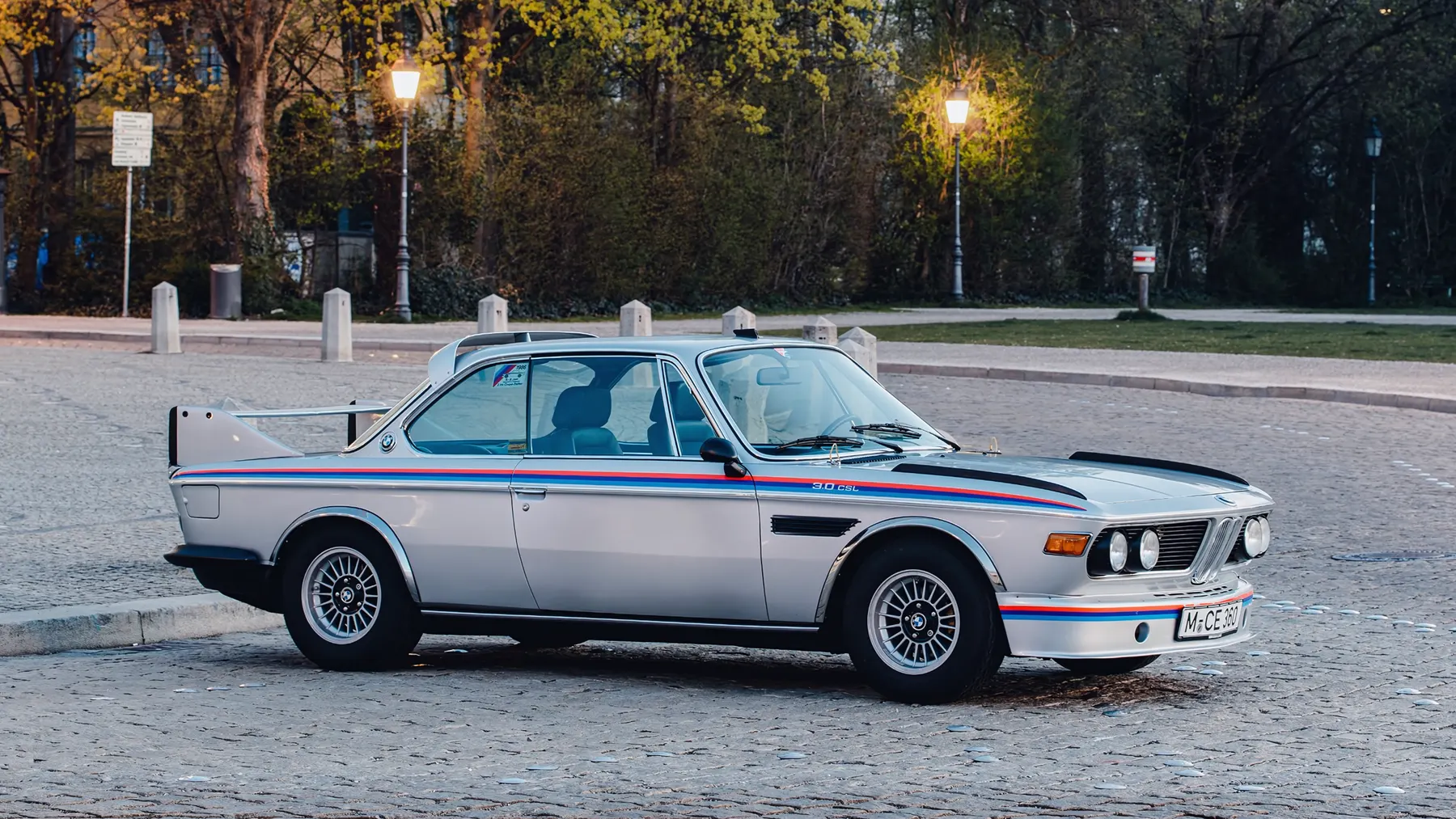
BMW handed the first owners of its ultimate 3.0 CSL a car they weren’t legally permitted to drive in the configuration it was built for. The towering rear wing that earned the coupé its “Batmobile” nickname contravened West German road-traffic rules of the day, so on many cars it left the factory folded into the boot rather than bolted to the tail, to be fitted later by a dealer or owner in a market where it was allowed - or simply never fitted at all until the car reached a racetrack. That is the kind of car this was: a road-going product engineered almost entirely to satisfy a set of motorsport regulations, with everyday civility and, apparently, road legality treated as afterthoughts. Few homologation specials have worn that compromise so visibly, or so proudly.
The car existed because BMW was losing. By the start of the 1970s, the firm’s handsome New Six coupé - launched as the Karmann-built 2800 CS in 1968 and developed through the 3.0 CS and fuel-injected 3.0 CSi - had settled into life as a sporting grand tourer rather than an outright competition machine, and independent tuners Alpina and Schnitzer struggled to turn it into a serious touring-car contender because it was giving away as much as 300kg to lighter, purpose-built rivals such as Ford’s Capri RS2600. The turning point arrived with a change of management. Bob Lutz took over BMW’s sales operation in 1972 and poached Ford’s motorsport chief, Jochen Neerpasch, along with a leading race engineer, folding them into the newly formed BMW Motorsport GmbH with a simple brief: build something that could actually win. Neerpasch’s team called the result the CSL - Coupé Sport Leichtbau, “lightweight” - and unlike a lot of badges from the era, that final word wasn’t marketing dressing. It was the entire engineering premise.
To race in the FIA’s Group 2 touring-car category, BMW needed to build and sell 1,000 road-going examples, and it treated that requirement as a genuine engineering exercise rather than a box-ticking formality. Nearly every panel was reconsidered. The bonnet, boot lid and doors switched to aluminium; the roof, bulkhead, wheel arches and side panels were pressed from thinner-gauge steel; the rear screen and rear side windows became Perspex in place of glass. BMW deleted the front bumper, the power-assisted steering, the electric windows, almost all the sound insulation and underbody coating, and even the boot lock and tool kit, hanging the bonnet on a simple prop rod rather than a spring-loaded latch and torsion bar. Lightweight Scheel bucket seats replaced the standard chairs, though the CSL kept the E9’s handsome wood dashboard and a distinctive three-spoke Petri steering wheel. Altogether, the changes stripped around 200kg from the car - a genuinely significant figure for a mid-1970s road car, and the reason the CSL, rather than any tuner-built CS, became BMW’s homologation weapon of choice.
The CSL arrived in stages, and the “Batmobile” most enthusiasts picture in their heads is really only the last and rarest of them - the name is sometimes applied loosely to the works racing cars too, but in its strict sense it describes only the road car’s optional aerodynamic package. The first examples, built from late 1971, used the same 2,985cc M30 straight-six as the standard 3.0 CS, fed by twin downdraught Zenith carburettors and producing around 180bhp; they were left-hand drive only, and roughly 169 were built. To move the car into the racing world’s over-three-litre class, BMW enlarged the engine fractionally to 3,003cc and switched to Bosch D-Jetronic fuel injection for a second series, lifting output to around 200bhp; this batch, comprising 429 left-hand-drive and 500 right-hand-drive cars, made up the bulk of the roughly 1,000-car homologation run. It’s here that the CSL’s purist image starts to blur, because most of the right-hand-drive cars - nearly all of them destined for Britain, the model’s largest market outside continental Europe - were specified with the optional “City Package,” which quietly reinstated much of the equipment the lightweight brief had just deleted: power steering, electric windows, thicker carpets, sound insulation, chrome bumpers and a locking boot. It roughly halved the car’s weight saving, from around 200kg down to closer to 110kg, and a fair number of left-hand-drive Series 2 cars were ordered the same way.
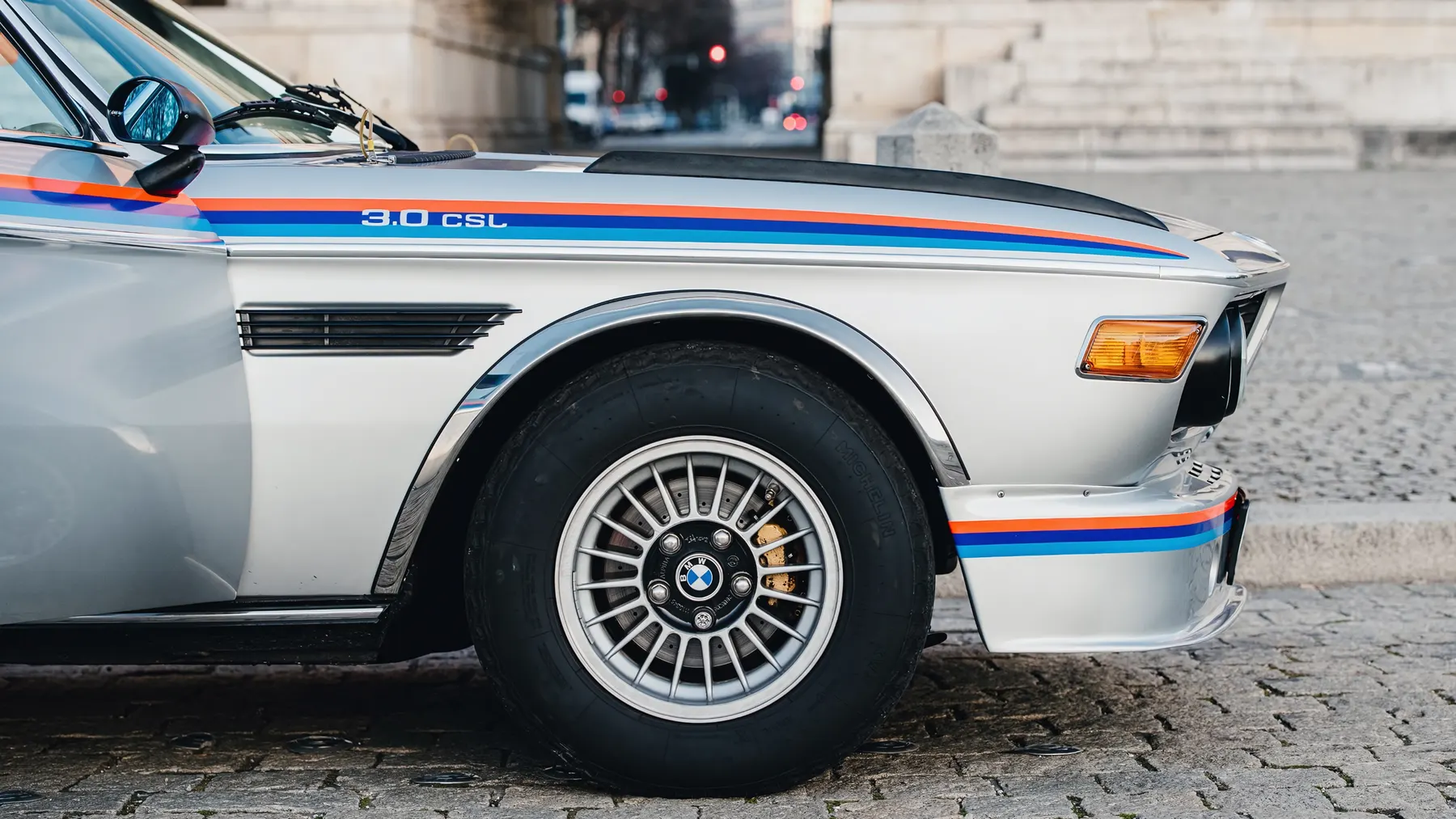
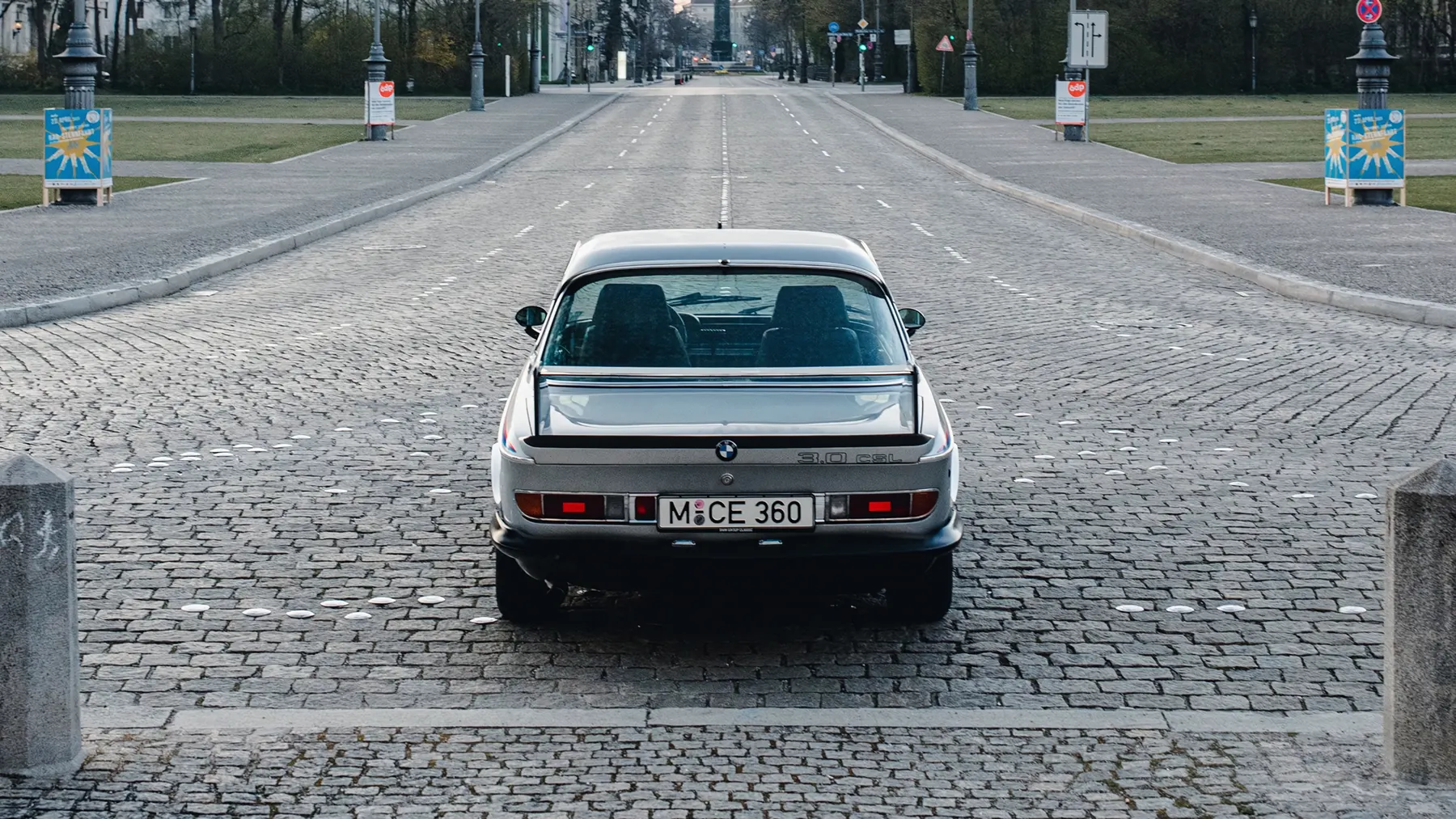
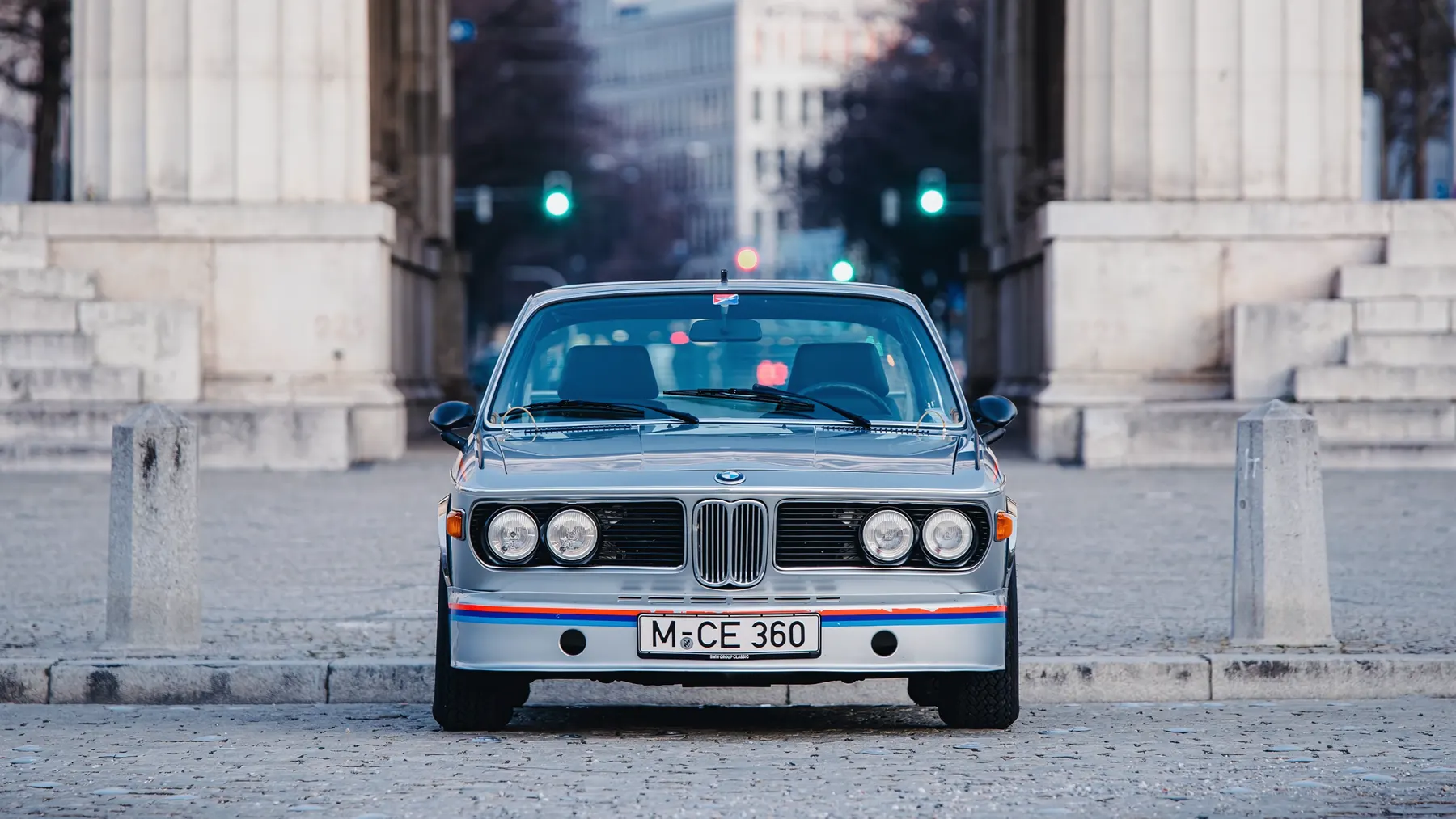
The version everyone actually means by “Batmobile” followed in mid-1973, when BMW enlarged the M30 again, to 3,153cc, and paired it with a striking aerodynamic package developed on the racetrack rather than in a styling studio: a deep front air dam, “wind-split” fins running along the front wings, a hoop-shaped spoiler above the rear screen, and a genuinely enormous rear wing, all intended to add downforce and high-speed stability rather than visual drama, even though it delivered plenty of the latter as a side effect. Output rose to around 206bhp at 5,600rpm, and with a kerb weight of roughly 1,270kg - a power-to-weight figure BMW itself liked to quote as 6.1kg per horsepower - the car could reach around 137mph in top gear. BMW built just 110 of these cars between July and October 1973, offered only in Polaris silver or Chamonix white, followed by a second, smaller batch of 57 cars produced between January 1974 and October 1975 and offered in the full range of factory colours; many of these later cars added a third, central fin to the rear wing. That is 167 genuine aero-package Batmobiles in total, a small fraction of the roughly 1,265 CSL road cars BMW built across all three engine stages - and the reason surviving examples now occupy such rarefied territory in the classic-car market.
Beneath the addenda, the CSL never abandoned the E9 coupé’s fundamental elegance. It kept the family’s slim-pillared glasshouse and excellent outward visibility, its twin headlights, and the “Hofmeister kink” swept into the C-pillar that would go on to define BMW styling for decades afterward. The wider 14-inch alloy wheels needed flared, chrome-lipped arches to clear them, and it’s the combination of that inherently handsome shape with genuinely function-first aero hardware that gives the Batmobile its unusual charisma: a good-looking car wearing brutal, purposeful equipment, with neither element undermining the other.
On track, the investment paid off almost immediately. In its debut season, a factory CSL driven by Hans-Joachim Stuck and Chris Amon won the 1973 Nürburgring 6 Hours outright, while an Alpina-entered sister car gave Niki Lauda a new lap record around the Nordschleife. BMW won the European Touring Car Championship that year and then took five further titles in succession between 1975 and 1979 - six championships across the decade, a run that made the CSL the defining touring car of its era. As the regulations evolved, so did the car: Group 2 machines raced with a mildly modified version of the road engine, while the far more extreme Group 4 and Group 5 cars used a 3.5-litre, 24-valve racing engine with mechanical fuel injection and dry-sump lubrication, pushing output past 430bhp in North American IMSA specification. BMW built roughly 21 factory competition CSLs across these categories, quite apart from the many privateer conversions built from road cars.
That American programme produced one of the CSL’s most celebrated results. Days after BMW of North America was formally established in March 1975, the works team arrived at the 12 Hours of Sebring with two CSLs against a field dominated by Porsche and Chevrolet. The instructions from the pit wall were blunt: send one car hard enough to force the leading Porsches into trouble, and nurse the other home. It worked. The sister car retired after breaking pace, and the surviving CSL - shared by Brian Redman, Allan Moffat, Hans-Joachim Stuck and Sam Posey, and running with a failing alternator for much of the night - held on to win outright, giving BMW its first major sports-car victory on American soil. The team went on to further wins that season at Riverside, Laguna Seca, Daytona and Talladega, helping establish the brand with a US audience some of whom, by BMW’s own later telling, still assumed the initials stood for a British car maker.
The CSL’s reach extended beyond racing paddocks, too. French driver Hervé Poulain proposed having an artist paint a car he intended to race at Le Mans, and in 1975 sculptor Alexander Calder covered a Group 4-specification CSL in bold, sweeping colour, creating the first BMW Art Car. A year later, painter Frank Stella applied a precise, graph-paper grid to an even more extreme, roughly 750bhp Group 5 CSL, launching a collaboration between BMW and contemporary artists that continues today. Between the winged silhouette, the race results and the artwork, the CSL did as much as any car of its generation to build BMW’s performance identity - and it was the first car to wear the red, purple and blue stripes that became BMW Motorsport’s signature colours.
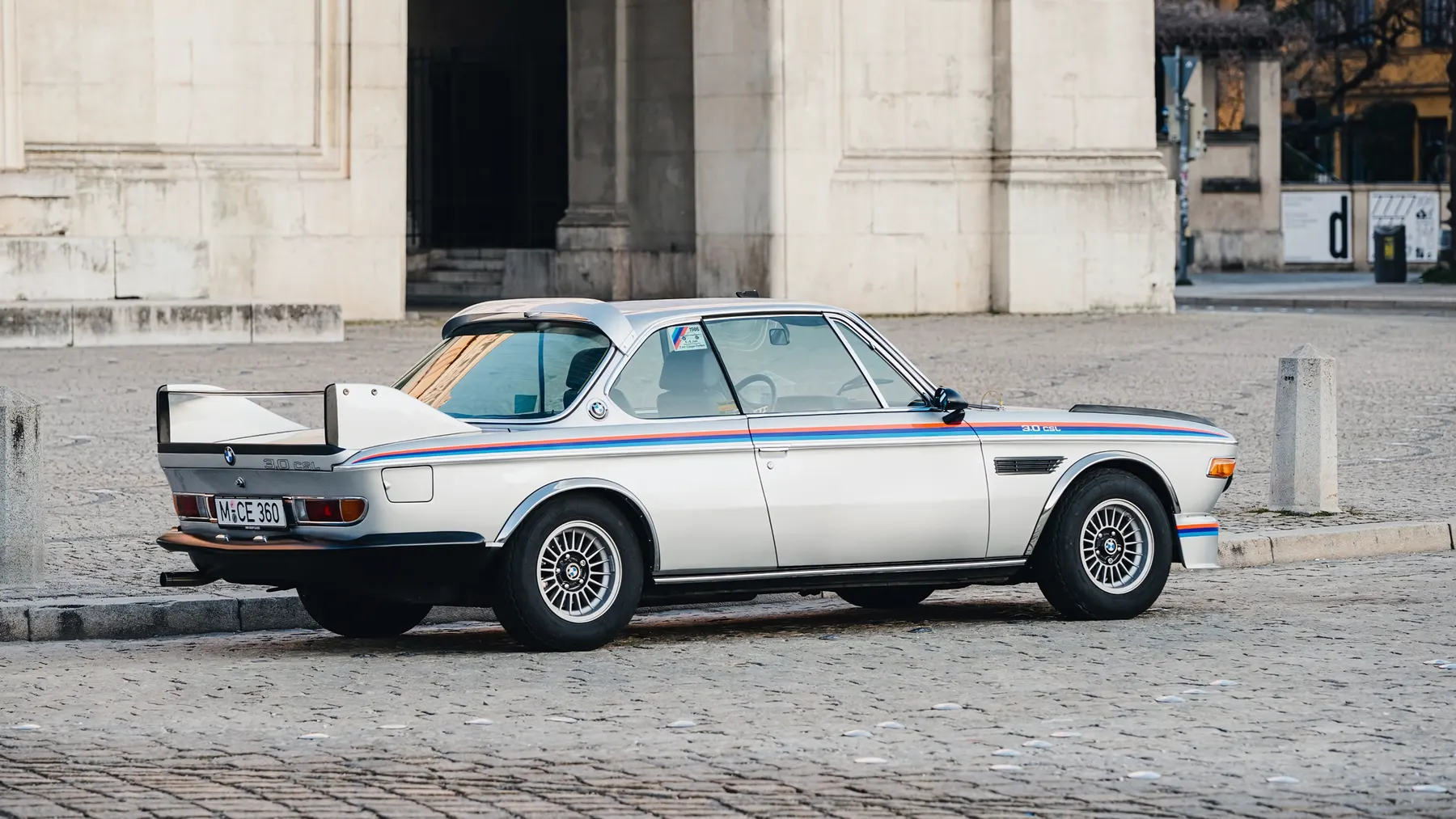
Behind the wheel of a genuine lightweight example, the CSL rewards patience before it rewards enthusiasm. The unassisted steering is heavy at parking speeds, and the clutch and throttle need a deliberate, practised touch; more than one modern road tester has admitted to stalling one while pulling away in traffic. Left at low revs, the single-overhead-cam six can feel a little cantankerous, but from around 4,000rpm it opens into a smooth, increasingly vocal wail that carries cleanly through to its 6,500rpm redline, aided by a cabin with almost no sound deadening left to mute it. Once moving, the heavy controls lighten and sharpen: the steering becomes genuinely communicative, the brakes gain feel as they warm, and the chassis balances neatly through fast direction changes in a way few coupés of the era managed. It punishes clumsy inputs and rewards good ones - old-school in the most literal sense of the phrase.
None of that comes without real cost, and the CSL’s reputation shouldn’t obscure some genuine shortcomings. The E9 platform it was built on was already a notoriously rust-prone design, and the CSL’s thinner-gauge steel and deleted underbody coating made the problem worse, not better - a fact that still shapes which surviving cars are worth restoring today and how much that restoration costs. The lightweight ethos itself was compromised almost from the outset: because most right-hand-drive cars, and a good many left-hand-drive ones, were ordered with the City Package, the majority of people who actually owned a “3.0 CSL” in period got a car substantially heavier and less pure than the badge implied - closer in spirit to a well-trimmed 3.0 CSi than to a stripped-out racer. Even the genuine lightweights were a demanding daily proposition: no power steering made low-speed manoeuvring a real chore, the uninsulated cabin was loud and draughty, and the engine’s flat low-rev response and light flywheel made it easy to stall in traffic - none of it the kind of thing a buyer spending serious money in 1973 would necessarily have wanted to live with. Then there’s the wing itself, the car’s single most famous feature, which in Germany and various export markets legally couldn’t be fitted for road use at all; it is a strange kind of homologation logic for a manufacturer to engineer a device specifically to sell with the car, then be unable to let the car wear it on public roads. Commercially, too, the CSL was never intended to be a big seller - it existed to clear a 1,000-car homologation bar rather than to compete for showroom volume, and the version most people picture when they hear “Batmobile” accounts for barely 167 of the roughly 1,265 CSLs BMW ultimately built. Its legacy, in other words, rests on a small, specialised sliver of a run that was itself only ever a means to a racing end.
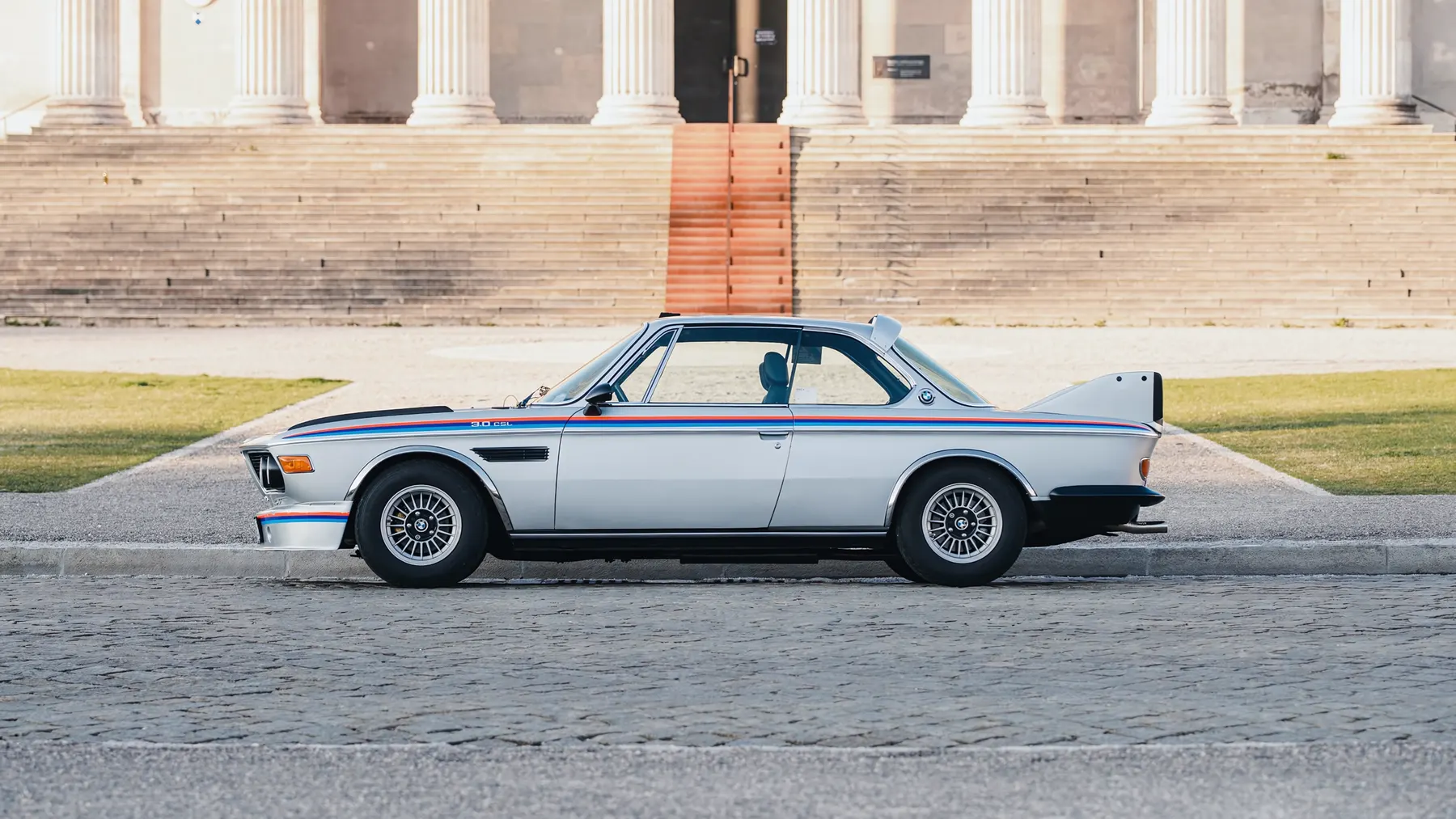
That legacy has proven remarkably durable all the same. The CSL was the first product of what became BMW Motorsport GmbH, the division that would go on to build the M1, the E30 M3 and everything wearing an M badge since, and its arrival coincided almost exactly with BMW chairman Eberhard von Kuenheim commissioning the “Ultimate Driving Machine” tagline that has outlived every car built under it. BMW has returned to the CSL name more than once to acknowledge that lineage, from the track-focused E46 M3 CSL of the early 2000s to a 2022 limited-run 3.0 CSL based on the M4, a 50-car, twin-turbocharged tribute reportedly producing around 560bhp and priced at roughly €750,000, built to mark BMW Motorsport’s 50th anniversary and sold out before most enthusiasts had a chance to consider one. None of those later cars quite recreate the original’s peculiar mixture of circumstances, though: a manufacturer’s competitive desperation, a homologation rulebook, and an engineering department told to remove weight by any means necessary, all wrapped around one of the most distinctive silhouettes 1970s Europe produced. Fewer than 200 of the true aero-package cars survive to carry that story, and it’s precisely because so few people ever got to own one that the Batmobile still commands a kind of reverence most homologation specials never quite achieve.
Sources
- BMW M: “The BMW 3.0 CSL from 1973” (Heritage)
- Hagerty UK: “What, exactly, is a BMW 3.0 CSL?” by Rob Siegel
- BMW Group Press: “The BMW 3.0 CSL” (2022 model reveal)
- BMW Group Press: “50 Stories for 50 Years, Chapter 5 - BMW Motorsport and the Mighty CSL Win the 1975 12 Hours of Sebring”
- BMW M: “50 Years of BMW M at 12h Sebring”
- BMW Group Press: “BMW 3.0 CSL #25 Wins Again”
- Top Gear: “Top Gear’s Coolest Racing Cars: BMW 3.0 CSL”
- autoevolution: “A Look Back at the Timeless BMW 3.0 CSL, the Forefather of All M-Badged Bimmers”
- Classic Driver Market: 1973 BMW 3.2 CSL Batmobile listing
- Jalopnik: “Driving A 1973 BMW 3.0 CSL Is The Best Way To Meet A Hero”
- Classic Motorsports: “What It’s Like to Drive an Authentic BMW 3.0 CSL”
- BimmerFile: “Driving the Original M Car - The 1972 BMW 3.0 CSL”
- BMWBlog: “The Iconic BMW 3.0 CSL Batmobile”
- BMWBlog: “NEW BMW 3.0 CSL - First Drive and Review”
- Wikipedia: “BMW M30” (engine family specifications)
- RM Sotheby’s: 1975 BMW 3.0 CSL ‘Batmobile’ (Munich) - general model background
Join the discussion
Comments
Loading comments…
Leave a comment
Share a detail, memory, or perspective. Every comment is reviewed before publication.