Porsche 959 Vorserie: The Pre-Series Prototypes That Changed What a Supercar Could Be
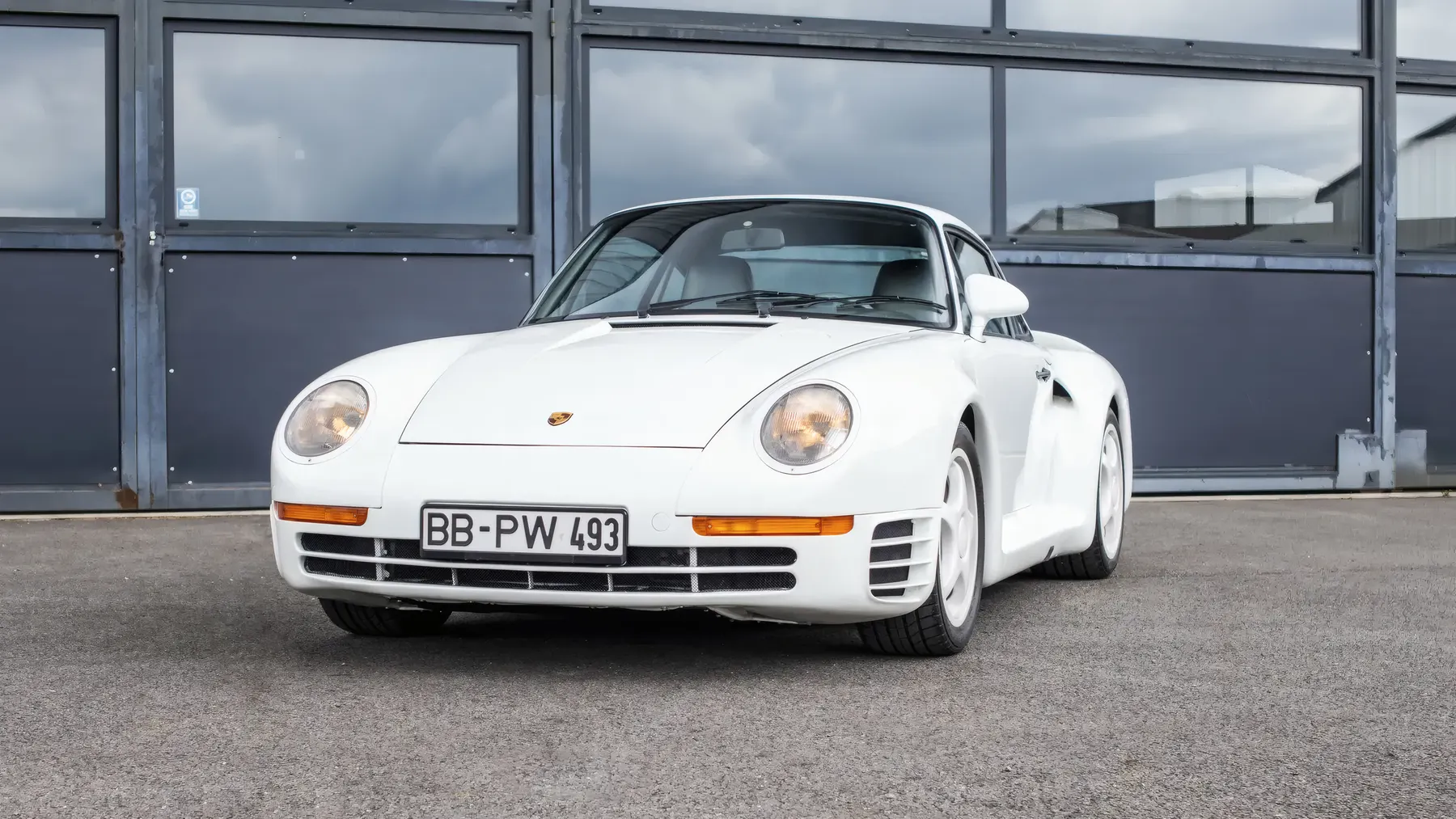
1985 Porsche 959 'Vorserie'

Images: Remi Dargegen / RM Sotheby's
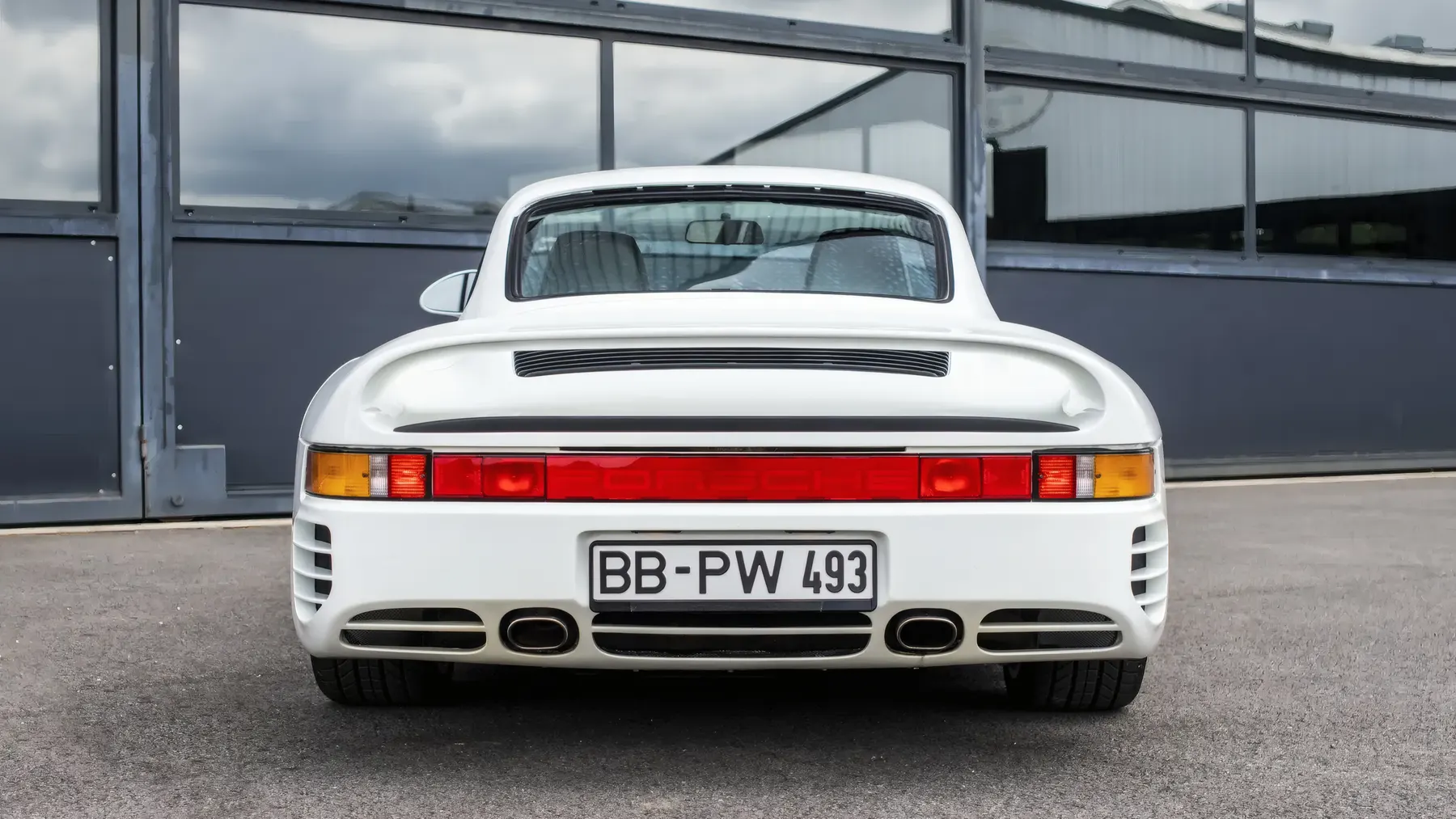
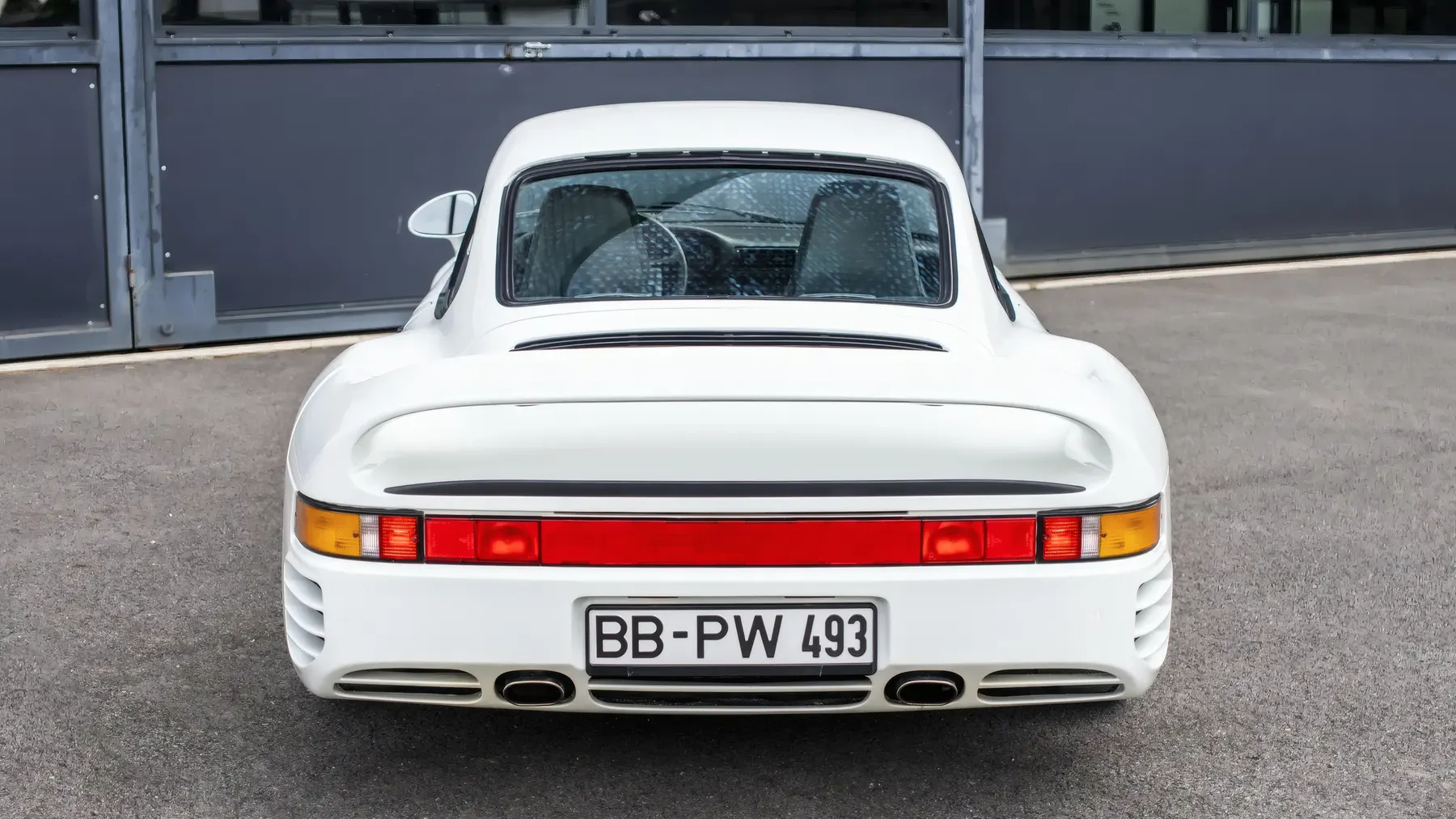
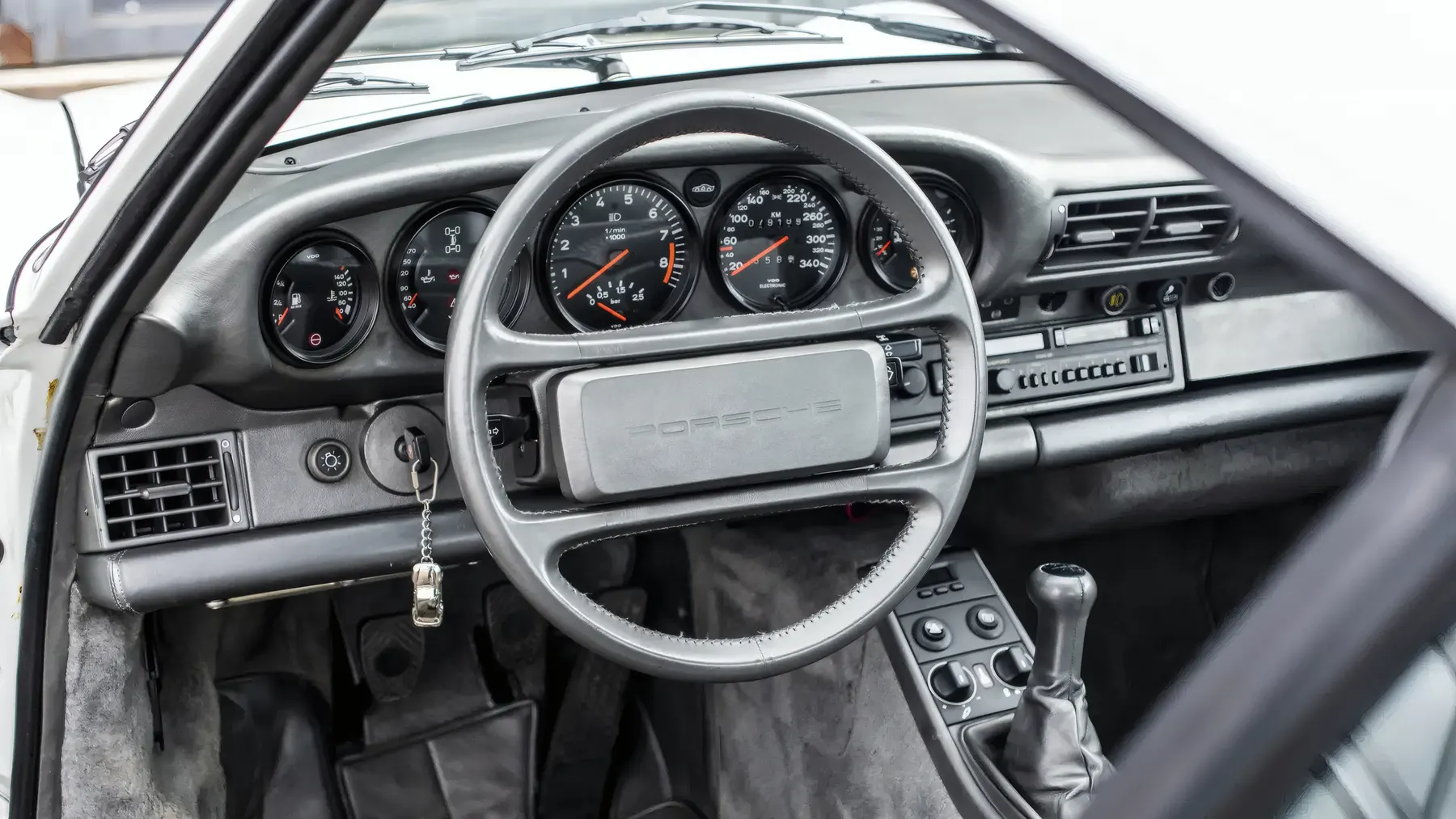
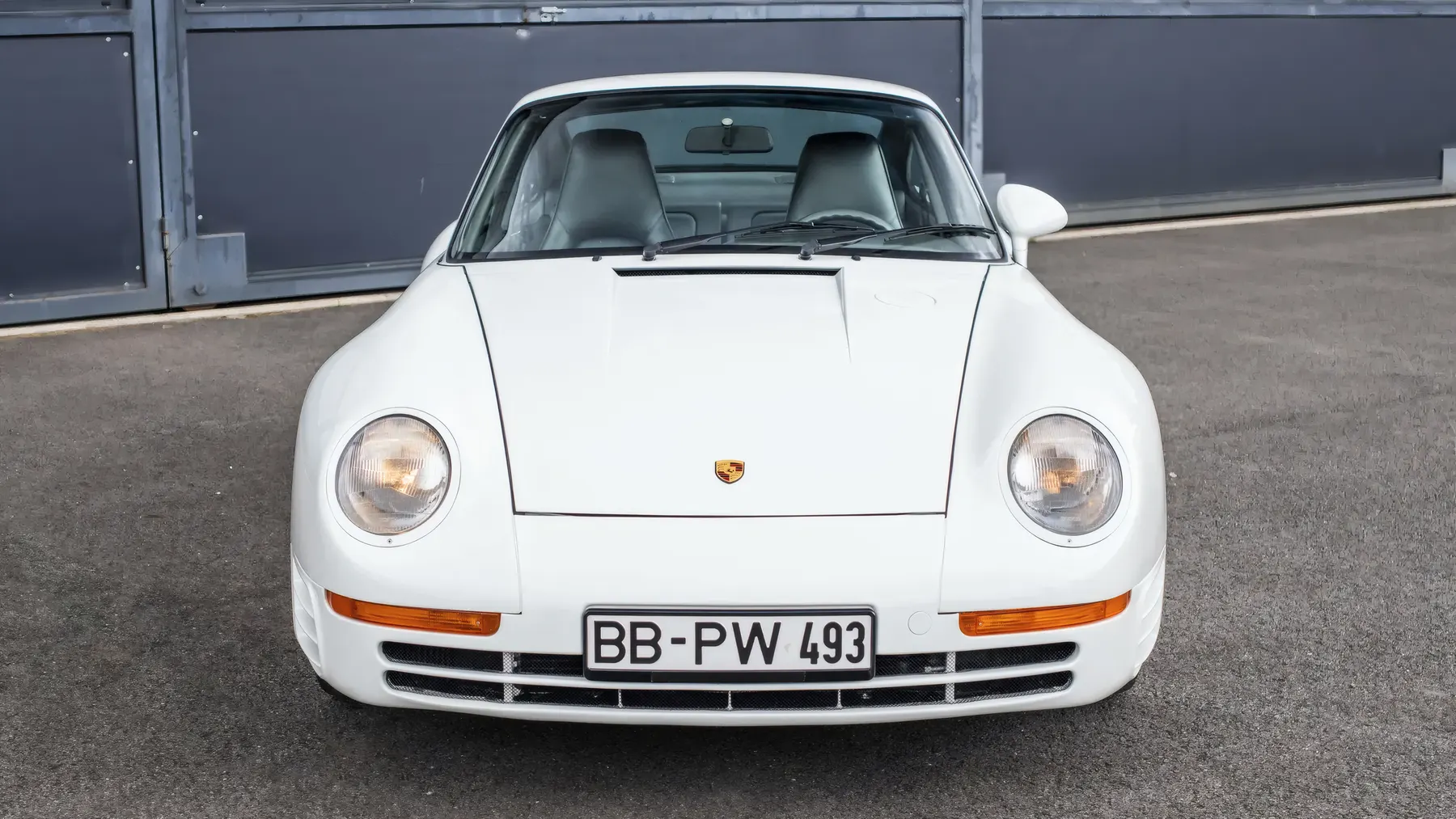
The question of what a Vorserie 959 actually is remains intriguing even to Porsche specialists. Technically, it occupies a tightly defined stratum between the rougher F-series development mules and the production cars that followed - but in practice, each of the seven V-series examples Porsche built in 1985 is different from every other. Some lack the pop-up headlight washers of the production car. Some arrived with a single door mirror rather than two. Some were trimmed inside in cloth rather than leather. At least one had the fuel filler cap recessed beneath the front bonnet lid rather than sitting on the external flanks. To encounter a 959 Vorserie is not to encounter a near-production car so much as a window into a development process that was, by any measure, the most ambitious - and most financially destructive - single engineering programme Porsche had ever undertaken.
The genesis of the 959 lay not in commercial ambition but in institutional survival. When Peter Schutz became Managing Director in 1981, he found Porsche’s chief engineer Helmuth Bott wrestling with a structural problem: the 911 was under constant threat of internal obsolescence, increasingly challenged by the front-engined 928, and Bott needed a compelling argument to push the rear-engined platform further. Group B provided the pretext. The FIA’s new formula required just 200 road-legal examples for homologation and was, in theory, equally suited to rally and circuit racing - a formula-free zone that rewarded ambition. Bott proposed an all-wheel drive, twin-turbocharged, aerodynamically sophisticated 911 derivative that would demonstrate, definitively, what that layout could achieve. Schutz approved it.
The project became public at the Frankfurt Motor Show in October 1983, when Porsche unveiled the “Gruppe B” concept - a car recognisably 911-derived in its wheelbase, roofline and doors, but transformed in every other respect. The bodywork was already sheathed in Kevlar and glass-reinforced plastic. The shape was wide, flush and aerodynamically resolved in ways the contemporary 911 was not. The development programme that followed was exhaustive. By 1985, Bott had earmarked 29 930 Turbo chassis as the physical basis for three tiers of 959 prototypes, each serving a different phase of the engineering validation. The F-series, twelve cars, were the earliest and most obviously mule-like: rough-built, used for electrical systems testing and hot-weather development, distinguishable from their 930 Turbo origins mainly by their 959 bodywork. Behind them came the N-series pilot vehicles. Then, at the apex of the pre-production hierarchy, came the seven V-series: the Vorserie proper, German for “pre-series,” built as the final calibration instruments before series manufacture began.
What made the V-series distinctive was precisely their proximity to the finished product. These were not test mules in any crude sense but cars finished close enough to the production specification that, as RM Sotheby’s noted in cataloguing a surviving example, only a genuine Porsche specialist could distinguish them from a standard 959 at a glance. The deviations were real but subtle: different front fenders, the absence of headlight washer pop-ups, the single mirror, the cloth seats where leather would eventually appear, the bonnet-integrated fuel filler on some examples. Each difference was a consequence of the development schedule rather than any deliberate design choice - the factory built what it could around the systems it was actually testing.
Those systems were extraordinary. The 959’s defining mechanical innovation was its PSK (Porsche-Steuer-Kupplung) all-wheel drive arrangement, which used an electronically controlled multi-plate clutch to distribute torque between the axles in real time. At normal road speeds the system split torque evenly front and rear; under hard acceleration it biased up to eighty percent toward the rear wheels; on loose or slippery surfaces it shifted more to the front. No production car in 1985 offered anything of comparable sophistication. The V-series cars were the primary instruments through which this system was validated - tested at Ehra-Lessien’s high-speed bowl, at Nardo, at the Nürburgring, at the Contidrome, and on winter roads in Scandinavia. During those cold-weather runs, one V-series car, equipped with the active suspension system its sister prototype lacked, could drive through conditions that stopped the other car outright - the Vorserie was reportedly used to clear deep snow ahead of the vehicle that couldn’t manage it unaided.
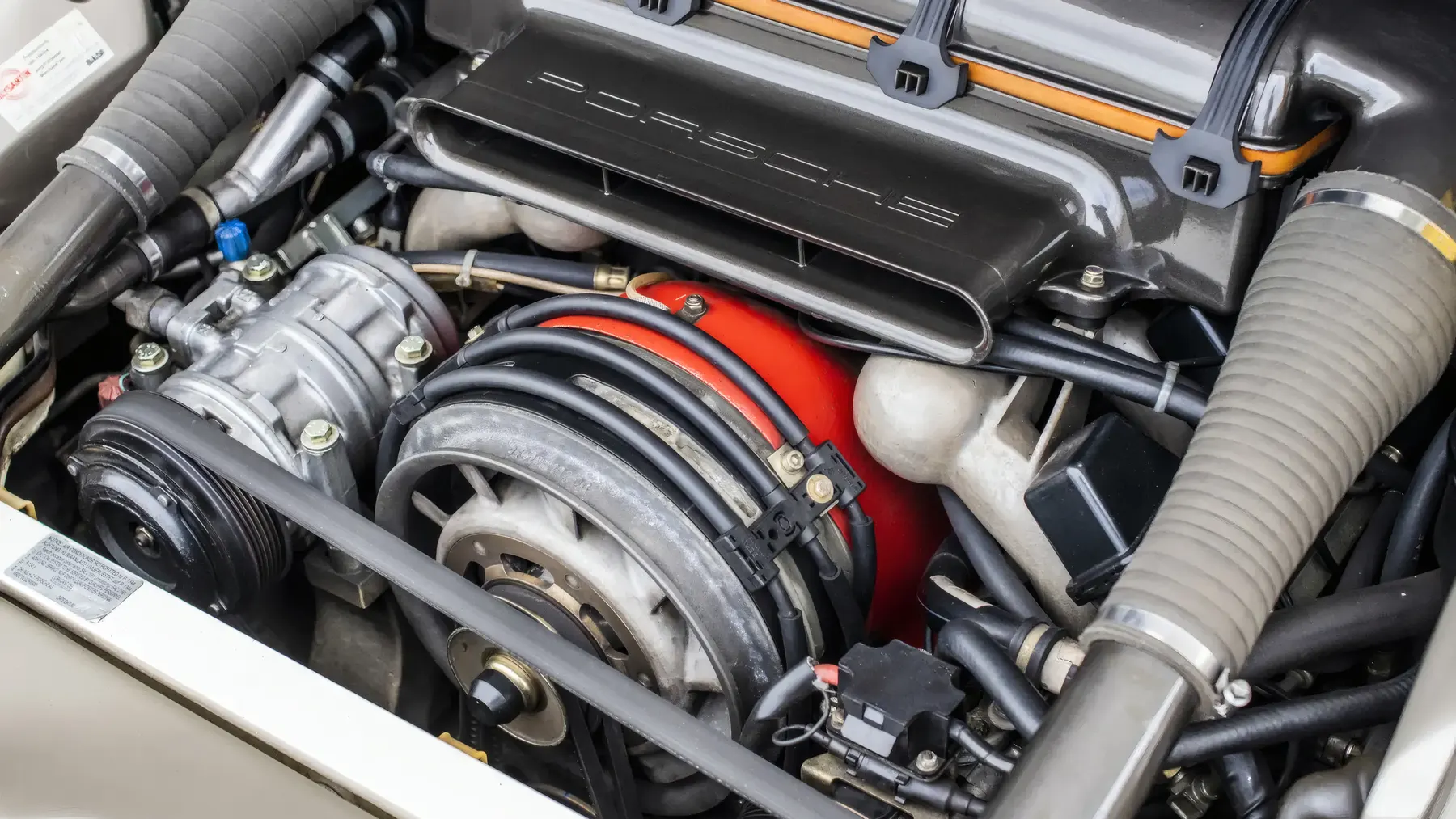
The engine underpinning all this was its own landmark. Derived from the flat-six architecture of the 956 and 962 Le Mans racers, the 2,849cc unit retained those cars’ practice of air-cooling the cylinders while water-cooling the heads - a solution first developed in the 935 endurance racer and refined here for civilian use. Twin sequential turbochargers, rather than two units operating in parallel, allowed one compressor to handle low-speed demand while the second came progressively on-stream as revs rose, largely eliminating the sudden power surge that characterised single-turbo cars of the period. In production Komfort specification, the result was approximately 450 bhp at 6,500 rpm and 369 lb-ft at 5,500 rpm - figures that, in any other car of the era, would have made the machine difficult to manage at the limit. In the 959, where the AWD system could absorb and redirect torque in milliseconds, they arrived in a more measured, accessible fashion.
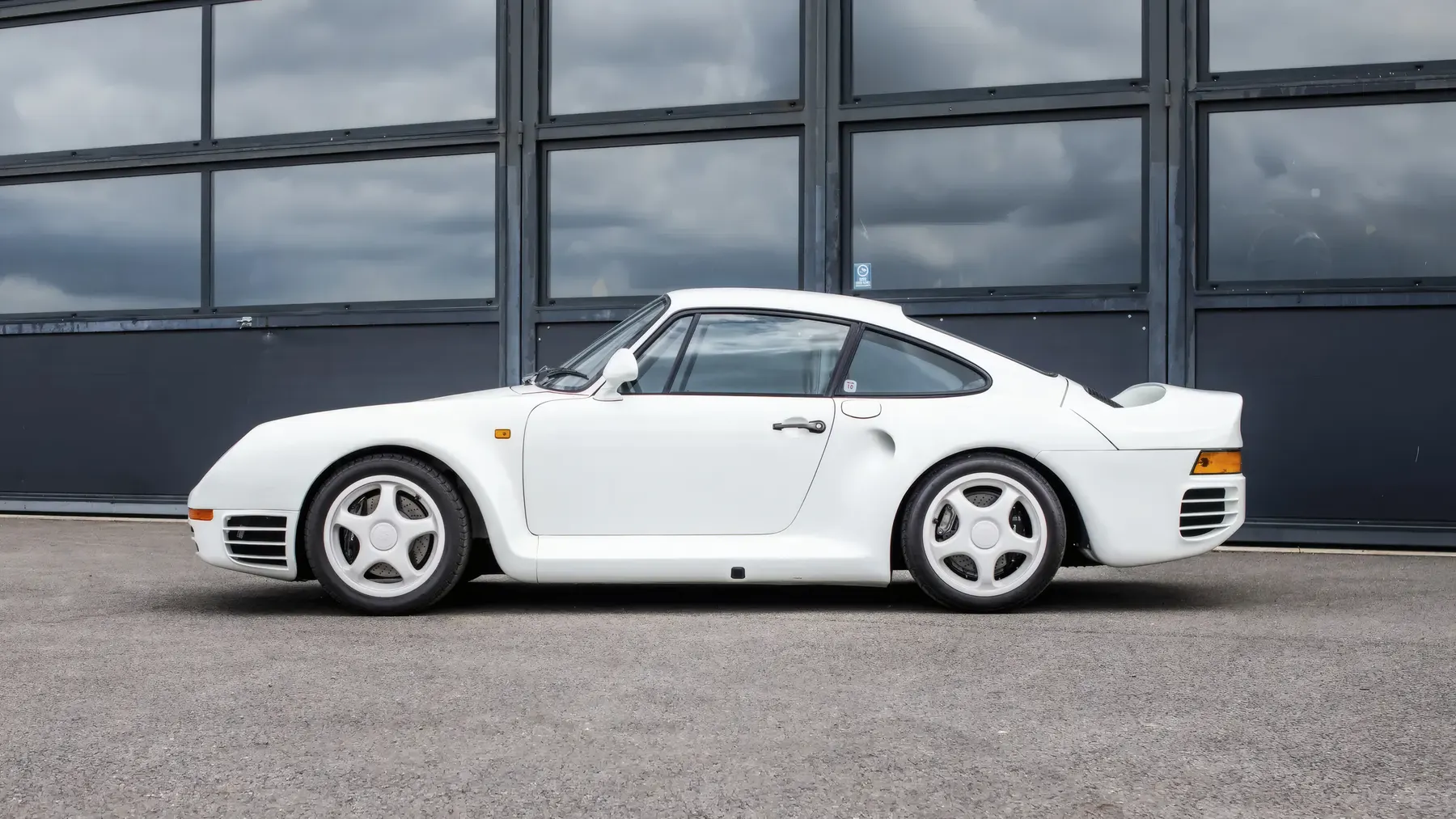
The surrounding package was correspondingly novel. Seventeen-inch magnesium Denloc wheels - hollow in the spokes to form a sealed chamber with the tyre - incorporated a pressure monitoring system that was decades ahead of its eventual mainstream adoption. Electronically controlled dampers could be adjusted at the press of a button, with an automatic mode that lowered the ride height at speed for aerodynamic stability. ABS was standard. The floorpan was a composite lined with Nomex. Aluminium doors reduced unsprung weight. All of this, in production Komfort form, produced a kerb weight of approximately 1,450 kg - impressive given the complexity, but not light.
That weight is the first of the 959’s genuine weaknesses, and the Vorserie cars share it in full. For all the structural cleverness of composite panels and aluminium doors, the dual cooling circuits, the AWD transfer equipment, the electronic control architecture and the twin-turbo induction system added mass that no lightweight construction programme could entirely neutralise. Ferrari, designing the F40 in direct response to the 959’s existence, produced a car approximately 350 kg lighter and, in doing so, built something far more visceral in character. The 959 was an intellectually extraordinary machine - but it was a sophisticated management system as much as a pure sports car. Its operating mode demanded trust in electronics rather than engagement of instinct, and for drivers who wanted a car that communicated through their hands rather than through a dashboard readout, the 959 presented a curiously filtered experience despite its performance.
The second weakness was financial, and it went to the heart of Porsche’s institutional health. The 959 programme had been given exceptional engineering latitude, and Bott and project manager Manfred Bantle used all of it. By the time production 959s were being delivered, Porsche was reportedly losing approximately $200,000 on every example sold - a figure that held even as the asking price rose from an initial $225,000 toward $360,000 in later years. The programme’s spending overruns were, in contemporary accounts, wrecking the company. That it survived owed something to politics as much as engineering: Ferdinand Piëch, grandson of Ferdinand Porsche and a figure of considerable influence within the family, endorsed the 959 enthusiastically - going so far as to acquire a V-series prototype for personal use - and his backing provided meaningful cover for Bott and Bantle at a moment when the financial damage was at its most acute. Even so, Porsche never recovered the development costs through the 959’s sales. The car was described, with some accuracy, as Porsche’s gift to its best customers.
The third blow was rendered by an external event. Group B - the entire regulatory framework that had justified the 959’s existence as a homologation car - was cancelled by the FIA in 1986 following a series of fatal accidents on rally stages. The 959 never competed in the championship it was designed to enter. The homologation argument, the original reason Schutz had approved the project, became retrospectively moot. Porsche pressed ahead anyway, because production was already committed and there was no clean exit, and because the technology had found real-world motorsport expression through adjacent routes. The 961, a track-oriented derivative, finished seventh overall and first in its class at the 1986 Le Mans 24 Hours. A modified 959 campaign in the Paris-Dakar Rally produced a 1987 victory - first and second - after a difficult 1986 campaign in which all three factory cars retired. But these achievements were addenda rather than the primary purpose; the Group B car never raced in Group B.
The production run itself was modest. Porsche built approximately 292 production 959s between 1987 and 1988, in two specifications: the Komfort, which included air conditioning, leather seating and power accessories, and the lighter Sport, which deleted those features. A further eight cars were reportedly assembled from spare parts in 1992. Total production including all prototype and Vorserie examples reached roughly 337 cars, depending on source. Porsche elected not to federalise the 959 for the American market - partly to avoid crash-test costs that would have deepened already severe losses - meaning the car was effectively illegal for road use in the United States until the Show and Display legislation of 1999 created a limited exemption, a change driven in large part by the lobbying of would-be American owners.
For the Vorserie cars specifically, life after the testing programme varied. Some were retained by Porsche for extended periods; at least one received a comprehensive rebuild to production Komfort specification before reaching its first private owner, with a completely replaced drivetrain, new wheels, and an overhauled electrical system. Others retained more of their original development idiosyncrasies. The complexity this creates for current owners is not trivial: individual Vorserie cars differ from production 959s in ways that are not always thoroughly documented, sourcing correct components for non-standard features demands specialist knowledge, and the question of what a period-correct Vorserie actually looks like remains genuinely contested among the small community who care about it.
What the 959 programme gave Porsche in return for its extraordinary cost was a technology pipeline that ran forward for decades. The electronically managed AWD system informed the Carrera 4 that launched with the 964 generation 911 in 1989, the first series-production 911 with four-wheel drive. Tyre pressure monitoring, adjustable active dampers, sequential forced induction - all fed into Porsche’s product development for years afterward. Project manager Bantle called the 959 a “learning vehicle” and the description was precisely right. The Vorserie cars were the instruments through which the learning happened: measuring, probing, failing occasionally, being rebuilt and tested again, exploring what the technology could actually do before it was offered to customers. They are physical evidence not merely of a development process but of a moment when Porsche chose, at ruinous cost and with the collapse of their original rationale, to build the future anyway.
Sources
- RM Sotheby’s Monterey 2024 - 1985 Porsche 959 ‘Vorserie’, Lot R0200
- RM Sotheby’s Amelia Island 2014 - 1986 Porsche 959 ‘Vorserie’, Lot 132
- Porsche Newsroom - The Porsche Story 7: 1985
- Stuttcars - Porsche 959 Prototypes (1983–1986)
- ConceptCarz - 1987 Porsche 959
- Girardo & Co - 1985 Porsche 959 S Prototype
- Petrolicious - A Porsche 959, the Lottery, Government, and You
- Stuttcars - The Porsche 959 Story
- Stuttcars - Porsche 959 Ultimate Model Guide
Join the discussion
Comments
Loading comments…
Leave a comment
Share a detail, memory, or perspective. Every comment is reviewed before publication.