Auburn 851 Supercharged Speedster: The Boattail That Bankrupted Its Maker and Inspired a Nation
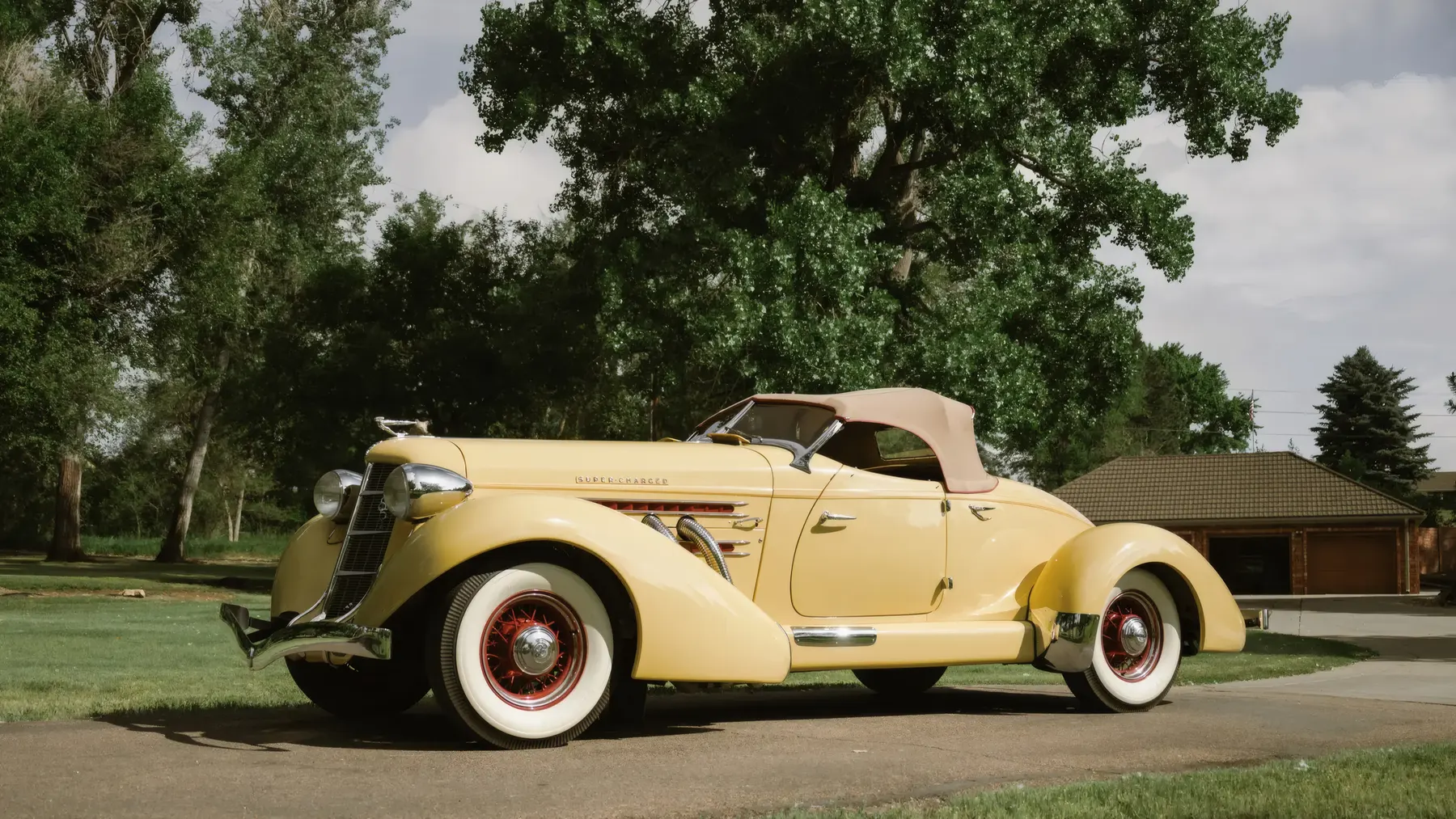
1935 Auburn 851 Supercharged Speedster

Images: Corey Davis / RM Sotheby's
The Auburn 851 Supercharged Speedster is a car built on audacity rather than abundance. By 1935 the Auburn Automobile Company was fighting for its life - output had collapsed from over 28,000 cars in 1931 to a fraction of that, the Great Depression had strangled the luxury market, and the V-12 engine that once gave Auburn its headline figure had just been quietly dropped. What emerged from that financial desperation was not a compromise but arguably the most arresting piece of American automotive design of the 1930s: a long, low, chrome-piped boattail that looked like it was doing a hundred miles an hour standing still. That it was barely capable of doing so in reality, and that it sold fewer than 150 examples across two model years, is the engine behind the car’s entire story.
Auburn had been rescued once before by an unlikely saviour. In 1924, with the factory turning out six cars a day and unsold inventory piling up, a young used-car salesman from California named Errett Lobban Cord took the general manager’s role on the understanding that improved sales would earn him a stake in the business. He repainted the sitting inventory, added nickel trim, sold the lot, and by 1926 was president and principal shareholder. What followed was a decade of extraordinary ambition: Cord absorbed Lycoming Engines in 1927, acquired the Duesenberg brothers and channelled their talent into the epochal Model J, added the front-wheel-drive Cord L-29, and built what was briefly the most glamorous automotive empire in America. Auburn sat at the accessible end of that empire, positioned as a performance car at a bargain price - but it was still a premium product, and when the Depression took hold, premium buyers all but vanished.
The Speedster itself had been in the Auburn line since 1928, a boat-tailed two-seater designed initially by Alan Leamy that established the template of long hood, external exhaust pipes, and tapered tail. Leamy’s first-generation cars earned genuine competition credentials: driver Wade Morton clocked 108 mph on a measured mile at Daytona Beach and covered over 2,000 miles in 24 hours at Atlantic City. A V-12-engined Speedster debuted in 1931 with 160 bhp and real showroom drama, but only 25 found buyers. Auburn, to its credit, kept swinging.
For 1935, with the V-12 gone, Cord’s team assembled what amounted to an all-star group of rescued talent. Designer Gordon Buehrig had come over from Duesenberg, where he had styled the Model J body. August Duesenberg - Augie, the less-celebrated of the two brothers - was on hand as an engineering consultant. Together with Auburn’s chief engineer George Kublin and vice president of engineering Herb Snow, they were tasked with producing something spectacular on almost nothing.
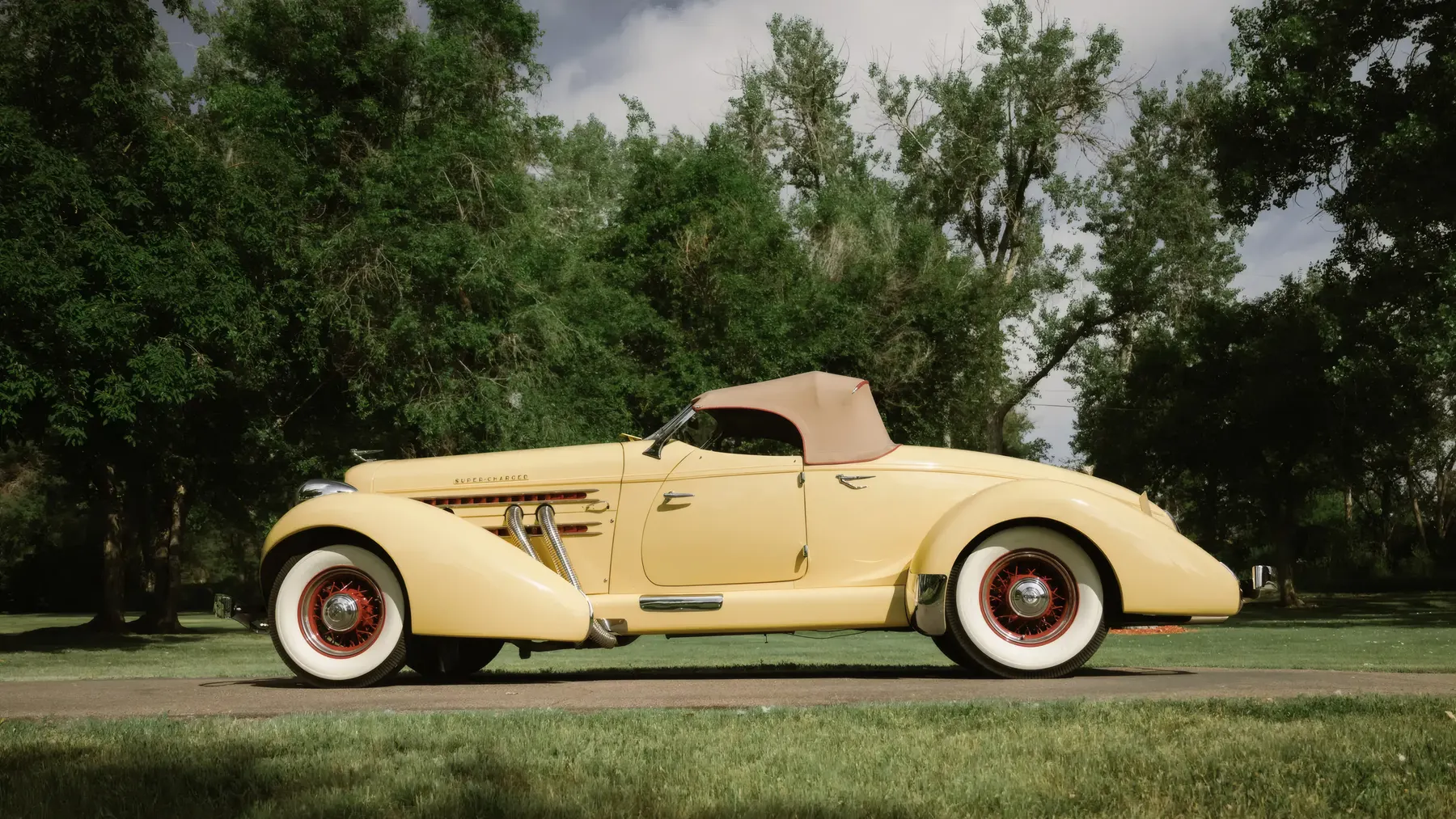
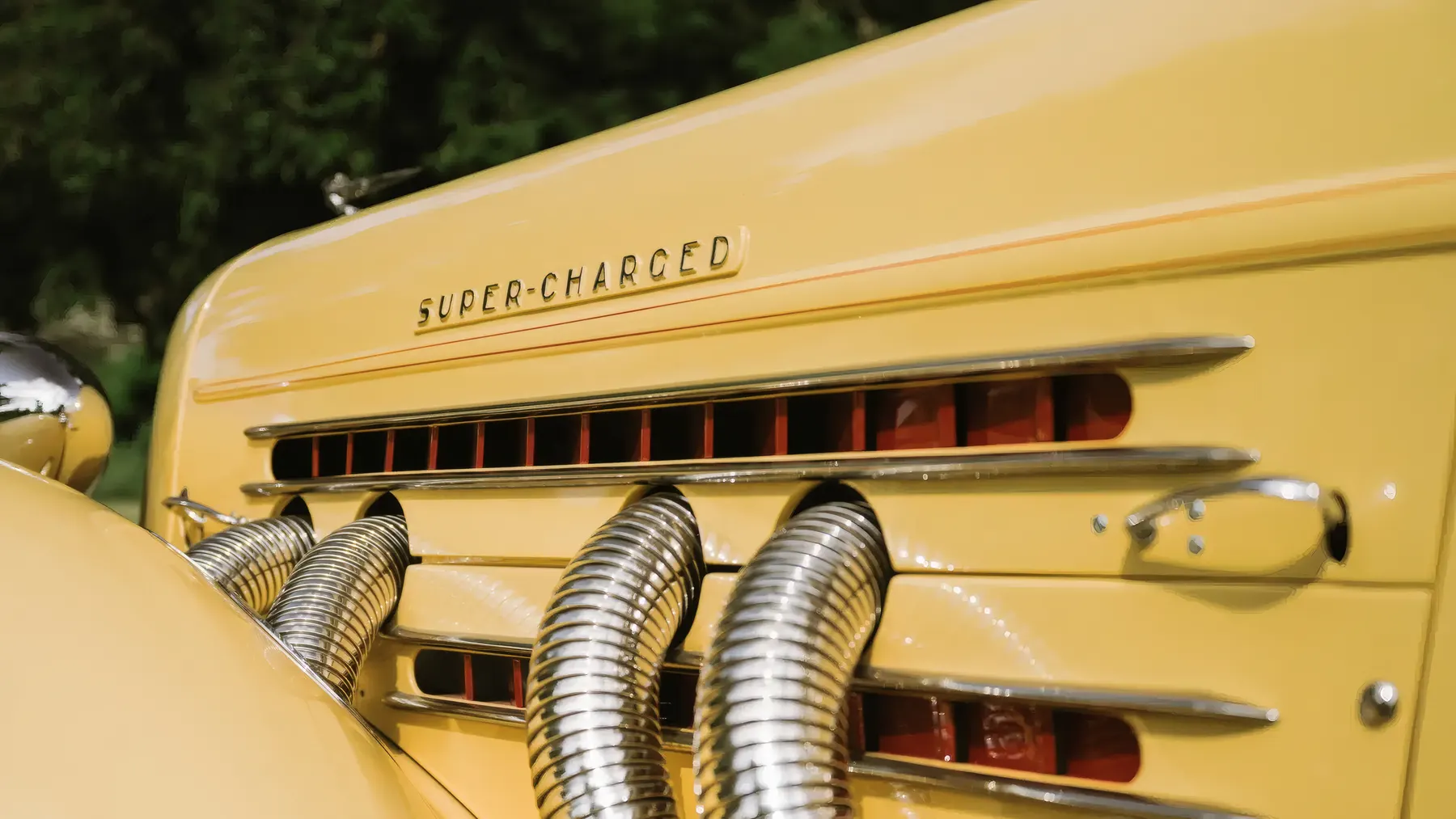
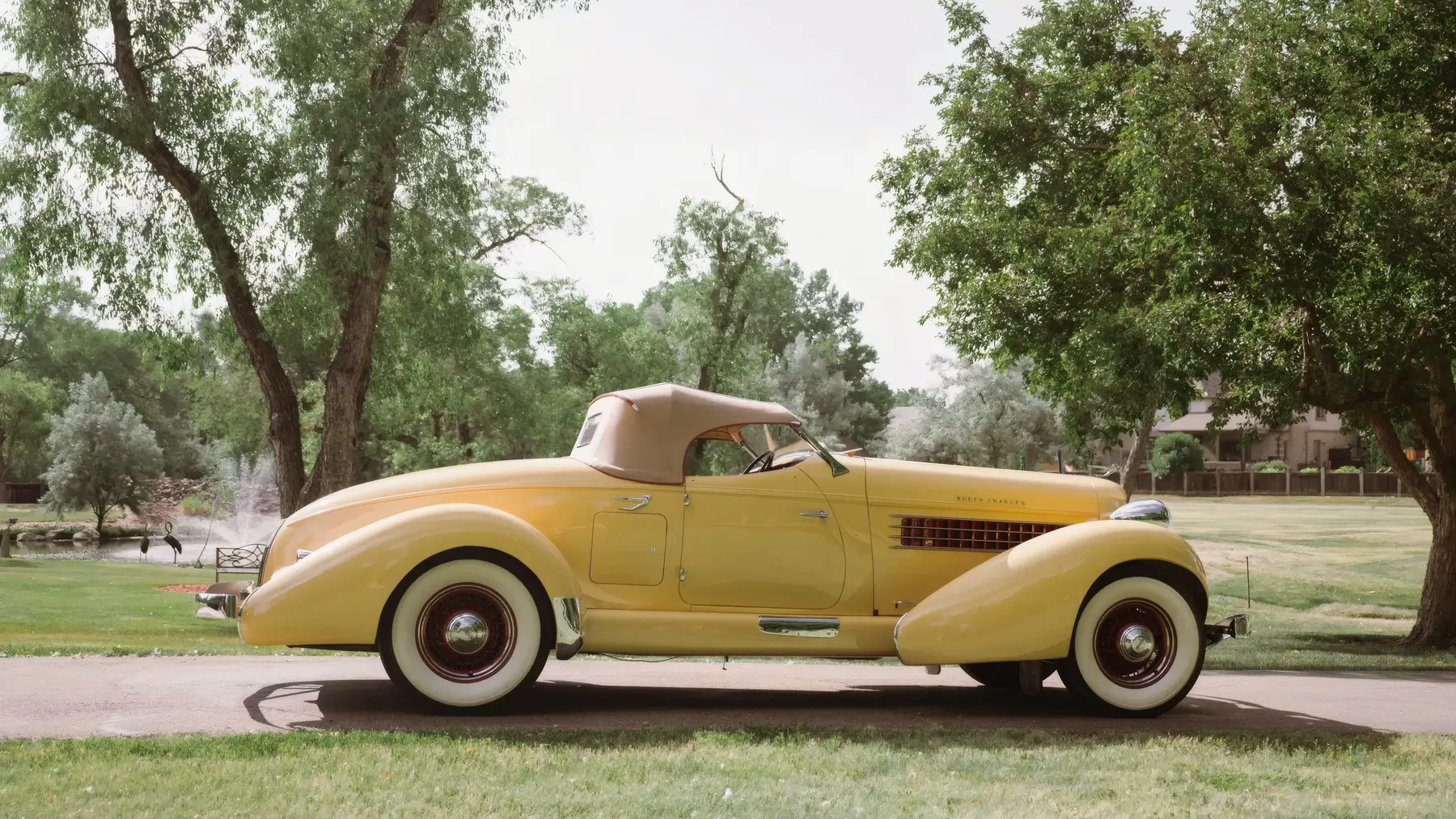
The result was an act of creative economy as much as design genius. The centre sections of the bodies were salvaged from unsold twelve-cylinder Speedster stock built between 1932 and 1934. To these Buehrig’s team fitted entirely new handmade front fenders, a new recessed radiator grille and cowling, and a reworked lower tail section that gave the car its smoother, more tapered rear silhouette. The A-pillar swept aggressively forward. The pontoon fenders flowed back to join the body almost organically. Four external side-exit exhaust pipes, chrome-bright and threaded, announced the supercharger to anyone within fifty metres. These features combined to produce a visual statement with no real precedent in American production design - something that looked simultaneously like a racing car and a luxury touring machine, which in Depression-era America was about as exotic as it got.
The engineering behind that visual required similar ingenuity. The core engine was the 4,590 cc side-valve Lycoming straight-eight - a solid, long-stroke unit with a 3.0625-inch bore and 4.75-inch stroke - that in standard form produced 115 bhp at 3,600 rpm. To extract the headline power, Augie Duesenberg adapted a Schwitzer-Cummins centrifugal supercharger, driven by chain from the camshaft at six times crankshaft speed, running at approximately 24,000 rpm at full chat. The compression ratio was raised to 6.5:1. The resulting output was 150 bhp at 4,000 rpm and 232 lb-ft of torque at 2,800 rpm. A single Stromberg downdraft carburettor sat atop the blower. The supercharger also performed the ancillary role of powering the windscreen wipers via suction - a detail that speaks volumes about the can-do improvisation running through the entire project.
The other mechanical masterstroke was the Columbia dual-ratio rear axle. An epicyclic gear train interposed between the axle and the crown wheel offered two final drive ratios: a shorter 5.1:1 for town driving and acceleration, and a taller 3.7:1 for high-speed cruising, selected via a pre-selective lever on the steering wheel hub. Combined with the three-speed synchromesh gearbox, this gave the driver effectively six forward ratios in an era when most rivals made do with three. It was a genuinely sophisticated solution that made the car surprisingly tractable at low speeds while allowing it to exploit its output at higher ones.
The marketing around performance was equally creative - and considerably less candid. Each 851 Speedster was delivered with a dashboard plaque, etched with the signature of competition driver Abner “Ab” Jenkins, certifying that the car had been driven to more than 100 mph prior to delivery. Jenkins had indeed set 70 American and international speed records with a supercharged 851 at the Bonneville Salt Flats in 1935, covering twelve hours at an average above 100 mph. But the individual plaques were never literally accurate; Jenkins had not personally driven each of the approximately 143 cars built to its noted speed. Auburn were, in effect, selling the halo of a single record-setting run to every Speedster customer. The figures on the plaques varied slightly - some read 100.1 mph, some 100.6 mph - which added just enough specificity to lend the impression of individual certification. It worked wonderfully as advertising, and the plaques remain among the most charming pieces of pre-war automotive memorabilia.
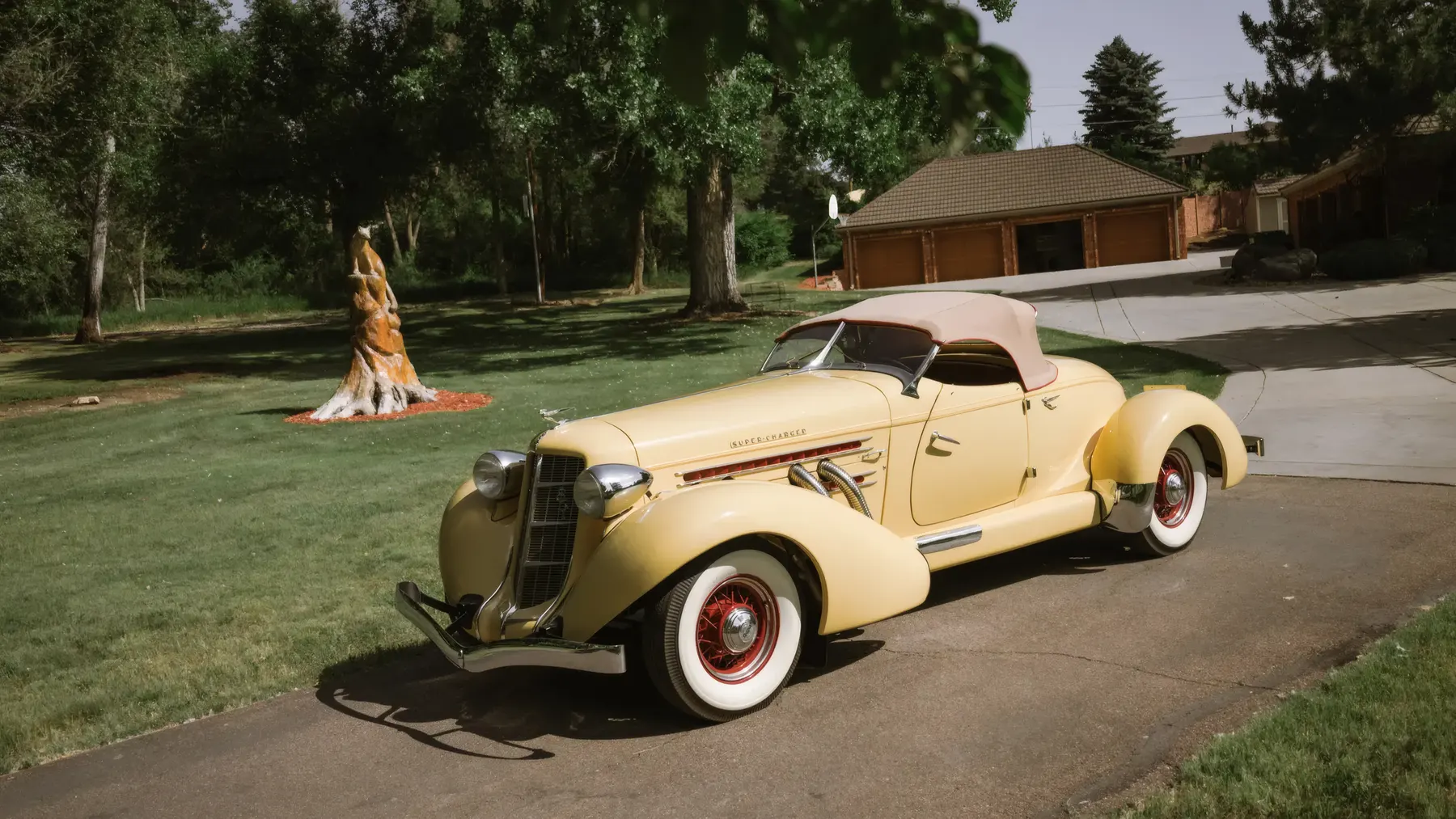
The 851’s performance in real-world use, however, was more nuanced than the legend implied. The car weighed approximately 1,708 kg - a substantial figure for a two-seater - and despite the supercharger, the side-valve Lycoming was not a high-revving unit. Period 0-60 mph figures are not well documented, and enthusiast sources suggest approximately 15 seconds, though this should be taken as indicative rather than definitive. Against the contemporary European benchmark - a Bugatti Type 57 or a supercharged Mercedes-Benz 540K - the Auburn’s performance was no more than respectable. The 100 mph top speed was genuine but required the Columbia axle in high ratio and a long, flat road. What the car offered was boulevard drama in abundance and the kind of presence that turned heads from a hundred metres, which in mid-Depression America was arguably worth more than a sharper 0-60.
The 851’s shortcomings were real, and some of them were structural. The side-valve engine architecture was by 1935 already a dated choice; while Augie Duesenberg’s supercharger installation made the best of it, the fundamental combustion geometry limited how far power could be developed without stress. The car’s immense visual proportion also came with packaging compromises: the A-pillar’s aggressive rake created a deeply awkward entry for anyone with feet larger than average, and the cabin itself was tight despite the generous exterior dimensions. The close-set exhaust headers ran hot enough alongside the occupants to be genuinely uncomfortable in warm weather - a consequence of prioritising the visual drama of external pipes over ergonomic sense. Ground clearance at the rear axle was barely 190 mm, and owners who drove their cars with any enthusiasm on less-than-perfect roads quickly discovered this. The body construction, partly recycled from earlier-generation shells, also meant that fit and finish consistency across the run was variable. No serious claim can be made that 143 cars - sold into the teeth of the Depression at $2,245 each - represent commercial viability. Auburn lost money on every Speedster it built.
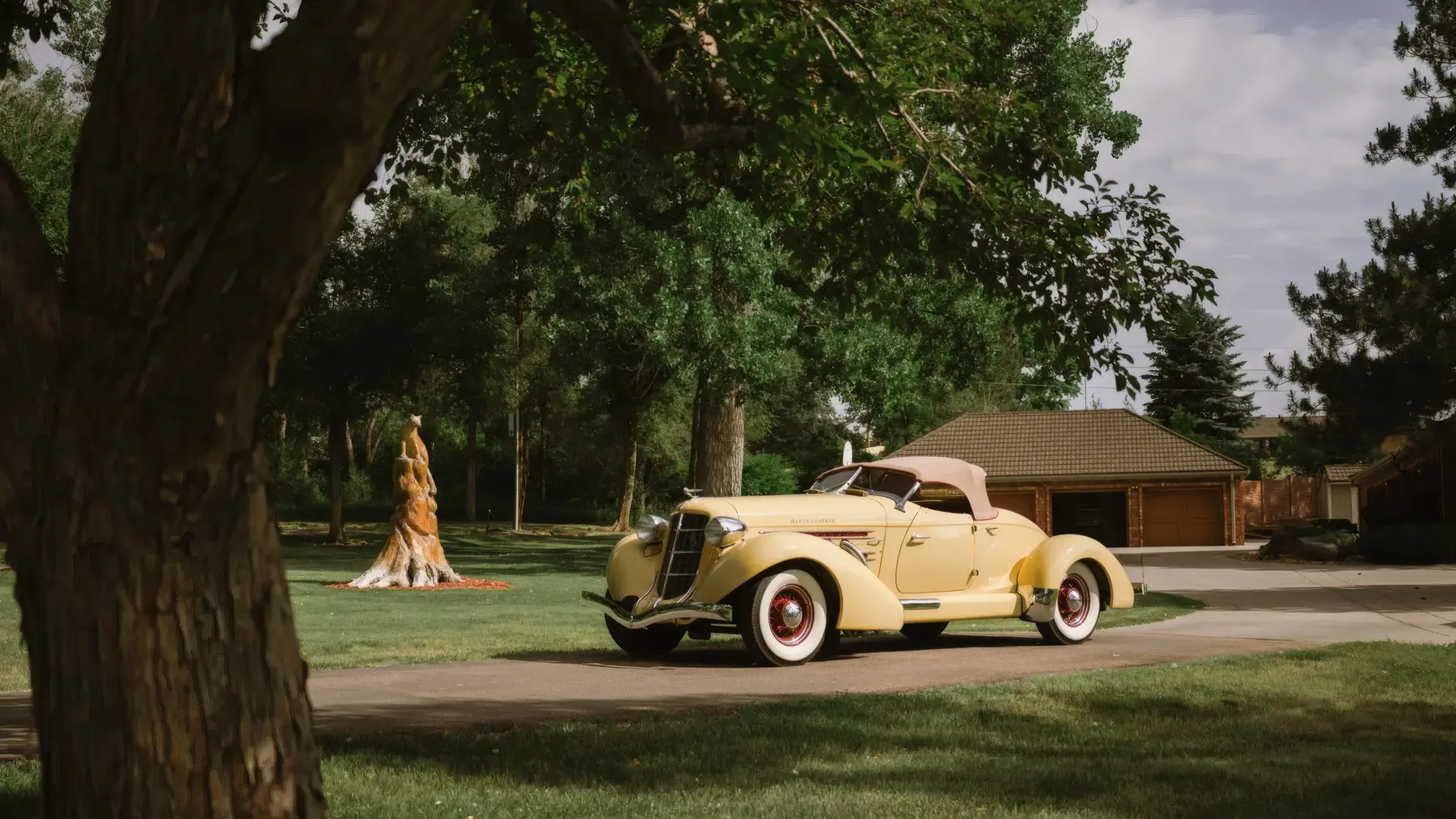
In 1936 the model was relabelled the 852, a change limited to the digits on the radiator grille. Nothing else changed. The Cord empire did not survive the decade: Auburn, Cord, and Duesenberg all ceased production in 1937, their parent corporation overwhelmed by financial pressures that even the most talented design group in America could not offset. The final cars rolled out of the Auburn, Indiana factory in late 1937, and the premises were sold.
The legacy of the 851 and 852 Speedsters proved more durable than their maker. Buehrig’s boattail influenced American design thinking for decades: the tapered tail of the 1963-67 Chevrolet Corvette Stingray and the 1971-73 Buick Riviera both owe a conscious debt to his work. In 1960 an Oklahoma schoolteacher and ACD restorer named Glenn Pray purchased the Auburn Cord Duesenberg Company name and rights, and from 1968 produced the Auburn 866 Speedster - a V8-powered replica on Ford running gear that, while a different animal entirely, kept the boattail shape visible in American driveways for a further decade and a half. The replica industry around the 851 design has since expanded considerably, and genuine caution is required when approaching any car presented as an original, as the Auburn-Cord-Duesenberg Club’s verification programme exists specifically to document and certify authentic examples.
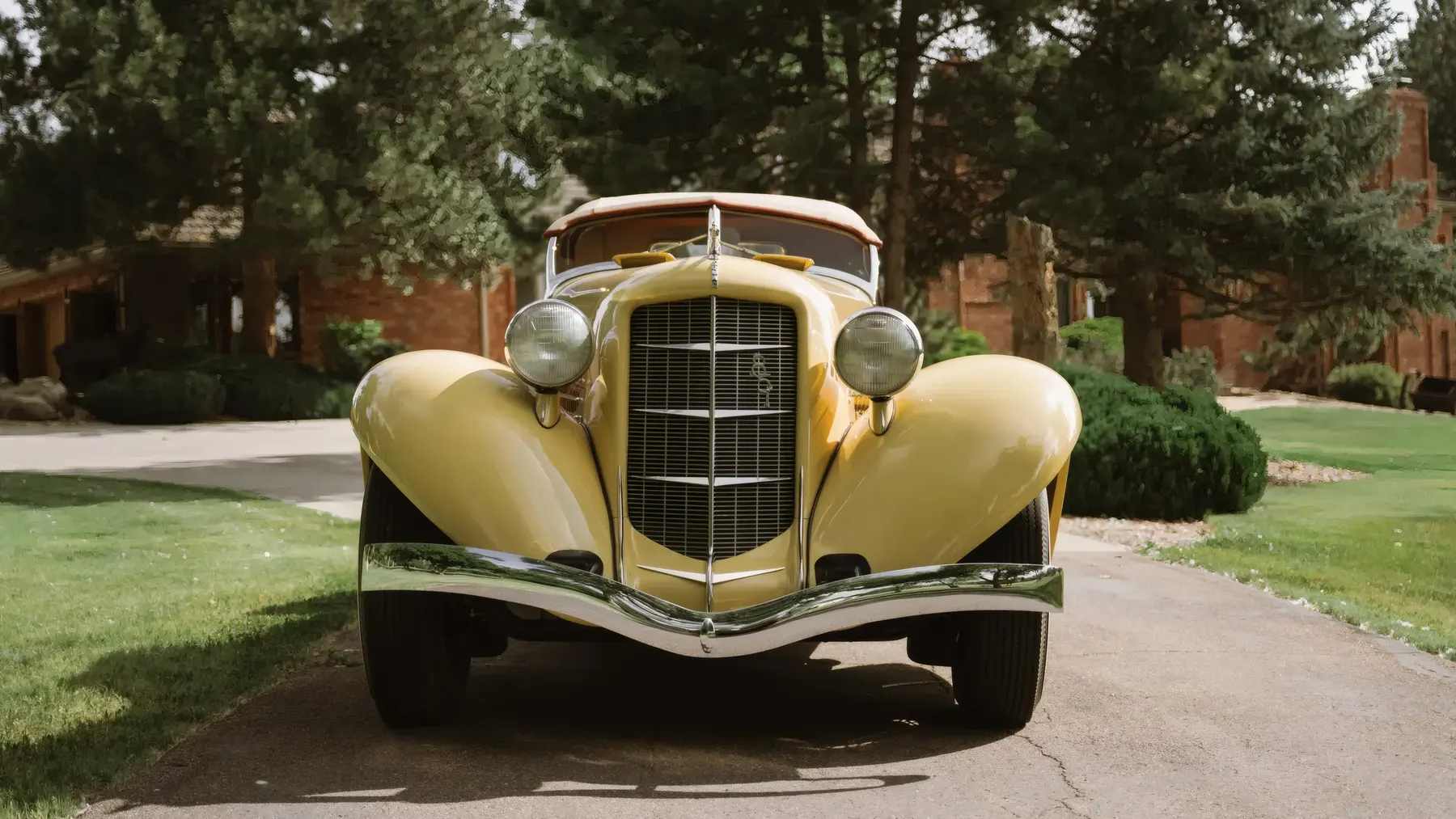
For a car produced in such tiny numbers under such difficult conditions, the 851 Supercharged Speedster achieved something that most low-volume Depression-era cars did not: it became a cultural object as much as a functional one. Its image stood for the idea that American industry could still produce something genuinely extraordinary even as the economic ground gave way beneath it, and that the tension between looking spectacular and being practical was sometimes worth resolving firmly in favour of spectacle. The car that practically sank Auburn turned out to be the only thing about Auburn anyone still talks about.
Sources
- RM Sotheby’s Monterey 2011 – 1935 Auburn 851 Supercharged Speedster Lot Description
- Silodrome – The Auburn Supercharged Speedster (Ben Branch, February 2023)
- Old Cars Weekly – Car of the Week: 1935 Speedster 851 (John Gunnell, August 2020)
- Classic Car Club of America – 1935 Auburn 851 Super-Charged Speedster
- Wikipedia – Auburn Speedster
- Louwman Museum – Auburn Model 852 Speedster
- The JBS Collection – 1935 Auburn 851 Supercharged Boattail Speedster
Join the discussion
Comments
Loading comments…
Leave a comment
Share a detail, memory, or perspective. Every comment is reviewed before publication.