Lancia Astura 'Tipo Bocca' Cabriolet: Pinin Farina's Most Daring Pre-War Commission
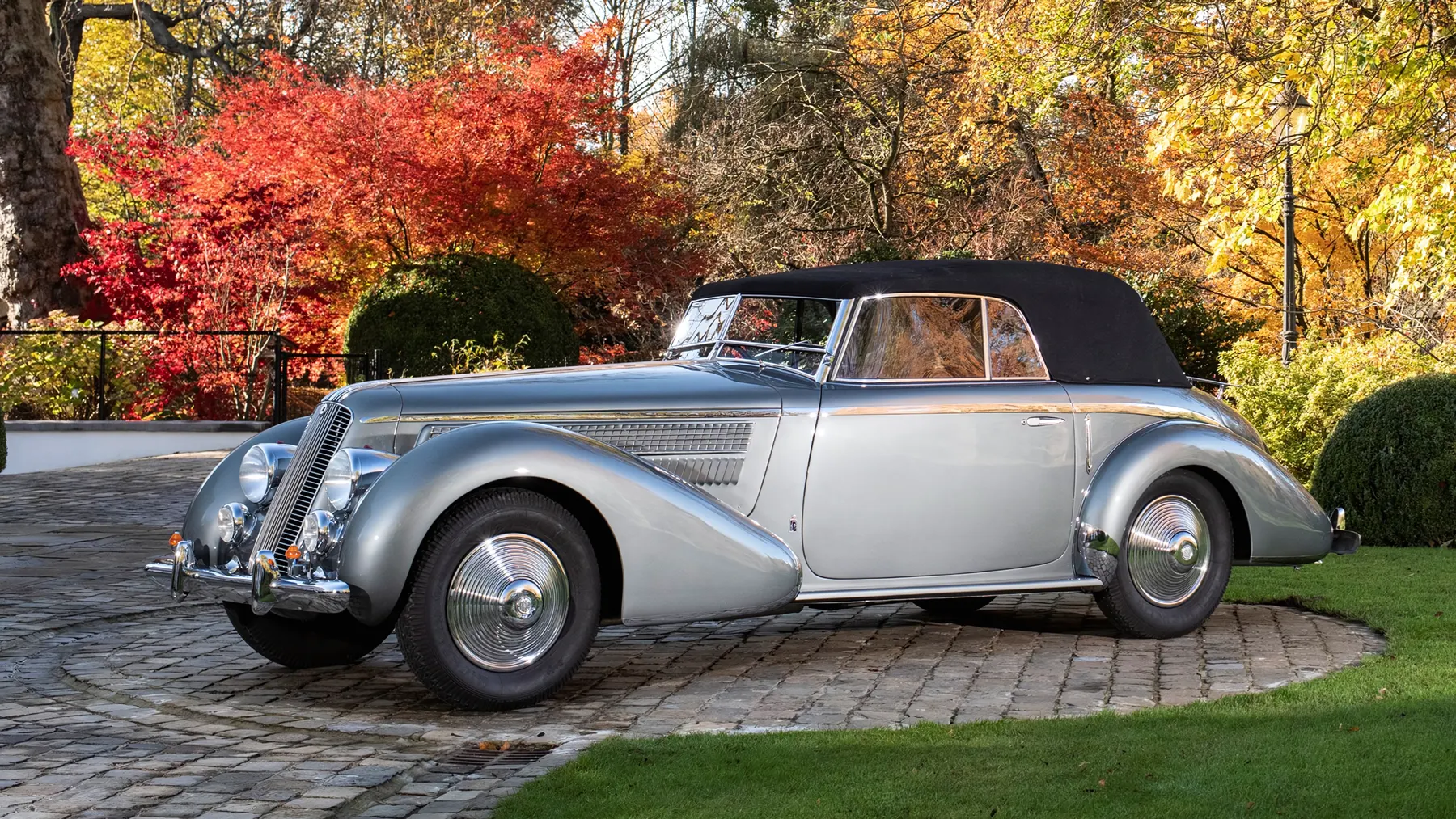
1936 Lancia Astura Cabriolet Series III 'Tipo Bocca' by Pinin Farina

Images: Dirk de Jager / RM Sotheby's
Vincenzo Lancia was, above all else, an engineer. His cars were technically precocious - the Lambda of 1922 gave the world its first production monocoque with independent front suspension - but the aesthetic he favoured for his larger machines in the 1930s was measured, even patrician. The Astura, launched at the 1931 Paris Salon as his flagship model and successor to the Dilambda, was a masterpiece of compact engineering dressed in rather sedate clothes. Its narrow-angle V8, independent front suspension and Bijur central lubrication system were more sophisticated than almost anything rivals could offer at comparable cost, yet the factory-bodied saloons and cabriolets that sat upon its cross-braced chassis could never be called adventurous. This tension between cutting-edge engineering and conservative presentation was precisely the gap the Tipo Bocca was commissioned to fill - which is why so few were ever built, and why each example that survives is treated as one of the most important pre-war Italian automobiles in existence.
The Astura grew through four series between 1931 and 1939, each refining the original formula. The first two relied on a 2,604cc V8 set at a remarkably narrow 19-degree angle between the cylinder banks, producing around 72 bhp. The bank angle narrowed still further on the third series, introduced in 1933: a new 2,972cc Type 91 V8 set at 17 degrees and driven through a single overhead camshaft produced 82 bhp. The third series - designated Tipo 233 - was also the first offered in two wheelbase lengths: the Corto short-wheelbase car (Tipo 233C) sat on a 3,100mm platform, while the Lungo (Tipo 233L) stretched to 3,330mm. Lancia built 328 Corto and 908 Lungo examples, for a total of 1,243 third-series cars, making it the most commercially successful Astura generation by a considerable margin.
The chassis was impressively specified for its era. Independent front suspension used Lancia’s signature self-lubricating sliding pillars, a system refined across multiple previous models. The live rear axle was controlled by friction dampers adjustable via a dashboard-mounted control - a small but telling detail about Lancia’s fastidiousness. From the third series onward the engine sat on rubber-lined leaf spring isolators to reduce vibration transmission, and period journalists consistently praised the Astura’s silky, near-silent progress at speed. Contemporary accounts suggest a top speed of around 78 mph, which reflected the V8’s wide, flat torque curve rather than any outright performance ambition. This was a grand touring machine oriented towards dignity and endurance; in 1934, a Castagna-bodied Astura driven by Mario Nardilli and Carlo Pintacuda won the Giro d’Italia - a six-day, 3,534-mile circuit of Italy completed at an average of 53.58 mph - demonstrating the chassis’s reserves of stamina even if not its ultimate pace.
What the chassis lacked, by the mid-1930s, was appropriate dress. The Astura was built on a separate frame precisely because Lancia expected it to be clothed by specialist coachbuilders - this was a deliberate commercial strategy - but the factory’s own bodies reflected Vincenzo Lancia’s conservative instincts. By 1935 and 1936, Italian design culture was absorbing streamlining and the aerodynamic confidence of Art Deco at full momentum, and certain Lancia dealers found themselves presenting a technically superb but visually modest product to an increasingly sophisticated clientele. The three Bocca brothers, who managed Lancia dealerships in Vercelli, Biella and Novara, were not content with this situation. As fellow Piedmontese with direct access to Vincenzo Lancia, they petitioned him to sanction a small series of properly ambitious cabriolets on the third-series short-wheelbase Tipo 233C chassis. Their chosen coachbuilder was Battista ‘Pinin’ Farina, who had left his brother Giovanni’s established Stabilimenti Farina to found his own atelier in 1930.
Pinin Farina assigned the commission to Mario Revelli di Beaumont, a Roman-born designer of ancient Piedmontese nobility who was, by the mid-1930s, the foremost Italian exponent of aerodynamic flamboyance. Revelli had trained at Stabilimenti Farina before moving into Fiat’s Special Bodywork section and operating as what would today be recognised as a freelance designer - an almost unheard-of professional category at the time. His collaboration with Pinin Farina through the 1930s produced some of the most stylistically advanced Italian coachwork of the decade, and his reputation rested on a specific ability: finding the precise point at which streamlined modernity and restrained elegance converged without tipping into vulgarity. For the Bocca commission, he exploited the narrow-angle V8’s slender engine bay to achieve proportions that no wide-angle or inline unit of similar capacity could have accommodated.
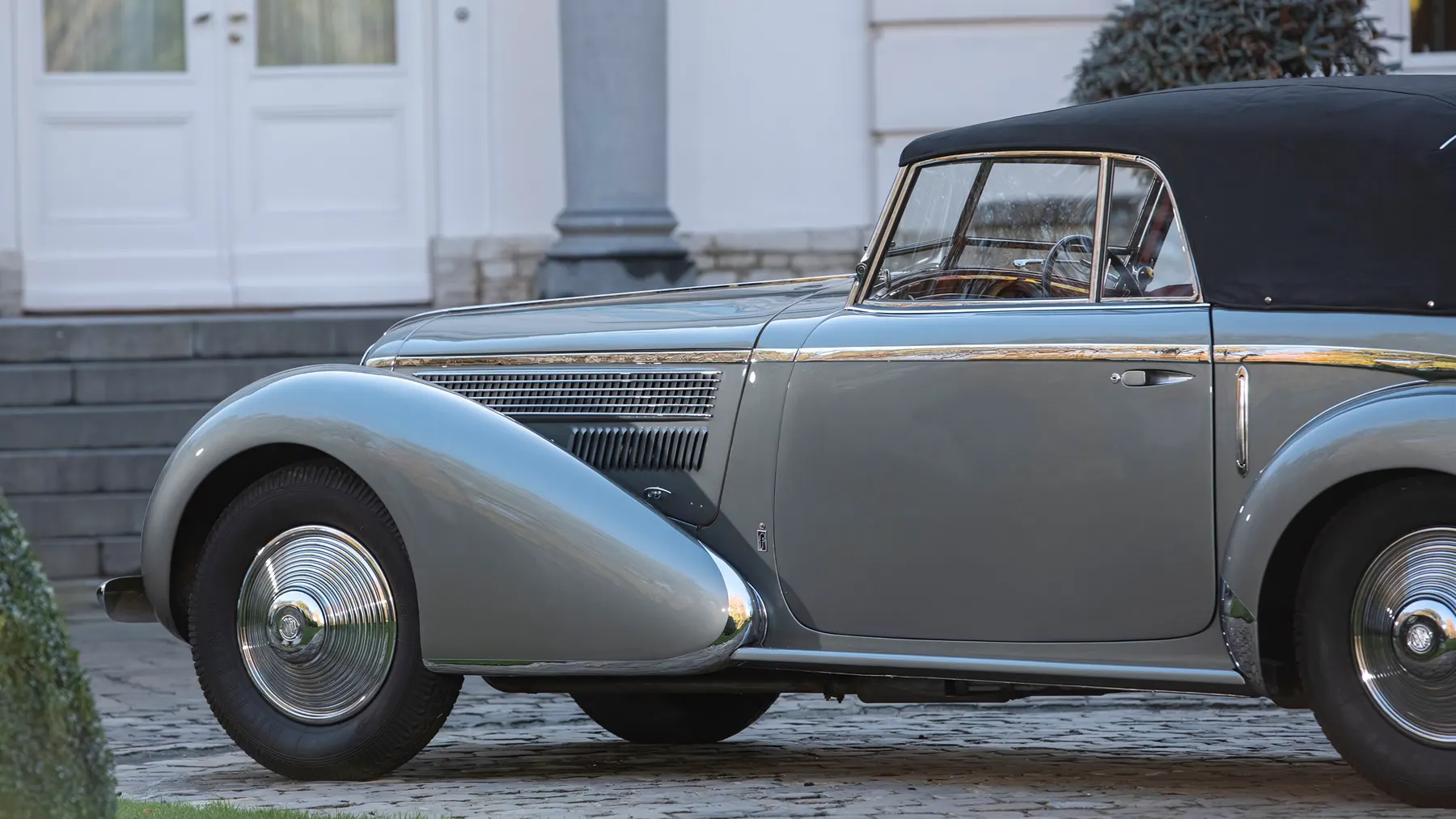
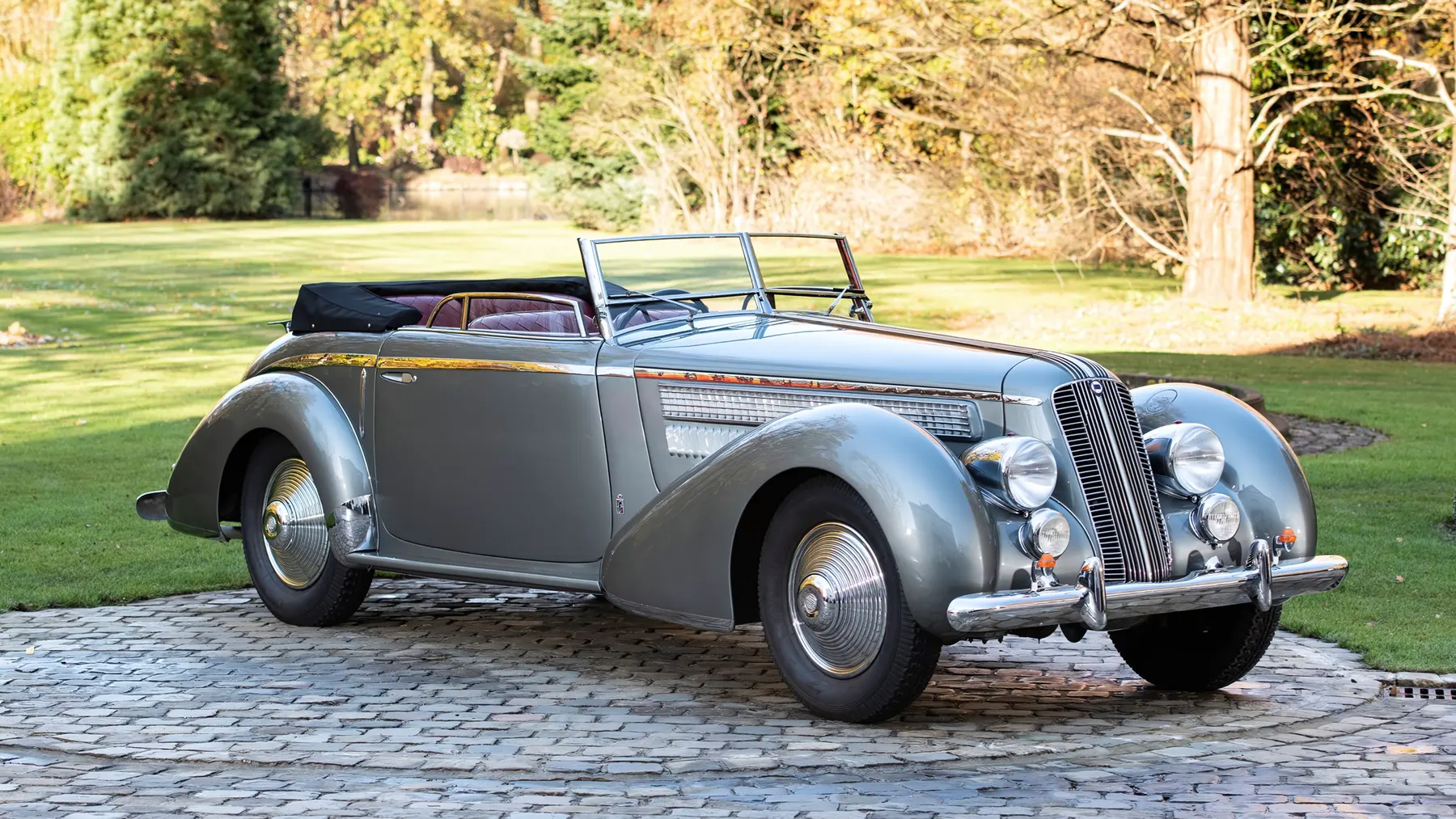
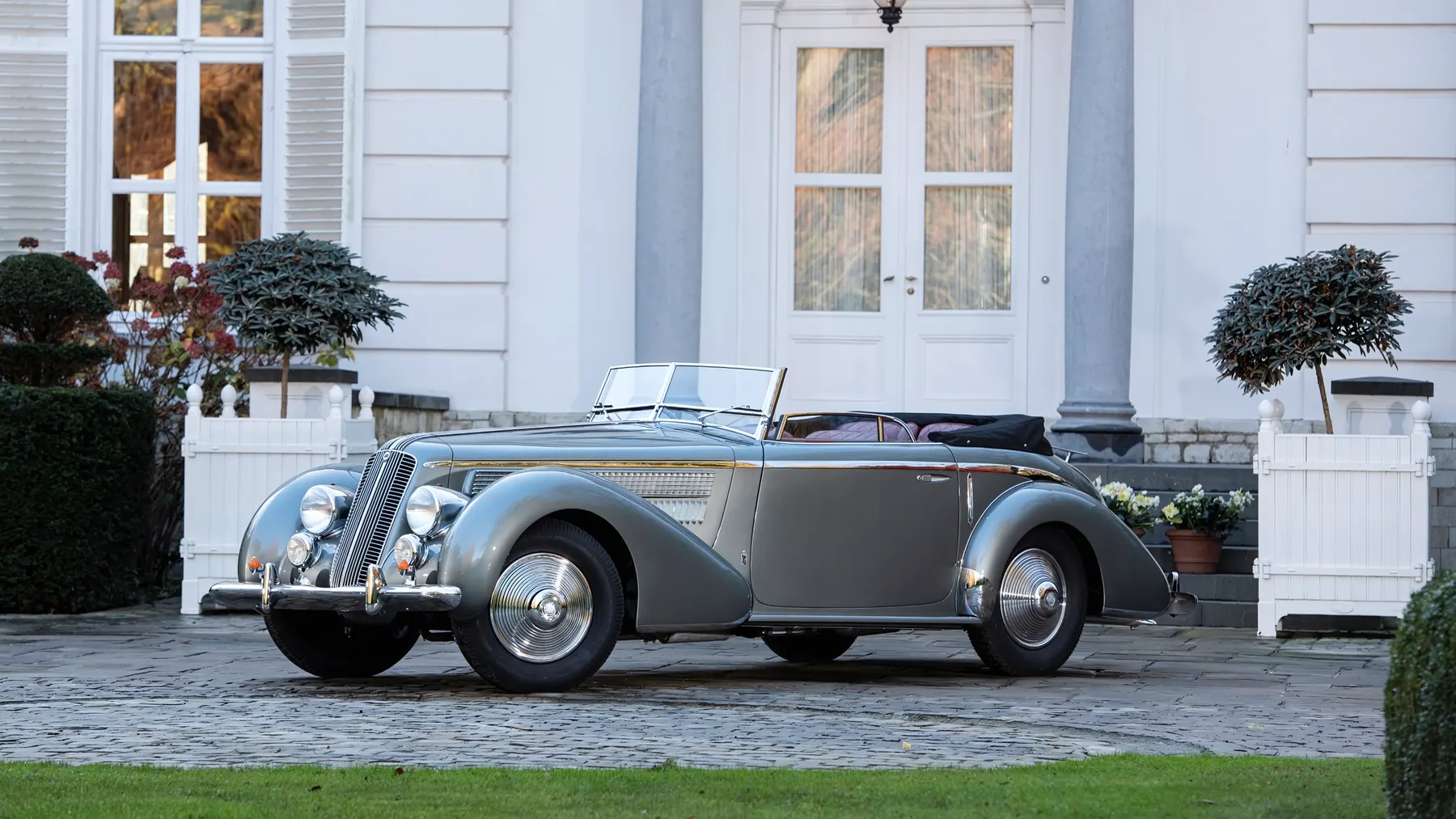
The resulting design, which came to be known as the ‘Tipo Bocca’ in reference to the brothers who commissioned it, was built on approximately six chassis in total - split between corto and lungo wheelbase examples, with each car featuring subtly different details while sharing a common aerodynamic vocabulary. The silhouette was defined by a strong horizontal emphasis, achieved through a chrome side moulding that ran the full length of the body and swept deliberately around the bootlid, adding visual length without decorative excess. At the front, a dramatic ‘waterfall’ grille presented horizontal chrome bars interrupted by vertical strakes cascading from the bumper to the base of the vee’d windscreen - a motif that balanced Continental modernity with specifically Italian discipline. Peaked front fenders were separated from the body by rounded fairings that individually integrated the headlights and driving lights; rear spats extended the aerodynamic treatment to the tail with appropriate restraint.
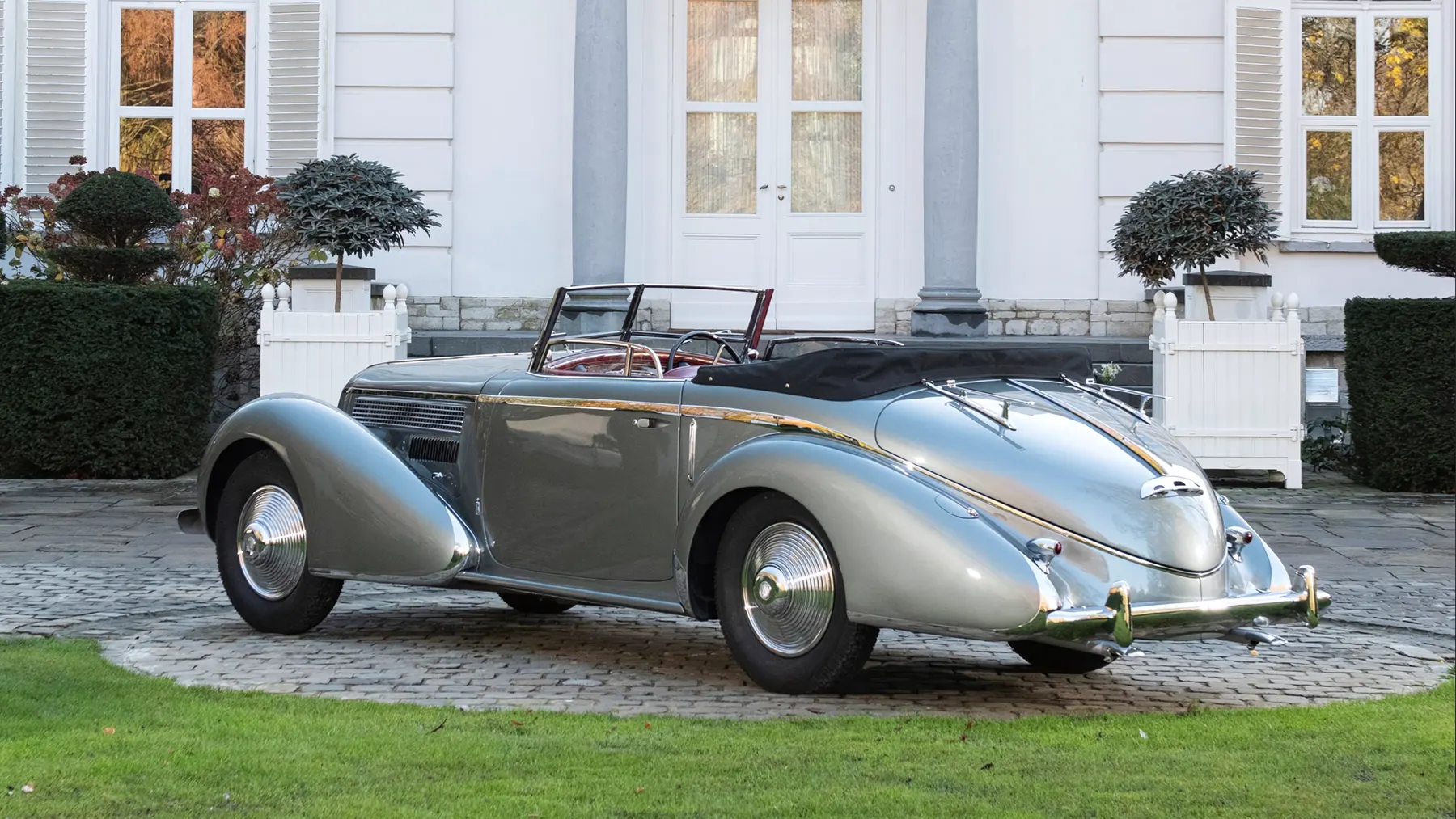
The convertible roof was itself an engineering statement. Pinin Farina had patented an electro-mechanical hood mechanism in 1934 - a notable novelty in the period - and it became a standard feature of the Tipo Bocca from 1936. The windscreen folded flat, allowing the full low-slung profile to be appreciated at speed. Inside, the Art Deco cockpit featured an engraved instrument binnacle, Bakelite handles and control knobs, wooden seatback cappings, and the distinctive diamond-shaped basket-weave leather upholstery - the intrecciato pattern - that gave the interior a richness commensurate with the exterior drama. These were not production cars with shared fittings; each example was effectively made to order, and the detailing varied correspondingly between chassis.
When the first completed Tipo Bocca cabriolet was displayed on the Pinin Farina stand at the 1936 Salone dell’Automobile in Milan, it was awarded the President’s Cup of the Royal Automobile Club of Italy. Another example appeared at the 1937 Berlin Motor Show, reflecting the design’s international ambition. The reception confirmed what the Bocca brothers had suspected: the third-series Astura chassis merited something more expressive than the restrained bodies Lancia’s own coachbuilding programme had supplied.
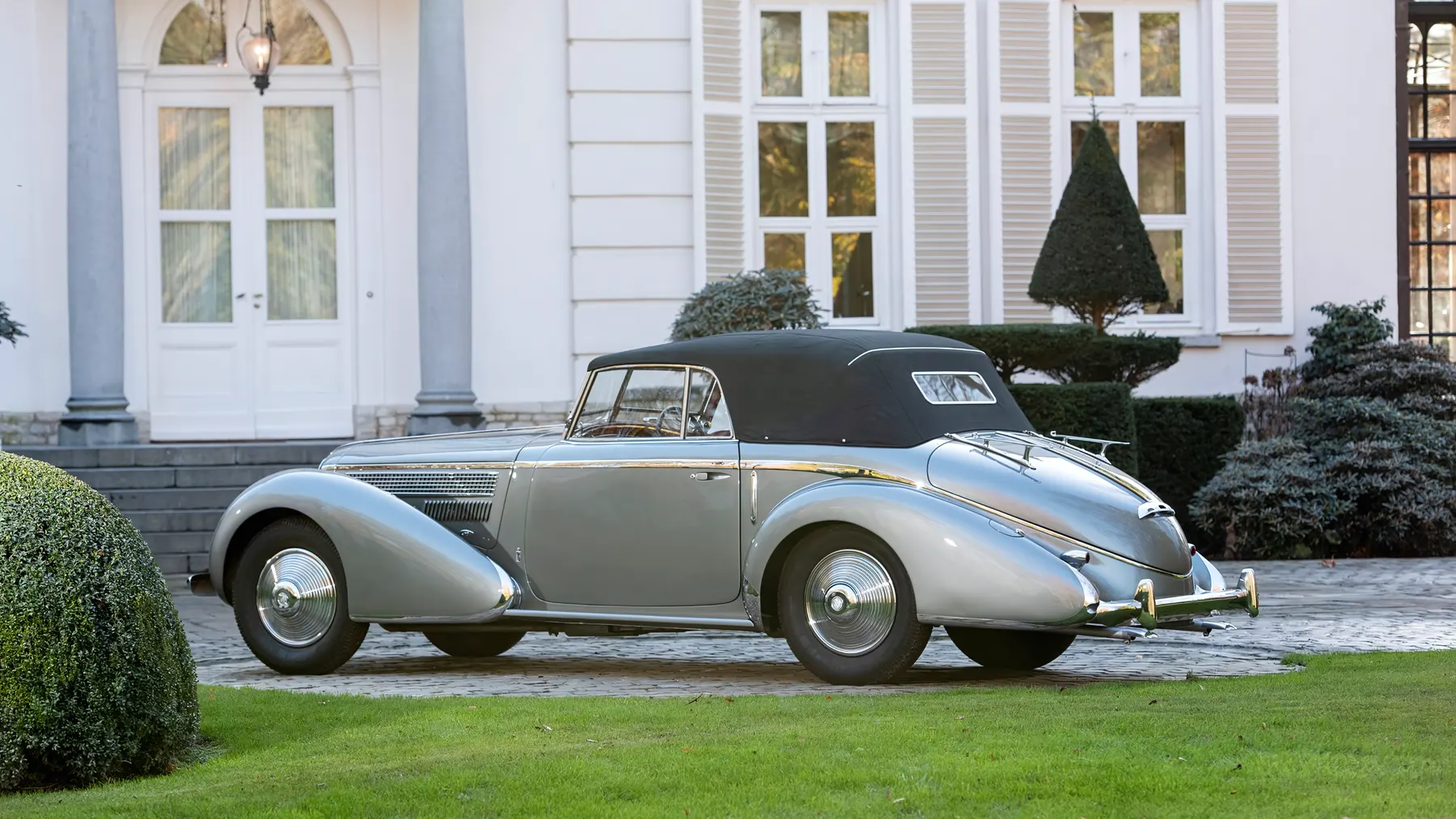
That said, the Tipo Bocca carried genuine limitations that deserve honest accounting rather than concours-room softening. The third-series V8’s 82 bhp was a modest output even by the standards of 1936. The Astura was tuned for smoothness over urgency, and while the torque curve’s breadth suited long-distance touring, the engine was not capable of making meaningful use of the aerodynamic body above the relatively modest top speed. Clothed in a full cabriolet body with structural reinforcement to compensate for the open roof and the addition of the powered hood mechanism, the car’s kerb weight would have extended towards the upper portion of the 1,250–1,750 kg range recorded for the Astura model line as a whole - leaving the power-to-weight ratio decisively in grand-touring territory rather than sporting territory. The live rear axle, while adequately controlled via its dashboard-adjustable dampers, placed a ceiling on dynamic refinement that the sophisticated independent front end had no means of raising on its own. The four-speed gearbox lacked synchromesh on its lower ratios in typical period fashion. These were not failings unique to the Tipo Bocca, but they were genuine constraints on what a car wearing such purposefully aerodynamic clothes could actually deliver. A contemporary buyer seeking real performance in a beautiful Italian cabriolet would have pursued an Alfa Romeo 6C or 8C, not an Astura; the Tipo Bocca was a statement of taste and craft, not a driver’s car in any competitive sense.
The Astura’s broader commercial limitations also matter. Total production across all four series reached approximately 2,912 cars - a figure that makes it a low-volume prestige model even by the standards of Italian luxury manufacture of the period, and one that reflects both the car’s high price and the economic climate of the 1930s. The Tipo Bocca, at roughly six examples, sits within a model line that was never truly commercially successful, representing an extreme of rarity even within that context.
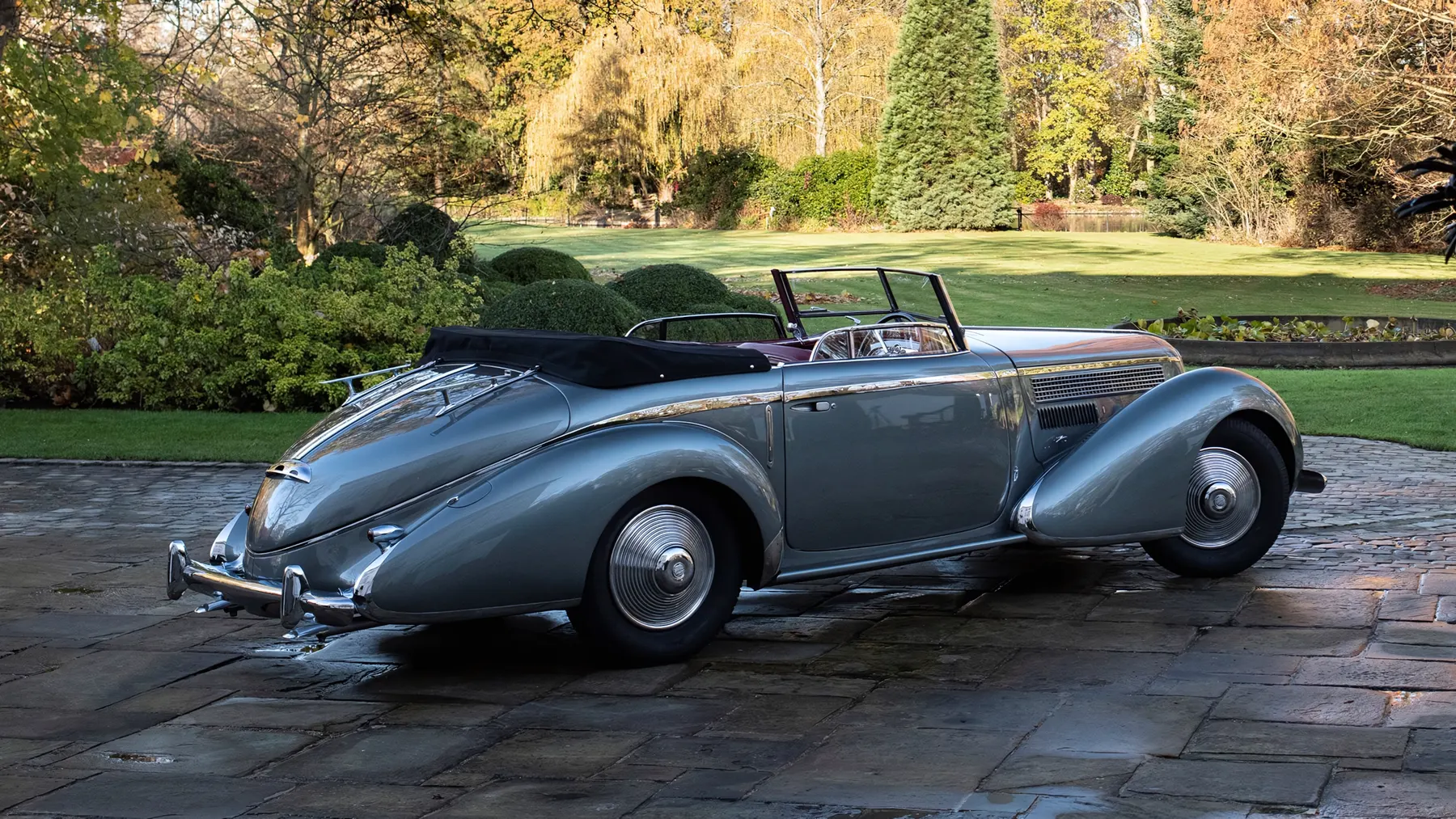
The legacy of those six cars has proved extraordinary. One example, found abandoned in a field in England in the early 1960s and purchased for £15 by Michael Scott after journalist Ronald ‘Steady’ Barker recognised its significance, underwent one of the most remarkable restorations in pre-war coachbuilding history: Barker showed photographs of the derelict car to Battista Pinin Farina himself at the Turin Motor Show, whereupon the coachbuilder - immediately recognising his own early work - offered to restore the body free of charge. Period photographs show Farina posing with the finished car in front of his workshops, the pride of authorship entirely undiminished by three decades. That example passed through the hands of Eric Clapton before eventually entering the Pininfarina collection and undergoing a further no-cost-spared restoration. Presented at the 2016 Pebble Beach Concours d’Elegance, it won Best of Show and the Gwenn Graham Most Elegant Convertible award - a result that positions the Tipo Bocca among the most acclaimed pre-war automobiles in the world.
That a design executed in six iterations on a pre-war chassis should stand at the summit of the most prestigious judged car exhibition in the world, eight decades after Revelli di Beaumont drew it at Pinin Farina’s atelier, is the clearest possible measure of what the Bocca brothers understood when they looked at Vincenzo Lancia’s conservative bodywork and decided the engineering beneath it deserved something better.
Sources
- RM Sotheby’s – Amelia Island 2023, Lancia Astura Cabriolet Series III ‘Tipo Bocca’ lot description
- RM Sotheby’s – Monterey 2022, Lancia Astura Cabriolet Series III ‘Tipo Bocca’ lot description
- RM Sotheby’s – Monterey 2023, Lancia Astura Cabriolet Series III ‘Tipo Bocca’ lot description
- RM Sotheby’s – Amelia Island 2017, Lancia Astura Cabriolet Series III ‘Tipo Bocca’ lot description
- Hyman Ltd. Classic Cars – 1936 Lancia Astura ‘Tipo Bocca’ Cabriolet, sales archive
- Marreyt Classic Cars – Lancia Astura 3rd Series Pinin Farina Cabriolet ‘Tipo Bocca’
- Wikipedia – Lancia Astura
- Carrozzieri-Italiani.com – The Lancia Astura: Italy’s Monument on Wheels (Andreas Scheidl, 2025)
- Conceptcarz.com – 1936 Lancia Astura model page
- Hagerty Media – Mario Revelli: The Most Prolific Car Designer You’ve Never Heard Of (Matteo Licata)
- Carrozzieri-Italiani.com – Mario Revelli di Beaumont: The First Freelance Car Designer
- Carrozzieri-Italiani.com – Pininfarina Through the Ages: The Complete History
Join the discussion
Comments
Loading comments…
Leave a comment
Share a detail, memory, or perspective. Every comment is reviewed before publication.