Alfa Romeo 6C 1500 Sport Tourer: Milan's Twin-Cam, James Young's Coachwork
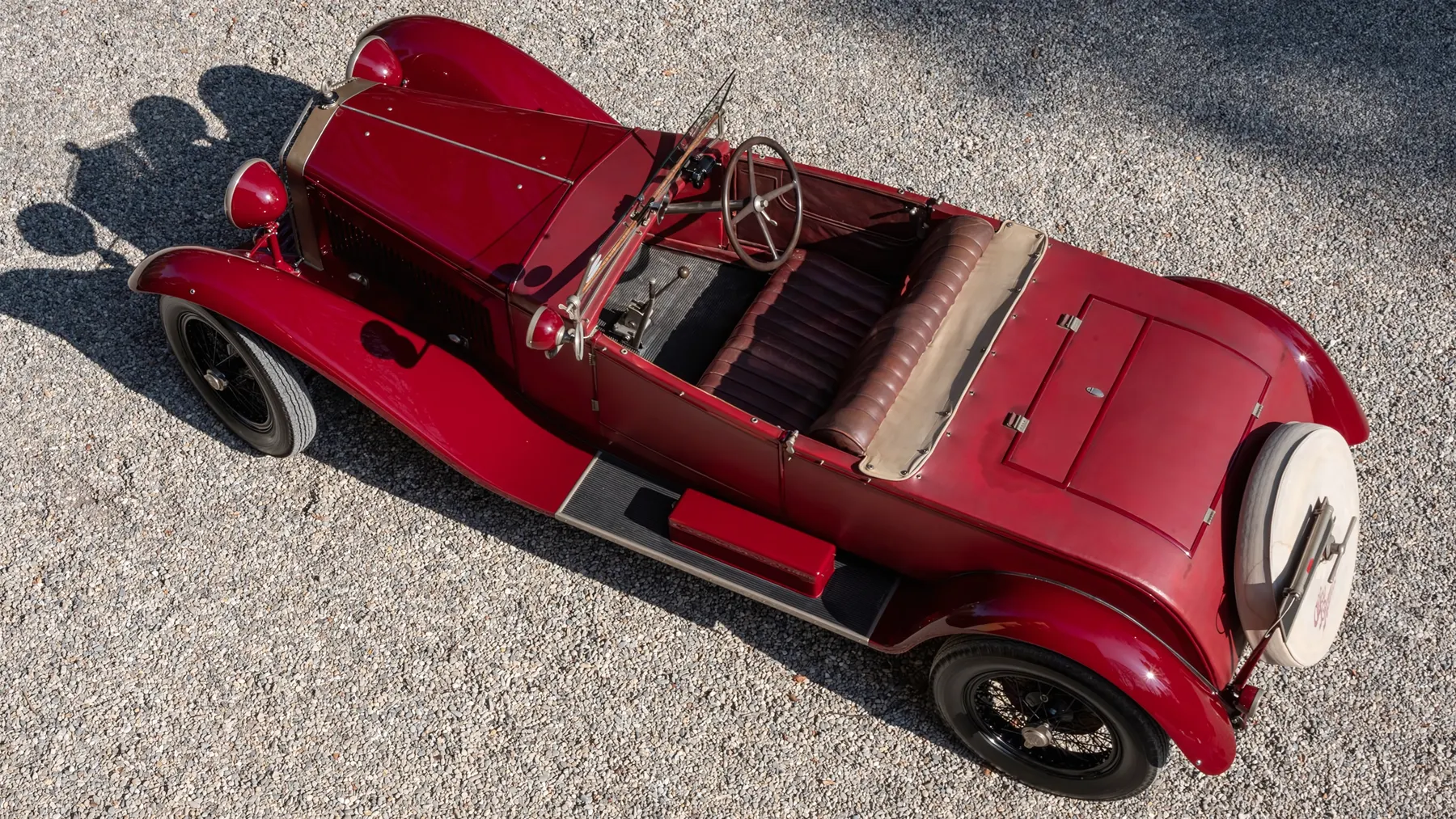
1929 Alfa Romeo 6C 1500 Sport Tourer Series II in the style of James Young

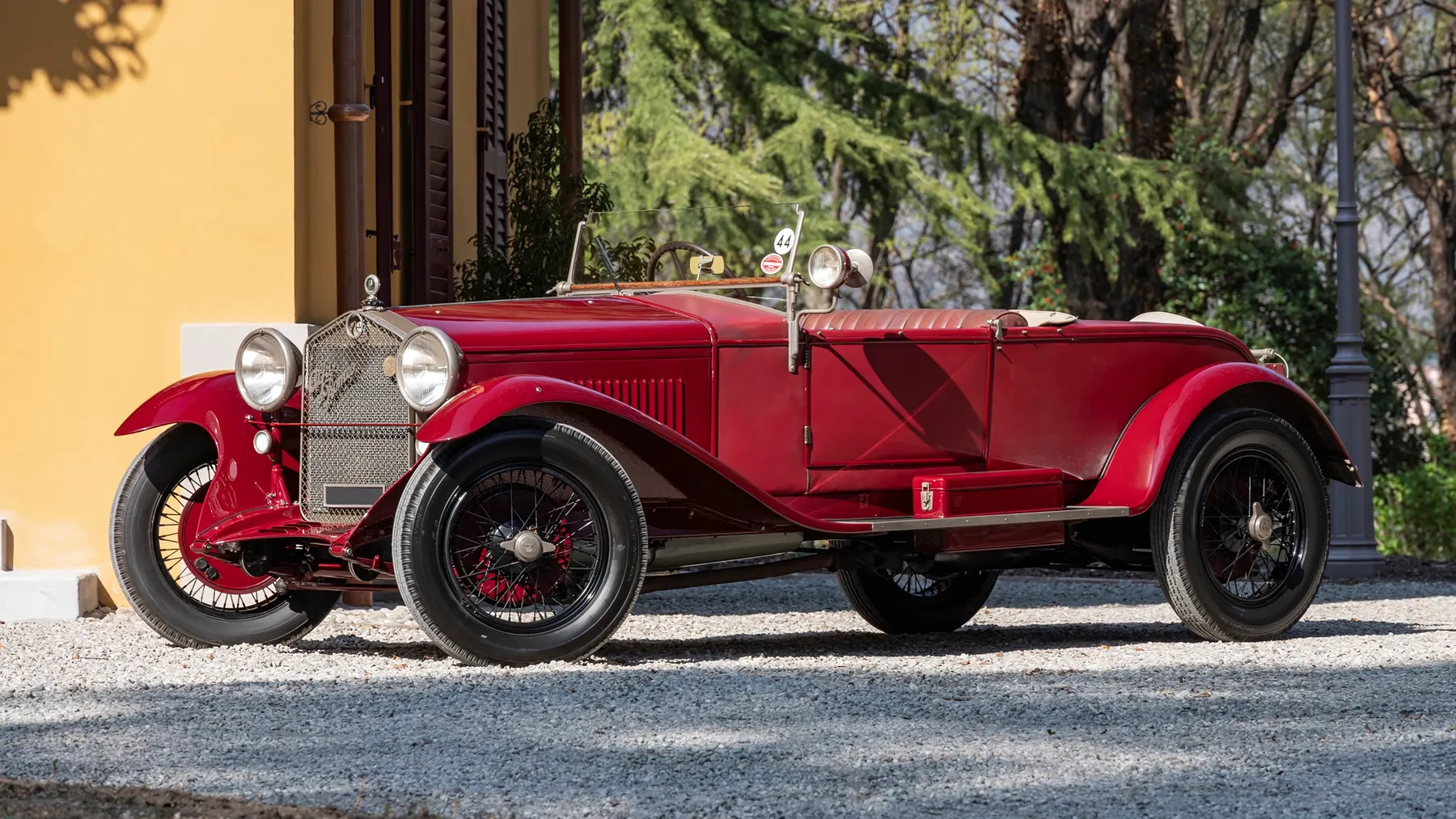
Images: Paolo Carlini / RM Sotheby's
Bromley and Milan occupied entirely different automotive worlds in the late 1920s. One was home to a Kentish carriage-maker that had spent sixty years perfecting the quiet, unshowy formality expected by Rolls-Royce and Bentley buyers. The other was the engine room of Vittorio Jano’s twin-cam revolution, a factory turning Grand Prix know-how into road cars for the first time. That a handful of Alfa Romeo 6C 1500 Sport chassis ended up wearing coachwork built, or at least closely modelled on the work, of that English carriage house is one of the more improbable crossovers of the vintage era. It should not have worked particularly well on paper. An Italian twin-cam sports chassis, bred from a championship-winning racer, dressed in the restrained tailoring of a firm whose signature output was formal saloons and drophead coupés for the English gentry, sounds like a mismatch of temperament as much as nationality. In practice, enough of these cars were built, or rebuilt in that idiom, that the pairing became a small but genuine sub-species of pre-war Alfa Romeo.
The 6C 1500 itself was Alfa Romeo’s first attempt at a genuine sports car, and it emerged directly from motor racing rather than from any conventional market study. Vittorio Jano, freshly arrived from Fiat, was tasked in the early 1920s with replacing the ageing Giuseppe Merosi-designed RL, a car judged too large and heavy for the smaller-capacity racing formulae then in vogue. Jano’s answer used his own P2 Grand Prix car as its starting point, shrinking the six-cylinder engine’s capacity from the P2’s 1,987cc down to 1,487cc and dropping the supercharger in the process. The car was shown at the Salone dell’Automobile di Milano in April 1925, initially carrying the internal designation NR after founder Nicola Romeo, before series production got under way in 1927 under the name by which it would be remembered: the 6C 1500. It replaced the RL and, in doing so, gave Alfa Romeo something it had not really had before: a genuinely light, genuinely quick road car built for driving pleasure rather than mere transport, and reportedly Scuderia Ferrari’s first customer car once Enzo Ferrari’s outfit was up and running.
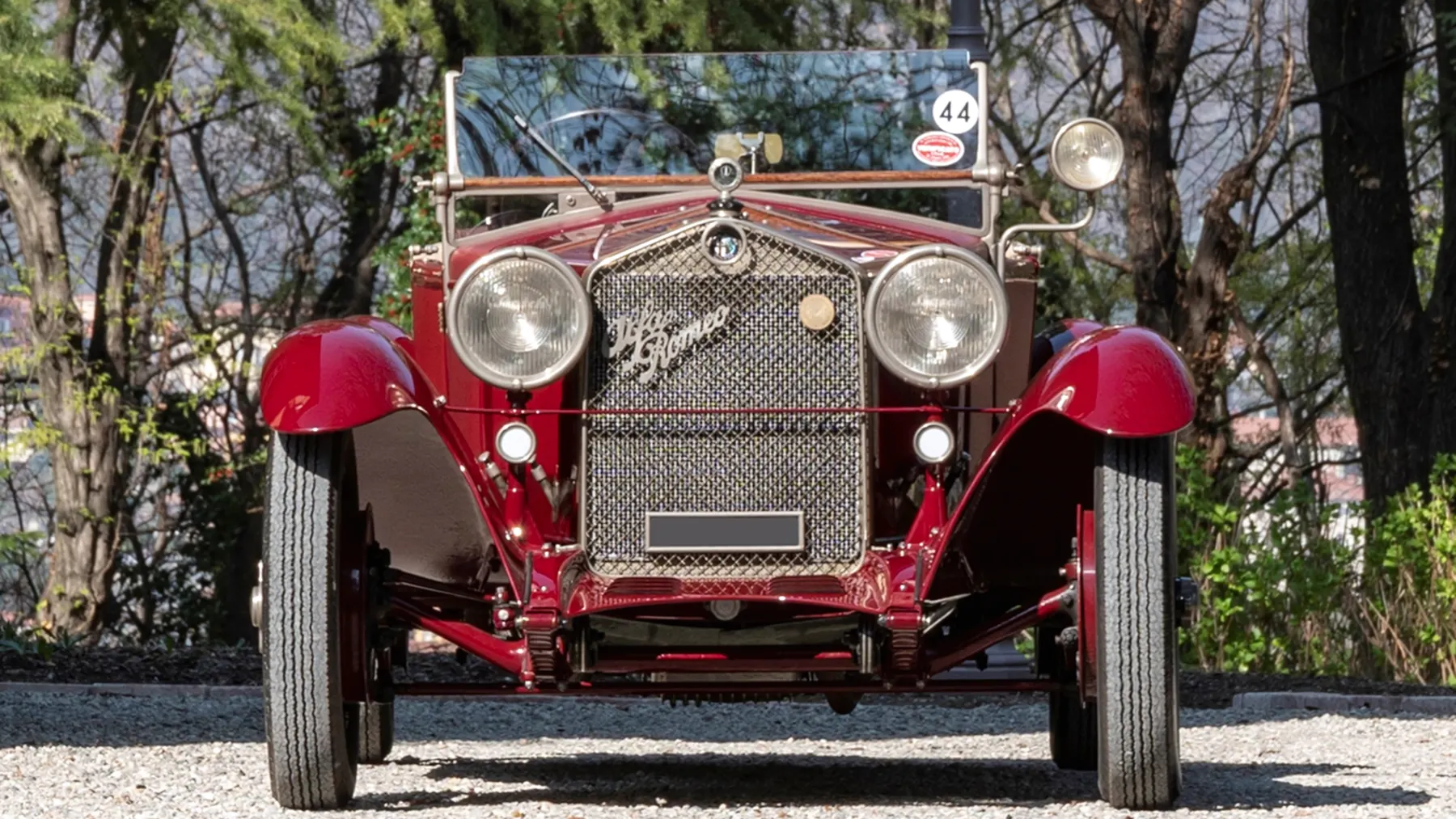
The Sport model arrived in 1928 as an uprated derivative of the original single-cam Normale, and it mattered more than its modest numbers suggest. Where the Normale used a single overhead camshaft, an alloy-and-iron monobloc construction and a compression ratio of 5.75:1 for 44 bhp at 4,200rpm, the Sport introduced a twin-cam cylinder head atop the same 1,487cc six, raised compression to 6.0:1, and lifted power to 54 bhp at 4,500rpm, good for around 78mph. It was the first Alfa Romeo road car sold with double overhead camshafts, a layout that would go on to define the marque for the rest of the century. Above the Sport sat a small cluster of still hotter derivatives built only in 1929: a twin-choke-carburettor Super Sport at 60 bhp, and a supercharged Super Sport Compressore reaching 76 bhp and roughly 87mph, some of the latter cars using a fixed monobloc “testa fissa” head-and-block casting to cope with the extra strain. None of these were built in meaningful numbers; the Sport itself found only 171 buyers across 1928 and 1929, against roughly 860 examples of the various Normale body styles, out of a 6C 1500 total generally put at a little over a thousand cars.
Underneath, the 6C 1500 was straightforward by the standards of Alfa’s later independent-suspension cars, but neatly engineered for its era. A steel chassis frame carried solid axles front and rear on semi-elliptic leaf springs, with power reaching the rear wheels through a torque tube, a six-inch multi-plate clutch and a four-speed, non-synchromesh gearbox. Steering was by worm-and-wheel, and Jano fitted a lightweight steering box that was deliberately left unattached to either the chassis or the engine, isolating it from the flexing and vibration of both. Brakes were rod-operated drums on all four corners, mechanical rather than hydraulic and with none of the servo assistance that would arrive within a decade. Rudge-Whitworth-type knock-off wire wheels completed the running gear. The Sport and Super Sport variants rode a shorter chassis of roughly 2,900mm, noticeably tighter than the 3,100mm-or-so wheelbase used by the six-seater Normale saloons, sharpening turn-in and giving the sporting cars a distinctly different character from their touring siblings even before the coachwork went on.
That sporting character was proven on track almost immediately. The DOHC Sport engine powered the winning car in the 1928 Mille Miglia, driven by Giuseppe Campari, an Alfa Romeo works driver whose day job as an opera baritone made him one of motorsport’s more colourful early characters. Wins of that stamp, arriving within a year of the Sport’s launch, did more than any brochure to establish Alfa Romeo’s reputation as a maker of cars that could win races on Sunday and be driven home on Monday, a reputation the 1750, 1900 and 2500-series cars that followed would spend the next two decades building on.
James Young, the coachbuilder whose name attaches to this particular body style, came from a completely different tradition. Founded in 1863 on London Road in Bromley, the firm spent its first four decades building horse-drawn carriages, including a lightweight design known as the Bromley Brougham that made its early reputation. Its first motor car body followed in 1908, fitted to a Wolseley chassis for a local Member of Parliament, and the firm spent the First World War building ambulances and armoured cars on Darracq and Hudson running gear. By the 1920s James Young had become a serious player among Britain’s coachbuilders, taking its own stand at the 1925 London Motor Show and building both standardised bodies for Sunbeam and Talbot and bespoke commissions on Bentley and Rolls-Royce chassis from 1921 onward. Alfa Romeo appears in James Young’s period client list too, and the firm is recorded as having clothed 6C 1500 and 6C 1750 chassis with drophead coupé and saloon coachwork for British owners who had imported rolling chassis rather than complete Italian-bodied cars. Some marque historians have noted that James Young occasionally bought rolling chassis on its own account as a speculative venture, building bodies before a customer had been found, rather than working solely to individual commission. The firm was acquired by the London Rolls-Royce dealer Jack Barclay in 1937 and continued producing coachwork, in steadily diminishing numbers, until the late 1960s.
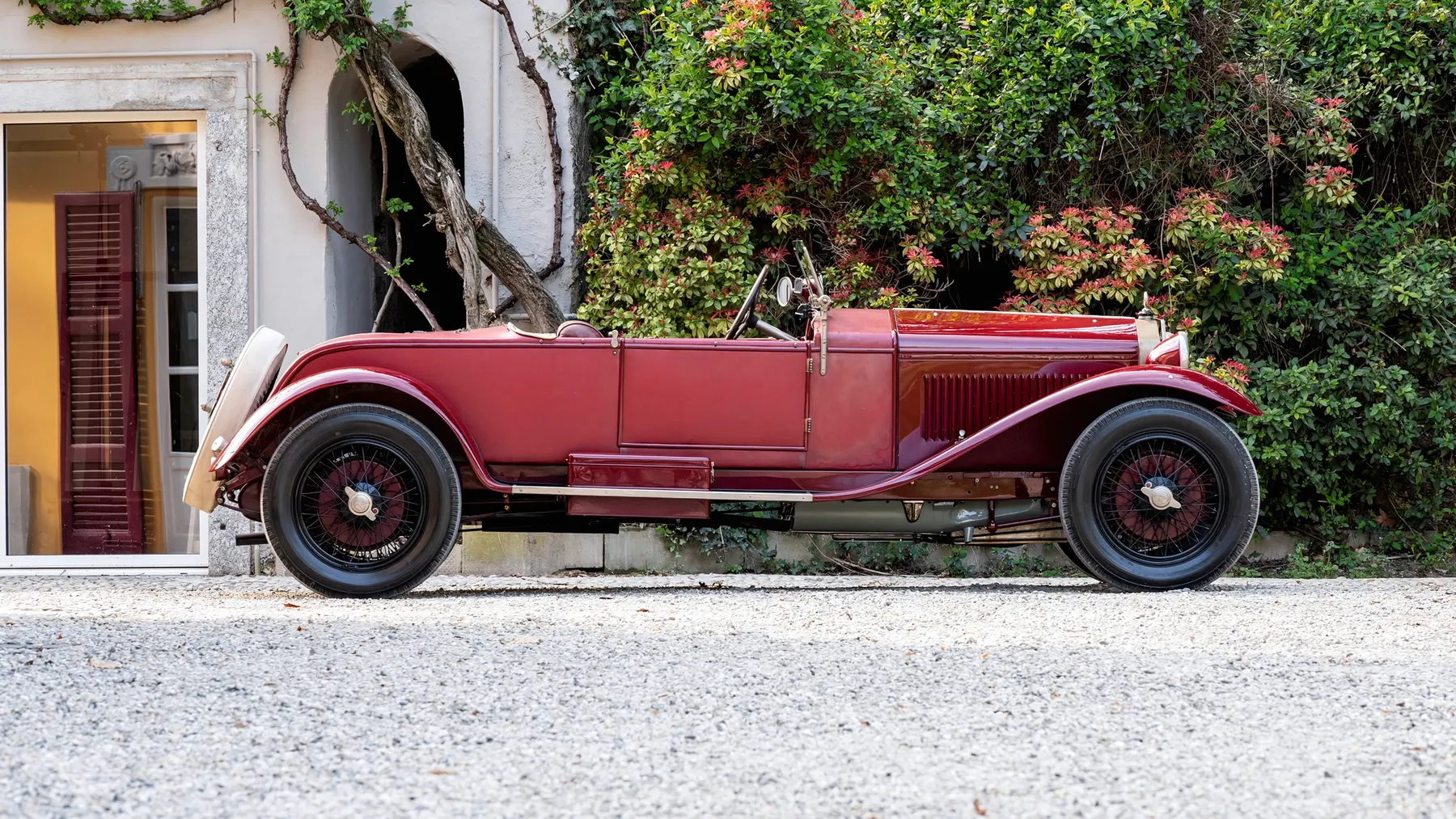
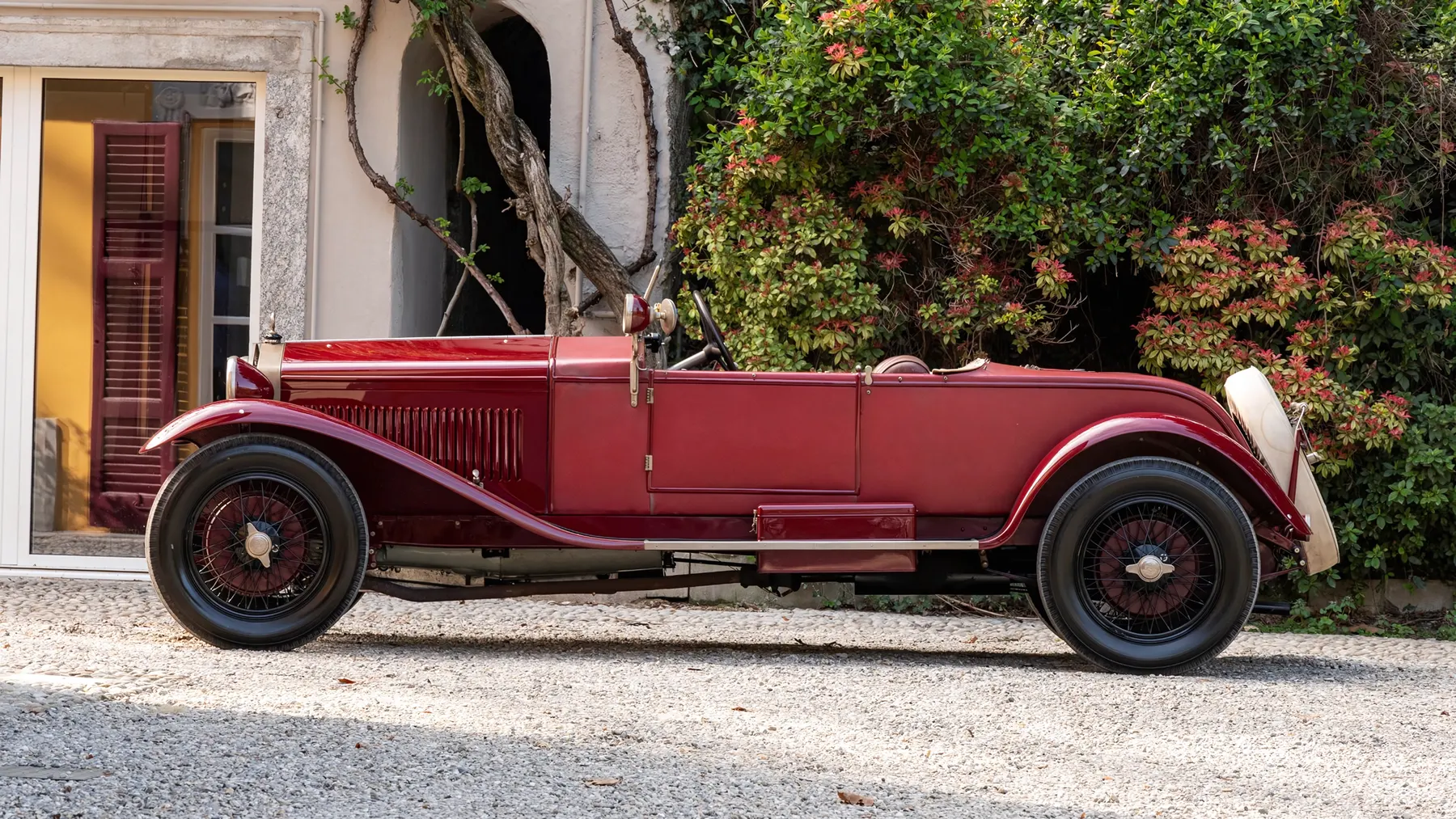
It is against that backdrop that a car like this one has to be understood. Surviving Weymann-type fabric tourers on the short-chassis 6C 1500 Sport platform are rare, and where James Young’s involvement is claimed, it is not always backed by paperwork. At least one such example catalogued in recent years by a major auction house was described candidly as bearing coachwork of unattributed construction that most closely resembled a James Young interpretation, with the cataloguer also noting stylistic echoes of Zagato in the same body. That kind of hedged attribution is common in this corner of the hobby: British owners in the late 1920s frequently had Continental rolling chassis shipped over and bodied locally, sometimes by well-documented firms working to a formal commission, sometimes by smaller workshops copying the prevailing fashion, and records from small coachbuilding concerns of the period were patchy even when new, let alone after nearly a century, two world wars and multiple changes of ownership. A four-seat, fabric-bodied open tourer also sits a little outside James Young’s better-remembered idiom of formal drophead coupés and saloons for Rolls-Royce and Bentley clientele, which is part of why such cars tend to be described as being “in the style of” the firm rather than confidently attributed to it.
The fabric construction itself deserves honest scrutiny, because it was never an unambiguous virtue. Weymann-type bodies, patented by the aviator-turned-coachbuilder Charles Weymann, used a jointed wooden frame sheathed in fabric rather than metal panelling, and the flexible joints between frame members genuinely did banish the creaks and drumming that plagued rigid coachwork on rough roads of the period. They were also considerably lighter than an equivalent steel or aluminium body, a real asset on a car whose entire raison d’être was performance relative to weight. But the trade-offs were substantial and well understood even at the time: the fabric skin offered next to no protection in a serious accident, it weathered poorly and was prone to rot if not scrupulously maintained, and its practical lifespan was measured in years rather than decades unless an owner was unusually diligent. By the early 1930s, improvements in steel pressing and finishing had eroded the Weymann system’s advantages in weight and refinement, and the fashion for fabric coachwork collapsed almost as quickly as it had arrived. Combined with mechanical, rod-operated brakes that demanded careful adjustment and offered nothing like the stopping power taken for granted even a decade later, and a crash gearbox that punishes a clumsy hand, the Sport Tourer is not a car that flatters an inexperienced or inattentive driver. Anyone approaching one today, whether to drive or to research, needs to accept both a certain mechanical vulnerability in the coachwork and a certain irreducible uncertainty in its documented history.
None of that undoes what makes the underlying car worth caring about. A 54 bhp twin-cam six revving out in a chassis weighing a fraction of what a contemporary luxury saloon carried was a genuinely lively thing for 1928, sporting in the way that mattered to buyers of the period even if the absolute numbers look modest by any later yardstick. The 6C 1500 Sport represents the moment Alfa Romeo worked out how to turn Grand Prix engineering into something a private owner could drive to dinner and, on a good day, to a class win. Wrapping that chassis in the language of an English coachbuilder best known for the opposite kind of car, formal, sober, built for chauffeurs rather than owner-drivers, only sharpens what made the underlying Alfa interesting in the first place: an engineering idea confident enough to wear almost any coat a customer cared to put on it.
Sources
- RM Sotheby’s - 1929 Alfa Romeo 6C 1500 Sport Tourer Series II in the style of James Young, Villa Erba 2023
- RM Sotheby’s - 1929 Alfa Romeo 6C 1750 Turismo by James Young, London 2011
- Wikipedia - Alfa Romeo 6C
- Wikipedia - James Young (coachbuilder)
- Coachbuild.com - James Young
- Supercars.net - 1928 Alfa Romeo 6C 1500 Sport
- Conceptcarz - Alfa Romeo 6C 1750 (6C 1500 historical background)
- Wikipedia - Weymann Fabric Bodies
- Historics Auctioneers - 1929 Alfa Romeo 1750 T James Young (coachbuilder background)
Join the discussion
Comments
Loading comments…
Leave a comment
Share a detail, memory, or perspective. Every comment is reviewed before publication.