Rolls-Royce Phantom V James Young Limousine: Last of the Independents
1965 Rolls-Royce Phantom V Limousine by James Young

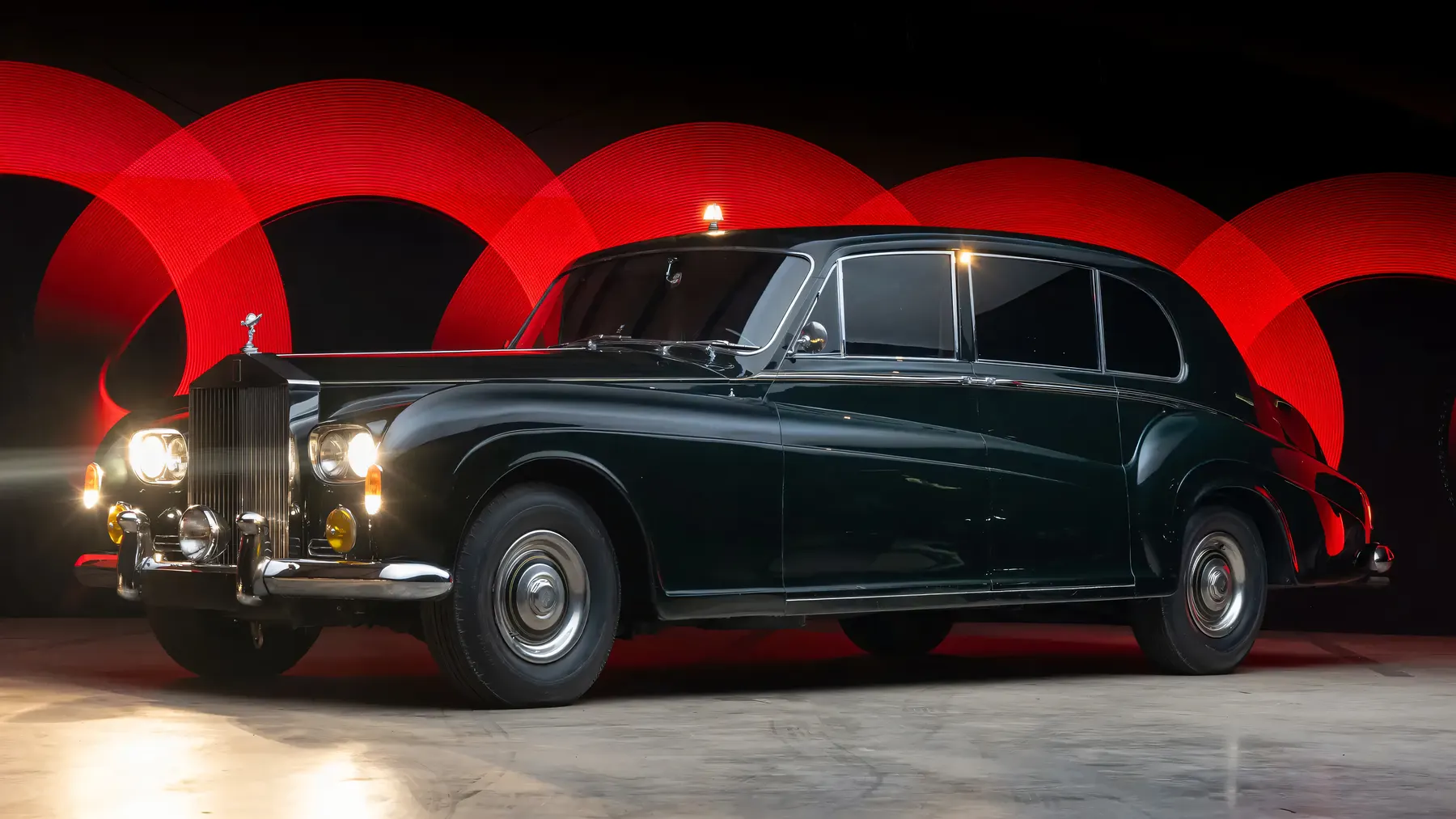
Images: Darin Schnabel / RM Sotheby's
In 1959, even as the first Phantom V chassis were being prepared for dispatch from Crewe, Rolls-Royce was quietly letting it be known that the Silver Shadow - the car already in development to replace the mainstream Silver Cloud - would be of monocoque construction. For the coachbuilding trade, this information arrived like a courteous notice of redundancy: professionally delivered, entirely inevitable, and impossible to argue with. James Young of Bromley, whose business had begun by building horse-drawn carriages in 1863 and who had spent the intervening century producing some of the most refined car bodies in Britain, received the news with the restraint of a firm that understood exactly what it meant - and then proceeded to produce, across the Phantom V programme’s nine-year run, the most admired coachwork of their entire history.
The heritage behind that achievement was considerable. James Young’s company began as a carriage builder, most celebrated for the lightweight Bromley Brougham, before graduating to motorcar bodies in 1908 with a Wolseley chassis commissioned by the local Member of Parliament. By the 1920s the firm was working routinely on Bentley and Rolls-Royce chassis alongside standardised bodies for Sunbeam and Talbot, and had also taken on the role of official Alfa Romeo coachbuilder for the British market. The pivotal moment came in 1937 when London Rolls-Royce dealer Jack Barclay acquired the company and persuaded A.F. “Mac” McNeil - then chief stylist at J. Gurney Nutting - to make the move to Bromley. McNeil, a Scotsman born in 1891, spent the war years at de Havilland’s aircraft division before returning to James Young as the firm rebuilt from bomb damage sustained twice during the conflict: first in the Blitz of 1941, which destroyed the factory and all its records, and then again from a V-1 strike from which production nonetheless continued. By the early 1950s, James Young had re-established itself as second only to H.J. Mulliner in coachbuilt Bentley MkVI and R-type output, with roughly 120 skilled employees producing 50 to 60 new bodies a year, mostly for export. By the time the Phantom V arrived, they were the last independent coachbuilder of any meaningful volume still operating on British chassis - Hooper and Freestone & Webb having already closed - and they understood both the responsibility and the finality of that position.
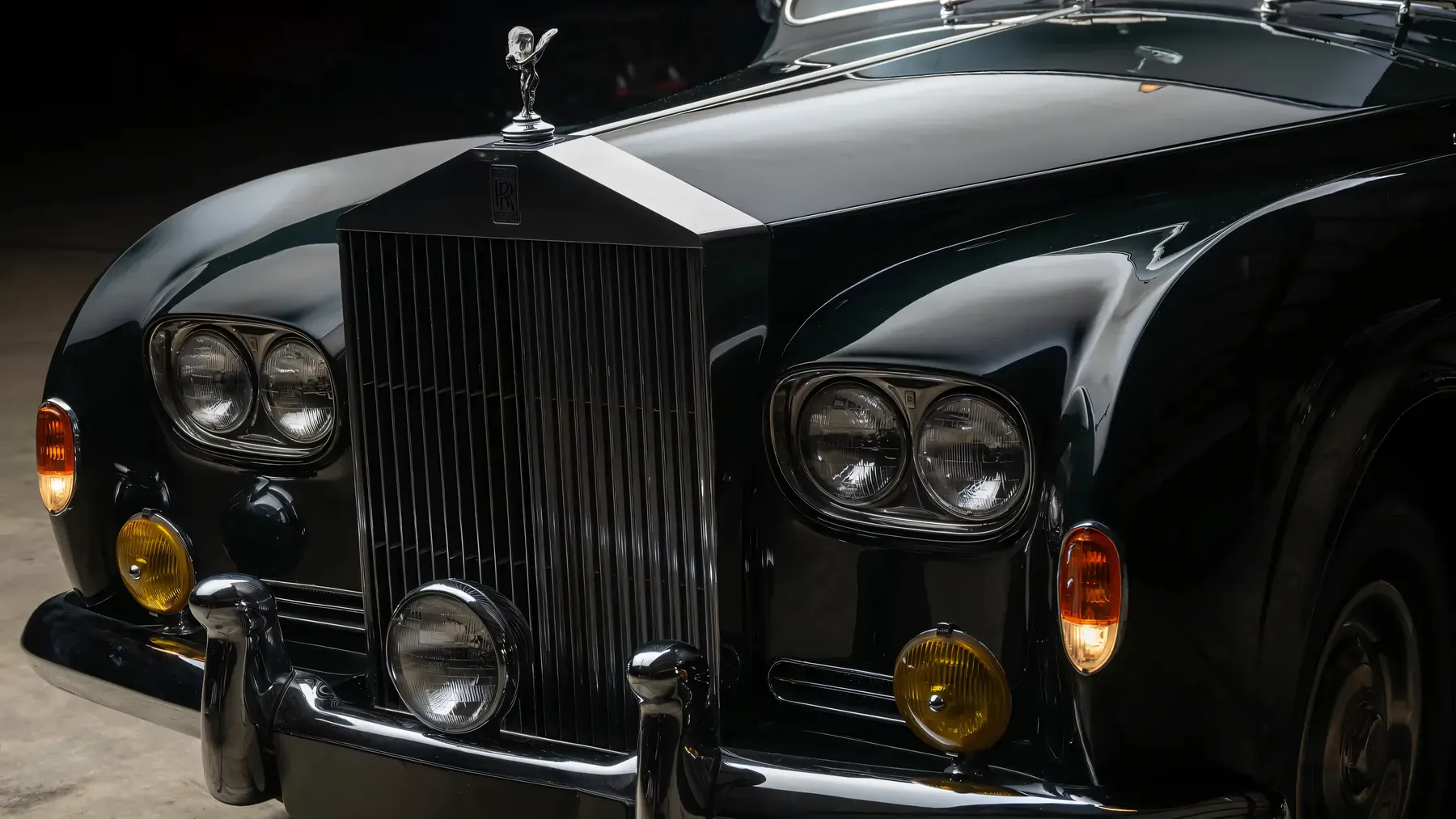
The chassis they now received was structurally related to the Silver Cloud II: the same stiff box-section frame, now extended by approximately 530mm to a wheelbase of 3,683mm - matching that of the Phantom IV - with additional crossmember reinforcement to handle coachbuilt bodywork at the upper limit of the formal limousine scale. Suspension was conventional: independent coil springs at the front, a live rear axle on semi-elliptic leaf springs at the rear, and hydraulic drum brakes on all four wheels, operated through a gearbox-driven servo. Power-assisted steering was standard. What had been genuinely modernised was the engine: a new all-aluminium 90-degree V8 displacing 6,230cc, fed through a pair of 1¾-inch SU HD6 carburettors and driving through a four-speed Hydramatic automatic gearbox built under General Motors licence. As was their established custom, Rolls-Royce declined to publish a power output, describing the engine simply as “adequate.” Period estimates - including those cited in Classic & Sports Car and Bonhams auction literature - place the figure at approximately 220bhp. A deliberately low 3.89:1 final drive ratio was specified so the car could maintain ceremonial walking pace without mechanical protest; the same setup was capable of propelling it well beyond 100mph when conditions permitted. The Phantom V made its public debut at the 1959 Earls Court Motor Show, replacing both the Silver Wraith, which had served as Rolls-Royce’s formal limousine through the 1950s, and in practical market terms the Phantom IV, which had been restricted to royalty and heads of state and produced in a run of just 18 examples.
Onto this chassis, James Young offered four principal coachwork families, identified internally by design numbers. The PV15 was the full formal limousine: tall, commanding, maximising headroom in the rear compartment and the gravity of a true seven-passenger layout. The PV22 - the Touring Limousine - achieved a modestly lower roofline that produced a tapered, more flowing silhouette without meaningfully reducing rear passenger space, and it is this design that most collectors and critics have consistently identified as the definitive expression of the Phantom V in coachbuilt form. In 1965 both designs received the Hooper-style rear quarterlights - a decorative detail James Young licensed from the recently closed Hooper coachbuilder at £25 per car - emerging as the PV16 and PV23 respectively, with a more refined vertical accent at the rear corners. From 1963, the underlying chassis had already gained the Silver Cloud III’s uprated engine, fitted with larger 2-inch SU carburettors and delivering approximately 7% more power, alongside new front wings with quad headlamps. These later VA-series Phantom Vs are visually distinct from the earlier two-headlamp cars and represent the final evolution of the design. Beyond the four limousine variants, James Young produced approximately ten to eleven Sedanca de Ville bodies - an open-chauffeur arrangement that was a self-conscious anachronism by 1960 and appealing precisely because of it - along with two audacious two-door saloon bodies on the near-six-metre platform, and a small number of owner-driver saloons built without the formal glass division for clients who wished to take the wheel themselves.
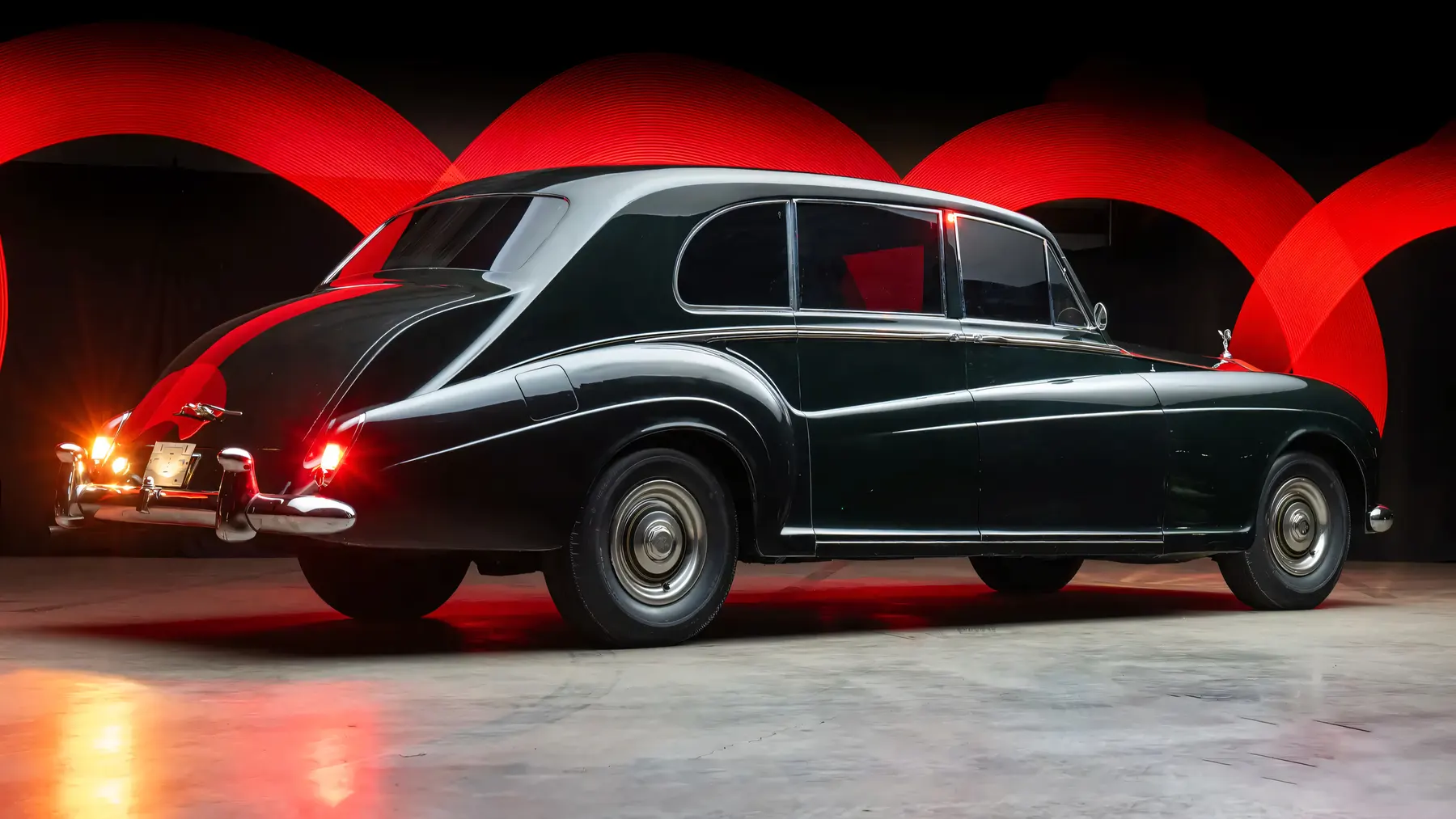
The cumulative output across all designs reached approximately 195 to 197 bodies - the exact figure varies marginally between sources - representing well over a third of the 516 Phantom Vs built in total between 1959 and 1968. Mulliner Park Ward, as the Rolls-Royce in-house operation, produced a greater number overall, but they were not independent: they had access to engineering drawings, technical support, and the Crewe relationship that James Young could never command. That James Young came close to matching their total while operating as a genuinely independent firm, purchasing chassis on the open market and producing coachwork entirely from their own resources, is itself a measure of the operation McNeil had built.
What elevated the best James Young Phantom Vs above their in-house alternatives was McNeil’s particular instinct for proportion. Working from full-size drawings pinned directly to the workshop walls - a method that was already being rendered obsolete by the shift to industrial production techniques - he approached each design with an eye for exactly where a waistline should hold level, how much taper the rear quarters could absorb before reading as pinched, and how a roofline could descend toward the tail in a curve that read as tapered rather than simply truncated. The PV22 Touring Limousine achieved something that few designs at any scale manage: it wore the Phantom V’s near-six-metre wheelbase as though the chassis had been built for the body rather than the other way around. Classic & Sports Car, in their detailed assessment of the model, concluded that no Cadillac Fleetwood or Mercedes-Benz 600 Pullman of the same era approached the composed, gravitational dignity these bodies achieved. Mulliner Park Ward recognised the quality of the PV22 sufficiently to attempt a competing Touring Limousine of their own; they abandoned the effort after six examples. The shutlines on the James Young bodies were so precisely fitted that they almost vanished from certain viewing angles - a standard of craftsmanship that the 120-strong Bromley workforce maintained consistently. Internally, hand-formed veneer cabinetwork, Connolly leather upholstery, fitted reading lamps, folding footrests, crystal glasses in rear cocktail cabinets, and in many cases writing tables and clock faces created the atmosphere of a private railway carriage. McNeil was also, according to Classic & Sports Car, a formative influence on John Blatchley, the Rolls-Royce in-house designer responsible for the Silver Cloud - a relationship that, if accurately reported, suggests the standard at which the Bromley firm operated within the wider world of British automotive design.
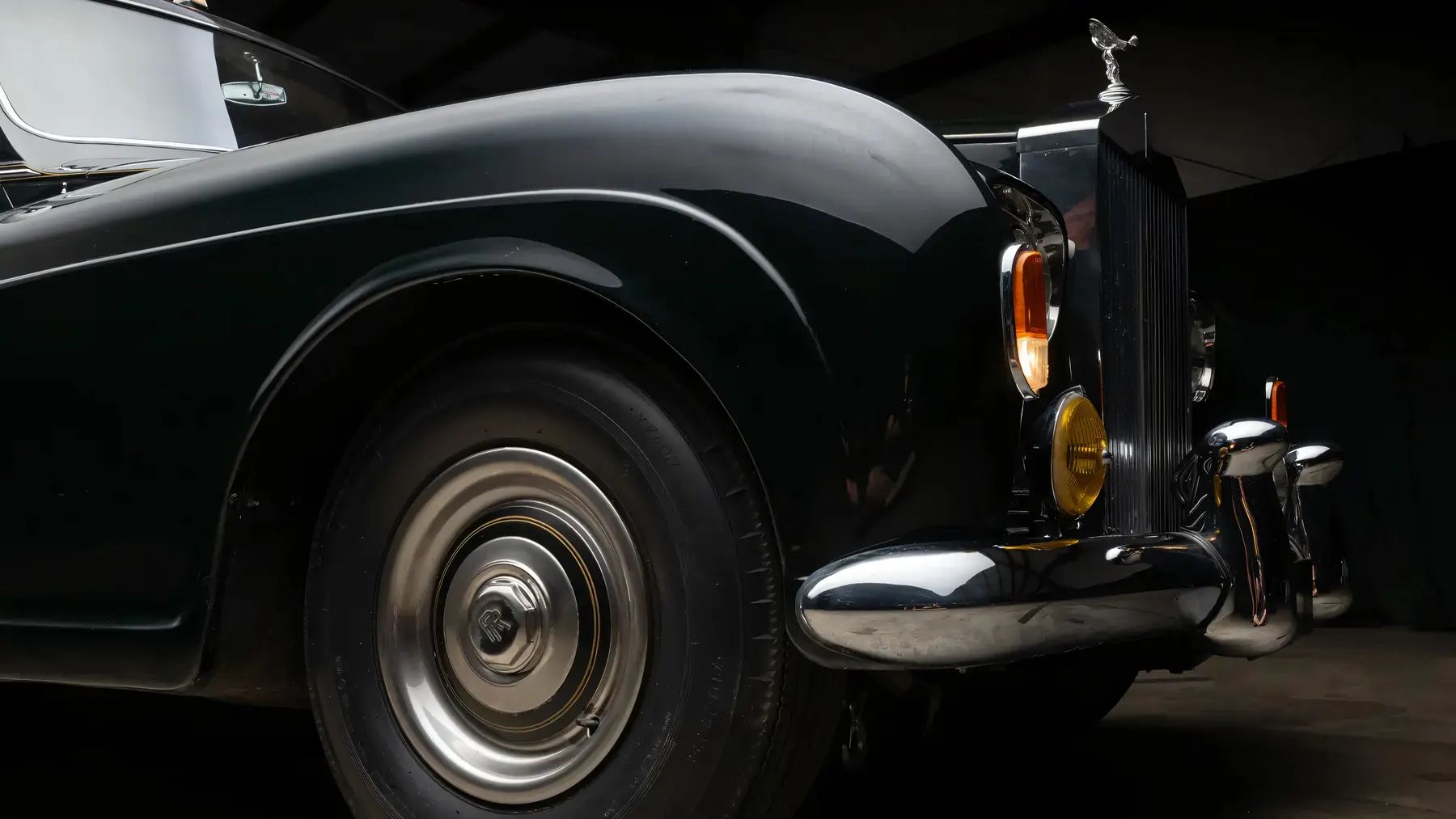
The client list bore all of this out. Two formal state limousines were delivered in 1960 and 1961 for official royal use. Elvis Presley ordered a 1963 James Young car. A 1961 PV22 Touring Limousine was temporarily requisitioned to transport Jacqueline Kennedy during her visit to Britain in June of that year. The Shah of Iran maintained a Phantom V in his collection, as did Marshal Tito of Yugoslavia. The common thread was not merely wealth but function: these were clients whose public appearances required that the car itself communicate something about the occasion, and the James Young body was equal to that requirement in a way that the more widely distributed alternatives were not.
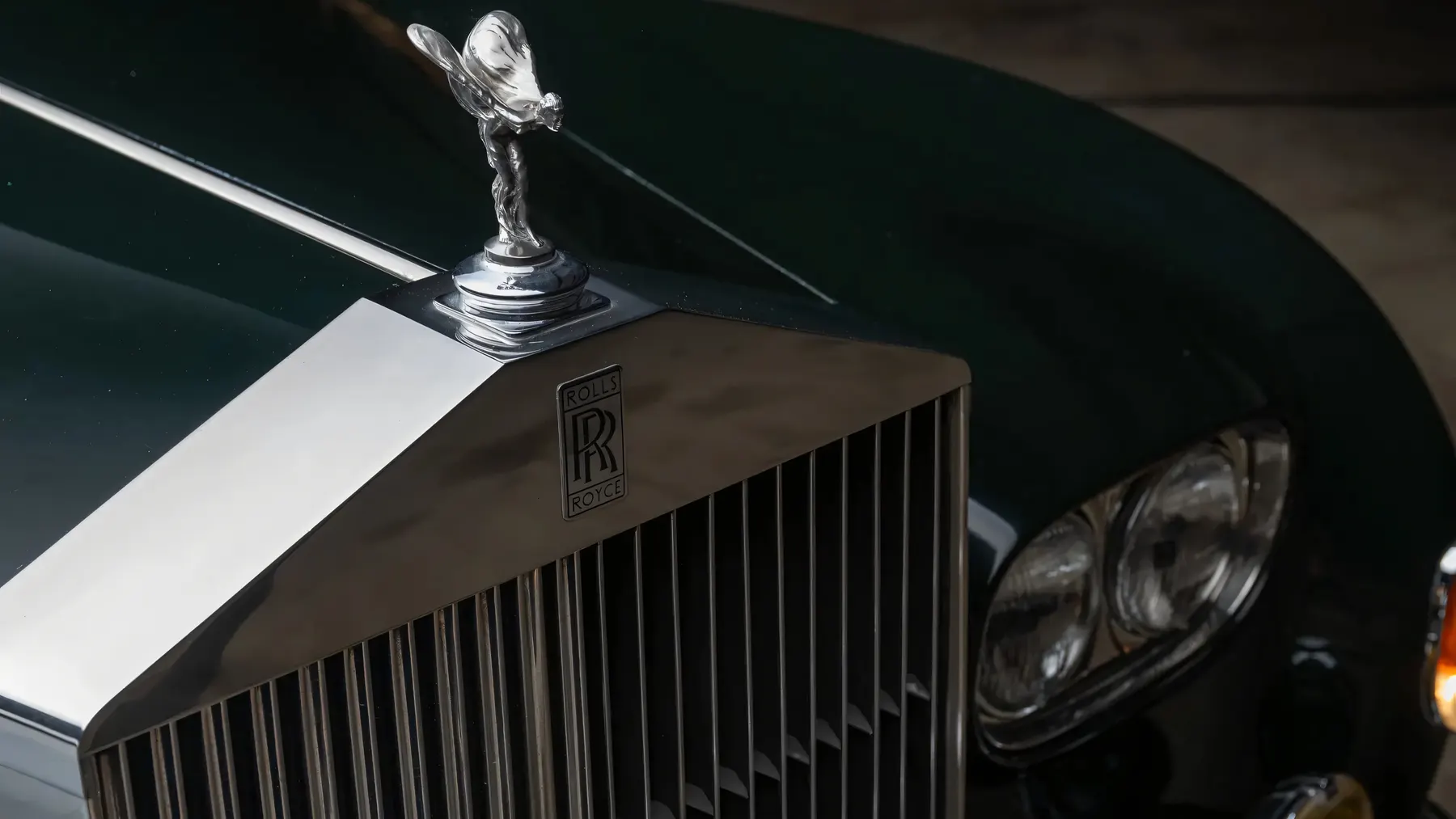
The genuine criticisms must be made clearly, because the car’s reputation does not require protecting from them. The drum brakes on all four corners of a vehicle weighing somewhere in the region of 2,600 to 2,900kg - figures vary between body styles, and no official kerb weight was published - were a meaningful limitation in 1959 and became increasingly hard to justify as the decade progressed. The Mercedes-Benz 600 Grosser, introduced in 1963, offered air suspension, disc brakes, and a centralised hydraulic system controlling windows, seats, and the boot lid: a level of engineering ambition that made the Rolls-Royce’s live rear axle and drum-brake architecture appear like a deliberate act of conservatism rather than a considered balance of virtues. In practice the live axle was most apparent on irregular road surfaces, where the Phantom V’s renowned capacity for silent isolation gave way to a less composed character that owner-driver variants would expose more readily than chauffeur-driven examples in which the passengers were separated from the rear wheels by a glass division and several metres of Wilton. These were not concerns for buyers using the car exclusively on smooth ceremonial routes, but the owner-driver market - for which James Young had made specific provision with their undivided saloon bodies - would have encountered them routinely.
The deeper problem was structural and ultimately fatal to the firm. When the Silver Shadow arrived in 1966 as a monocoque structure, James Young had no suitable canvas. The approximately 35 Rolls-Royce Silver Shadow and 15 Bentley T-series two-door coupés they completed in 1966 and 1967 were made by removing the rear doors from standard unitary-construction production cars and extending the front doors - technically sound but aesthetically uncertain, lacking the sculptural confidence that McNeil had brought to every previous James Young body. McNeil himself had died in November 1965, aged 74. Without him the firm could not compete with Mulliner Park Ward, which had both the technical information and the creative resources to produce a more convincing result. The Silver Shadow coupés sold poorly, around 50 in total across the two model variants. James Young closed in 1968, 105 years after building its first Bromley Brougham, with the final Phantom V bodies among its last work, its skilled workforce dispersing into occupations with no connection to the marquetry and aluminium-forming they had spent their careers practising.
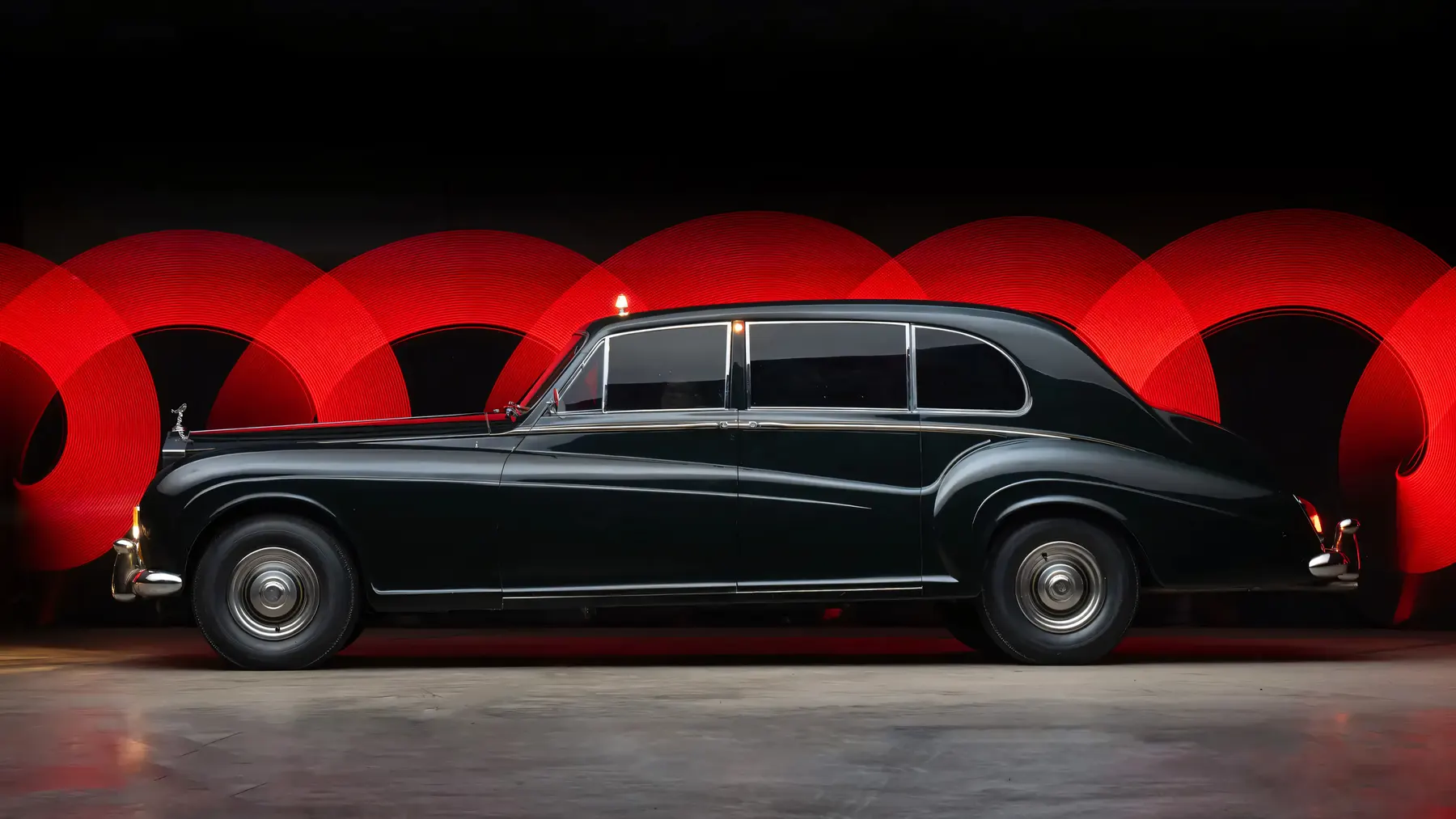
What that closure confirmed, in retrospect, is the specific nature of what had been accomplished. The James Young Phantom V limousines represent the terminal chapter of independent British coachbuilding at meaningful scale, produced at the moment when the tradition itself was being extinguished. The fact that Mulliner Park Ward - Rolls-Royce’s own in-house body operation with every institutional advantage - attempted a comparable Touring Limousine and could not sustain it beyond six examples is the most precise available measure of what McNeil and the Bromley craftsmen achieved. These were not simply the natural output of an expensive chassis and a prestigious commission. They were a particular thing, made by particular people, at the very last moment it was possible to make them.
Sources
- Classic & Sports Car – Rolls-Royce Phantom V: Last of the Line (Martin Buckley, October 2024)
- Wikipedia – Rolls-Royce Phantom V
- Wikipedia – James Young (Coachbuilder)
- The Silver Cloud Society – Coach Builders: James Young
- Bonhams – 1966 Rolls-Royce Phantom V Limousine, Coachwork by James Young Ltd
- Frank Dale – 1961 Rolls-Royce Phantom V Limousine (PV22) by James Young
- Park-Ward Motors – 1962 Rolls-Royce Phantom V by James Young
- Park-Ward Motors – James Young Ltd Phantom V PV22 Touring Limousine
- ConceptCarz – Rolls-Royce Phantom V
- RM Sotheby’s Monterey 2022 – 1965 Rolls-Royce Phantom V Limousine de Ville by James Young
- Hagerty Valuation Tool – 1960 Rolls-Royce Phantom V (James Young)
- Coachbuild.com Forum – James Young Rolls-Royce Phantom V Limousine
Join the discussion
Comments
Loading comments…
Leave a comment
Share a detail, memory, or perspective. Every comment is reviewed before publication.