Rolls-Royce Silver Cloud III Drophead Coupé: The Design Its Creator Disowned
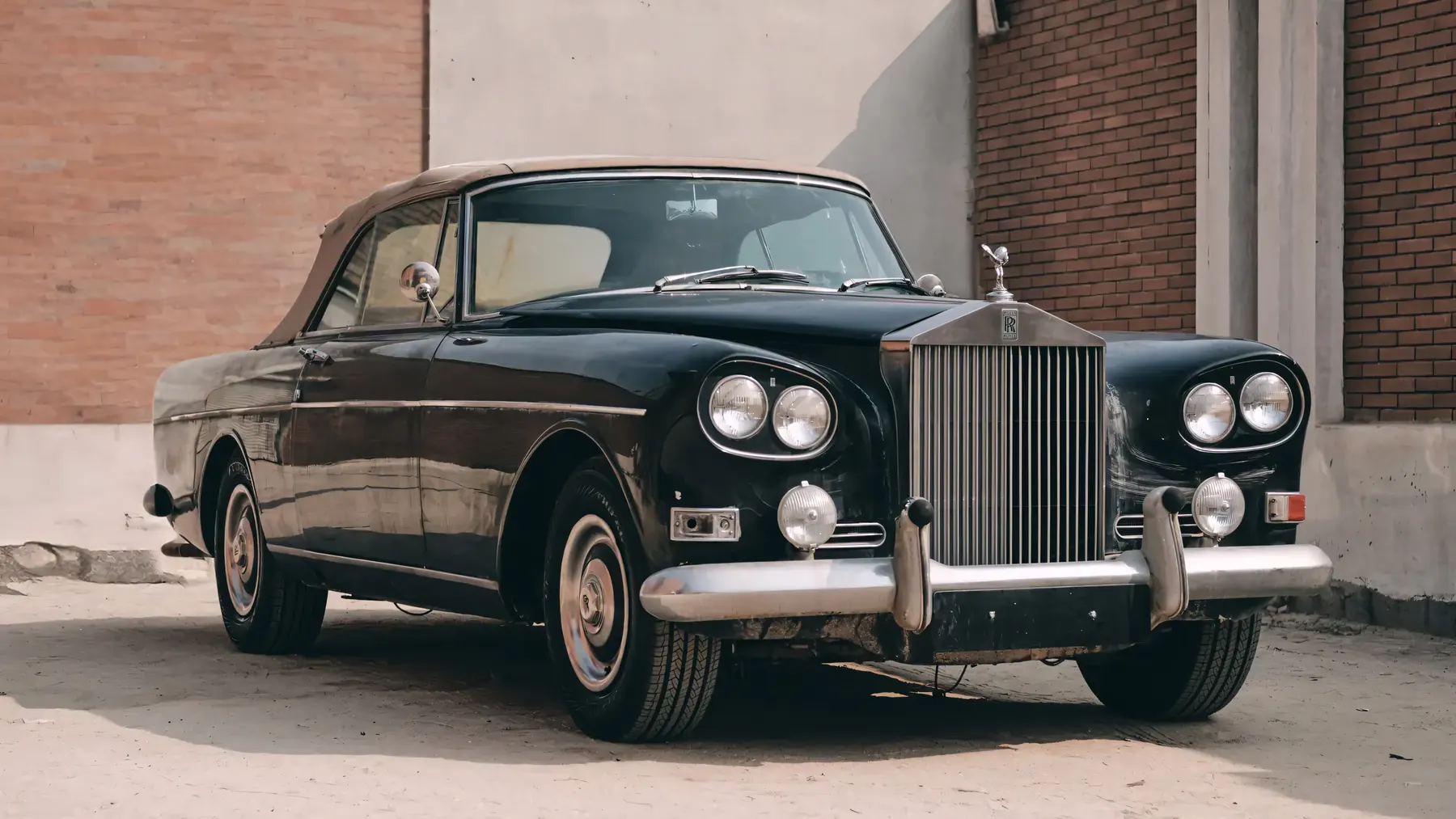
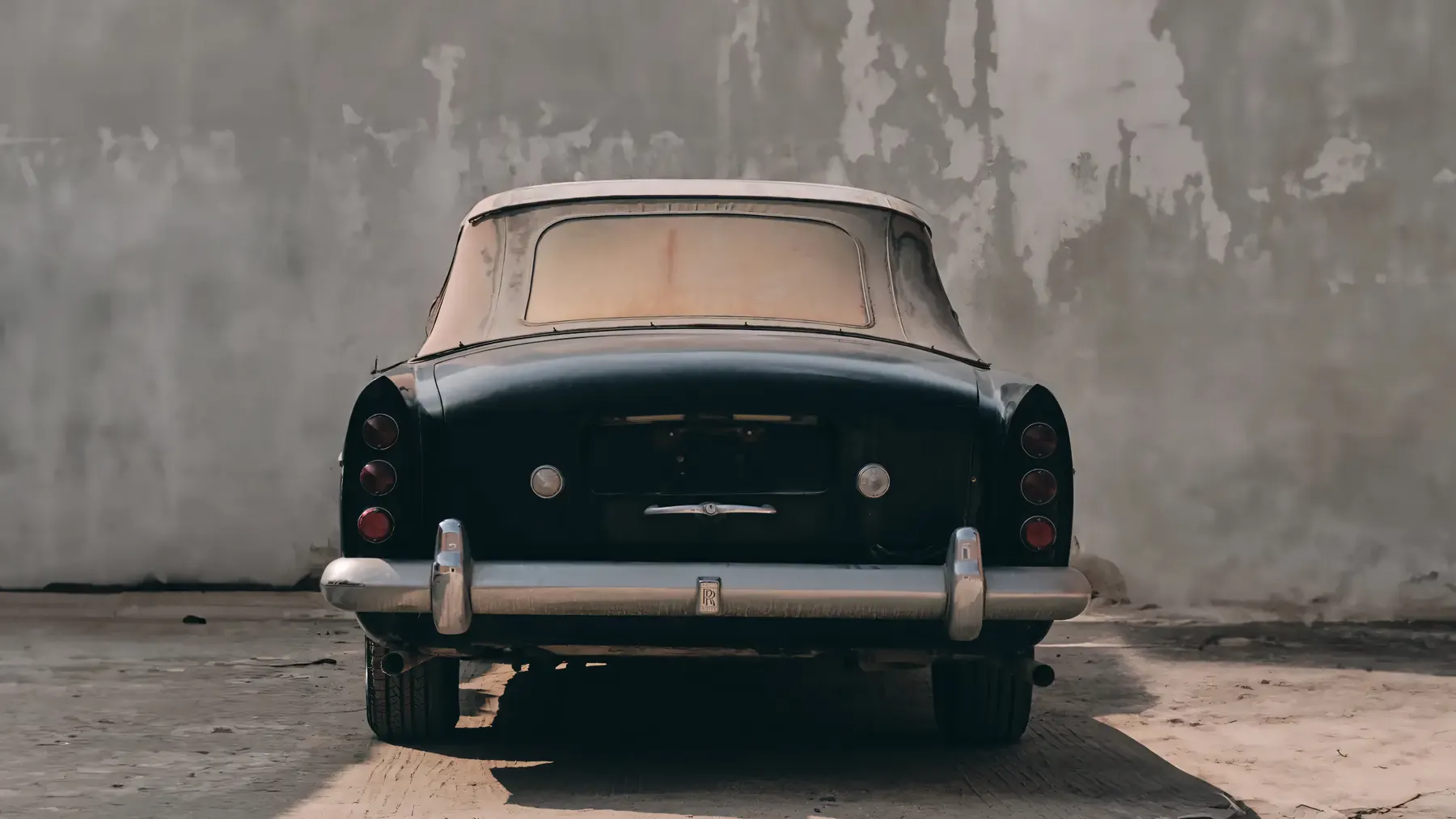
1964 Rolls-Royce Silver Cloud III Drophead Coupé by Mulliner Park Ward

Images: Matt Wardle / RM Sotheby's
When Vilhelm Koren heard what Rolls-Royce had done with his design, his reported response was one of displeasure. The Norwegian had left Park Ward’s coachbuilding works at Pyms Lane in Willesden well before 1962, and what troubled him in particular - as Classic & Sports Car’s investigation of the subject established - was the use of Humber-sourced indicator and sidelight units within the modified four-headlamp arrangement that Mulliner Park Ward had fitted to the new Silver Cloud III and Bentley S3 Continental chassis. His original design, first seen on the Bentley S2 Continental at Earls Court in 1959, had been a clean and restrained exercise: a continuous wing line running unbroken from front fender to rear, cut-back wheel arches, flanks stripped of the chrome appliqué that cluttered most luxury cars of the period, and a low roofline that introduced design ideas into British coachbuilding that had previously belonged almost exclusively to the Italian carrozzerie. What Mulliner Park Ward produced on the Cloud III chassis in 1962 retained the structural logic of Koren’s concept while fitting four headlamps set at an inward slant into angled nacelles - a solution to the engineering awkwardness of placing horizontal quad lamps within a bonnet line not originally designed for them. The effect was so distinctive that the car acquired an enduring nickname: the ‘Chinese Eye.’ Koren was not pleased. His clients, over the six years that followed, largely were.
The Silver Cloud III was introduced at the 1962 Paris Salon, the third and final iteration of a line Rolls-Royce had been producing since 1955. As a standard saloon, it was recognisably an evolution of what had come before - the body-on-frame architecture, the cruciform-braced steel chassis, and the all-alloy overhead-valve V8 of 6,230cc that had been introduced on the Cloud II in 1959 were all retained, though meaningfully revised. The carburettors grew from 44mm SU units to 51mm, the compression ratio rose to 9:1, and the crankshaft received nitride hardening to address the crankshaft breakages that had troubled earlier V8 installations - a detail that period press coverage largely passed over in silence but which was quietly significant for long-term durability. Rolls-Royce declined, as was the company’s established practice, to publish power figures. The official acknowledgement was that the revisions represented an improvement of “perhaps seven percent” over the Cloud II, a phrase that communicated everything Rolls-Royce believed about performance as a marketing concept. Secondary estimates from specialist dealers and auction houses range from approximately 185 to 230 bhp, a spread that illustrates the difficulty of calculating what a manufacturer preferred to leave undefined. What period testing of the equivalent standard saloon indicated was a 0–60 mph time approaching ten seconds and a top speed in the region of 115 mph - figures that satisfied the magazine testers of the day without unsettling the car’s fundamental identity as a conveyance rather than a sporting machine.
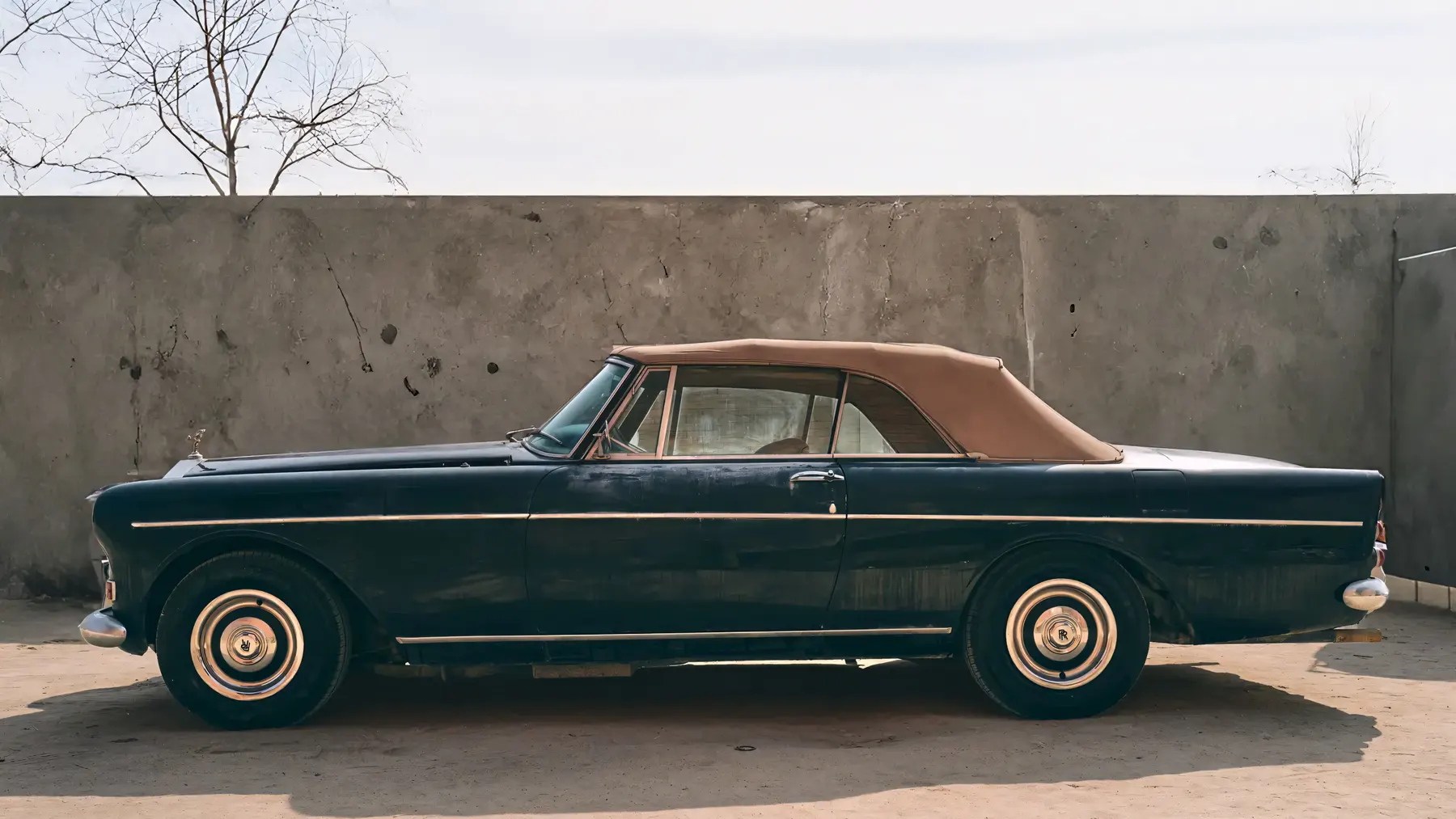
The more interesting question is what Mulliner Park Ward offered alongside that standard car, and this is where the amalgamation of H.J. Mulliner and Park Ward in 1961 - Rolls-Royce brought the two coachbuilding houses under single management just as the Cloud III was entering development - becomes the central fact. The merged entity inherited from Park Ward the Koren shape that had been running on the Bentley S2 Continental since 1959, built there in open form exclusively: all 125 of the S2 Park Ward Continentals were drophead coupés, with no fixed-head version ever produced on the S2 chassis. When Mulliner Park Ward adapted the design for the Cloud III and the S3 Continental chassis simultaneously in 1962, it became available for the first time in both fixed-head and drophead coupé form, and - crucially - for the first time as a Rolls-Royce rather than a Bentley. The two cars were mechanically identical beneath their different radiator shells and badging; the Rolls-Royce variant was distinguished among other things by the absence of a rev counter, it being understood that clients of the Silver Cloud III had no particular use for such information.
The ‘Chinese Eye’ design served a purpose beyond offering coachbuilt alternatives to the standard saloon. Rolls-Royce was developing the Silver Shadow through the early 1960s - a monocoque design that would eventually make body-on-frame construction at Crewe redundant - and the slanting headlamps and slab-sided body language of the Koren coachwork served partly as a way of testing market reception to the styling direction that would define the Shadow and Bentley T-series. This was not widely advertised at the time. What it means in retrospect is that the car was carrying two histories simultaneously: a concluded one, rooted in the coachbuilding tradition, and an incipient one oriented toward a future the Cloud III could only hint at.
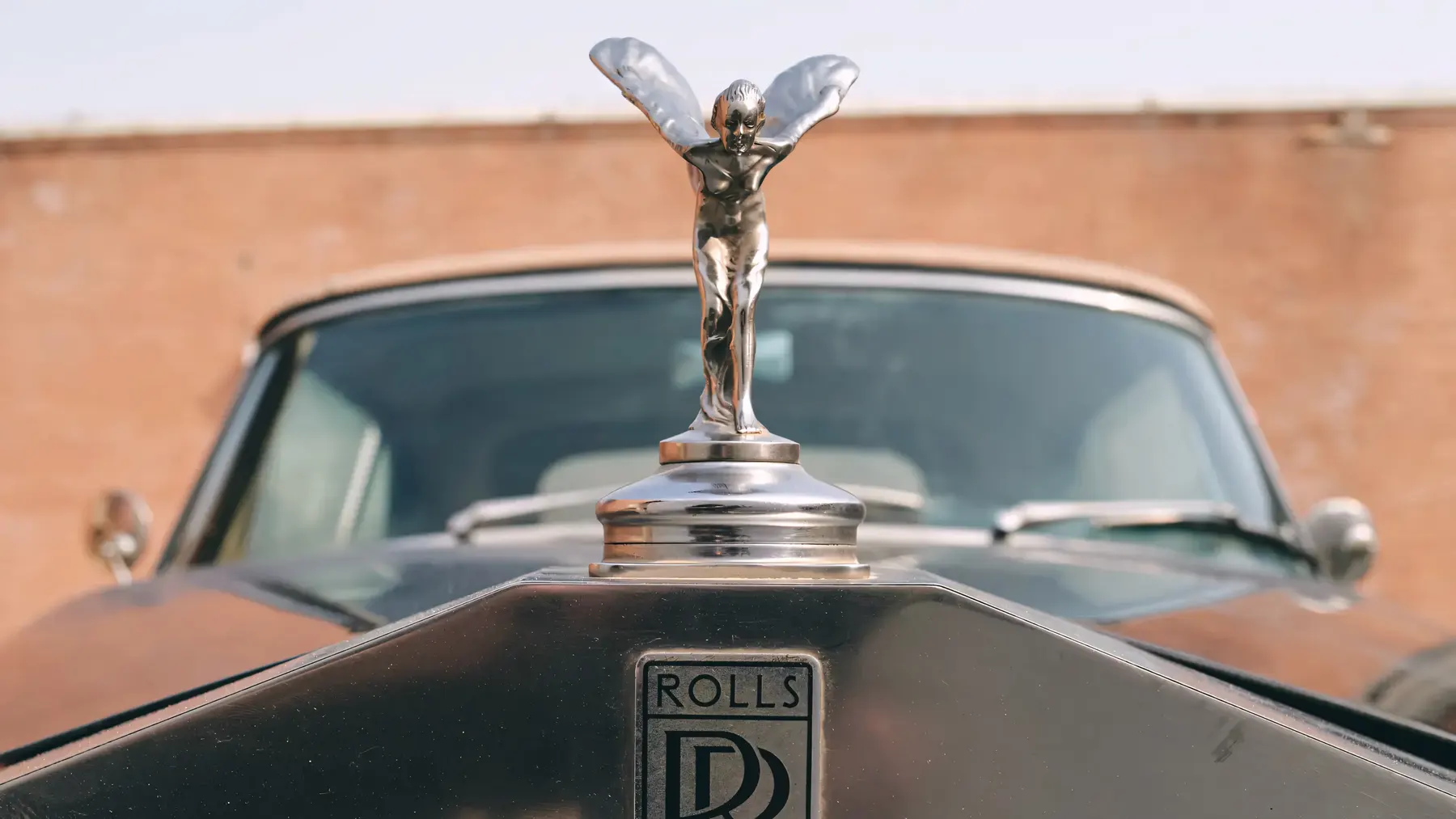
Approximately 107 Rolls-Royce examples of the ‘Chinese Eye’ design were built between 1962 and 1966, comprising fixed-head and drophead coupés. The great majority were open cars - around 101 drophead coupés by the most frequently cited specialist count, with approximately 52 built to left-hand-drive specification for export, principally the United States. Each car took approximately six months to construct, using a body of lightweight steel and aluminium built with techniques that owed something to the aircraft industry, and each was finished to its buyer’s precise specification. Build records preserved by the Rolls-Royce Foundation reveal personalisation that no volume process could accommodate: compass installations, monograms applied by hand by G.C. Francis - the company’s long-standing heraldic artist - interior fabrics specified for particular climatic requirements. The new price in Britain was approximately £7,995, placing the car above almost every other vehicle available and well beyond the reach of a Jaguar E-Type, which offered a categorically different kind of driving experience at a fraction of the cost.
The chassis beneath all this craft was orthodox: independent front suspension by coil springs, wishbones, and an anti-roll bar; a live rear axle located by semi-elliptic leaf springs and radius arms with lever-arm dampers at both ends. Power-assisted cam-and-roller steering was standard equipment. The four-speed GM Hydramatic gearbox - manufactured by Rolls-Royce under licence - was smooth in its transitions and well suited to the unhurried temperament the car encouraged in its driver. What the ‘Chinese Eye’ drophead delivered in motion was close to the automotive expression of a large, well-appointed yacht: immense low-speed torque available without apparent effort, a V8 that communicated its presence more through sensation than sound, steering with genuine feel from the road surface, and remarkably little body roll for a car of its proportions. The book-matched walnut veneer and Connolly hide of the interior continued the formal tradition without concession to modernity; no instrument, no surface, no control departed from what Rolls-Royce considered appropriate for a customer who expected the world to accommodate itself to him rather than the reverse. With the hood folded and the V8’s voice reduced to a distant murmur at the cruising speeds the car preferred, the sensation was of a moving drawing room conducted in the open air - insulating rather than exciting, but complete in its own terms. The tested weight was 2,235 kg in fully equipped form, a consequence of the substantial open coachwork, the power hood mechanism, and the equipment that bespoke specification habitually accumulated.
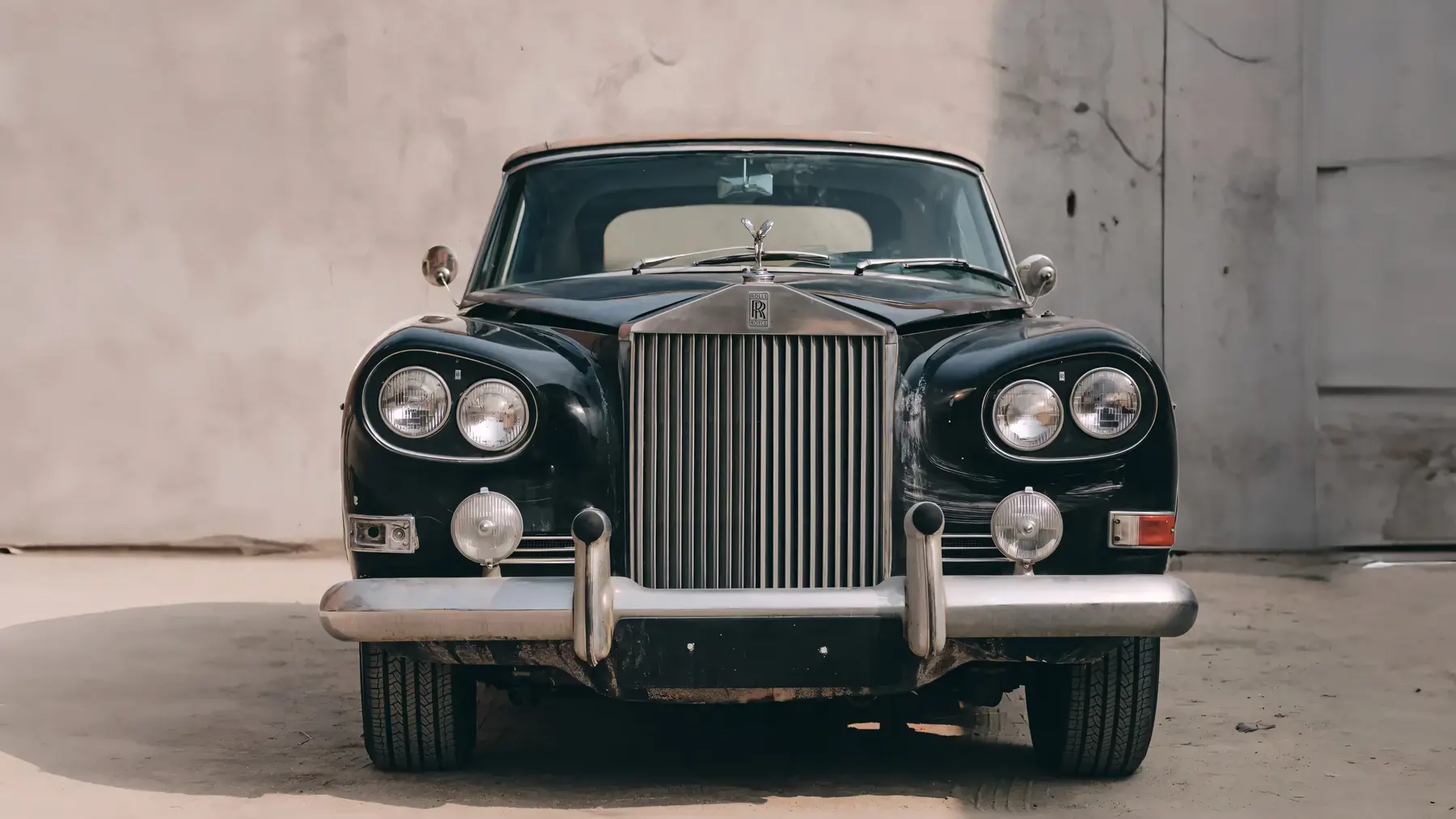
There are genuine criticisms to make of the Cloud III drophead, and they are worth stating clearly. The most obvious concerns the braking system: four-wheel drums, operated through a gearbox-driven servo, at a time when disc brakes had become standard equipment on performance and luxury cars across Europe. Jaguar had fitted discs to all four corners of the E-Type from its 1961 debut; Aston Martin had done the same on the DB4 from 1959. The drums on the Cloud III were adequate for the car’s pace in normal use, and period assessments of properly maintained examples have described the servo assistance as effective, but four-wheel drums remained a conspicuous conservatism for a machine sold at the market’s upper extreme - anachronistic not just in retrospect but before production had begun. The V8 itself carried a qualification that attentive period journalists had noted since the Cloud II’s debut: despite the hydraulic tappets intended to silence it, the engine was not quite as refined in its running as the straight-six it had replaced in 1959. The engine bay was also a tight fit, having been adapted into a body originally designed for a narrower inline unit, with the consequence that changing the spark plugs on the right side of the engine required removing the front wheel - an inconvenience that belongs on no vehicle asking £7,995 for the privilege of ownership. And the Cloud III’s crankshaft had already required redesign with nitride hardening to address breakages in earlier V8 installations - a correction that reflected well on Rolls-Royce’s willingness to address problems but not on the engine’s initial execution. Real-world fuel consumption of 10–14 Imperial mpg was, in context, entirely expected for a car of this weight and character, but it added meaningfully to the cost of ownership. There was also the broader structural reality that the Silver Cloud III was built on a platform that Rolls-Royce itself knew was approaching the end of its life. The Shadow arrived in 1965 - before Cloud III production had even concluded - to confirm that monocoque construction had superseded what the body-on-frame chassis could offer. The coachbuilt Cloud III was therefore not merely the rarest and most spectacular member of its model family; it was, structurally speaking, the final expression of an engineering tradition that was already being retired.
The ‘Chinese Eye’ drophead found its cultural moment almost incidentally. A black example, initially ordered by a certain James Savile in January 1965 and passed on within weeks, came into the possession of Pierre Rouve, co-producer of Michelangelo Antonioni’s 1966 film Blow-Up. It appears throughout that picture at the wheel of David Hemmings, moving through a London simultaneously glamorous and unresolved, its hooded lamps and squared flanks perfectly suited to Antonioni’s aesthetic of polished surfaces concealing uncertain depths. Peter Sellers and Brigitte Bardot also owned examples. These associations were not incidental to the car’s reputation in retrospect; they located it precisely within the decade’s visual imagination in a way that the standard Steel Saloon - however competent - could never have managed.
Production of the Silver Cloud III ended in 1966. The Shadow’s own two-door variants, built by Mulliner Park Ward on monocoque foundations and carrying clear traces of Koren’s structural thinking even as they abandoned his specific details, evolved through the 1970s into the Rolls-Royce Corniche, sustaining the convertible line for another three decades. But the Cloud III drophead is not the Corniche, and the distinction lies in the manner of its making. Each of the approximately 101 examples was built individually, to a specific buyer’s instruction, in a workshop, using methods that the Shadow’s monocoque platform could never have accommodated. The design that Koren reportedly disowned - produced on a chassis that its manufacturer was already planning to replace, by a coachbuilding entity that had only just come into existence through merger - was the last Rolls-Royce made in the way Rolls-Royces had always been made. That it was simultaneously controversial in styling, compromised in certain mechanical particulars, and genuinely, arrestingly beautiful is perhaps the most accurate summary of what the final chapter of a great coachbuilding tradition looked like when it came.
Sources
- Classic & Sports Car - “Rolls-Royce Silver Cloud III: Blow-Up’s star car,” Martin Buckley, June 2025
- Frank Dale Rolls-Royce & Bentley - Silver Cloud III Model Guide
- RM Sotheby’s - Hershey 2024, 1965 Silver Cloud III Drophead Coupé by Mulliner Park Ward
- RM Sotheby’s - Monterey 2024, 1965 Silver Cloud III Drophead Coupé by Mulliner Park Ward
- RM Sotheby’s - Don Davis Collection, 1965 Silver Cloud III Drophead Coupé by Mulliner Park Ward
- H&H Classics - Lot 210: 1965 Silver Cloud III Drophead Coupé
- Wikipedia - Rolls-Royce Silver Cloud
- RMW.lv - Rolls-Royce Silver Cloud III Drophead Coupé by Mulliner (specification and background)
- Fender Broad Classic Cars - Rolls-Royce Silver Cloud III Drophead Coupé
Join the discussion
Comments
Loading comments…
Leave a comment
Share a detail, memory, or perspective. Every comment is reviewed before publication.