Rolls-Royce Silver Cloud II Mulliner Drophead: The 'Adaptation' That Was Anything But
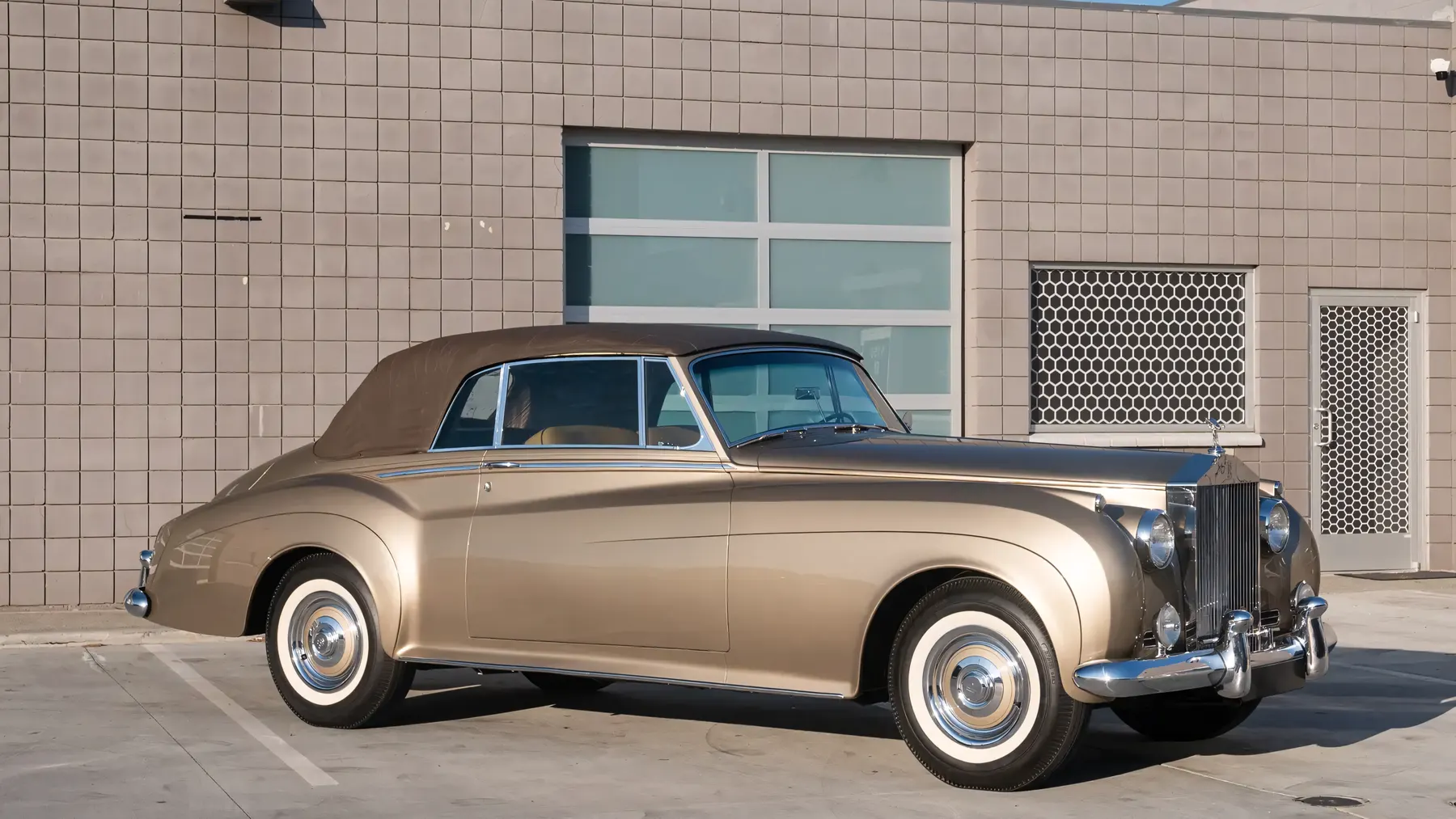
1962 Rolls-Royce Silver Cloud II Drophead Coupe Adaptation by H.J. Mulliner

Images: Karissa Hosek / RM Sotheby's
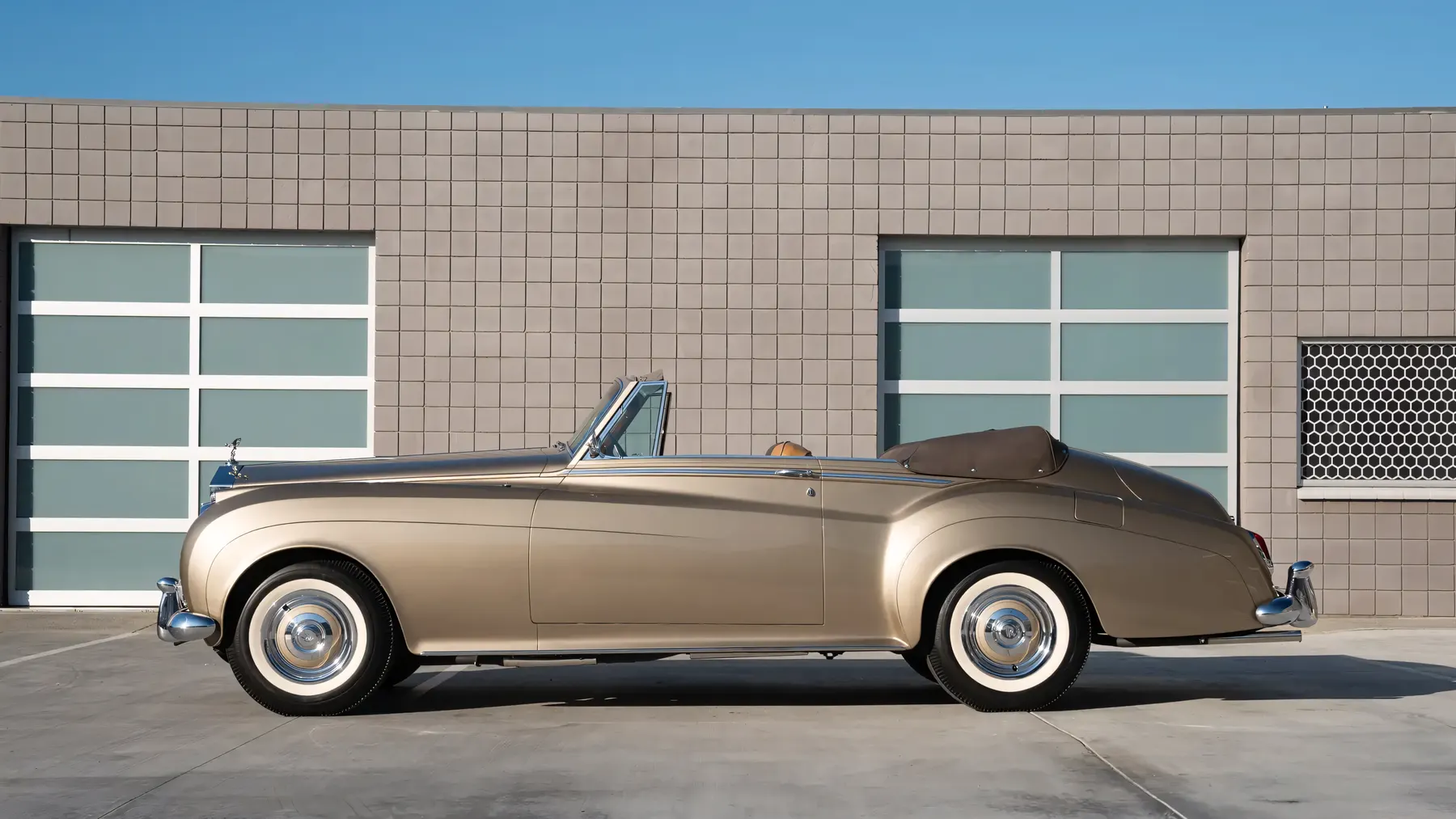
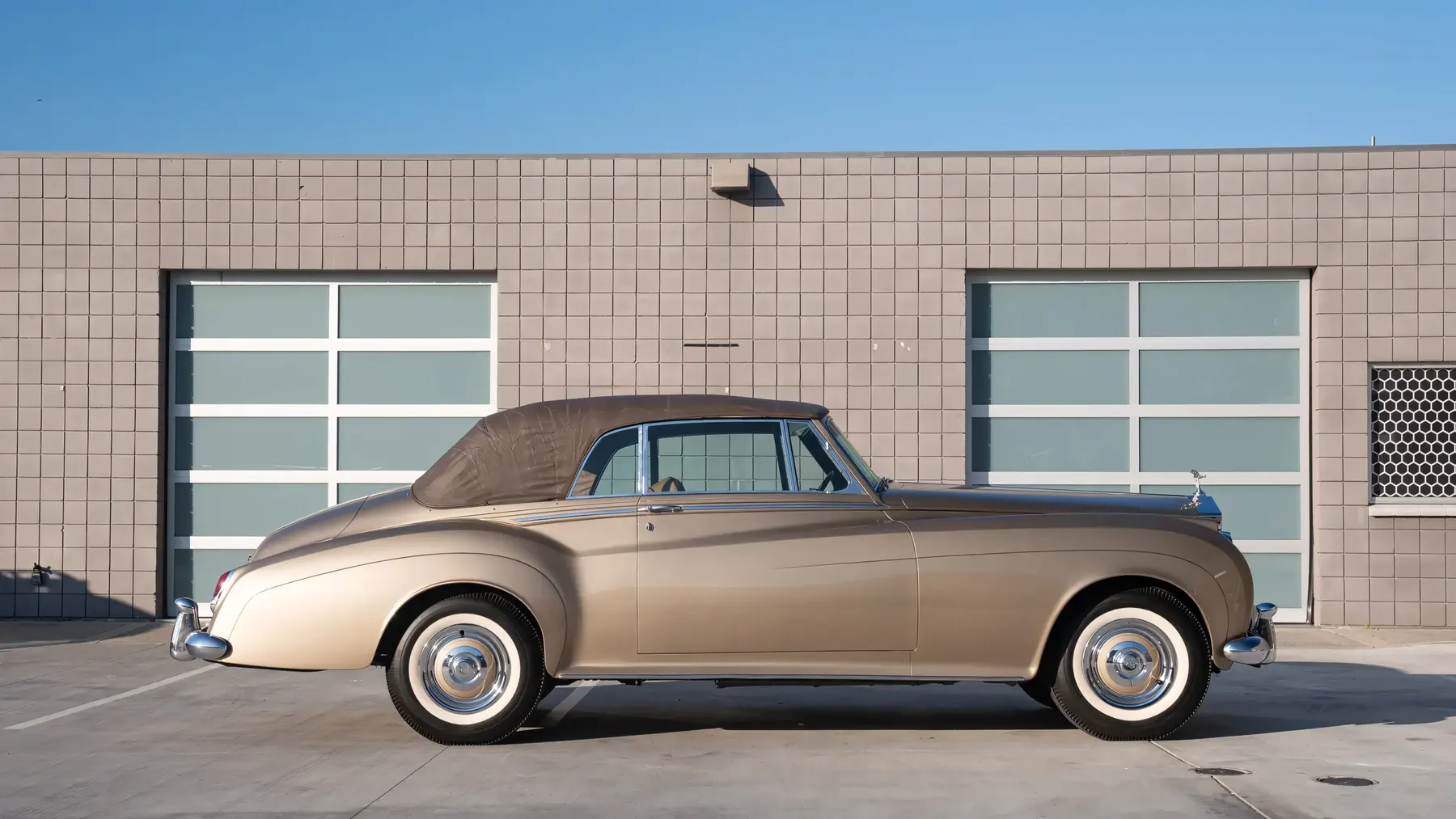
The name that Rolls-Royce and H.J. Mulliner chose for their most desirable Silver Cloud conversion was, by any reasonable measure, an act of studied understatement. “Adaptation” - suggesting a minor modification, a subtle tweak to the recipe, something closer to an extended specification option than a genuine piece of coachbuilt artistry. In reality, what happened at Mulliner’s Chiswick workshop to the factory Standard Steel Saloon shell amounted to something far more radical. The steel roof was removed entirely. The four doors were reworked down to two. The waistline chrome moulding was replaced with a bespoke curved piece that transformed the body’s visual cadence. The resulting car bore almost no emotional resemblance to the four-door saloon that had left Crewe. And yet the modest designation endured - partly for legal and commercial convenience, and partly, perhaps, because Rolls-Royce understood that the 7504 Drophead Coupe did not need to shout about itself.
The story of this car is inseparable from H.J. Mulliner & Co., one of the most distinguished coachbuilders in British automotive history. The firm traced its roots through a family business founded in Northampton in the 1760s to hire out carriages, later relocated to Mayfair and then to Chiswick, West London, where it spent the latter decades of its independent life. By the 1930s, virtually the entire output of the Chiswick works was destined for Rolls-Royce and Bentley chassis - an arrangement that suited both parties and cemented Mulliner’s reputation as a house of exceptional craft. The firm had designed the original Bentley Continental in the early 1950s, among other landmark bodies. What made the late 1950s particularly significant is that Rolls-Royce acquired Mulliner outright in July 1959 - the same autumn the Silver Cloud II was launched at the Earls Court Motor Show - and would go on to merge it with Park Ward in 1961 to form Mulliner Park Ward. The 7504 Drophead therefore occupies a precise and unrepeatable moment in that history: built under the Mulliner name, after Rolls-Royce took ownership, in the brief window before consolidation erased the workshop’s independent identity.
The Silver Cloud II itself represented a significant engineering transition at Crewe. Externally, Rolls-Royce made almost no changes from the Silver Cloud I - the distinguished John Blatchley-designed body remained essentially intact, its classical upright grille, long bonnet, and flowing rear haunches unchanged. But under that familiar bonnet lay an entirely new engine. The Silver Cloud I had been powered by an inline-six of 4.9 litres, itself a descendant of units stretching back to the Silver Ghost era. By 1959, that engine had been developed as far as Crewe believed it could go, and competition from American luxury saloons - heavier, torquier, and in some respects more technically modern - was sharpening Rolls-Royce’s commercial instincts. The answer was a new 6,230cc V8, built from an aluminium alloy block and fitted with twin 1.75-inch SU carburetors. Power output was never officially stated - Rolls-Royce maintained their famous position that output was “adequate” - but period estimates, which have found their way into reference sources, suggest something in the region of 185 bhp. What the new engine unambiguously delivered was improved torque, better acceleration, and the ability to sustain high speeds with greater composure. The Motor, in its road test of the standard saloon in 1960, recorded 0–60 mph in 10.9 seconds and a top speed just short of 105 mph in test conditions, though Rolls-Royce cited 114 mph as the car’s maximum. Road & Track, testing the car in September 1960, concluded that “it is a pleasure to report that there is still a company in business dedicated to the task of producing the best car in the world, regardless of cost.” The V8’s introduction was considered significant enough that the engine itself was placed on display at the Motor Show alongside the cars.
It was onto this mechanically evolved but visually conservative platform that Mulliner worked its transformation. The 7504 body style had actually been introduced very late in Silver Cloud I production, giving it only a brief initial run before the updated mechanical underpinnings of the Silver Cloud II arrived. The conversion process began with a completed factory Standard Steel Saloon shell, which was then subjected to what Mulliner called an adaptation but which any objective observer would describe as a near-total reworking. The steel roof was cut away. The four-door body was rebuilt with two doors of considerably more generous proportions, demanding new pressings for the door skins and frames. A revised chromed waistline moulding was fitted - longer, more curved, more voluptuous than the saloon’s equivalent - and it is this single detail, sweeping low along the flanks before rising gently towards the tail, that gives the Drophead Coupe its distinctive visual authority. A properly engineered folding hood completed the conversion, with later examples offering the power-operated mechanism that buyers in warmer markets particularly appreciated. The interior could be specified to virtually any standard the client required - the bespoke options list being, in Mulliner’s own terms, limited only by the buyer’s imagination and budget.
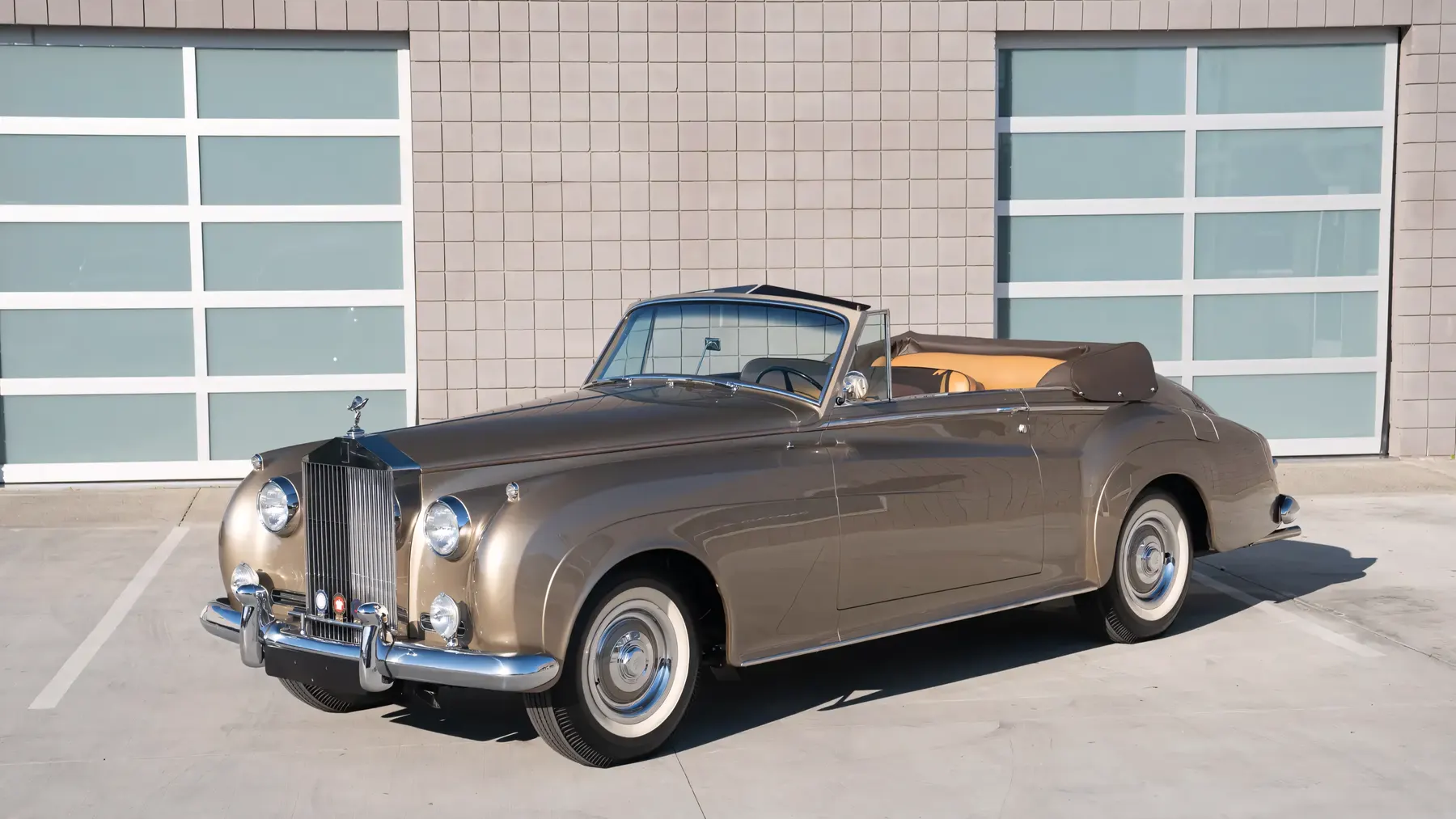
Of the 107 Drophead Coupe Adaptations built on the Silver Cloud II chassis between 1959 and 1962, more than half went to American customers, reflecting a demand that the domestic British market, with its different climate and tax structure, could not match. The split between left- and right-hand-drive examples was notably uneven, with approximately 74 of the 107 configured for the American or continental European markets. Florida, California, and the American south represented the car’s natural habitat - places where the folding hood would actually be used, where the open-air elegance of the design could be properly appreciated, and where the Rolls-Royce name carried maximum social weight. The rarity of right-hand-drive examples - perhaps three dozen - makes them especially sought after in the British market today, and their survival rate is generally higher than US-delivered cars that spent decades in the corrosive atmosphere of northern states.
From the driver’s seat, the Silver Cloud II Drophead Coupe presents itself as an experience governed entirely by isolation and ease. The steering - power-assisted and geared for effortless low-speed manoeuvring rather than communicative feedback - allows the car to be placed with sufficient precision but offers little sense of the road surface beneath it. The automatic transmission shifts early and smoothly, keeping the V8 in its torque-rich low-speed range for most ordinary driving. At speed, the sense of unhurried potency - the car gathering pace in near-silence, the horizon closing at a rate that seems inconsistent with the mechanical effort involved - is the defining sensation. Rolls-Royce never intended this car to be driven with urgency, and it rewards those who accept its own pace unconditionally. Wind noise with the hood lowered is relatively well managed given the architecture of the conversion, though no open car of this era could entirely silence the roofless penalty at sustained high speed.
That said, the Silver Cloud II Drophead demands honest critical accounting. The V8 engine, for all its advantages in torque and performance over the straight-six it replaced, was widely noted at the time to be neither as quiet nor as smooth as the outgoing unit. The hydraulic tappets were intended to suppress mechanical noise, but contemporary road testers consistently flagged that the Silver Cloud II did not quite achieve the near-silent refinement the Silver Cloud I had delivered. The engine’s dimensions were also a poor fit for a bay designed around a narrower inline unit: to change the spark plugs, a mechanic was required to remove the car’s right front wheel - a significant maintenance inconvenience that sat uncomfortably with the marque’s image of engineering perfectionism. Earlier examples of the V8 also suffered from reported crankshaft breakages, a problem subsequently addressed at Crewe but which introduced unwanted uncertainty into the early cars. The drum brakes at all four corners were being asked to manage the momentum of a car that, in standard saloon form, already weighed approximately 2,108 kg, and the Drophead’s folding hood mechanism and additional structural reinforcement would add measurably to that figure. Disc brakes were becoming the standard of competence elsewhere in the market; the Silver Cloud II was not yet part of that transition. Fuel economy, too, was sobering even by 1960 standards: The Motor recorded 13 Imperial mpg in the standard saloon, and the additional weight and aerodynamic compromise of the open body would not have improved matters. These were not flaws that deterred the clientele - demand for the 7504 consistently ran ahead of supply - but they were genuine limitations that even the most devoted owners chose, with some justification, to overlook.
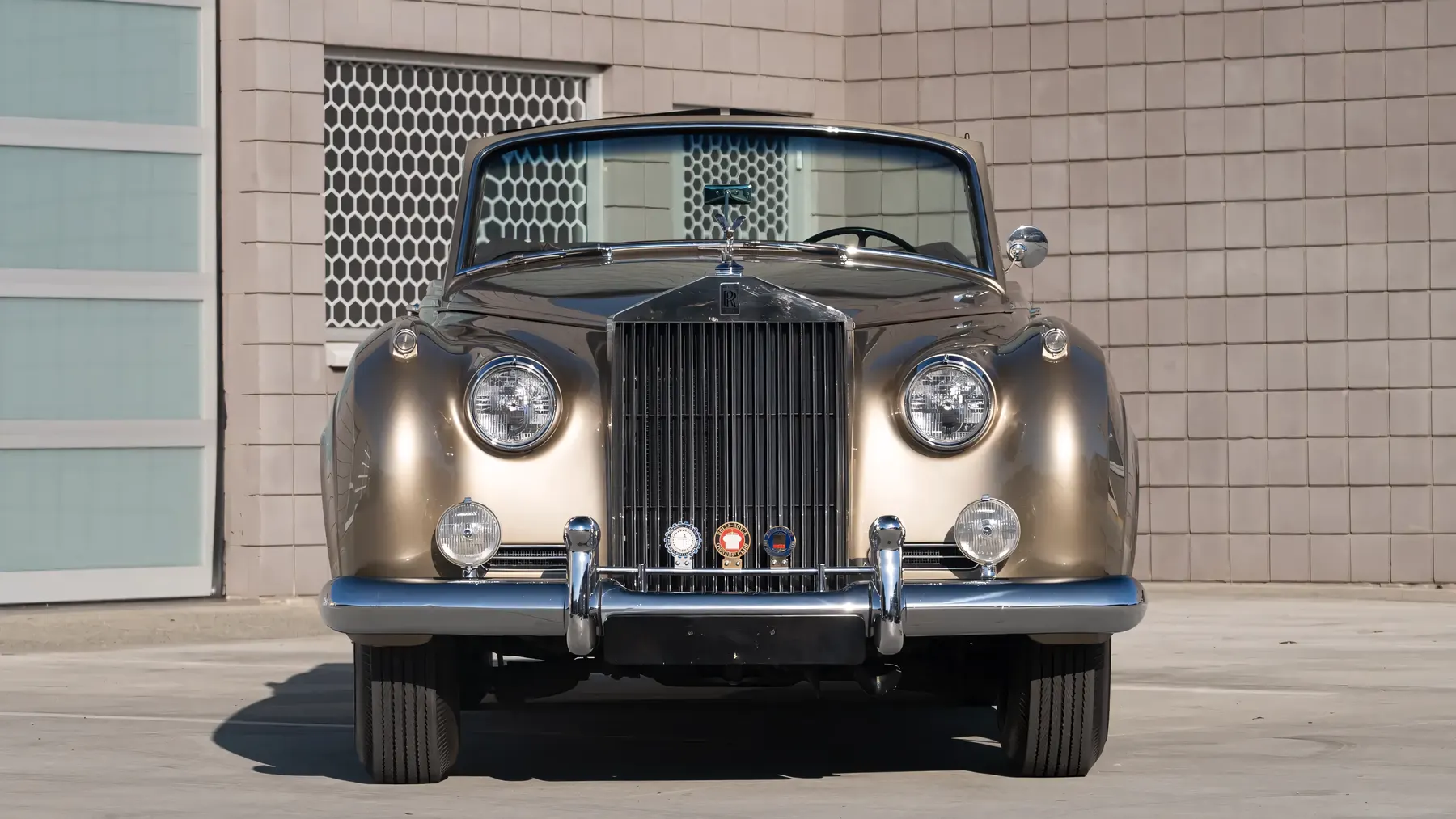
The Silver Cloud II Drophead Coupe Adaptation occupies a genuinely significant place in the postwar Rolls-Royce story because it straddles two eras with unusual elegance. It belongs to the tradition of coachbuilding, drawing on techniques and craftsmanship reaching back generations, while being built under factory ownership and to a degree of standardisation that the independent coachbuilders of the 1930s would scarcely have recognised. It was the last expression of the idea that a Rolls-Royce could be transformed into something genuinely open and glamorous without having to resort to a fully bespoke commission, and the 107 examples built on the Silver Cloud II represent a finite and unrepeatable body of work. The total Silver Cloud II production run amounted to 2,417 cars - meaning each Drophead Coupe Adaptation represents a tiny fraction of the series, and perhaps four times that fraction of the cars that carry any enduring collector significance today. That such a small proportion were built for right-hand-drive markets only intensifies competition for the survivors. The car’s combination of the mature, evolved Silver Cloud II platform, the 7504’s perfectly proportioned two-door body, and the unique circumstances of Mulliner’s final years as a nominally independent house makes it one of those rare objects where history, engineering, and design converge without visible seam. That it was officially only an “adaptation” remains, in retrospect, one of the more charming euphemisms in the history of the motor car.
Sources
- RM Sotheby’s Miami 2024 – Silver Cloud II DHC Adaptation lot description
- RM Sotheby’s Amelia Island 2022 – Silver Cloud II DHC Adaptation lot description
- RM Sotheby’s Villa Erba 2015 – Silver Cloud II DHC Adaptation lot description
- Wikipedia – Rolls-Royce Silver Cloud
- Wikipedia – H.J. Mulliner & Co.
- Wikipedia – Mulliner Park Ward
- Frank Dale – Rolls-Royce Silver Cloud II Model Guide
- ConceptCarz – Rolls-Royce Silver Cloud II
- Classic Rolls-Royce Bentley – Silver Cloud II specifications and road test data
- Hagerty – 1960 Rolls-Royce Silver Cloud II valuation and historical notes
- The Silver Cloud Society – H.J. Mulliner coachbuilder profile
Join the discussion
Comments
Loading comments…
Leave a comment
Share a detail, memory, or perspective. Every comment is reviewed before publication.