The Bentley S2 Continental Park Ward Drophead Coupé: Crewe's Most Elegant V8 Cabriolet
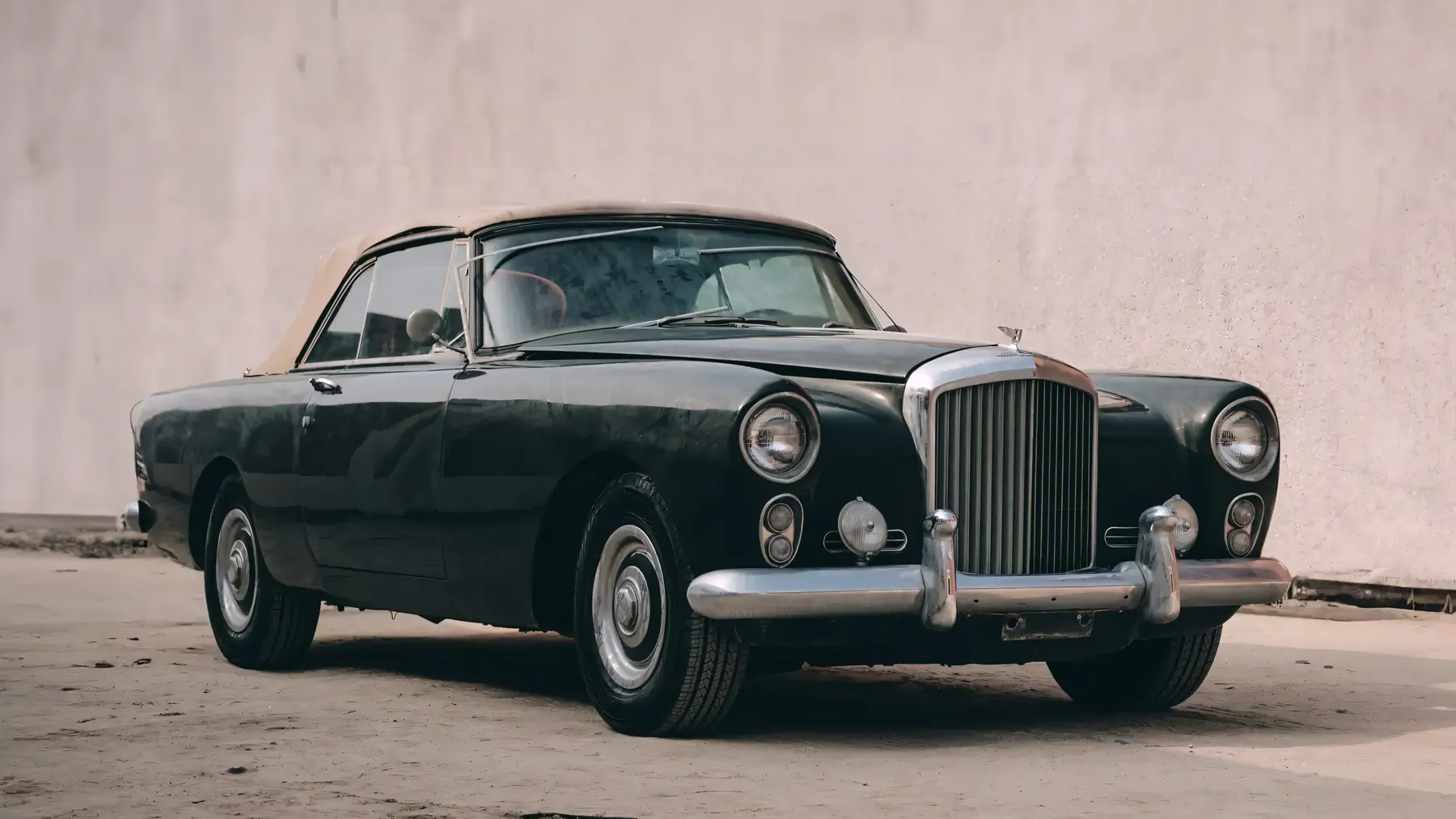
1962 Bentley S2 Continental Drophead Coupé by Park Ward

Images: Matt Wardle / RM Sotheby's
When Rolls-Royce wanted a body for the most significant Bentley in a generation, they did not turn to Britain. They turned to a Norwegian freelance designer who had caught their attention in Turin with an Alfa Romeo. That small corporate decision - to hire Vilhelm Koren and task him with creating the open coachwork for the new S2 Continental - produced what many collectors now regard as the most beautiful Bentley ever to carry a traditional drophead body. It also produced a design that departed so sharply from the pre-war coachbuilding aesthetic that it caused genuine discomfort at Crewe before it was vindicated by client orders.
The S2 arrived in 1959 as something of a mechanical revolution disguised inside familiar clothing. From across a car park, the new car was nearly indistinguishable from the S1 it replaced - the same upright radiator, the same formal proportions, the same general silhouette. Under the bonnet, however, everything had changed. The old 4.9-litre straight-six, which had delivered around 160bhp and which was by 1959 extended to its practical limit, gave way to an entirely new 6,230cc overhead-valve V8. Cast almost entirely in aluminium alloy, the new engine shared its architecture with the Rolls-Royce Silver Cloud II - the S2’s closely related cousin - and was constructed with hydraulic tappets throughout to ensure the near-silence that Crewe had come to consider a baseline requirement rather than an aspiration. Power was never officially declared: Bentley and Rolls-Royce took the position that their engines produced whatever output was deemed adequate, a policy that was equal parts commercial discretion and institutional superiority. Reliable estimates of approximately 200bhp were widely circulated, and the figures in use - a top speed of around 115 mph and a 0–60 mph time of just over ten seconds - confirmed that the new unit represented a meaningful step beyond its predecessor in both pace and composure.
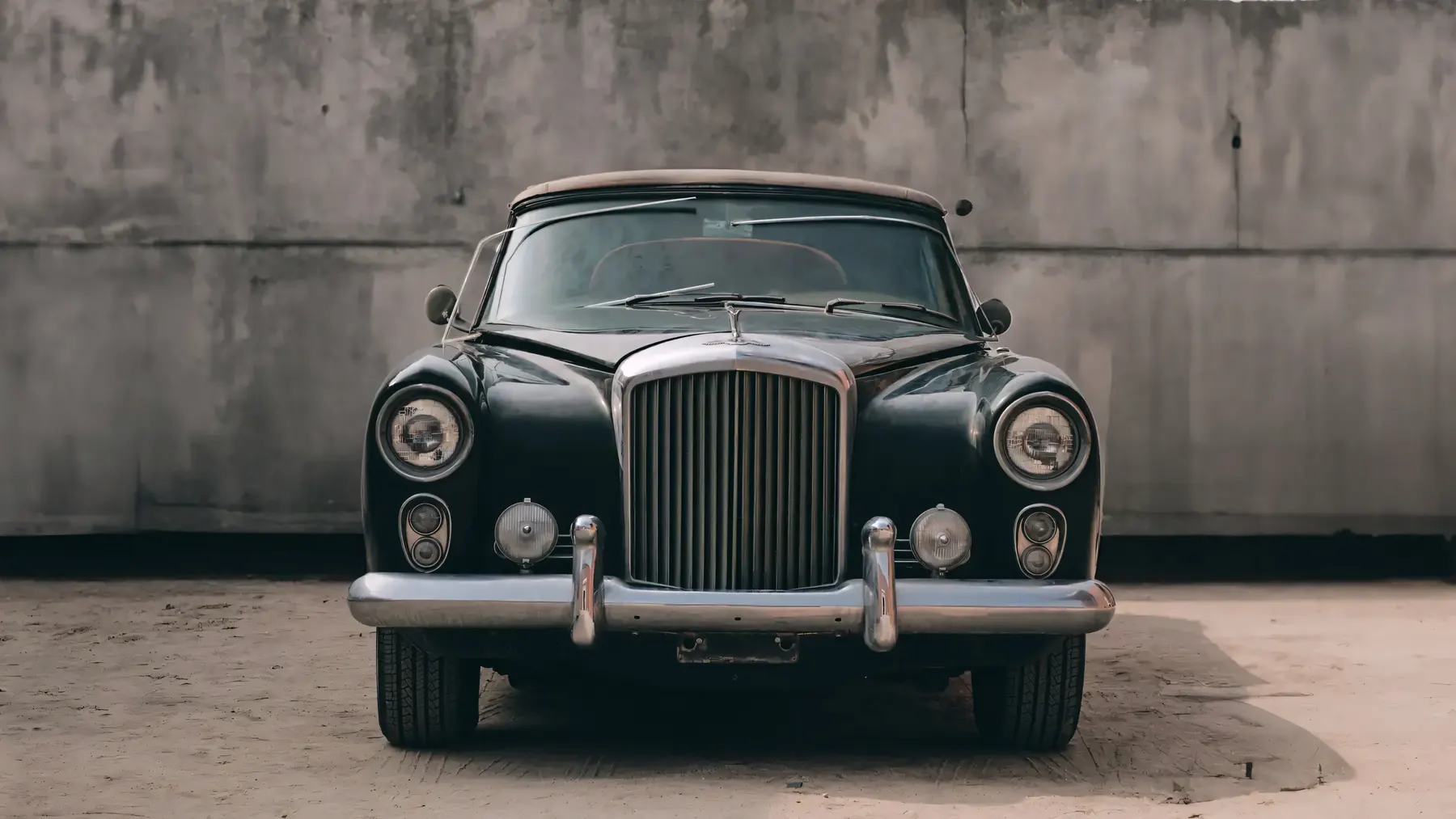
The Continental designation, carried over from the S1, identified a separately tuned chassis intended for the driver rather than the driven. Its mechanical differences from the standard S2 were specific and purposeful: an uprated braking arrangement with four-leading-shoe drums at the front rather than the standard two-leading-shoe configuration, a shorter radiator grille by around 75mm, and - on earlier examples up to a particular point in the production sequence - a higher rear axle ratio calibrated for sustained high-speed cruising on motorways that the British road network conspired to make largely unnecessary. As the production run progressed, this gearing advantage was standardised away, equalising the Continental’s ratio with the standard car in later builds. The Continental was, in theory, for those who wanted to drive themselves hard across Europe; in practice, many of its buyers were content to use its cachet without demanding its performance.
Park Ward, which had been under Rolls-Royce ownership since before the war, was given responsibility for the open coachwork on the S2 Continental chassis. H.J. Mulliner - acquired separately by Rolls-Royce in 1959 - handled the closed variants, including the celebrated Flying Spur four-door and their own two-door coupé. Koren was brought into the Crewe styling department, reportedly after Rolls-Royce management noticed his handling of an Alfa Romeo at the Turin Motor Show, and was set to work under the direction of John Blatchley on what became Park Ward Design Number 991. What he produced was a deliberate break from the rounded, pontoon-winged shapes that had defined British coachbuilding in the 1950s. The new body featured a straight wing line running without interruption from nose to tail, hooded headlamp surrounds pushed outward from the body to create a wider, more assertive face, and modest vestigial fins at the rear that nodded - carefully, tastefully - toward contemporary American and Italian influence without surrendering to either. The three-box silhouette was long and taut. The overall effect was sophisticated where other British coachwork of the period could feel merely conservative.
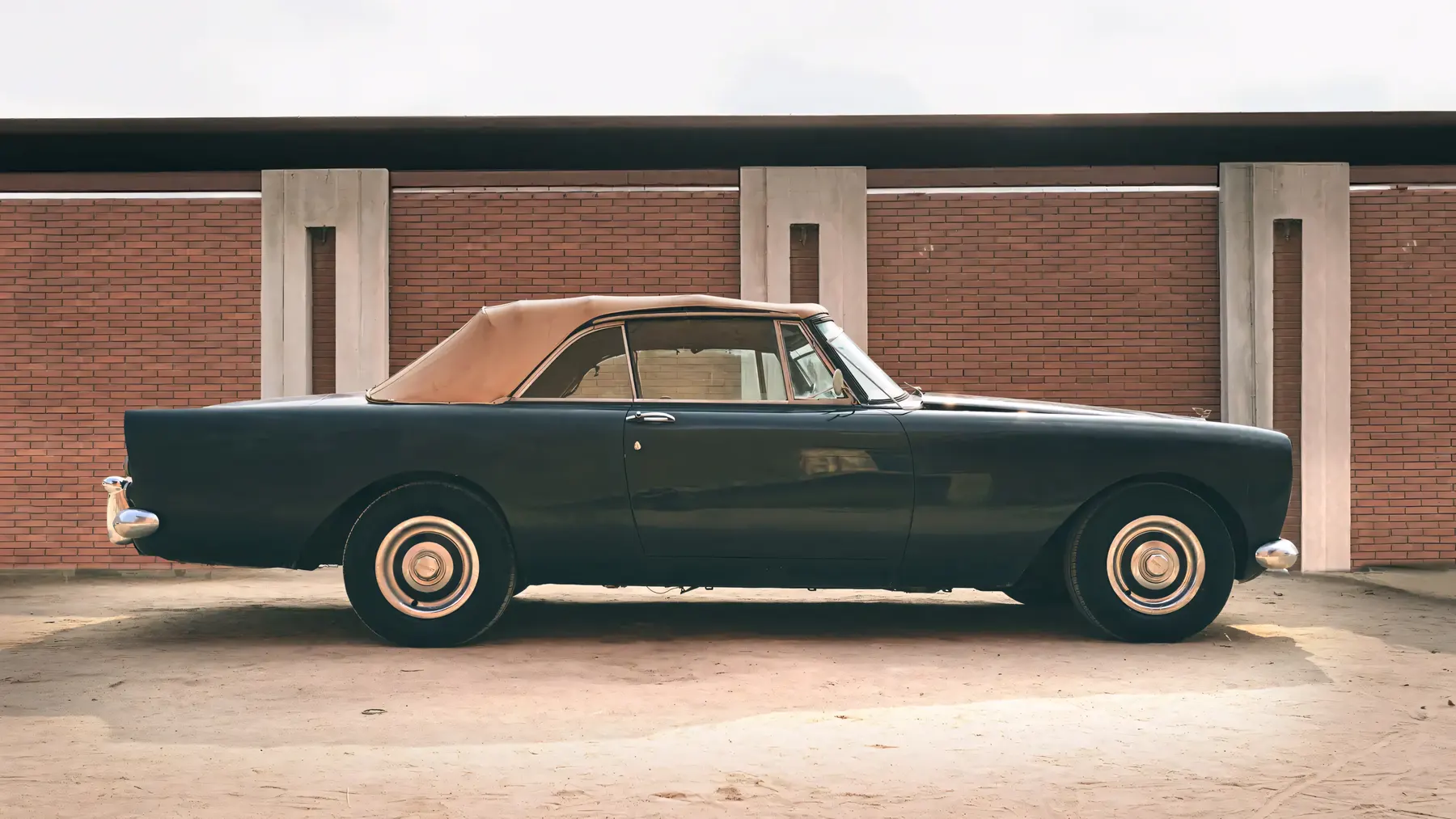
Construction was more complex than the visual simplicity suggested. The body used a steel frame with steel floor pan, sills, rear wings, and scuttle - structural elements demanding rigidity - while the outer panels were formed in aluminium alloy using a 300-ton stretch press, a production technique that required significant investment in tooling. The result was lighter than an all-steel body would have been, but the mixed metallurgy introduced a potential for galvanic corrosion between the dissimilar materials wherever they met, a problem that decades of British weather would make apparent to subsequent custodians. The electro-hydraulic power hood was lined with a padded cloth headliner and fitted with a zipped PVC rear window - workmanlike rather than luxurious in its details, though the overall standard of trim inside was precisely what clients at this price level expected. Each car was built to individual order, which in practice meant extended delivery times and significant variation in specification across the run.
Behind the wheel, the S2 Continental Drophead delivered its character in a way that rewarded patience rather than urgency. The V8 was exceptional at low speeds - broad and muscular in its torque delivery, utterly refined in its mechanical manners, generating pace without drama. The four-speed Hydramatic automatic transmission was the sole gearbox option, the manual having been quietly retired for this generation, and it suited the car’s temperament: the driver made directional and throttle decisions; the car managed the mechanical details. Power steering was standard, calibrated toward comfort rather than feedback, which meant that the Bentley’s enormous nose was easy to place but offered little tactile information about what was happening at the front tyres. This was not a car that communicated anxiety; it preferred to absorb it.
For all that Crewe achieved with the S2 Continental - and what it achieved was genuinely remarkable for the era - the car carried structural compromises that were already beginning to look dated when it entered production. The braking system, though improved on the Continental chassis with its four-leading-shoe front arrangement, remained entirely drum-based at a period when disc brakes had been standard on Jaguar’s road cars since 1957 and were spreading rapidly through serious performance machinery. At a laden weight approaching 1,900 kg and with a top speed of 115 mph available in near silence, the drum-brake hardware was the system most likely to impose itself on a driver’s confidence during extended fast motoring. It was not dangerous in normal use; it was simply behind where the industry was heading. The rear suspension - a live axle located by semi-elliptic leaf springs - was similarly unreconstructed. Independent rear suspension was within reach of Crewe’s engineering resources by 1959; the choice to persist with a solid rear axle reflected priorities of refinement and simplicity over dynamics. At the speeds for which these cars were genuinely suited, the handling was composed and predictable; at the limits of the hardware, it was not the car that blinked first.
The separate-chassis construction, though it had given coachbuilders like Park Ward the flexibility to build exactly this kind of bespoke open car, was by the late 1950s being progressively replaced by monocoque construction in the broader market. The S2 chassis was an engineering tradition rather than an engineering necessity. It added weight, complexity, and height; it also made cars like the Park Ward Drophead possible. The model was genuinely, practically expensive to build, and the prices asked - around £6,250 for the Park Ward DHC in 1961 - put it well beyond the reach of the people who bought standard S2 saloons, which were themselves formidably costly. The Continental commanded a premium of roughly 40 per cent over an equivalent S3 Continental sports saloon when that model arrived in 1962.
Between 1959 and 1962, Park Ward built 125 S2 Continental Drophead Coupés to Koren’s design. Of these, the split between right- and left-hand-drive examples is documented in factory records, with right-hand drive accounting for 63 cars and the remaining examples built in left-hand drive - the exact count cited in different sources varies slightly, between 62 and 65 - the majority destined for the American market, where the car’s scale and presence suited the wider roads and the clientele’s appetite for open British luxury. Notable early buyers included figures from sport and entertainment, and a portion of the American delivery orders came through the kind of social networks that ran, in that period, directly through the drawing rooms of the east coast establishment. During the production run, H.J. Mulliner and Park Ward were consolidated into a single entity - Mulliner-Park Ward - in 1961, meaning that the last of the S2 Continental Dropheads carried bodywork from a coachbuilder that technically no longer existed in its original form.
The S3 Continental that followed in 1962 offered a revised V8 with slightly higher compression, quad headlamps in a lower bonnet line, and improved refinement. It was by most objective measures a better car. Many collectors, however, find the S2 Drophead more satisfying precisely because of what it represented: the first open Continental to carry the new V8, designed by an outsider working against type, delivered in the last years before independent coachbuilding on Bentley chassis became a thing of history rather than a current production option. The car was the last moment at which a client could specify a Bentley rolling chassis from Crewe, send it to a coachbuilder operating with genuine creative latitude, and receive something that no standard factory catalogue could replicate. The fact that Koren’s design proved both commercially successful and enduringly attractive - more so, many argue, than the quad-headlamp S3 Drophead that followed it - suggests that Rolls-Royce’s instinct in Turin was sound, even if it took some persuasion for the Bentley establishment to believe it.
Sources
- Coachbuild.com – Park Ward Bentley S2 Continental Drophead Coupé
- RM Sotheby’s Monaco 2024 – 1962 Bentley S2 Continental Drophead Coupé by Park Ward
- Supercars.net – 1959→1962 Bentley S2 Continental Drophead Coupé
- Frank Dale Rolls-Royce & Bentley – S2 & S2 Continental Model Guide
- ConceptCarz – 1962 Bentley S2 Continental
- Classic & Sports Car – Perfection? Bentley S2 Park Ward Continental Restoration (Martin Buckley, November 2020)
- The Classic Motor Hub – Bentley S2 Continental Park Ward DHC (1961)
- ConceptCarz – Bentley S2 and Continental Model Series
Join the discussion
Comments
Loading comments…
Leave a comment
Share a detail, memory, or perspective. Every comment is reviewed before publication.