2002 Bentley Azure (First Gen)
%20%7C%20Motor%20Archive)
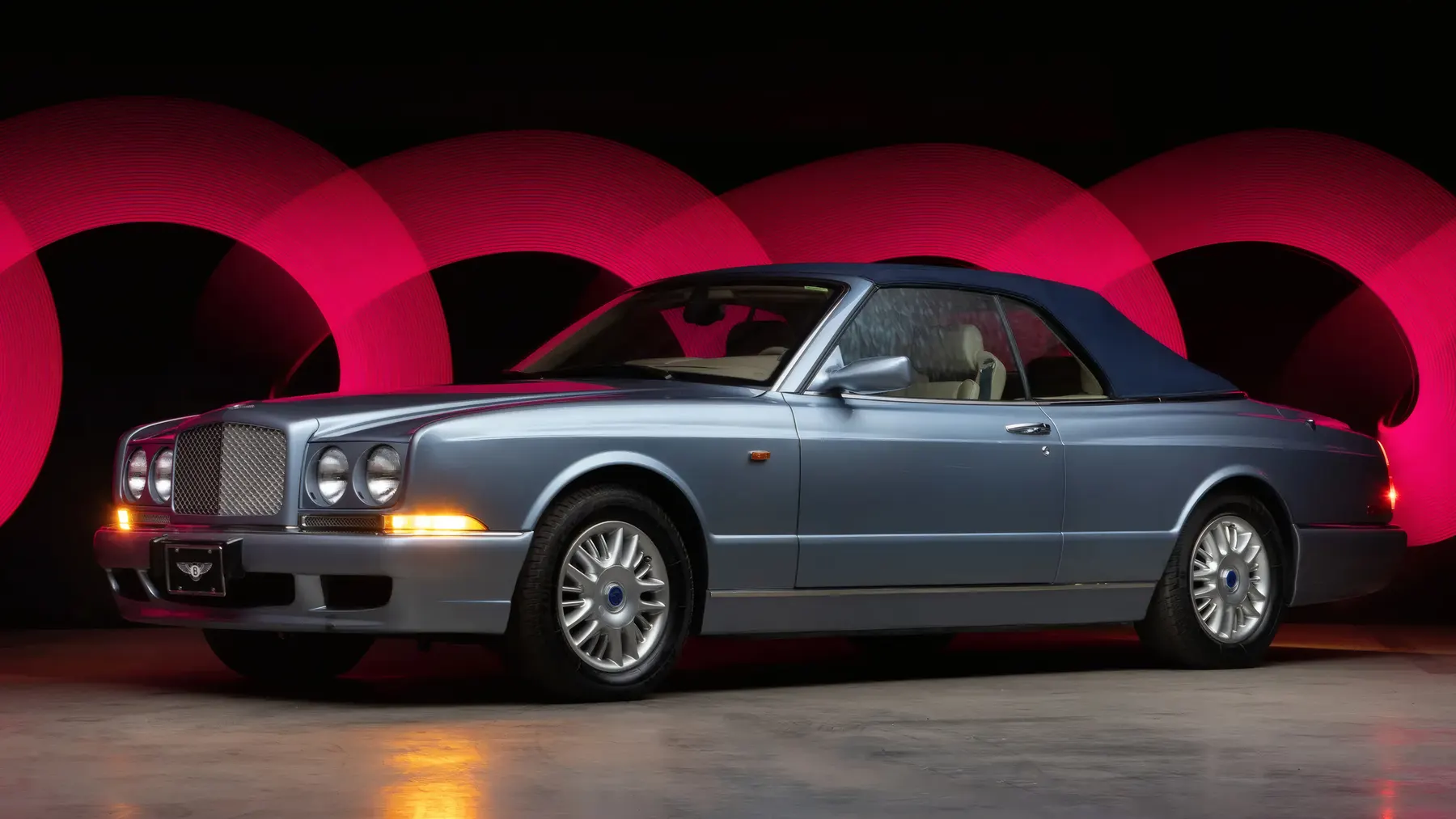
When Pininfarina agreed to build the bodyshell of a British luxury car in a factory outside Florence, it was quietly acknowledging something Bentley’s own workforce could not: that Crewe simply lacked the space and the sheer panel-crafting capacity to turn the Continental R into a credible open car. That admission, half-hidden in Italian coachbuilding diplomacy, is the most honest way to understand the first-generation Bentley Azure - a car that achieved something magnificent despite, and sometimes because of, the compromises baked into its very DNA.
The Azure arrived in 1995 as the most expensive production car Bentley had ever offered, priced at £215,167 at launch - a premium of £22,590 over the Continental R coupé on which it was directly based. That figure telegraphed intent immediately. This was not a Continental with the roof cut away. It was a separate statement, positioned as the definitive four-seat grand touring convertible at a time when the market for such things was populated largely by smaller, less committed machines. Bentley wanted the Azure to own the very top of the open-car hierarchy, and it was willing to make the case in the most expensive way possible.
The architecture beneath the Azure’s skin was, at its core, the steel monocoque of the Continental R, stiffened with additional reinforcement to compensate for the loss of the fixed roof - a structural challenge that added meaningful mass to what was already a substantial platform. Front suspension used coil springs and wishbones with an anti-roll bar; the rear ran coil springs and semi-trailing arms, also with an anti-roll bar, and the whole system was managed by electronic ride control that could shift between softer and firmer damping. This was not a chassis engineered for corner-carving. It was engineered for composure at speed on long continental roads, and in that context it was genuinely accomplished.
The engine was Bentley’s long-serving 6,750cc V8, an architecture whose origins stretch back to the late 1950s, here fitted with a single intercooled Garrett AiResearch TO48 turbocharger and Zytek EMS3 engine management. Early prototypes were quoted at around 384 bhp, but by the time full production was underway the Zytek system had lifted that figure to 385 bhp at 4,000 rpm, with 553 lb-ft of torque arriving at just 2,000 rpm. Drive went rearward through a General Motors-sourced four-speed 4L80-E automatic transmission with a final drive ratio of 2.69:1. The result was a car that could reach 62 mph in 6.5 seconds and press on to a governed top speed of 150 mph - figures that sound unremarkable on paper until you absorb the context of a 2,610 kg convertible with the aerodynamic efficiency of a garden shed.
That torque curve is the most important number in the Azure’s character. The turbocharger was sized and tuned to fill the mid-range, not to produce headline peak power, which means that below 3,000 rpm the car offers a surge of urge that makes motorway merges and overtaking manoeuvres feel effortless in a deeply relaxed way. There is no drama, no theatrical kick - just an unhurried avalanche of forward momentum, entirely consistent with the car’s purpose. Bentley understood that its customers were not building lap times on the Nordschleife; they were covering 600 km between Monte Carlo and the Italian lakes without emotional effort.
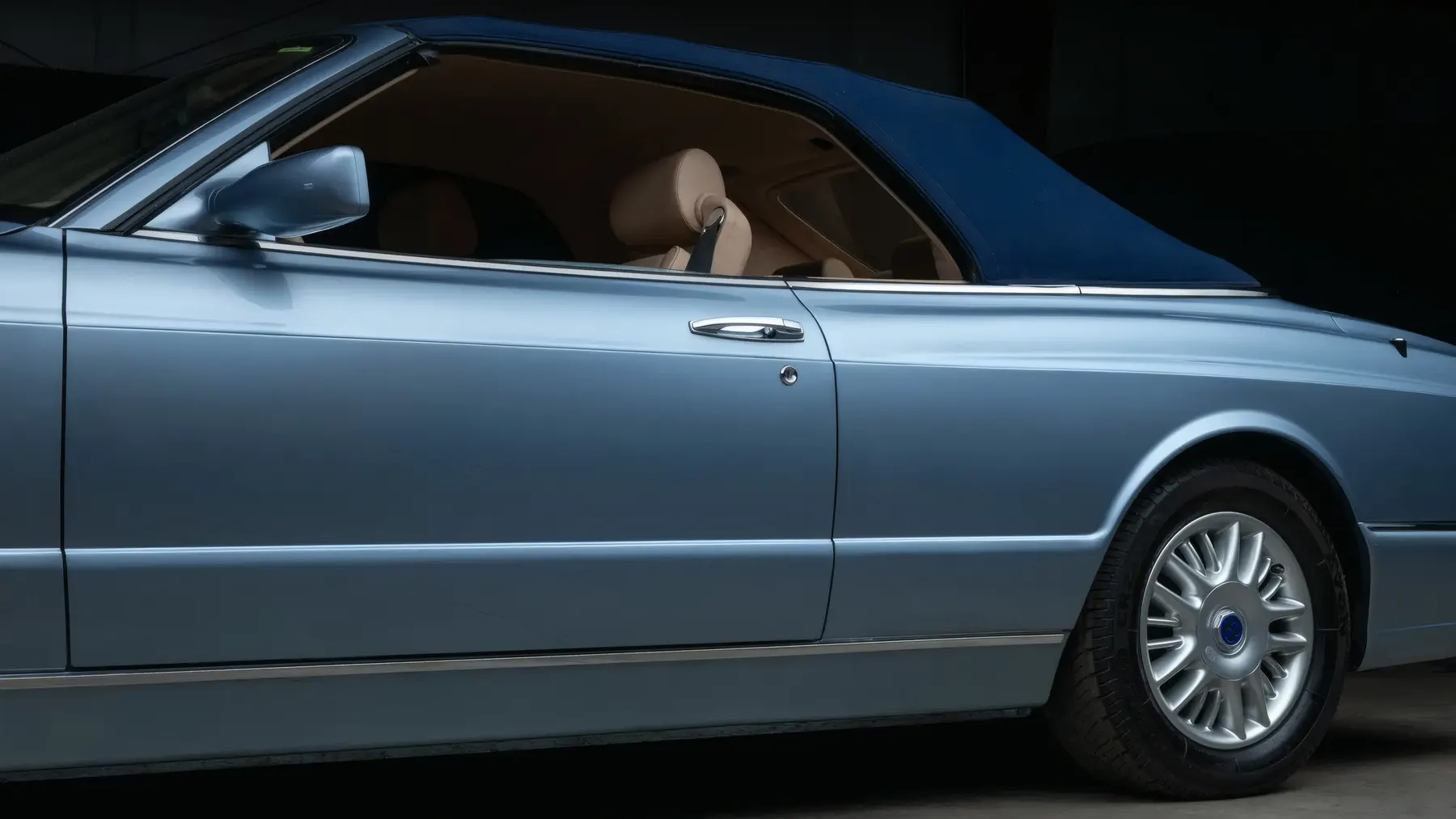
The soft top - electrically operated, multi-layered, acoustically engineered - was designed and manufactured entirely by Pininfarina, and it represents one of the Azure’s genuine engineering achievements. It is thick enough to suppress wind noise at motorway speeds with credible effectiveness, and it stows in a manner that preserves reasonable rear seat headroom when lowered. Pininfarina built the complete bodyshell at its facility near Florence and shipped it to Crewe for final assembly, meaning that every first-generation Azure passed through Italian hands before it was finished as a Bentley. The collaboration was logistically complex and commercially expensive - both factors that fed into the Azure’s stratospheric sticker price - but the quality of the resulting structure was largely vindicated in service.
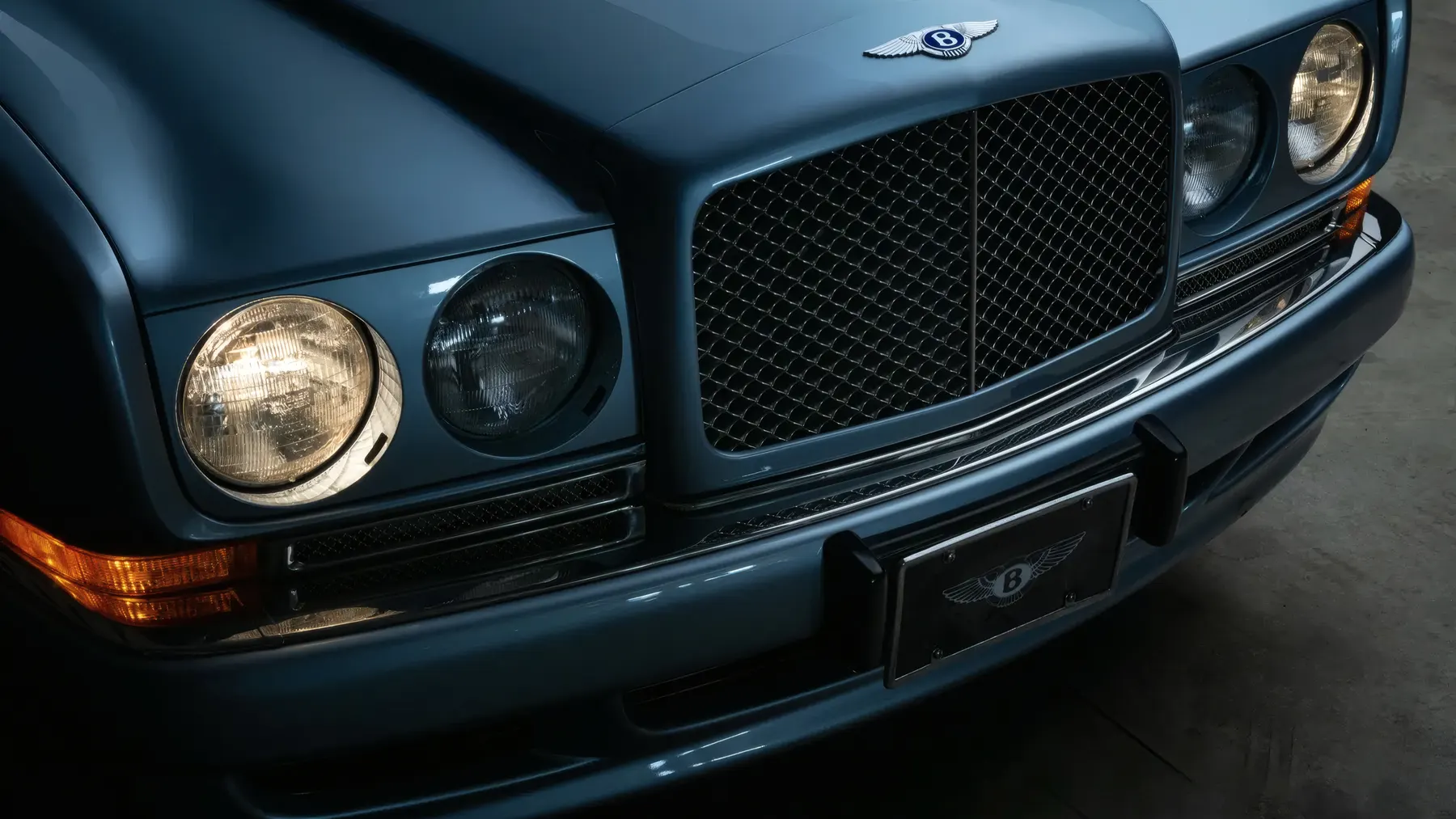
The exterior design belongs to Pininfarina, working from the brief established by Bentley’s own styling department, and the result is a car that rewards sustained looking rather than instant impact. The long bonnet, the pronounced haunch over the rear wheels, and the raked windscreen all read as natural extensions of the Continental R’s geometry rather than a distinct visual identity. It is a conservative piece of design, deliberately so, and it aged gracefully precisely because it never chased a contemporary moment. The interior continued this philosophy: deeply upholstered hides, veneered surfaces across the fascia, instruments that felt borrowed from a very expensive yacht. Everything was available through Mulliner Park Ward’s bespoke ordering system, which meant that no two cars were precisely identical in their interior specification.
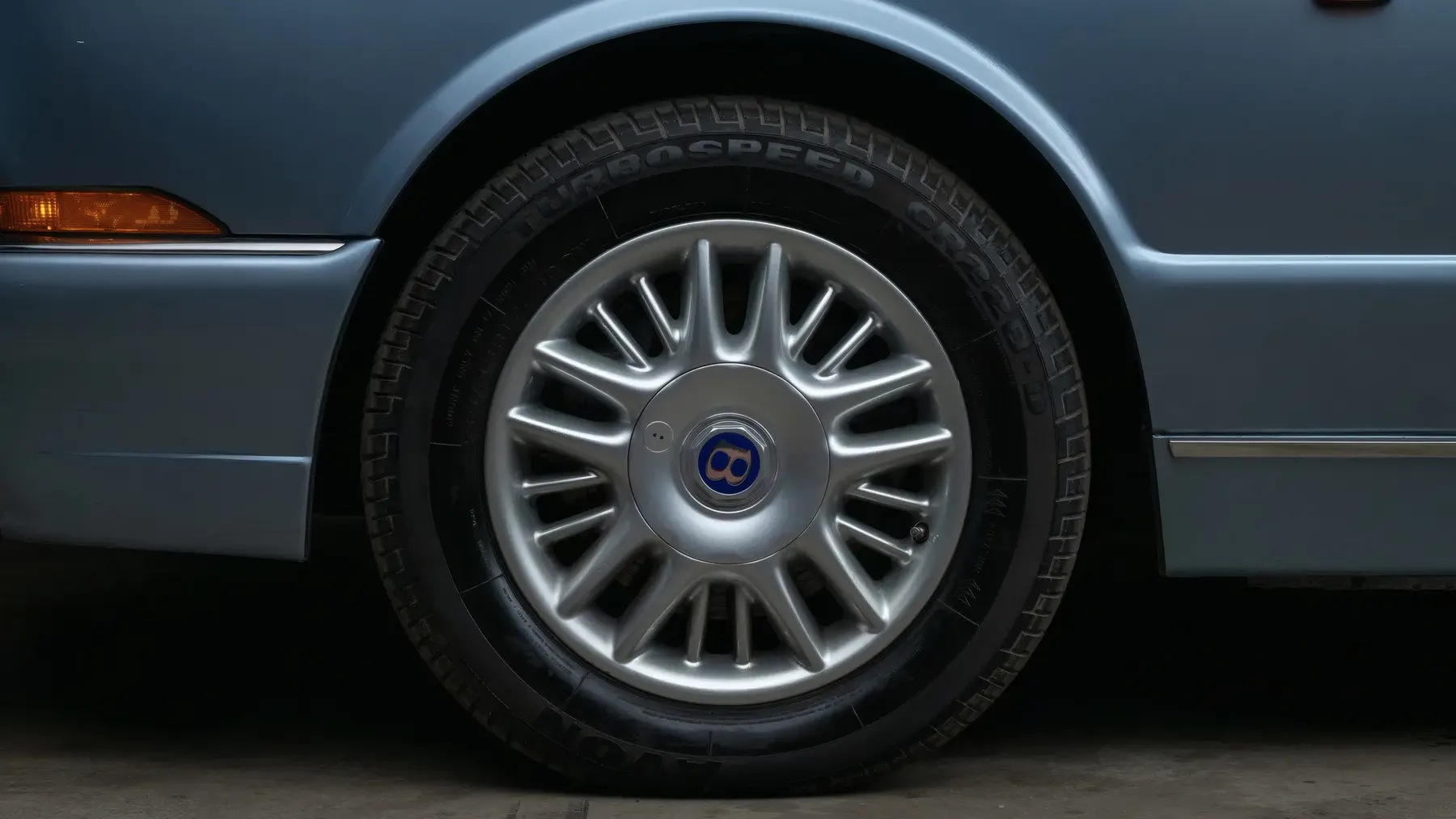
The Mulliner variant, which effectively superseded the standard Azure in the later years of the first generation, pushed power to 420 bhp and shaved the 0–62 mph time to 6.2 seconds. It also brought flared wheel arches housing 18-inch five-spoke wheels, Mulliner badging, and a slightly more assertive stance that gave the car visual presence to match its mechanical credentials. Then, in the final two years of production, Bentley offered the Final Series - an eleven-car limited edition built to close out the first-generation run with a twin-turbocharged variant producing figures closer to 500 bhp, a clear anticipation of where the second generation would eventually go.
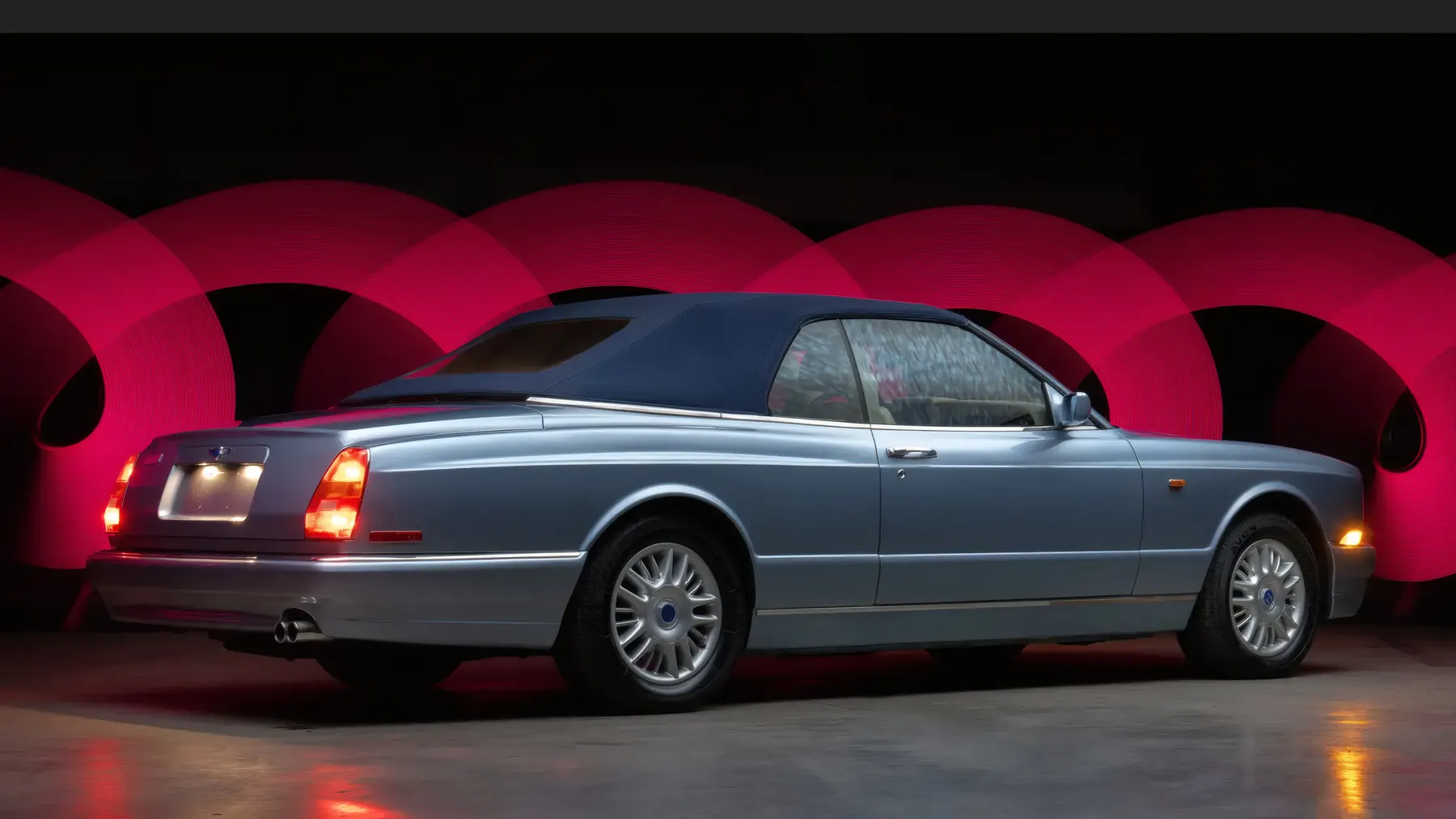
The Azure’s drawbacks were real and worth acknowledging without apology. That 2,610 kg kerb weight placed enormous thermal demands on the braking system in anything other than gentle use, and the four-speed automatic gearbox - adequate for the driving style the car encouraged - felt increasingly dated as the decade progressed and competitors moved to five- and six-speed units. The semi-trailing arm rear suspension, a design compromise inherited from the Continental R, was not beyond criticism in terms of camber change under hard cornering, though hard cornering was not an activity the Azure’s dynamics encouraged or rewarded. Fuel consumption was, bluntly, a secondary consideration for the intended buyer, but figures north of 17 litres per 100 km in typical driving were not unusual.
Critically, the Azure occupied an unusual position in automotive culture from the moment it appeared. It was simultaneously a car of serious engineering substance and a conspicuous symbol of wealth in the most undisguised sense - a combination that attracted both admiration and a certain degree of mockery in the British press, where the car became associated with a specific archetype of high-net-worth indulgence. Road tests were largely admiring of the engineering while honestly noting that the Azure made no attempt to pretend it was a sports car. The consensus was that within its defined purpose - grand touring in open-air comfort at a level no other manufacturer was prepared to match - it was without peer.
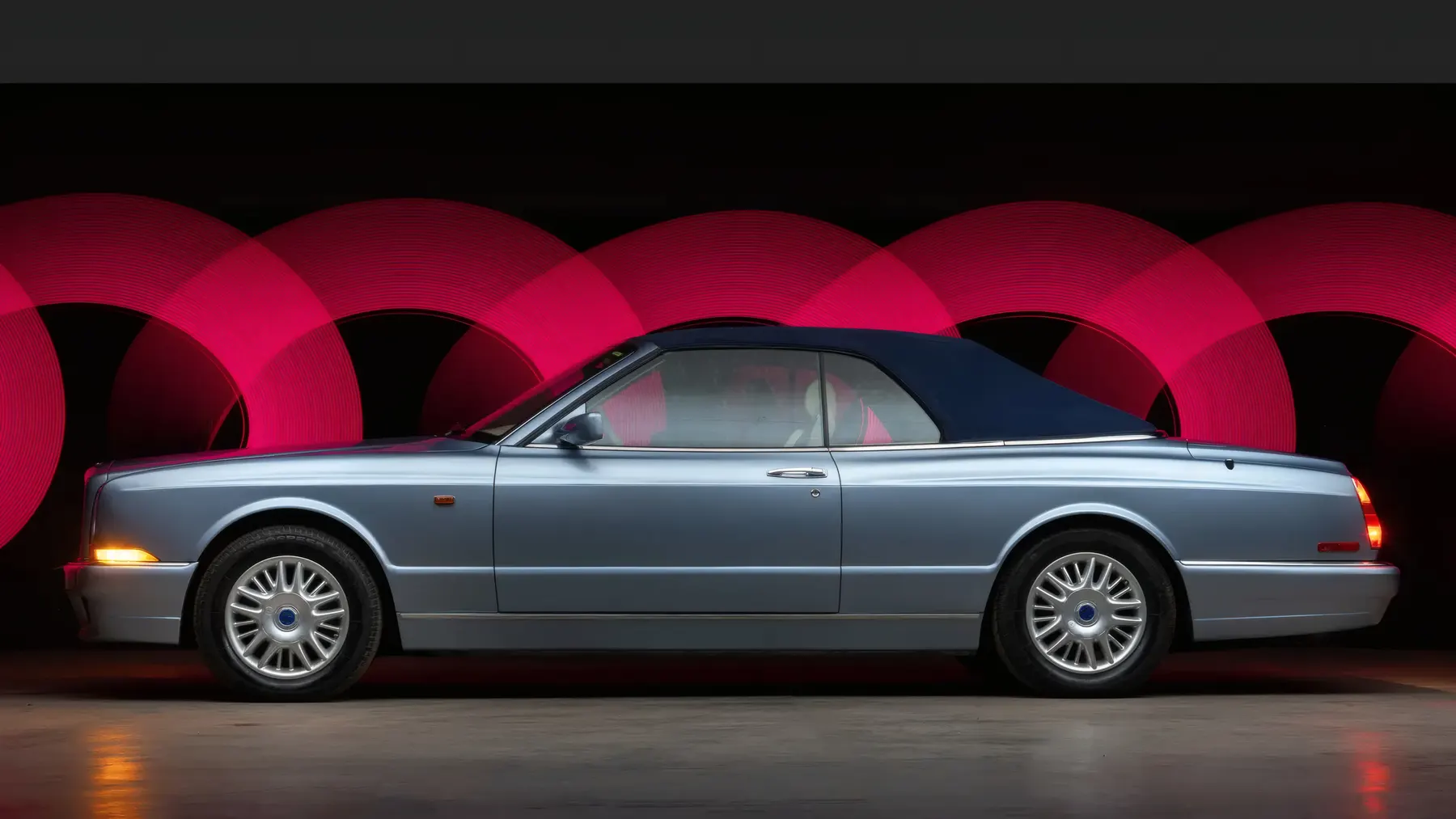
The 1,311 units produced across the full eight-year run of the first generation tell only part of the story. The Azure established that Bentley, post-Vickers and on the eve of the Volkswagen acquisition, still possessed the confidence and the craftsmanship to produce a car of genuine rarity and seriousness at the very summit of the market. When the second generation arrived on the Arnage platform in 2006, it carried that expectation forward - but it was the first generation, with its Pininfarina bodyshells and its Garrett turbocharger and its quietly extraordinary torque, that had made the Azure a name worth inheriting.
Join the discussion
Comments
Loading comments…
Leave a comment
Share a detail, memory, or perspective. Every comment is reviewed before publication.