Bentley S1 Continental Flying Spur: The Four-Door That Could Never Stand Still
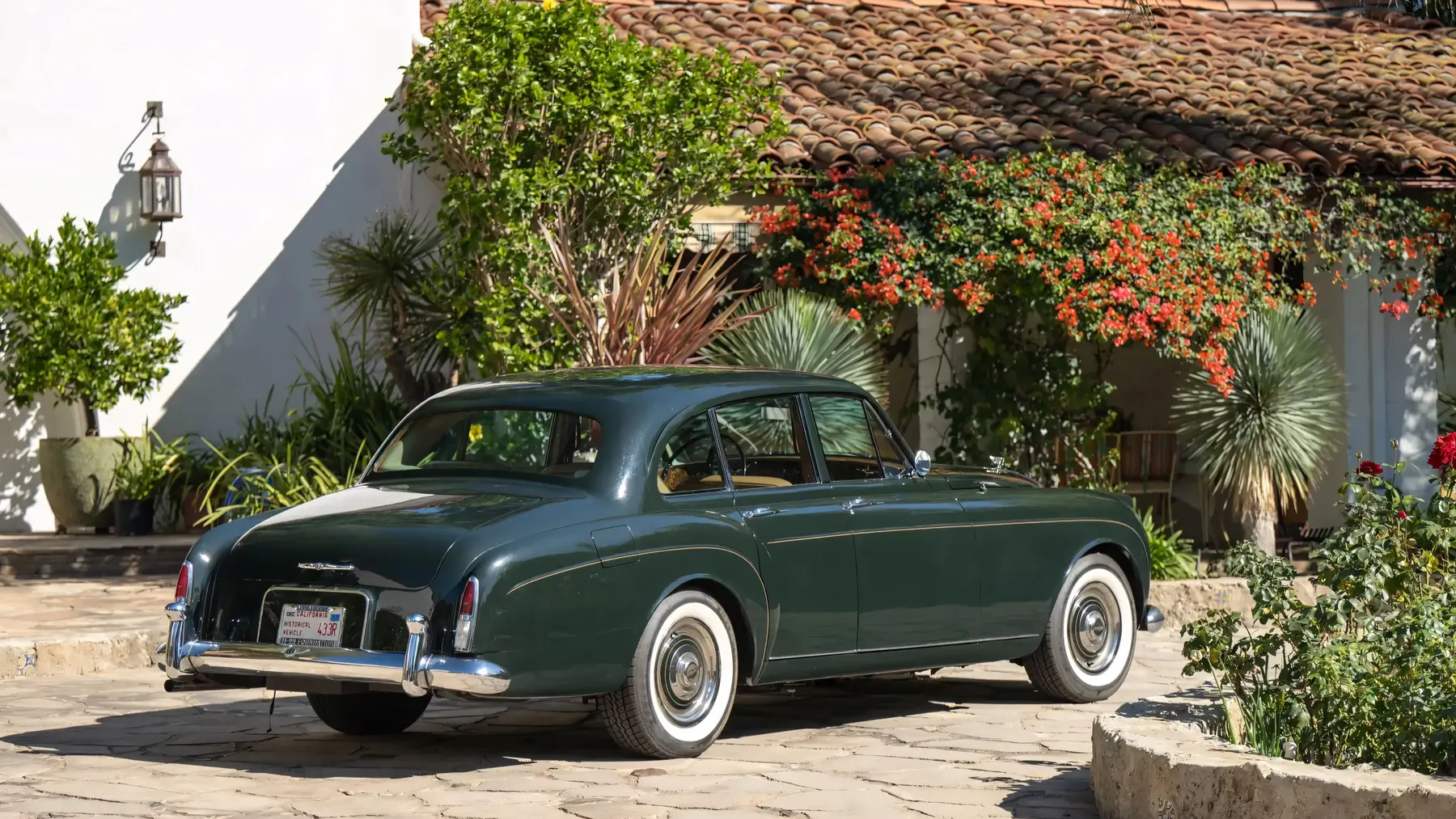
1958 Bentley S1 Continental 'Flying Spur' Sports Saloon by H.J. Mulliner

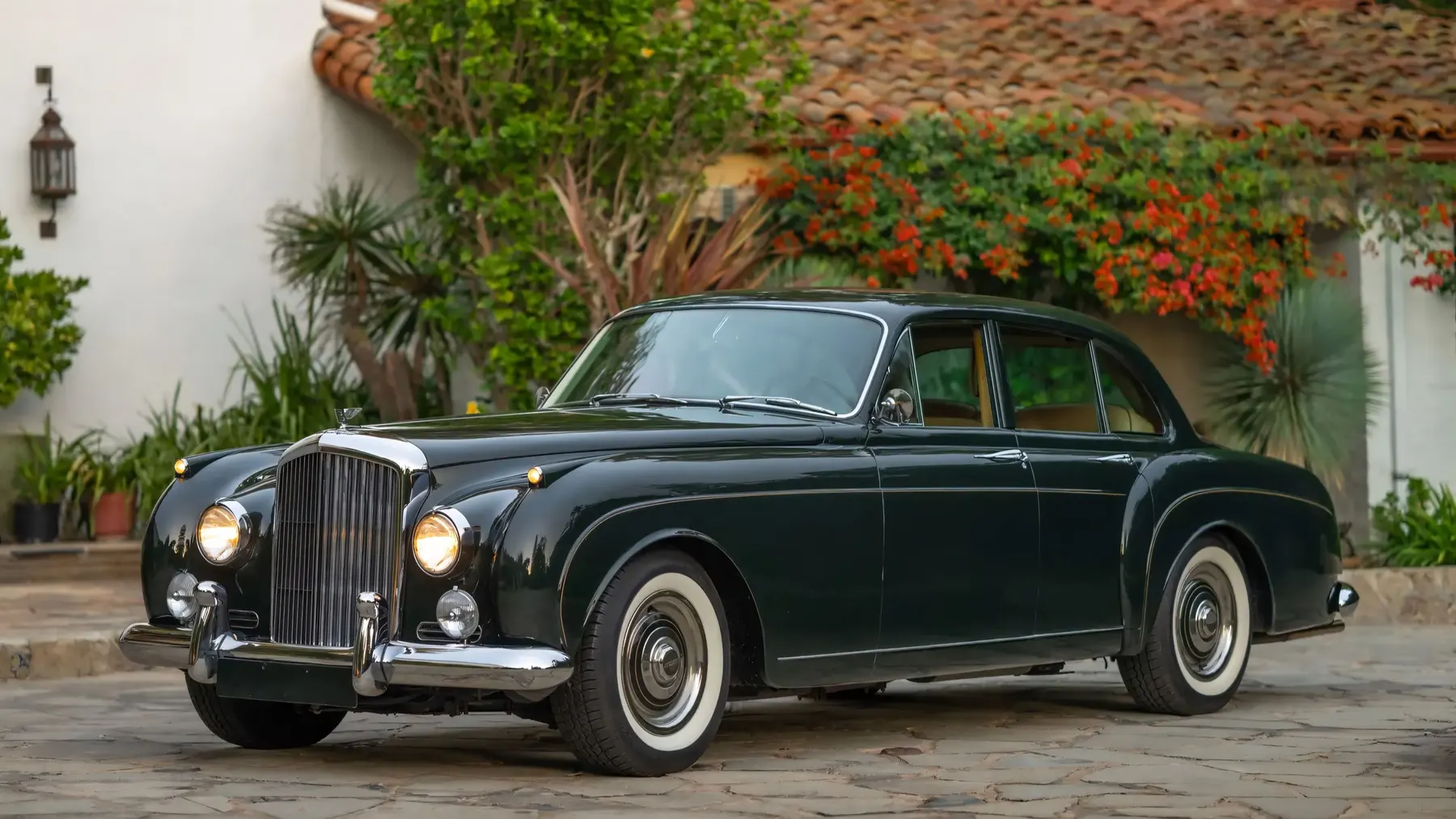
Images: Robin Adams / RM Sotheby's
The most celebrated Continental Bentleys of the 1950s wore two-door bodies - lean, purposeful shapes that rejected the rear-quarter glass of a conventional saloon in favour of something more aerodynamically resolved and visually certain. The R-Type Continental, which preceded the S1, had established the archetype with considerable authority: a Bentley that was not merely well-appointed but genuinely, measurably fast, capable of maintaining speeds across European roads that most sports cars of the era could not sustain in any meaningful comfort. When the new S-Series arrived in 1955 and the Continental designation carried forward onto the updated platform, the formula remained largely intact. Among the small community of coachbuilders that dressed these rolling chassis - James Young, Park Ward, Franay, and H.J. Mulliner among them - it was Mulliner who identified the gap the two-door configuration could never fill. Their Flying Spur would become simultaneously the most sporting four-door saloon that money could buy in period and, within the Continental family, the least sporting variant in the range. That productive tension is what makes it worth understanding.
H.J. Mulliner had been building bodies for Bentley and Rolls-Royce chassis since the interwar years, and by the mid-1950s the relationship had become so close that the company functioned as a preferred supplier for Continental-specification work. Mulliner’s Chiswick workshop operated somewhere between craft workshop and small-scale manufacturer, producing bodies of consistent quality and considerable elegance, with the attention to detail that only very small production volumes permitted. Their contribution to the S1 Continental story was not confined to the Flying Spur - they also produced the two-door fastback that formed the numerical core of the Continental range - but the four-door saloon was perhaps their most architecturally considered achievement on the platform. The name they chose for it drew from heraldic tradition: a spur furnished with wings, suggesting not simply speed but speed that had acquired direction and purpose.
The argument the car made was commercially clear. Many buyers of Continental Bentleys were not solitary enthusiasts but men with families, business associates, and social obligations that a two-door coupé could not gracefully accommodate. The Flying Spur’s proposition was to place the S1 Continental’s mechanical identity - the tuned engine, the stiffened suspension, the performance gearing - inside a body with four full-size doors and a proper rear compartment, without formally acknowledging a compromise. The performance would be preserved; the practicality would be added. Whether the character survived intact was the question worth asking.
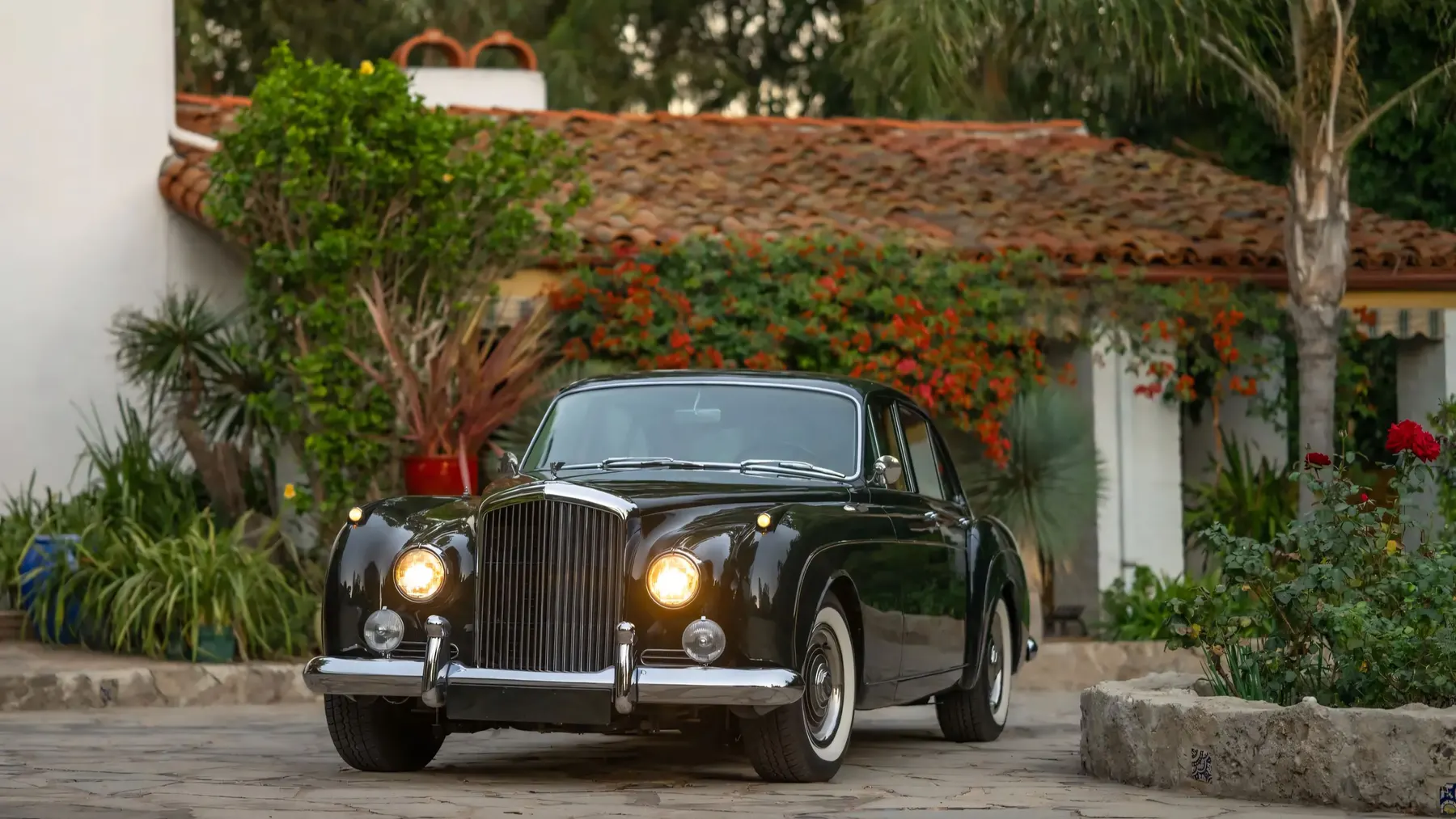
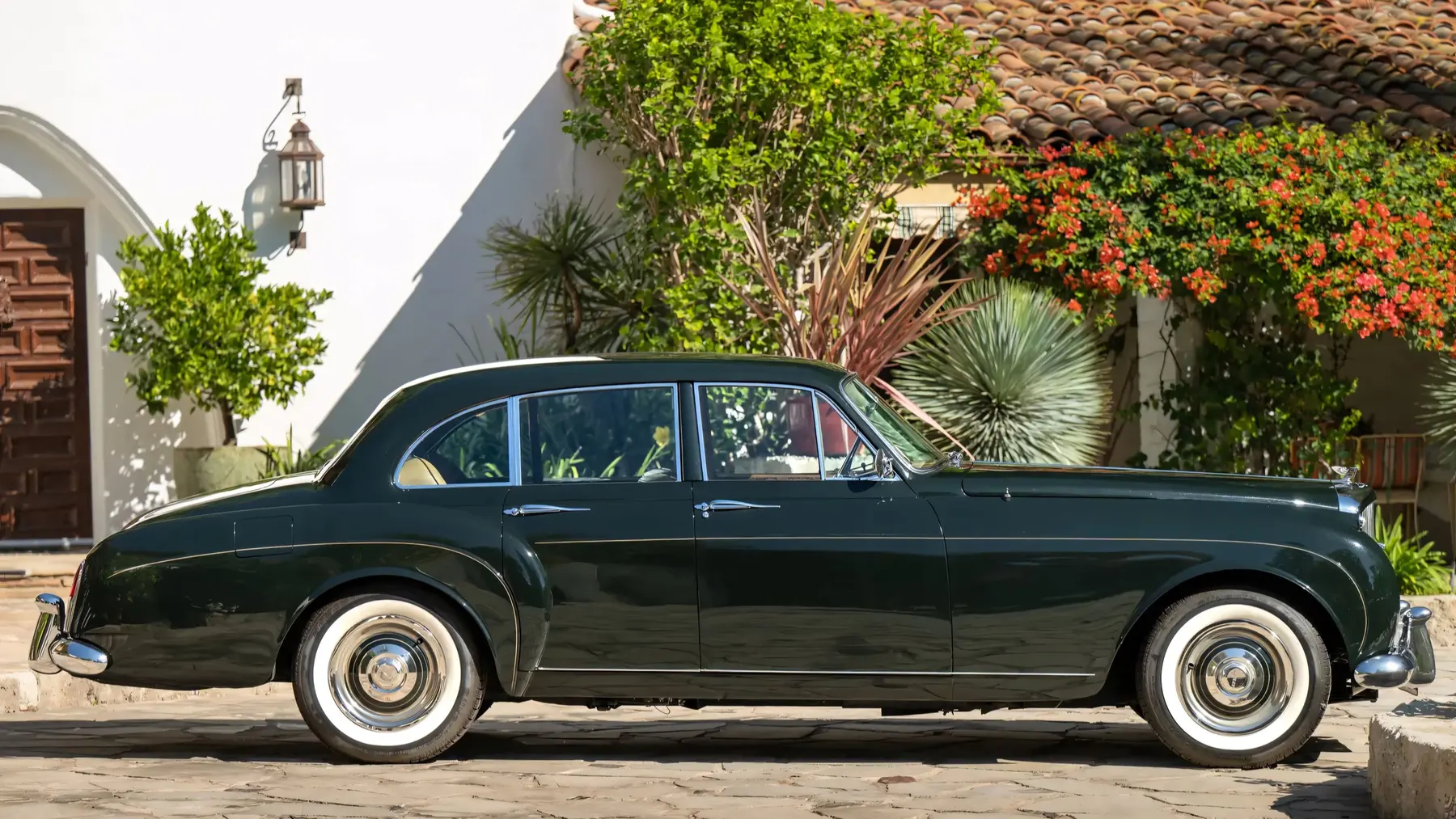
The body H.J. Mulliner produced was an object of careful proportion. From the outside, the Flying Spur reads as a formal saloon with a long bonnet, but the relationship between its elements is more considered than that description implies. The glasshouse sits well back relative to the rear axle; the rear doors are long enough to allow a dignified entry; the waistline moves through the door sills without kink before lifting gently into the rear quarters. Chrome brightwork defines the car’s principal lines without overwhelming them. The two-door Continental fastback remains the sharper visual statement and the more aerodynamically resolved shape, and direct comparison makes the Flying Spur’s relative formality plain. But the coachbuilder’s instinct for proportion prevents it from reading as simply a large saloon with an expensive specification. The long-bonnet profile and the controlled relationship between glass and steel give the body coherence across its full length.
Inside, the materials and their execution matched the exterior’s character. Hides from Connolly Brothers, hand-polished figured walnut veneer, deep carpeting that absorbed road and tyre noise from even rough surfaces: these were the components of an interior made by hand at a cost and to a standard that no volume production facility of the period could approximate. Rear passengers sat with sufficient lateral room to cross their legs and headroom generous enough that removing a hat on entry was not required. For four adults travelling significant distances at speed - which was the Flying Spur’s primary purpose and the reason for its existence - the accommodation was genuinely excellent by any comparison the period offered. It bears emphasising that this quality was not standard S1 specification enhanced or upgraded; it was independently crafted for each car, fitted to a specific chassis, and finished by craftsmen whose working methods had changed relatively little since before the war.
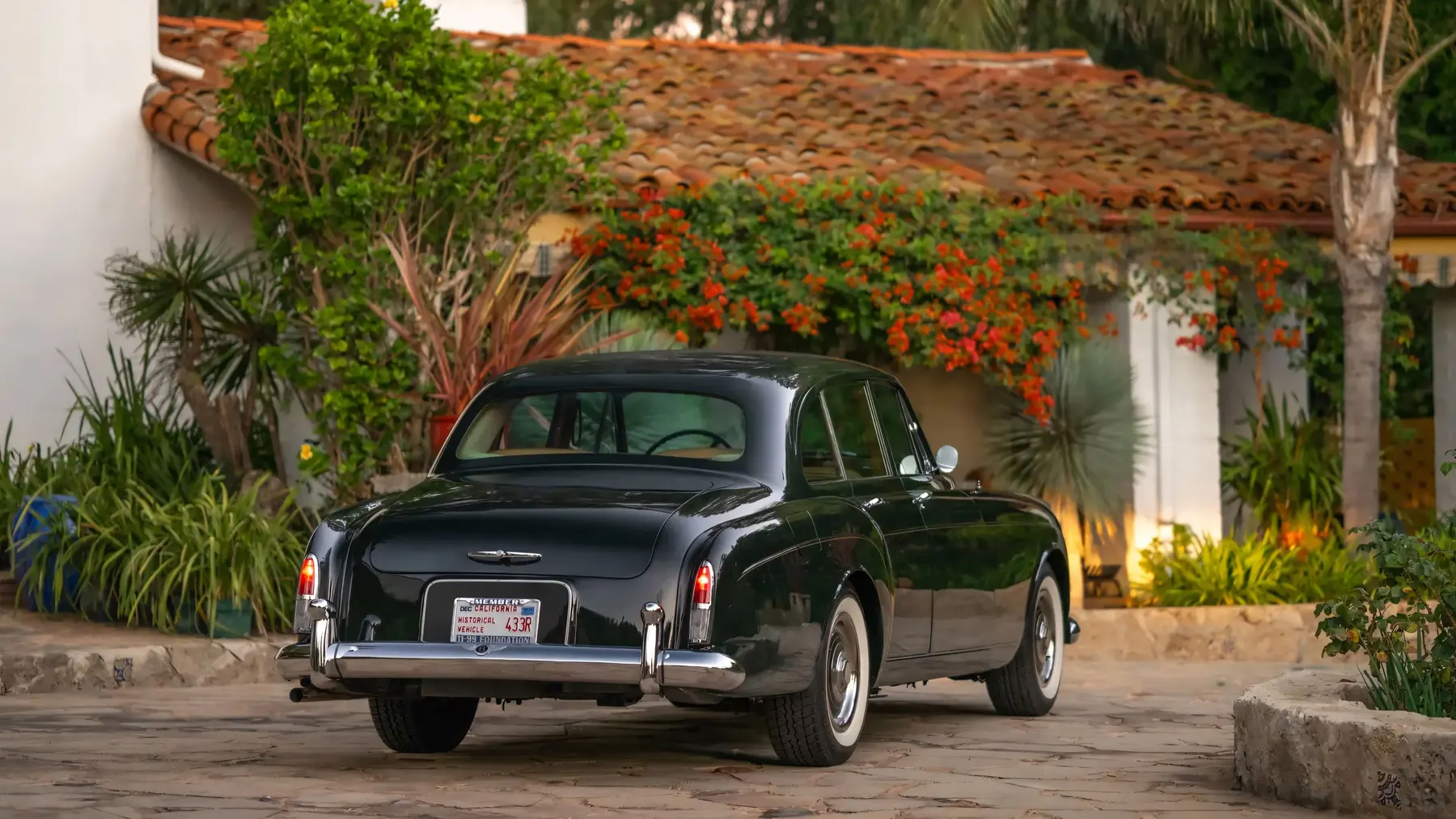
In the broader market of the late 1950s, the Flying Spur faced essentially no direct competition. The Mercedes-Benz 300 series offered comparable continental touring ability and genuine mechanical sophistication, but occupied a different aesthetic register and a different social context. The Facel Vega HK500, which arrived in 1958, was more dramatically styled and arguably more glamorous but offered nothing approaching four-door accommodation at a comparable level of refinement. Aston Martin and Ferrari products of the era were more dynamically capable but were fundamentally unsuited to formal four-seat transport. The Flying Spur’s specific position - a four-door car offering genuine Continental-specification performance, hand-crafted coachwork of the first quality, and the particular social register that a Bentley Continental nameplate carried - was, in a meaningful sense, uncontested. Whether that reflects genuine market need or simply a clientele with sufficient means to commission whatever they required is perhaps the same observation.
Mechanically, the S1 Continental chassis differed from the standard S1 in ways that mattered. The 4887cc F-series straight-six - an inlet-over-exhaust unit whose evolutionary history stretched back into the immediate postwar period - was tuned differently in Continental specification, with a higher compression ratio and revised carburation. The exact power output was something Bentley and Rolls-Royce famously declined to quantify; the company’s position that their engines produced “sufficient” power was less eccentricity than a calculated refusal to compete on figures with manufacturers whose published numbers were sometimes optimistic. Reliable period estimates place Continental-specification output somewhere between 155 and perhaps 170 bhp, though these represent informed approximation rather than verified factory data. The torque output, spread broadly across the rev range by the long-stroke six, was the more practically important characteristic: the engine pulled strongly from well below 2,000 rpm and continued smoothly to the point where most roads in period ran short of usable space.
Continental chassis specification also included stiffer spring rates, revised shock absorber calibration, and a lower ride height relative to the standard S1. On the road, the effect was a car that communicated the surface more honestly while retaining sufficient compliance for sustained high-speed travel. At the velocities the Flying Spur’s specification invited - the car was capable of maintaining well over 100 mph with ease, and contemporary period estimates placed the maximum somewhere between 110 and 115 mph - the chassis felt settled and accurate rather than merely compliant. Body roll in corners was controlled without being eliminated; the power-assisted steering, well-weighted for a car of this size, required genuine input to place accurately. For a car of this mass and this intent, the dynamic integrity was a substantial engineering achievement.
The four-speed automatic gearbox, sourced initially from General Motors’ Hydra-Matic programme before Rolls-Royce progressively developed their own transmission units, suited most buyers across most conditions. It was smooth in normal operation and well-matched to the engine’s broad torque delivery, but it introduced a note of detachment between throttle and response that the manual gearbox option avoided. Drivers who specified the manual four-speed - meaningful on cars destined for owners who took the Continental specification at its word - found a car that communicated intent more faithfully. The automatic softened something the chassis calibration had been working to express, and on a car sold partly on its sporting pretensions, that softening was a real reduction.
The weaknesses of the S1 Continental Flying Spur are real and should be stated plainly. Servo-assisted drums at all four wheels were among the better drum installations of the period, and Bentley’s hydraulic servo calibration was careful work. But the direction of travel in braking technology was already established by the late 1950s, and the gap between what drums could do and what discs offered was widening. On a car of approximately 1,800 kg in most completed configurations - coachbuilt body weights varied by specification - capable of sustained high-speed cruising on alpine roads, the drums’ susceptibility to fade under repeated hard use was not a theoretical concern. The four-door body, heavier than two-door fastback alternatives on the same chassis, brought the drums’ limits into play more readily on demanding terrain. Drivers using the car as the Continental specification implied encountered conditions that the standard braking arrangement managed with less than full confidence, and no amount of sympathetic driving technique changed the fundamental physics of the situation.
The engine, separately, was approaching its development ceiling. The F-series six was an evolved design with roots predating the war, and however smooth and flexible it remained in 1957, it had little remaining margin for extraction. The arrival of the S2 Continental in 1959, equipped with the new all-aluminium 6230cc V8, placed the S1’s inline-six in immediate and unflattering comparison. The V8 offered more power, substantially more torque, and a broader operational range that made the old six’s careful tuning feel incremental rather than definitive. S2 and S3 Continental Flying Spurs are superior performers by measurable criteria, and those who approach the type through later cars sometimes find the S1 underwhelming in direct comparison. That judgment is fair as a performance assessment and misleading as an evaluation of the car: the S1 Continental Flying Spur was a complete and self-contained design from a particular historical moment, built under conditions - coachbuilding by hand, in small numbers, on a chassis that still drew from prewar mechanical architecture - that were already approaching their end when the first examples were delivered.
Production of the S1 Continental across all body styles and coachbuilders ran to fewer than 450 cars between 1955 and 1959, making the Flying Spur one of the rarer variants within an already exclusive range. H.J. Mulliner was absorbed into the Rolls-Royce corporate structure in 1959, coinciding with the S1’s replacement by the S2, effectively ending the era of independent coachbuilding that had produced these cars. The Mulliner name survived as an in-house division, and the Flying Spur designation passed through subsequent Bentley and Rolls-Royce history: a long-wheelbase variant of the Silver Shadow, and eventually the Continental Flying Spur that Bentley has produced since the early 2000s, powered by a twin-turbocharged W12 and all-wheel drive. Those cars are better by almost every measurable criterion. What they cannot replicate is the specific gravity of the H.J. Mulliner original: the understanding that each panel was made by hand, fitted to one chassis, and completed by craftsmen who regarded coachbuilding as a continuation of work done by the same methods for generations.
What the S1 Continental Flying Spur did, at a moment when that world was ending, was make a persuasive case that speed and accommodation were not fundamentally incompatible. It was the sportiest four-door saloon of its era and the heaviest, most formally dressed Continental in the range, and both things were true simultaneously, and neither made the car less interesting. H.J. Mulliner made the argument in aluminium and steel, finished it in hide and veneer, and left the engine’s output officially unstated. The terms of that argument have not changed since.
Join the discussion
Comments
Loading comments…
Leave a comment
Share a detail, memory, or perspective. Every comment is reviewed before publication.