H.J. Mulliner's Silver Cloud I Drophead Adaptation Prototype: Coachbuilding at the Crossroads
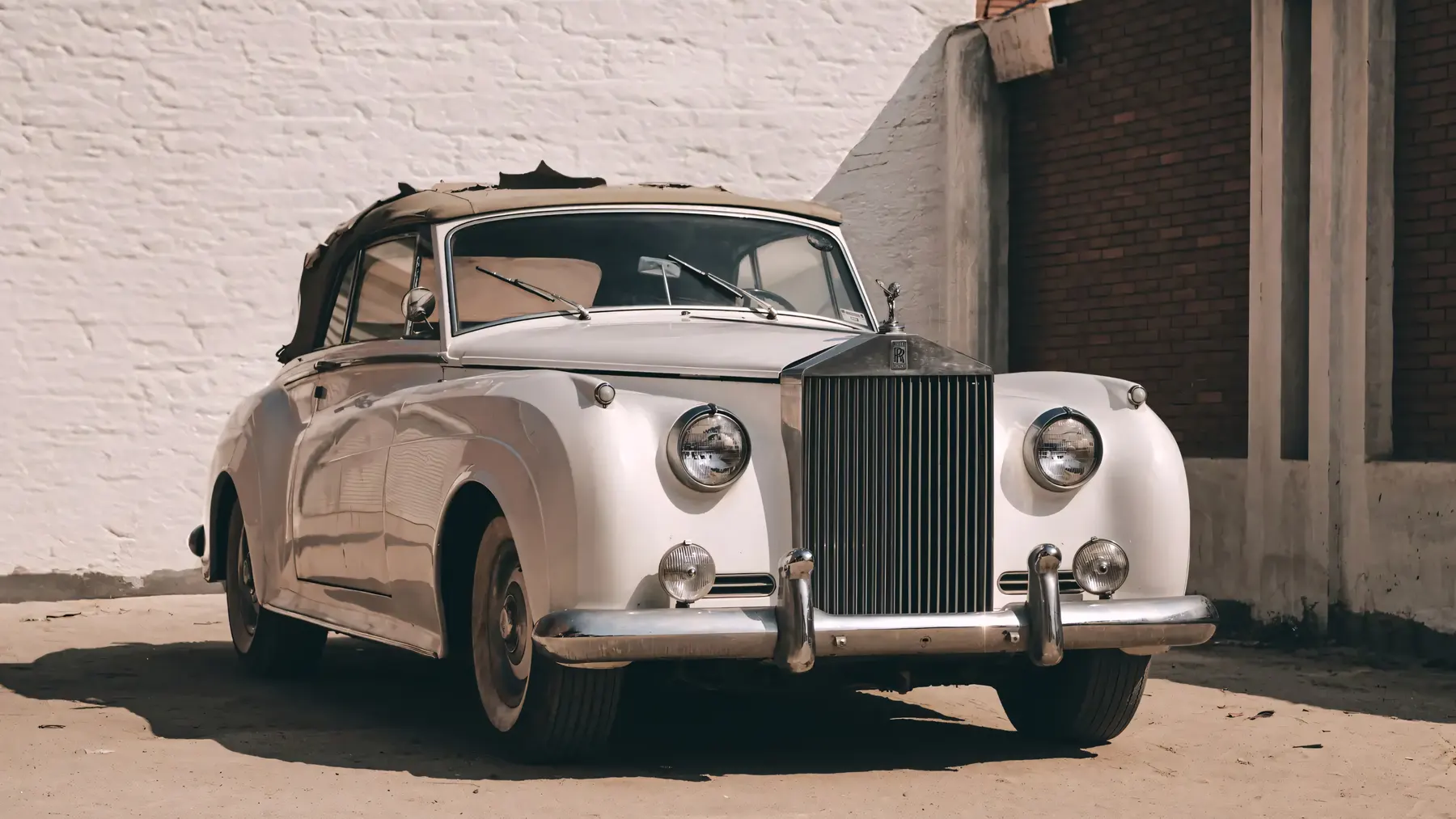
1959 Rolls-Royce Silver Cloud I Drophead Coupé Adaptation 'Prototype' by H.J. Mulliner

Images: Matt Wardle / RM Sotheby's
When Rolls-Royce launched the Silver Cloud in 1955, it marked something of a philosophical watershed for the Crewe firm: for the first time, the standard body was pressed steel, manufactured at the Pressed Steel Company’s plant in Cowley - the same facility supplying bodies to Morris and Nuffield. The move was industrially sensible and commercially pragmatic. It was also, to a certain constituency of Mayfair and Belgravia, quietly alarming. H.J. Mulliner’s response to this standardisation was the Adaptation - a programme of bodywork modification that took the factory Silver Cloud and re-formed it into something Pressed Steel’s dies could never produce. The Drophead Coupé Adaptation Prototype was the first expression of that idea in open-top form, and it has the conceptual clarity of something that knows exactly what problem it is solving.
H.J. Mulliner occupied a particular position among the coachbuilders working with Rolls-Royce in the 1950s. Unlike James Young at Bromley, who tended toward formal, upright interpretations, or the more idiosyncratic output of Freestone & Webb, Mulliner’s aesthetic leaned consistently toward restraint and forward momentum. The firm had been coachbuilding since the Victorian era, and by the mid-twentieth century it had developed a house style of considerable refinement: long, low profiles, surfaces that swept rather than broke, and an almost architectural economy of means. These qualities were already present in their Silver Wraith and Silver Dawn work, and the Silver Cloud offered both a challenge and an opportunity. The challenge was the factory body, which was competent and handsome enough in its own terms but lacked the specific lightness and flow that distinguished a coachbuilt car. The opportunity was the chassis: a separate, conventional steel structure - still the basis of Rolls-Royce practice at the time - that could accept different bodywork without fundamental engineering compromise.
The Adaptation programme worked by taking the standard Silver Cloud body as its dimensional point of departure rather than its finished form. Mulliner’s craftsmen reshaped significant areas of the coachwork - most notably the roofline, the rear deck treatment, and the handling of the rear wings - to produce a silhouette that read as lower and more fluid than the factory saloon. The overall dimensions remained close to the original, and the 3,124mm wheelbase was retained unchanged, but the character of the car was meaningfully altered. Where the factory saloon had a certain robustness, even solidity, the Adaptation read as more composed and considered. It was not a radical departure - this was not coachbuilding as sculptural experiment - but the refinement was genuine, and the differences were visible to any eye trained on the period’s coachbuilt canon.
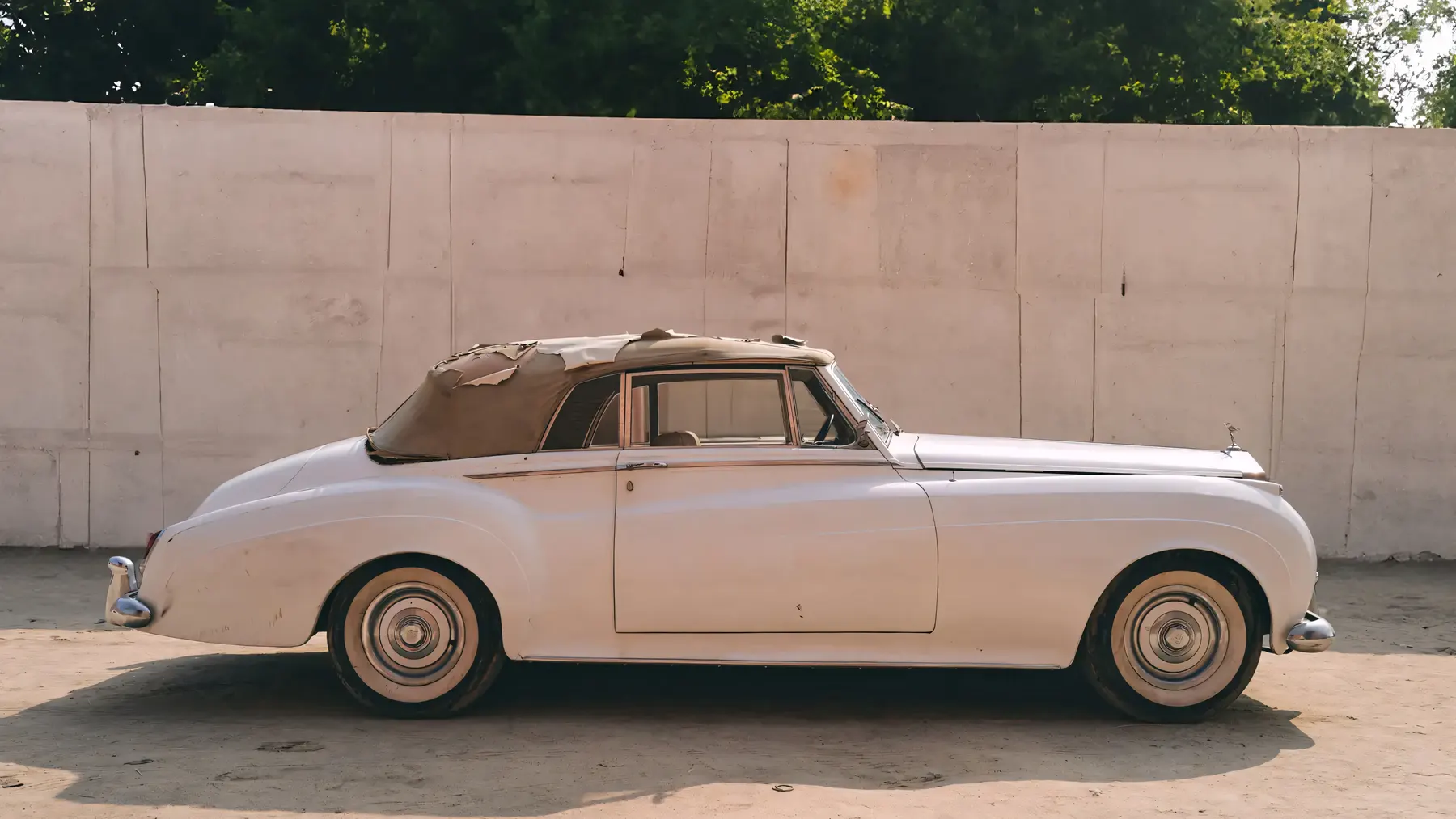
The decision to develop a drophead version of this Adaptation body introduced a set of engineering considerations that the closed saloon had simply avoided. Converting from a closed to an open car eliminates the structural box formed by the roof and its pillars entirely, and the Silver Cloud’s separate chassis - for all its traditional virtue - was not designed with this eventuality in mind. Stiffening the scuttle and sill sections to compensate was unavoidable, adding weight to a car that was already substantial. The standard Silver Cloud I saloon weighed in the region of 1,900 kg, and a drophead conversion, with its additional structural bracing, hood mechanism, and the elaborate weather sealing demanded by any Rolls-Royce client, would have exceeded that figure meaningfully. H.J. Mulliner’s craftsmen had managed such conversions before on earlier chassis, and the folding hood itself - manually operated in the fashion of the period, and lined and trimmed to the same obsessive specification as the cabin - would have been an exercise in applied craft. But the weight was real, and it sat in tension with the performance available from the car’s engine.
That engine was the Silver Cloud I’s 4,887cc F-head straight-six, a unit that Rolls-Royce, in their customary fashion, declined to formally rate. Contemporary road tests and engineering estimates placed output somewhere in the region of 155 to 165 bhp - adequate for graceful cross-country progress and entirely suited to unhurried London driving, but not exceptional by any absolute measure. Paired with a four-speed automatic transmission, the drivetrain encouraged a particular style: smooth, sustained, with power arriving in a long pull rather than a sharp surge. On the open road the dynamics were composed rather than involving. The independent front suspension and semi-elliptic rear springs gave a supple, insulated quality to the ride entirely appropriate to the car’s character, but in a heavier drophead configuration the combination of mass and moderate power produced an experience better described as stately than spirited. Power steering was available as an option but was by no means standard, and without it the weight of a coachbuilt drophead made itself felt at parking speeds and in tighter manoeuvres. For the right customer, in the right conditions, none of this was a criticism. For a broader audience, it underlined that the Silver Cloud I was a car of a particular, unhurried philosophy.
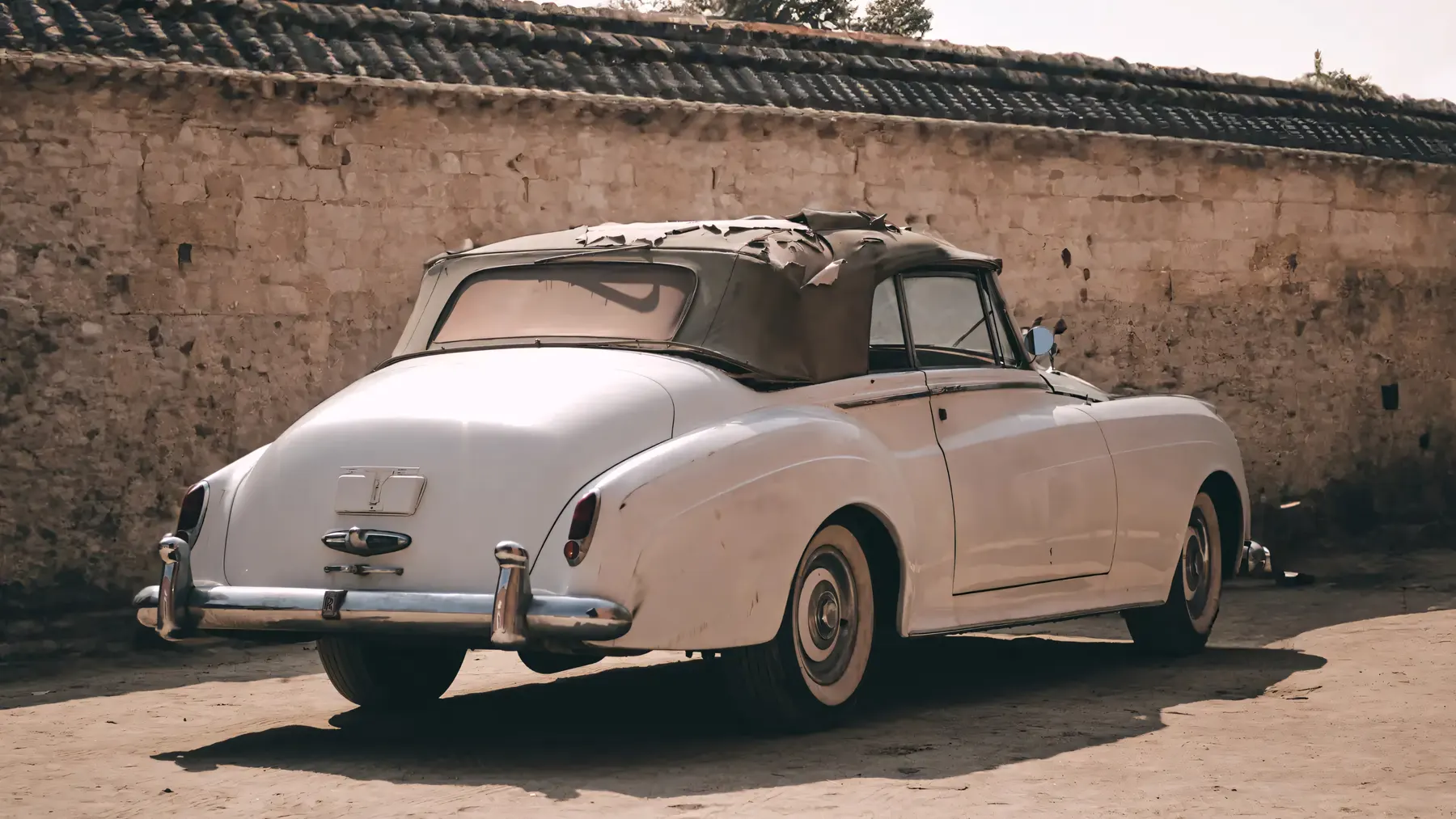
The prototype designation carries significance beyond the merely technical. In coachbuilding practice, a prototype served multiple simultaneous functions: it proved the structural and aesthetic solutions to the conversion problem; it demonstrated the finished proposition to prospective customers; and it allowed Mulliner’s craftsmen to establish the patterns, jigs, and fabrication sequences that any subsequent examples would require. Whether the Drophead Coupé Adaptation proceeded beyond this prototype in any meaningful quantity is a question the surviving records do not answer with full clarity. What can be said with confidence is that the potential customer base was narrow even by the standards of Mulliner’s clientele. A coachbuilt drophead Silver Cloud represented an expenditure substantially beyond the already considerable cost of the standard car, at a moment when the economics of bespoke coachbuilding were becoming precarious and the number of customers both capable of and committed to such a premium was quietly contracting. The prototype is therefore partly a commercial proposition and partly an argument - a demonstration that the craft was still available, still worth commissioning, still distinct from what the factory could supply.
That argument had an expiry date, and H.J. Mulliner knew it. The firm was purchased by Rolls-Royce in 1959 and subsequently merged with Park Ward in 1961, absorbed into the manufacturer it had spent decades distinguishing from. The absorption was symptomatic of a wider pattern: the independent coachbuilders who had sustained the Silver Wraith and Silver Dawn era were one by one either closing or being consolidated, their skills and equipment becoming assets of the very manufacturers whose standardised products had made independent coachbuilding progressively less commercially viable. The Silver Cloud I’s factory body, for all that Mulliner’s customers might have found it insufficiently individual, was genuinely well-made and well-proportioned. The case for spending significantly more on a coachbuilt alternative required a conviction about exclusivity that not every wealthy buyer shared - and the ones who did share it were supporting a craft whose commercial foundations had already been undermined.
There was also a forward-looking problem that the prototype could not entirely escape: the Silver Cloud I’s straight-six engine, smooth and dependable as it was, had been rendered somewhat anachronistic by the time the Silver Cloud II arrived in 1959 with a new all-aluminium 6,230cc V8. The six-cylinder unit beneath the long bonnet was already, by the mid-1950s, a configuration whose character suited the car’s existing philosophy rather than expanding its possibilities. In a heavy coachbuilt drophead, it delivered an experience of appropriate grandeur, but the engine’s relative modesty meant that the car’s most obvious asset - the sensation of effortless motion - was somewhat harder to sustain than it appeared from the outside. The Silver Cloud I was, in this respect, a transitional model: a car whose standard of finish and engineering integrity remained exemplary, but whose powertrain was already pointing toward replacement.
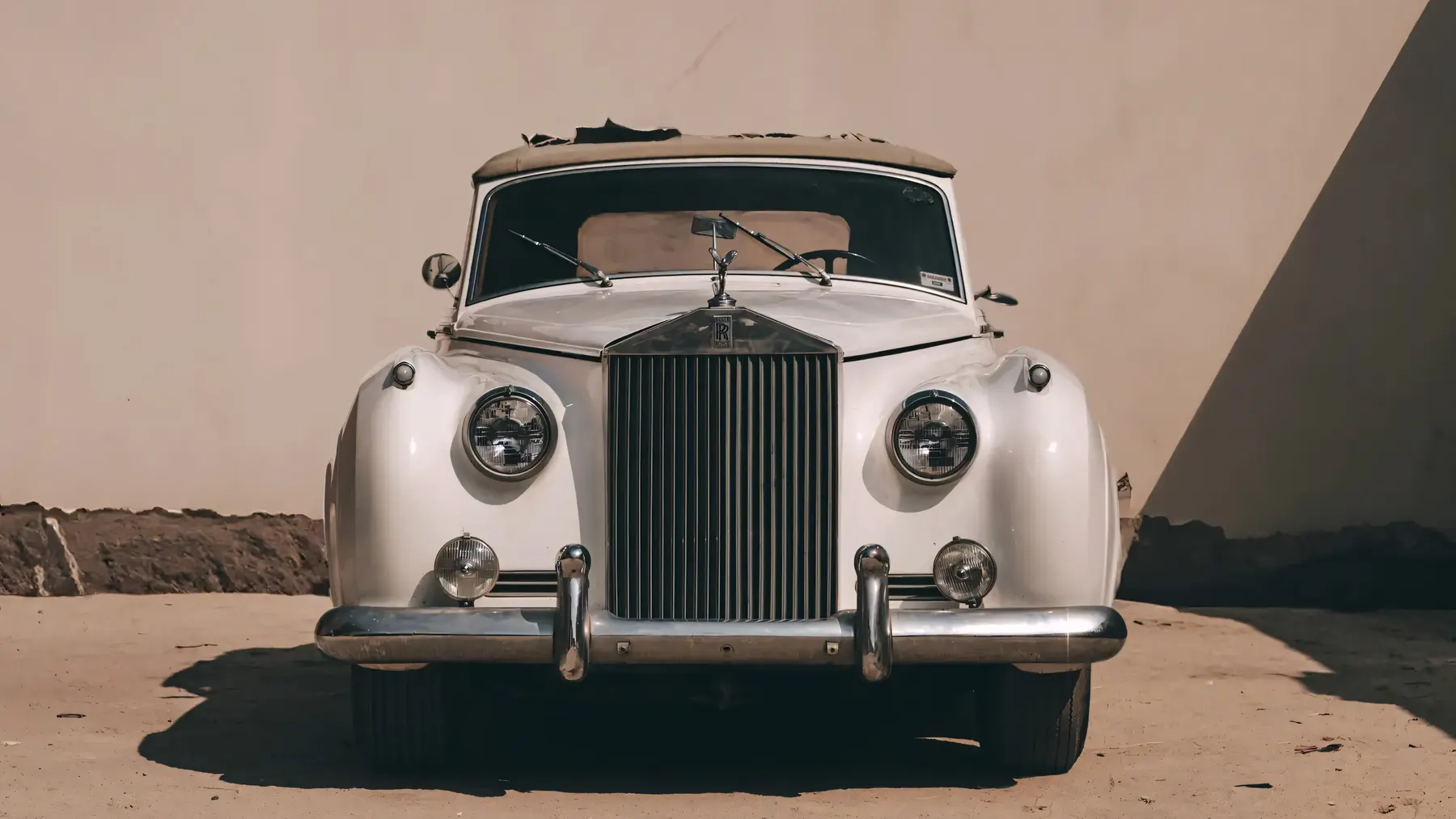
What the Mulliner Drophead Coupé Adaptation Prototype most coherently represents is the precise intersection of two endings: the end of the independent coachbuilder’s commercial independence, and the end of the Silver Cloud I’s particular configuration of engine, body, and market expectation. The prototype sits at this junction not as a curiosity but as a considered statement - evidence that even as the industrialised approach was winning, there remained craftsmen capable of taking the winner’s product and making it into something else entirely. That something else was more beautiful, more exclusive, and more expensive than the thing it began as. It was also, perhaps inevitably, the kind of object that only a contracting world could afford to commission and only a receding world of craft could produce.
Editorial notes: The Silver Cloud I’s power output is unconfirmed by Rolls-Royce; the 155–165 bhp range used here represents a conservative synthesis of contemporary road-test estimates and figures associated with the engine family - it should be treated as approximate. The prototype designation is taken at face value from the subject’s description; if H.J. Mulliner’s commission records or body number documentation survive, they would clarify the vehicle’s precise position in the Adaptation drophead production sequence. Weight figures for the standard Silver Cloud I saloon are approximate at circa 1,900 kg, extrapolated from period road test data; the coachbuilt drophead weight increase is inferred from the engineering logic of the conversion rather than from a documented figure. H.J. Mulliner’s acquisition by Rolls-Royce in 1959 and subsequent merger with Park Ward in 1961 are established historical facts.
Join the discussion
Comments
Loading comments…
Leave a comment
Share a detail, memory, or perspective. Every comment is reviewed before publication.