The Last Handmade Giant: The Rolls-Royce Phantom VI Limousine by Mulliner Park Ward
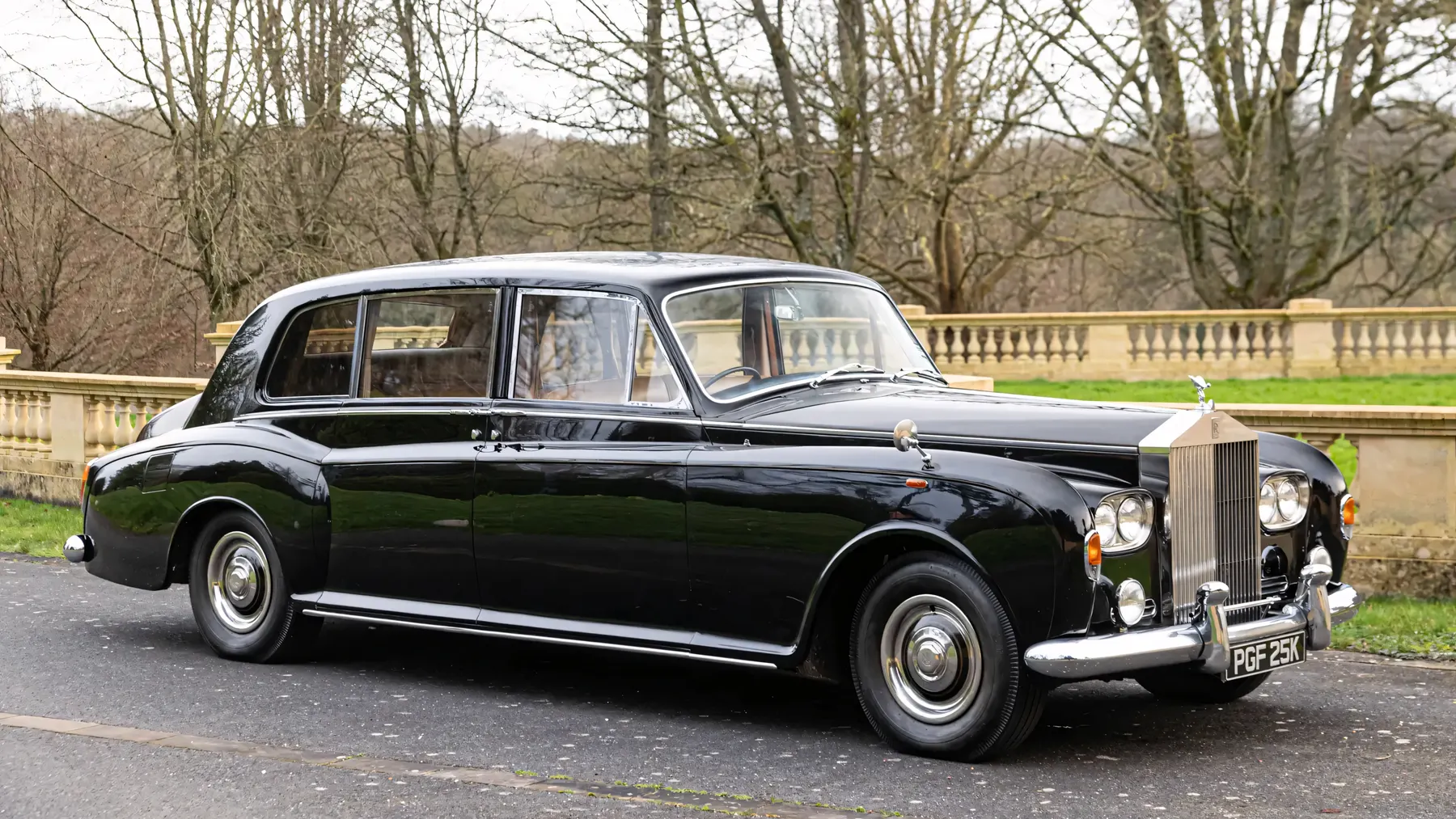
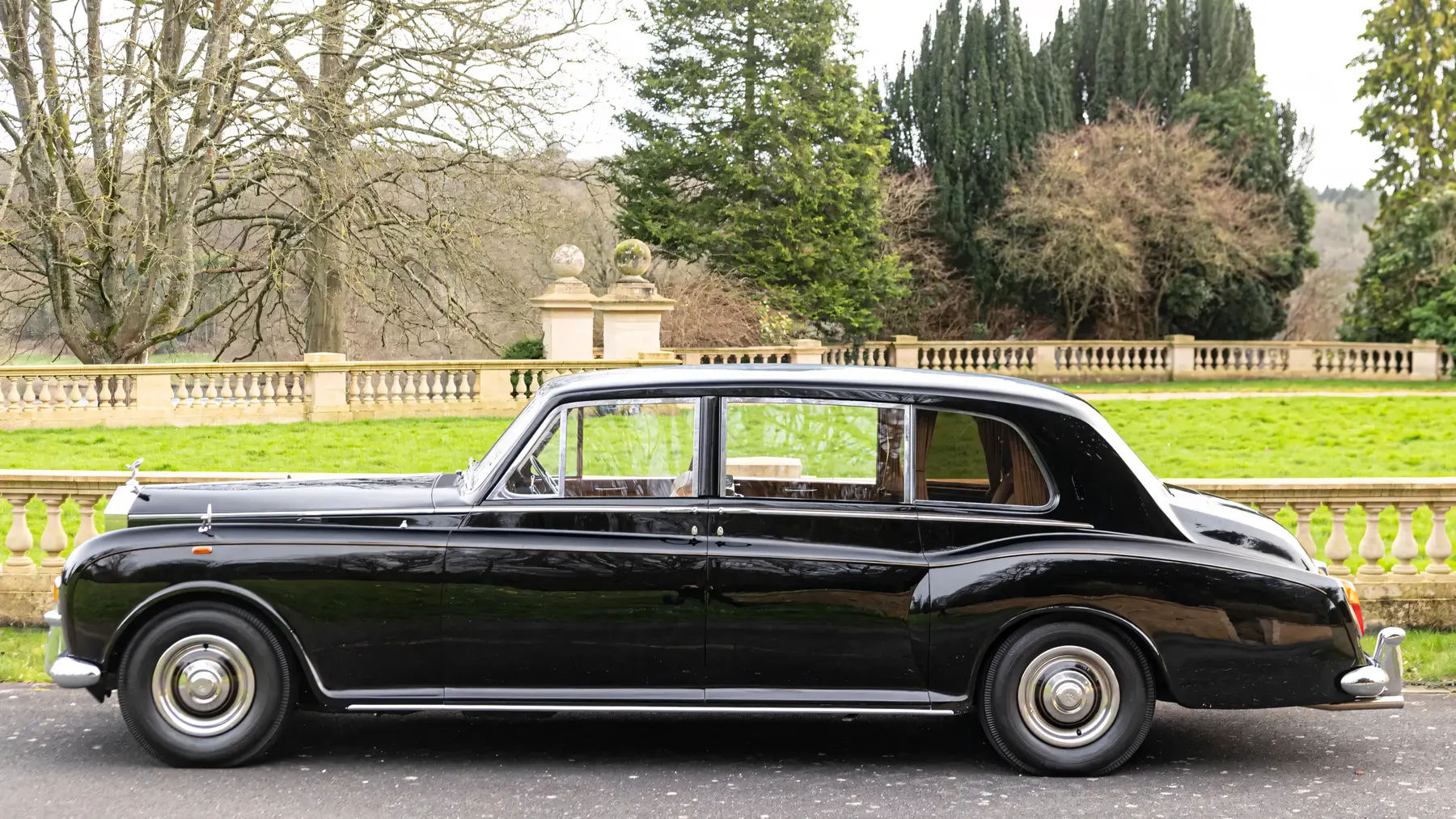
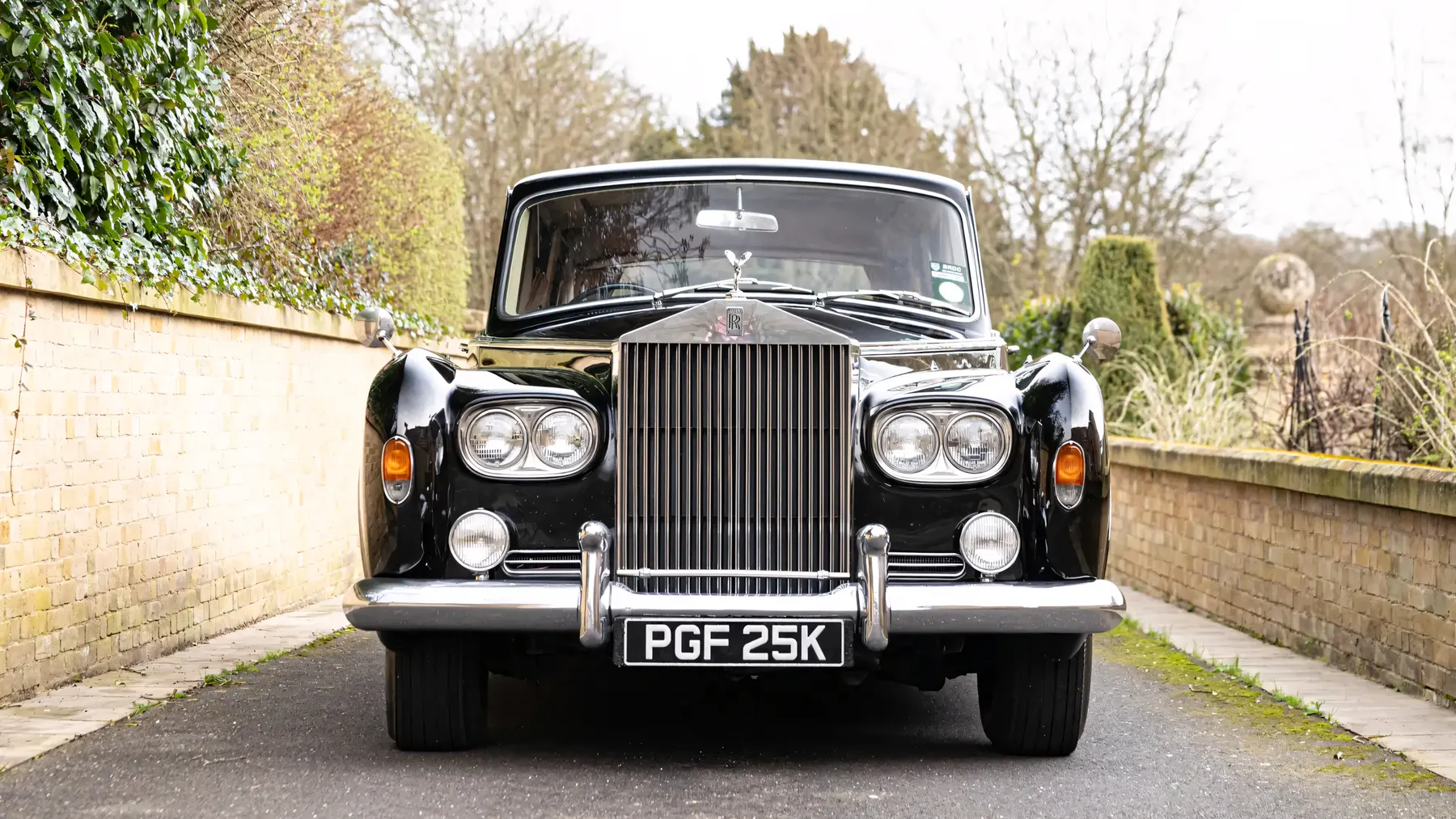
1972 Rolls-Royce Phantom VI Limousine by Mulliner Park Ward

Images: Simon Clay / RM Sotheby's
When James Young of Bromley finally ceased building bodies on Phantom chassis in 1968, Rolls-Royce found itself for the first time as sole provider of coachwork for its most formal model. The coachbuilder’s works on Hythe Road in Willesden, operating under the name Mulliner Park Ward, had already been supplying the majority of Phantom V bodies since the early 1960s, following Rolls-Royce’s merger of Park Ward - a subsidiary since 1939 - with H. J. Mulliner & Co., acquired in 1959. Now, with the Phantom VI, they had the entire run to themselves: not a large run, by any commercial measure, but an extraordinary one. Each car took the Hythe Road craftsmen approximately eighteen months to complete. The workshop could call on a workforce of around 750 at its post-war peak, engaged in a kind of manufacturing that the rest of the motor industry had largely abandoned - building bespoke bodies, panel by panel, over a separate steel chassis, to the exact requirements of each individual buyer.
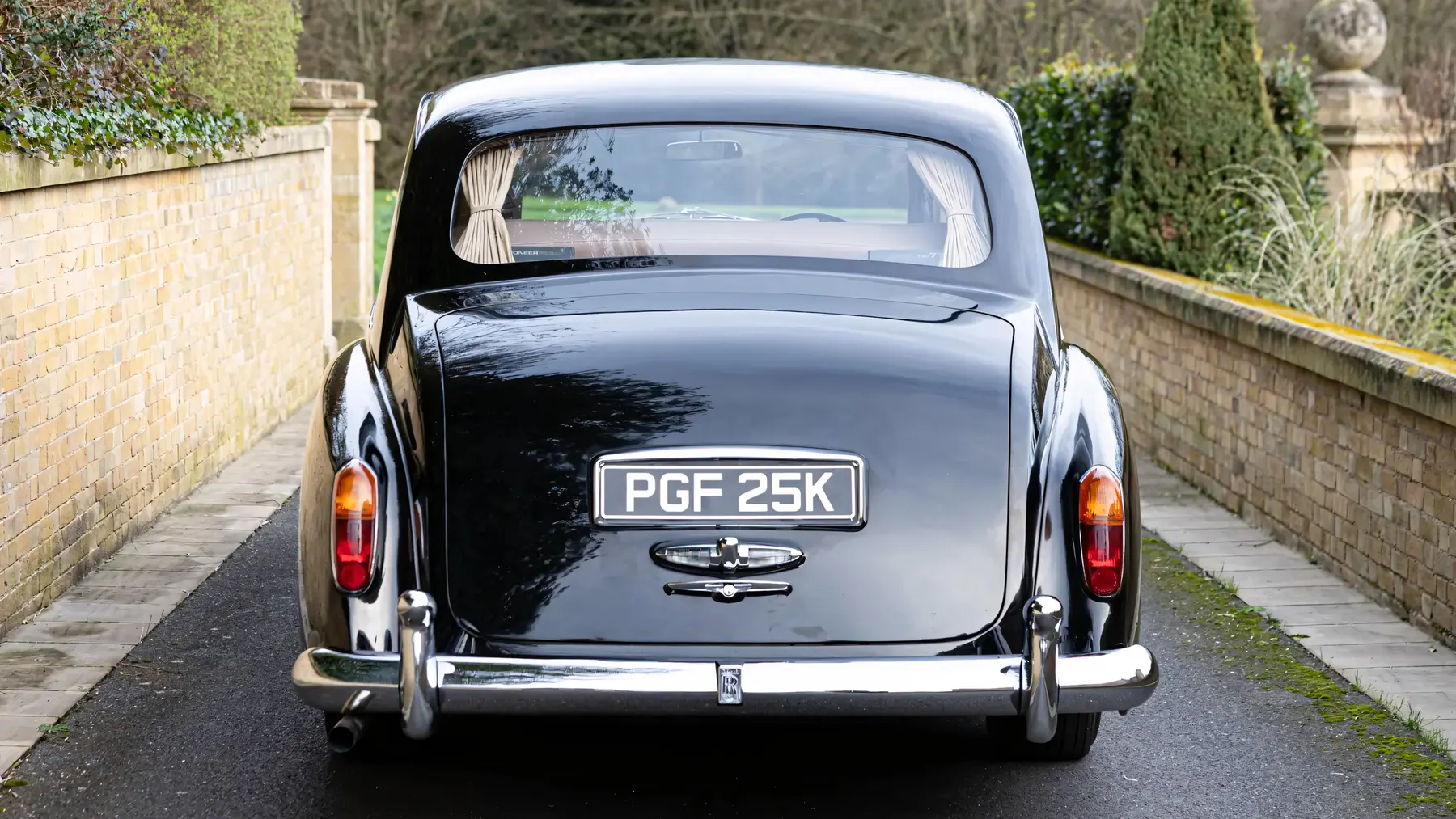
The Phantom VI entered production in 1968 as exactly what it was designed to be: a refinement of the Phantom V rather than a replacement. Externally the new model was nearly indistinguishable from the late-production Phantom V; the most visible changes were a slightly lower radiator grille and a revised bonnet profile. Inside, the fascia had been redesigned, and the engine had been updated to use cylinder heads derived from the Silver Shadow, which had entered production two years earlier as the modern, monocoque-bodied replacement for the Silver Cloud. That the Silver Shadow and the Phantom VI should co-exist within Rolls-Royce’s range said something clear about the company’s understanding of its market. The Phantom VI was not competing with the Silver Shadow for the same clients. It was competing with nothing. Its intended owners were heads of state, sovereign families, and the occasional private individual for whom money was an entirely secondary consideration.
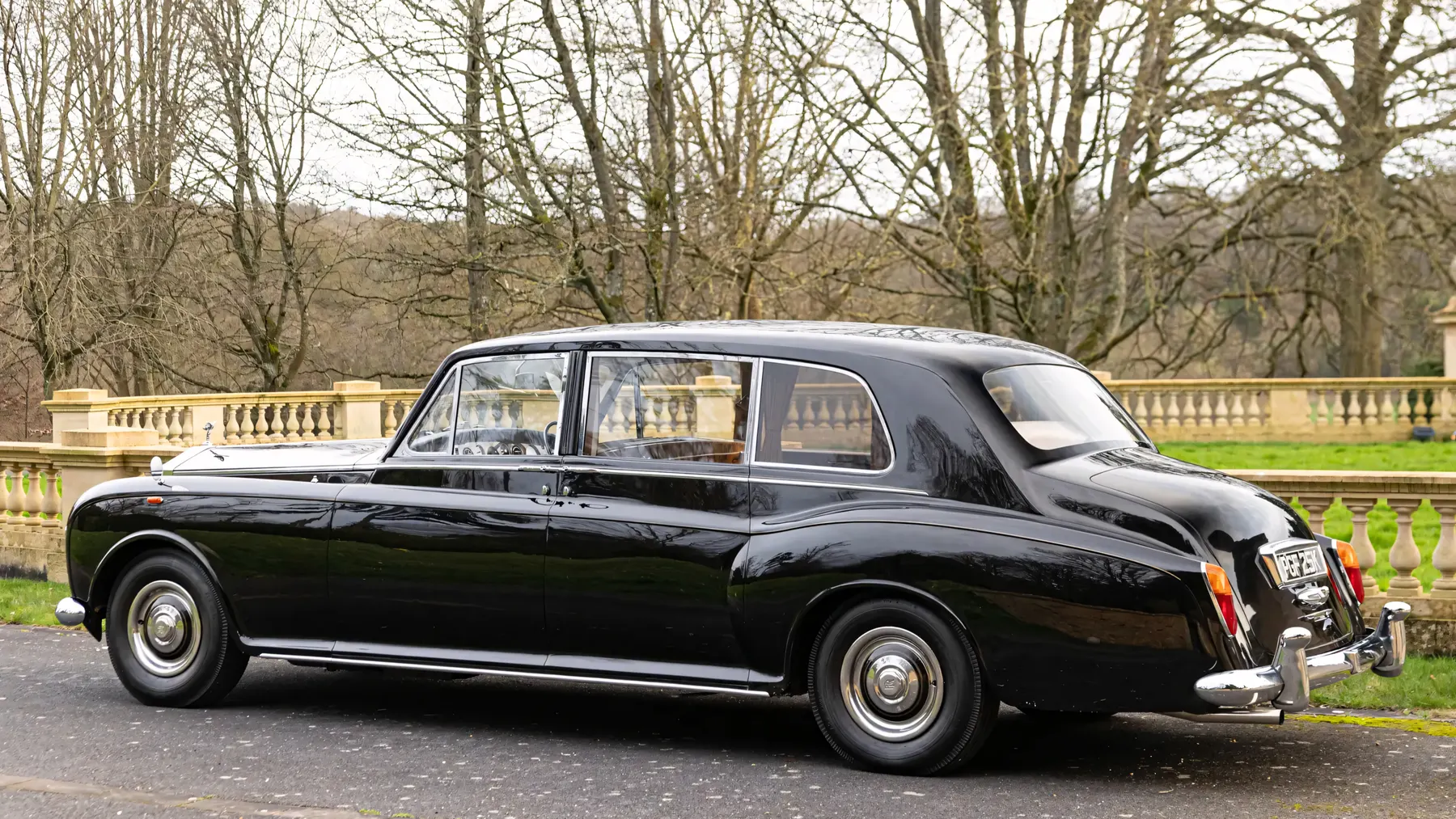
The chassis that underpinned the Phantom VI was a substantial box-section steel frame with a wheelbase of 3,683mm and an overall length of 6,045mm - nearly six metres from bumper to bumper. Coil springs at the front and leaf springs with a live rear axle at the back provided the suspension. Four-wheel drum brakes handled the stopping duties. This was, to be plain about it, an engineering specification that belonged more to the decade before the car’s launch than to the decade in which it was sold. By 1968, disc brakes were already established in motor sport and spreading rapidly through passenger car production; by the time the Phantom VI received its 1979 powertrain upgrade, disc brakes were standard on cars of a fraction of its price. The drums remained throughout the model’s entire production life, from the first example delivered in 1968 to the last one completed in 1992. Rolls-Royce’s implicit position was that drum brakes on a car designed to proceed at a walking pace past crowds on a processional route imposed no meaningful limitation. This was true up to a point, but it was also a rationalisation. The gearbox-driven servo arrangement, shared with the Phantom V, required a firmer pedal effort at low speeds as servo assistance became less effective - an awkwardness that car and driver descriptions of the period noted as a genuine, if situational, handling compromise.
The engine fitted at launch was the 6,230cc 90-degree V8 of all-aluminium construction, running on twin SU carburettors and coupled to a four-speed Hydramatic automatic gearbox - the same General Motors-derived unit that Rolls-Royce had manufactured under licence since the Phantom V. In keeping with the company’s long-standing practice, no power output was ever declared in period documentation; internal communications and marketing material referred to output simply as “adequate,” which neatly encapsulated Rolls-Royce’s genuine conviction that performance figures were both vulgar and irrelevant to the Phantom’s clientele. Period estimates placed the figure at around 220bhp at 4,000rpm - sufficient for the Silver Shadow but hauling considerably more metal in the Phantom VI, where kerb weight was approximately 2,500kg. The car was not designed to accelerate with urgency, and it did not.
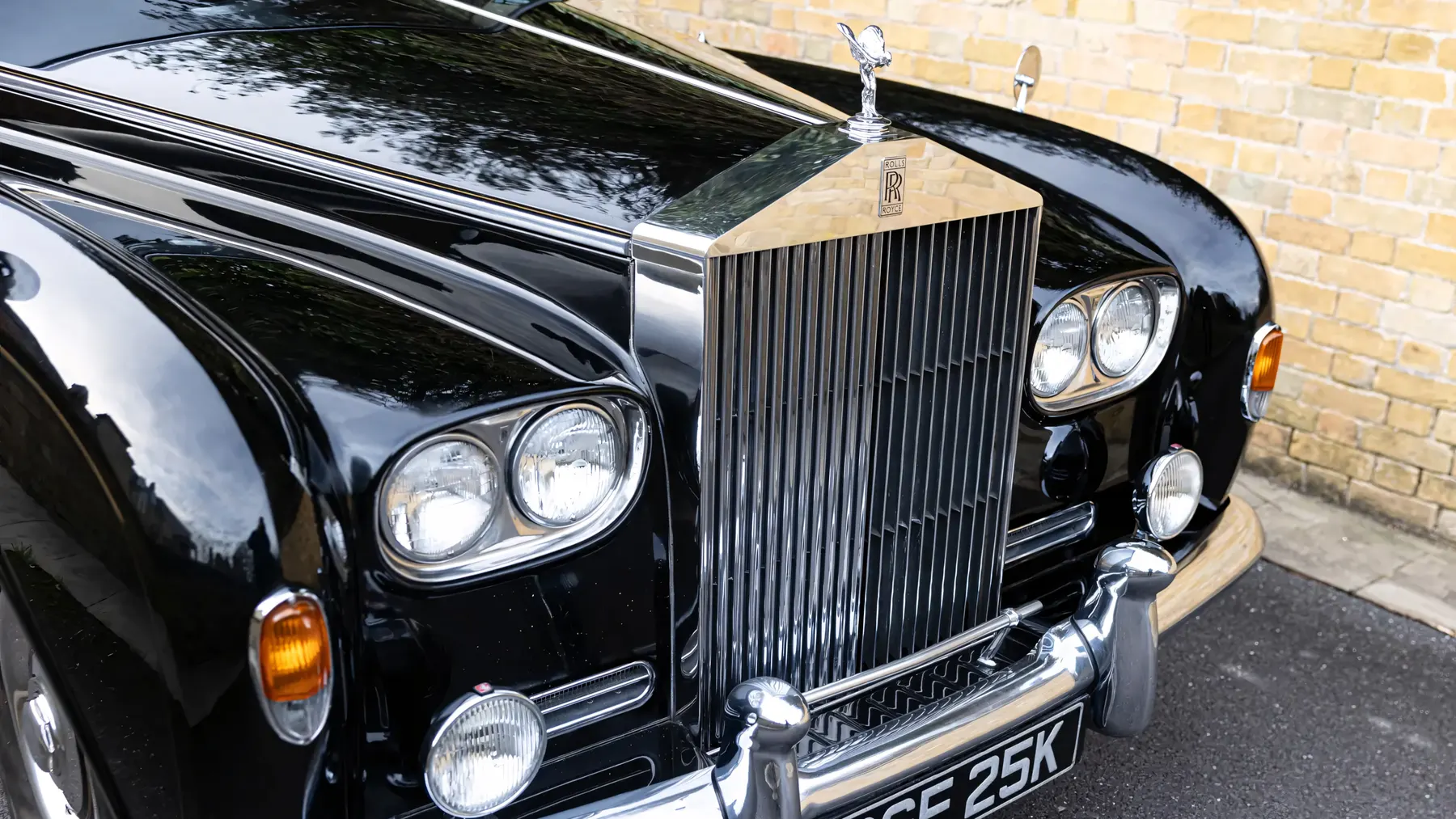
The standard Mulliner Park Ward limousine body incorporated the features expected of the model’s market position. A glass division separated chauffeur and passenger compartments. Folding occasional seats faced forward from the rear quarter panel line. A cocktail cabinet in burled walnut veneer occupied the space between them. The interior climate was managed by separate front and rear air conditioning units - a significant technical distinction, since the Phantom VI was reputedly the first production motor car in the world to offer dual air conditioning as standard equipment. The level of individualisation available to buyers was substantial. A demonstrator vehicle built in 1972 and documented for Mulliner Park Ward’s Mayfair dealership reportedly offered every available option simultaneously, its promotional brochure calling it “The Exclusive Phantom” - an automotive dessert cart from which prospective buyers would select according to their tastes and budgets. At the far extreme of the commission spectrum, the final limousine to leave Hythe Road, completed in 1990, ran to an options list of 118 items, requiring an additional 4,300 hours of build time beyond the already prolonged standard programme. That car was delivered at a cost of £600,000 - at a time when a well-specified Rolls-Royce Silver Spur cost a fraction of that figure. It was documented in the February 1992 issue of CAR magazine as the last limousine built.
The 1979 powertrain revision was the most substantial development the Phantom VI received during its twenty-two-year production run. The engine displacement was increased to 6,750cc, the four-speed Hydramatic was replaced by a three-speed GM 400 unit incorporating a torque converter, and the separate front-and-rear air conditioning arrangement was standardised across the range. The drum brakes remained. In practice this update made the Phantom VI more tractable in the kind of low-speed, stop-start ceremonial driving that represented much of its use, the torque converter smoothing the transmission’s behaviour at the very low road speeds at which these cars most frequently operated.
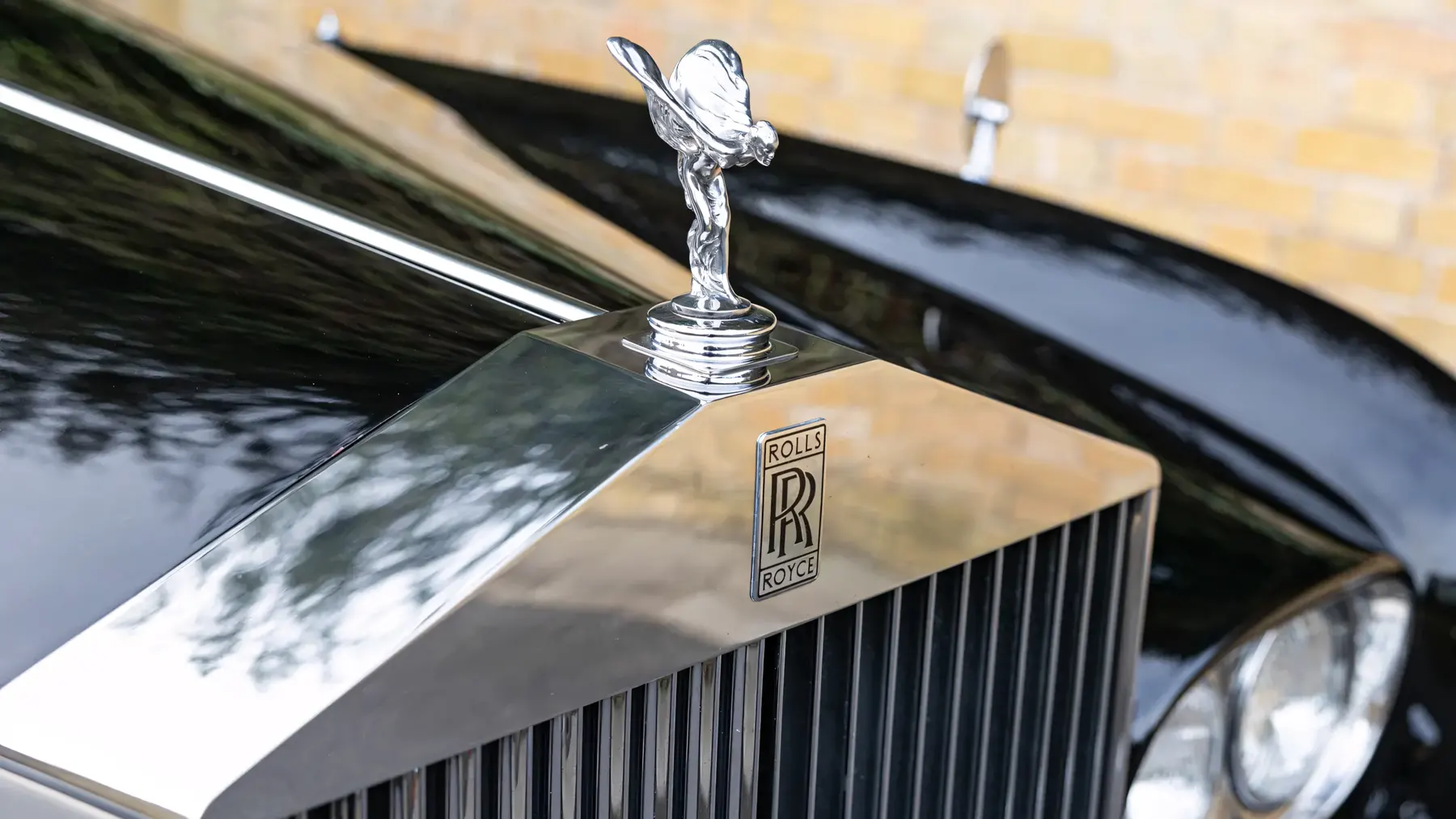
The 1977 Silver Jubilee Car presented to Queen Elizabeth II by the British motor industry was, in mechanical terms, a preview of the 1979 update - the first Phantom VI to be built with the Silver Shadow II engine and the GM 400 gearbox, introduced ahead of their general adoption. The coachwork specification was considerably more elaborate than that of a standard limousine. Mulliner Park Ward’s Willesden craftsmen incorporated a raised roof with transparent rear quarters to ensure public visibility of the occupant; an elevating back seat; a trap door in the roof for the Royal Standard; and a central armrest housing dictation equipment alongside the controls for radio and air conditioning. The paint finish was the traditional Black over Royal Claret. A small blue light above the windscreen would alert police to a royal presence on the roads. The Spirit of Ecstasy was replaced, when the Queen was on board, by a specially commissioned solid silver mascot depicting St George slaying the dragon. The completed car carried no registration plates. Rolls-Royce declined to comment on the price; a rumoured figure of £65,000 was reported in the contemporary press, at a time when £68.70 represented an average weekly wage in Britain.
The car was not presented to the Queen until 1978, owing to industrial action at the Willesden works - a delay that will not have surprised anyone familiar with British manufacturing in the late 1970s. It served as the principal state car until 2002, when two Bentley State Limousines were commissioned for the Golden Jubilee. The 1977 Phantom VI appeared again in 2011, transporting the bride from the Goring Hotel to Westminster Abbey for the wedding of the Duke and Duchess of Cambridge. A more conventionally specified 1986 Phantom VI joined the royal fleet midway through the model’s life. When Queen Elizabeth II died in September 2022, it was the 1977 Phantom VI that carried King Charles III to Buckingham Palace - a car then approaching half a century old, performing exactly the function for which it had been built.
The Phantom VI’s formal clientele extended well beyond the British royal family. Governments ordered it as a ceremonial vehicle on every continent; the 1970 example used for the Governor-General of Australia became among the most frequently photographed Phantom VIs outside Europe. The landaulet configuration, though rare - approximately twelve examples were built across the production run, making each one effectively a bespoke one-off - found favour with heads of state requiring open visibility of the occupants for public occasions. A handful of convertible bodies were commissioned outside the standard Mulliner Park Ward programme: two were built by Frua of Turin, one a two-door and one a four-door cabriolet, representing an unusual Italian excursion on a chassis that was otherwise entirely a product of North London.
The honest critical reckoning with the Phantom VI must acknowledge that by the mid-1970s, the car was engineering of a type that retained no real technical justification beyond its symbolic importance. The live rear axle and leaf spring rear suspension provided perfectly acceptable ride quality on the smooth processional routes for which the car was principally designed, but could be caught out by the uneven road surfaces that urban use regularly presented. Period driving impressions of the closely related Phantom V described understeer as the natural outcome of ambitious cornering - the long-wheelbase nose diving in while the rear stayed obediently in line - and that characteristic was equally present in the Phantom VI. The brakes, as noted, became progressively less easy to justify against a contemporary standard. By the 1980s, German limousines were offering self-levelling air suspension and, eventually, anti-lock braking systems. The Phantom VI’s running gear read as an artefact rather than a specification.
Production in the final decade made the situation visible. Fewer than forty cars were built in the last ten years of the programme - a figure that speaks not to deliberate exclusivity but to a market that had largely exhausted itself. The order book dwindled not because Rolls-Royce chose to limit supply, but because the number of buyers prepared to invest in a hand-built ceremony car on what was essentially pre-war suspension geometry was genuinely, verifiably shrinking. The discussions about a possible Phantom VII based on the Silver Shadow’s body platform, which took place in the 1970s but resulted in no prototypes, were perhaps the clearest internal acknowledgement that the Phantom VI’s particular version of luxury had a finite horizon. Rolls-Royce chose not to force the issue, and so the Phantom VI outlived its own era by a considerable margin.
The chassis production line at Crewe built its final Phantom VI chassis in 1990. Mulliner Park Ward completed the coachwork on the remaining examples during 1991, with the very last car - a state landaulet initially intended to remain in Rolls-Royce’s own ownership as an institutional full stop to the Silver Ghost era, but ultimately sold to the Sultan of Brunei - delivered in 1992. The Hythe Road coachbuilding facility closed in 1991, ending a tradition of London-based coachwork on the Phantom chassis that traced back to Park Ward’s first Rolls-Royce bodies in the early 1920s.
When the BMW-era Phantom VII arrived in 2003, it carried forward the name and general presence of the Phantom VI but none of its construction philosophy. The separate chassis, the live axle, the drum brakes, the eighteen-month build time, the commission from a buyer with precise personal requirements - all of it belonged to a world the new car chose not to revisit. The Phantom VI was not a car of its era, even when it was new; by its final years it was operating in a category of one, immune to both competition and criticism. Four hundred years of coachbuilding tradition had been gradually contracting toward this single point, and when the last one was delivered, a genuinely irreplaceable craft ended with it.
Sources
- Wikipedia - Rolls-Royce Phantom VI
- Wikipedia - Rolls-Royce Phantom V
- ConceptCarz - 1971 Rolls-Royce Phantom VI
- ConceptCarz - 1972 Rolls-Royce Phantom VI
- Classic & Sports Car - Rolls-Royce Phantom VI A-to-Z Guide
- Classic & Sports Car - Rolls-Royce Phantom V: Star Conveyance (driving impression)
- Classic & Sports Car - Rolls-Royce Phantom V: Last of the Line
- RM Sotheby’s - 1972 Rolls-Royce Phantom VI Limousine by Mulliner Park Ward (Cliveden House)
- RM Sotheby’s - 1990 Rolls-Royce Phantom VI Special Limousine by Mulliner Park Ward (A Passion for Elegance)
- RM Sotheby’s - 1972 Rolls-Royce Phantom VI Limousine by Mulliner Park Ward (Arizona 2019)
- Lancaster Insurance - The Silver Jubilee Rolls-Royce Phantom VI
- Rolls-Royce Motor Cars Press - A Century of Power and Influence: The Rolls-Royce Phantom at 100
- Wikipedia - Mulliner Park Ward
- Wikipedia - Park Ward
- The Silver Cloud Society - Mulliner Park Ward Coach Builders
- IntroCar - Rolls-Royce Phantom VI Parts Catalogue & Chassis Info
Join the discussion
Comments
Loading comments…
Leave a comment
Share a detail, memory, or perspective. Every comment is reviewed before publication.