Alfa Romeo 1900 C Cabriolet by Pinin Farina: Refinement Over Flash
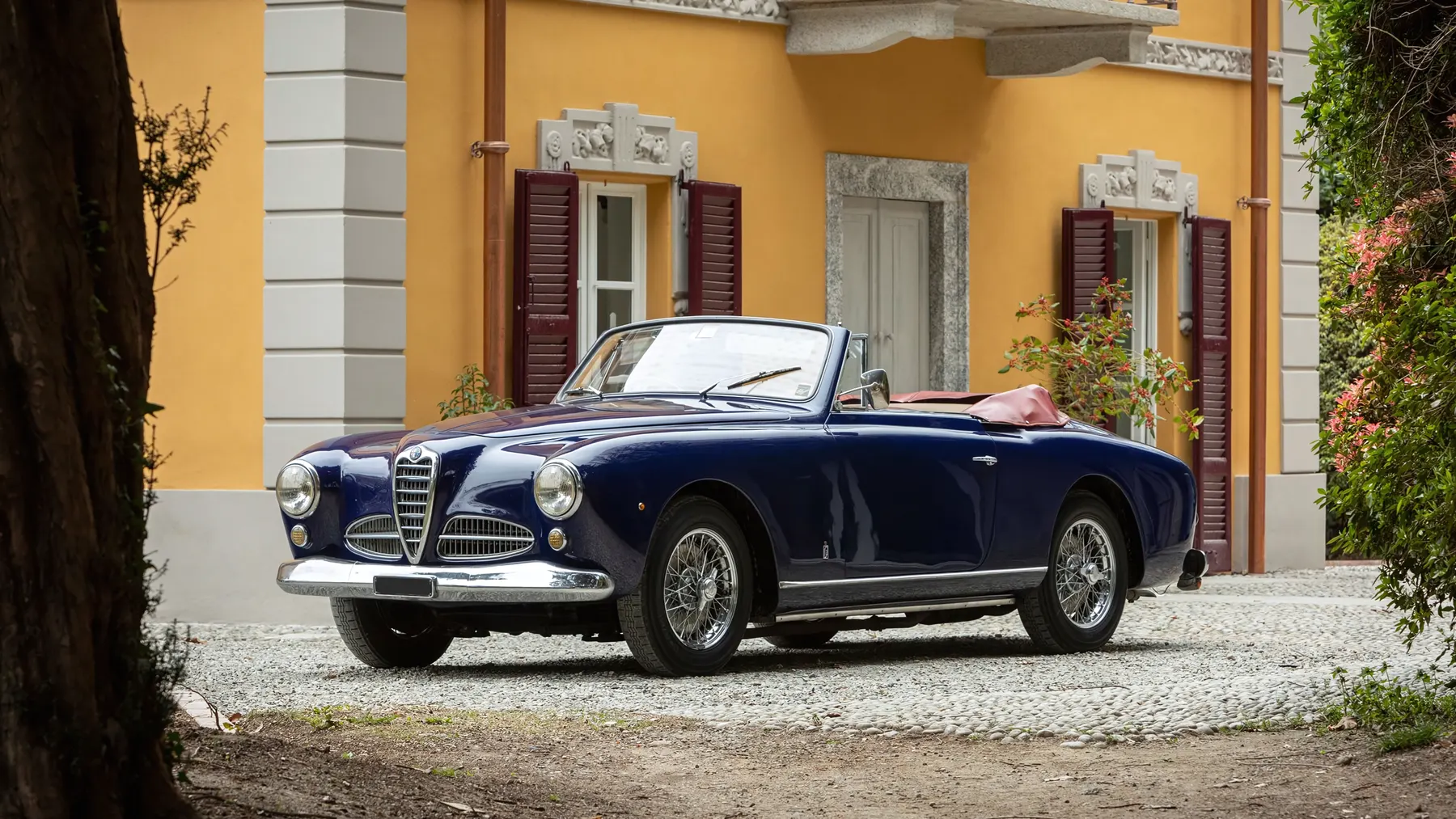
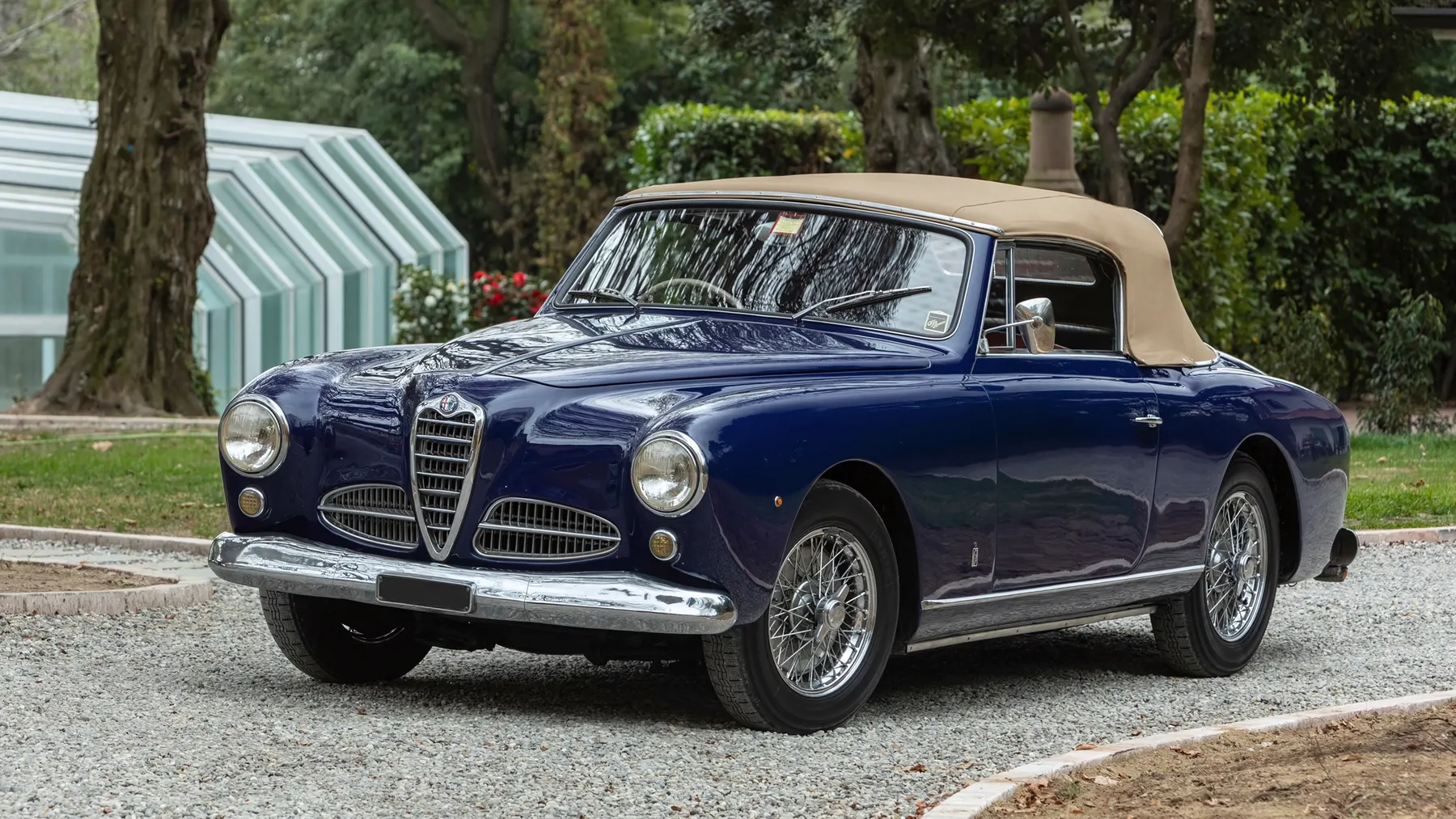
1953 Alfa Romeo 1900 C Cabriolet by Pinin Farina

Images: Paolo Carlini / RM Sotheby's
Battista “Pinin” Farina carried more prestige than almost anyone else in Italian coachbuilding by 1951, yet when Alfa Romeo handed out contracts for its new short-wheelbase 1900C chassis, the glamour assignment went to someone else. The lightweight sports coupé that would define the shape of Alfa coupés for a generation was entrusted to a smaller Milanese rival, Carrozzeria Touring. Pinin Farina got the cabriolet: a quieter, heavier, more grown-up car built for buyers who wanted open-air motoring and the right badge on the bonnet rather than lap times to trade with a Lancia Aurelia. It is a strange footnote in the history of one of the world’s most famous design houses, and it explains almost everything about why this particular Alfa has spent seventy years standing in the shadow of its coupé sibling.
The car it was built on mattered enormously to Alfa Romeo. The 1900, unveiled in 1950 and designed by Orazio Satta Puliga, was the first Alfa built with a unitary, load-bearing body rather than a separate chassis, and the first put together on a proper assembly line at the rebuilt Portello works. It arrived just as Alfa was walking away from Formula 1 undefeated, redirecting the company’s resources toward volume production rather than a handful of ultra-expensive competition cars a year. The 1900’s four-cylinder, twin-overhead-camshaft engine, with its aluminium cylinder head and chain-driven cams, displaced 1,884cc and produced 80bhp in its original saloon form, enough to take the 1,100kg berlina to around 93mph. Alfa’s own advertising called it “the family car that wins races,” a slogan the 1900 more or less lived up to on the era’s road-racing circuits.
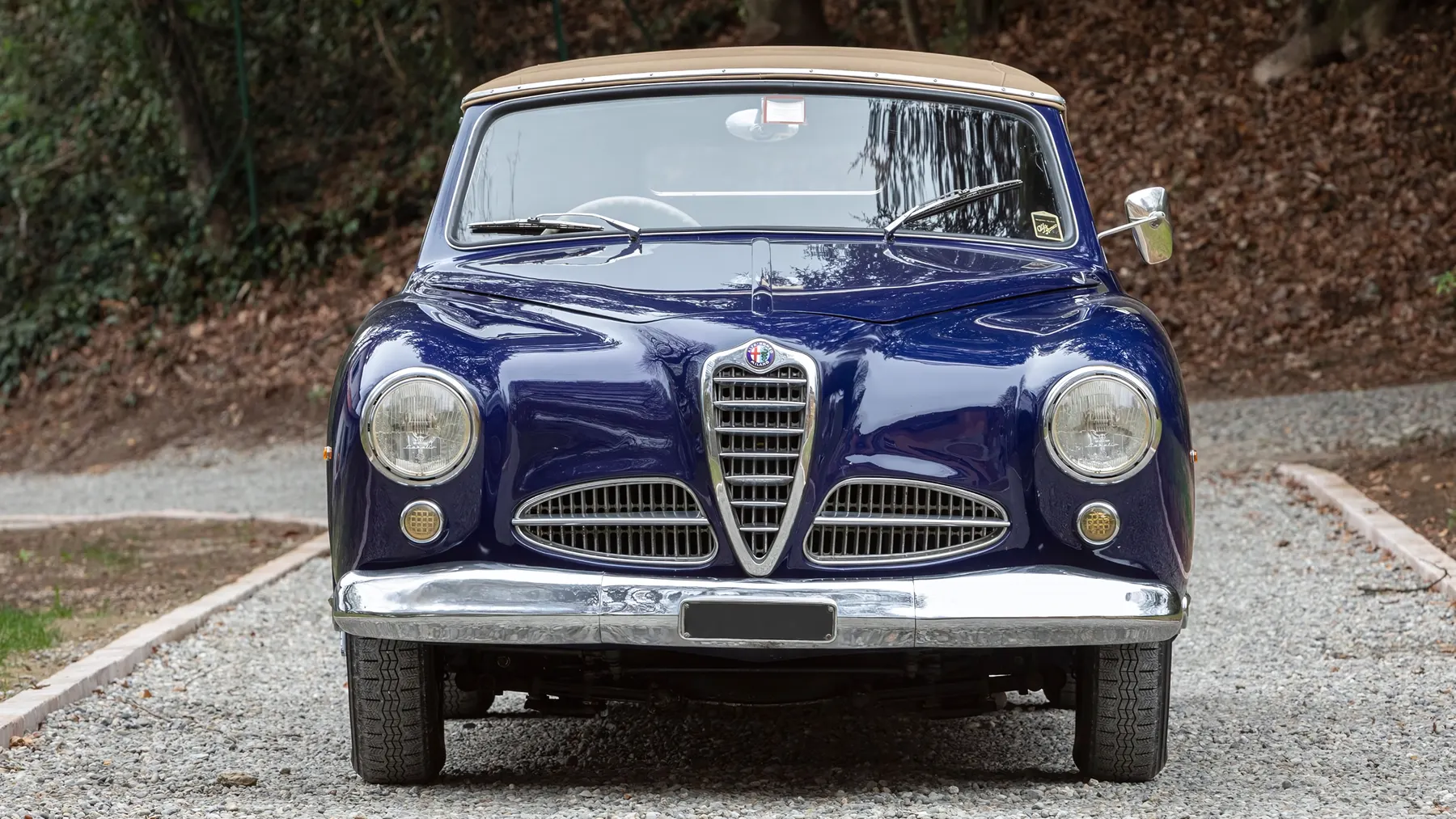
A shortened, sportier “corto” version of the platform followed in 1951, and it was this 1900C chassis that Alfa released to outside coachbuilders. Touring Superleggera used it to build the 1900C Sprint, an aluminium-bodied berlinetta whose vertical, heart-shaped grille flanked by horizontal air intakes became a template for Alfa styling for years afterward, eventually feeding into cars as significant as the Giulietta Sprint. Around 800 Touring-bodied Sprint coupés were built through 1953, powered by the uprated 100bhp version of the 1,884cc engine borrowed from the 1900 TI saloon. Pinin Farina, working from the same rolling chassis and the same drivetrain, produced the cabriolet: roughly 88 cars built mainly between 1952 and 1954, with deliveries trickling into that final year. Pinin Farina also built a separate, much smaller run of around 100 fixed-head coupés on the 1900C in the same period, intended partly to demonstrate that traditional coachbuilding could approach the weight of Touring’s patented Superleggera method, and a handful of even rarer coupés on the longer 1900L floorplan, badged 1900L TI.
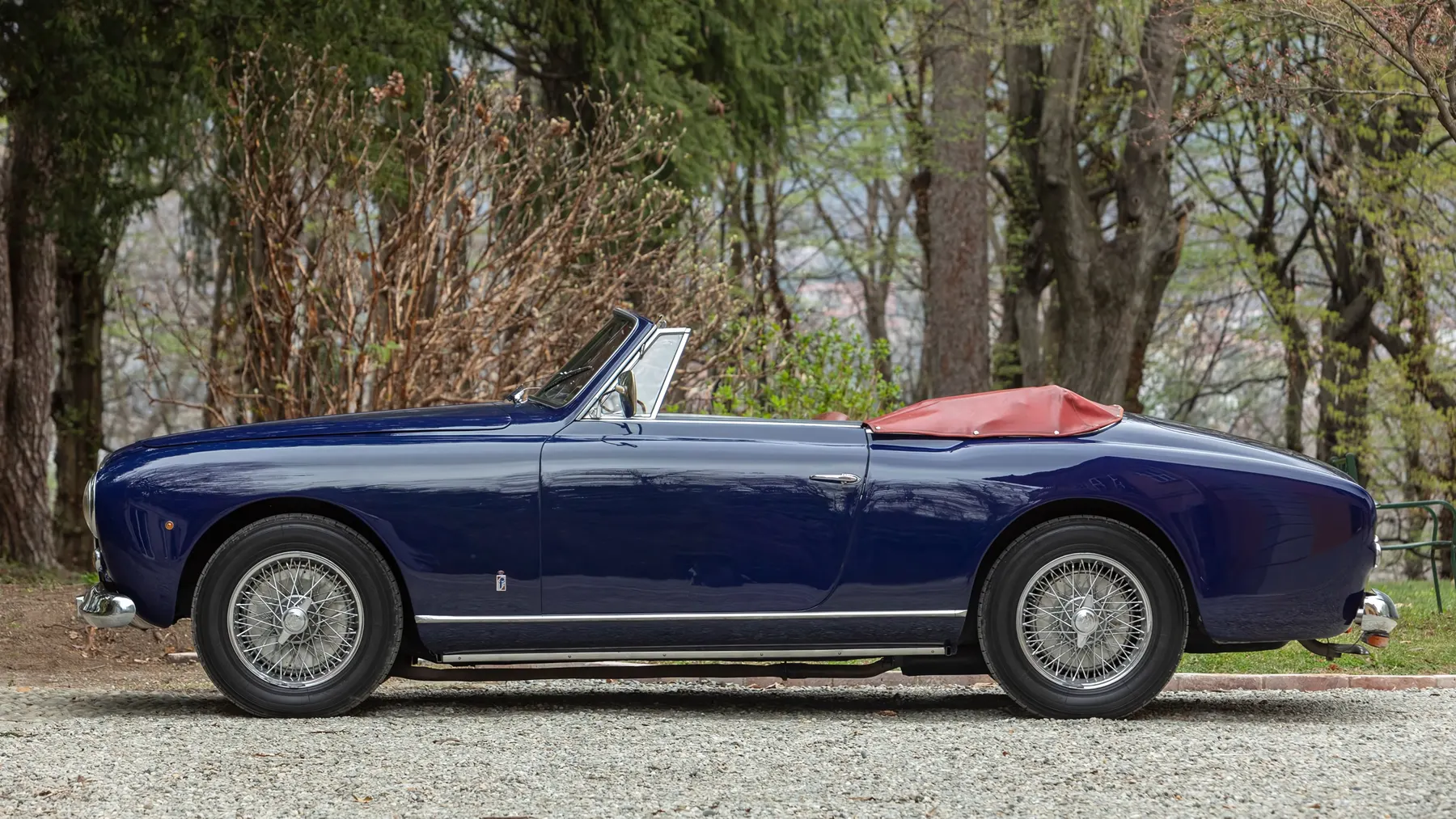
Where Touring’s Sprint was drawn with drama, Pinin Farina’s cabriolet was drawn with restraint. Alfa’s own heritage division still describes it, without much elaboration needed, as “a sedate cabriolet” - smooth, unadorned surfaces, a simple waistline, and none of the aggressive detailing that other Italian carrozzerie were putting on open cars in the early 1950s. It rode on the same independent front suspension, with coil springs and wishbones, and the same well-located live rear axle as every other 1900C variant, using worm-and-roller steering and four-wheel drum brakes. Power came from the 1,884cc twin-cam four in its 100bhp, 5,500rpm Sprint tune, with larger valves, a twin-choke carburettor and higher compression than the base saloon engine, driving through a four-speed manual gearbox. On paper, then, cabriolet and coupé were mechanically identical cars wearing different bodies from different coachbuilders. On the road, they were not.
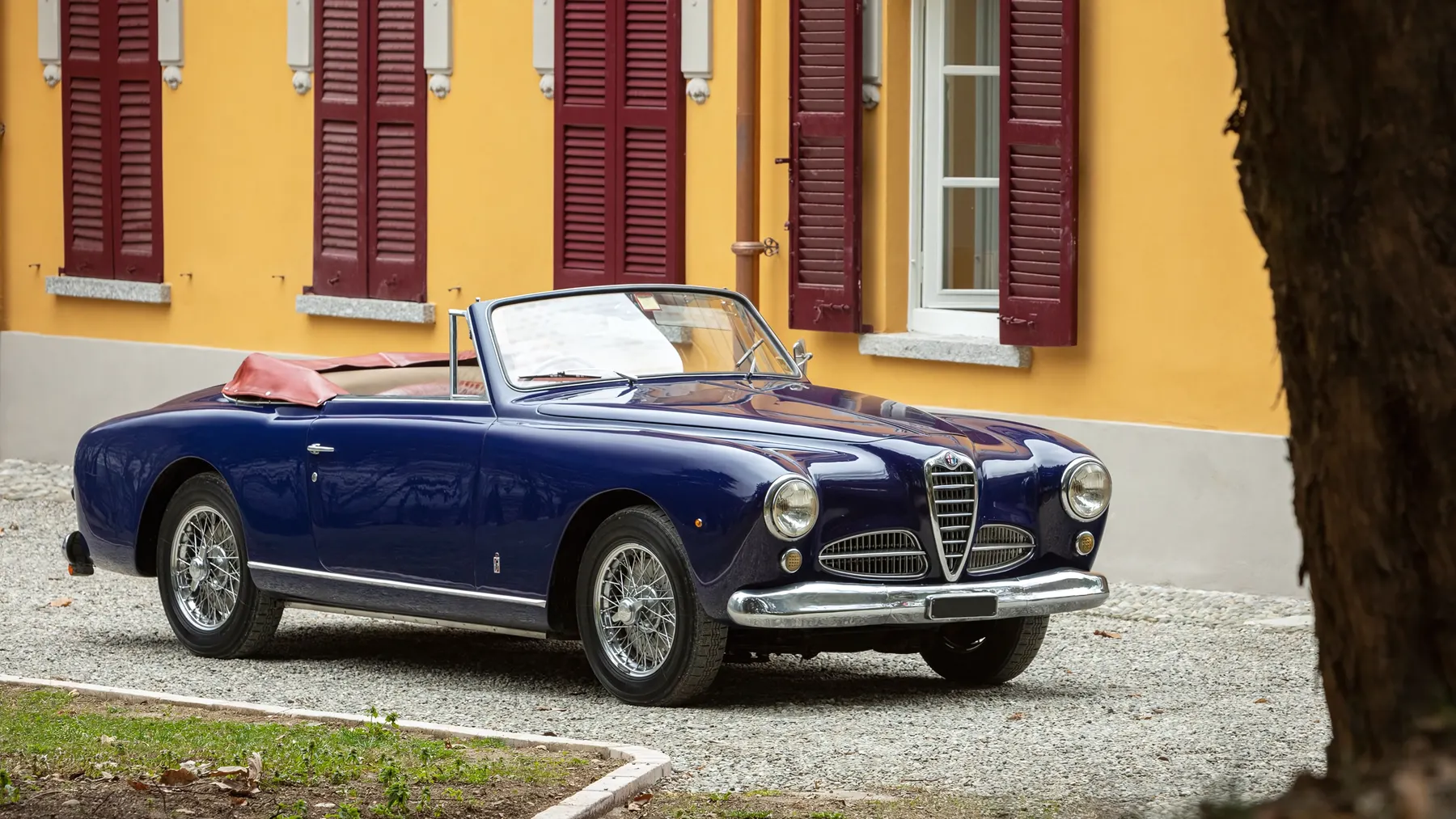
That is where the cabriolet’s real compromise shows up, and it is worth being honest about it rather than filing it under charming eccentricity. A folding roof removes a large chunk of a unitary body’s torsional stiffness, and Pinin Farina had to compensate with extra bracing in the sills, floor and scuttle to stop the open car from flexing and shaking over rough roads. That reinforcement carried a weight penalty severe enough that specialist accounts of the period describe the cabriolet as weighing about as much as the standard four-door saloon - some 1,100kg - against roughly 1,000kg for Touring’s superleggera coupé, a car built with alloy panels over a lightweight tube framework specifically to keep weight down. With an identical 100bhp engine and four-speed gearbox pulling more mass through more aerodynamic drag from a folded hood, the cabriolet was consistently the slower of the two: contemporary sources put its top speed around 106mph, against roughly 112mph for the coupé. It is not a huge gap in absolute terms, but it meant that the more expensively named car - bodied by the more famous coachbuilder - was also the more sluggish one, a genuinely awkward position for a company selling both side by side. Braking, too, relied on drums all round, which were already looking dated against the disc brakes beginning to appear on rival GTs later in the decade, and which faded noticeably under repeated hard use on mountain roads of the kind these cars were built to enjoy.
Alfa Romeo never fixed any of this. When the Sprint mechanicals were enlarged into the Super Sprint in 1955 - 1,975cc, 115bhp, and a five-speed gearbox - the upgrade went exclusively to Touring’s coupé. No factory-sanctioned Super Sprint version of the Pinin Farina cabriolet followed. Touring itself later pitched Alfa a one-off Super Sprint cabriolet design of its own, but by then Alfa’s attention for open-top development had already moved on to what would become the Alfa Romeo 2000 Spider, and the idea went no further than a single show car. The practical result is that every Pinin Farina 1900C Cabriolet ever built left the factory with the older, lower-output engine and the coarser four-speed gearbox, tied permanently to the specification Alfa considered its entry-level performance package rather than its best.
None of that made the cabriolet unsuccessful exactly, but it did make it a secondary product in period, and that reputation has largely stuck. Specialist British coverage of the 1900C family has tended to reserve its warmest praise for Touring’s cars - one well-regarded classic car magazine feature on the 1900C Super Sprint calls Touring’s interpretations “by far the most attractive” of the many small-series 1900C bodies, Pinin Farina’s included. Production numbers reflect the same imbalance: against roughly 800 Touring Sprint coupés, Zagato’s rare competition-oriented SSZ, and Pinin Farina’s own 100-odd coupés, the 88-car cabriolet run was always a minority interest even within a minority interest, and decades of attrition mean a good many of those cars are gone or scattered in various states of restoration today. Right-hand-drive examples did reach the UK market in small numbers, but parts, trim and coachbuilding expertise specific to this body style are scarce, and any restoration tends to be a bespoke, expensive undertaking rather than a matter of ordering catalogue parts.
Where the cabriolet does matter is as the opening chapter of a much longer story. This modest, unglamorous contract was Pinin Farina’s first serious factory commission to body an open-top Alfa Romeo, and the relationship it began did not end here - Pinin Farina went on to design Alfa’s production Giulietta Spider from 1955, becoming the marque’s default coachbuilder for open cars for years afterward. Alongside the cabriolet and its handful of catalogue coupés, Pinin Farina also used the 1900 platform for at least one exclusive one-off commission, reportedly built for Egypt’s King Farouk, a sign of the coachbuilder’s growing appetite for bespoke work running in parallel with its factory contracts. Seen from that angle, the 1900C Cabriolet looks less like a lesser cousin of the Touring Sprint and more like a quiet dry run - Alfa and Pinin Farina working out, car by car, what their long partnership would eventually become. It is a modest, honestly compromised machine rather than a great one, and its value today rests less on outright driving thrills than on rarity, restrained good looks, and its place at the start of a coachbuilding relationship that would go on to produce far more famous Alfas.
Technical data
Specifications
| Specification | Details |
|---|---|
| Production | c. 1952–1954 (introduced alongside the 1900C chassis in 1951) |
| Number built | 88 (Pinin Farina cabriolet body only) |
| Coachbuilder | Pinin Farina, Turin |
| Body/chassis | Unitary steel construction, shortened “corto” wheelbase, two-door cabriolet |
| Engine | 1,884cc inline four-cylinder, DOHC, aluminium head, twin-choke carburettor (1900 TI/Sprint specification) |
| Power | 100 bhp at 5,500 rpm |
| Gearbox | 4-speed manual |
| Drive | Front-engine, rear-wheel drive |
| Front suspension | Independent, coil springs and wishbones |
| Rear suspension | Live axle, coil springs, radius arms |
| Steering | Worm and roller |
| Brakes | Drums, all four wheels |
Sources
- Stellantis Heritage: “Alfa Romeo 1900”
- RM Sotheby’s: 1953 Alfa Romeo 1900 C Cabriolet by Pinin Farina, Villa Erba 2023
- Gooding & Company: 1952 Alfa Romeo 1900C Cabriolet
- Conceptcarz: 1952 Alfa Romeo 1900C
- Carrozzieri Italiani: “The Partnership between Pininfarina & Alfa Romeo”
- Carrozzieri Italiani: “The Alfa Romeo 1900C Touring Coupé”
- Carrozzieri Italiani: “The Alfa Romeo 1900C SS Cabriolet one-off by Touring Superleggera”
- Classic & Sports Car: “Alfa Romeo 1900C Super Sprint: defying expectations”
- Sports Car Market: 1953 Alfa Romeo 1900C Sprint
- Bonhams: 1956 Alfa Romeo 1900C Super Sprint Barchetta by Ghia, Aigle
- Classic Driver: 1953 Alfa Romeo 1900 - C Pininfarina
Join the discussion
Comments
Loading comments…
Leave a comment
Share a detail, memory, or perspective. Every comment is reviewed before publication.