Alfa Romeo Giulietta T.I. Berlina: The Saloon Alfa Unveiled at Monza
1959 Alfa Romeo Giulietta T.I. Berlina

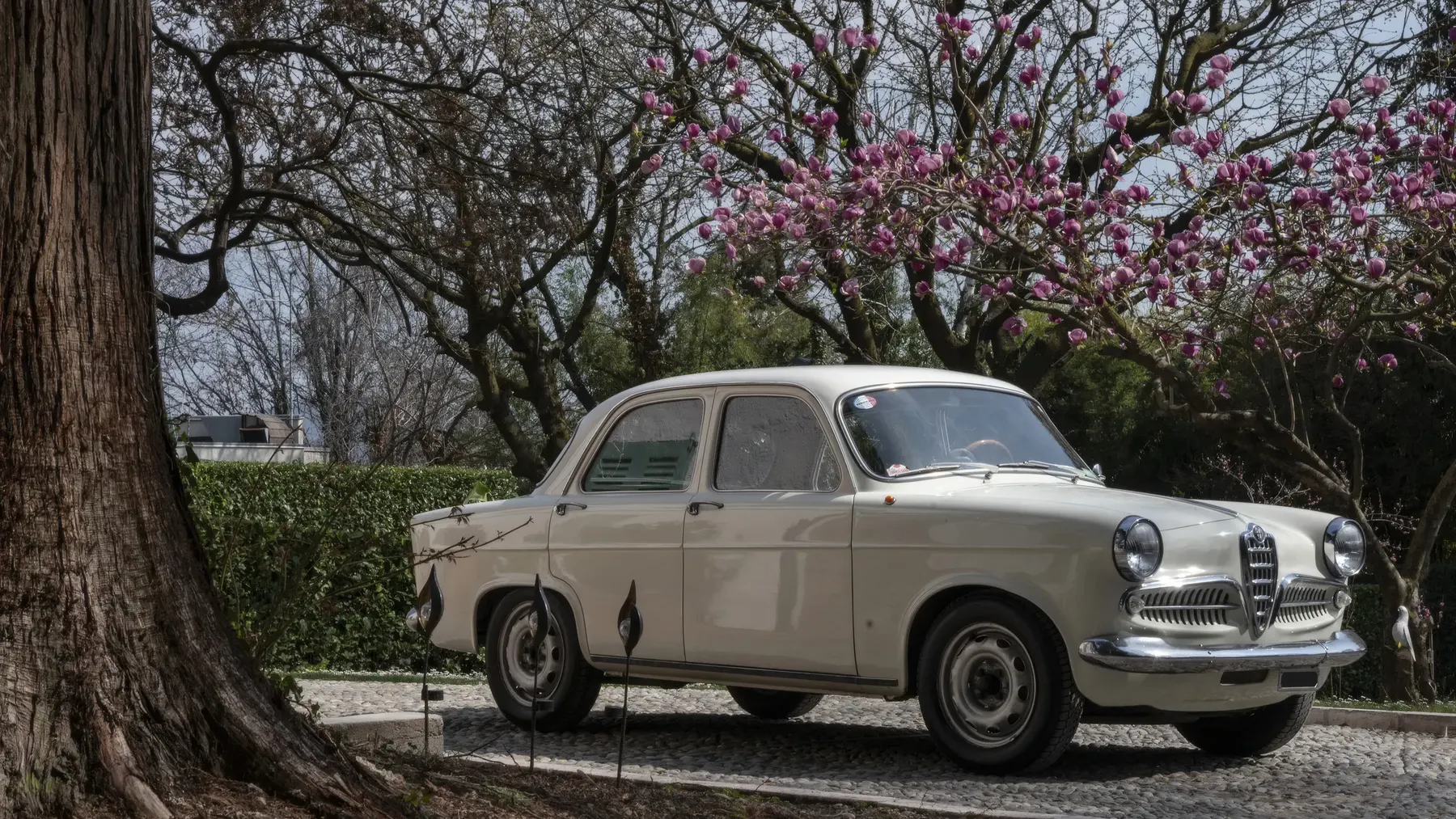
Images: Paolo Carlini / RM Sotheby's
When Alfa Romeo wanted to show the press what its new performance saloon could do in the autumn of 1957, it didn’t book a hotel conference room or a quiet stretch of Milanese autostrada. It took journalists to Monza. That the venue was a racetrack rather than a boardroom says almost everything about what the Giulietta T.I. Berlina was built to prove: that a four-door family car, complete with room for the shopping and, on many examples, a steering-column gearchange, could genuinely go motor racing and win. Alfa Romeo had spent the 1950s rebuilding itself around exactly that contradiction, and nothing in the range embodied it more completely than this car.
The T.I. arrived three years into a project that had already rescued Alfa Romeo from real financial difficulty. Development of what became the Giulietta began in 1952 under chief engineer Orazio Satta Puliga, with Giuseppe Busso designing the new engine, in an unprecedented push toward genuine mass production for a company that had built its reputation on hand-finished exotica. Short of the capital needed to tool up, Alfa financed development through an unusual bond scheme: investors who bought interest-bearing company bonds were entered into a draw for two hundred free Berlinas once production began. When the promised cars failed to appear on schedule, Italian newspapers began muttering about fraud, and Alfa hurriedly commissioned Bertone to build a run of coupé bodies to placate ticket-holders and buy time. That car, the Giulietta Sprint, was unveiled at the 1954 Turin Motor Show and became a sensation in its own right; the four-door Berlina that had actually been the point of the whole exercise did not follow until the spring of 1955.
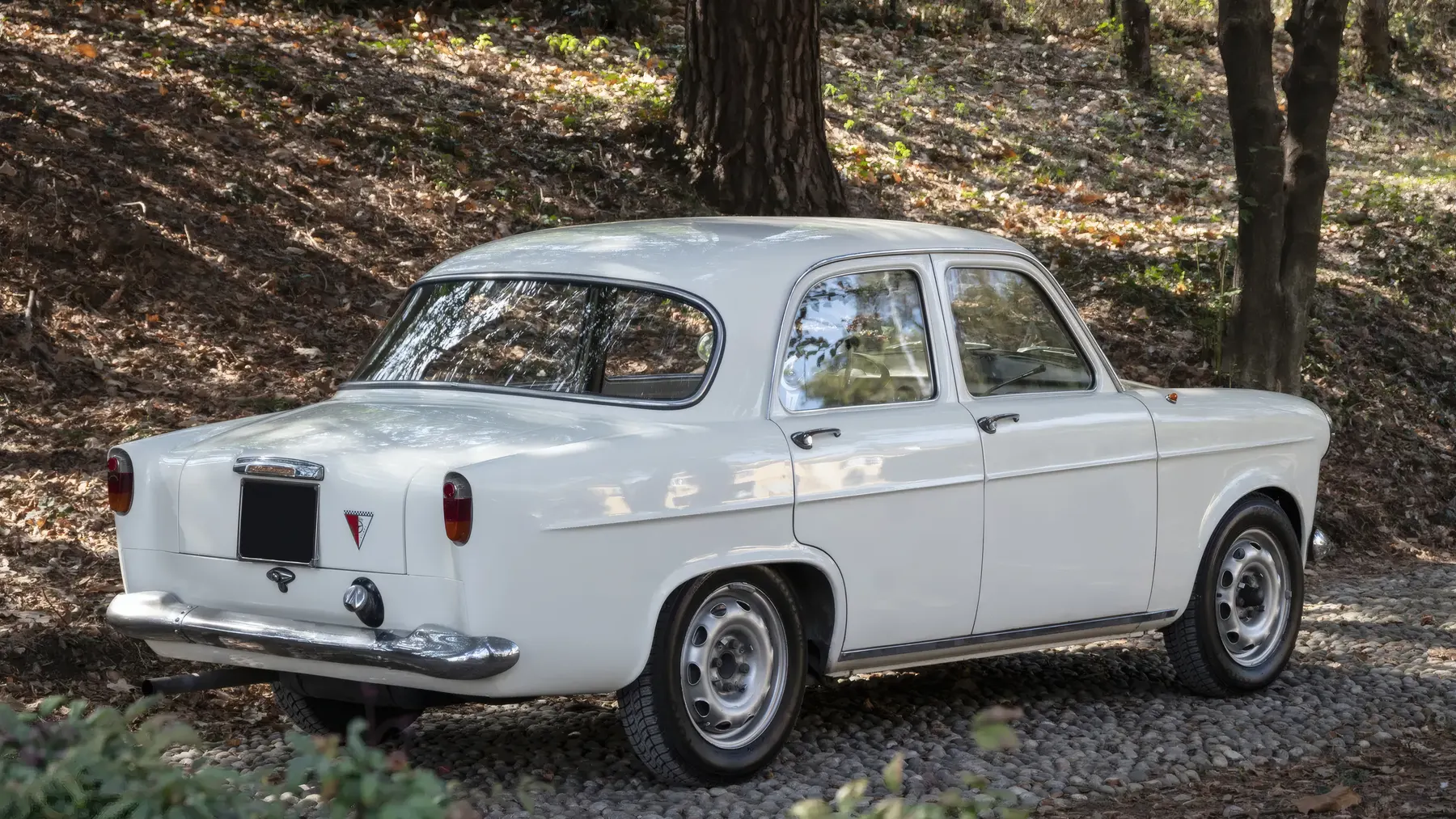
The Berlina inherited the running gear of Alfa’s larger 1900 saloon, scaled down: the new twin-cam engine displaced just 1,290cc against the 1900’s near two litres, a deliberate concession to Italy’s punishing taxation of larger-capacity cars. Positioned as an intermediate saloon, it sat between the small-engined Fiat 1100, with its 1,395cc four, and the narrow-angle V4 Lancia Appia at 1,089cc - smaller in displacement than either, yet quicker than both thanks to a genuinely sophisticated twin-cam alloy engine that neither home-market rival could match. That was the Giulietta’s whole trick: rather than sell size, Alfa sold engineering, wrapped around a welded-steel monocoque body that was itself unusually advanced for a mainstream family saloon of the period.
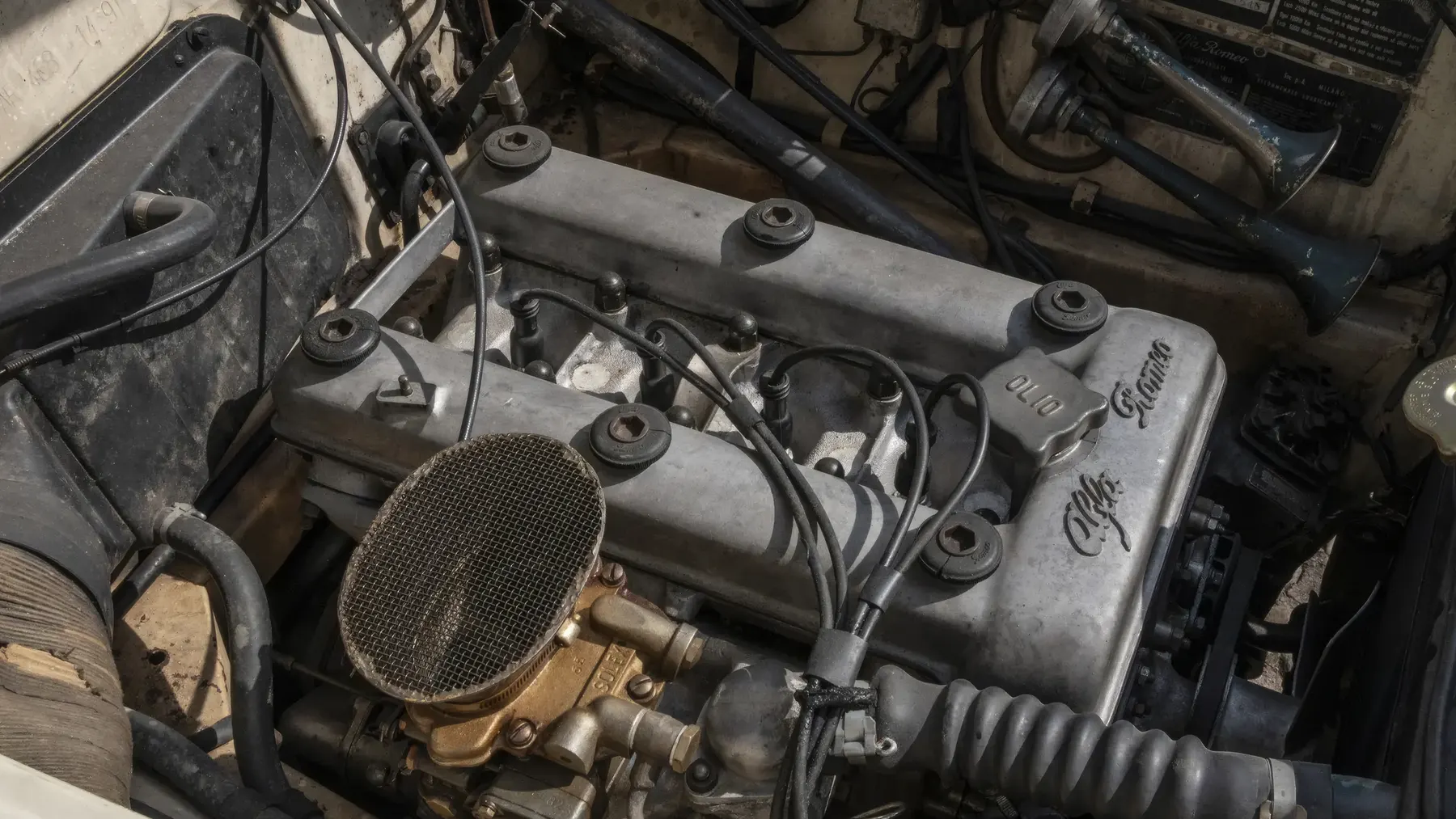
The standard Berlina, badged Normale, was never intended to be quick. What Alfa unveiled at Monza in 1957 was something else: the Tipo 753 Giulietta T.I., its initials standing for Turismo Internazionale, the international touring-car racing classification the model was built to contest. A higher compression ratio and a twin-choke carburettor lifted output to around 65bhp, up from roughly 53bhp in the Normale, and contemporary road tests recorded the T.I. reaching 60mph in around 11.5 seconds, several seconds quicker than the standard car, with a top speed in the region of 97mph. Visually the T.I. was distinguished mostly by details - revised dial lighting, larger rear lamps, minor changes around the bonnet - while a tachometer and oil and water temperature gauges on the dashboard signalled its sporting intent to anyone who looked past the saloon bodywork.
Underneath, the T.I. shared the Berlina’s genuinely advanced structure, carrying independent front suspension by coil-sprung double wishbones and an anti-roll bar, with worm-and-roller steering that needed around two and a half turns lock to lock. At the rear sat a live axle, located not by a Panhard rod but by trailing arms and a single upper locating arm - a simpler, cheaper arrangement that worked well within sensible limits. Period road testers found the steering precise and full of feedback, if noticeably heavy at parking speeds, and the ride, for a car built to be driven hard, was reported as genuinely pliant rather than harsh. The engine itself was the real story: an aluminium block with cast-iron wet liners and an alloy cylinder head with hemispherical combustion chambers, a forged steel crankshaft on five main bearings, and bore and stroke of 74mm and 75mm. It was, for a saloon costing under £2,000 in the late 1950s, a remarkably exotic piece of engineering - the kind of double-overhead-camshaft architecture most manufacturers reserved for out-and-out sports cars, not the car that took the children to school.
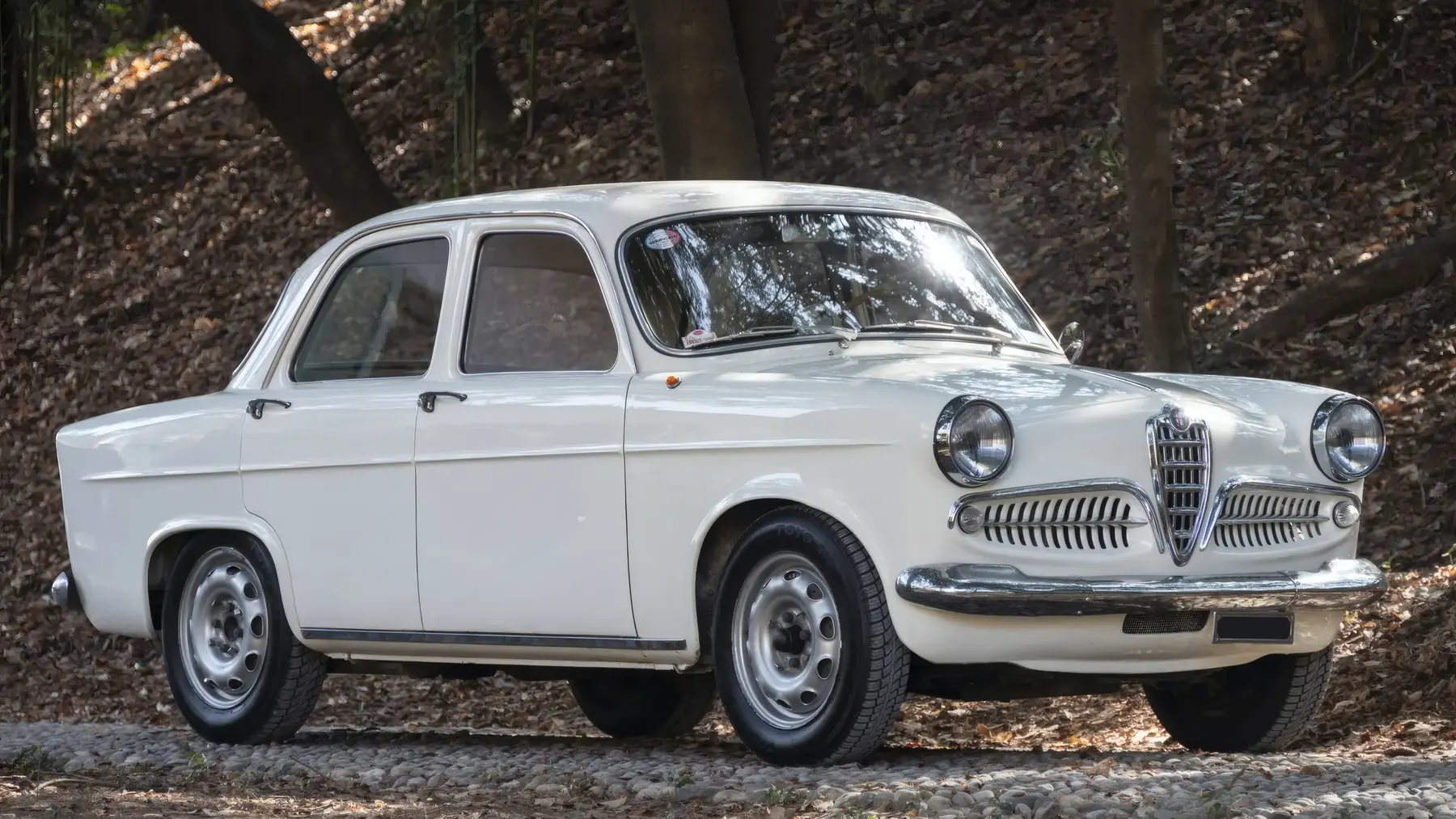
Like the rest of the range, the T.I. was updated in 1959, when Alfa revised the nose, recessed the headlights, relocated the fuel filler and reorganised the dashboard; the internal type designation changed from the 750/753 series to the 101 series to mark the switch. A further revision in 1961 raised power to around 74bhp and top speed to close to 99mph, largely through a new exhaust system rather than any fundamental change to the engine. Production of the ordinary Berlina ended in 1962, when the larger Giulia saloon took over the mainstream family-car role, but the T.I. - by then both the more desirable and the more numerous of the two - soldiered on for a further two years before it, too, was retired in 1964, its name and its sporting-saloon brief passed directly to the new Giulia T.I.
What is easy to miss, looking back at a car now overshadowed by its glamorous coupé and open-top siblings, is just how commercially dominant the T.I. actually was. Specialist sources disagree on the precise totals - one marque register puts T.I. production at around 92,700 against roughly 39,000 standard Berlinas, while a Classic & Sports Car model guide gives figures closer to 139,000 and 54,000 respectively - but every account agrees on the shape of the story: the T.I. outsold the standard Normale Berlina by more than two to one, and comfortably outnumbered the Giulietta Sprint, Sprint Veloce, Spider and Spider Veloce combined. The car Alfa had unveiled at a racetrack to prove a point about performance ended up being, by any measure, the version most Giulietta buyers actually chose.
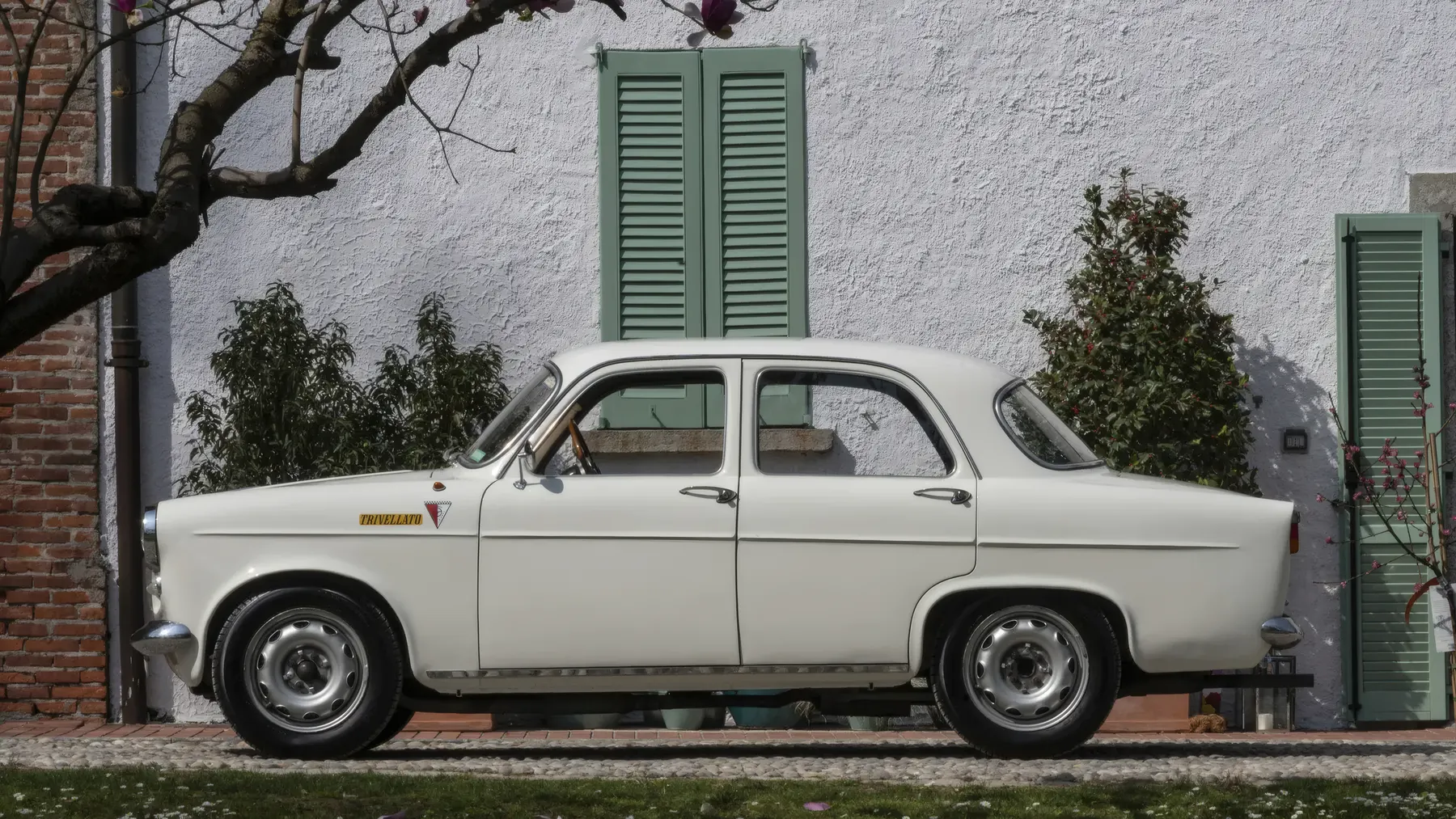
That dominance was overwhelmingly a domestic Italian story, though. Right-hand-drive T.I. Berlinas were rare even when new - only around 1,017 were built in that configuration, roughly one per cent of total production - and the car never had anything like the Sprint’s profile in Britain or the United States. Price didn’t help: in Britain in 1959 a T.I. Berlina cost around £1,928, more than double the £928 asked for a Sunbeam Rapier, a broadly comparable performance saloon from a mainstream domestic maker. Alfa did chase export volume through CKD assembly, building T.I.s from knocked-down kits in East London, South Africa, between 1960 and 1963, but across most English-speaking markets the T.I. Berlina remained a rare and slightly obscure choice next to the far more visible Sprint and Spider.
On track and in competition, the T.I. earned a reputation that outlasted its showroom career by decades. Alongside the Sprint 1300 and the exotic Sprint Zagato, it is generally reckoned among the handful of Giuliettas that genuinely made motorsport history, competing successfully in touring-car racing, hillclimbs and rallies across Europe through the late 1950s and into the 1960s. Alfa’s own period marketing had already described the standard Berlina as “the family car which wins races,” and the T.I. was the version that made the boast credible, combining real pace with the kind of everyday usability that let privateers drive to a circuit, race, and drive home again. That reputation persists today, where T.I. Berlinas remain a familiar and competitive sight in historic events built around 1950s and 1960s touring-car racing.
Behind the wheel, period and latter-day assessments describe a cabin that was sparse rather than plush - a stylised dashboard, seats offering more style than lateral support, a driving position that felt slightly perched - yet one with genuinely usable rear space, packaged into a footprint not much larger than a modern supermini. It was, in other words, honest about what it was: a saloon first, wearing its performance modestly rather than shouting about it. Reviewers who drove the family of cars together have consistently noted that, next to the flashier Sprint and Spider, the Berlina ti looks the most out of place, with its upright stance and thoughtfully rather than lavishly applied brightwork - understated to the point that its rarity in export markets left it looking almost unfamiliar next to more common Italian rivals of the period.
For all that, the T.I. Berlina was a car of real and specific compromises, not merely gentle imperfections that can be waved away as period charm. Many T.I.s, particularly earlier and left-hand-drive examples, retained a steering-column gearchange shared with the ordinary Normale saloon rather than a dedicated floor-mounted lever, even as Alfa moved its sportier Sprint and Spider siblings to floor shifters from 1956 onward; it was a sensible concession to saloon-car practicality, but one that sat oddly with a car sold on its sporting pretensions, and it meant many T.I. drivers never got the crisper, more involving change that the same engine deserved. Braking was by drums on all four corners with no servo assistance - adequate for spirited road use, but the kind of set-up that fades noticeably once pushed hard and repeatedly, exactly the treatment so many T.I.s received in period competition, and specialists have long flagged the brakes as the model’s weakest mechanical link. The rear axle’s single-upper-arm location, while simple and cheap to produce, sat the roll centre uncomfortably close to the car’s centre of gravity, and drivers of the period noted a tendency for the tail to step out abruptly once cornering limits were reached - a trait shared across the whole Giulietta family, but one a heavier, longer four-door body did nothing to disguise. And despite outselling every other Giulietta variant, the T.I. Berlina has never commanded anything like the collector interest or values of the Sprint coupé or Spider; good examples remain comparatively affordable as a result, but original saloon-specific trim and brightwork have become considerably harder to source than the mechanical components the model shares with its more celebrated siblings.
None of this made the T.I. Berlina the fastest or the most glamorous Giulietta - that contest was always going to be won by the Sprint or the SZ. What it did was prove, at real commercial scale, that Alfa Romeo’s founding idea for the whole Giulietta project - that ordinary customers deserved genuinely sophisticated engineering, not a diluted version of it - worked just as well wrapped in four doors as it did in two. The Giulia T.I. that replaced it in 1962 inherited both the badge and the brief directly, and the same idea has echoed through Alfa Romeo’s saloon range ever since. The T.I. Berlina was where it was first proven, in volume, on ordinary roads, by drivers who mostly just wanted a practical car that happened to be genuinely rewarding to drive.
Technical data
Specifications
| Specification | Detail |
|---|---|
| Type designation | Tipo 753 (1957–59); 101-series from 1959 facelift |
| Production years (T.I.) | 1957–1964 |
| Production total (T.I.)* | c. 92,700–138,900 (sources disagree) |
| Engine | 1,290cc DOHC inline-four, alloy block with cast-iron wet liners, alloy head |
| Bore x stroke | 74mm x 75mm |
| Carburation | Single twin-choke carburettor |
| Power (1957 launch) | c. 65bhp |
| Power (1961 revision)* | c. 74bhp |
| Transmission | 4-speed manual; column or floor gearchange depending on market and year |
| Kerb weight | 915kg |
| Wheelbase | 2,380mm |
| Length | 4,033mm |
| Width | 1,550mm |
| Height | 1,405mm |
| Front suspension | Independent, double wishbones, coil springs, anti-roll bar |
| Rear suspension | Live axle, trailing arms and single upper locating arm, coil springs |
| Steering | Worm and roller |
| Brakes | Drums, all four corners, no servo |
| 0–60mph* | c. 11.5 sec (T.I., twin-carb); standard Normale saloon notably slower |
| Top speed | c. 97–99mph, depending on source and model year |
| Price new (UK, 1959)* | c. £1,928 |
Sources
- 1962 Alfa Romeo Giulietta Sprint
- Classic & Sports Car A-Z: Alfa Romeo Giulietta Berlina/Berlina TI
- The Giulietta Register: History of the Giulietta
- Wikipedia: Alfa Romeo Giulietta (1954)
- Museo Nicolis: Alfa Romeo Giulietta t.i., 1957
- Hagerty UK: 1958 Alfa Romeo Giulietta Saloon
- Alfa Revival Cup (Canossa): 70 years of the Alfa Romeo Giulietta
- Stellantis Heritage: The innovative and sporty Giulietta Berlina turns 70
- Driven to Write: Giulietta and her Sisters
- HowStuffWorks: 1954–1965 Alfa Romeo Giulietta and Giulia
- Ate Up With Motor: Romeo and Julietta - The 1954–1958 Alfa Romeo Giulietta
- autoevolution: The Evolution of Alfa Romeo’s Bialbero
- Auto Tecnica: Alfa Romeo Giulietta Ti 1300, la berlina da corsa
- conceptcarz: 1961 Alfa Romeo Giulietta Ti
- Bonhams: 1960 Alfa Romeo Giulietta Ti
- RM Sotheby’s: 1957 Alfa Romeo Giulietta T.I. Berlina
Join the discussion
Comments
Loading comments…
Leave a comment
Share a detail, memory, or perspective. Every comment is reviewed before publication.