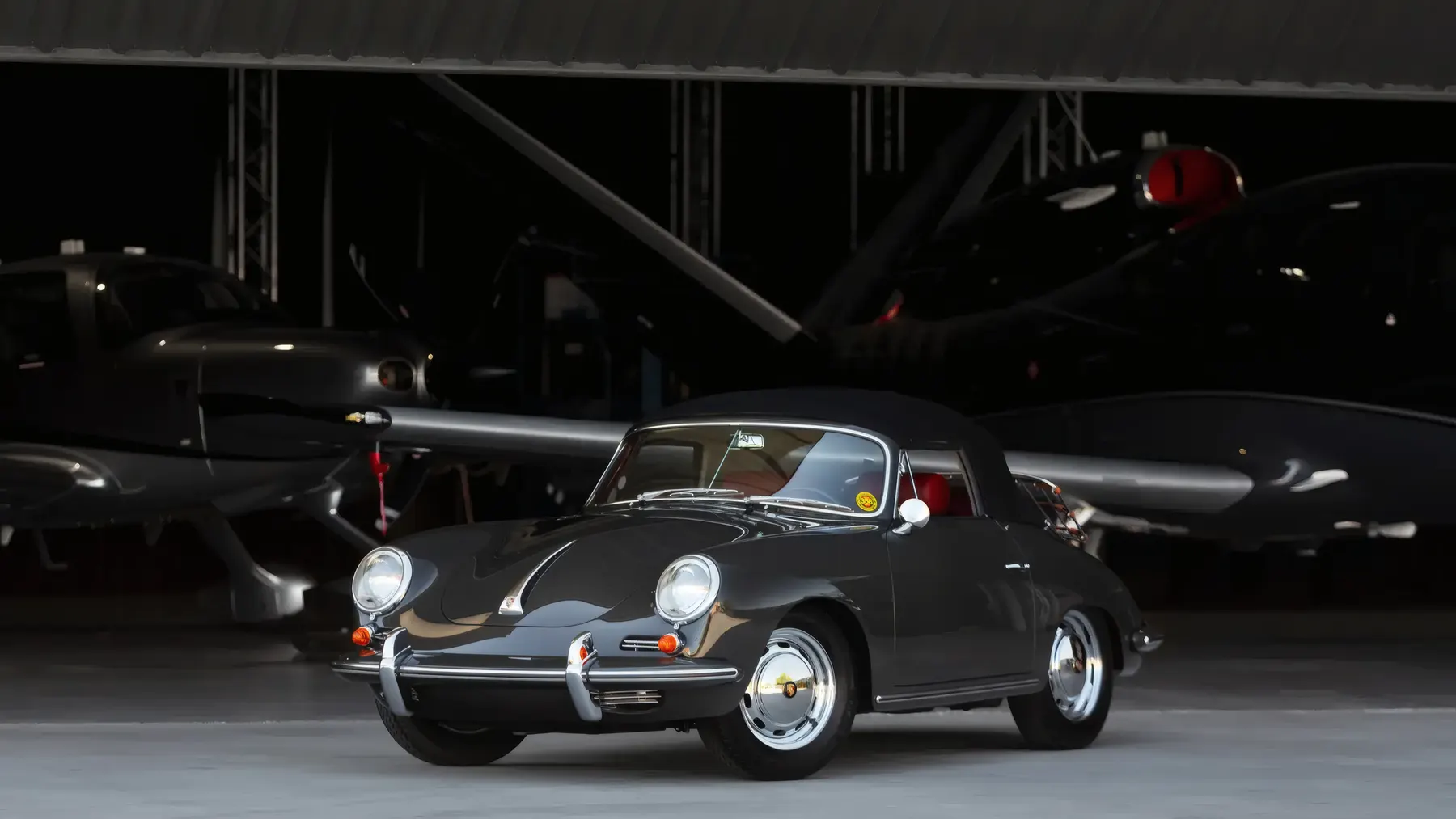
1964 Porsche 356 C 1600 SC Cabriolet by Reutter

Images: Patrick Ernzen / RM Sotheby's
By the time the 356 C arrived in the summer of 1963, the model it represented had already lived several lives. It had begun as a hand-assembled curiosity in an Austrian sawmill, evolved through successive generations of careful engineering refinement, and grown, almost imperceptibly, into one of the most respected sports cars in the world. The C-designation did not signal reinvention. It signalled completion. And nowhere was that sense of a design reaching its finest expression more evident than in the 1600 SC Cabriolet - built, as so many of these cars had been, by the Reutter coachworks in Stuttgart, right next door to Porsche’s own factory.
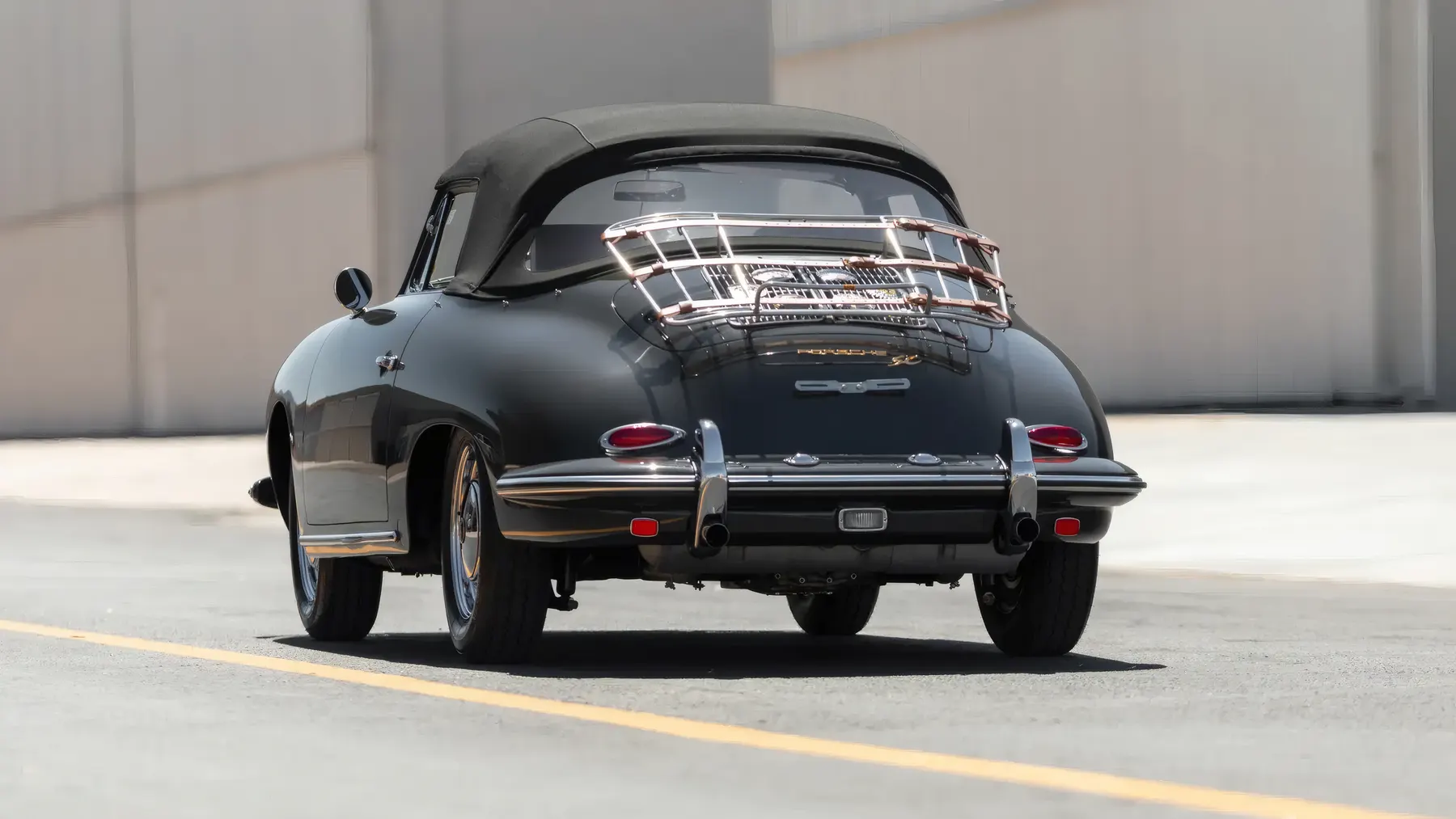
The relationship between Porsche and Reutter was, by 1963, so deeply interwoven that describing it as a supplier arrangement almost misses the point. Reutter had been stamping and assembling 356 bodies almost from the beginning of the model’s German production life, working physically adjacent to the Zuffenhausen plant and sharing the rhythms of Porsche’s evolving manufacturing ambitions. Porsche formalised what was already a de facto integration on March 1, 1964, when it officially acquired the Reutter coachworks, renamed the seat-building division Recaro, and absorbed the body manufacturing operation as its own Werk 2. For buyers of a 1964-model 356 C 1600 SC Cabriolet, the “by Reutter” designation on the car was already a historical footnote in the making: after the takeover, the Reutter badges were quietly removed from subsequent production. The cars built in that brief early-1964 window wearing the Reutter name thus occupy a peculiarly poignant position - the last expression of a coachbuilding identity that had, in practical terms, already ceased to exist independently.
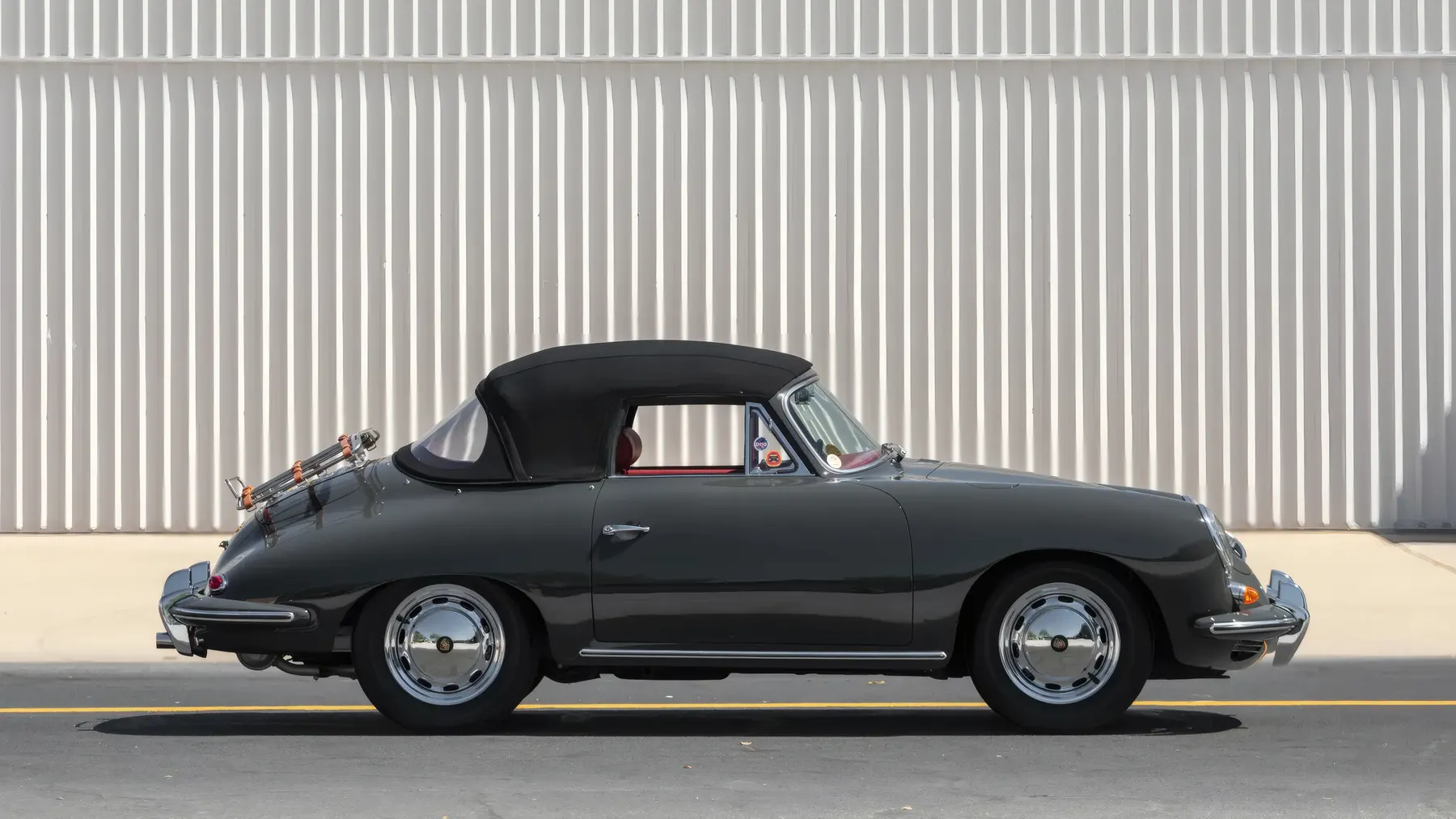
The body itself was not new. Porsche’s T6 shell, introduced for the 356 B in 1961–62, was carried over to the C essentially unchanged in exterior form. The familiar rounded nose, the smooth greenhouse, the low beltline - all of it was Erwin Komenda’s original vision refined across fifteen years rather than replaced. That the shape still read as stylish rather than tired in 1963 is a genuine tribute to the quality of the original design, though it was also, candidly, approaching the outer limits of its currency. The 911 shown alongside the 356 C at the 1963 Frankfurt Motor Show was unmistakably a newer, sharper idea. The 356 C’s role at that show was that of the dignified incumbent, not the coming attraction.
What distinguished the 356 C from its predecessor, the B, was concentrated in two areas: brakes and engine. Both changes were substantial. The most immediately significant was the adoption of four-wheel disc brakes, supplied by Teves under licence from Dunlop, with 277mm discs at the front and 243mm at the rear. Porsche had stubbornly persisted with drums while other manufacturers moved on, largely because the company had developed its own sophisticated disc system and was reluctant to abandon it. When the technical director who had championed that proprietary brake, Nikolaus von Rücker, departed in 1961, and when it became clear that Porsche’s own design was incompatible with the mass-production direction the industry was taking, Teves finally won the contract - partly by adapting its system to incorporate several Porsche patents, including a clever parking brake mechanism that concealed small drum-type shoes inside the rear disc hats. The result, according to period testing by Motor, was brakes that were notably powerful and consistent, with reassuringly heavy pedal forces that remained stable under repeated hard use. The new discs also necessitated a wheel redesign: the 356 abandoned its distinctive combined wheel-and-brake drum arrangement for conventional full-disc steel wheels with five-stud fixing, covered by smaller, flatter hubcaps. It was a small but historically significant detail.
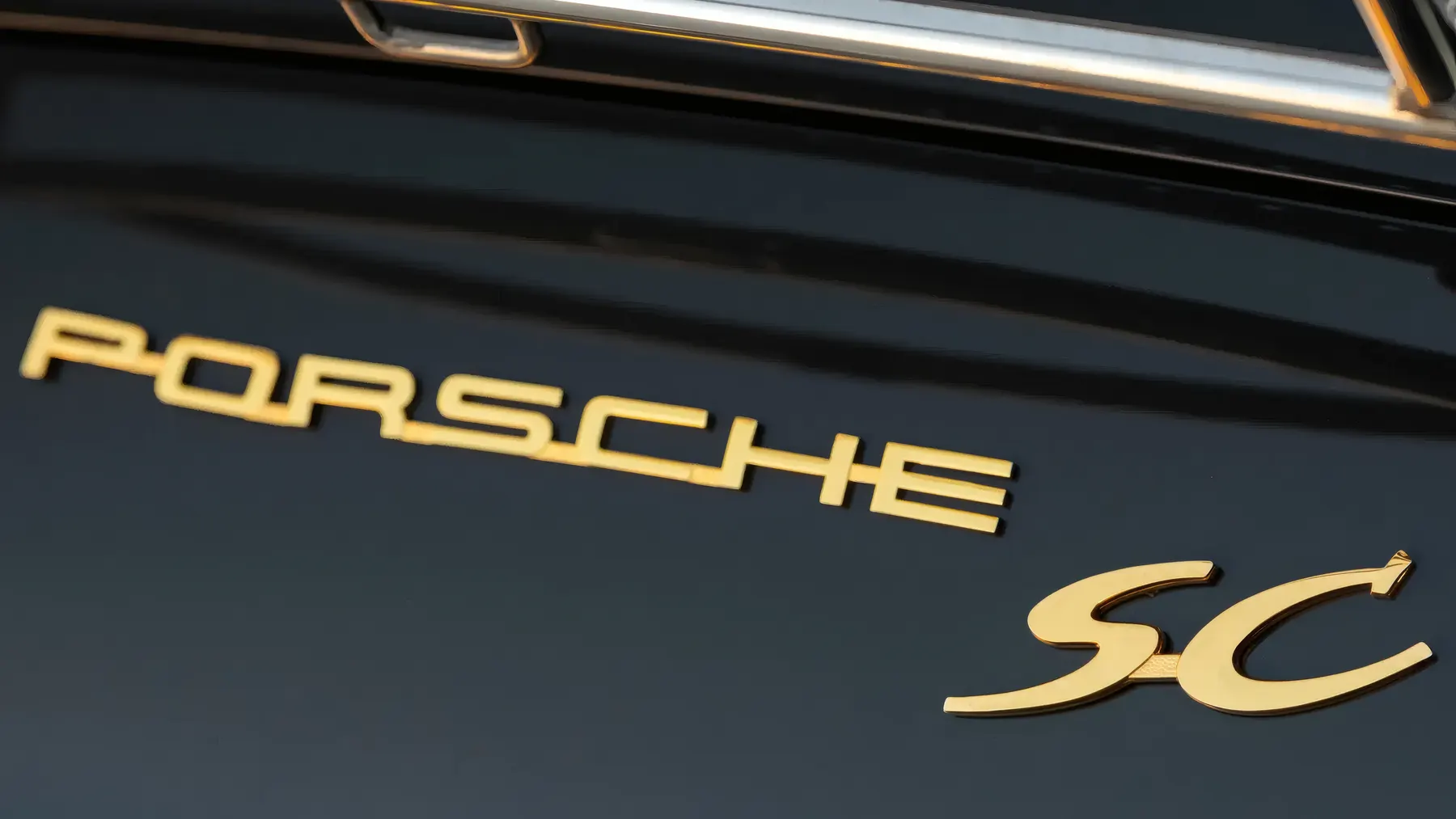
The engine that went into the SC - the top-specification pushrod option, the Type 616/16 - was the result of careful development work by Hans Mezger, a young engineer who would later go on to design Porsche’s racing flat-twelves and the legendary 917 motor. Mezger’s approach to the 356’s ageing pushrod unit was methodical and, in one key respect, counterintuitive. Rather than simply enlarging the inlet valves to chase more power, as had been the previous approach, he actually reduced the inlet valve diameter from 40mm to 38mm so that the exhaust valves could grow from 31mm to 34mm. Proper exhaust breathing, he reasoned, had been the unit’s limiting factor. Combined with reshaped ports, high-lift camshafts, sodium-cooled exhaust valves, a higher compression ratio of 9.5:1, twin Solex 40 PII-4 carburettors, and a crankshaft fitted with four integral counterweights for smoother high-rpm operation, the result was 95bhp at 5,800rpm with 91lb-ft of torque at 4,200rpm in net figures - or 107bhp gross, a distinction that appeared in period road tests and which occasionally causes confusion.
The 1582cc displacement was unchanged from earlier 356 engines, with bore and stroke of 82.5mm and 74mm respectively. The SC’s alloy cylinders originally used a Ferral bore coating carried over from the Super 90, but from early 1964 these were replaced with Biral construction - a cast-iron sleeve bonded inside a finned aluminium muff - which improved heat dissipation more effectively than either alternative alone. This quiet mid-run engineering change is the sort of detail that separates the 356 SC from most of its contemporaries: Porsche was still actively developing the car even as it prepared to replace it.
In the Cabriolet, the SC engine turned what was already a light car into something genuinely quick by early 1960s standards. Kerb weight for the open car ran close to 900kg, and with 95bhp on tap the performance was lively rather than electrifying. Porsche’s own figures suggested a 0–60mph time around 10.8 seconds, with a top speed of approximately 123mph. Period road testing produced somewhat variable results - Motor’s SC coupe test returned a 0–60mph time of 13.2 seconds, suggesting some variability in testing conditions or specific cars - but the character of the performance was consistently described in similar terms. The acceleration built steadily and kept building, the engine’s willingness to rev being more notable than any dramatic low-end surge. Period reviewers noted the intake roar from the Solex carburettors and the building fan whine, both of which were distinctly Porsche sounds rather than objectionable noises. You drove with the windows up not from cold but from the pleasant bubble of mechanical sound that surrounded the cabin.
Handling in the 356 C represented a gentle recalibration of the model’s long-standing dynamic compromise. The pendulum mass of the rear engine had always made the car tail-happy in extremis, and Porsche’s engineers knew it. For the C, the front anti-roll bar diameter was increased by 1mm to promote understeer at the entry to corners, while the rear torsion bar diameter was reduced from 23mm to 22mm to soften the ride. The rear compensating spring - a device designed to manage camber change under load - was made standard only on the SC and Carrera 2, remaining optional on the base C. The SC also received gas-pressurized Koni dampers rather than the standard Boge units, adding a degree of control that the softer C-spec suspension lacked. The honest summary is that the 356 C in SC specification handled with more composure than the B it replaced, but any driver who arrived expecting the neutrality of a mid-engined car would be quickly disabused. Motor’s description - progressive understeer building to neutral and then, at the limit, gentle oversteer - was accurate and encouraging: the car told you what it was doing, and it did it slowly enough to respond to. Henry Manney of Road & Track, testing an SC hardtop in 1964, described getting through icy Paris-to-Stuttgart slush without a moment of real anxiety, crediting the car’s predictability and the driver’s ability to read its communication.
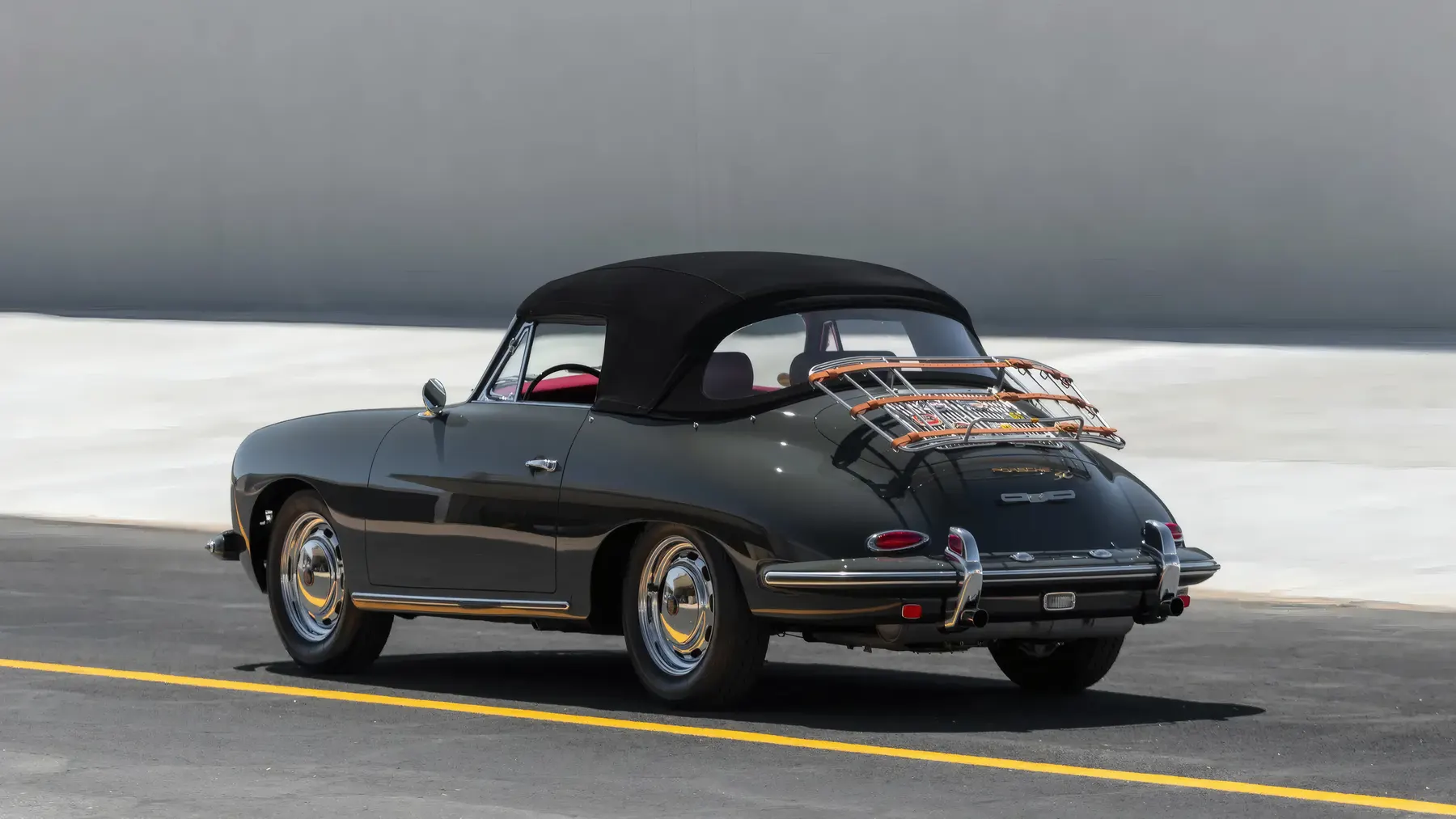
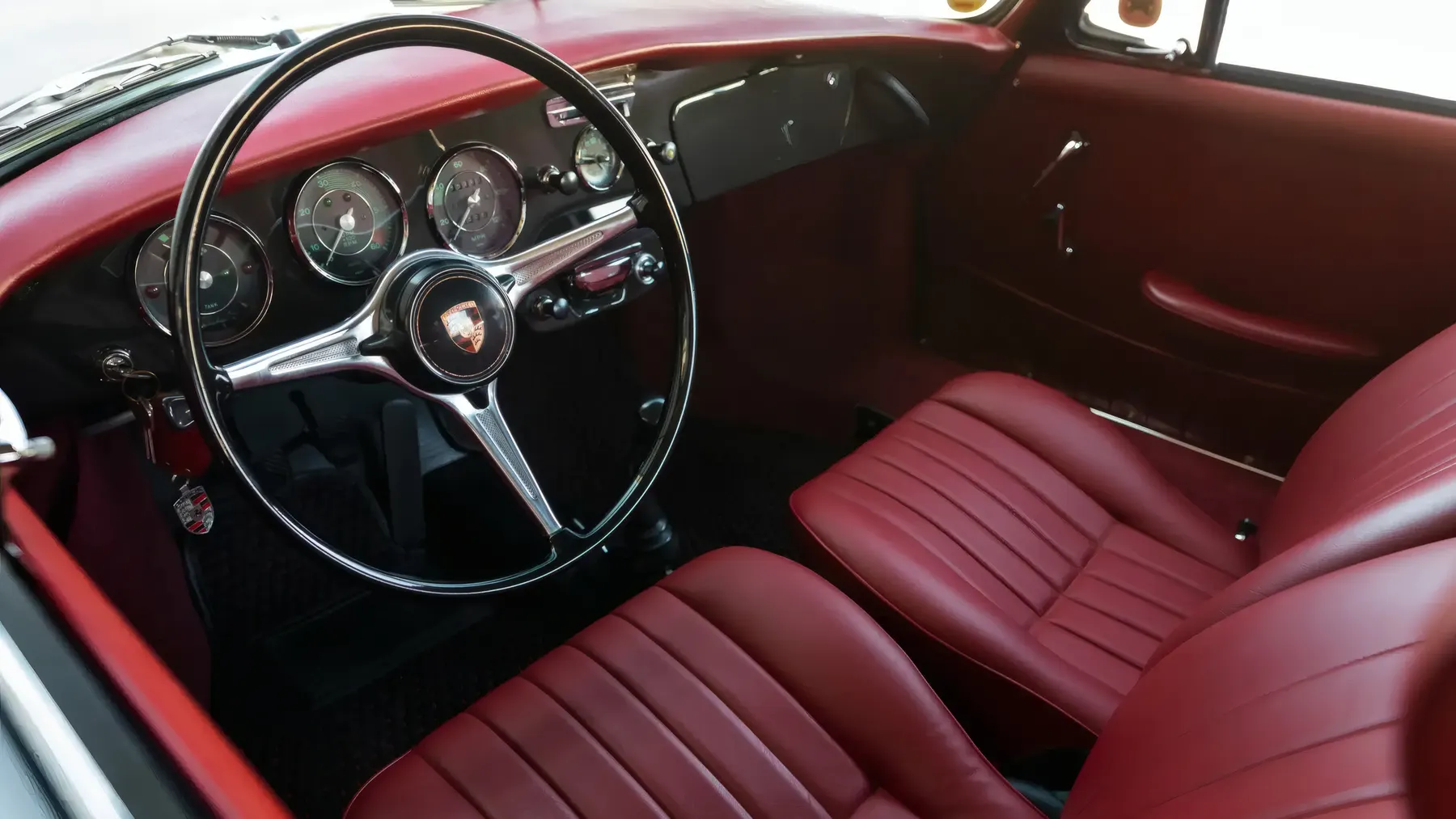
Inside the Cabriolet, the SC represented the most refined interior the 356 had yet offered. Reutter’s standard of seat construction was, by contemporary accounts, genuinely high - combining cloth and leather in patterns intended to slow visible wear - and the open car typically came with full leather rather than the coupe’s part-vinyl arrangement. The 356 C brought armrests integrated into the door panels, a repositioned heater control lever (moved from the floor to a position directly ahead of the gearlever after journalists had noted its awkward placement), a reworked dashboard with lighter switches, and magnetic closure for the glovebox. A second zip was added to the Cabriolet’s rear window, allowing it to be opened from inside or outside. None of this was transformative. It was the accumulated product of a company that read its press coverage carefully and acted on it, which Motor Sport’s Frankfurt show correspondent noted with dry appreciation.
The 356 C’s production run was short - from July 1963 to April 1965 in official terms, with the final ten cars, ordered by the Royal Dutch Police, leaving Zuffenhausen in May 1966. The Dutch police had been fans of the 356 C SC Cabriolet in particular, using its performance to keep pace with traffic on the country’s long, flat roads. The image of a police force unable to let go of a discontinued sports car says something genuine about the SC’s real-world effectiveness: this was not a machine that impressed on paper and disappointed in use. Total 356 C production across all variants came to 16,668 cars, of which 3,265 were Cabriolets, split between the base 1600 C and SC specifications. SC cabriolets represented a small minority of that already modest number.
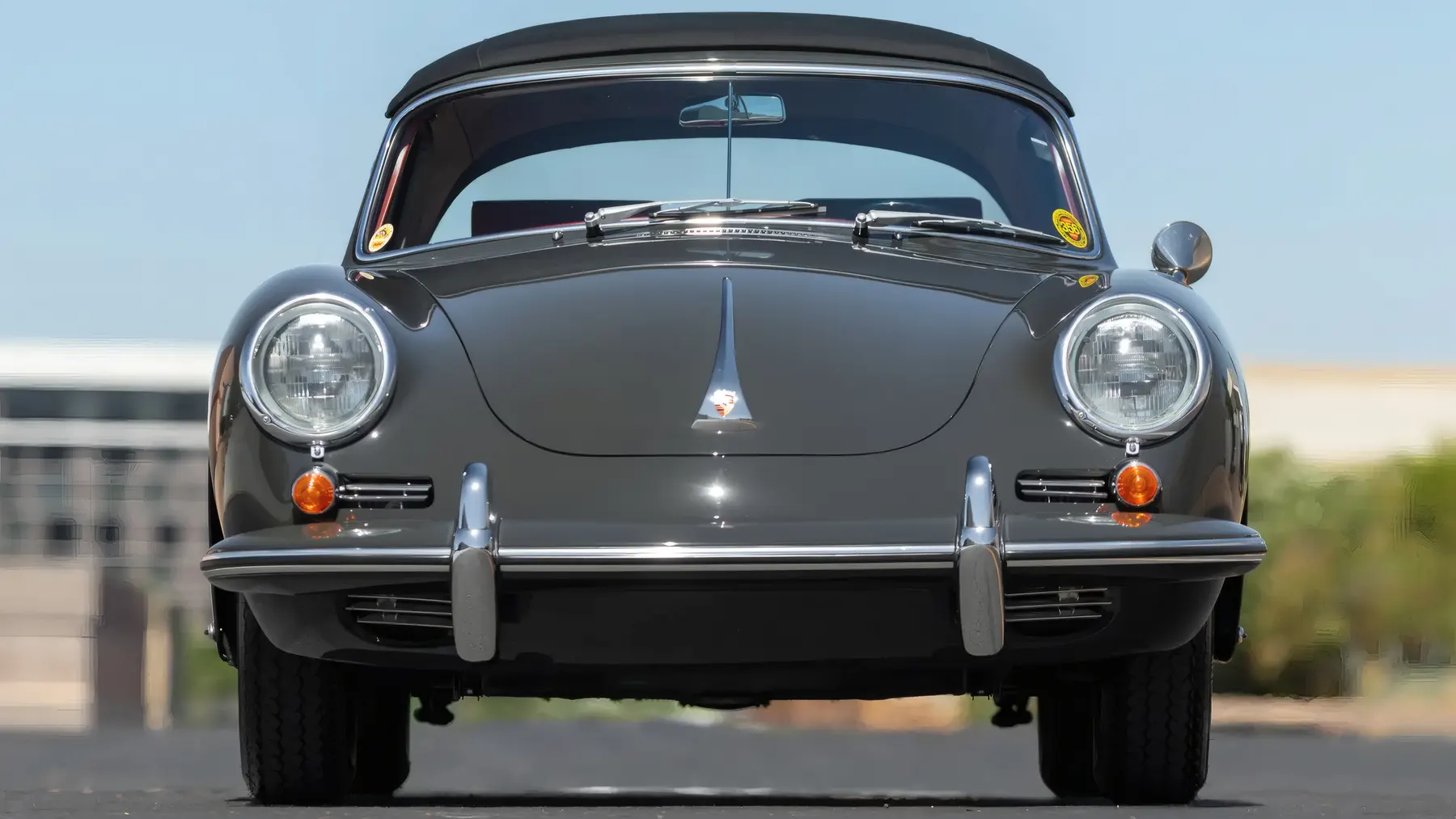
The timing of the 356 C’s arrival and departure was awkward in a specific, historically interesting way. The car was designed, developed, and launched while Porsche was simultaneously pouring resources into the 911 - its coachbuilder was literally being absorbed into Porsche’s own manufacturing structure to free up capacity for the new model. The 356 C received fewer post-launch updates than any previous iteration of the model precisely because the engineering department was too busy looking forward. The irony is that this relative neglect produced, arguably, the most balanced and complete version of the original concept. With the entry-level 60bhp engine dropped and the range consolidated into two clearly differentiated options, with brakes that finally matched the performance, and with an interior that addressed the accumulated complaints of fifteen years, the C was the 356 fully resolved rather than the 356 still in progress.
It ended quietly, the way such things should. The last official 356 C to roll off the line on April 28, 1965, was a white Cabriolet, decorated with flowers, tracing its way through the final assembly stations at Zuffenhausen. By that point the 911 had been in production for eight months. The new car was louder, faster, and pointed unmistakably toward the future. The 356 C 1600 SC Cabriolet pointed somewhere different - toward a kind of achieved completeness, a car that had become, through patient iteration, exactly what it always wanted to be.
Join the discussion
Comments
Loading comments…
Leave a comment
Share a detail, memory, or perspective. Every comment is reviewed before publication.