Shelby 427 S/C Cobra: The Race Car Shelby Couldn't Sell As One
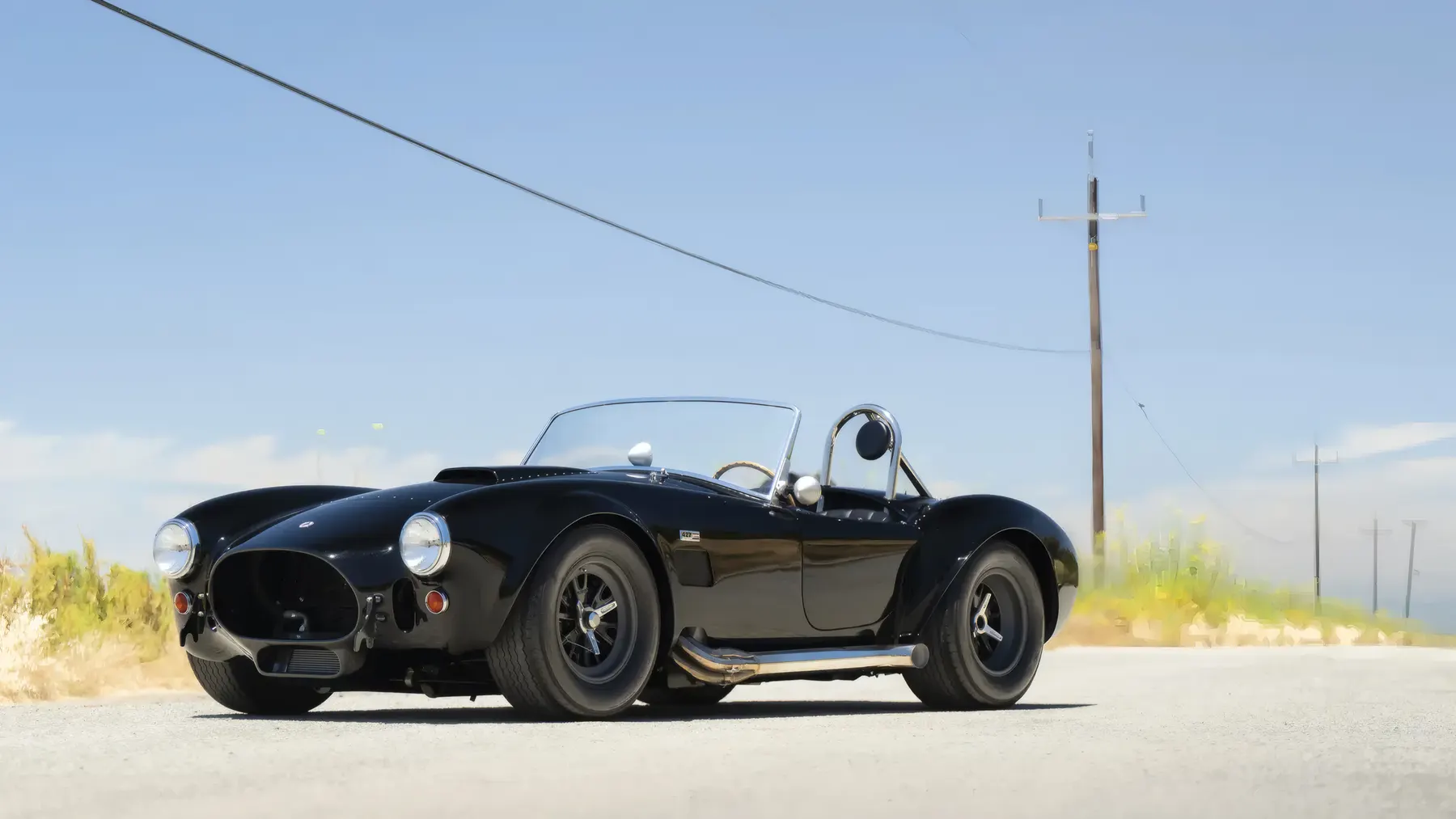
1966 Shelby 427 S/C Cobra

Images: Robin Adams / RM Sotheby's
Carroll Shelby’s plan for the 427 Cobra never included selling it to the public. The whole point was homologation: build a hundred cars, satisfy the FIA’s production requirement, and go racing against the Ferraris and Corvette Grand Sports that had started humiliating his small-block Cobras on both sides of the Atlantic. When the paperwork fell through and the FIA refused to certify the car, Shelby was left holding three dozen unsellable competition chassis and an expensive problem. The 427 S/C is the solution his sales team improvised: a stopgap conversion job that became one of the most coveted road cars America has ever produced, precisely because it was never supposed to be a road car at all.
By the early 1960s the 289 Cobra had reached the practical ceiling of what Ford’s small-block V8 could deliver reliably, somewhere around 380 to 390 bhp, and it was no longer enough. At the 1963 Nassau Speed Week, Chevrolet turned up with the aluminium-engined Corvette Grand Sport and beat the Cobra team by a lap deficit of nine seconds or more, a defeat Shelby had no intention of repeating. Ford had promised an aluminium 390-cubic-inch big block as the answer, but the engine evaporated amid internal politics within Ford’s NASCAR faction, leaving Shelby to make do with a cast-iron 427 instead. The first attempt to fit it, chassis CSX2196 with the 427 shoehorned into an unmodified leaf-spring chassis, was such a disaster under Ken Miles’s testing, plagued by overheating, questionable durability and handling that bordered on dangerous, that the crew nicknamed it “The Turd.” It was obvious the existing Cobra platform could not simply absorb the extra muscle.
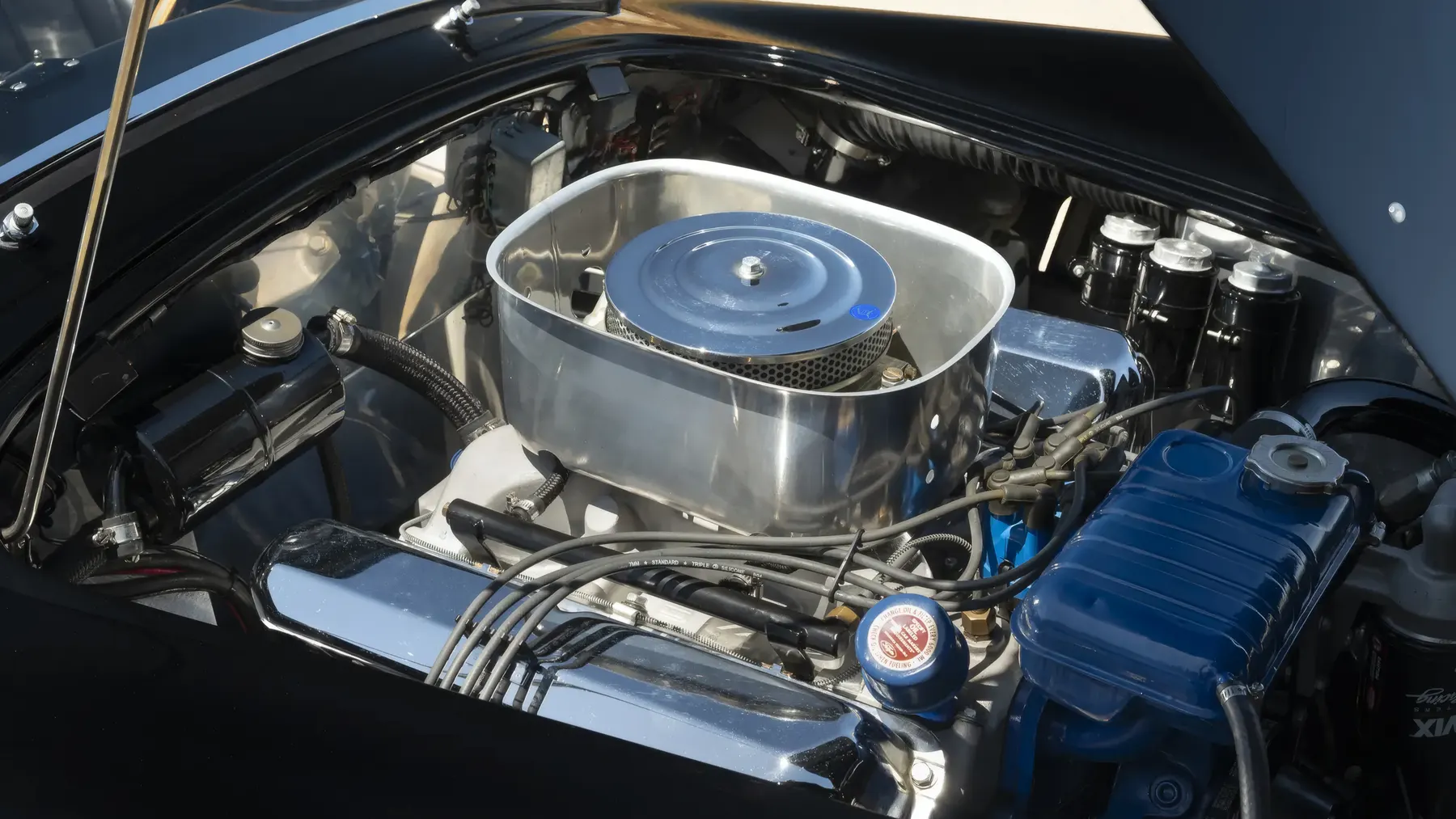
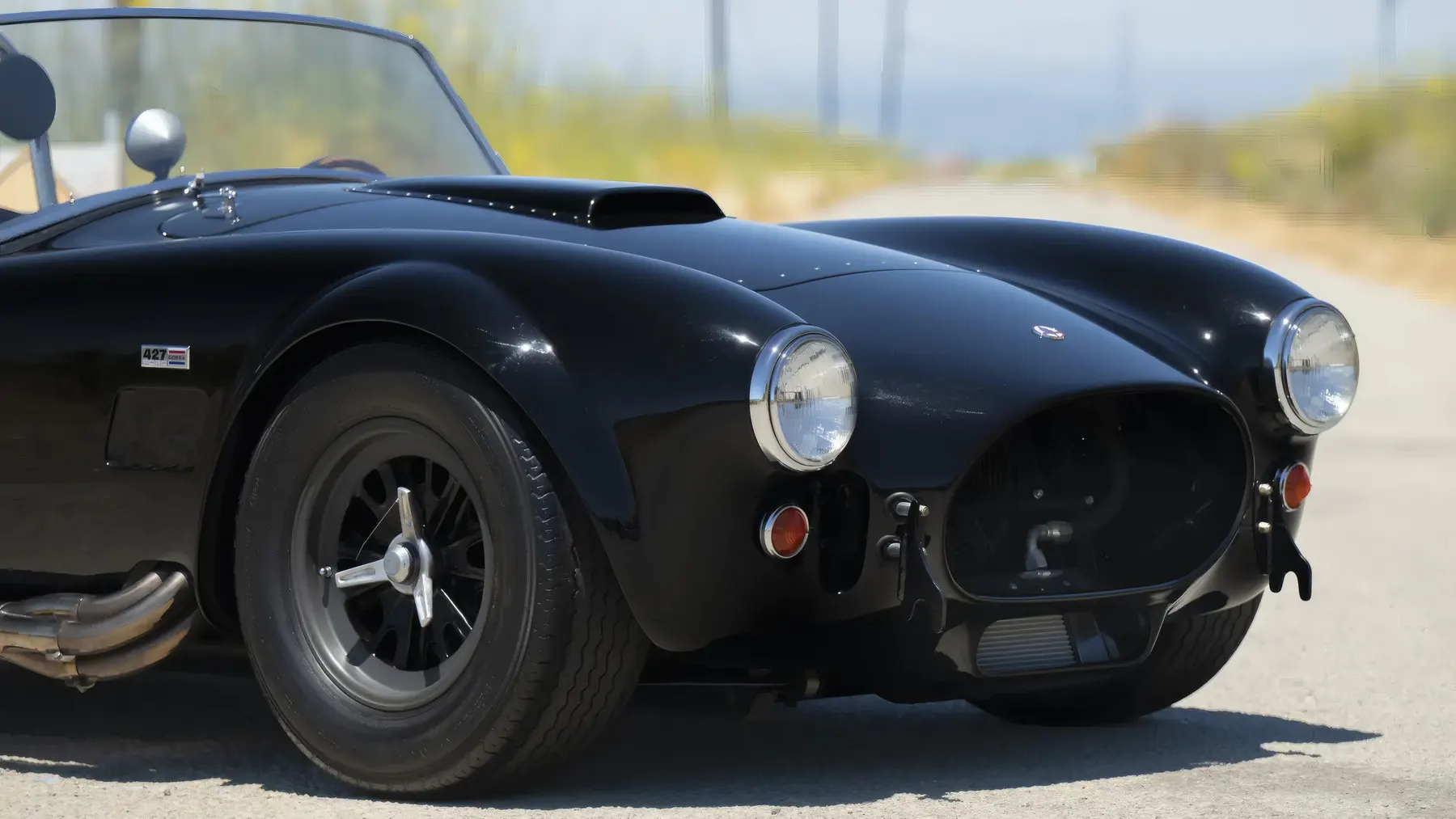
What emerged instead was essentially a new car. Working with Ford’s engineers in Detroit, Shelby’s team designed the Mark III chassis around 4-inch main tubes, up from the original 3-inch items, and coil-spring suspension at all four corners in place of the old transverse leaf springs. The frame grew five inches wider to accommodate the bigger engine and give the suspension room to work, the bodywork was reprofiled with a larger radiator opening and pronounced wheel-arch flares to cover wider magnesium wheels, and the redesign was so thorough that only the bonnet, boot lid and windscreen carried over from the leaf-spring cars. Under that scooped bonnet sat Ford’s FE-series 427-cubic-inch (7.0-litre) “side-oiler” V8, so named for an oil-gallery layout that fed the crankshaft and main bearings before the valvetrain, a NASCAR-derived durability measure that mattered enormously once the engine was asked to sustain high revs for hours at a time. Fed by a single 780 cfm Holley four-barrel, the baseline rating was around 425 bhp and 480 lb-ft of torque; cars finished to S/C specification are widely quoted at up to 485 bhp, though period and retrospective sources disagree on the exact figures depending on carburettor configuration, state of tune and testing methodology.
Shelby ordered a hundred of these Mark III chassis from AC, the minimum the FIA required to homologate the car for the 1965 racing season. It did not go to plan. When FIA inspectors arrived on 29 April 1965, they found just 51 cars completed, nowhere near the required number, and homologation was refused. Ferrari suffered an almost identical fate that same season with its 250LM. Then, in a twist that felt almost designed to torment him, the FIA revised its classification system that June, creating a new “Competition GT” category with a production minimum of just 50 cars, one fewer than the number Shelby had already built. The reprieve came with a catch: it placed the Cobra in the same class as the Ford GT40, a car Shelby was simultaneously developing for Ford, creating an obvious conflict of interest that led him to withdraw from campaigning his own car and leave it to privateers instead.
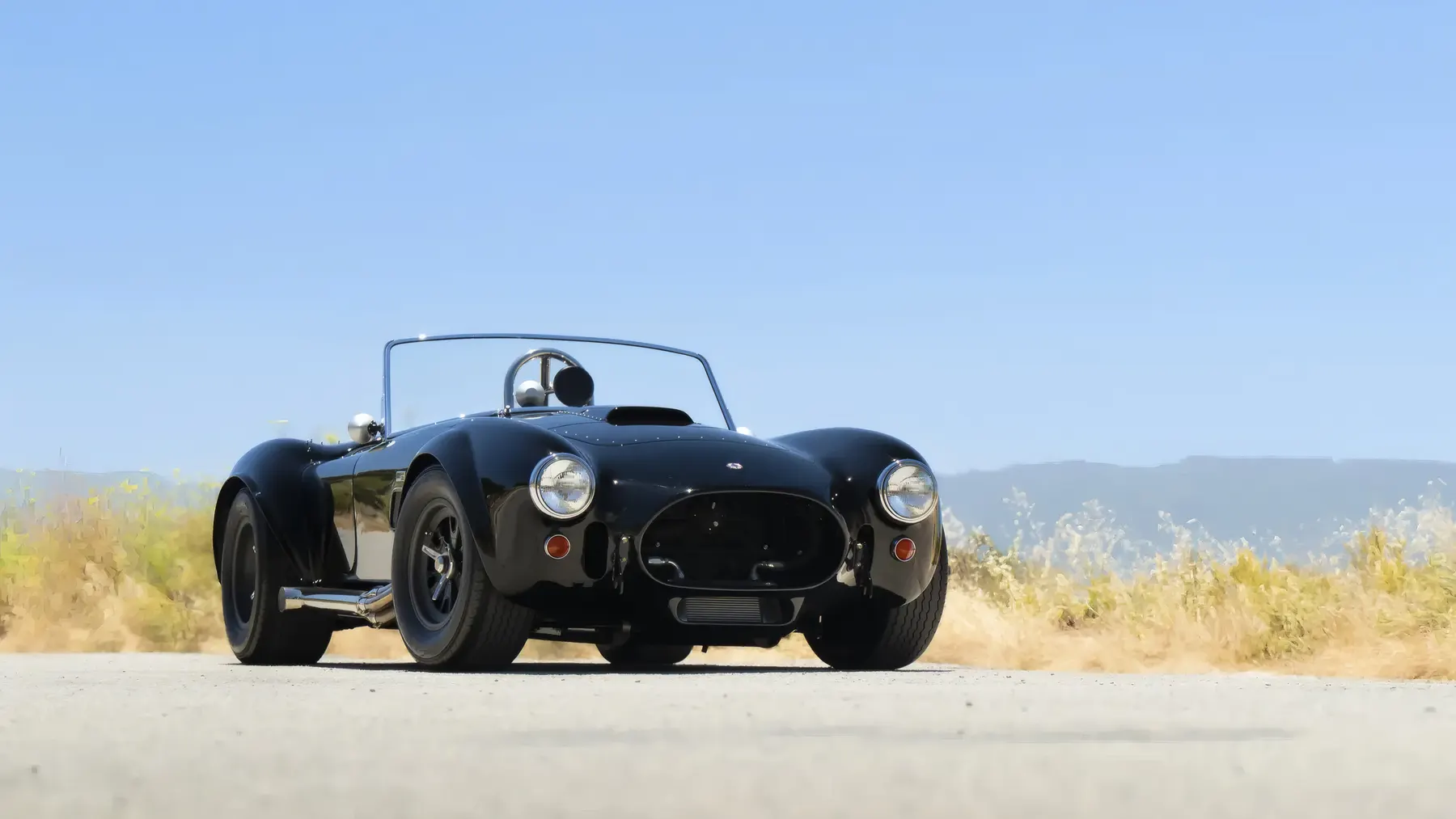
By the time the dust settled, 53 Mark III competition chassis had been completed, numbered CSX3001 through CSX3053. Sixteen were sold to private racing teams, two were retained as factory prototypes, and one went to Ford’s engineering department. A further three orders arrived for full competition specification during the months that followed, bringing the total number of genuine “production” competition Cobras to nineteen. That left roughly three dozen chassis sitting outside Shelby’s Los Angeles warehouse with nowhere to go, wearing a price tag that few buyers wanted to pay for a car that could no longer race for a manufacturer’s championship. It was Shelby’s East Coast sales representative, Charles Beidler, who suggested the fix: detune the surplus competition chassis, fit them with production windscreens, and sell them to the public as the fastest street car in the world. Shelby agreed, and the 427 S/C, for “semi-competition,” was born out of what was essentially unsold inventory.
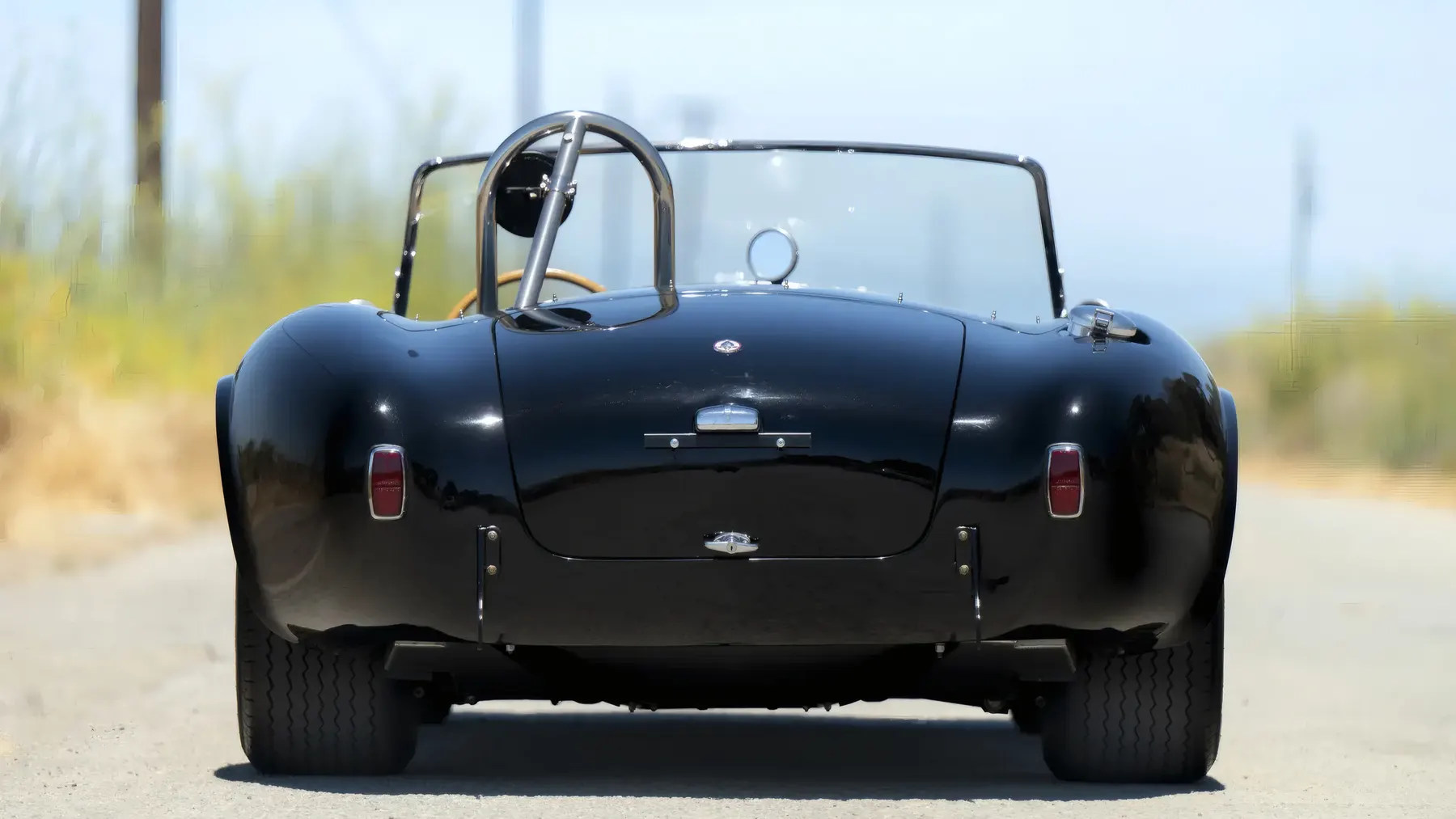
The conversion was deliberately light-touch. Cars kept their oil cooler, riveted bonnet scoop, wide competition-flared fenders, side exhaust, dual batteries, external fuel filler and 42-gallon fuel tank, along with the front jacking points and roll bar that had no real purpose on the road but every purpose on a racetrack. What changed was a full-height windscreen in place of the low competition item, electric cooling fans to cope with idling in traffic, baffling added to the exhaust to satisfy street noise rules, and Goodyear Blue Dot street tyres in place of racing rubber. Like the full competition cars, S/C chassis left the factory unpainted, delivered in bare aluminium or grey primer for dealers or owners to finish as they saw fit, a detail that separated them visually from the standard painted 427 street Cobras Shelby built later at his Los Angeles works. Car and Driver’s test in the November 1965 issue was enthusiastic about the value on offer, effectively urging any reader who could scrape together the money to buy one without delay.
Exactly how many genuine S/C Cobras exist depends on which registry is consulted. Bonhams and several other references put the number of competition chassis converted toward S/C specification at 31, a figure repeated in Wikipedia’s account of the car; the Shelby American World Registry, by Hagerty’s account, records only 28 as having actually been sold in S/C trim, while other sources split the difference at 29. What is not in dispute is how few of them there are relative to demand: this is among the rarest genuine Cobra variants of any kind, rarer even than the leaf-spring 289s that preceded it.
On paper the S/C is a small, brutally simple machine: a wheelbase of just 2,286 mm (90 in), a kerb weight generally put in the region of 1,050 kg (roughly 2,280 to 2,355 lb depending on source), and a body barely wider than two metres. Contemporary performance claims varied wildly depending on axle ratio, tyres fitted and who was holding the stopwatch. Bonhams has quoted a 0-100 mph time as low as 8.8 seconds for a genuine S/C; other period and retrospective figures push that closer to eleven or thirteen seconds depending on the car and test. The most famous number associated with the model isn’t even a straightforward one: Ken Miles, inspired by Aston Martin’s boast that its racing cars could accelerate from 0 to 100 mph and back to zero in under thirty seconds, arranged for Sports Car Graphic’s Jerry Titus to attempt the same test in a 427. The result, 13.2 seconds, humiliated Aston Martin’s claim and became one of the defining anecdotes of the whole programme. Top speed is most commonly quoted around 165 mph, though some references push the S/C’s claimed maximum as high as 185 mph; given the car’s unassisted steering, brakes with no power assistance, and a windscreen barely taller than a motorcycle fairing, either figure represents a genuinely alarming way to spend an afternoon.
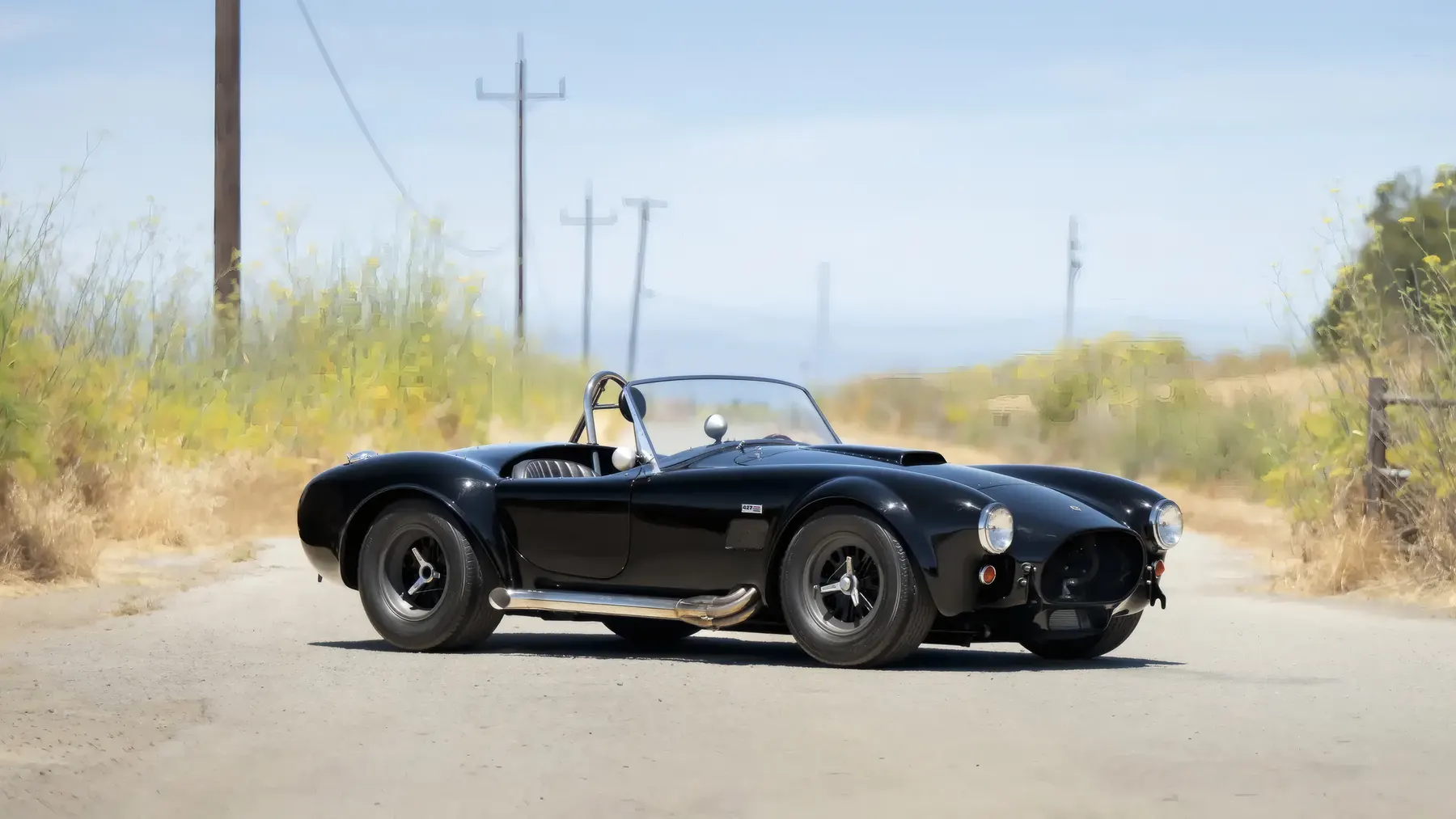
Driving one today, whether an original or one of the continuation cars built to broadly similar specification since, tends to produce the same reaction: this is not a machine that flatters an inexperienced driver. The unassisted steering demands real shoulder effort to swing into a tight corner, more like wrestling a pre-war grand prix car than steering a modern sports car, and the non-servo brakes need a genuinely strong leg to slow the car from any real speed. Torque peaks around 3,700 rpm, and the engine pulls with a lumpy, visceral urgency below that before smoothing into a wall of noise and acceleration above it. Grip, thanks to fat tyres and a genuinely light structure, is considerable, but the feedback through the chassis is not especially tactile or filtered; on a demanding road the car can feel wayward rather than composed, and simply keeping pace with a modern hot hatch on a twisting lane is harder work than the figures suggest it should be. Where the S/C excels is at a gentler pace, arm resting on the door top, engine burbling, drinking in a summer afternoon rather than chasing a lap time. Travelling quickly in a Cobra is, by most honest accounts, genuinely hard work.
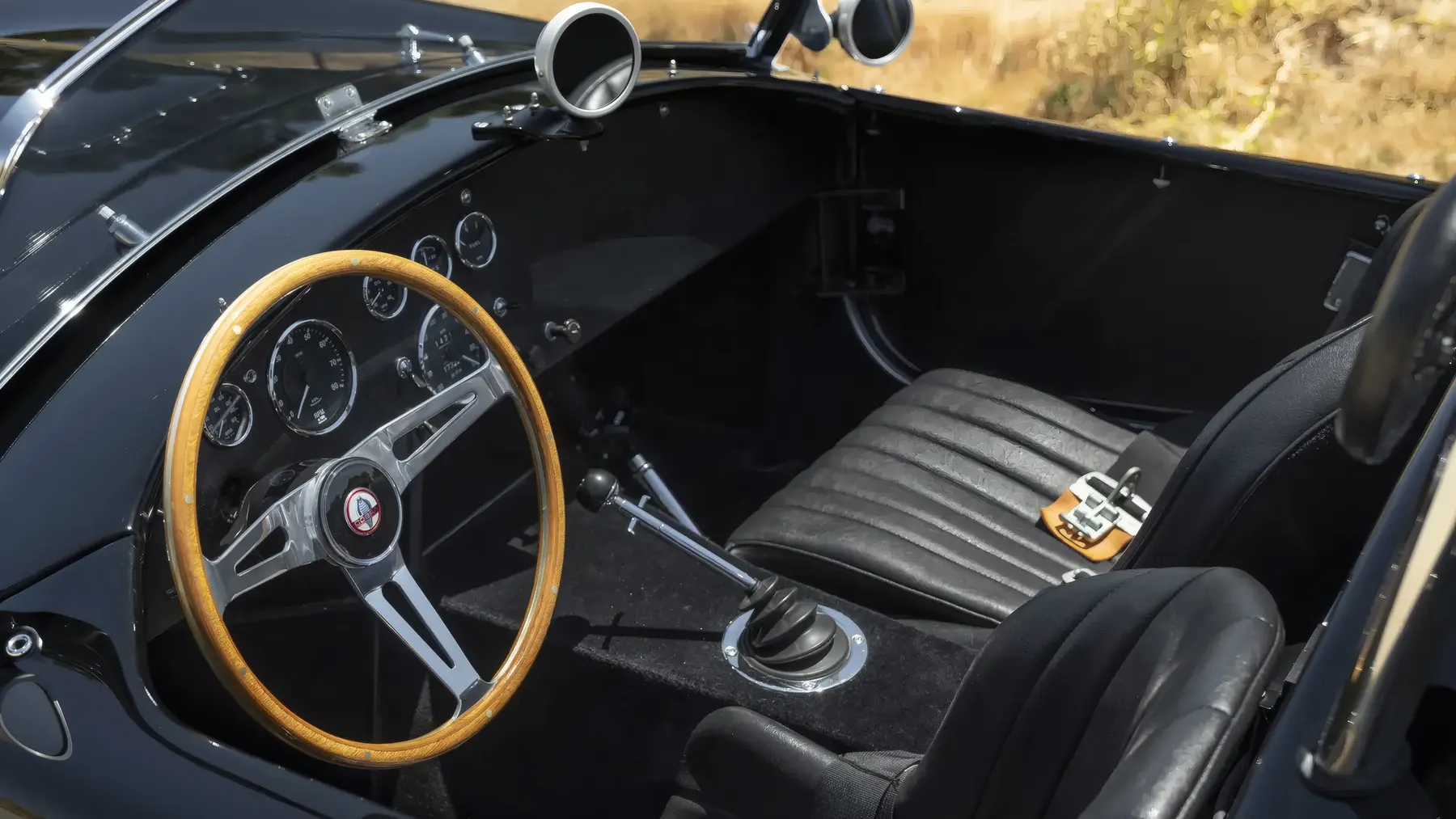
That physicality is part of the appeal, but it should not be romanticised past the point of honesty. Weather protection amounted to a simple canvas top and perspex side-screens that most owners left in the boot; driving a 427 at speed in the rain was, by contemporary accounts, a genuinely dangerous proposition rather than a charming period quirk. The unassisted steering and non-servo brakes, while authentic to the car’s competition origins, meant real physical strain on a long drive and demanded a level of confidence not every owner possessed, particularly once the tyres let go near the limit. The cabin offered nothing beyond two unsupportive seats, an oversized wood-rimmed wheel and the essential gauges; there was no weather sealing, no sound insulation, and precious little to soften the side-exhaust roar inches from the driver’s ear. None of this was an accidental oversight so much as a direct consequence of the car’s origin as an unsold race car with a windscreen bolted on, but it explains why, even in period, the S/C sold in such small numbers. Hagerty’s own assessment of the sales figures is blunt: Beidler’s plan worked well enough to move the surplus stock, but the muted response showed that the 427 Cobra’s future as a mainstream production car was not terribly bright. Within two years, Chevrolet’s C2 Corvette, offered with comparable big-block power, proper weather equipment and a considerably lower price, had made Shelby’s minimalist approach look increasingly like a hard sell to anyone who wasn’t already a committed enthusiast, and the wider 427 Cobra line wound down by 1967.
None of that commercial struggle diminished the S/C’s standing once the car’s rarity became apparent to the collector market decades later. Values began climbing sharply from the late 1980s, and by the early 1990s genuine competition and S/C Cobras were being discussed as million-dollar cars, a surge so dramatic that Shelby himself, working with restorer Mike McCluskey, began producing additional “Completion Cars” on old, unused chassis numbers in 1991 and 1992. The scheme unravelled once journalists and the California DMV started asking pointed questions about authenticity, and it ultimately produced only nine cars before it was shut down. That episode says as much about the S/C’s mythic status as anything else in its history: demand had grown so far beyond the genuine 28 to 31 original cars that Shelby was tempted to manufacture more of the legend rather than let scarcity stand as it was. Genuine surviving examples now trade well into seven figures even in modest condition, with the finest cars commanding considerably more, and Shelby American has since honoured the designation with continuation cars built under the CSX4000 series, extending the S/C name to buyers who could never hope to find, let alone afford, an original.
What makes the 427 S/C worth remembering isn’t just the numbers, contested as most of them are, but the honesty of its origin story. It was never designed to be the ultimate expression of anything; it is a race car that failed to become a race car, sold to the public because the alternative was a warehouse full of unmovable inventory. That accident of circumstance produced something purer than a deliberately engineered flagship could have managed: a machine with no compromises made for comfort, refinement or mass appeal, because nobody involved in its creation expected ordinary buyers to want it in the first place. Six decades on, in a world of power-assisted everything and computer-mediated grip, the S/C’s raw, unfiltered physicality is exactly why it remains one of the most sought-after Cobras of all.
Technical data
Specifications
| Specification | Figure |
|---|---|
| Engine | Ford FE 427 cu in (7.0-litre) “side-oiler” V8, OHV, 16-valve |
| Carburettion | Single 780 cfm Holley 4-barrel (baseline); dual 4-barrel on some cars* |
| Power | c. 425-485 bhp @ 5,600-6,000 rpm (sources vary)* |
| Torque | c. 460-480 lb-ft @ 2,800-3,700 rpm (sources vary)* |
| Transmission | 4-speed manual |
| Wheelbase | 2,286 mm (90 in) |
| Length | approx. 3,962 mm (156 in)* |
| Width | approx. 1,727 mm (68 in)* |
| Height | approx. 1,245 mm (49 in)* |
| Kerb weight | approx. 1,035-1,070 kg (2,280-2,355 lb)* |
| Suspension (f/r) | Unequal-length wishbones, coil springs over dampers, all independent |
| Brakes | Four-wheel discs, unassisted |
| Steering | Rack and pinion, unassisted |
| 0-60 mph | approx. 4.5 sec (estimated)* |
| 0-100 mph | 8.8-13.2 sec depending on source and test method* |
| Top speed | approx. 165 mph; some sources claim up to 185 mph* |
| Production | 28-31 genuine S/C conversions (sources vary)* |
Sources
- RM Sotheby’s: 1965 Shelby 427 Competition Cobra, Monterey 2012
- Bonhams Cars: 1965 Shelby 427 Cobra, Chassis No. CSX 3104
- Bonhams Cars: 1966 Shelby 427 Cobra, Chassis No. CSX 3242
- Hagerty Media: Your Handy 1965-67 Shelby 427 Cobra Buyer’s Guide
- Supercars.net: 1966 Shelby Cobra 427 S/C
- Top Gear: Shelby Cobra Review - Driving
- Wikipedia: AC Cobra
- Silodrome: 1966 Shelby Cobra 427 ‘Semi-Competition’
- New Zealand Classic Car (via PressReader): Shelby Cobra 427
Join the discussion
Comments
Loading comments…
Leave a comment
Share a detail, memory, or perspective. Every comment is reviewed before publication.