Shelby 289 Cobra: The Race Car That Beat Ferrari and Made No Apologies
1963 Shelby 289 Cobra

Images: Karissa Hosek / RM Sotheby's
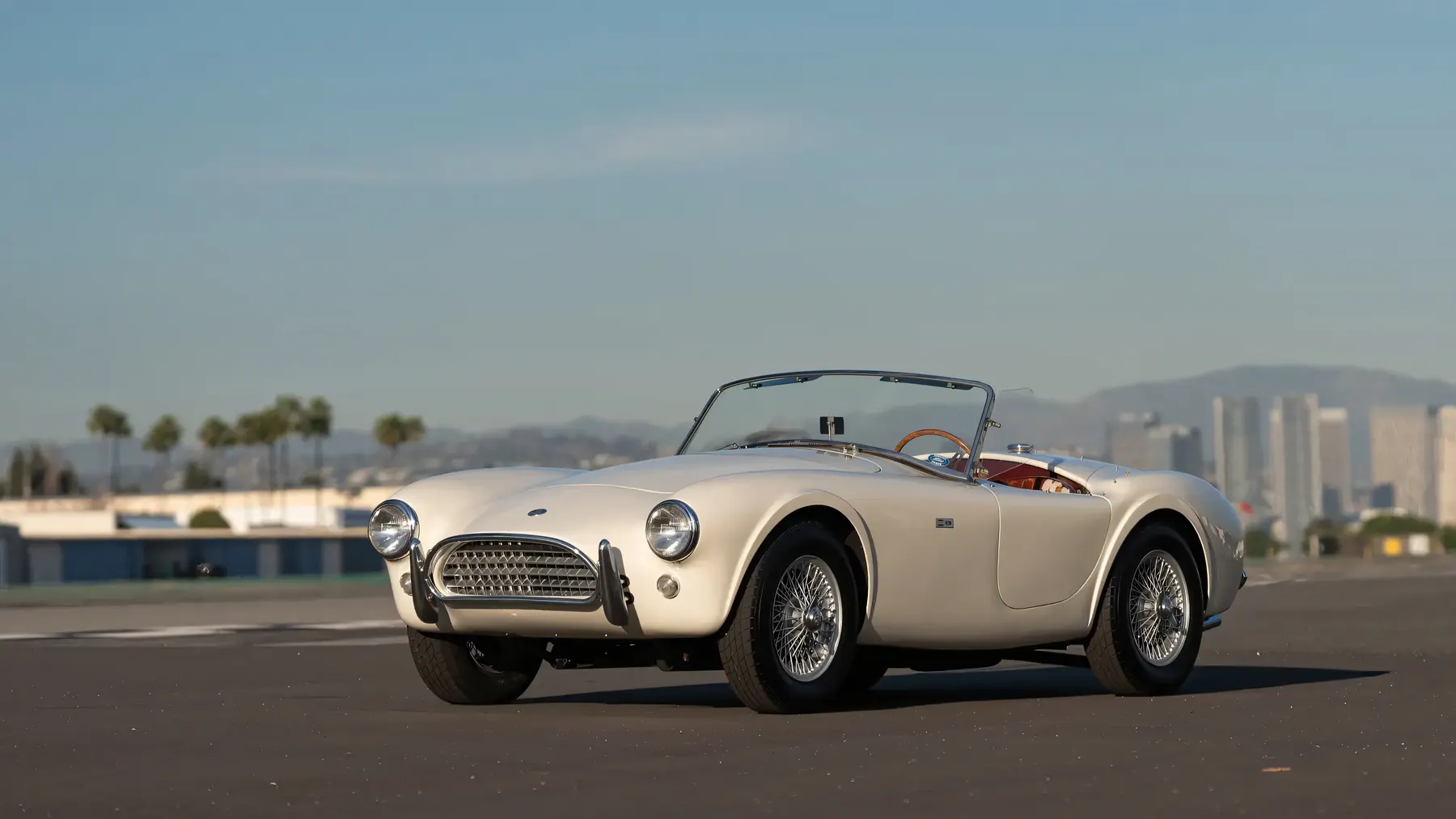
By any rational measure, the Shelby Cobra was already behind the times before the first example was completed. The AC Ace body it wore had been hand-formed in Thames Ditton since the mid-1950s. The chassis underneath was a steel-tube construction with clear roots in a Tojeiro sports-racing special from the early 1950s. The transverse leaf spring suspension front and rear was an arrangement that pre-dated the car by decades. And yet this assembled anachronism, once Carroll Shelby fitted a Ford small-block V8 and sent the result to a California racetrack, proved to be the fastest production sports car in America and, in time, the machine that ended Ferrari’s dominance of the FIA GT Championship.
The story begins with a sequence of converging necessities. AC Cars needed a replacement engine after Bristol ceased supply of the straight-six that had powered the Ace for most of its production life. Shelby, whose racing career had been curtailed by a heart condition he managed with nitroglycerin tablets during races, had an idea for an Anglo-American sports car but no manufacturer willing to donate a chassis. Ford, launching its Total Performance marketing campaign, wanted a high-profile motorsport presence but lacked a suitable lightweight platform. The solution emerged from the intersection of these three separate problems. AC would supply body-chassis units. Ford would supply engines and a commercial framework. Shelby would assemble, develop, and race the results. The alignment was opportunistic rather than strategic, and the first car - stuffed with Ford’s 260 cubic inch V8 and sent down a drag strip to establish its bona fides - was built with a speed that reflected the urgency all three parties felt.
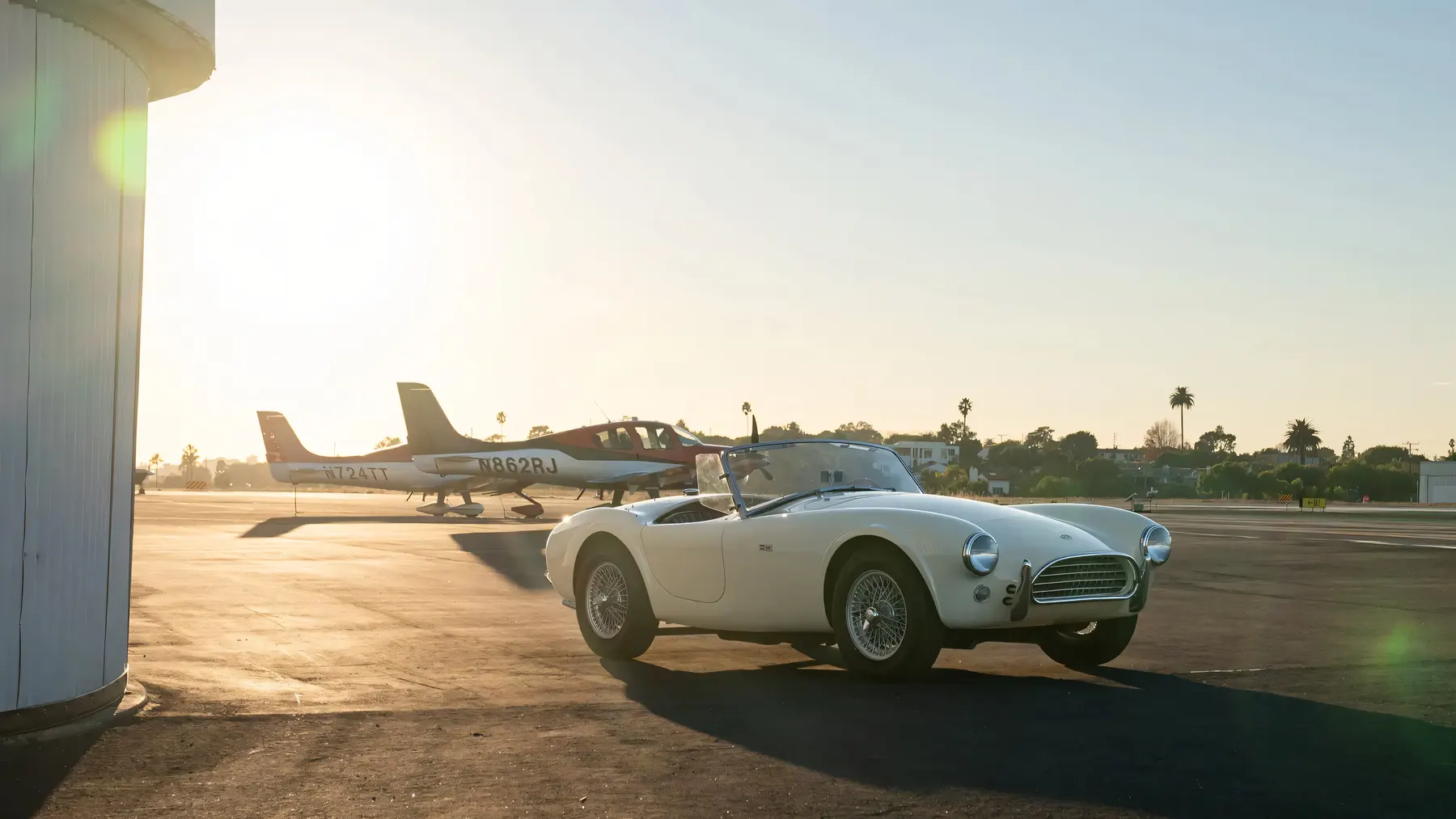
The specific V8 that defined the Cobra’s identity was the 289 cubic inch (4.7-litre) Windsor unit, introduced after approximately 75 of the 260-powered cars had been built. Ford’s 289 was a conventional pushrod iron-block V8, technically unremarkable by European race engineering standards but well-sorted in production form and available in a useful spread of specifications. The standard versions used a two-barrel carburettor and produced outputs suited to family saloons; the High Performance K-code variant, which used a four-barrel Holley carburettor, solid lifters, and a revised intake manifold, was rated at 271 bhp at 6,000 rpm with approximately 269 lb-ft of torque. Competition-specification engines went further still: cars prepared for the SCCA and FIA ran modified versions with Weber carburettors, ported heads, and aggressive camshaft timing that pushed the 289 considerably beyond its street figures, though the precise output varied from engine to engine depending on the builder and the purpose. What united all these variants was the weight they propelled. A road-going 289 Cobra in standard trim weighed around 1,000 kg - a figure that sets the entire car’s performance in its proper context. This was, by mid-1960s standards, vanishingly light for a vehicle with any practical claim to road legality. Against the E-Type’s substantially greater mass and the Sting Ray’s heavier construction, the Cobra’s power-to-weight advantage was decisive.
The platform enabling this lightness was AC’s inheritance from John Tojeiro’s design philosophy of radical weight minimisation. Tojeiro’s sports-racing cars, which had directly inspired the Ace in the early 1950s, used oval-section steel tubes to build a chassis that weighed almost nothing, and AC carried this approach forward essentially unchanged through a decade of Ace production. The result in Cobra form was a tube-frame structure that Shelby’s team reinforced and widened but never fundamentally reinvented - it remained a hand-assembled piece of 1950s thinking adapted to receive 1960s power. The transverse leaf spring suspension at both ends, which Tojeiro had also pioneered, produced handling characteristics that were direct, communicative, and demanding in roughly equal measure. Rack-and-pinion steering, sophisticated by American sports car standards when the Corvette was still specifying recirculating-ball gear, sharpened the car’s reflexes further. Disc brakes at all four corners put it ahead of nearly every American competitor in stopping hardware and gave the Cobra a technical specification that justified its competition claims regardless of how anachronistic the suspension might appear on paper.
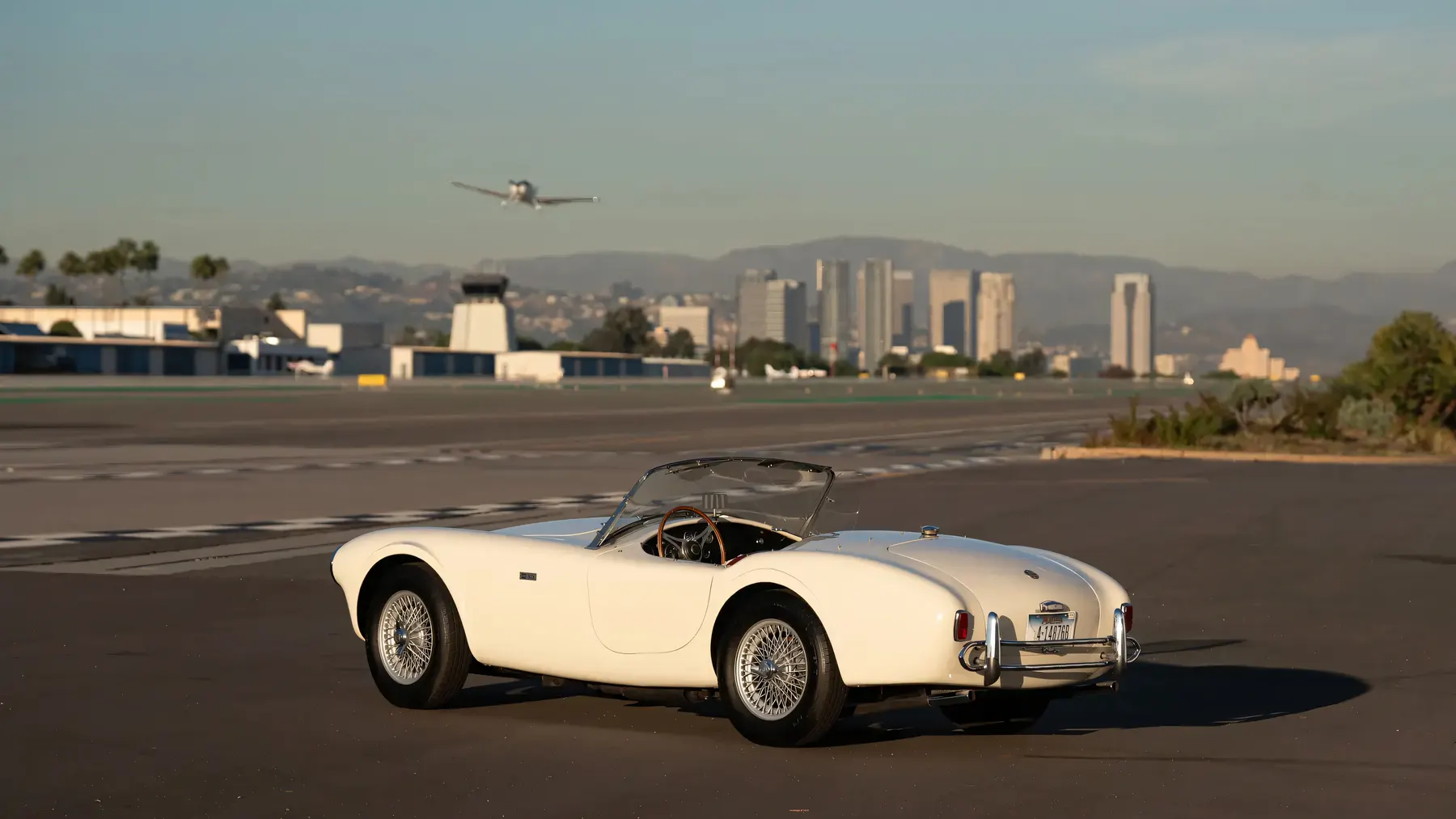
Racing use was never an afterthought for the 289 Cobra - it was, in several important respects, the primary purpose. In SCCA production class racing through the mid-1960s, Ken Miles exploited the Cobra’s combination of power and minimal weight with exceptional results, and other Shelby American drivers including Bob Bondurant, Dave MacDonald, and Dan Gurney built a formidable record across multiple venues and classes. The FIA campaign demanded more. European circuits, and particularly Le Mans, exposed the open roadster’s fundamental aerodynamic limitation: at high speed on long straights, the lack of a roof allowed significant drag to cap the car’s top-end velocity, and contemporary Ferrari GTOs simply went further down the Mulsanne. Shelby American’s response was the Cobra Daytona Coupe. Pete Brock designed an aerodynamic closed body that fitted over the 289 roadster’s chassis, giving it the slippery profile needed for outright speed on fast circuits. Only six Daytona Coupes were ever completed, their construction characteristically rushed and pragmatic, but the combination of their pace at long-distance events and the points accumulated by the open 289 roadsters in GT categories proved sufficient. The 1965 FIA GT Manufacturers’ Championship went to Cobra, denying Ferrari a title the Maranello operation had treated as its own. For Shelby, who had raced Ferraris himself in European competition during his driving career, the result carried a specific personal weight that pure commercial satisfaction does not quite explain.
Driving a 289 Cobra on public roads provides an experience so unmediated as to feel almost confrontational by contemporary standards. The steering weights up and becomes crisp as velocity builds, tracking driver inputs with a fidelity that modern assisted systems struggle to replicate without feeling artificial. The engine’s power delivery is progressive enough in street tune that the car can be threaded through traffic without drama, but speed accumulates with alarming ease once the road opens up, and the rev-happy nature of the High Performance 289 rewards being driven hard through the range in a manner that feels more Italian than American. Drivers familiar with both 289 and 427 Cobras consistently identify the smaller-engined car as the more engaging machine to actually drive: the 427 is spectacular, but the 289 responds to effort in a way the larger car’s torque surplus makes less necessary. The 289’s limit is accessible and exploitable; the 427’s is simply very large.
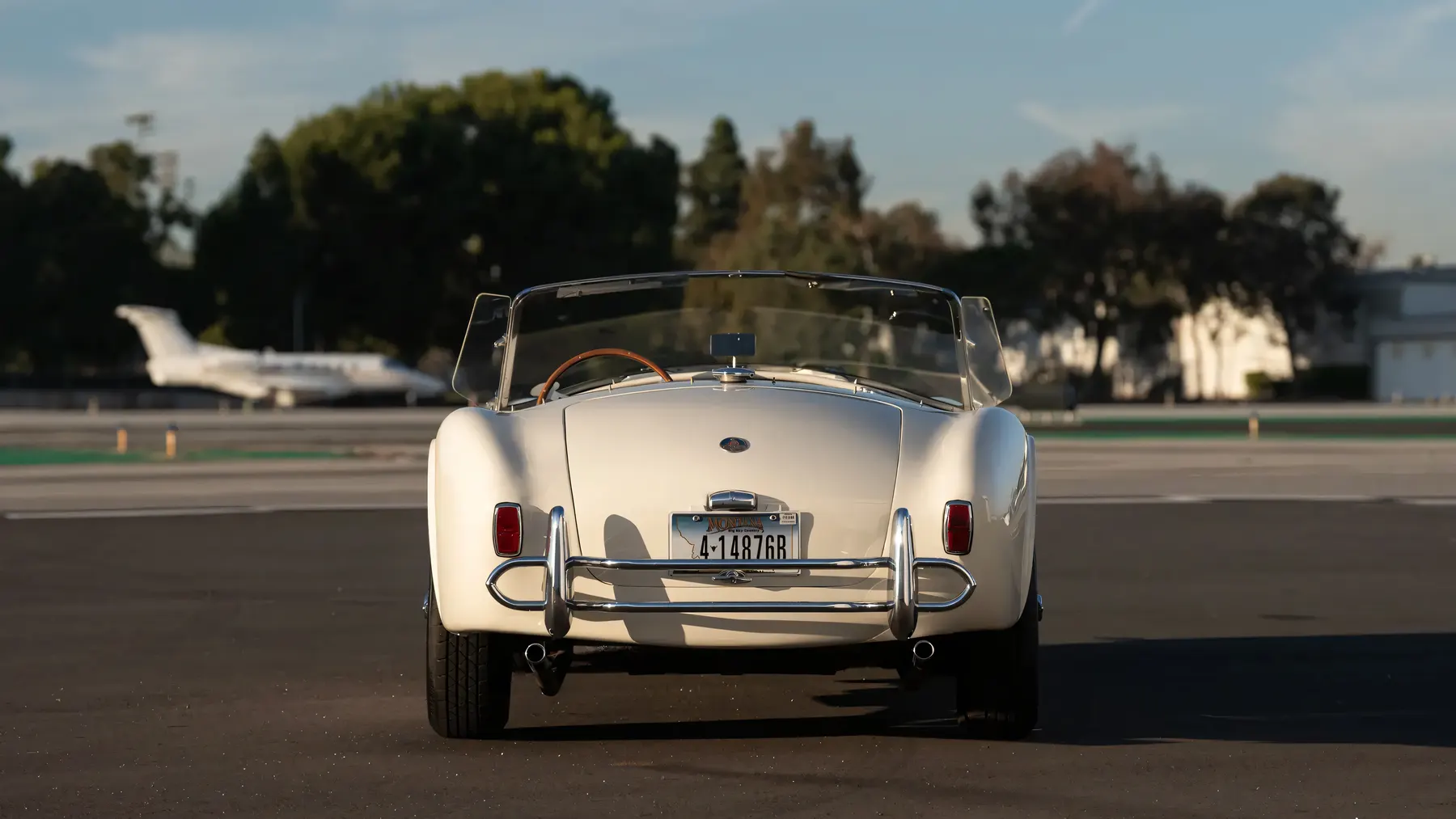
The compromises are real and substantial, and they were not minor in period. The transverse leaf spring suspension, while effective enough for circuit use, produces a road ride that deteriorates rapidly on imperfect surfaces - not merely firm but brittle, transmitting shocks with minimal attenuation in a way that the best contemporary grand touring cars had already moved well beyond. The chassis, despite Shelby’s reinforcement of the AC Ace structure, retained an inherent flex that drivers could sense as a subtle softness under extreme cornering loads - tolerable in a racing context, less reassuring on public roads. Weather protection barely deserves the description: the standard soft top managed to be both inadequate in anything heavier than light rain and obtrusive at speed, and the side curtains, when fitted, provided a token gesture toward keeping wind out while largely failing to do so. The windscreen was sized for sprint conditions, which meant that at sustained road speeds the airstream deposited itself on the occupants rather than over them.
These were not simply the expected shortfalls of a 1960s sports car. The Jaguar E-Type, sold for comparable money in Britain and aimed at a recognisably similar enthusiast customer, offered a proper enclosed body option with wind-up windows, a useable boot, and a suspension that handled ordinary road surfaces without punishing its occupants. Press comparisons between the two cars in period were rarely diplomatic on this point: the Cobra was faster, but it gave less in almost every dimension of everyday utility. The car’s handling, capable and exploitable by a driver who understood it, left no margin for inattention. The rear’s tendency to step out under power, fundamental to the car’s appeal on track, required active management on public roads in a way that casual owners found genuinely demanding. A number of serious accidents during the 289’s competition and road life were a matter of public record in period, and the car’s reputation for punishing driver error was accurate rather than exaggerated.
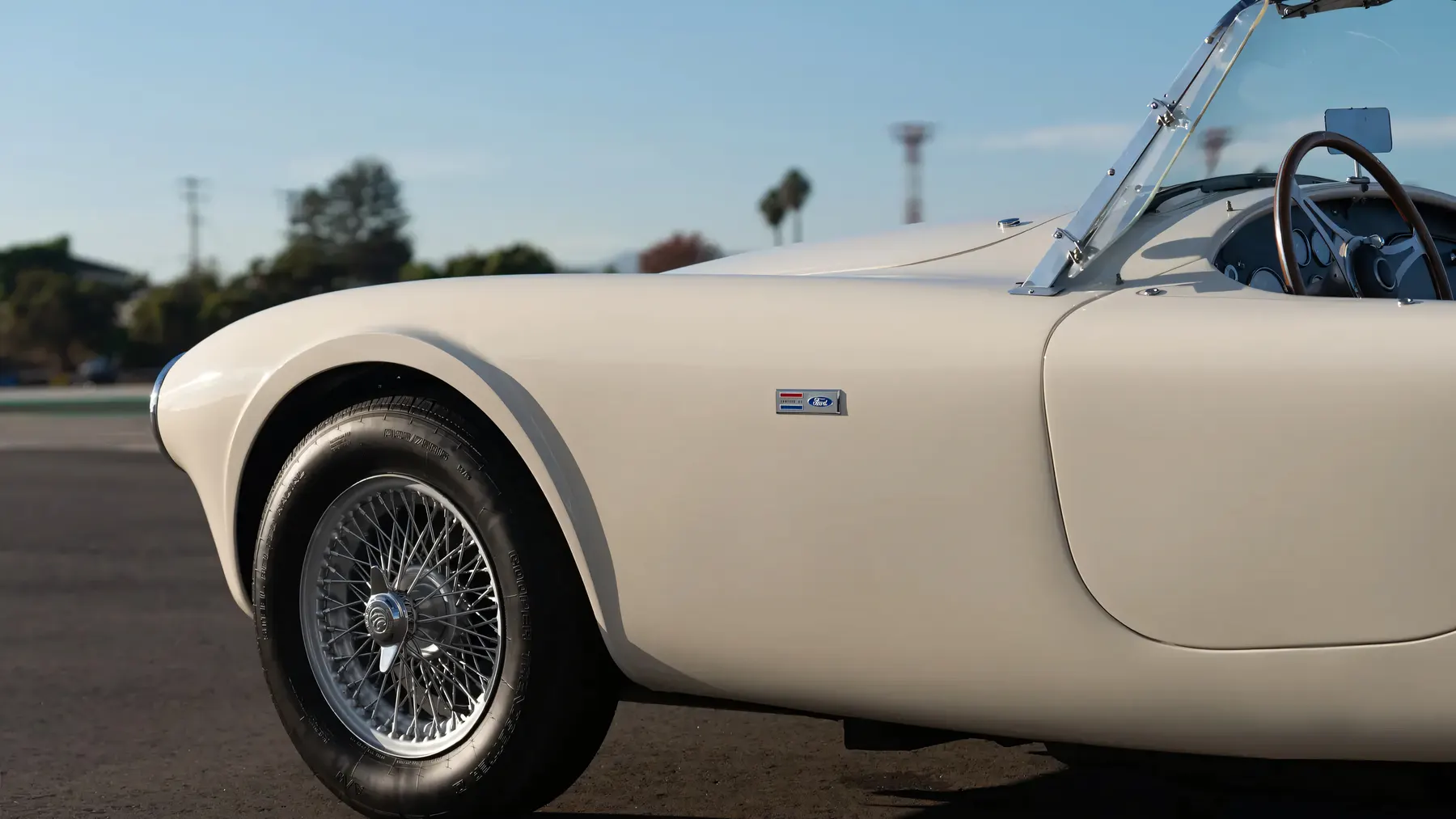
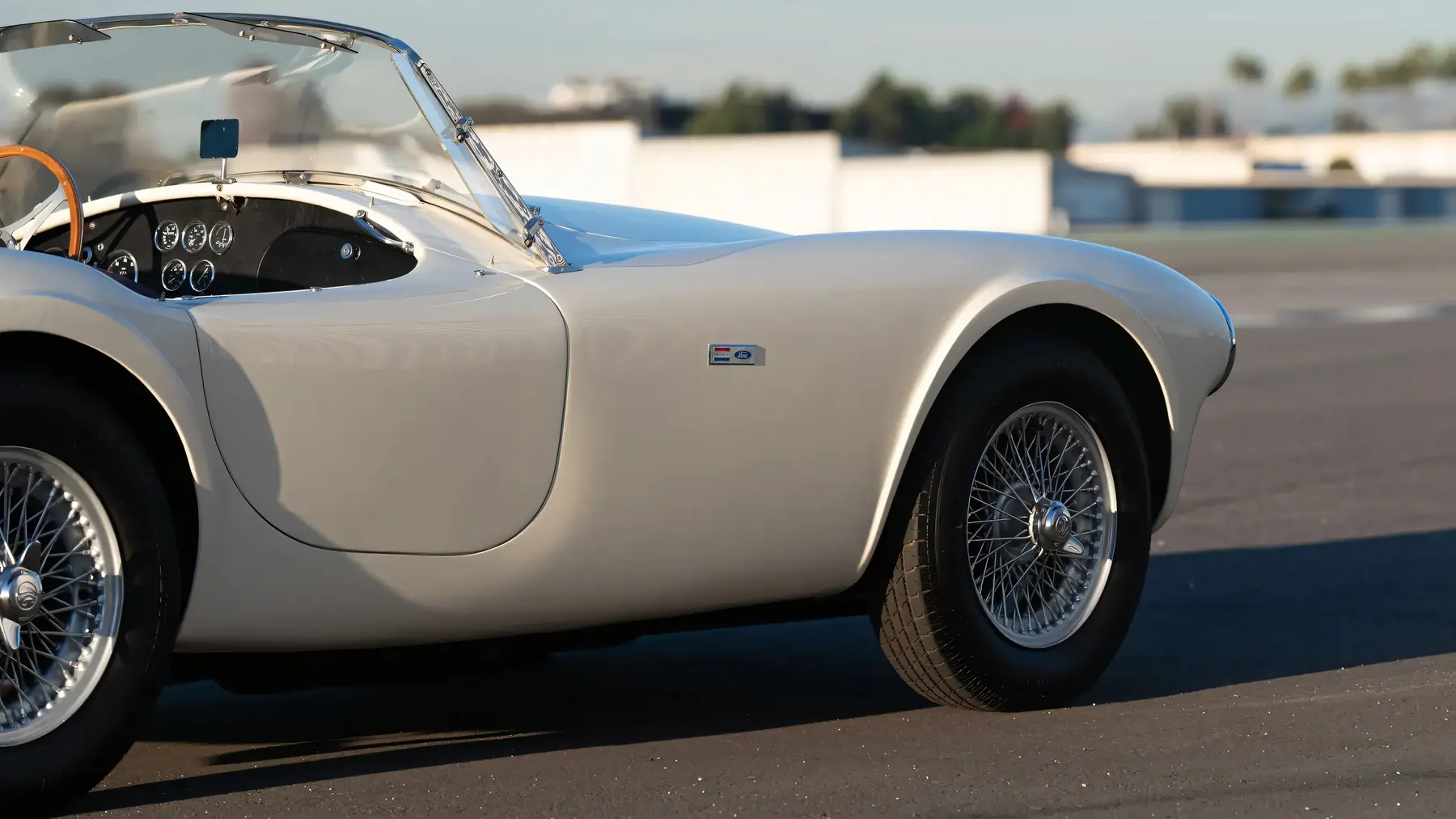
Total production of 289-engined Cobras amounts to approximately 580 cars by careful reckoning - a figure that makes the model’s subsequent cultural dominance difficult to account for by numbers alone. The shift to the wider 427 chassis in 1965, with its enlarged bodywork and overwhelming torque, brought a car that quickly became the template for how most people imagined the Cobra nameplate, and the big-block’s more dramatic visual presence overshadowed the 289’s more nuanced claim to significance in the popular memory. The subsequent authorised continuation vehicles that Shelby released in later decades, built to varying specifications and numbered in distinct series separate from original production, added further complications to the 289’s identity. Today the number of Cobra-bodied cars in existence vastly exceeds the original production run, and verifying authenticity is an exercise that experienced buyers approach with documentary caution - a complication that barely applies to other collectible sports cars of the period but is now central to navigating the 289 Cobra market.
What makes the 289 matter is precisely the gap between its credentials and its origins. The car that won an FIA GT Championship from Ferrari was built from a British artisan body shell, a chassis designed by a 1950s specials builder, and an engine from a Ford Fairlane. The people who built and developed it were working from improvisation as much as engineering. The result was, by the standards of its moment, exactly right: fast enough to matter, light enough to make that speed count, difficult enough to operate as a constant reminder that it was a racing car wearing a road car’s identity without having fully committed to the role.
Join the discussion
Comments
Loading comments…
Leave a comment
Share a detail, memory, or perspective. Every comment is reviewed before publication.