Shelby GT350 Fastback: The Car That Gave the Mustang Teeth
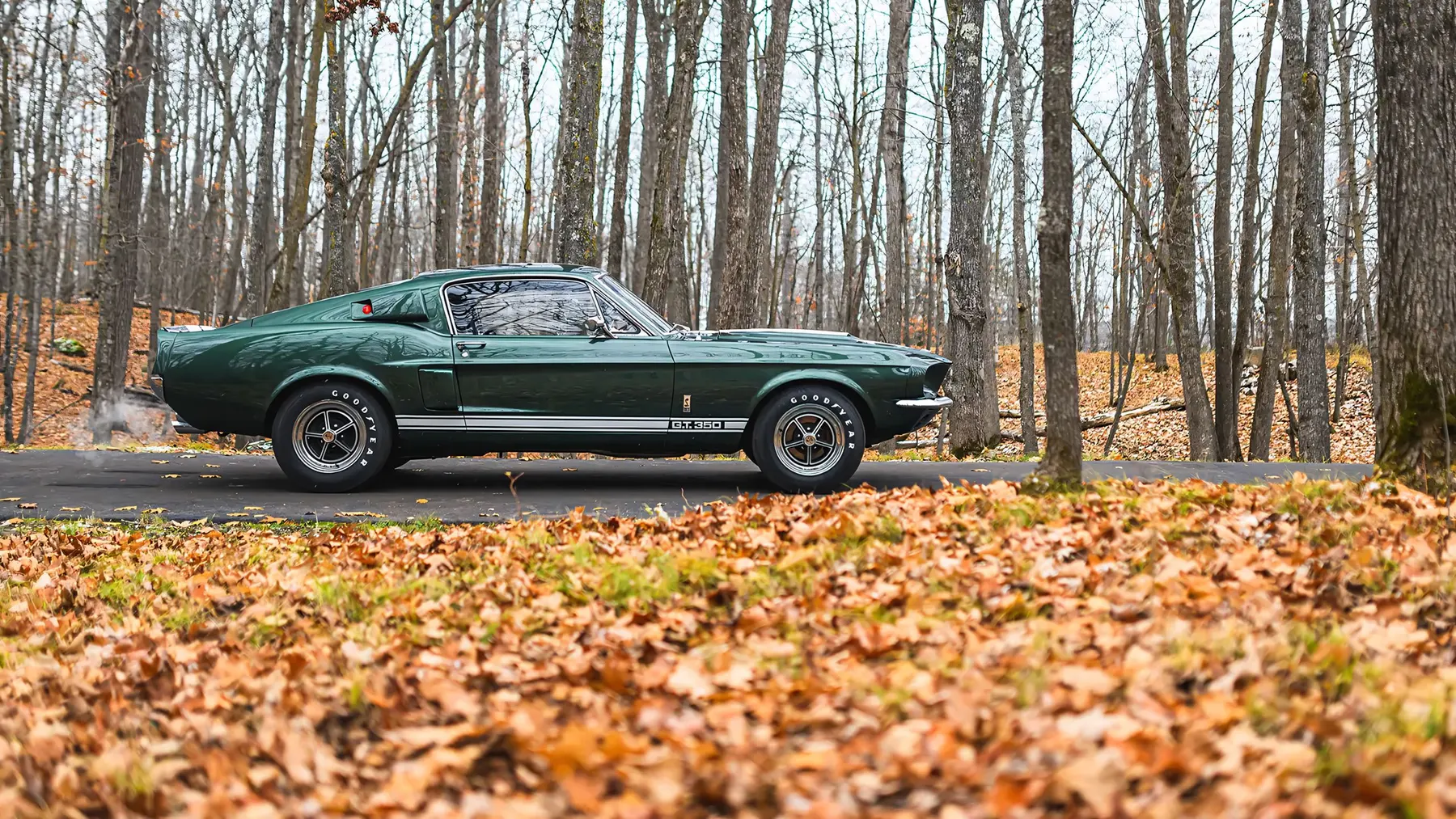
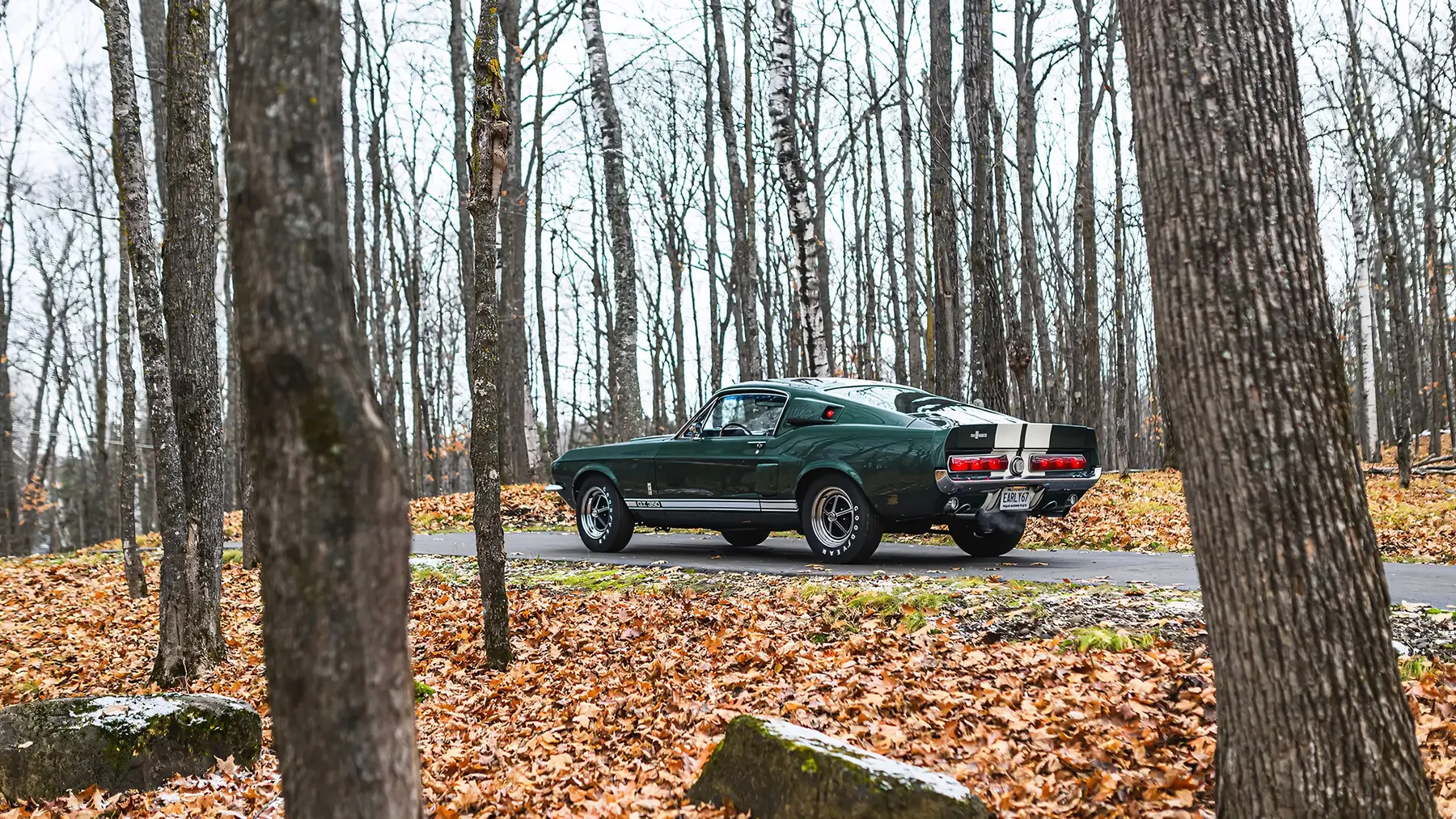
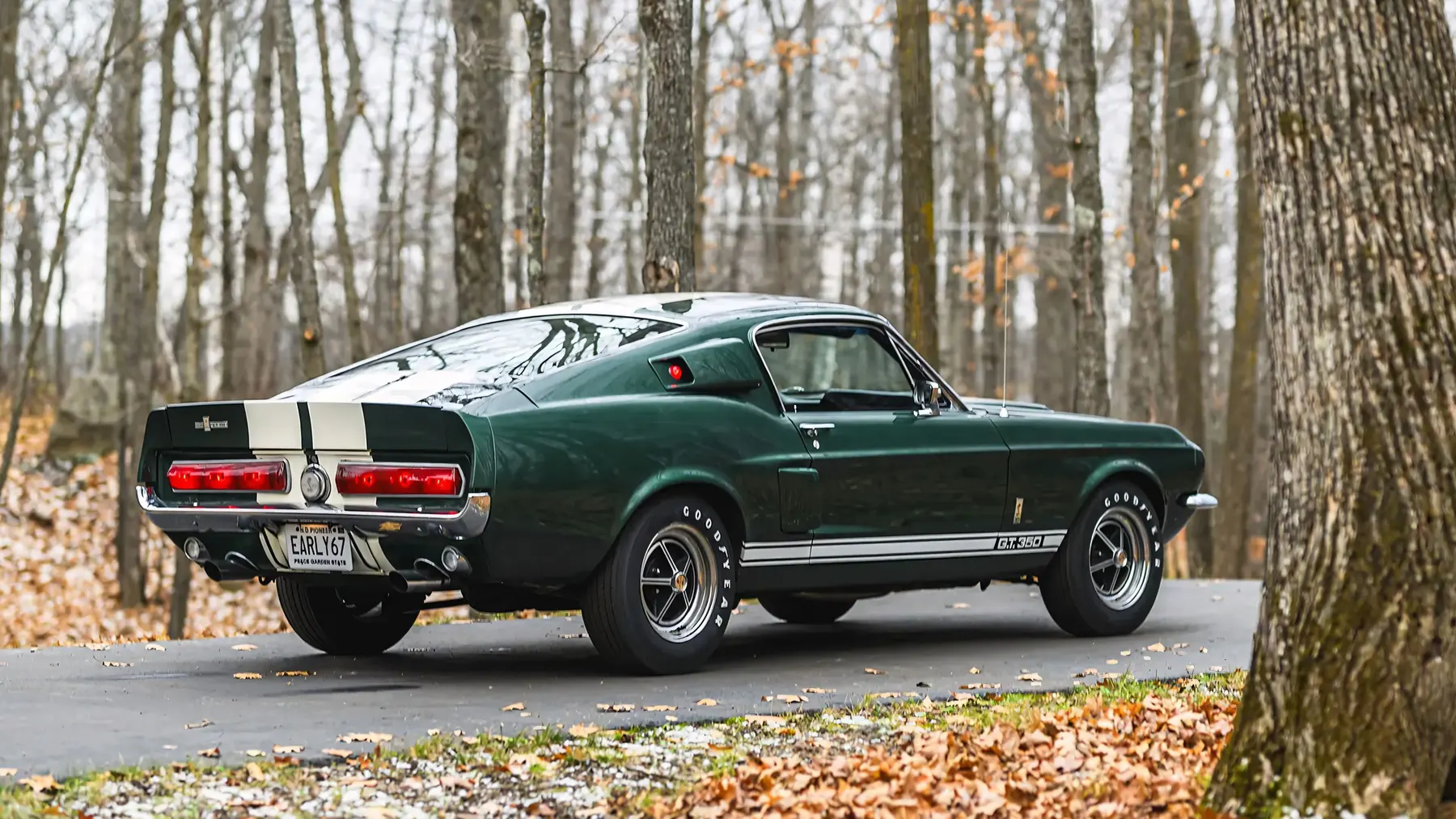
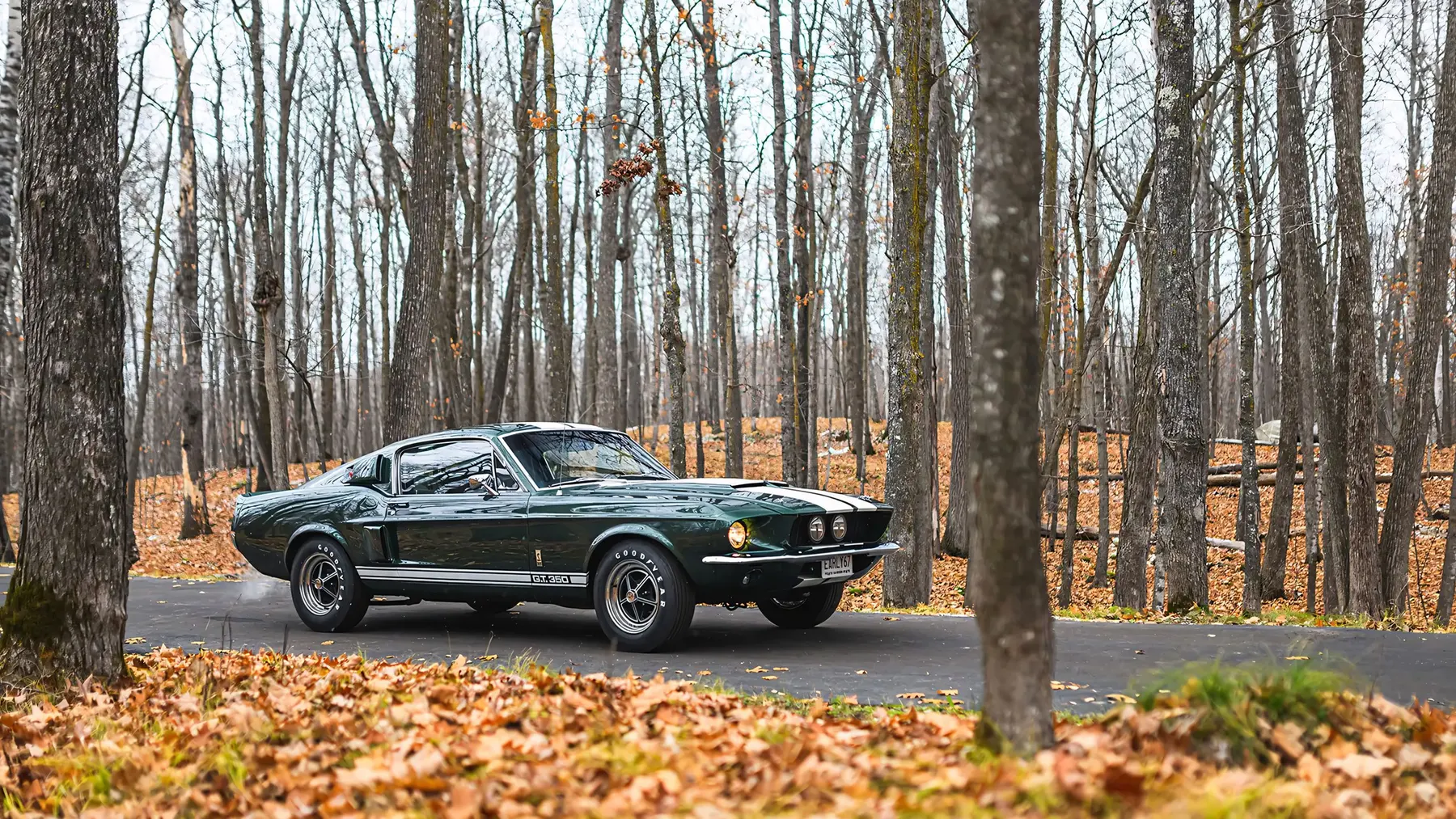
1967 Shelby GT350 Fastback

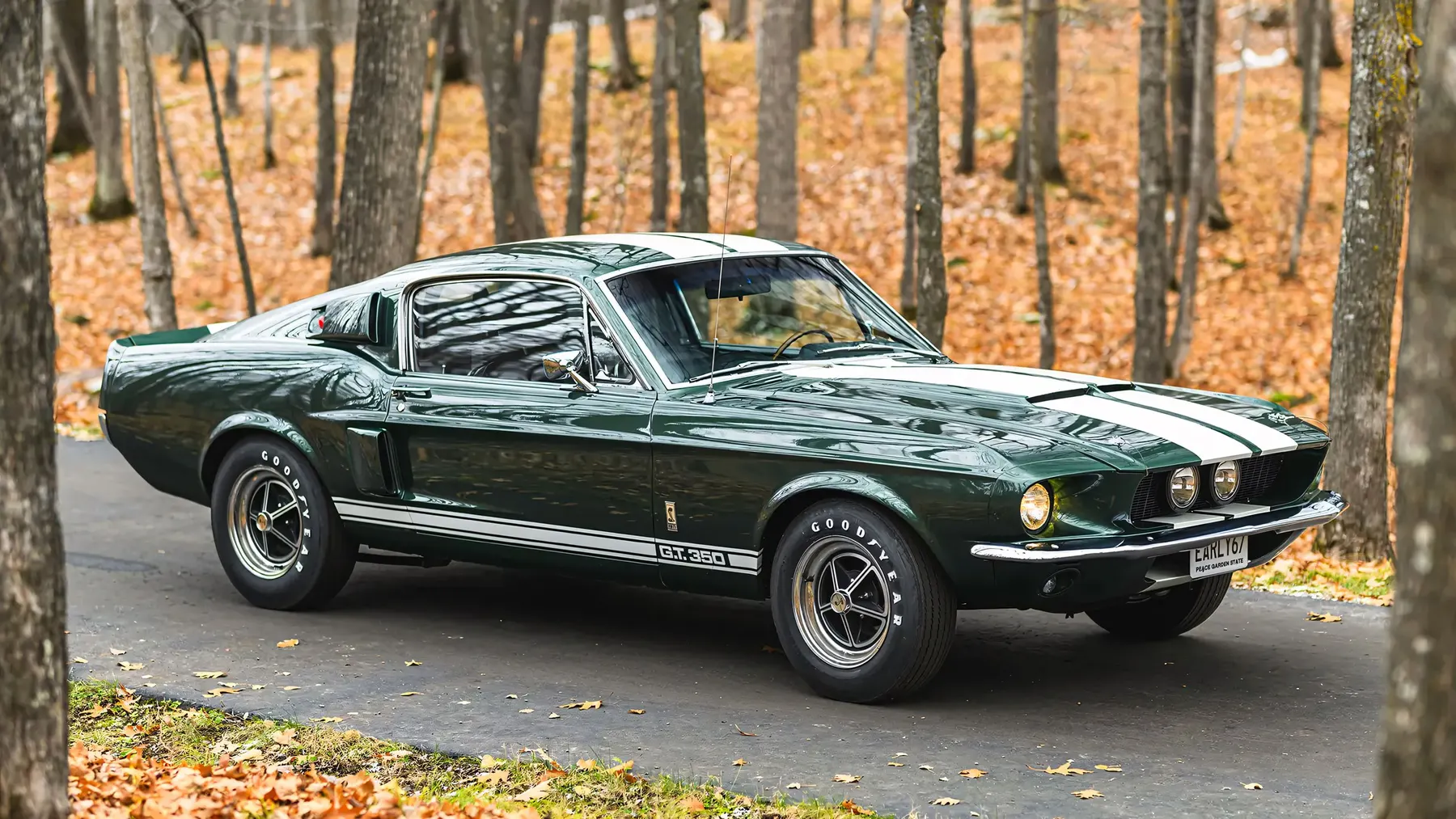
Images: Alex Bellus / RM Sotheby's
When Ford launched the Mustang in April 1964, it got nearly everything right except the engineering. Underneath the handsome long-hood, short-deck body was a compact car platform derived from the Falcon, built around a live rear axle, drum brakes on most variants, and suspension calibrated for comfort rather than cornering. The Mustang looked like a sports car and sold in extraordinary numbers partly because of that resemblance, but anyone who drove one hard understood that the appearance and the mechanical reality were separate things. Carroll Shelby, Ford, and a small team of engineers in Los Angeles set about closing that gap.
The GT350 emerged from an arrangement that suited everyone involved. Ford needed the Mustang to earn genuine performance credentials - not just brochure performance, but the kind that came from racing results and from specialist reviews that treated the car as competition equipment. Shelby needed a new project and a working relationship with Ford. The SCCA’s B-Production road racing class offered a clean target: develop and homologate a modified Mustang fastback as a credible competition machine, then sell sufficient examples to the public to satisfy the rules. The car that emerged from Shelby American’s facility near Los Angeles International Airport over the winter of 1964–65 was not a Mustang with a few go-faster parts bolted on; it was a rethought vehicle that borrowed the Mustang’s body and drivetrain components as raw material rather than as a finished product.
The 1965 GT350 was only available as a fastback. The coupe and convertible Mustangs were irrelevant to the brief - the fastback offered better torsional rigidity for competition use, and aesthetically it wore Le Mans-style blue centre stripes over Wimbledon White with far more authority than either alternative body style would have managed. Shelby began with the K-code Mustang, which meant Ford’s own 289 cubic inch (4.7-litre) HiPo small-block V8 producing 271 bhp. That engine was a starting point rather than an endpoint.
Ken Miles, the British-born racer and development engineer who had worked with Shelby on multiple projects and whose mechanical intuition was exceptional, played a central role in shaping the GT350’s dynamics. The suspension work was extensive and systematic. At the front, Koni adjustable shock absorbers replaced the stock units, geometry was revised, and a Monte Carlo bar - a bracing strut bolted across the engine bay between the inner wings - was added to reduce chassis flex under cornering loads. At the rear, the leaf springs were repositioned in new mounting perches set further outboard, reducing the tendency for the axle to hop under hard acceleration. Koni units went in at the rear as well. The ride height dropped, and front disc brakes, which Ford offered as a performance option, were standardised. The transformation in handling character compared with a standard Mustang was significant and immediately apparent to anyone who drove both cars back to back.
Shelby’s engine modifications centred on improving airflow and reducing mechanical restriction. A Holley 715 cfm carburettor was mounted on an aluminium high-rise intake manifold, and the factory exhaust manifolds were replaced with Tri-Y tubular headers. The valve timing was revised. The official output figure was 306 bhp gross, and while gross horsepower measurements of the era had a well-understood tendency toward optimism - recorded without ancillaries, under idealised conditions - the modified engine was demonstrably stronger and far more responsive than the standard unit. On cars fitted with the optional side-exit exhaust pipes, routed below the door sills to exit behind the front wheels, the 289’s bark crossed into something you either loved completely or found entirely unsuitable for daily use.
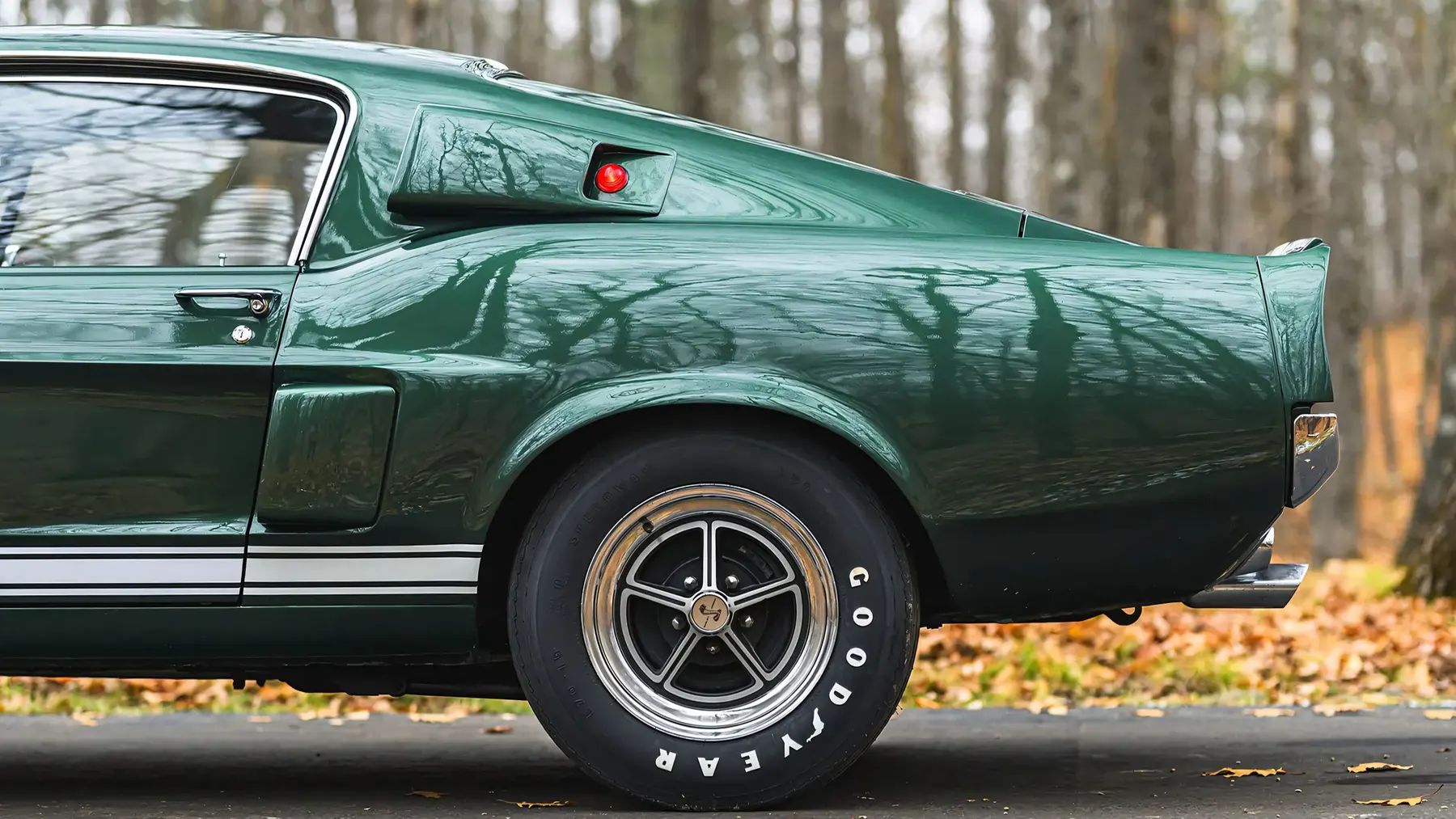
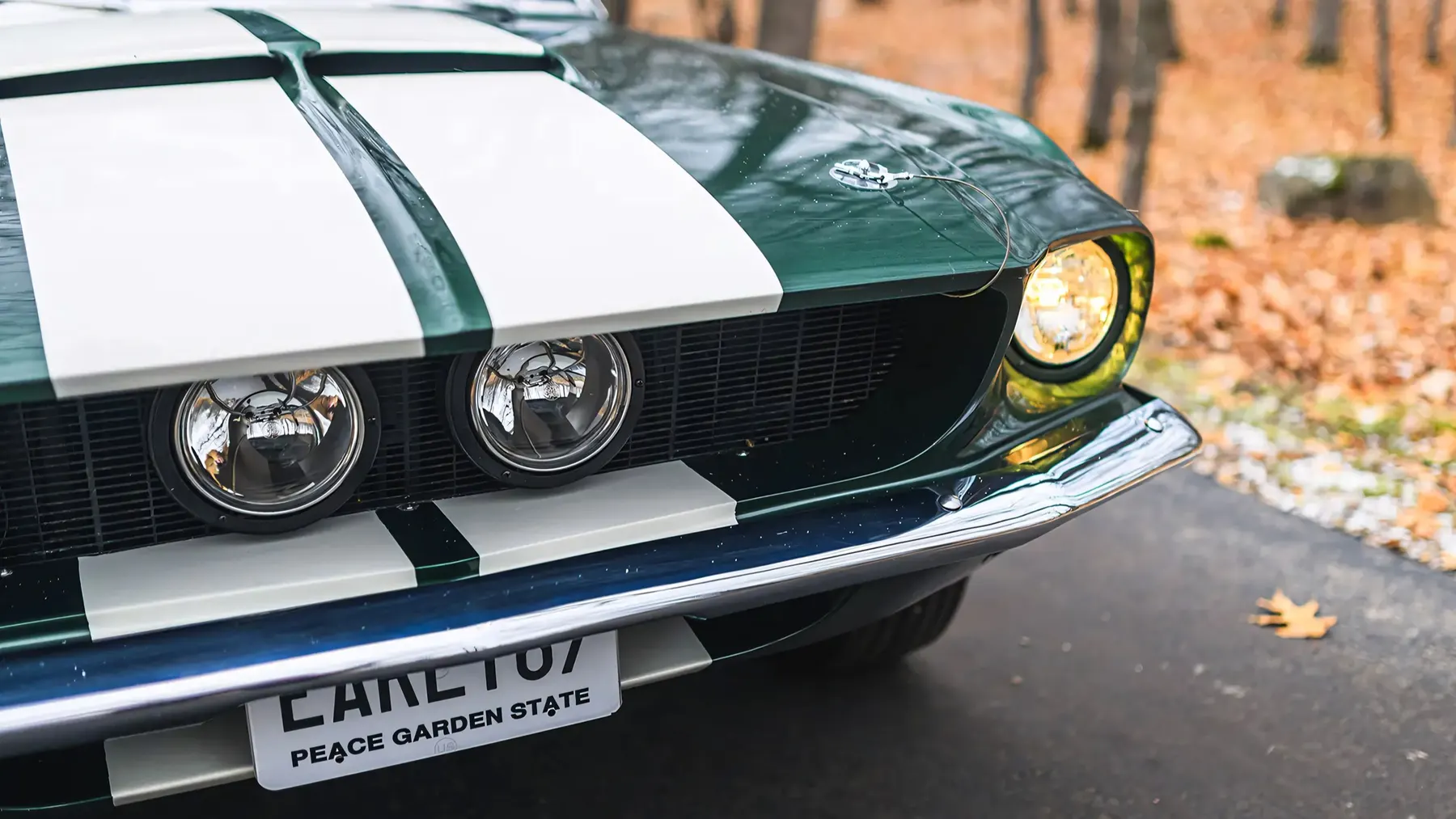
Several other details signalled the 1965 car’s purpose. The Mustang fastback’s small louvred rear quarter vents were replaced with fixed plexiglass panes. The bonnet was a fibreglass replacement, lighter than the steel factory item and secured at the leading edge with Dzus quarter-turn fasteners rather than a conventional catch - a direct borrowing from racing practice that made rapid bonnet access straightforward. The rear seat was deleted entirely and replaced with a fibreglass shelf, allowing the GT350 to be classified as a two-seater for SCCA homologation purposes. These were functional choices, and they gave the interior a stripped, purposeful quality that some buyers appreciated and others found bewildering in a car sold through conventional Ford dealerships to customers who hadn’t necessarily requested something with the day-to-day temperament of a race car.
On circuit the results validated the approach. Jerry Titus took the 1965 SCCA National B-Production Championship in a GT350, and the R-Model - the dedicated competition variant, of which approximately 36 cars were built - established the nameplate at the top of its class from the outset. The R-models received roll cages, additional fibreglass bodywork, further weight reduction, and an engine prepared to approximately 350 bhp. They were formidable when properly sorted, and the SCCA campaign demonstrated that Shelby and Miles had correctly diagnosed the standard Mustang’s problems and built genuine solutions rather than cosmetic ones.
When the street GT350’s chassis was loaded correctly - approaching a fast corner with confidence, on a smooth road, with the driver properly committed - it rewarded with a precision and aliveness that no standard Mustang could approach. The steering was heavy but quick and honest, the front end progressive, and the 289’s power delivery was strong and enthusiastic without the blunt-instrument quality that would arrive in the bigger-displacement muscle cars a few years later. It felt like a purpose-built machine because, within the constraints of production car engineering, it was.
The Detroit Locker rear differential, however, was not a comfortable companion in everyday conditions, and understanding it is essential to understanding the 1965 GT350’s character and limitations. Fitted as standard to every car that year, the Locker operates differently from a conventional limited-slip unit: it locks completely under straight-line acceleration, delivering power to both rear wheels simultaneously, then disengages abruptly as cornering forces cause the wheels to turn at different speeds, then snaps back into lock on the next hard acceleration. At a race circuit, with a skilled driver anticipating each transition, it worked extremely well. On a public road - navigating a tight turn, manoeuvring in a car park, making a slow U-turn - it lurched, groaned, and occasionally caused the rear end to step sideways without warning. Period road testers noted this with varying degrees of diplomatic language; several expressed genuine concerns about whether the car was appropriate for buyers who were not experienced racing drivers. The Locker was made optional for 1966, with Ford’s Traction-Lok available as a more predictable alternative, and the change was broadly welcomed even by those who appreciated the original’s competition intent.
The suspension’s firmness compounded this. What worked superbly on smooth asphalt transmitted poor road surfaces directly to the driver without apology. Cabin noise was considerable regardless of exhaust configuration, the fixed plexiglass rear windows offered no ventilation, and heat management in summer required a certain commitment to the experience. The deleted rear seat made occasional use as a 2+2 impossible, and the stripped interior sat somewhat awkwardly with the car’s position as a Ford dealer product aimed, at least in part, at buyers who hadn’t asked for a race car that happened to have number plates.
The 1966 model year addressed some of this, at a cost. Production increased substantially, to approximately 2,380 cars. The rear seat returned as an option. New colours appeared alongside the original white. The Traction-Lok became standard. These were sensible adjustments, but they began the process of softening a car whose character had depended on its lack of compromise. The most striking addition was the GT350H, produced for Hertz’s Rent-A-Racer programme in a run of approximately 1,001 cars, predominantly black with gold stripes and available for hire at airports across America. The marketing concept was imaginative; the execution was instructive. A significant number of Hertz GT350Hs were returned at the end of rental periods with race tyres fitted, mechanical damage, and evidence of circuit use. The programme has since become part of the GT350’s mythology, but it also illustrated that the nameplate was already being asked to serve purposes well beyond what its original brief had intended.
That drift accelerated after 1966. For 1967, the GT350 was redesigned around the new and larger Mustang bodyshell, built under contract at a facility in Michigan rather than at Shelby American in Los Angeles, and joined by the GT500 with its 428 cubic inch V8. The cars grew in size, in equipment levels, and in the distance between their marketing claims and their mechanical substance. By 1969 and 1970, the Shelby GT350 had effectively become a Mustang with a different bonnet, striping, and badge package. The specific engineering purpose of the 1965 original - the repositioned springs, the homologation discipline, the Ken Miles input - was long gone.
What the first-generation cars represent is therefore something quite specific: a brief window in which a group of experienced engineers who understood racing took a platform they knew well and, with limited resources and clear objectives, made it into something the factory genuinely could not. The GT350 was not a comfortable car, not an easy car, and not a car that suited every buyer who wandered into a dealership attracted by the stripes. What it was, for those who met it on its own terms, was honest in a way that most production performance cars - then or since - never quite manage to be.
Join the discussion
Comments
Loading comments…
Leave a comment
Share a detail, memory, or perspective. Every comment is reviewed before publication.