Shelby GT350H: The Rent-A-Racer Shelby Never Wanted to Build
1966 Shelby GT350 H

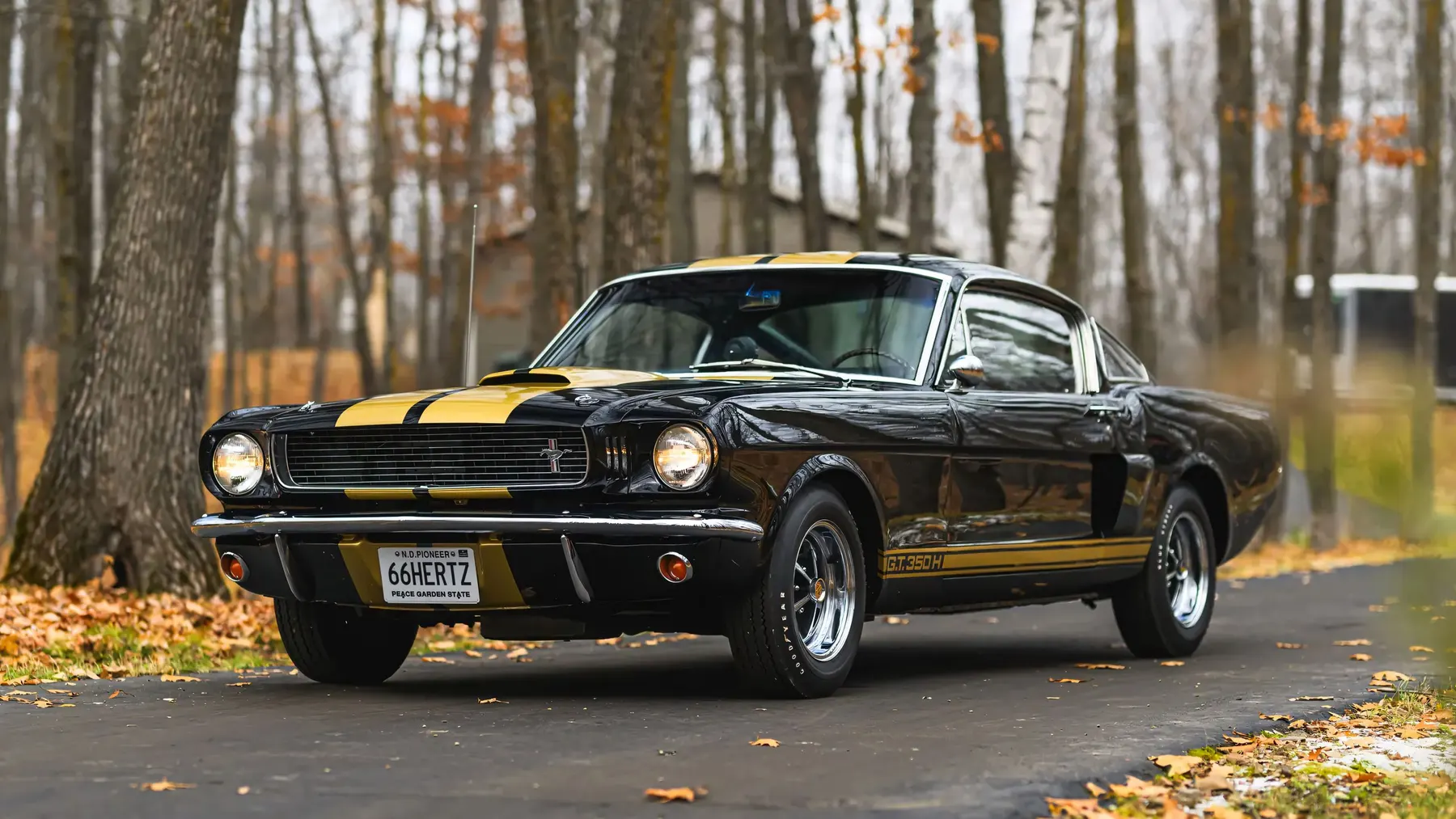
Images: Alex Bellus / RM Sotheby's
Carroll Shelby had, by early 1966, established the GT350 as the most driver-focused Mustang money could buy. He had stripped weight, stiffened suspension, fitted Koni shock absorbers, added a Monte Carlo bar to brace the cowl against chassis flex, and replaced the standard exhaust with side pipes that made the 289 sound like something genuinely dangerous. He had been emphatic on record that his car would never be offered with an automatic gearbox. Then Hertz called.
The deal that produced the Shelby GT350H was one of the more extraordinary arrangements in American automotive history - not because of what it created technically, but because of what it said about how performance cars could be sold. Hertz, fighting to differentiate its rental fleet against Avis’s relentless “We Try Harder” campaign, had identified an opportunity: offer something no competitor could touch. Its Sports Car Club had already made Corvettes and other sporting machinery available on rental counters, but the Shelby partnership took the concept somewhere stranger. Under the marketing banner of “Rent-A-Racer,” Hertz agreed to take approximately 1,000 Shelby GT350s - modified to fleet use but genuine in their mechanical specification - and place them at rental desks across the United States. The result was the GT350H, and the H stood, without elaboration, for Hertz.
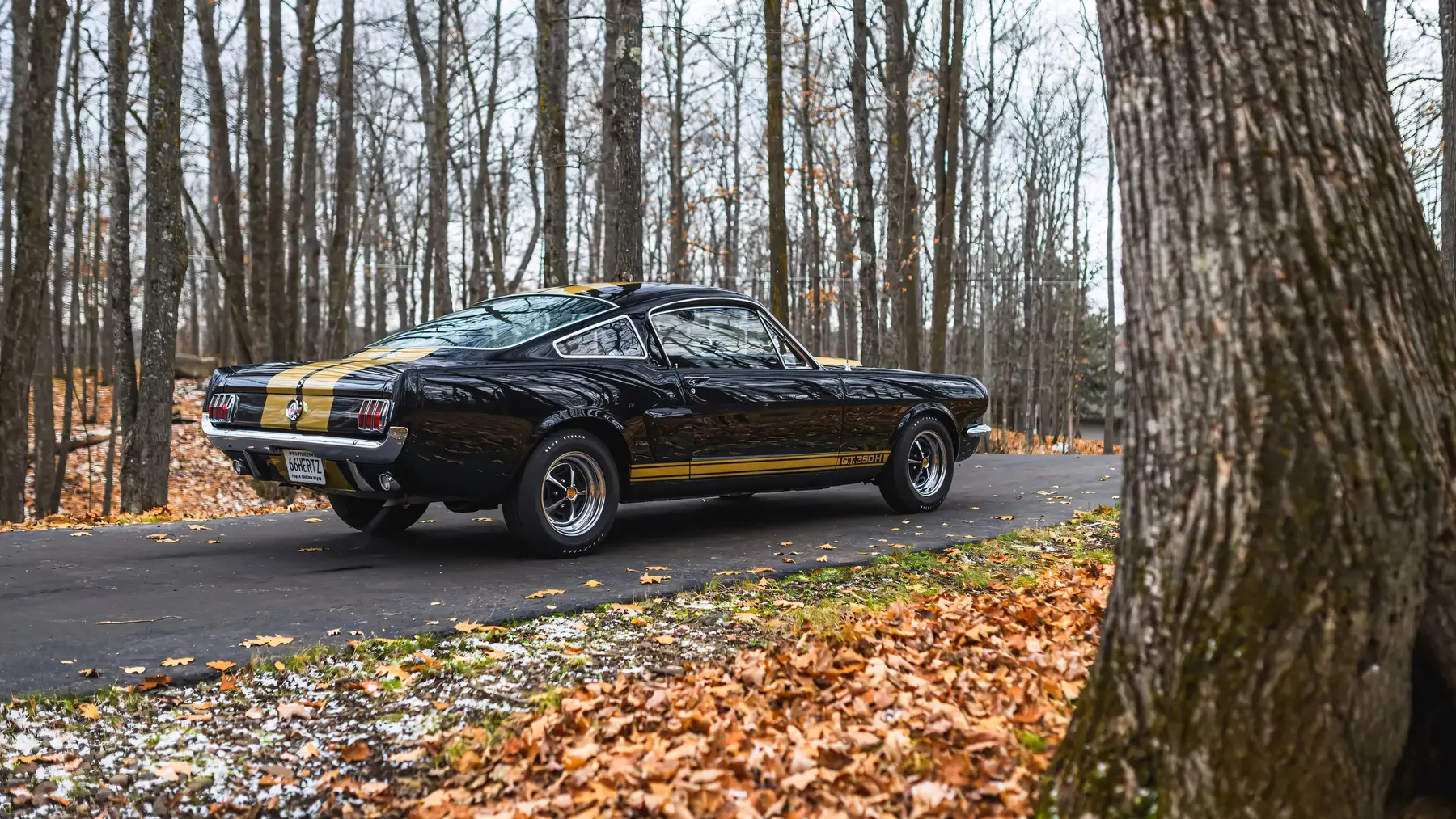
To understand why this mattered, it helps to understand what the standard GT350 was in the first place. The car had grown from Ford’s desire to homologate the Mustang for SCCA B-Production racing in 1965. Shelby American took the Fastback body and transformed it: the front suspension was re-engineered with relocated upper A-arm mounting points to correct the factory’s poor geometry, and the high-performance 289 cubic inch K-code V8 was given a larger carburettor, aluminium intake manifold, and a freer-breathing exhaust to bring claimed output to 306 bhp. The kerb weight came down to somewhere around 1,270–1,290 kg, giving the GT350 a power-to-weight ratio that put it ahead of almost anything Detroit was building at street-car prices. It was a purposeful, demanding machine - one that reflected Shelby’s racing background more than his commercial instincts.
By 1966, the GT350 had been modestly civilised. The rear seat returned as an option, the side-exit exhausts were no longer standard fitment, and production was expanding - around 2,380 units total for the model year, including the Hertz cars. The GT350H accounted for roughly 1,000 of those, which placed Hertz in the unlikely position of being the single largest customer for a Shelby performance car in a given year.
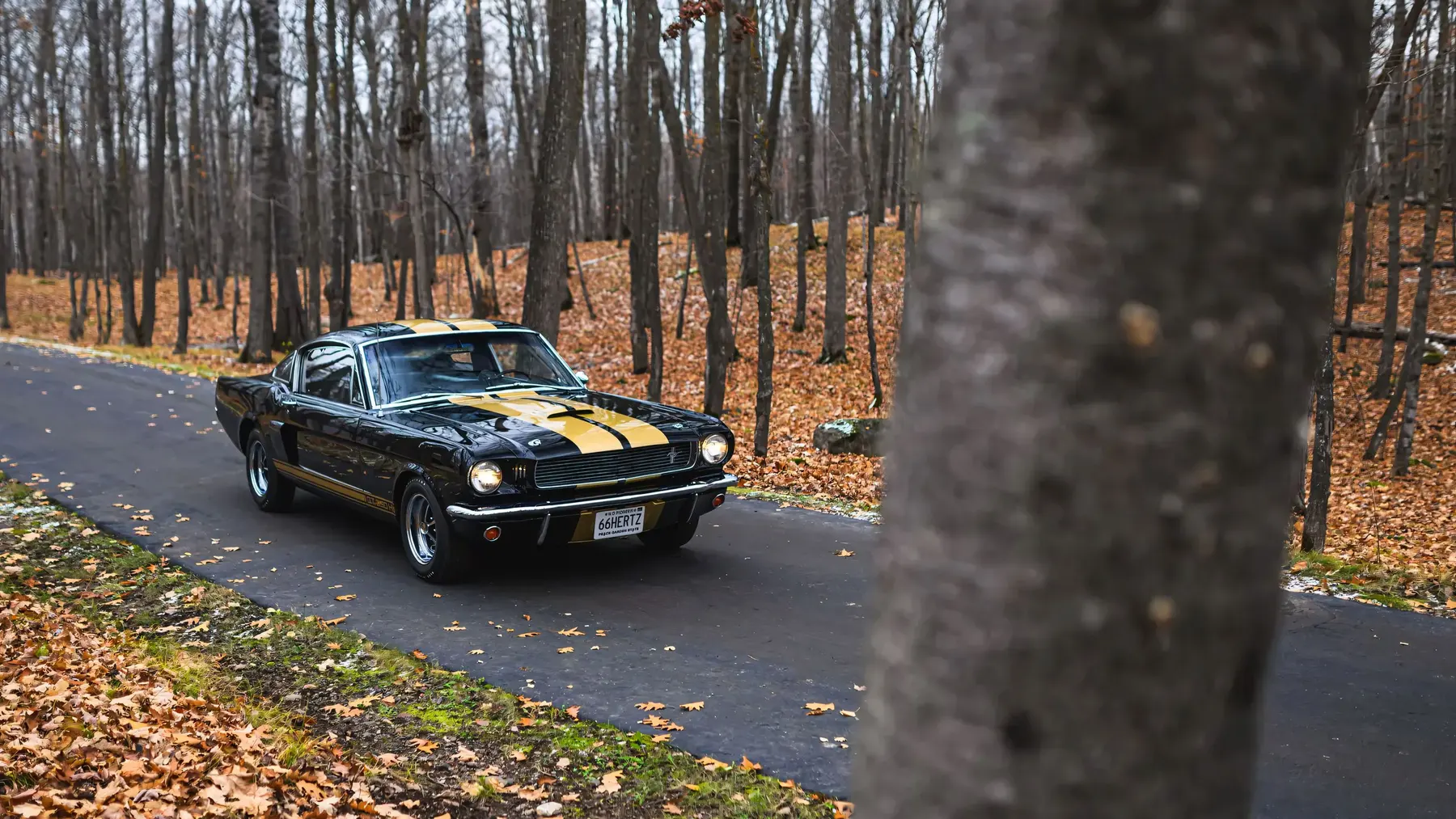
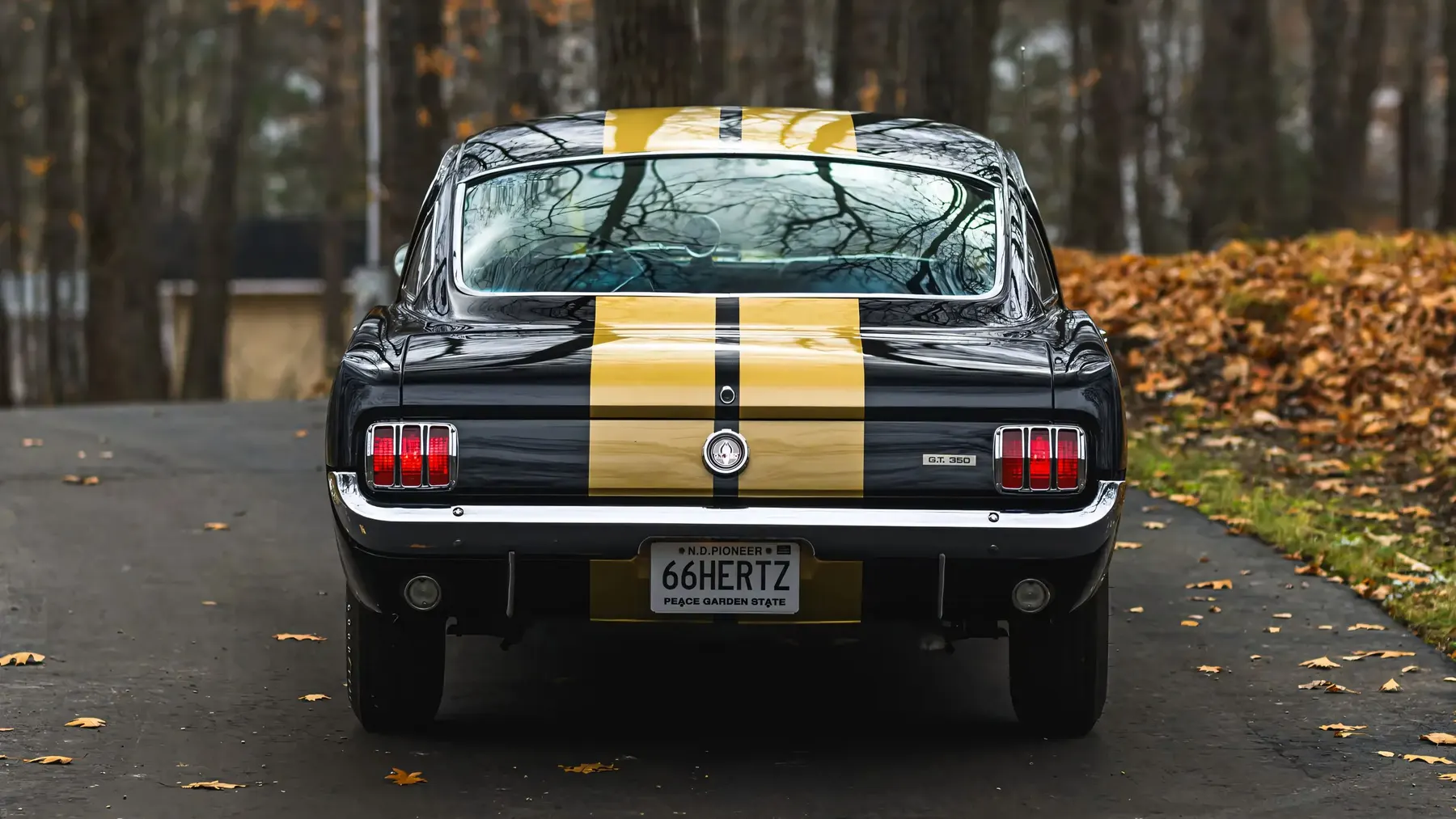
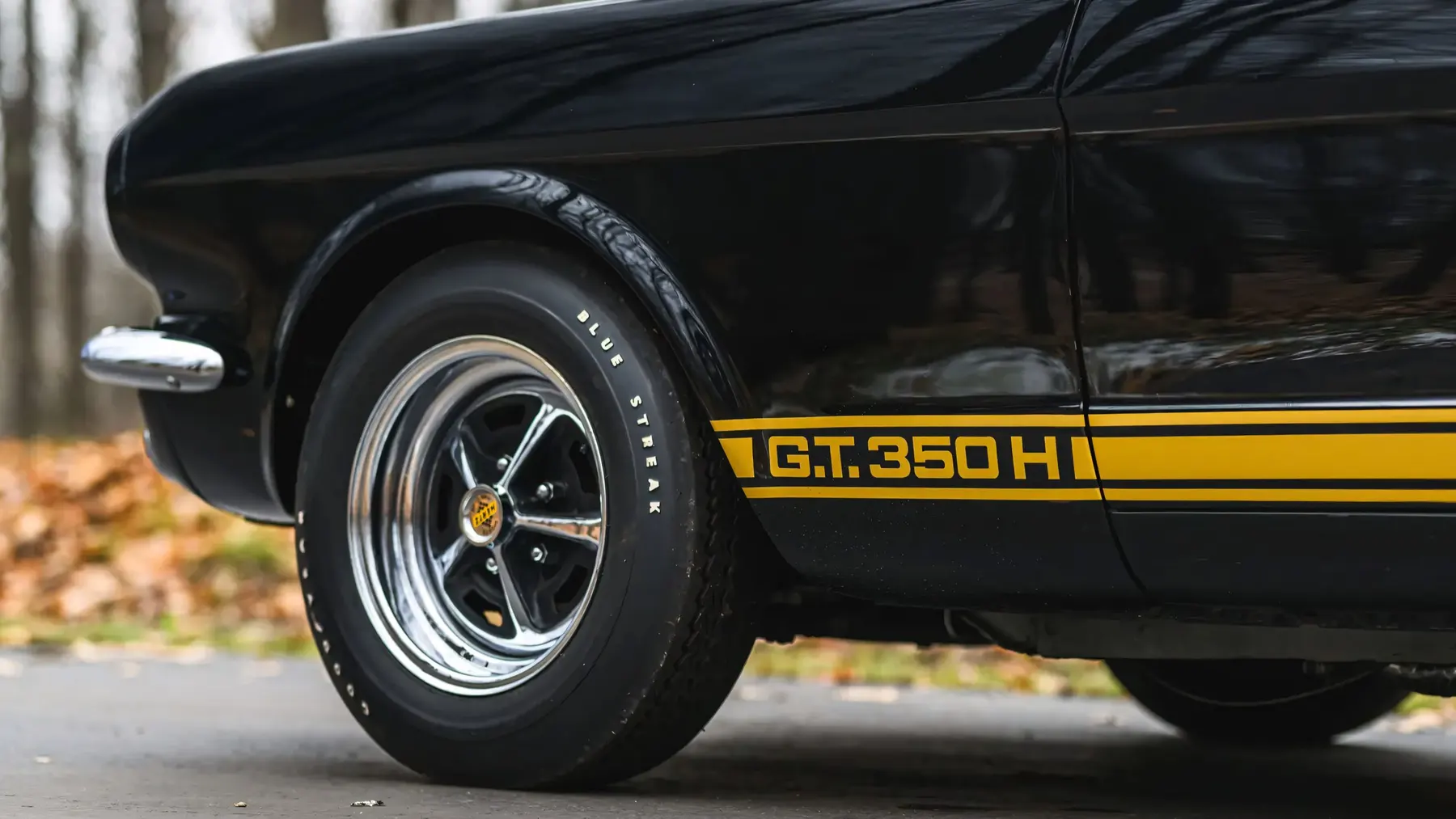
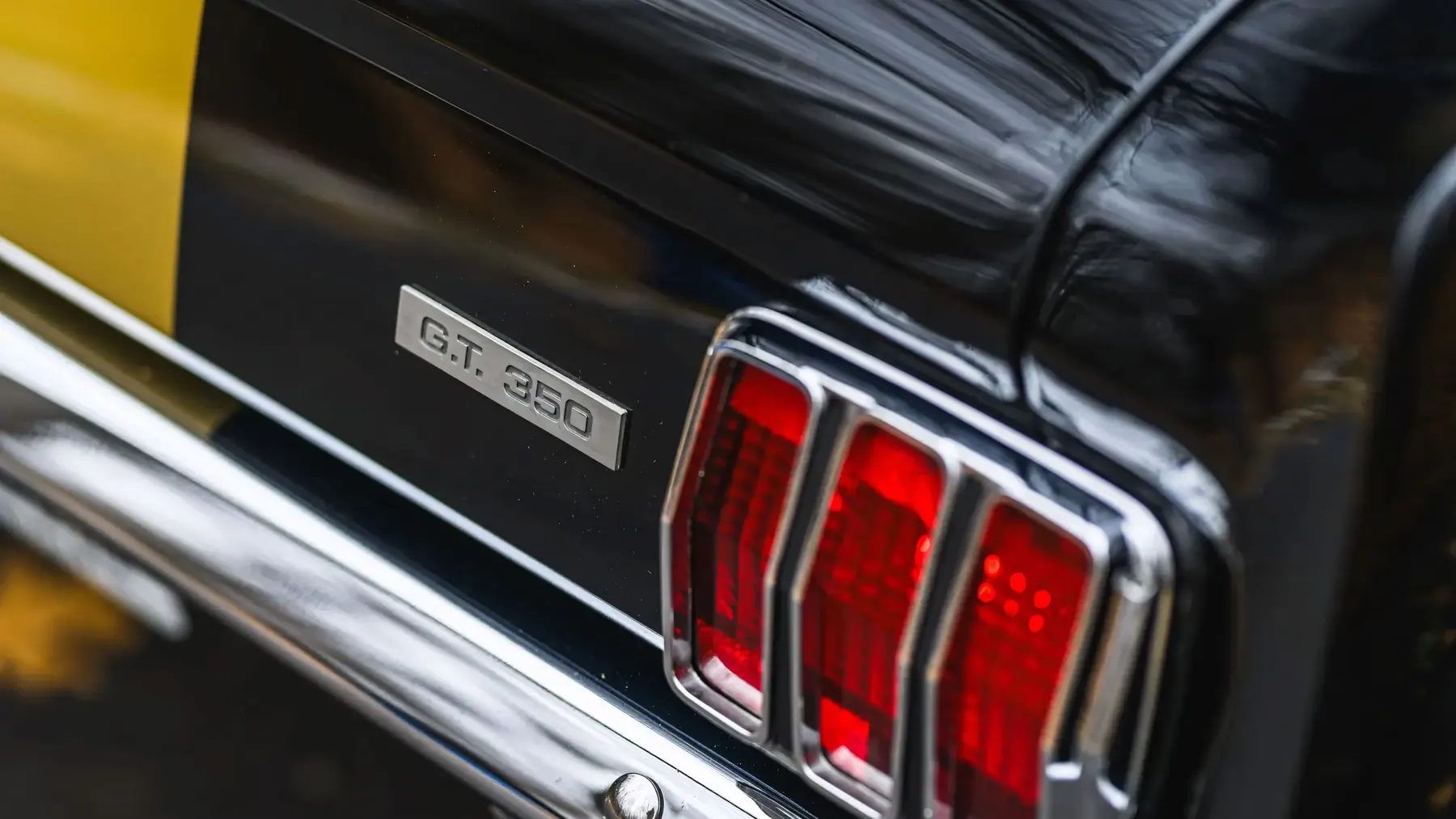
The Hertz cars were finished predominantly in black with gold LeMans stripes - a combination so specifically associated with the model that it remains the most sought-after configuration today. Smaller numbers were produced in white, red, green, and blue, all with gold striping, but the black cars are the ones that define the GT350H in collector culture and period photographs. Mechanically, the H cars received the same Shelby-modified 289 V8, the same Koni shock absorbers, and the same fibreglass hood with its functional centre scoop. From the outside, the only distinguishing detail over a standard GT350 was a discreet H badge on the front fenders.
The crucial internal difference was the gearbox. Shelby’s earlier declaration notwithstanding, Hertz insisted that the fleet cars be offered primarily with automatic transmissions. The practical logic was inescapable: a car handed to potentially hundreds of different drivers, many with no experience of a performance clutch, needed to be operable without the risk of a missed gear destroying the drivetrain on day one of a rental. The result was that approximately eight or nine in every ten GT350H cars left Shelby American fitted with the Ford C4 Cruise-O-Matic three-speed automatic - a capable unit in ordinary circumstances, but one entirely at odds with what the GT350 had been built to celebrate. A smaller number of H cars left the factory with the close-ratio Toploader four-speed manual, and those are considerably more representative of what the model was supposed to be.
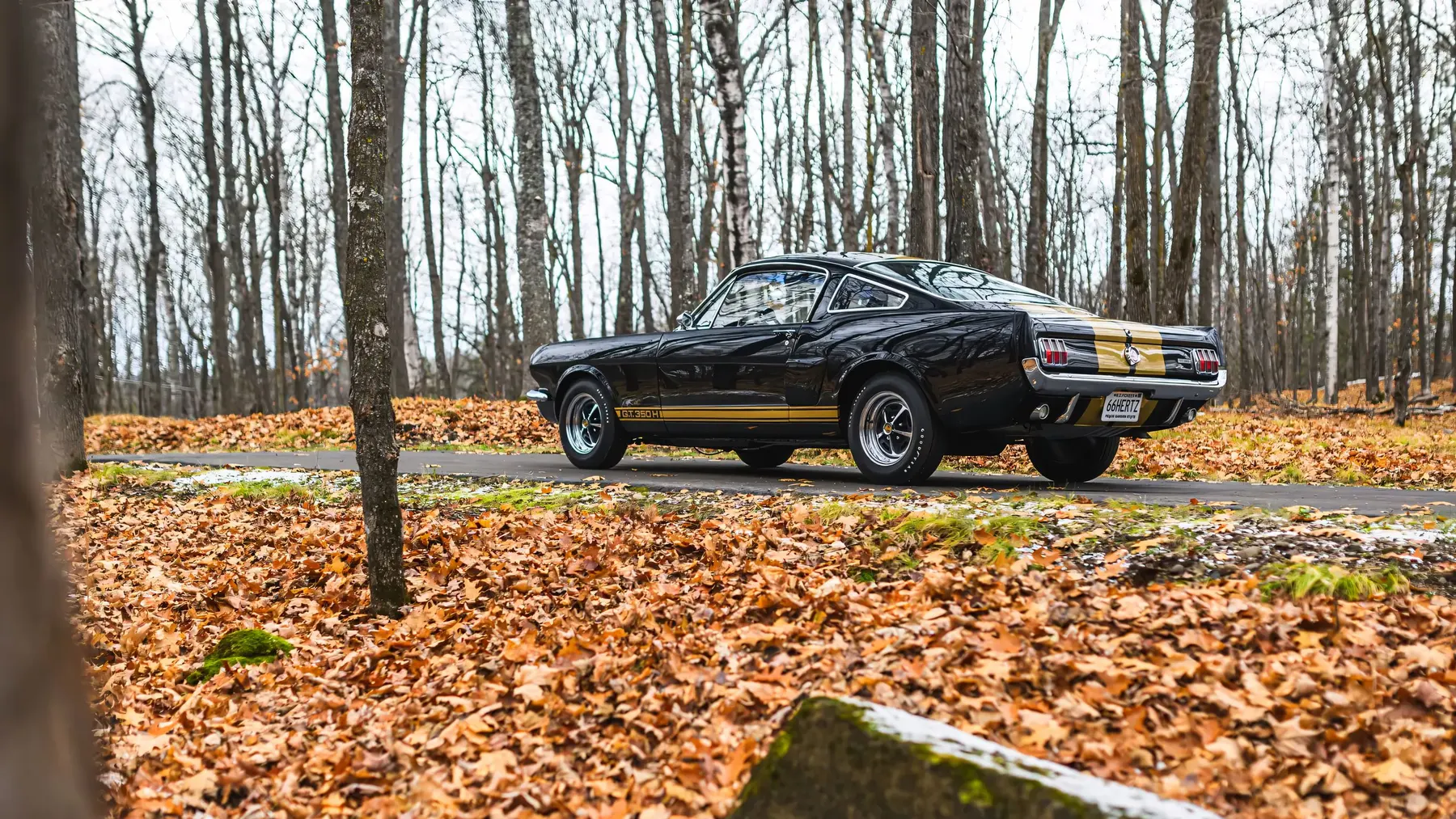
Hertz charged a premium for access. Rental rates in 1966 ran to approximately $17 per day plus a per-mile charge - meaningful money against the cost of a standard Mustang rental at the time. In return, the renter got something that actually worked as a sports car. The 289’s tractability at low revs made it manageable in urban traffic, but the engine genuinely came alive above 4,000 rpm, with a mechanical urgency no standard pony car could match. Hertz’s own marketing called it a Racing Car You Can Rent, and while that was somewhat optimistic, it was not fundamentally dishonest.
What nobody had fully anticipated was how literally some customers would take that invitation. Renters in cities near racetracks discovered, quickly, that the GT350H was eligible for local drag strip events on weekend evenings. The cars went to Pomona, to Englishtown, to strips across the South and Midwest, were run through the quarter-mile, and returned to Hertz on Monday morning. This is not automotive mythology: it is documented in period correspondence and contemporary racing publications. Hertz was, effectively and inadvertently, subsidising grassroots motorsport participation for anyone who held a driving licence and a credit card.
The more troubling version of the story involves engines. The 289 High Performance unit in the GT350H was worth considerably more on the used market than the standard Mustang 289 fitted to base Fastbacks of the same era. The persistent claim - and it has enough documented instances to qualify as more than mere legend - is that some renters arrived at rental counters driving their own standard Mustangs, removed the Shelby engine during the rental period, installed their own lower-specification unit, and returned the car to Hertz with nothing obviously amiss. The financial logic was straightforward: keep the Shelby unit, return the car with whatever sat beneath the scoop. Whether Hertz’s inspection process was thorough enough to consistently identify such swaps is debatable. What is not debatable is that a significant number of surviving GT350H cars today carry engines whose numbers do not correspond to original documentation - a provenance problem that has generated enormous discussion among registrars and collectors, and that makes authenticating an H car considerably more complicated than authenticating a standard GT350.
The automatic transmission question deserves direct treatment. For the nine-in-ten GT350H cars that left Shelby American with the C4, the driving experience is materially different from what Carroll Shelby had built the GT350 to deliver. The automatic permits smooth, undramatic progress without the driver needing to manage the engine’s relatively narrow power band. Around town or on an open highway, the Shelby engine’s additional output is perceptible - it pulls harder and sounds considerably better than a stock 289 - but on a demanding back road, the car does not communicate the way a properly specified GT350 should. There is no tactile connection to the gearbox, no ability to exploit engine braking on the entry to a corner, no sense of active collaboration between driver and machine. The manual-transmission H cars, when they surface, are a different proposition entirely: genuinely involving, properly connected to the road, and consistent with the GT350’s original intent. But they account for a small minority of production, and their rental history raises as many questions about originality as the automatics do.
Hertz returned the cars to the used market after the rental period ended, and many entered private hands at competitive prices - where, it is reasonable to assume, some were purchased by people who had already spent a weekend with one and wanted the relationship on more permanent terms. The model’s combination of genuine Shelby specification and extraordinary rental history ensured it never faded from enthusiast memory.
The concept was revived twice in subsequent decades. In 2006, forty years after the original programme, a new GT-H appeared based on the S197 Mustang GT platform, again in black and gold, with Ford’s 4.6-litre V8 upgraded above standard Mustang GT specification. In 2016, a further anniversary version followed on the contemporary platform. Both were accomplished tributes with real commercial logic behind them. Neither generated the cultural charge of the original - because the original existed at a specific and unrepeatable intersection: American muscle at its least apologetic, rental car culture in the process of being reimagined, and the idea of leasing a competition-derived machine for a weekend still new enough to feel genuinely transgressive.
The GT350H’s enduring reputation rests on that specificity. It was not the most sophisticated or outright powerful performance car of 1966 - a Corvette 427 would leave it behind in a straight line, and the chassis, while transformed from the base Mustang, still reflected the period’s relatively crude understanding of suspension geometry. The automatic cars, which constitute the majority of production and the majority of survivors, lack the defining quality that made the GT350 worth commissioning in the first place. But the package - the black and gold livery worn by a machine that was genuinely capable, available over a rental counter, and entrusted to whoever showed up with a credit card - produced something more durable than any individual specification could: a story that almost no other production car can honestly claim.
Join the discussion
Comments
Loading comments…
Leave a comment
Share a detail, memory, or perspective. Every comment is reviewed before publication.