Ferrari 365 GTS/4 Daytona Spider: The Convertible That Closed an Era
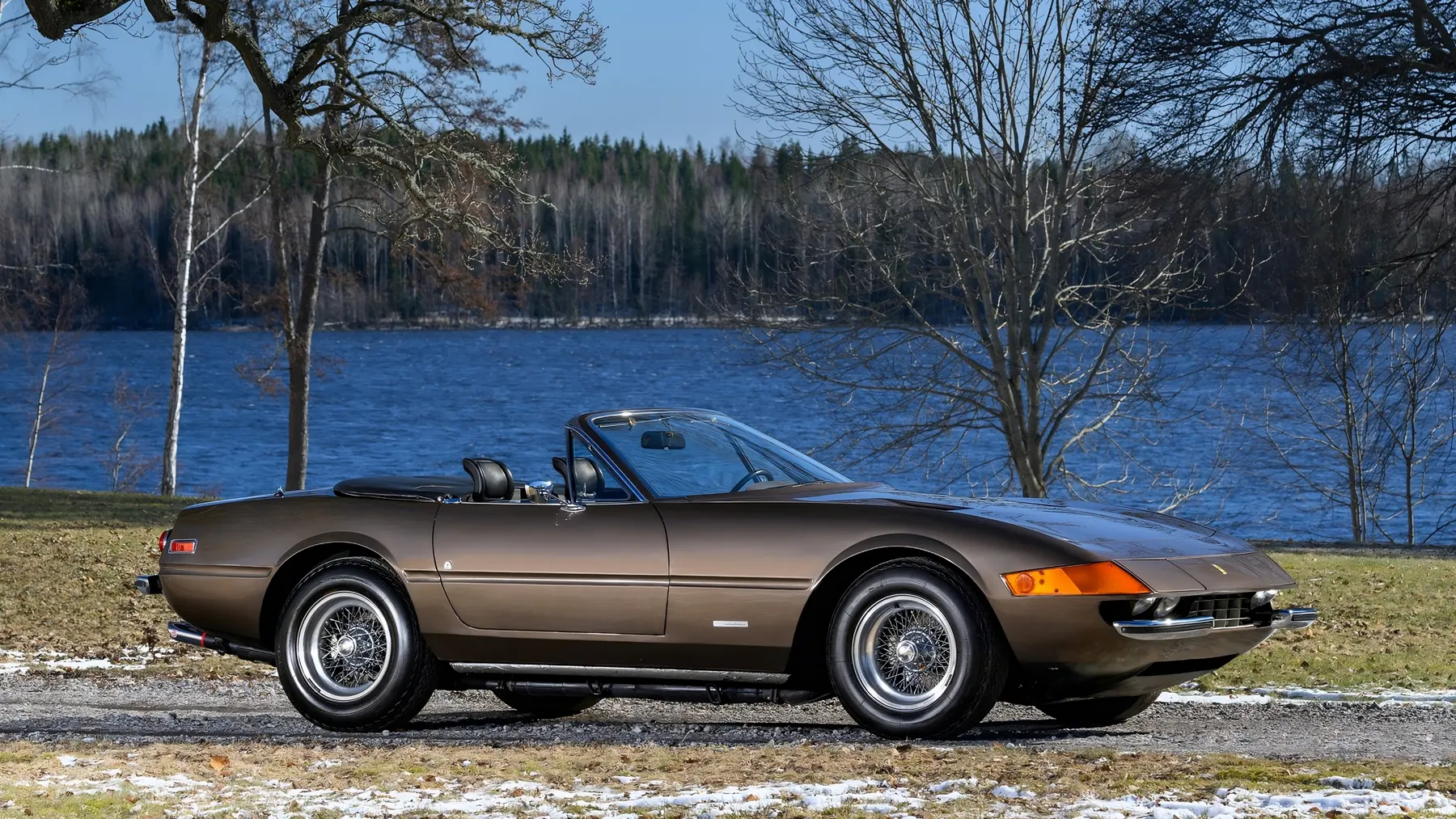
1973 Ferrari 365 GTS/4 Daytona Spider by Scaglietti

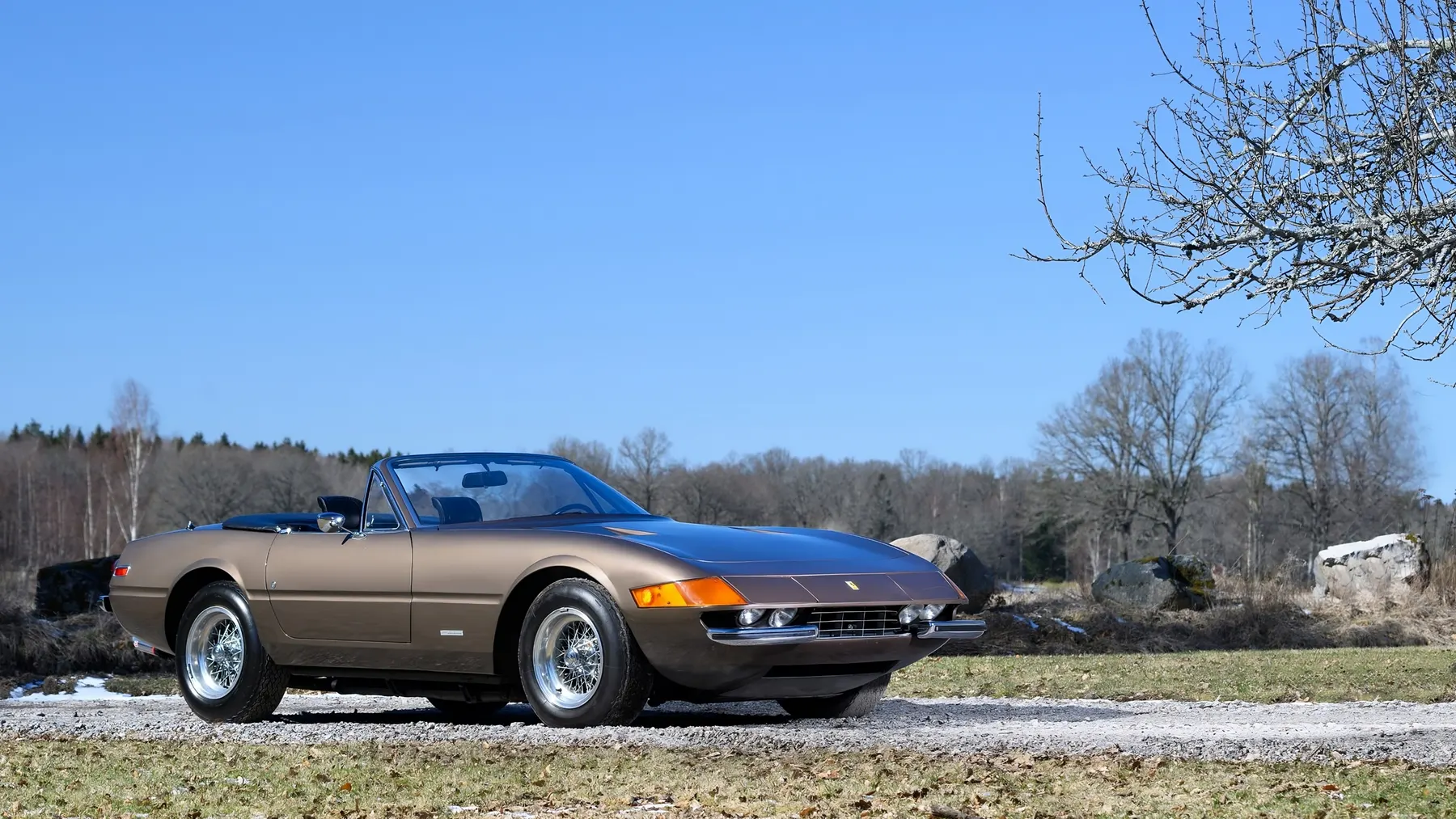
Images: Tim Scott / RM Sotheby's
Inside Maranello, building a soft-top version of Ferrari’s fastest, most uncompromising road car struck some of the men who had engineered it as close to reckless. Company folklore holds that Ferrari’s own engineers resisted the idea of an open Daytona, on the grounds that a car meant to cruise comfortably above 150mph had no business losing its roof. They built it anyway, and the result, the 365 GTS/4, went on to outlive those doubts entirely: it became one of the most coveted open Ferraris ever made, and, as things turned out, the last of its kind for a generation.
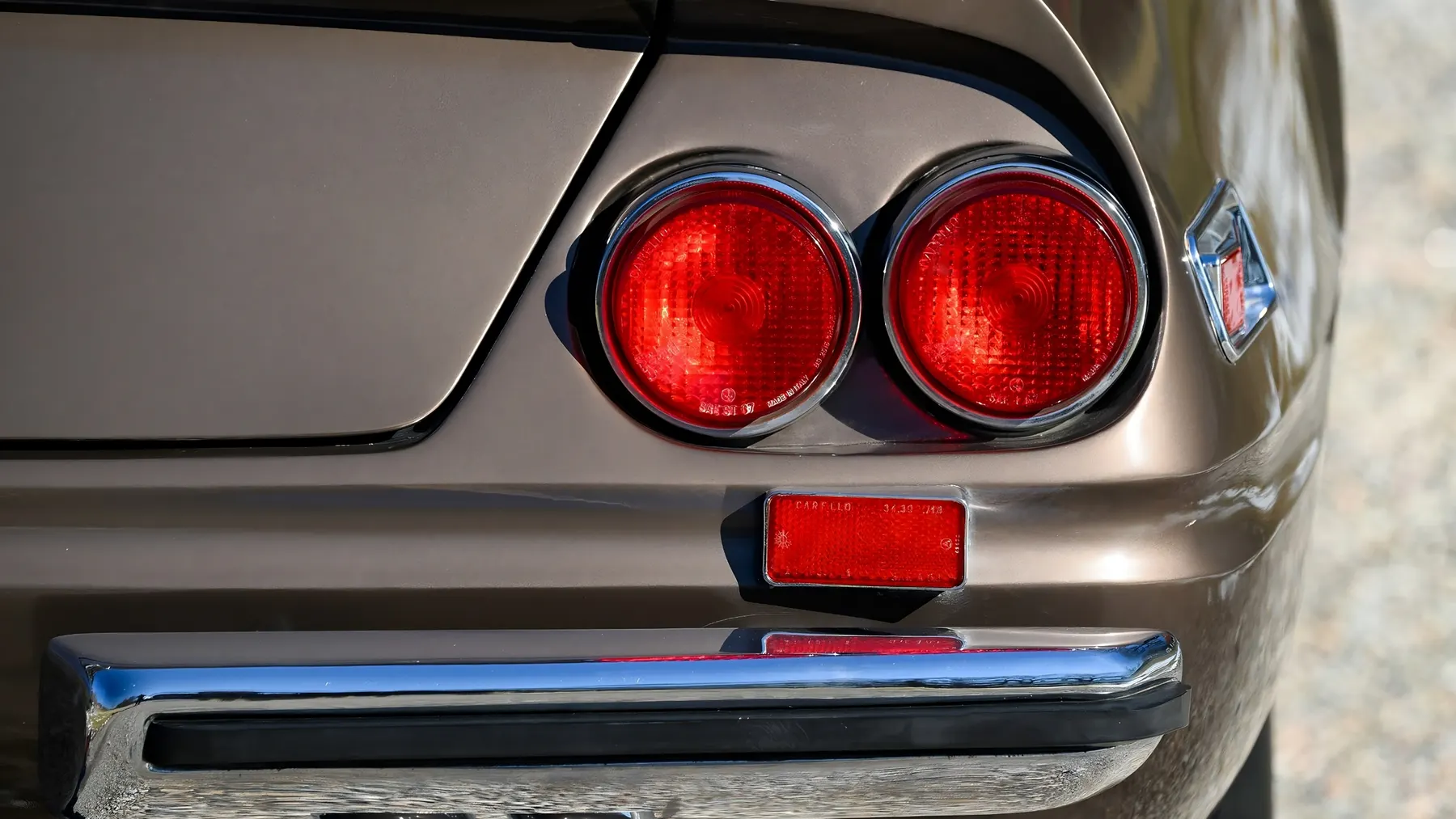
The story begins with the closed car. Ferrari unveiled the 365 GTB/4 berlinetta at the Paris Salon in the autumn of 1968 as the replacement for the 275 GTB/4, its Pininfarina-designed body built by Scaglietti in a mix of steel with aluminium doors, bonnet and boot lid. The car was almost immediately nicknamed “Daytona” by the press, an unofficial tribute to Ferrari’s 1-2-3 finish at the 1967 24 Hours of Daytona, though Ferrari itself has generally treated the name as unofficial rather than a factory designation. Leonardo Fioravanti’s shape for Pininfarina abandoned the curvaceous idiom of earlier V12 Ferraris for something flatter, sharper and altogether more aggressive: a long, wide nose tapering to a Kamm tail, with the headlights, on early cars, hidden behind a full-width band of acrylic glass. A change in US safety regulation banning covered headlights forced a switch to pop-up units from 1971 onward, a detail that came to define the model’s later production and remains one of the easiest ways to date a car at a glance. Underneath, a dry-sumped, four-cam evolution of Gioacchino Colombo’s classic V12 sat well back in the chassis, feeding a five-speed transaxle mounted at the rear axle for close to ideal front-to-rear weight distribution, an engineering approach shared with the 275 GTB/4 before it and one that gave the Daytona a poise its size and weight didn’t obviously promise.
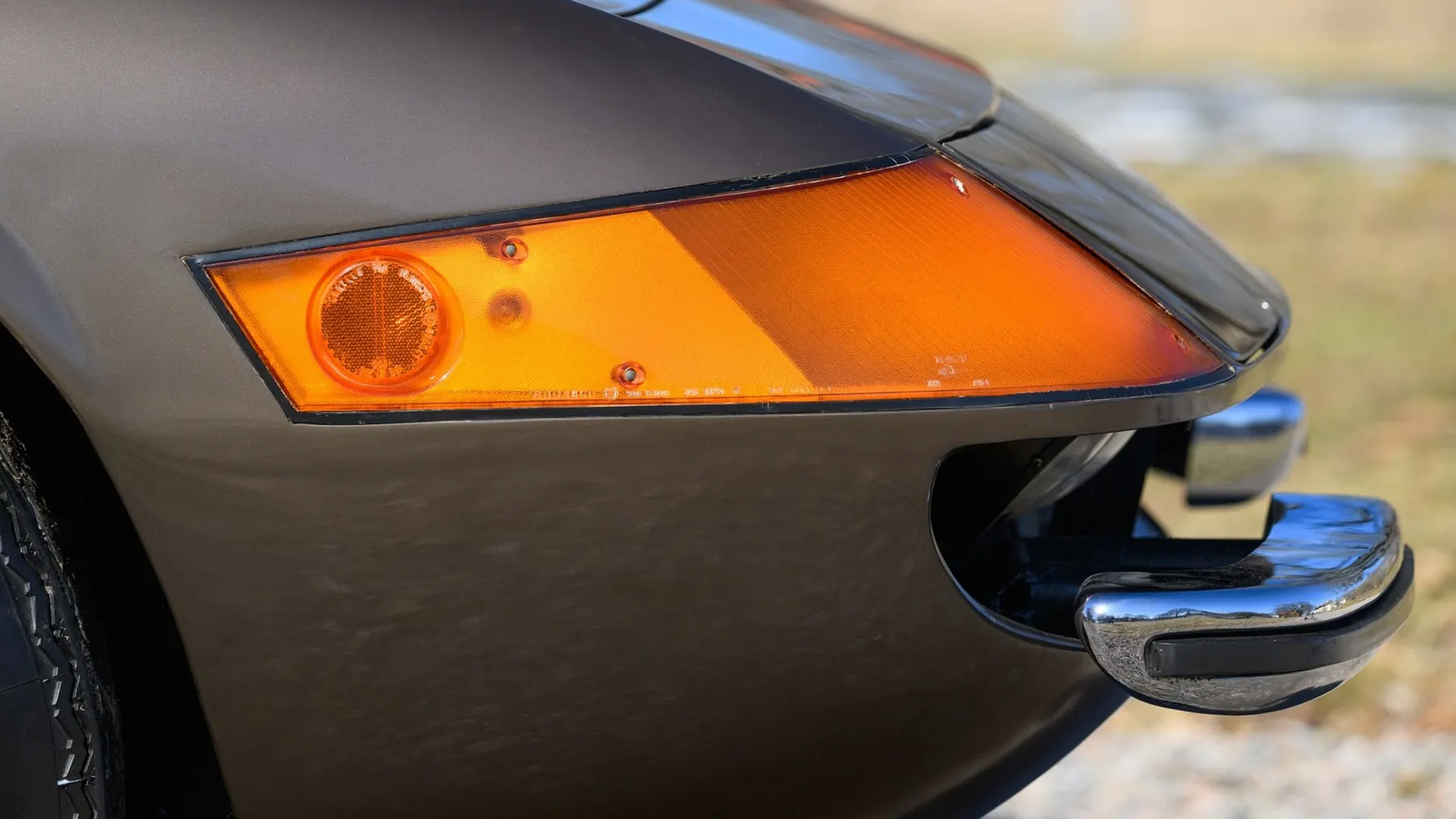
The open car followed roughly a year later. Ferrari announced the 365 GTS/4 at the 1969 Frankfurt Motor Show, a car visually identical to the berlinetta from the waist down, differing only in its folding canvas roof and reshaped boot profile, and it proved especially popular in the American market, accounting for something like a tenth of total sales across the whole 365 GTB/4 family from the time of its introduction. Turning a fastback coupe into a well-resolved convertible is rarely as simple as removing the roof, and the Daytona was no exception. The coupe’s tapering, unbroken profile had to be reworked with a broad, decked rear end to replace the roofline entirely, a far more drastic surgery than most cabriolet conversions require, yet the proportions held together with a lightness the closed car never quite managed. Mechanically the two cars were twins: the same 4,390cc, four-cam V12 with dry-sump lubrication, fed by six twin-choke Weber 40 DCN carburettors, drove through the same rear-mounted five-speed transaxle to independently suspended wheels on double wishbones, coil springs and hydraulic dampers at each corner, producing a claimed 352bhp. Torque is commonly quoted at around 320 lb-ft, though that particular figure isn’t corroborated by any period road test consulted for this piece and should be treated as an approximation rather than a verified factory number. American-market cars carried extra emissions hardware - a fast-idle device, exhaust manifold air injection and an electronic ignition system in place of the standard twin-coil distributor set-up used elsewhere. Standard road wheels were five-spoke alloy “star” items secured by a knock-off spinner on a Rudge hub, though US-market and certain other cars used a plainer centre-lock nut to satisfy local regulations; Borrani wire wheels remained available as a factory option throughout the run. Ferrari’s preferred spelling has also shifted over the years - a former company chairman was said to dislike “spyder” with a y, and most official references to the marque’s open-top cars now favour the plainer “spider,” the spelling used in the car’s own type designation.
Losing a roof is never free, structurally speaking, and Ferrari couldn’t simply cut the top off a Daytona and expect the body to behave. Spider bodies gained steel inner front fenders in place of the coupe’s lighter fibreglass items, along with slightly heavier-gauge frame tubing, to compensate for the rigidity a fixed roof would otherwise have provided. It was a sound piece of engineering - later restorers would come to treat those steel fenders as one of the surest ways to tell a genuine factory Spider from a coupe that had been converted after the fact - but it also meant the open car carried a weight and cost penalty the berlinetta didn’t. Contemporary road testers never got the chance to weigh a Spider independently in the way they weighed the coupe; Road & Track’s October 1970 test of the closed 365 GTB/4 recorded a kerb weight of around 3,600lb, or roughly 1,630kg, noticeably heavier than the factory’s own quoted dry weight, and it’s reasonable to assume the Spider, with its extra bracing, sat a little above that figure still.
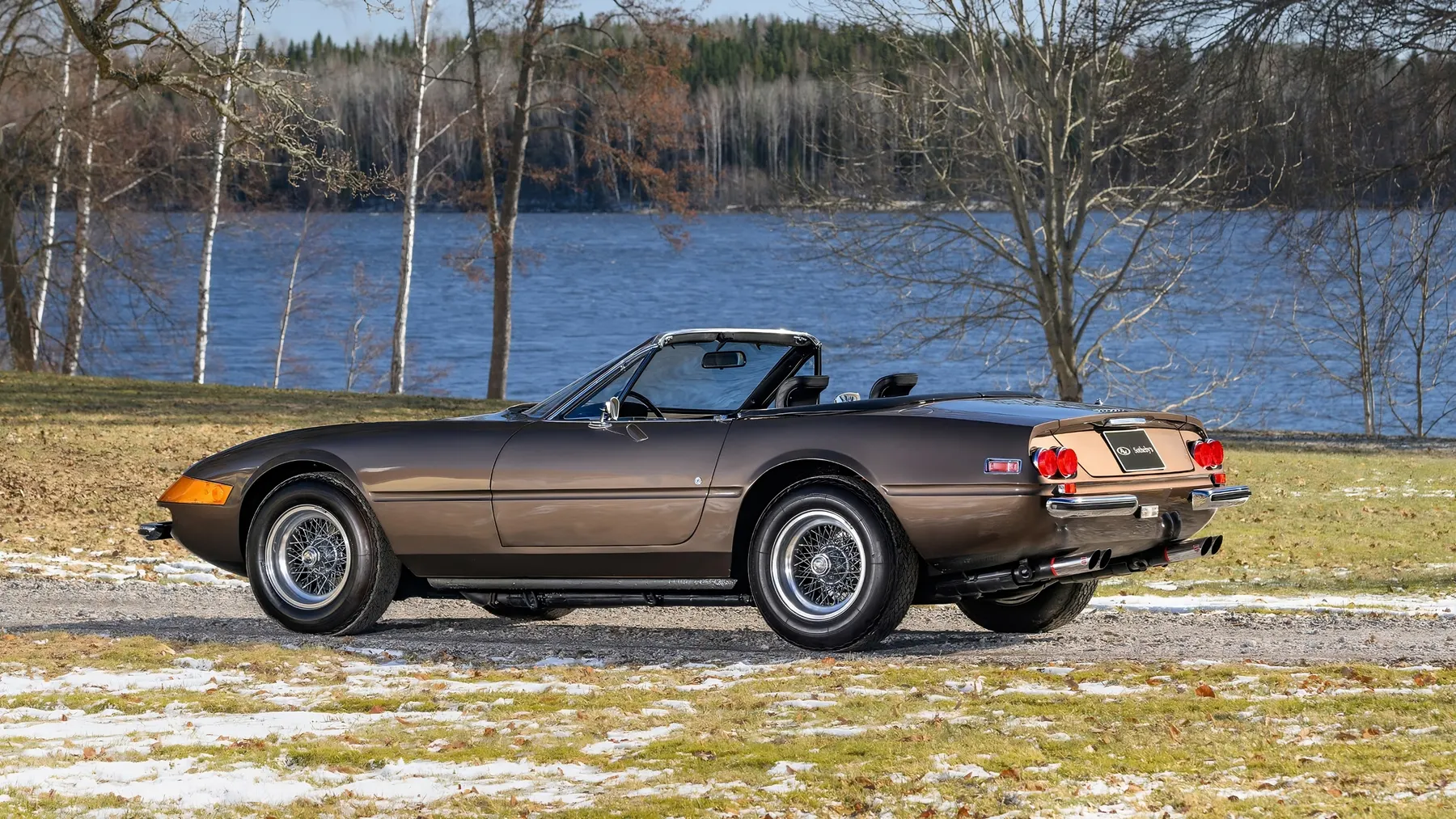
Performance figures for the two body styles were, by every account, essentially shared. Autocar’s road test of a 365 GTB/4, published in September 1971, recorded 0-60mph in 5.4 seconds, a standing quarter mile in 13.4 seconds at 104mph, and a top speed of 174mph that stood as the magazine’s fastest-tested road car for years afterward. Road & Track’s own test the previous year returned a slightly more modest 5.9-second 0-60 sprint and a verified 173mph top speed. At launch, that kind of pace made the Daytona, in berlinetta form, the fastest production car in the world, eclipsing Lamborghini’s glamorous, mid-engined Miura on outright speed even if not on visual drama. The Spider, sharing the driveline, could get close to those numbers, though its slightly greater weight and, with the roof stowed, worse aerodynamics meant it almost certainly never quite matched the coupe flat out; nobody in period seems to have published a rigorous top-speed test of an open Daytona to confirm exactly how much was lost. In 1971, Dan Gurney and Brock Yates drove a Daytona to victory in the inaugural Cannonball Baker Sea-to-Shining-Sea Trophy Dash, crossing the United States at an average of just over 80mph - a deliberately provocative demonstration, given the new lower speed limits of the era, of precisely the sustained high-speed touring the model was built for.
Living with the roof itself turned out to be the Spider’s least convincing feature, ironically enough, given that the roof - or its absence - was the entire point of the car. Period accounts describe the folding top as genuinely awkward to raise and lower, with sections that had to be guided carefully into place rather than falling naturally, seats that needed to be slid forward in their tracks to clear the folded mechanism, and fabric that could easily be pinched if the operator wasn’t careful. The plastic rear window, meanwhile, was the same material used in humble Fiats of the era and clouded over just as readily. None of that stopped the car looking handsome with the top raised - the steeply raked windscreen met the curved fabric roofline in a way that didn’t upset the car’s proportions, unlike a number of contemporary convertibles - but anyone expecting effortless open-top motoring to match the drivetrain’s effortless pace was in for a small disappointment.
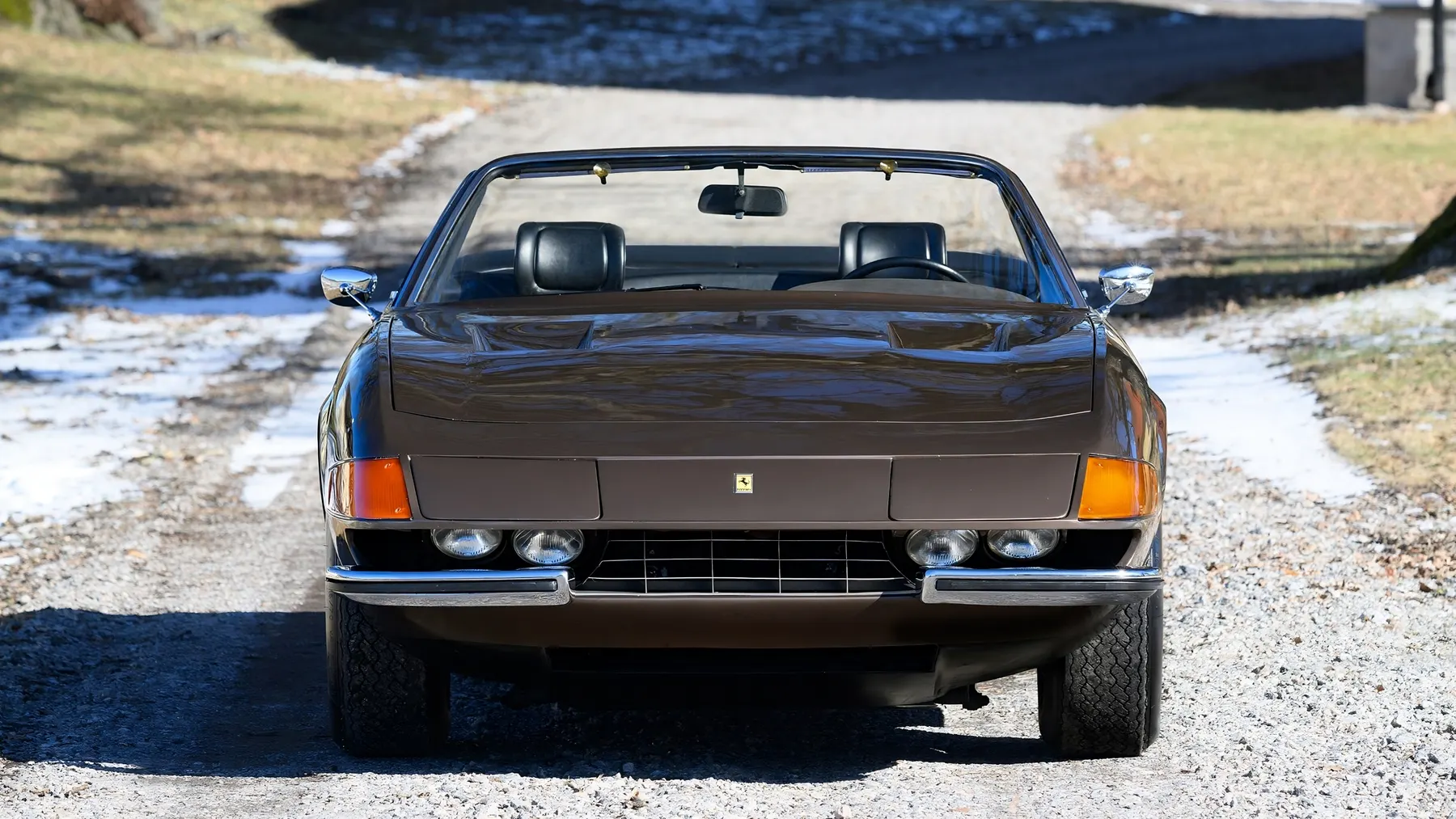
The Spider’s reception in period was also more muted than its current reputation suggests. Enthusiast and marque histories describe new Daytona Spiders sitting unsold in dealer showrooms well past their expected shelf life during the mid-1970s, as flashier, more modern-looking rivals from Lamborghini, De Tomaso, Bizzarrini, Iso and even Toyota captured the attention of exotic-car buyers and the motoring press, with the Daytona’s front-engined, front-radiator layout increasingly viewed as yesterday’s engineering next to the new wave of mid-engined exotics. Demand for the open car specifically was never enormous while it was in production, and the closed berlinetta generally remained the choice of drivers who took the car most seriously. There’s a persuasive theory, repeated by marque historians, that Scaglietti’s coachbuilding capacity, rather than overwhelming customer demand, may have been the real trigger for putting the Spider into series production in the first place; one contemporary account from 1971 suggested Scaglietti was simply turning out more Daytona bodies than Ferrari’s chassis line could readily absorb, and that converting a portion of coupes into open cars was a way of managing that imbalance, though this theory has since been disputed by other marque historians, who argue that early one-off open commissions for Ferrari’s American importer built the appetite that led to a catalogued production version rather than the reverse. Either way, it took the classic car boom of the following decade, not new-car buyers, to turn the Spider into a genuinely desirable object. Exactly how many were built remains a small, genuine point of dispute: Ferrari’s own heritage archive and most club historians credit the model with 122 examples across a single, continuous chassis-number sequence run between 1971 and 1973, several long-established auction houses have consistently cited 121, and one detailed contemporary account from the mid-1980s put the total as high as 127 - the kind of modest discrepancy not unusual for a low-volume, semi-custom production run built without perfectly reconciled factory records. Of that total, only a small minority, commonly put at around eighteen cars, were finished to European specification, the bulk of the run heading to the American market that had asked for an open Daytona in the first place.
The classic-car boom that eventually rescued the Spider’s reputation also produced one of the model’s stranger legacies. As values climbed sharply through the 1980s, a cottage industry sprang up offering to cut the roof off berlinettas and convert them into open cars, with the quality of these conversions ranging from crude trim hacks to properly engineered jobs that, for a fraction of a genuine factory Spider’s price, delivered something close to the open-air experience. Because a real factory Spider used solid steel inner fender panels rather than the coupe’s fibreglass items, and carried no glass rear window to fog or discolour, those two details became the classic giveaways separating an authentic car from a garage conversion - a quirk of this specific model’s construction that still occupies marque specialists and buyers today, decades after the conversions themselves stopped being commercially worthwhile to commission. It’s a useful reminder that the Spider’s desirability, once established, was strong enough to distort the market for the coupe it was based on.
It’s also worth separating the catalogued 365 GTS/4 from a handful of unrelated one-offs that sometimes share its name in casual conversation. In the mid-1970s, Ferrari’s long-serving American importer Luigi Chinetti commissioned the Italian designer Giovanni Michelotti to rebody several Daytonas - coupes, and in at least one case a genuine factory Spider - into angular, wedge-themed “NART Spyder” specials. These were entirely separate bespoke commissions rather than a Ferrari factory product, fascinating in their own right but distinct from the Scaglietti-built production Spider that carried the official 365 GTS/4 designation and is the subject of this piece.
What the Daytona Spider closed out mattered more, in the end, than what it opened up. It was the final open Ferrari to use a derivation of Colombo’s classic short-block V12 architecture in a front-engined car, and the traditional front-engine, open-top V12 configuration that had defined Ferrari’s road cars since the marque’s earliest days effectively disappeared from the catalogue once the Spider’s production run ended in 1973, not to properly reappear until the 550 Barchetta arrived at the turn of the millennium. Decades on, Motor Trend Classic ranked the 365 GTB/4 and GTS/4 as the second-greatest Ferrari road car ever built in one retrospective survey, and in 2024 Ferrari’s own 12Cilindri drew visibly on the Daytona’s shark-nosed silhouette for its design language - a rare instance of a manufacturer explicitly reaching back to a model it once treated, commercially, as something of an afterthought. Values for genuine Spiders climbed dramatically through the 2000s and into the 2010s before levelling off somewhat in more recent years, as newer, harder-to-find Ferraris drew collector attention away from a fifty-year-old convertible. That cooling has done little to diminish what the car represents: something Ferrari’s own engineers were said to have doubted, built anyway, and which needed no further justification for existing than the fact that, eventually, everyone agreed it should.
Sources
- Ferrari.com - 365 GTS4 Heritage Page
- Ferrari.com - 365 GTB4 Heritage Page
- Wikipedia - Ferrari Daytona
- RM Sotheby’s - 1973 Ferrari 365 GTS4 Daytona Spider by Scaglietti
- Sports Car Digest - 1973 Ferrari 365 GTS4 Daytona Spider
- Sports Car Market - 1973 Ferrari 365 GTS4 Daytona Spider Profhttps://www.sportscarmarket.com/profile/1973-ferrari-365-gts-4-daytona-spiderile
- Remember Road - The Spyder Inside the Daytona
Join the discussion
Comments
Loading comments…
Leave a comment
Share a detail, memory, or perspective. Every comment is reviewed before publication.