Isdera Imperator 108i Series 2: Germany's Most Obsessive Mercedes-Powered Supercar
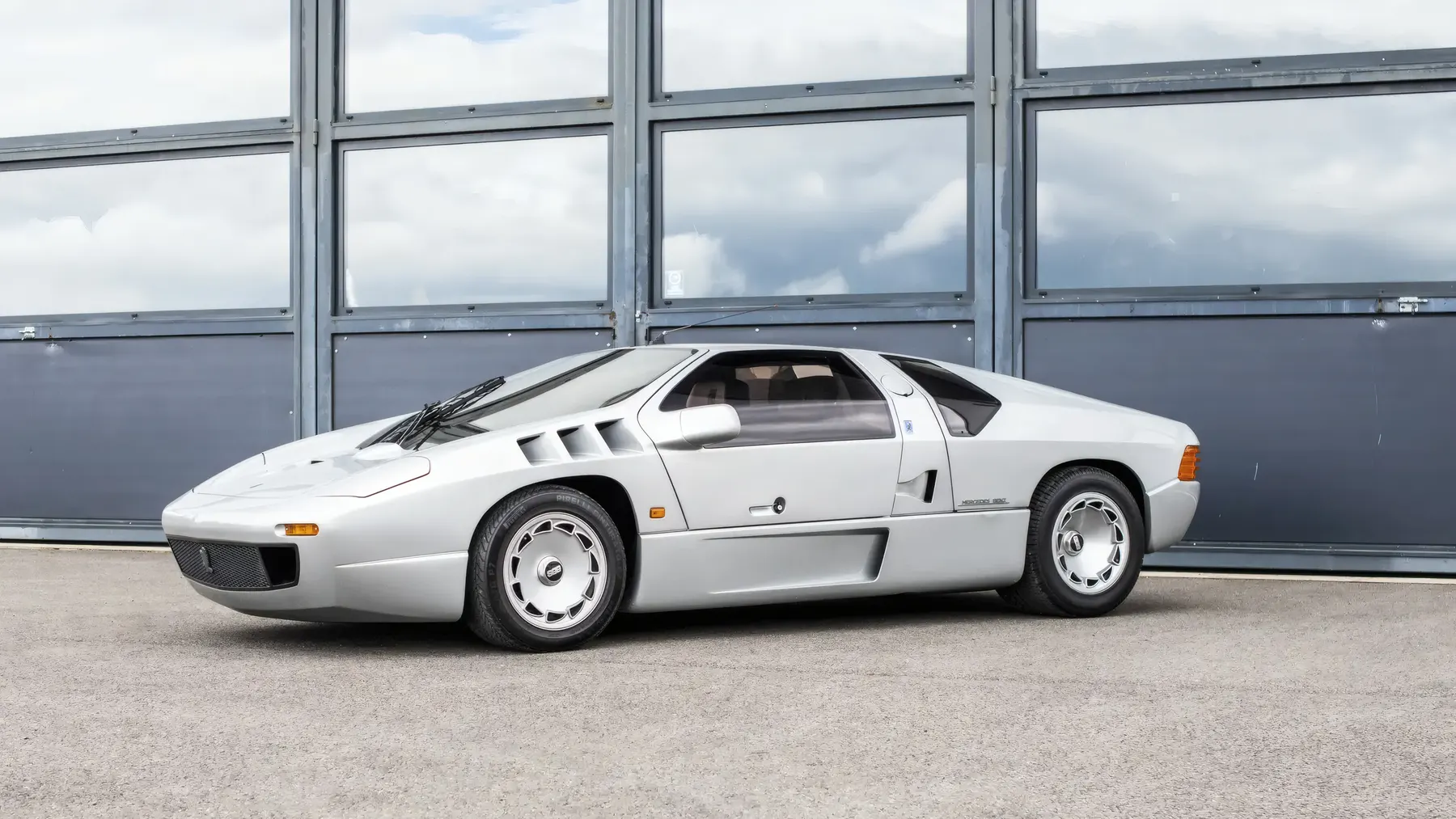
1991 Isdera Imperator 108i Series 2

Images: Remi Dargegen / RM Sotheby's
Eberhard Schulz conceived the car that would eventually become the Isdera Imperator 108i while still employed by Porsche - designing it in his own time, drawing extensively on Mercedes-Benz engineering, and apparently unconcerned by the professional awkwardness of the arrangement. When the result, the CW311 concept, was unveiled in 1978, Mercedes neither condemned nor endorsed it but allowed Schulz to wear their star on its nose, having perhaps calculated that the favourable press attention was doing Stuttgart no particular harm. That tolerance would define the Imperator’s entire existence: a car built not with manufacturer backing in the conventional sense, but in the goodwill of a company that preferred to supply engines than to build the car itself.
The CW311’s name was deliberate: wind tunnel testing had returned a drag coefficient of 0.311, and Schulz and his B&B collaborator Rainer Buchmann considered that figure worth commemorating. The 1950s Mercedes 300SL Gullwing and the experimental C111 research vehicles of 1969–70 were explicit reference points, and the concept shared their low, wedge proportions and aircraft-cockpit drama. By 1982, Schulz had parted from Buchmann after a disagreement and established Isdera - an acronym derived from Ingenieursbüro für Styling, Design und Racing - in Leonberg, Germany. His first production model was the open Spyder 033i. In March 1984, he brought the Imperator 108i to the Geneva Motor Show, and the concept car he had been developing for six years was, finally, a purchasable object.
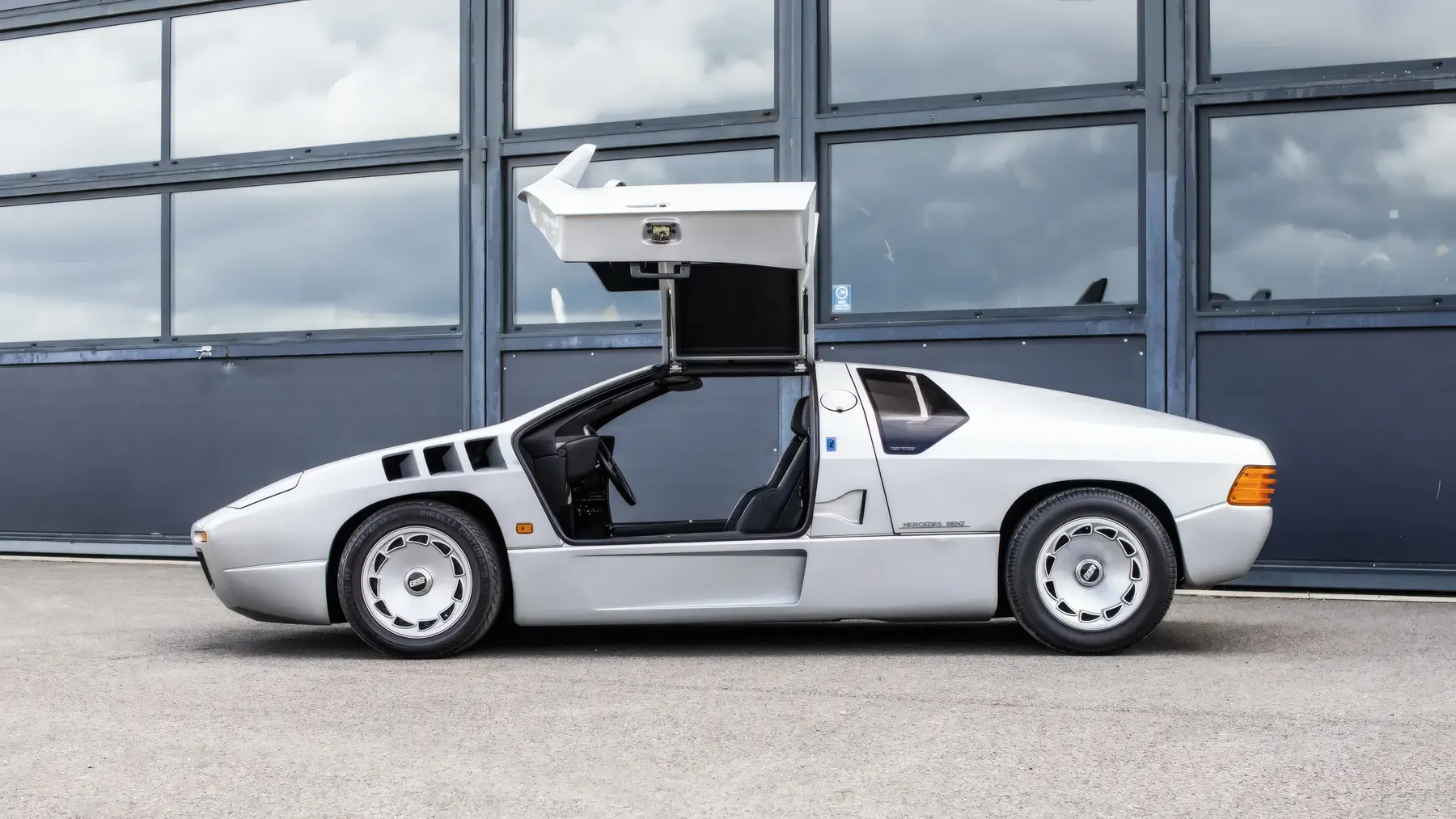
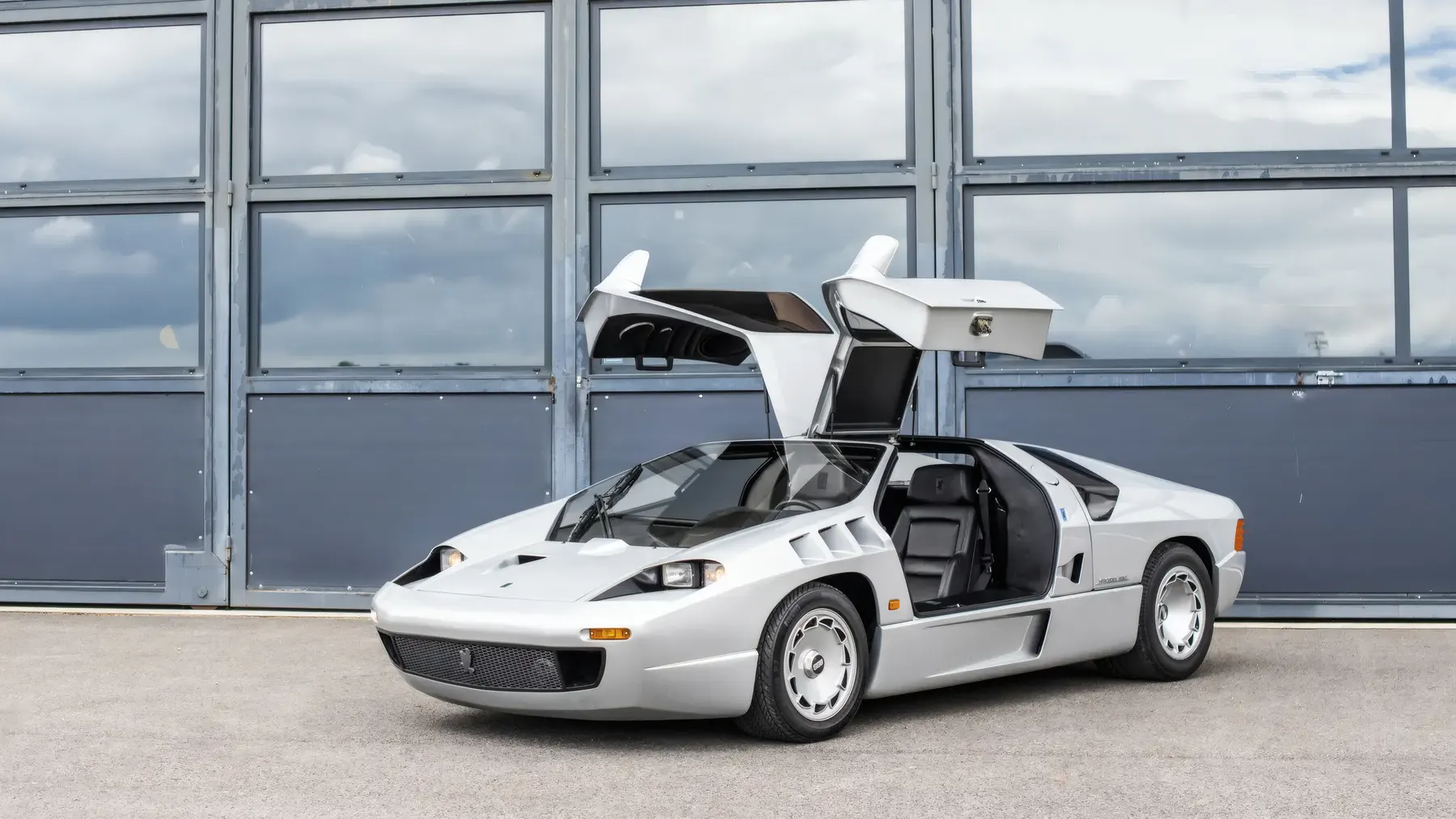
The production car differed from the CW311 in a few areas driven by practicality. Pop-up headlamps gave way to fixed clear-glass units, and the taillights were lifted directly from the Mercedes parts bin. Everything else that had made the show car distinctive was carried over intact. The fiberglass body was bonded to a tubular steel spaceframe, with wide, deep sills providing the torsional rigidity needed by a car without a conventional roof structure - the same engineering logic Lamborghini had used on the Countach. Gullwing doors were the engineered response to those sills, allowing occupants to step over them rather than wrestle through them. In place of conventional wing mirrors, a periscope device was mounted at the roofline, creating a distinctive bulge in the roof and reducing the frontal area that external mirrors would have added to an otherwise tightly packaged silhouette. Interior components were sourced from the Porsche 928, lending the cabin a quality of finish that few small constructors could match. A stereo and car telephone were included in the base price, which was quoted at approximately DM 250,000 in period - placing the 108i comfortably alongside Ferrari and Lamborghini in cost, if not in name recognition.
The engine was always a Mercedes V8, growing progressively more capable as the production run continued. The earliest cars used the M117 in 5.0-litre form, though period sources disagree considerably on the output in Isdera’s application, with figures ranging from around 235 bhp in near-standard tune to figures closer to 300 bhp. A 5.6-litre version of the same engine, in the state of tune used in the 560SEC, produced around 300 bhp. The more interesting developments came with AMG, which prepared both 5.6-litre and 6.0-litre derivatives of the M117 with bespoke 32-valve cylinder heads; the former produced approximately 385 bhp, and the latter between 390 and 420 bhp depending on the source. The only independent benchmark of any substance came from a supercar group test conducted by Auto Motor und Sport in 1987 at Volkswagen’s Ehra-Leissen proving ground, subsequently reported in Road & Track: an Imperator fitted with the 385 bhp AMG 5.6-litre engine reached 176 mph, covered 0–60 mph in 5.0 seconds, and despatched 0–100 mph in 10.8 seconds. It finished last among the cars tested that day, but the gap to the Lamborghini Countach QV was narrow enough that a candid assessment had to credit the Imperator as a genuine performer rather than a merely flamboyant one.
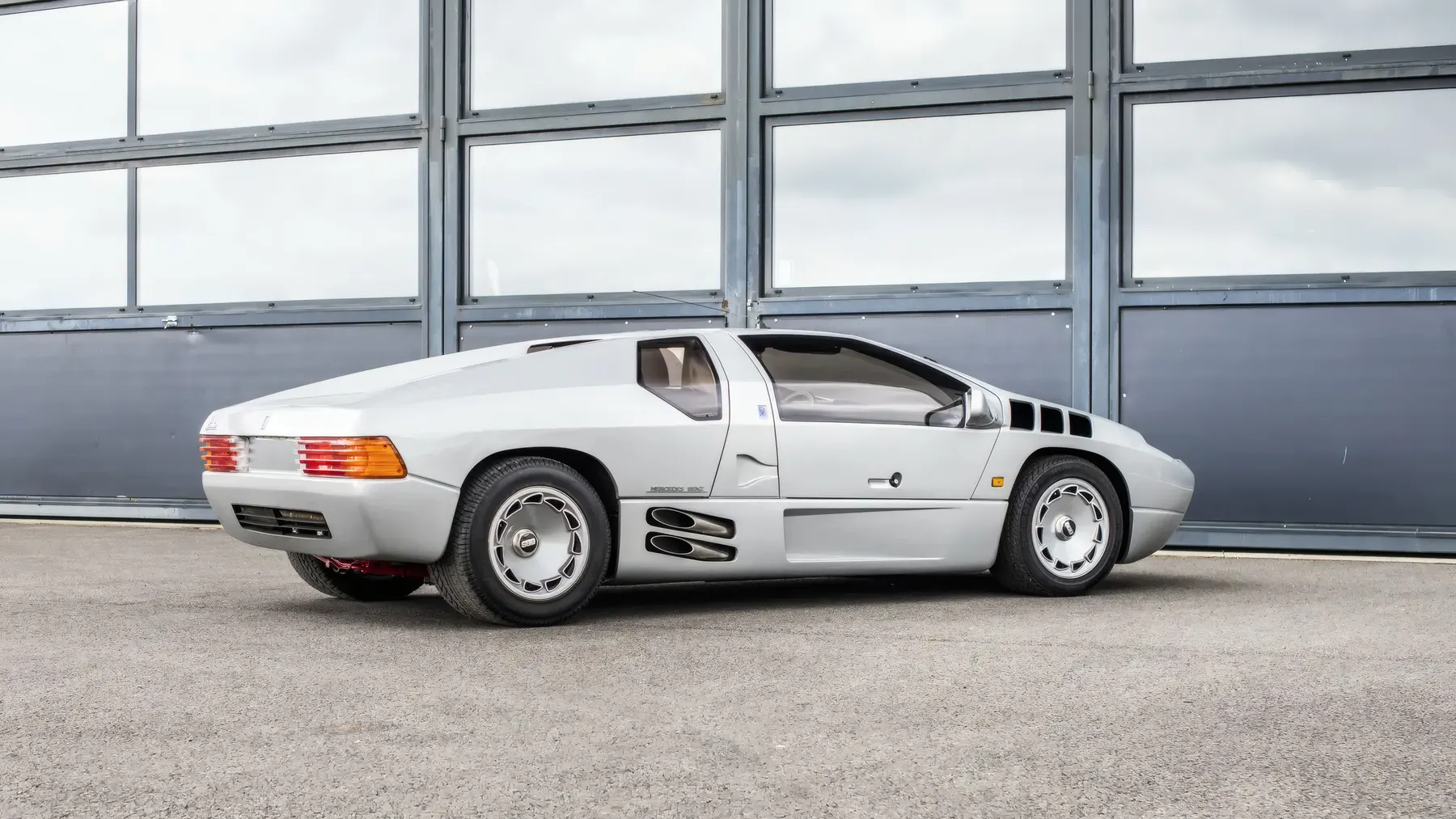
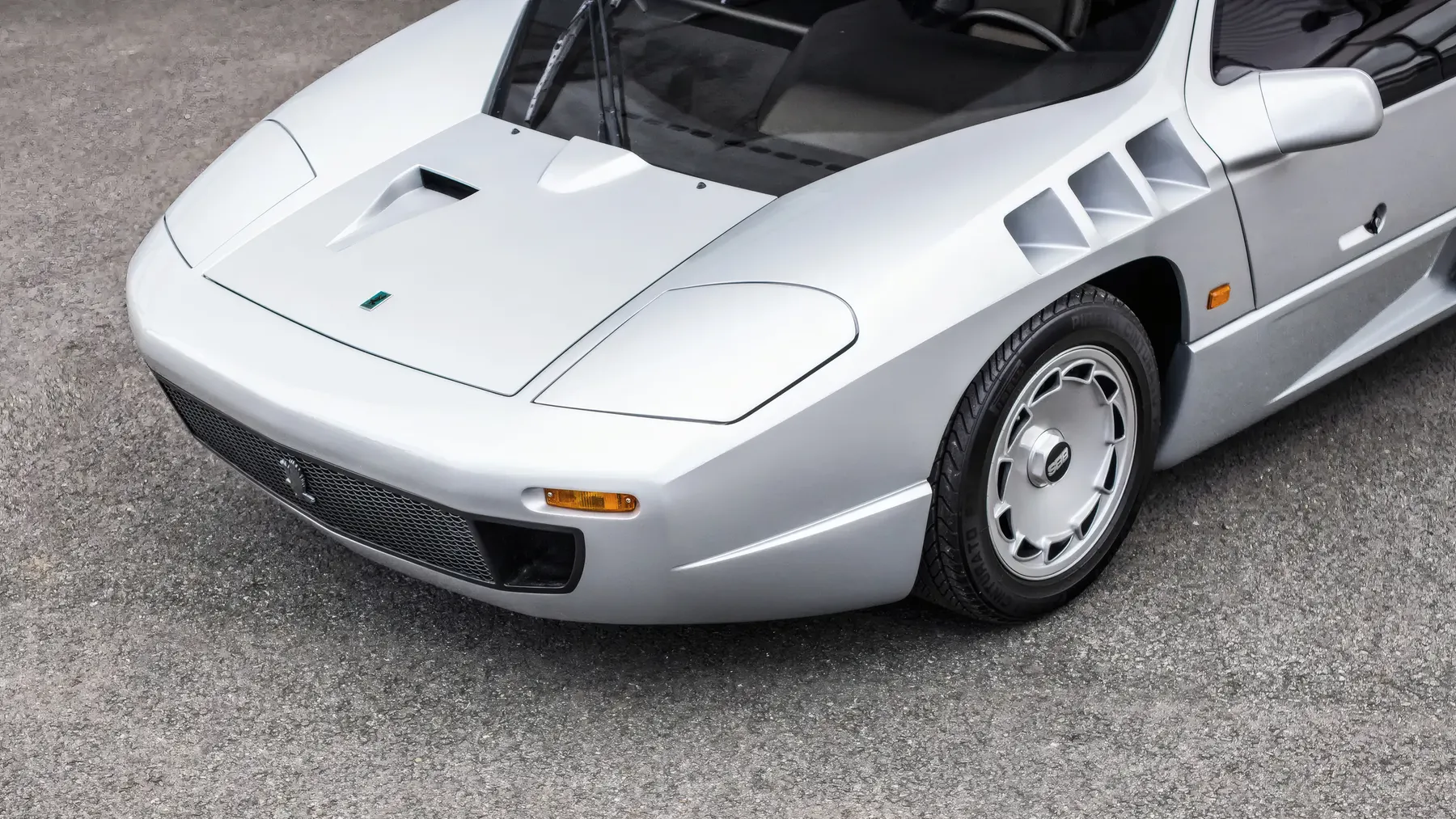
The Series 2, introduced in 1991, was simultaneously a genuine development and a return to first principles. Its most immediately visible change was the reinstatement of pop-up headlamps - the very feature abandoned in 1984 - which gave the facelifted car the curious quality of appearing more faithful to the 1978 concept than the Series 1 it superseded. The body lines were softened and made more curvaceous, an additional vent was introduced above each front wheel arch, and the three bonnet intakes of the earlier car were consolidated into a single offset NACA duct. The exhaust was rerouted from a conventional rear exit to a twin-outlet arrangement emerging from in front of the right rear wheel - a deliberate echo of the side-exit pipes on the 300SL Gullwing that had started the whole lineage. Structurally, the nose was slightly lengthened and raised to meet updated crash safety regulations, and ABS and catalytic converters were made available as options. On markets requiring conventional wing mirrors, such as Japan and Switzerland, traditional mirrors were fitted alongside or in place of the periscope. Exactly how many Series 2 cars were built remains uncertain: Bonhams’ auction catalogue cited a range of 13 to 17; Wikipedia settles on approximately 17. The total across both series is generally agreed at around 30 examples, of which roughly 24 were Series 1 cars.
The 108i’s compromises were genuine, and in several cases they mattered in ways that affected daily use. Despite its dramatic wedge form, the production body carried a drag coefficient of approximately 0.38 - well short of the 0.311 that had given the CW311 its name, and indifferent by contemporary sports car standards. The wide structural sills that gave the spaceframe its rigidity made cockpit entry a physical undertaking even with gullwing doors; for buyers accustomed to the relaxed accessibility of a 928 or a 911, this was a non-trivial inconvenience every time they approached the car. The periscope mirror, though technically considered, provided a narrower and less intuitive field of view than conventional external mirrors and required deliberate acclimatisation from any driver new to the car. The early 5.0-litre engine, in whatever state of tune, delivered performance that sat awkwardly against the 108i’s pricing and posture - a problem the AMG motors eventually resolved but that gave the first customers a somewhat understated machine relative to what they had paid for. And there was no dealer network, no service infrastructure, no brochure sent to strangers: the only way to order an Imperator was to obtain Schulz’s personal telephone number and call him. The car’s commercial isolation was complete.
The deeper limitation was cultural. Against Ferrari, Lamborghini, and Porsche - manufacturers backed by racing heritage, dealer networks on three continents, and decades of devoted press coverage - the Imperator 108i was always going to struggle for the kind of irrational acceptance that selling performance cars ultimately requires. Its outright performance was comparable; its engineering was coherent and in some respects more interesting than that of cars that had simply received updated bodywork for thirty years. None of it was enough. When Isdera ceased trading in 1993, it had built approximately 30 cars over nine years and remained almost entirely unknown outside a narrow circle of enthusiasts. The Commendatore 112i, planned around a mid-mounted V12, was Schulz’s intended continuation, but the 108i had never generated the sales to finance the company that would build a successor.
Thirty examples is a production figure so small as to make the question of commercial viability almost irrelevant in retrospect. What the Isdera Imperator 108i represents, across both its series, is the furthest point to which one engineer’s personal conviction about a specific design could be taken using borrowed engines, borrowed components, and the latitude of a major manufacturer that had declined to build the car itself. That the Series 2 arrived looking more like the 1978 concept than the 1984 original was not a contradiction - it was evidence that Schulz knew, even near the end, exactly what the car was supposed to be.
Sources
- Wikipedia - Isdera Imperator 108i
- Hagerty - “This Isdera Imperator came, saw, and conquered 1991” (Nik Berg, March 2021)
- Bonhams - 1991 Isdera Imperator 108i Series 2 Auction Catalogue, Les Grandes Marques à Monaco, April 2021
- Supercars.net - 1984 Isdera Imperator 108i (Nick Dellis)
- Supercars.net - 1991 Isdera Imperator 108i Series 2 (Canepa)
- Silodrome - “The Forgotten German Supercar: The Isdera Imperator 108i” (Ben Branch, August 2024)
- Secret Classics - “Isdera Imperator 108i” (Matthias Kierse, March 2021)
Join the discussion
Comments
Loading comments…
Leave a comment
Share a detail, memory, or perspective. Every comment is reviewed before publication.