Porsche 911 (964) America Roadster: A Turbo Body With No Turbo Inside
1992 Porsche 911 America Roadster
%20America%20Roadster%3A%20A%20Turbo%20Body%20With%20No%20Turbo%20Inside%20%7C%20Motor%20Archive)
Images: Darin Schnabel / RM Sotheby's
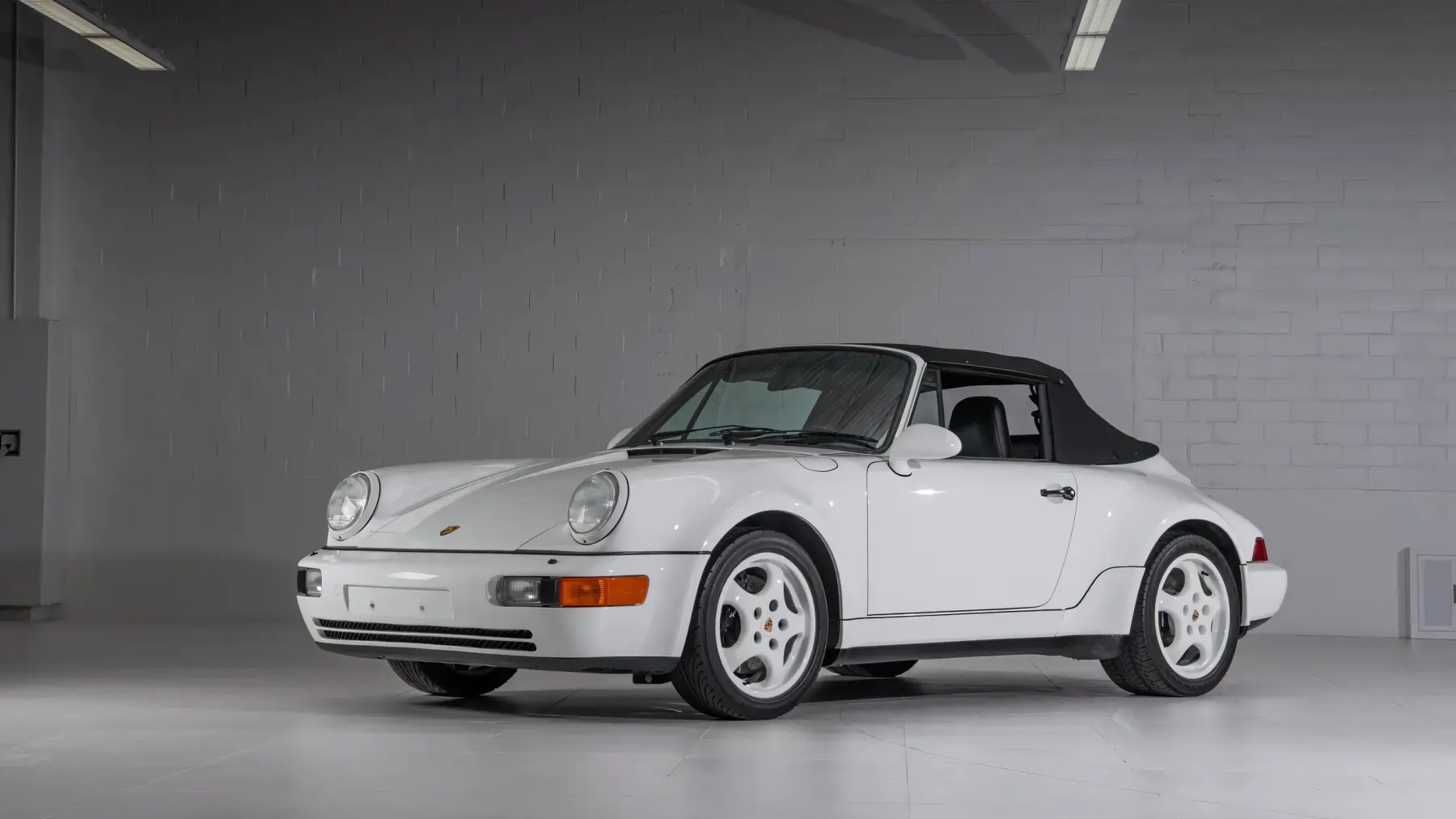
Porsche’s marketing department had a genuine talent, in the early 1990s, for turning a gap in the range into a story worth telling, and the 964-generation America Roadster is one of the tidiest examples of that instinct at work. Underneath its flared hips, its 17-inch Cup wheels and its clean, wing-free tail sat nothing more exotic than the standard Carrera 2’s naturally aspirated flat six. It wore the costume of the 911 Turbo without a scrap of the Turbo’s forced induction, was sold exclusively to American buyers, and borrowed its name from a stripped-out 356 built four decades earlier for the same market and the same purpose: giving Porsche’s most important export customers something they could not get anywhere else. Understanding that the America Roadster is fundamentally a piece of clever repackaging, rather than a new performance model, is the key to understanding why it exists and why it still divides opinion among 964 specialists today.
The nameplate traces back to 1952, when Porsche’s fiercely persuasive American importer, Max Hoffman, persuaded the factory to build him a lightweight, open 356 aimed squarely at buyers who found the standard cabriolet too soft for genuine sports-car use. Coachbuilder Glaser handled the bodywork, fitting hollow doors, thin alloy panels, no wind-up side windows and a removable windscreen in pursuit of weight savings; sources place production of that original car at somewhere around sixteen to twenty examples, making the 356 America Roadster one of the rarest Porsches ever built and a direct ancestor of the far more successful 356 Speedster that followed it into production. Four decades on, with the fortieth anniversary of that original car approaching and a new-generation Speedster of its own already being planned for the following year, Porsche’s American arm revived the America Roadster name for a limited run of 964-based cabriolets, timed deliberately to trade on the nostalgia of the original while filling a genuine gap between the standard Carrera 2 Cabriolet and the far more expensive 911 Turbo.
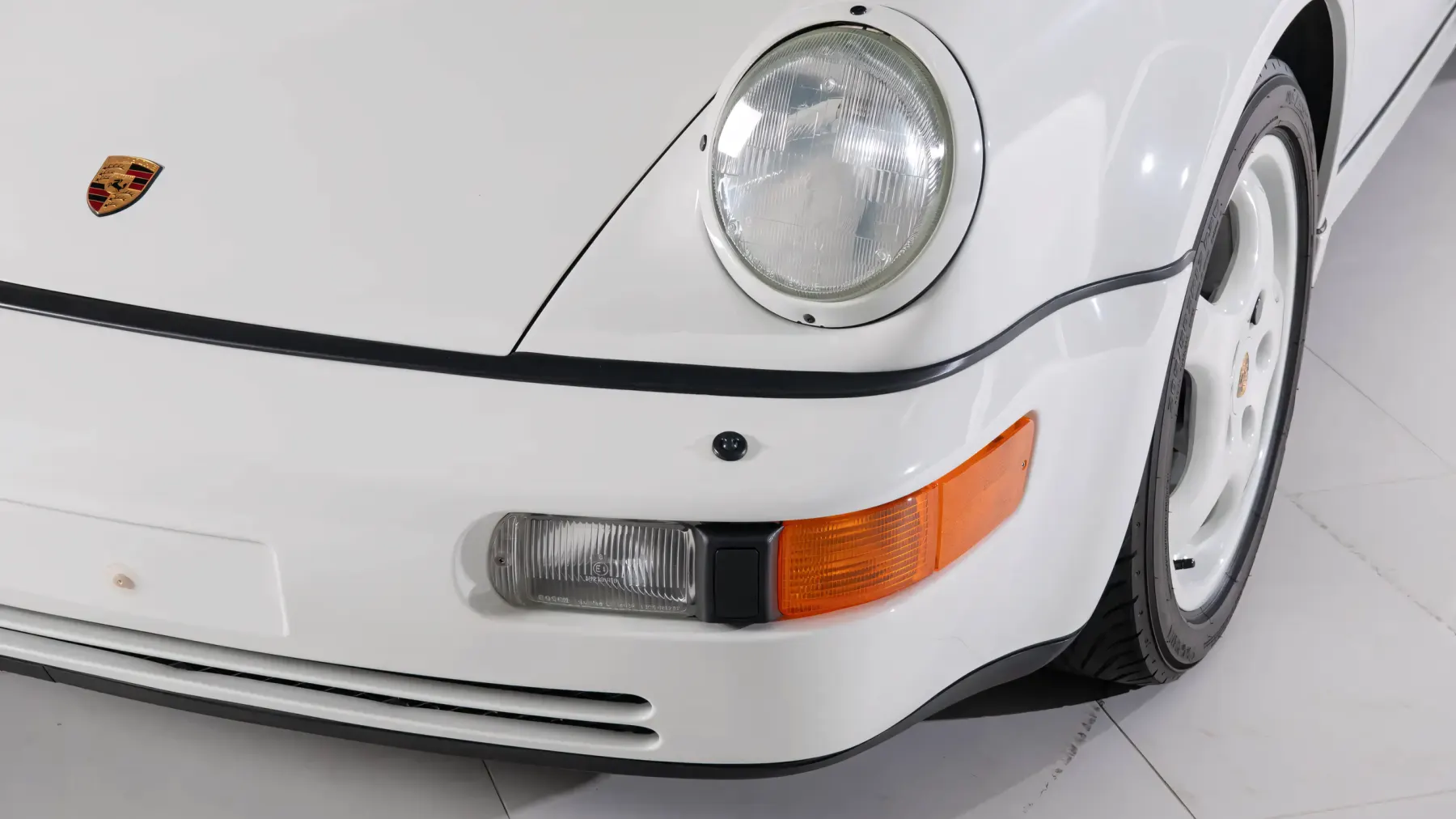
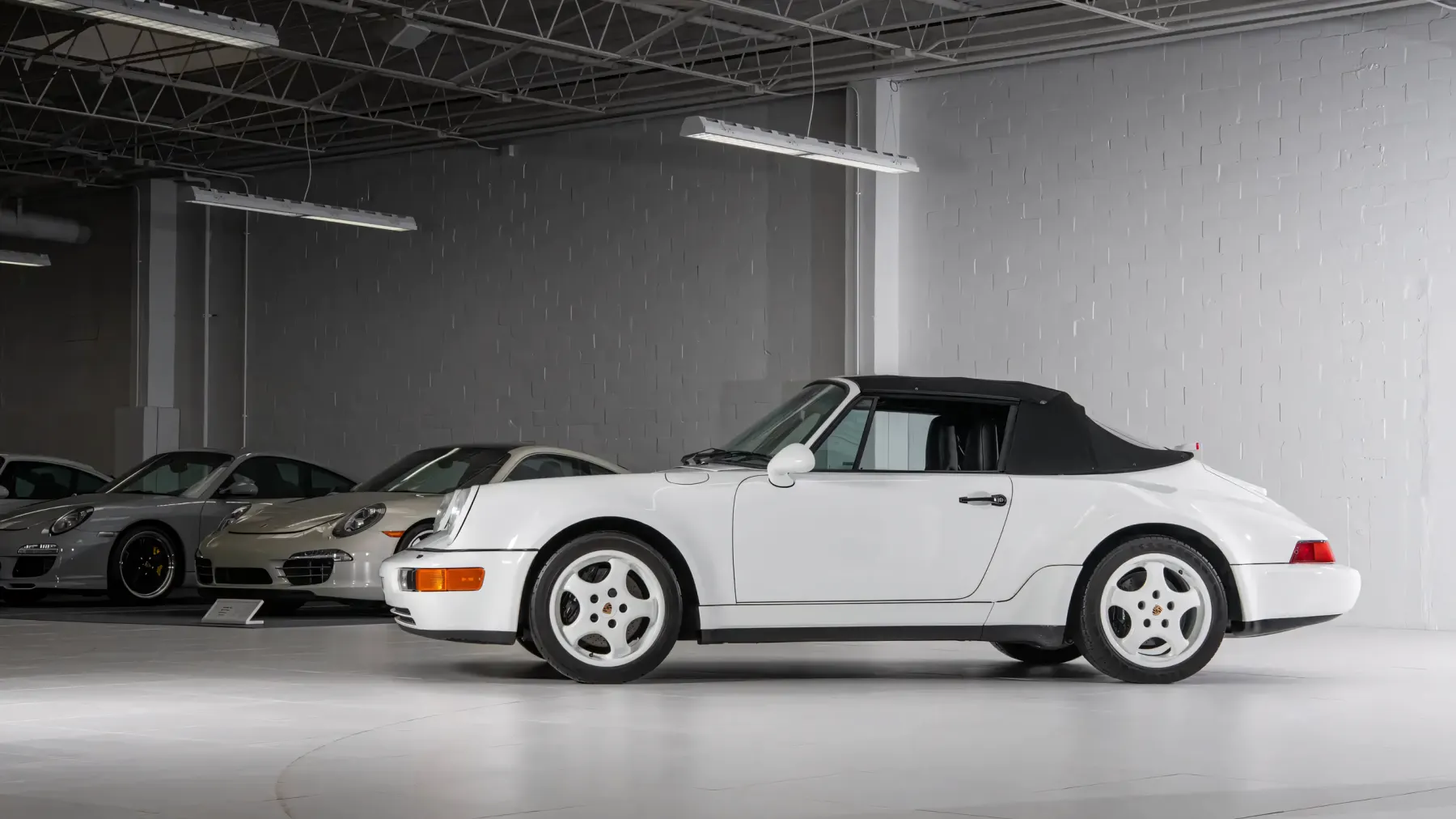
Mechanically, the 1992 and 1993 America Roadster was a Carrera 2 Cabriolet in every meaningful sense: rear-wheel drive only, powered by the same air-cooled, 3.6-litre M64 flat six fitted to every other naturally aspirated 964, producing 247 bhp at 6,100rpm and 228 lb-ft of torque at 4,800rpm through a five-speed manual gearbox. What set it apart, visually and mechanically, was borrowed wholesale from the contemporary 911 Turbo: the wide, flared bodywork Porsche called the Turbo-look, the Turbo’s larger brakes and firmer suspension, and its distinctive 17-inch, five-spoke Cup wheels. It is worth being precise about what this did and did not mean, because the two cars are easily confused. A handful of genuine Turbo-engined cabriolets did leave Porsche’s Sonderwunsch department in this period, built to special order for a very small number of well-connected customers; the America Roadster was not one of these. It was, in essence, a Carrera dressed for a part it was not physically equipped to play, and buyers who wanted the visual drama of the wide-body Turbo without the waiting list, the running costs or the turbocharged engine’s occasionally abrupt power delivery had, for the first time in the United States, a factory-built way to get it.
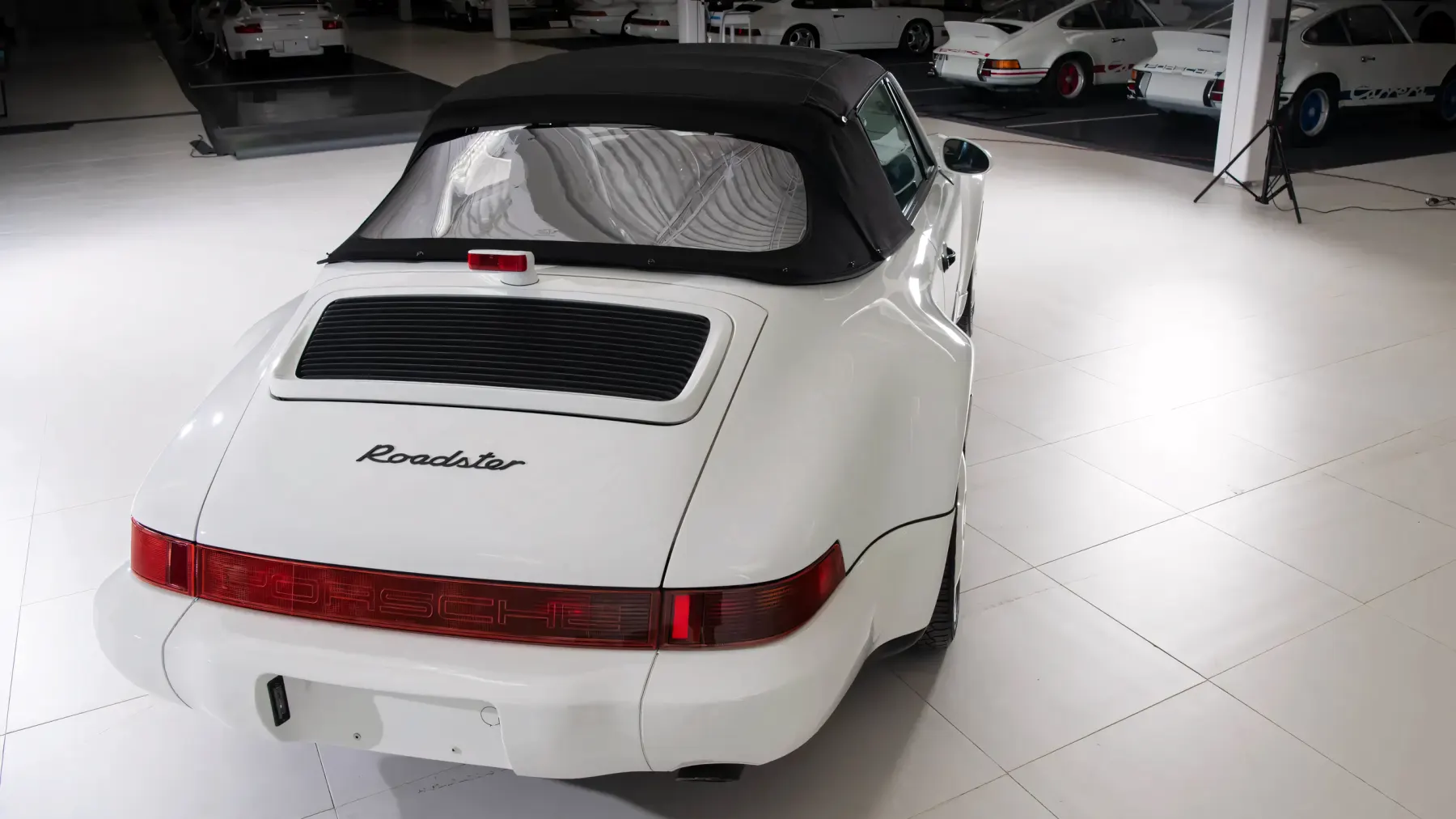
The wide fenders needed somewhere to go, and Porsche used the opportunity to strip out what little practicality the Cabriolet’s rear seats offered in the first place; in their place sat a parcel shelf with small storage cubbies underneath, reinforcing the car’s billing as a two-seat driver’s tool rather than an occasional four-seat tourer. Just as deliberate was what Porsche left off. Where the genuine 911 Turbo relied on its fixed whale-tail spoiler as its most recognisable feature, the America Roadster kept the ordinary Carrera’s small, speed-activated rear spoiler, which rose automatically above around 50mph and sat flush with the decklid the rest of the time. The result, to many eyes, is the more resolved-looking car of the two: all of the width and stance of the Turbo-look body, none of the visual weight of the wing, and a rear deck that reads as clean rather than aggressive. Porsche offered the same combination of wide body and naturally aspirated running gear as a cabriolet elsewhere in the world under the more prosaic name of Carrera 2 ‘Turbo-look’; only in the United States did it come dressed in the America Roadster’s specific marketing and its own model designation.
On the road, the America Roadster feels exactly like what its specification sheet promises: a well-sorted, naturally aspirated 964 Cabriolet with sharper brakes, firmer damping and a noticeably wider footprint than the standard Carrera. The 3.6-litre flat six retains all the character of the standard engine, a metallic, high-revving voice that builds with none of a turbocharged engine’s surge, together with the immediate throttle response that naturally aspirated 911s of this era are prized for, and the extra grip from the Cup wheels and Turbo brakes lets a driver lean on the chassis with more confidence than in a standard-width Cabriolet. Period-tested performance figures vary a little between sources, with 0-60mph times quoted at around 5.5 to 5.6 seconds and top speed cited anywhere between roughly 158 and 162mph depending on the publication, but the broad picture is consistent: this is a quick, characterful open-top 911, not a genuinely fast one by the standards its Turbo-aping bodywork suggests. With the roof down, wind buffeting builds quickly above motorway speeds, and the extra width of the Turbo-look arches makes the car noticeably harder to place on a narrow British or Continental back road than a standard-width Carrera; it feels, and is, a car built with wide American highways rather than tight European lanes in mind.
The America Roadster’s most genuine engineering compromise has nothing to do with its badge and everything to do with its roof. Every 964 Cabriolet and Targa gives up a meaningful amount of torsional rigidity compared with the coupé, because the fixed roof panel that normally ties the front and rear of the monocoque together simply is not there; decades later, restoration specialist Singer found the shortfall significant enough to commission a dedicated structural analysis from Red Bull Advanced Technologies, whose finite-element modelling led to a bonded carbon-fibre reinforcement package said to increase torsional stiffness by some 175 per cent over an unmodified open-top 964 shell. That is not a criticism unique to the America Roadster, but the America Roadster inherits it in full, and it is compounded by the car’s added width and firmer Turbo-spec suspension, which ask more of a chassis that was already the softer half of the 964 range in period. Scuttle shake over broken surfaces and a slightly less planted feel through fast corners than the coupé are the practical result, and they are the price of admission for the open-top driving experience rather than a flaw exclusive to this particular special edition. The second, more model-specific criticism is a simpler one: buyers paid a real premium over a standard Carrera 2 Cabriolet for brakes, suspension, wheels and bodywork, while the car’s most important mechanical component, its engine, was completely unchanged. For anyone shopping specifically for outright pace, the America Roadster was, and remains, a car that looks considerably faster than it is, and the small rear parcel shelf that replaced the back seats did little to offset the fact that a standard Carrera 2 Cabriolet, ordered with the same brakes and suspension as options, could get remarkably close to the same driving experience for meaningfully less money.
Porsche’s official line has long put America Roadster production at 250 cars across the 1992 and 1993 model years, a figure that deliberately echoed the roughly sixteen to twenty original 356 America Roadsters by adding a symbolic zero; some dealer and market sources instead break the total down by model year and arrive at a combined figure closer to 326, so the exact count should be treated as approximate rather than definitive. Whatever the precise tally, the America Roadster occupied a distinct niche within Porsche’s early-1990s American line-up. It arrived roughly a year before the RS America, a stripped, lightweight, track-oriented Carrera 2 built in far larger numbers, around 701 cars across its 1993 and 1994 model years, that pursued the opposite philosophy entirely: less weight and less equipment rather than more width and presence. The 1994 Speedster, meanwhile, arrived as an even more focused open-top 964, closer in character to the RS than to a comfort-oriented Cabriolet. Positioned between these two, the America Roadster was never really trying to be the quickest or the lightest 964; it was trying to be the most visually dramatic open-top Carrera money could buy, and on that measure it succeeded completely.
For much of its life, the America Roadster shared the wider 964 generation’s reputation as something of an in-between model, overshadowed by the raw, motorsport-adjacent G-series cars that preceded it and by the 993 that followed with a properly reworked rear suspension. That reputation has shifted substantially in recent years, as collectors have come to appreciate the 964 as the last 911 generation to combine a genuinely air-cooled engine with meaningfully modern conveniences such as power steering and anti-lock brakes, both fitted as standard on a 911 for the first time. Within that reappraisal, the America Roadster’s rarity, its clean styling and its direct link back to Max Hoffman’s original 356 special have made it a consistently sought-after piece of that story, regularly grouped alongside genuinely rare 964 variants such as the Turbo S Leichtbau and the Carrera RS 3.8 in dedicated collector sales. Porsche itself has returned to the America Roadster formula more than once since, most recently with a limited-run 911 GTS Cabriolet finished for the American market in 2023, proof that the basic idea, rear-wheel drive, manual gearbox, open top, American exclusivity, remains one of the more durable pieces of marketing in the company’s history.
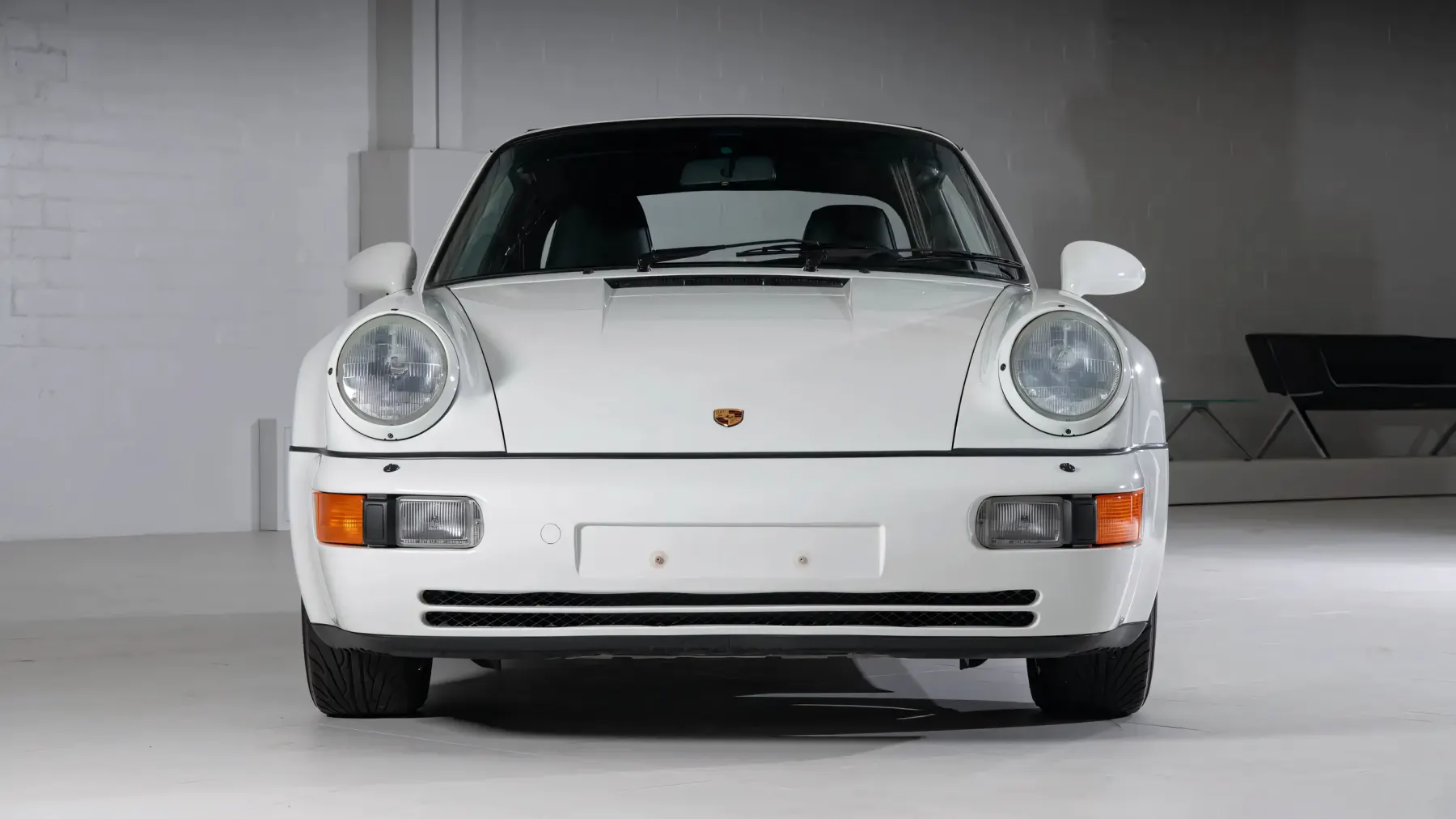
What the America Roadster leaves behind, more than any lap time or production statistic, is a fairly honest lesson in how Porsche used styling and storytelling to stretch a single mechanical platform across a remarkably wide range of characters. It never pretended to out-drive the 911 Turbo it resembled, and buyers who understood that were rewarded with one of the best-looking open-top 964s Porsche built, wearing a body it arguably deserved more than the standard-width Cabriolet ever did. Buyers who mistook the wide arches for genuine forced-induction pace were, and still are, the ones most likely to come away disappointed, which says rather less about the America Roadster’s shortcomings than it does about how convincingly Porsche’s design department did its job.
Technical data
Performance Specifications
| Item | Detail |
|---|---|
| Model | Porsche 911 (964) America Roadster |
| Body style | Two-door, two-seat cabriolet, Turbo-look wide body |
| Production | 1992-1993 model years; widely cited at 250 units total, though some sources put combined production nearer 326* |
| Base platform | 964 Carrera 2 Cabriolet (rear-wheel drive) |
| Engine | 3.6-litre (3,600cc) air/oil-cooled, SOHC flat six, M64 |
| Power | 247 bhp at 6,100rpm |
| Torque | 228 lb-ft at 4,800rpm |
| Transmission | Five-speed manual (G50), rear-wheel drive |
| Brakes | 911 Turbo-specification four-wheel ventilated discs |
| Wheels | 17-inch five-spoke Porsche Cup alloys |
| 0-60mph | Approximately 5.5-5.6 seconds* |
| Top speed | Approximately 158-162mph* |
| Kerb weight | Approximately 1,375kg to DIN 70020 standard; a fuller kerb weight with fluids and options is cited as high as roughly 1,435kg depending on source* |
| Wheelbase | 2,270mm |
| Length | Approximately 4,275mm |
Sources
- RM Sotheby’s, “1992 Porsche 911 America Roadster,” Amelia Island 2017
- Wikipedia, “Porsche 911 (964)”
- Stuttcars, “Porsche 911 America Roadster (964) (1992-1993)”
- Sotheby’s Motorsport, “1992 One-Owner Porsche 911 America Roadster”
- European Collectibles, “1992 Porsche 911 America Roadster”
- Elferspot, “Porsche 964 America Roadster for sale”
- Kelley Blue Book, “1992 Porsche 911 America Roadster 2D”
- Autoblog (via AOL), “Red Bull Helped Singer Fix One of the Porsche 911’s Biggest Weaknesses”
- Road & Track (via AOL), “Red Bull and Singer’s Latest Project: Fixing the Porsche 964 Targa and Cabriolet’s One Weakness”
- Car and Driver (via AOL), “Singer Reveals Its First ‘Reimagined’ Porsche 911 Cabriolet”
- Car and Driver (via AOL), “2023 Porsche 911 GTS Cabriolet America Edition Is a Red, White, and Blue Tribute”
- Robb Report, “A Porsche 964 Collection Comes to the RM Sotheby’s Amelia Island Sale”
Join the discussion
Comments
Loading comments…
Leave a comment
Share a detail, memory, or perspective. Every comment is reviewed before publication.