Ferrari Monza SP1: Maranello's Fastest Barchetta Has No Windscreen
2019 Ferrari Monza SP1

Images: Tim Scott / RM Sotheby's
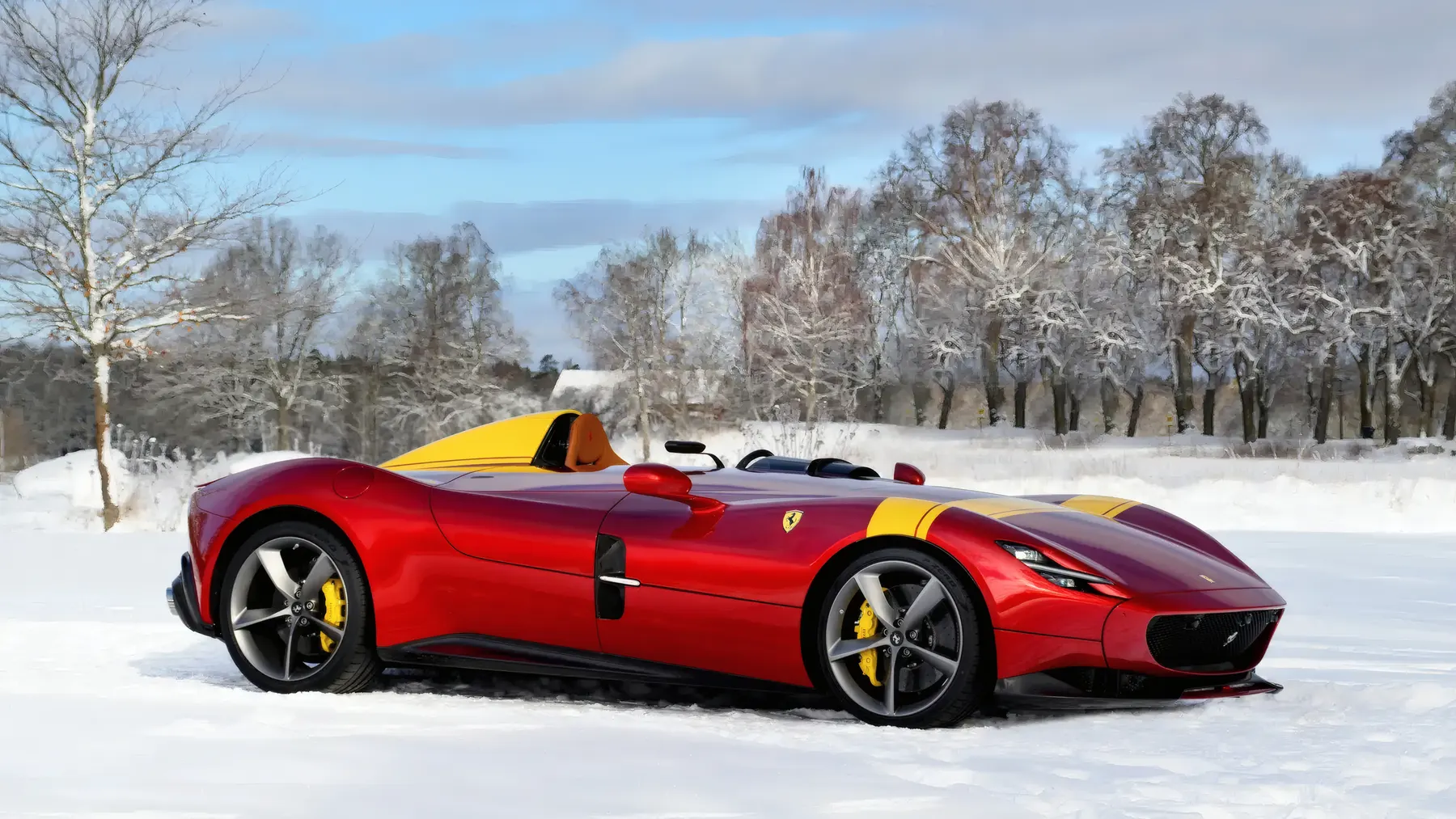
Ferrari’s Capital Markets Day is normally a spreadsheet affair - five-year plans, margin targets, delivery projections delivered to a room full of institutional investors. In September 2018, Maranello used that stage to reveal a car with no windscreen. Not a concept, not a design study, but a production model clients could order there and then: the Monza SP1, joined by a two-seat sibling called the SP2. It was an odd choice of venue for something so wilfully impractical, and that contradiction is really the whole point of the car. Ferrari didn’t set out to build the most sophisticated machine it possibly could and leave it at that; it took its most powerful naturally aspirated V12 yet, wrapped it in Formula 1-grade carbon construction, and then stripped away the one piece of equipment every road car has carried since the 1930s. The result launched an entirely new category for the company, one built on nostalgia engineered with the most modern tools Maranello had.
Ferrari called this new segment “Icona” - icon - and the Monza pair were its opening statement. The idea was simple on paper: take a car from Ferrari’s back catalogue, keep its spirit rather than its underpinnings, and rebuild it with everything the modern factory could offer. The SP1 is the purer expression, a single-seat barchetta with a tonneau cover fairing over the passenger side and a single faired headrest behind the driver. The SP2 softens that asceticism slightly, swapping the cover for a second seat, a second roll hoop, and a small polycarbonate screen to take the edge off the passenger’s exposure. Buyers chose one body style or the other, not both, and Ferrari never disclosed how the combined production run split between the two configurations, leaving that detail as one of the more persistent unknowns of the whole programme.
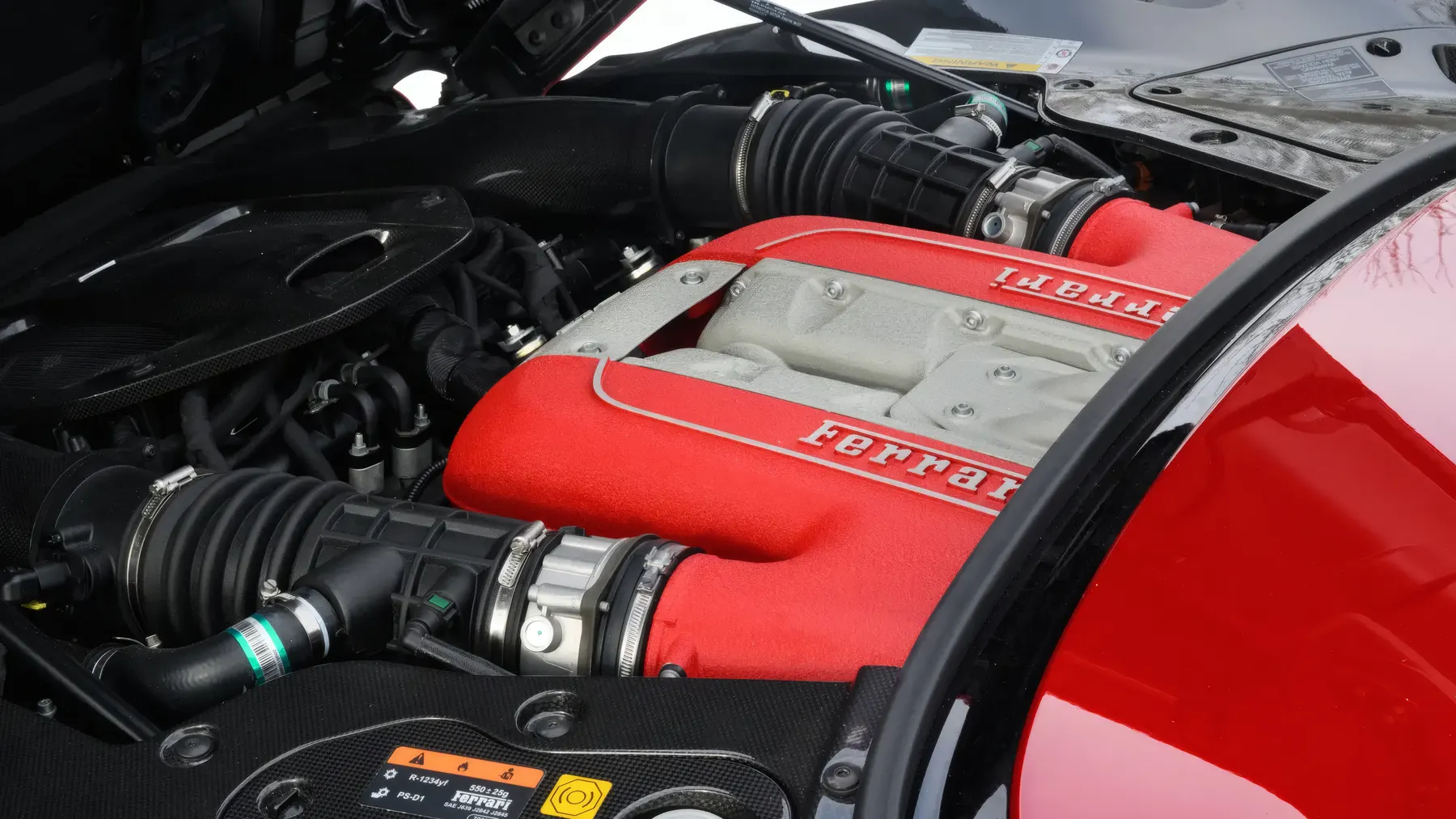
Underneath the theatre, the Monza shares its aluminium chassis and running gear with the 812 Superfast, Ferrari’s front-engined V12 flagship of the period. That’s not a dismissive rebody job, though: the structure was widened by 25mm to suit the new proportions, and the body itself uses far more carbon fibre than the coupe it’s based on, saving roughly 15 per cent on panel weight and covering the car in around 20 square metres of composite produced using techniques borrowed from Ferrari’s Formula 1 department. Dry weight came in at 1,500kg for the SP1 and 1,520kg for the SP2, some 160kg lighter than the 812 Superfast despite the wider footprint - enough, Ferrari claimed, to give the Monza the best power-to-weight ratio of any barchetta it had ever built.
The styling came from Ferrari’s Centro Stile under design chief Flavio Manzoni, who has since named the Monza SP1 and SP2 among the handful of projects that arrived, as he put it, in one continuous stroke of the pencil: cars whose shape resolved itself early and stayed largely intact through development rather than being fought over for years. That’s visible in the details. There’s a long, unbroken bonnet with almost no visible shutlines, a clamshell front end that lifts as a single piece to expose the engine, and compact scissor-hinged doors reworked from the 812 Superfast’s mechanism to sit flush with the new bodywork. The design was significant enough to earn the Monza SP1 a Compasso d’Oro industrial design award in 2020, one of Italy’s most respected design honours and a recognition that reaches well beyond the car industry.
The names attached to all this aren’t incidental. The original 750 Monza was a four-cylinder sports racer introduced in 1954, earning its title after winning its debut race at the Monza circuit itself, and it went on to compete across some of the period’s toughest events, including the Mille Miglia and the Tourist Trophy. Ferrari enlarged the same Lampredi-designed four-cylinder engine two years later for the 860 Monza, which continued the model’s competition record, including a strong showing at Sebring, before the four-cylinder racing programme wound down and the Monza name went quiet for well over six decades. Reviving it in 2018 for a pair of road cars wasn’t just a marketing flourish, then; it reattached a genuinely competition-bred name, along with the broader barchetta lineage of cars like the 166 MM, to a bespoke modern design exercise, even though the SP1 and SP2 themselves never turned a wheel in period motorsport.
Power comes from the F140 GC, a 6.5-litre naturally aspirated V12 derived directly from the 812 Superfast’s unit but retuned for a modest gain: around 799bhp at 8,500rpm, with 530 lb-ft of torque arriving at 7,000rpm, a step up from the donor engine. At launch it was the most powerful engine Maranello had ever fitted to a road car, a distinction the Monza would hold only until later Icona and Competizione-badged V12s eclipsed it. The engineering underneath that headline figure is arguably more interesting than the number itself: a 350-bar direct-injection system, the first fitted to a high-performance production petrol engine, paired with variable-geometry intake tracts conceptually derived from naturally aspirated Formula 1 engines. Drive goes through a seven-speed dual-clutch transmission to the rear wheels only, with the electronic stability and dynamic-control software carried over from the 812 Superfast to help manage that much power through a chassis that, lacking a roof, has less structure to lean on for torsional stiffness.
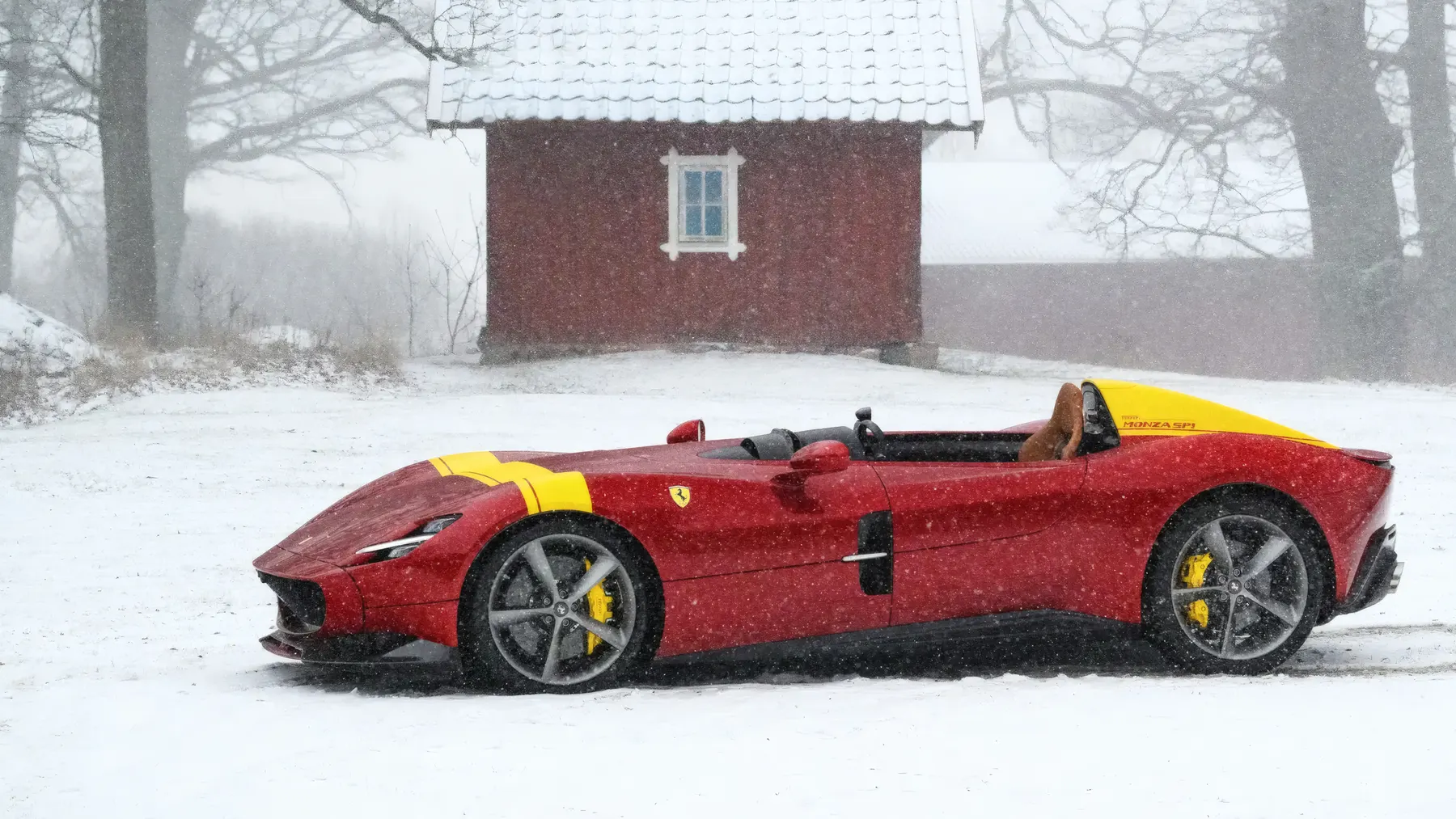
The figures that resulted are exactly what you’d expect from a near-800bhp car weighing barely more than a well-equipped saloon with a V12 bolted in: 0-62mph in 2.9 seconds, 0-124mph in 7.9 seconds, and a claimed top speed beyond 186mph. Ferrari fitted unique lightweight forged 21-inch wheels, wrapped in 275-section front and 315-section rear tyres, to put that much thrust down through an unassisted rear axle. None of this reads as radically quicker than the 812 Superfast underneath it - the Monza is a fraction lighter and a touch more powerful, not a different order of machine entirely - which is precisely the point that critics of its pricing structure would go on to make.
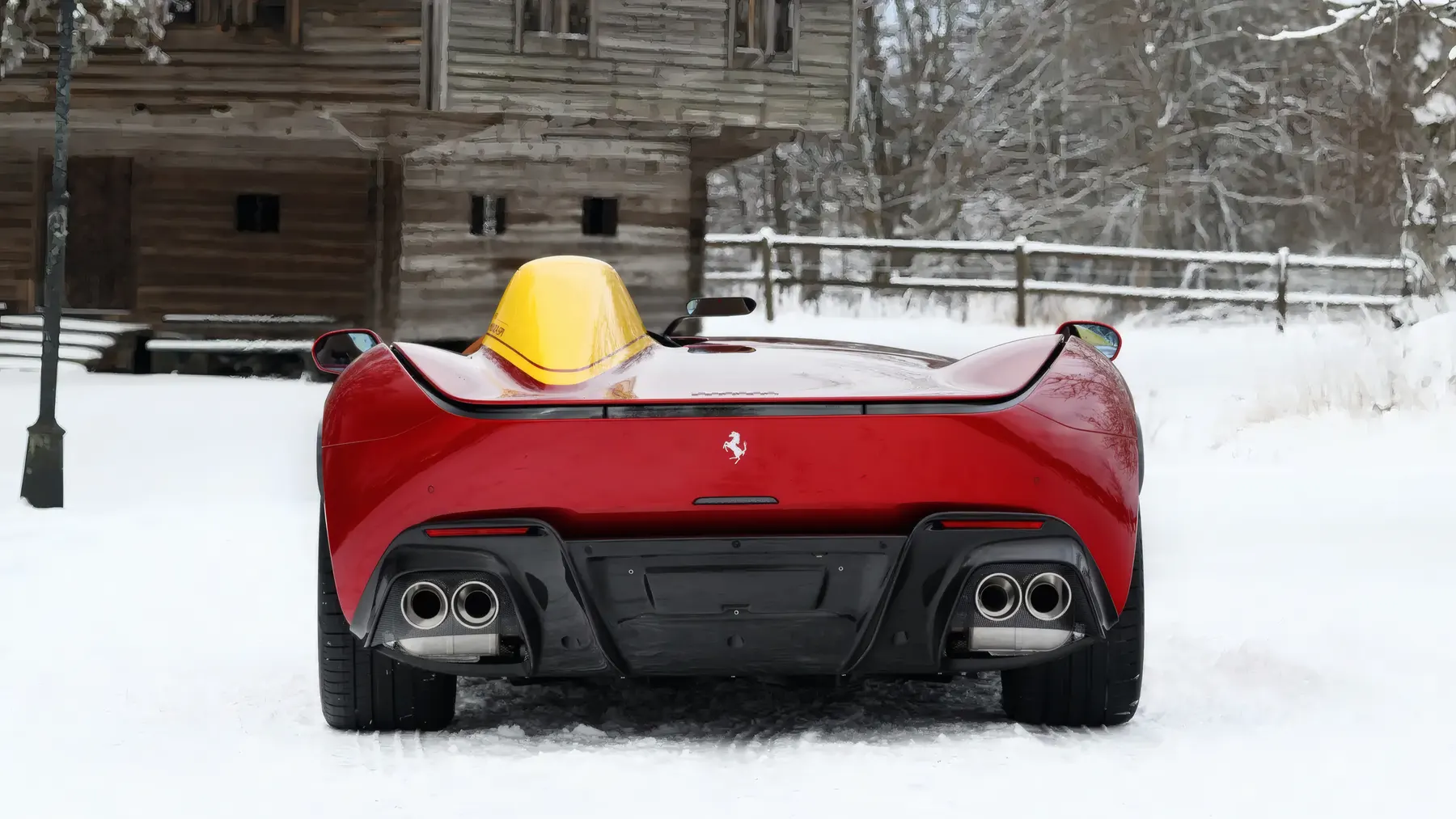
The genuinely novel piece of engineering is the system Ferrari calls the Virtual Wind Shield, developed because there’s nothing between the driver and the airflow coming off the bonnet at speeds approaching three times a motorway limit. It works as a duct rather than a barrier: air gathered from an intake beneath the driver’s aero screen is accelerated through a channel shaped like an aerofoil and ejected upward just ahead of the instrument panel, creating what Ferrari describes as an energised upwash that lifts the oncoming airflow over the driver’s head rather than into their face. The concept was refined first through computational fluid dynamics modelling, then physically in the wind tunnel using a full-scale mock-up with pressure-sensor-equipped dummies standing in for test drivers. The SP2’s passenger doesn’t get the same treatment; instead they sit behind a small conventional polycarbonate screen, since the packaging didn’t allow the duct system to be duplicated on both sides of the cockpit.
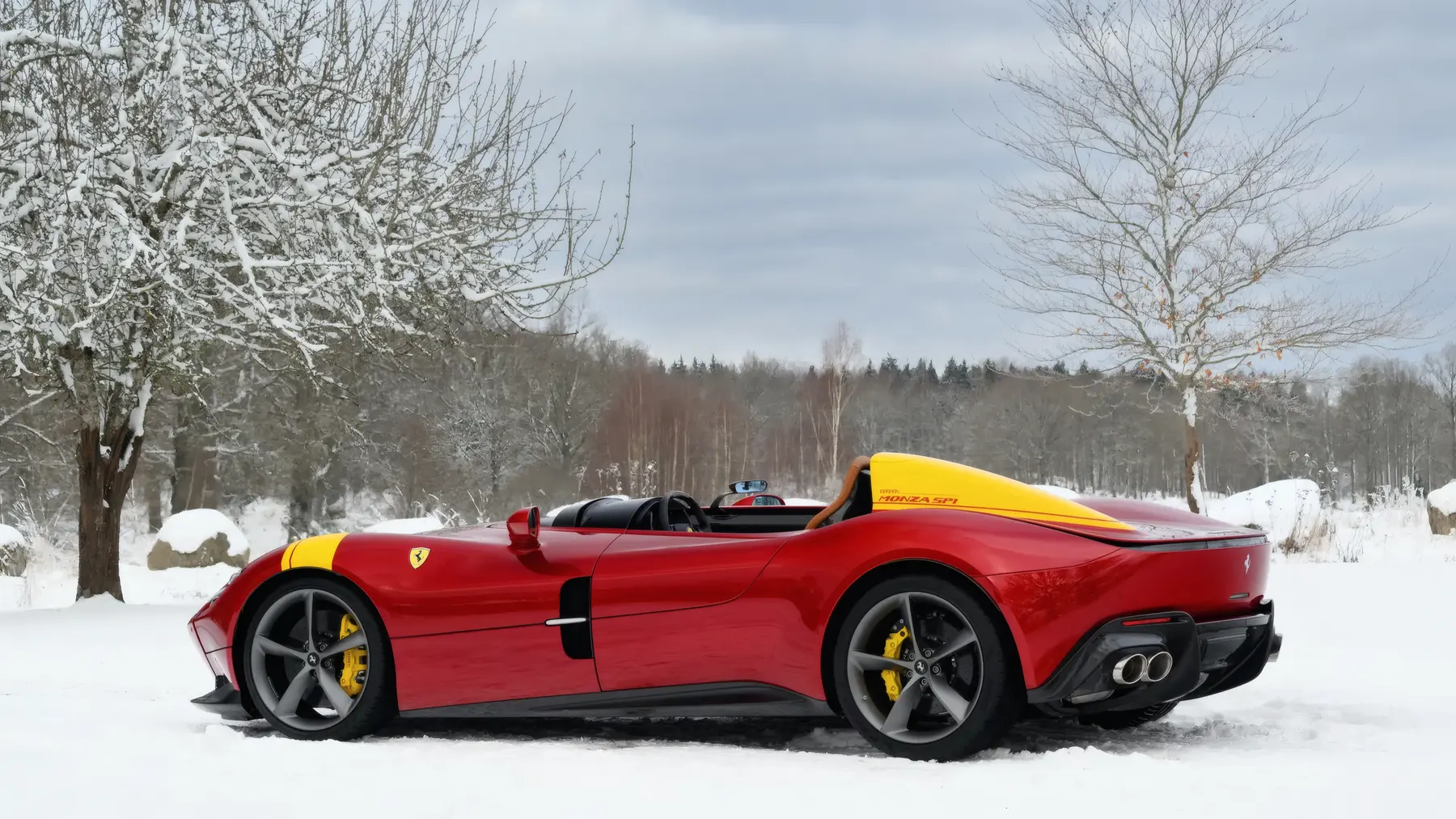
None of that engineering turns the Monza into a fully sheltered environment, and it was never meant to. Accounts from those who’ve ridden or driven one - including former Formula 1 champion Nico Rosberg, filmed by Ferrari lapping an SP1 around the Fiorano test track - describe an experience closer to riding a motorcycle or sitting in an open-wheel racer than driving anything with a badge on the bonnet. With no glass and no roof to muffle it, the intake roar of that V12 arrives at the driver’s ear with none of the usual filtering, and the sensation of speed at any given mph is dialled up considerably compared with a closed car covering the same ground. It’s a car built to be felt in the chest and the eardrums rather than judged on a data logger, which is a genuinely different proposition from most modern Ferraris, whatever underpinnings it shares with them.
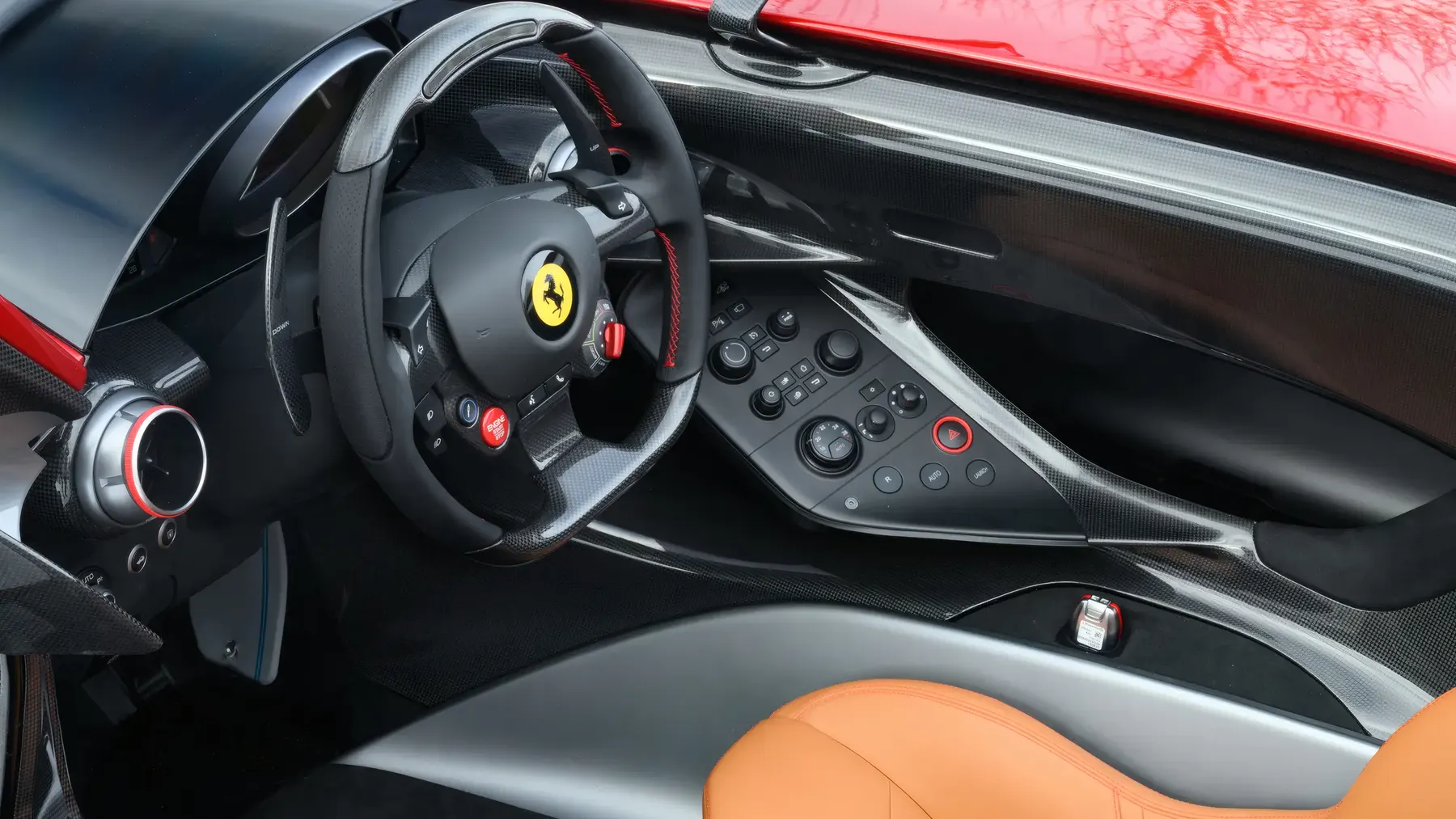
That same commitment to sensation is also where the Monza’s real compromises live, and they’re worth naming plainly rather than waving off as barchetta charm. The absence of a windscreen isn’t just a styling flourish; it means no meaningful weather protection whatsoever, so rain, cold, or anything short of a dry, mild day turns the car from event into endurance test. More consequential for a car aimed heavily at Ferrari’s wealthy American clientele, the lack of a windscreen has generally put the Monza outside street-legal registration under most US state regulations, meaning owners in Ferrari’s largest single market have largely had to treat their cars as track and show exhibits rather than genuine road cars, a limitation the marque’s home market in Europe doesn’t share. Several reviewers have also flagged the interior’s switchgear and instrument surround as surprisingly ordinary for the money, a plastic-heavy panel of conventional buttons that reads more like a well-equipped grand tourer than a seven-figure design object. And because the Monza is mechanically a lightly reworked 812 Superfast rather than a bespoke platform, a meaningful share of its price premium over that car is difficult to attribute to anything beyond exclusivity and design work, however handsomely that work turned out.
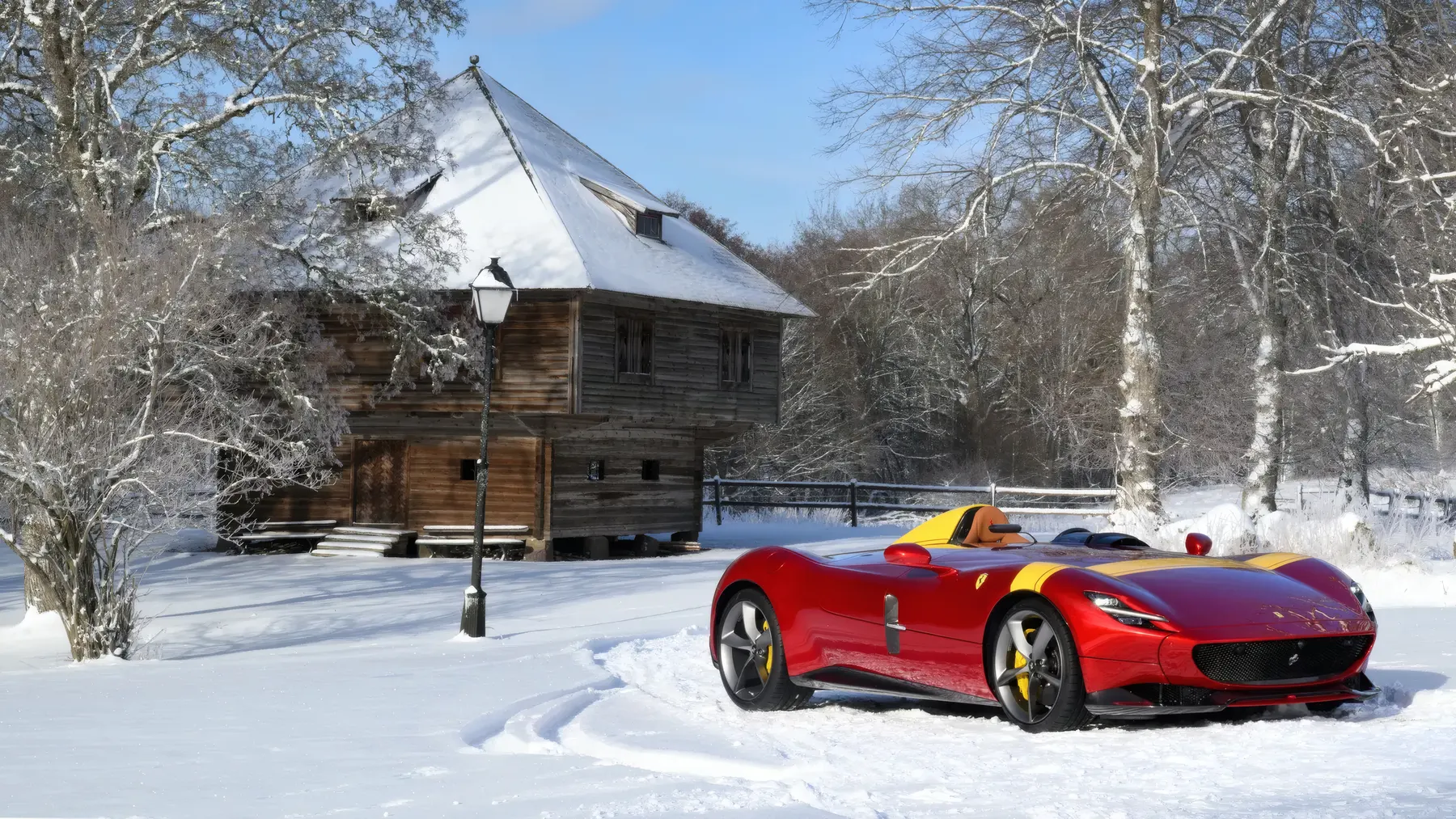
None of that dented demand. Ferrari’s reported launch price sat at roughly €1.6 million before options in Europe, with contemporary US reporting putting the figure closer to $1.75-2 million depending on specification, and all 499 combined examples were reportedly spoken for before the public unveiling at that year’s Paris Motor Show had even finished. Allocation was never simply a matter of writing a cheque: buyers were drawn from Ferrari’s existing client base and vetted individually, a process that has reportedly turned away even well-resourced collectors without the right relationship or ownership history with the marque. That scarcity has carried straight through to the secondary market, where tracked results put the average public sale price for a Monza SP1 or SP2 at just under three million dollars, with recorded highs approaching five million - several times what any original buyer paid at launch.
That successor relationship is instructive about what the Monza actually started. The next Icona model, the Daytona SP3, kept the same low-volume, design-led formula but moved to a closed, targa-topped body and a mid-mounted V12 drawing on LaFerrari Aperta underpinnings, and Ferrari’s own executives have been explicit that these cars aren’t meant to compete with the company’s outright supercars on technology; they’re meant to put design and driver sensation ahead of raw pace, a different brief entirely from a mainstream high-performance Ferrari. The Monza SP1 and SP2 set that template first: take a familiar drivetrain, wrap it in the most expressive design a small, design-led studio can produce with F1-grade materials, sell it exclusively to people who already own several Ferraris, and let everyone else watch from the outside. Whether that amounts to a fully realised piece of engineering or a beautifully executed exercise in scarcity marketing probably depends on which side of the order book you were standing on. As the opening statement for a new kind of Ferrari, though, it did precisely what it was built to do.
Technical data
Specifications
| Specification | Monza SP1 | Monza SP2 |
|---|---|---|
| Engine | 6.5-litre naturally aspirated F140 GC V12 | 6.5-litre naturally aspirated F140 GC V12 |
| Power | 799bhp @ 8,500rpm | 799bhp @ 8,500rpm |
| Torque | 530 lb-ft @ 7,000rpm | 530 lb-ft @ 7,000rpm |
| Transmission | 7-speed dual-clutch, rear-wheel drive | 7-speed dual-clutch, rear-wheel drive |
| 0-62mph | 2.9 sec | 2.9 sec |
| 0-124mph | 7.9 sec | 7.9 sec |
| Top speed | Beyond 186mph (claimed) | Beyond 186mph (claimed) |
| Dry weight | 1,500kg | 1,520kg |
| Wheelbase | 2,720mm | 2,720mm |
| Length | 4,657mm | 4,657mm |
| Width | 1,996mm | 1,996mm |
| Height | 1,155mm | 1,155mm |
| Seats | 1 | 2 |
| Production | 499 combined (SP1/SP2 split undisclosed) | 499 combined (SP1/SP2 split undisclosed) |
| Production years | 2019-2022 (2019-2023 model years) | 2019-2022 (2019-2023 model years) |
| Launch price | Approx. €1.6 million pre-options (Europe); approx. $1.75-2 million (US estimates) | Approx. €1.6 million pre-options (Europe); approx. $1.75-2 million (US estimates) |
Sources
- Ferrari Monza SP1 - Ferrari official model page
- The Ferrari Monza SP1 and SP2 Unveiled - Ferrari corporate news
- Ferrari Monza SP1 and SP2: The First in a New Concept of Limited Series ‘Icona’ Cars - Ferrari corporate news
- Ferrari Monza SP2 and SP1: Full Details and Ride Review - evo
- Ferrari Monza SP - Wikipedia
- Ferrari’s Newest Million-Dollar Supercar Already Sold Out - Fox Business
- The 10 Coolest Features on the Ferrari Monza SP1 - SlashGear
- Ferrari Monza SP1 and SP2 Are Not Street Legal in the US - CarBuzz
- Ferrari Monza SP1/SP2 Special Editions Offered - Kelley Blue Book
- Why the Monza SP1 and SP2 Are the Most Insane Ferraris of the Modern Era - autoevolution
- Ferrari Monza SP1/SP2 Market - Classic.com
- Creative Spirit: Flavio Manzoni Interview - Forza magazine
- Flavio Manzoni - Wikipedia
- Ferrari Plots More Icona Models and Hints at Future of V12 - Autocar
- Ferrari Daytona SP3 - Wikipedia
- Ferrari Monza (750 Monza / 860 Monza) - Wikipedia
- Ferrari 750 Monza - Ultimate Guide - Supercars.net
- Watch Former F1 Champion Nico Rosberg Thrash a Ferrari Monza SP1 Around Fiorano - Gulf News
Join the discussion
Comments
Loading comments…
Leave a comment
Share a detail, memory, or perspective. Every comment is reviewed before publication.