Bugatti Chiron Super Sport: The Grand Tourer After the 300mph Record
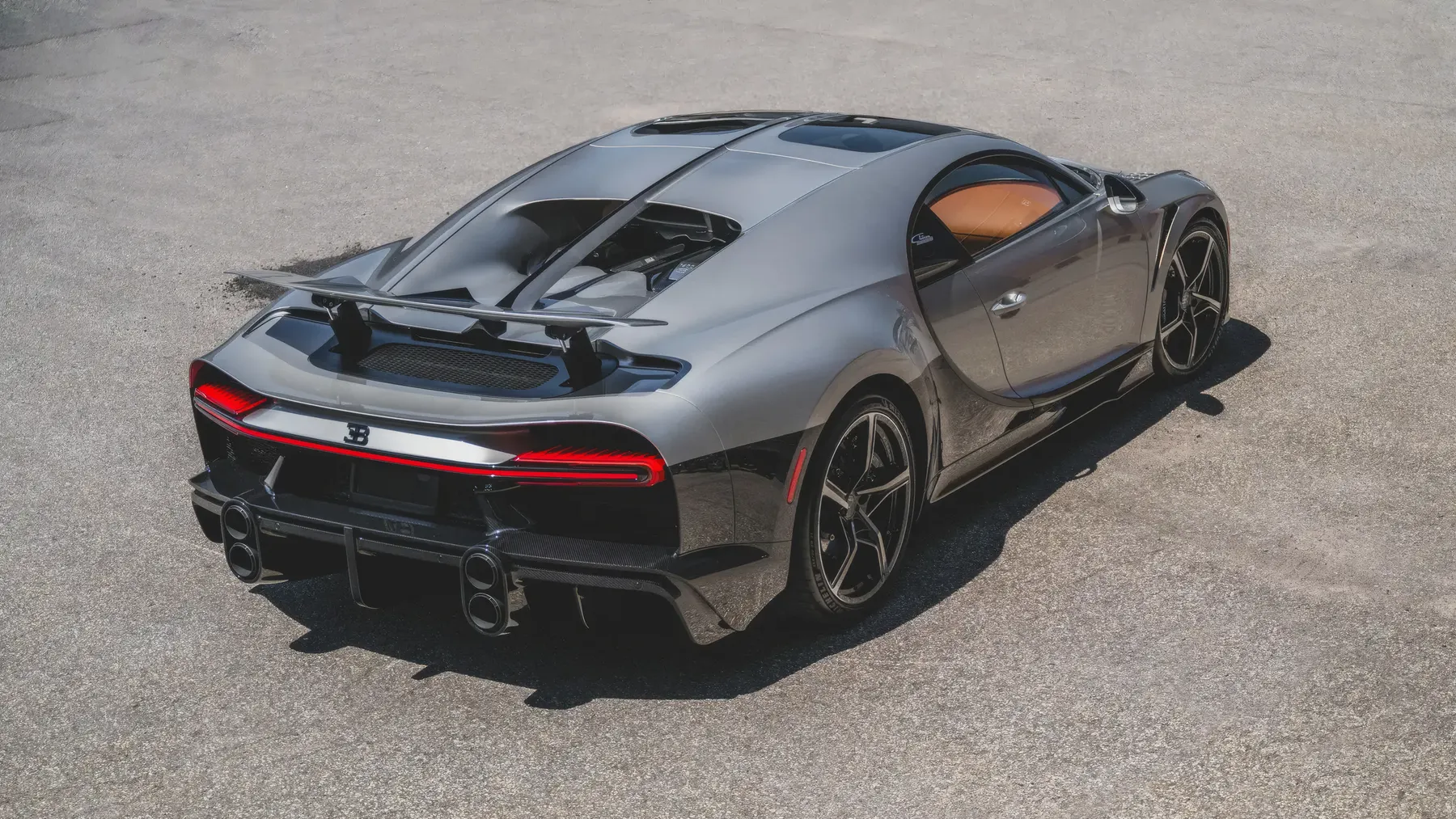
2023 Bugatti Chiron Super Sport

Images: RM Sotheby's
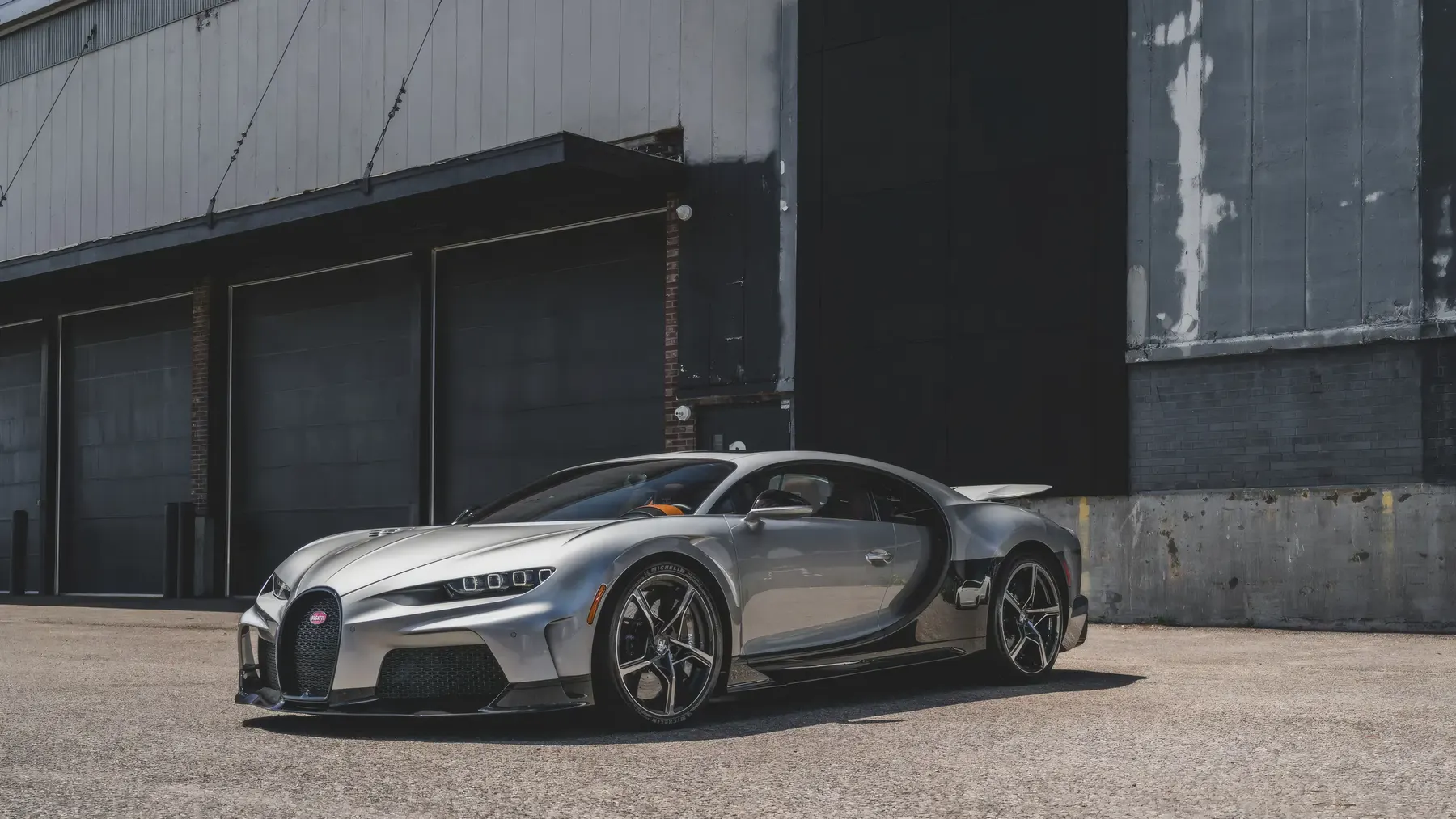
Before a single customer ever climbed into a Chiron Super Sport, the car’s signature achievement had already happened to someone else’s car. On 2 August 2019, at the Volkswagen Group’s private Ehra-Lessien test track in Germany, Bugatti’s Le Mans-winning test driver Andy Wallace took a stripped, roll-caged prototype to a TÜV-certified 304.773mph, becoming the first person to drive a production-derived car past the 300mph mark. The car customers eventually bought, badged Chiron Super Sport, was not that car. It was a plusher, heavier, better-trimmed descendant of it, electronically capped at 273mph, with proper upholstery and none of the record car’s stripped-out cabin. That is not really a criticism, more the whole point of the exercise: the Super Sport is Bugatti’s attempt to fold an outright speed record into a car you could actually live with, and the tension between the record-setting prototype and the car you could actually order explains almost everything else about it.
The Chiron itself arrived at the Geneva motor show in March 2016 as successor to the Veyron, tasked, according to Bugatti’s own account of the brief given to its engineers, with simply being better than its predecessor in every respect. Under the engine cover sat a descendant of the Veyron’s basic architecture: an 8.0-litre, quad-turbocharged W16, effectively two narrow-angle V8s mounted around a common crankshaft, the upper two banks set 90 degrees apart and the lower two splayed a further 15 degrees on each side beneath them - a genuinely strange WR16 layout that owes nothing to any other production engine. Across the Chiron’s eight-year run, Bugatti built a family of variants around that engine: the standard Chiron and the stiffer, lighter Chiron Sport covered the early years; the Chiron Pur Sport, limited to 60 units from 2020, went all-in on cornering ability with a shorter final drive, a large fixed rear wing and a 50kg weight cut; and the Super Sport, unveiled in June 2021 and delivered to customers from the end of that August, went the other way entirely, built around outright top speed while trying not to sacrifice the comfort that has defined Bugatti’s grand tourers since long before anyone was measuring aerodynamic stall.
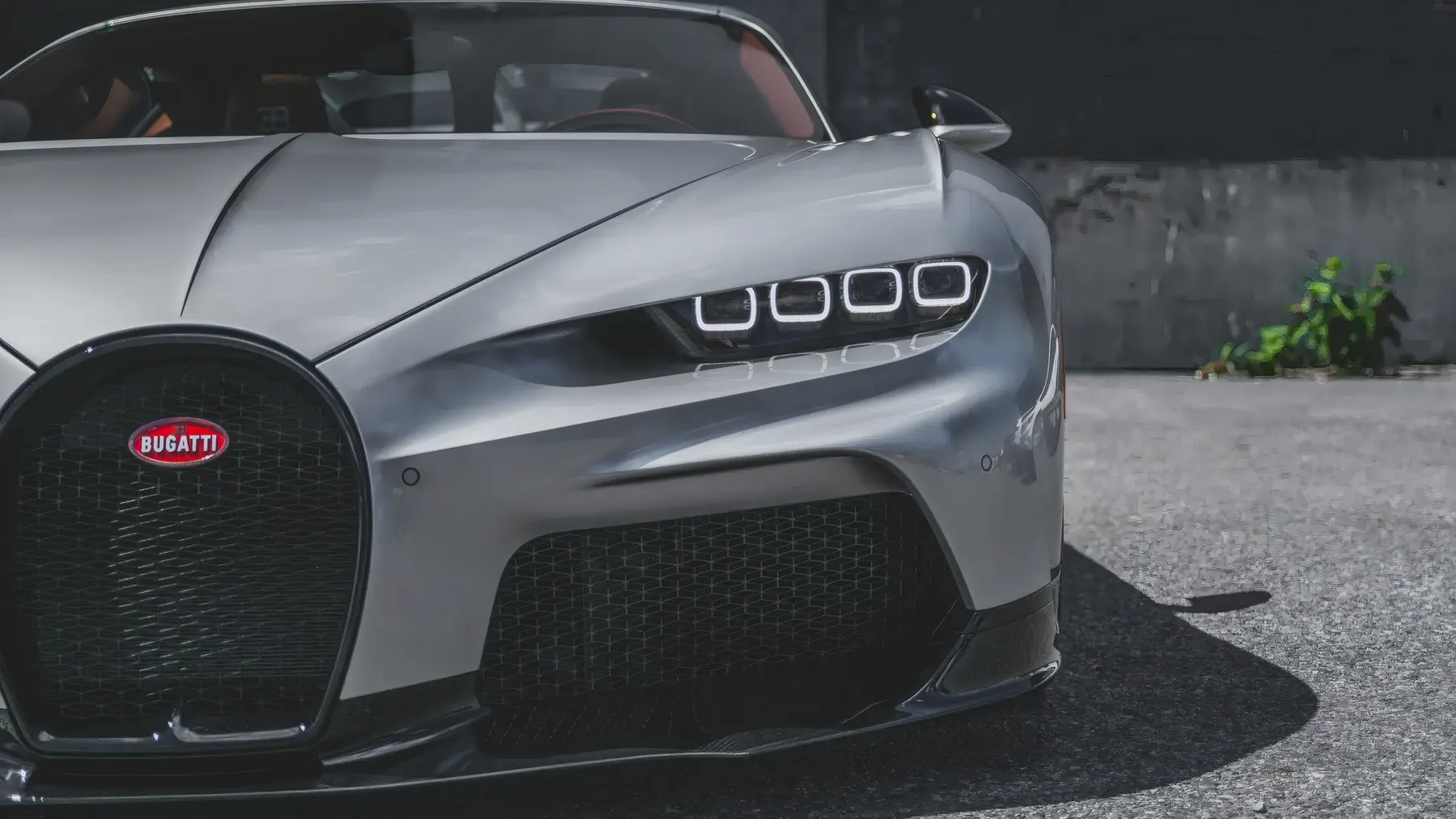
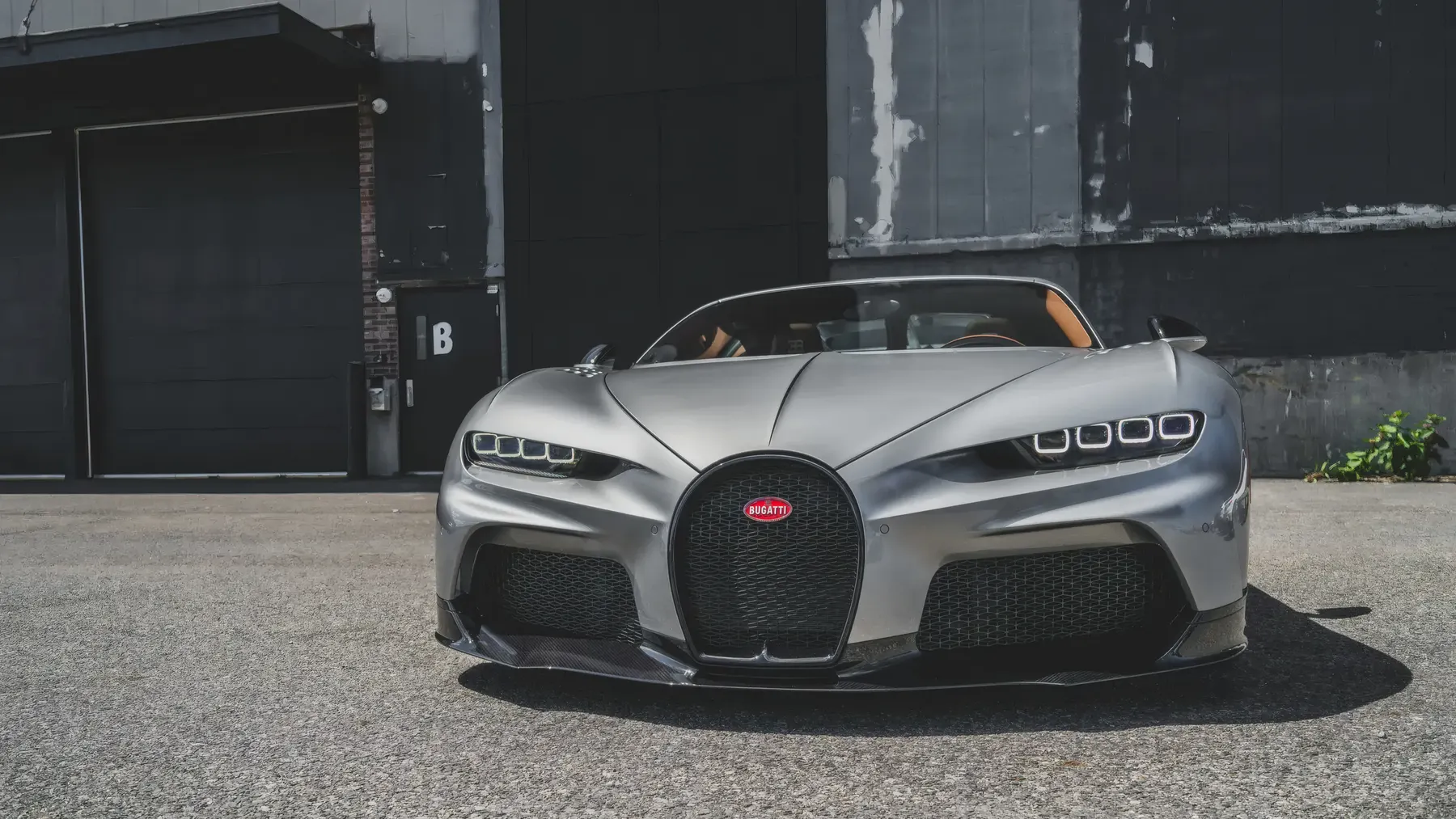
Most of what separates the Super Sport from a standard Chiron lives in its bodywork. Extended by around 250mm over the standard car’s tail, this “longtail” treatment holds airflow attached to the bodywork for longer before it separates, reducing aerodynamic stall and drag at the very top of the speed range. Air curtains ahead of the rear wheels channel air along the flanks rather than letting it churn in the wheel arches, while nine outlet slots on each front wing - a deliberate visual echo of the Bugatti EB110 Super Sport from the early 1990s - bleed pressure that builds up in the wheel wells as the front wheels spin. The rear diffuser sits higher than on the standard car and works alongside twin vertical exhaust stacks that effectively form part of the diffuser itself. Drag coefficient shifts across Bugatti’s driving programs, from around 0.35 in Top Speed mode up to 0.59 when the rear air brake deploys under heavy braking, and ride height drops correspondingly with each mode, from 125mm at both ends in Lift mode down to just 80mm at the front and 89mm at the rear in Top Speed mode. None of it is subtle, and none of it is meant to be: Bugatti describes the entire skin of the car as designed around the mantra “form follows performance.”
The engine itself was recalibrated rather than reinvented. Bugatti’s own technical datasheet lists 1,578bhp arriving at 7,050–7,100rpm and 1,180lb-ft of torque available from 2,250rpm all the way to 7,000rpm - a genuinely enormous plateau that means the engine is pulling close to its maximum for almost the entire usable rev range, rather than building to a single peak. That is roughly 100bhp more than the standard Chiron produces, extracted largely through revised turbocharging and cooling rather than any fundamental redesign. Bugatti quotes 0–62mph in 2.4 seconds, 0–124mph in 5.8 seconds, 0–186mph in 12.1 seconds and 0–249mph in 28.6 seconds, figures independently reproduced by Autocar during its own testing. A longer seventh-gear ratio than the standard Chiron’s lets the car hold its speed for longer rather than running out of gearing early: Bugatti’s own gear-speed chart shows first gear topping out around 62mph, second at 99mph, third at roughly 130mph, fourth at 174mph, fifth at 211mph and sixth at 258mph, with seventh gear’s theoretical maximum sitting right at the car’s 273mph limiter - a ratio that exists more on paper than in practice, since the electronics cut in exactly there. Braking is similarly extreme: Bugatti quotes 33 metres to stop from 62mph, 124 metres from 124mph and 520 metres from 249mph, using 420mm front and 400mm rear discs gripped by eight-piston and six-piston calipers respectively.
The Super Sport 300+ deserves its own mention, because it is easy to conflate with the regular Super Sport and the two are not identical. Following Wallace’s record run, Bugatti built 30 examples of a special edition visually and mechanically inspired by the prototype, finished in exposed black carbon fibre with the marque’s Jet Orange accents and priced from around €3.5 million; the last of the batch was delivered to its owner in mid-2022. Even the 300+ customer cars were limited to 273mph rather than the prototype’s 304.773mph, a decision Bugatti attributed to tyre durability and general longevity at those speeds - the record run itself used bespoke Michelin Pilot Sport Cup 2 tyres, individually X-rayed after production, experiencing tearing forces in the region of seven tonnes at full speed. It is also worth being precise about what that 304.773mph figure actually represents: it has never been ratified as an official two-way average speed record, the convention normally used to cancel out wind and gradient, because Wallace’s run was made in one direction only. Bugatti has generally been careful in its own materials to describe the achievement in those terms rather than claiming an outright, sanctioned record.
On the road, Bugatti’s own engineers describe the difference between Super Sport and Pur Sport as genuinely pronounced. Frank Heyl, the brand’s deputy design director, has said the two models look very different and feel even more different to drive; Jachin Schwalbe, head of chassis development, has described the Super Sport as remaining deliberately neutral and quiet at speeds well beyond where the Pur Sport is generating meaningful downforce, prioritising straight-line stability over outright cornering feel. Journalists who have driven both back to back tend to agree: Top Gear found an owner who had already covered 50,000 miles in a Super Sport, using it as an outrageously usable everyday car, while Autocar’s tester likened the whole Chiron driving experience, ergonomically, to sitting in a Volkswagen Golf, noting that the starter button and general switchgear are drawn straight from the Volkswagen Group’s wider parts bin - deliberately unintimidating for a car capable of speeds most drivers will never see the underside of. That is arguably the Super Sport’s cleverest trick: making something genuinely extraordinary feel, for the vast majority of the time you spend in it, entirely ordinary.
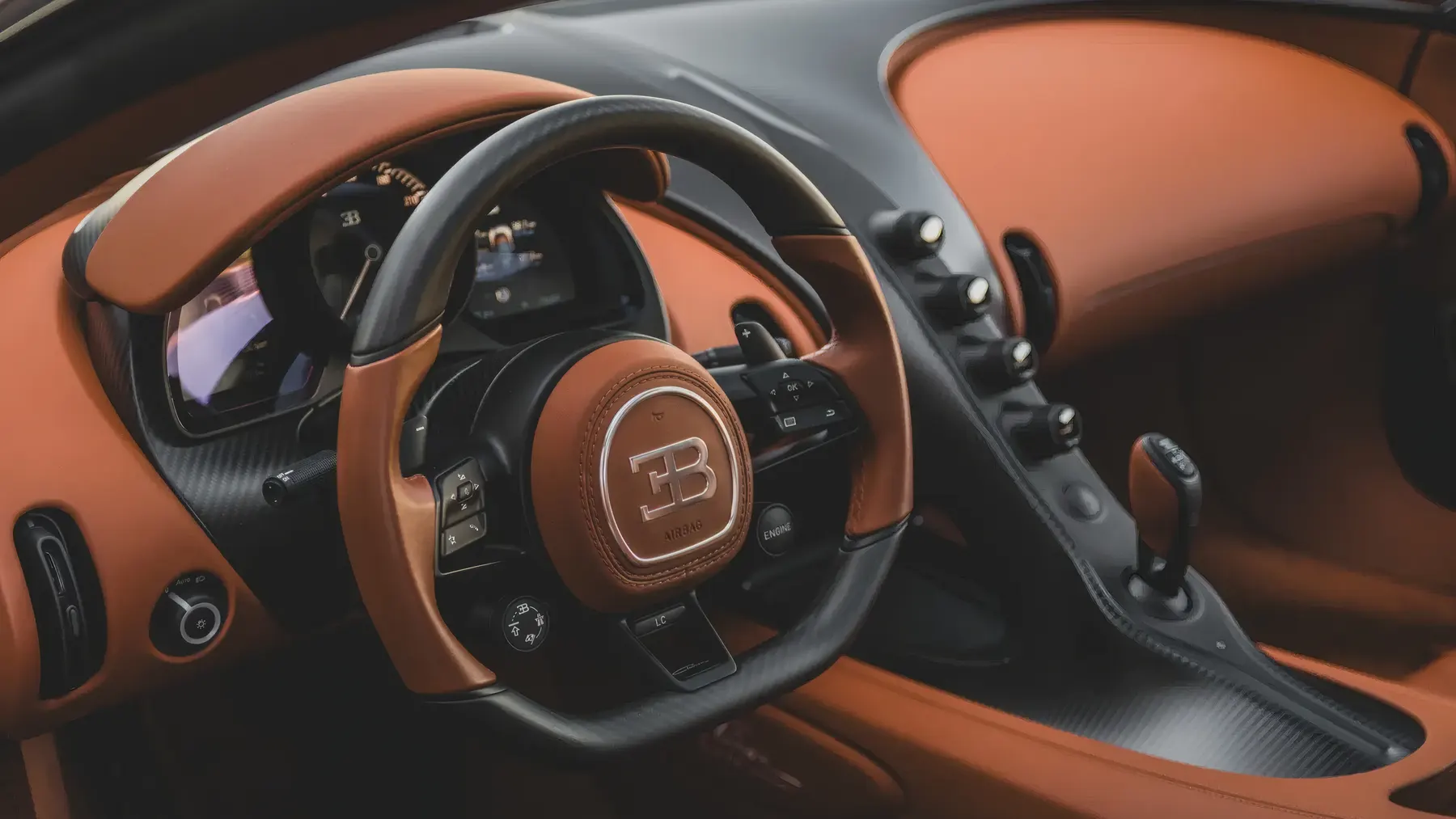
That deliberate ordinariness comes at a real cost once you start asking the Super Sport to do more than cruise, and it is worth naming the compromises plainly rather than waving them away as charm. At a claimed kerb weight in the region of 2,000kg - Bugatti’s own datasheet lists 1,995kg DIN-empty, though that figure is explicitly carried over from the standard Chiron’s homologation rather than measured separately for the Super Sport, and independent road testers have put real-world kerb weight closer to 2,080kg with fluids and a driver aboard - this is a heavy car by any hypercar standard, and it does not entirely hide it. Autocar’s own verdict on the Super Sport specifically was that the ride is reasonable on the road, but the handling is fairly unapproachable, a pointed observation from a publication otherwise generous about the car’s engineering. Visibility is only average and worsened by the longtail’s high-shouldered rear bodywork, and there is no blind-spot monitoring or any of the driver-assistance systems - adaptive cruise control, active lane-keeping and the like - that buyers of far cheaper cars now take for granted; one reviewer, comparing it directly with a contemporary Porsche 911, called the infotainment system hopelessly outdated, and it is a fair criticism, since there is no central touchscreen at all, just a pair of small driver-facing displays flanking the analogue speedometer. Running costs are equally uncompromising: Bugatti’s own combined-cycle figures work out to around 13mpg and roughly 487g/km of carbon dioxide, and at a sustained 273mph the 100-litre fuel tank would empty in about eight minutes. Perhaps the most awkward criticism is a competitive one. Since the Super Sport’s launch, electric hypercars such as the Rimac Nevera have matched or beaten its acceleration figures while weighing about the same or less, blunting the closely guarded claim to outright pace that has underpinned Bugatti’s identity since the Veyron. None of this makes the Super Sport a bad car - it remains a staggering piece of engineering - but it was never quite trying to be the last word in dynamic reward, and buyers chasing that experience should look toward the Pur Sport instead, or beyond the Chiron range entirely.
Pricing reflected its position near the top of the regular Chiron range: around €3.2 million net at launch in 2021, above the Pur Sport’s roughly €3.1 million and below the 300+ special edition’s circa €3.5 million, though conversions vary between outlets, with figures ranging from roughly $3.9 million to £2.6 million depending on exchange rate and date. All of it sat within Bugatti’s hard cap of 500 total Chirons across every variant, a limit reached in May 2024 with a car called L’Ultime - fittingly, itself finished to Super Sport specification, its bodywork fading between the two colours worn by the very first Chiron shown at Geneva in 2016, its flanks hand-scripted with the locations of the model’s defining moments, Ehra-Lessien among them.
The Chiron’s replacement, the hybrid V16 Tourbillon, was unveiled within weeks of L’Ultime’s completion, and its combustion-electric powertrain makes plain that the Super Sport represents something closer to an ending than a beginning: the final full expression of the pure, unassisted quad-turbo W16 philosophy Bugatti had been refining since the original Veyron, built at a moment when a two-tonne, four-figure-horsepower petrol car pushing past 270mph was still, just about, the most extraordinary thing money alone could buy. Whether that remains true for very much longer is genuinely uncertain, and the Super Sport seems to know it. There is a valedictory quality to a car built, quite openly, as the plush and drivable answer to a question a stripped prototype had already settled two years earlier. It does not need to prove anything else. It already has, on someone else’s behalf, and that is precisely the point.
Technical data
Specifications
| Specifications | Bugatti Chiron Super Sport (2022–2024 model years) |
|---|---|
| Engine | 8.0-litre (7,993cc) quad-turbocharged W16, DOHC, 4 valves per cylinder |
| Power | 1,578bhp @ 7,050–7,100rpm |
| Torque | 1,180lb-ft from 2,250–7,000rpm |
| Transmission | 7-speed dual-clutch automatic, permanent all-wheel drive |
| 0–62mph | 2.4 seconds |
| 0–124mph | 5.8 seconds |
| 0–186mph | 12.1 seconds |
| 0–249mph | 28.6 seconds |
| Top speed (customer car, electronically limited) | 273mph |
| Top speed (Super Sport 300+ prototype, one-way test run, Aug 2019) | 304.773mph (unratified as a two-way record) |
| Kerb weight | approx. 1,995–2,080kg (sources vary) |
| Length | 4,733mm |
| Width (incl. mirrors) | 2,183mm |
| Height | 1,212mm |
| Wheelbase | 2,711mm |
| Track, front / rear | 1,749mm / 1,662mm |
| Brakes, front / rear | 420mm / 400mm discs, 8-piston / 6-piston calipers |
| Wheels, front / rear | 20in / 21in, bespoke 5-Y-spoke design |
| Tyres, front / rear | 285/30 R20 / 355/25 R21, bespoke Michelin Pilot Sport Cup 2 |
| Fuel tank | 100 litres |
| Fuel economy (combined, official) | approx. 13mpg (Imperial) |
| CO2 emissions (combined) | approx. 487g/km |
| Launch price (2021, net) | approx. €3.2 million |
| Production | Part of the 500-unit total Chiron programme, 2016–2024; no separate production cap published for the standard Super Sport |
Sources
- Bugatti Chiron Super Sport - Official Technical Specifications, Bugatti Newsroom
- The Bugatti Chiron Super Sport – The Quintessence of Luxury and Speed, Bugatti Newsroom
- Bugatti Chiron Super Sport Makes its First Stop in the Middle East, Bugatti Newsroom
- Bugatti Chiron Super Sport – High-Speed Testing for Optimal Longitudinal Performance, Bugatti Newsroom
- Chiron Super Sport 300+ and Chiron Pur Sport – Bugatti’s Broad Spectrum of Performance, Bugatti Newsroom
- Final World Record-Breaking Bugatti Chiron Super Sport 300+ Delivered, Bugatti Newsroom
- ‘L’Ultime’: Celebrating the End of the Incomparable Chiron Era, Bugatti Newsroom
- Bugatti Chiron Super Sport review: a 273mph daily-driver, Top Gear
- Behold the Bugatti Chiron Super Sport, Top Gear
- Bugatti Chiron Super Sport 2022 First Drive, Autocar
- Tested: Bugatti Chiron - Full Review, Price & Features, Autocar
- Bugatti Chiron review – the final generation of Bugatti’s W16 masterpiece, evo
- Review: 2022 Bugatti Chiron Super Sport Hyperactivates the Hypercar Experience, Motor Authority
- Bugatti Has Built the Final Chiron, Motor Authority
- 24 Hours in a 2019 Bugatti Chiron Review, WhichCar
- Andy Wallace Says Bugatti Chiron Super Sport 300+ Was Still Accelerating At 304 MPH, Carscoops
- Bugatti Chiron Super Sport 300+ Finishes Production, Final One Delivered, Motor1
- Bugatti Announces New Variant, a $3.9 Million Chiron Super Sport, Bloomberg
- Bugatti Chiron, Wikipedia
- Bugatti Tourbillon, Wikipedia
Join the discussion
Comments
Loading comments…
Leave a comment
Share a detail, memory, or perspective. Every comment is reviewed before publication.