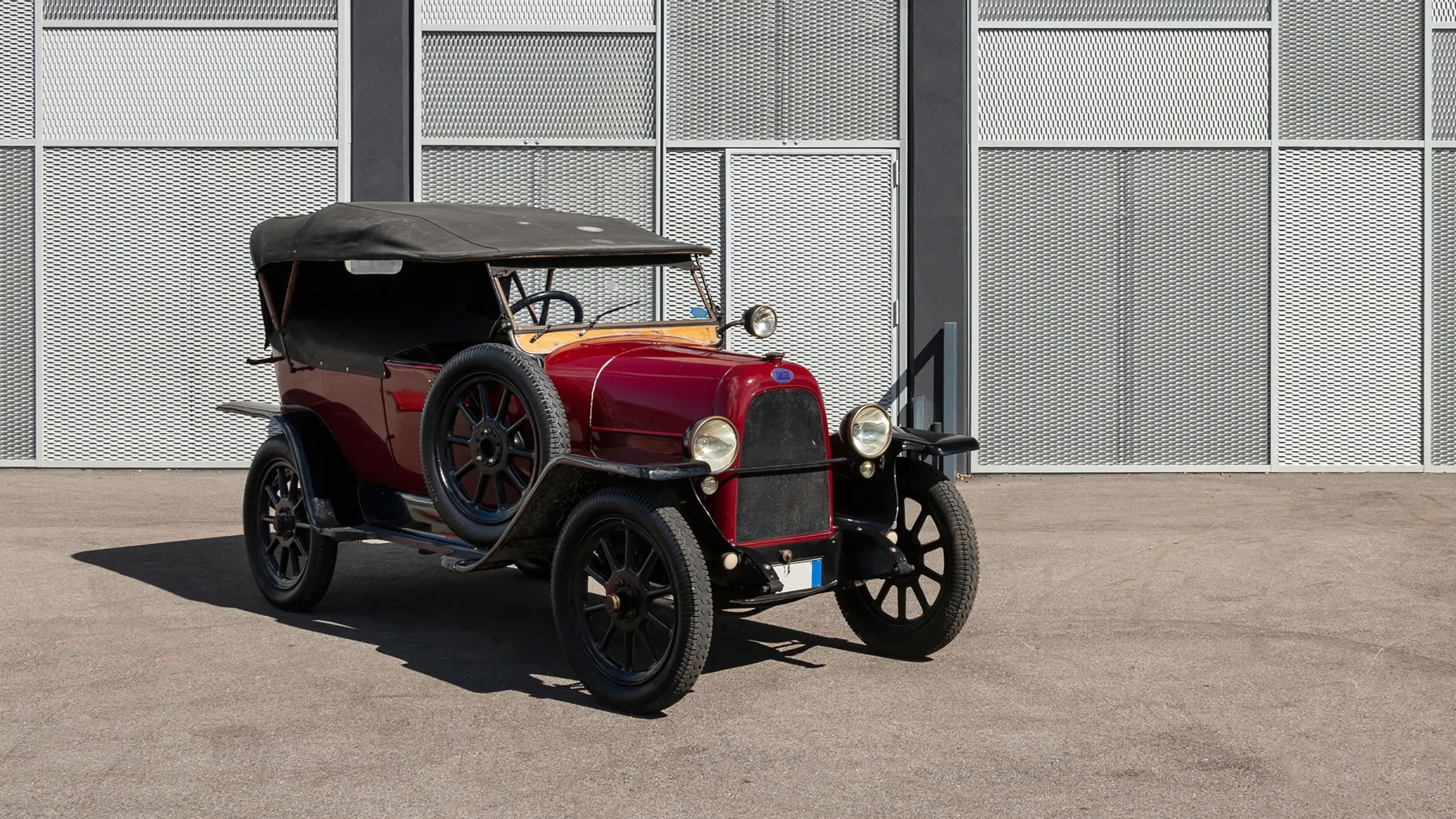
1920 Fiat 501 Tourer
When Fiat's engineers returned to civilian work after the Armistice, the brief handed to technical director Carlo Cavalli for the company's first entirely new postwar design read less like a specification sheet...
Curated collection
Cars that helped manufacturers, industries and ordinary motorists return to civilian life after war, rebuilding production as well as mobility.
Collection note
Wars do not end at the factory gates. When peace returns, carmakers must convert plants, materials and engineering teams away from military production while confronting damaged infrastructure, restricted finances and customers whose needs have changed dramatically. This collection gathers cars that played a meaningful role in that transition: models that restarted civilian assembly lines, re-established manufacturers in the marketplace, introduced practical new postwar ranges or helped put private motorists back on the road after years of disruption. Their significance is not necessarily found in exotic engineering or outright performance, but in what they enabled - renewed production, restored exports, revived factories and the return of affordable personal transport. Some became major commercial successes; others simply provided the bridge between a manufacturer’s prewar identity and the very different industry that followed. These are cars whose importance extends beyond the machines themselves, representing moments when automotive companies and the societies around them began moving again.
When Fiat's engineers returned to civilian work after the Armistice, the brief handed to technical director Carlo Cavalli for the company's first entirely new postwar design read less like a specification sheet...