Fiat 501 Tourer: Turin's 1919 Answer to Ford's European Ambitions
1920 Fiat 501 Tourer

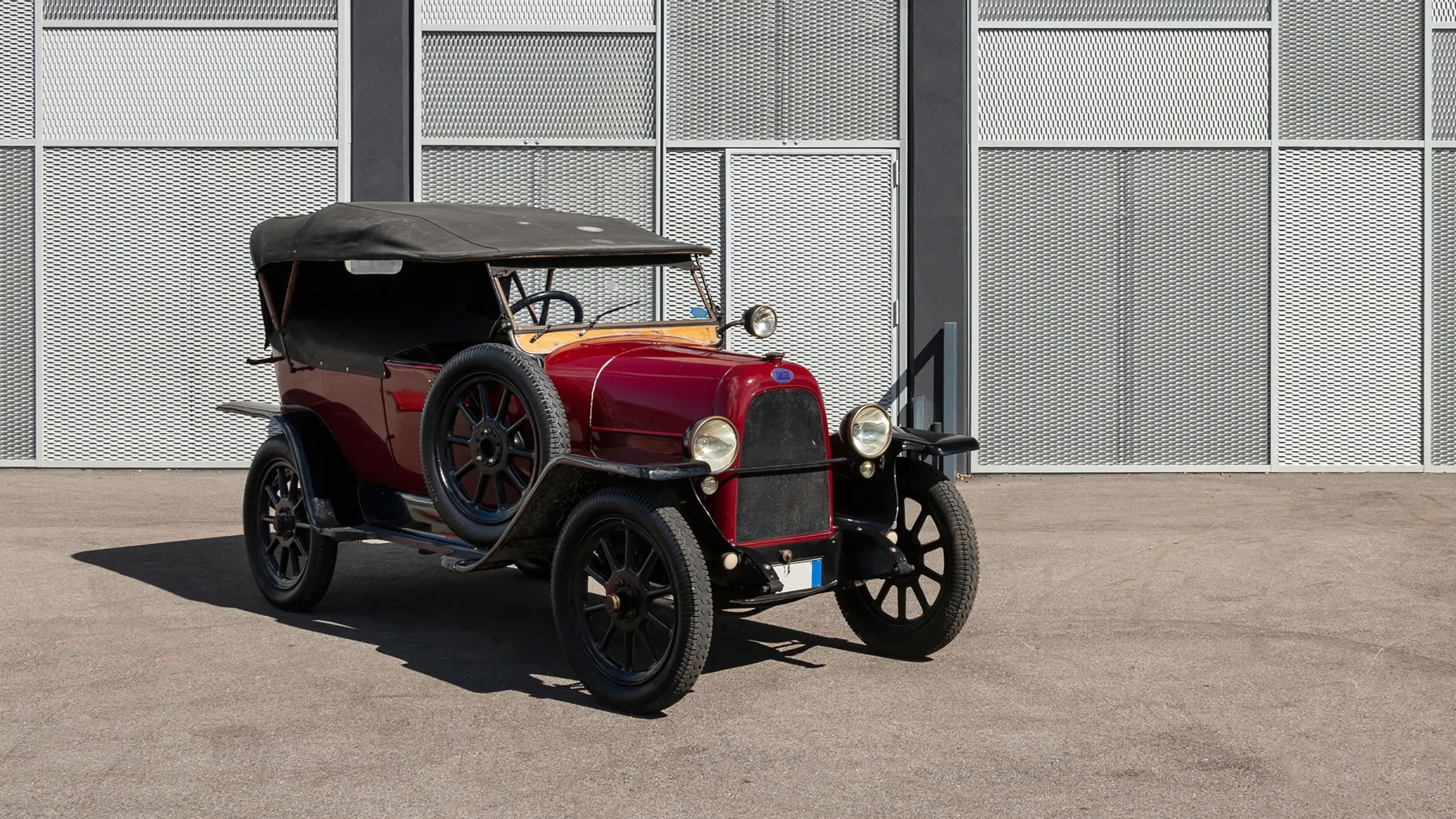
Images: Paolo Carlini / RM Sotheby's
When Fiat’s engineers returned to civilian work after the Armistice, the brief handed to technical director Carlo Cavalli for the company’s first entirely new postwar design read less like a specification sheet than a list of contradictions. The car had to be simple enough that a village blacksmith could keep it running, tough enough to double as light agricultural machinery, quick and light enough to be competitive on a Grand Prix grid, robust enough for roads that had barely recovered from four years of war, and stylish enough to actually sell. Cavalli had already sketched something smaller and more radical, a roughly one-litre “Fiat 500” project, but shelved it as too advanced and too commercially risky for the moment. What emerged instead, launched in November 1919 as a four-door Torpedo tourer, was the Fiat 501, the car that reopened Fiat’s civilian production line after four years of wartime manufacturing and became the company’s first genuine mass-market success of the postwar era. The earliest cars were built at Fiat’s existing Corso Dante works in Turin; later production, including much of the run from the early 1920s onward, shifted to the newly completed Lingotto complex, one of the largest and most advanced car factories in Europe at the time.
The timing was not accidental. With European industry struggling to retool after the war, Henry Ford saw an opening to sell the Model T formula into the continent’s shattered car market, and Fiat, one of the few manufacturers with the capital and factory capacity to respond quickly, got there first with a genuinely modern small family car; Citroën’s rival Type A would not appear until the following year. The 501 replaced the wartime-era Fiat 70 in the range and slotted in as the smallest of a family of related postwar Fiats that also included the larger 505 and 510. Where the 70 had been a fairly conventional prewar design pressed into continued service, the 501 was engineered from the ground up as an affordable, mass-producible touring car, priced at launch around 32,000 lire in Italy and, once exports to Britain got underway, at roughly £340 by the mid-1920s.
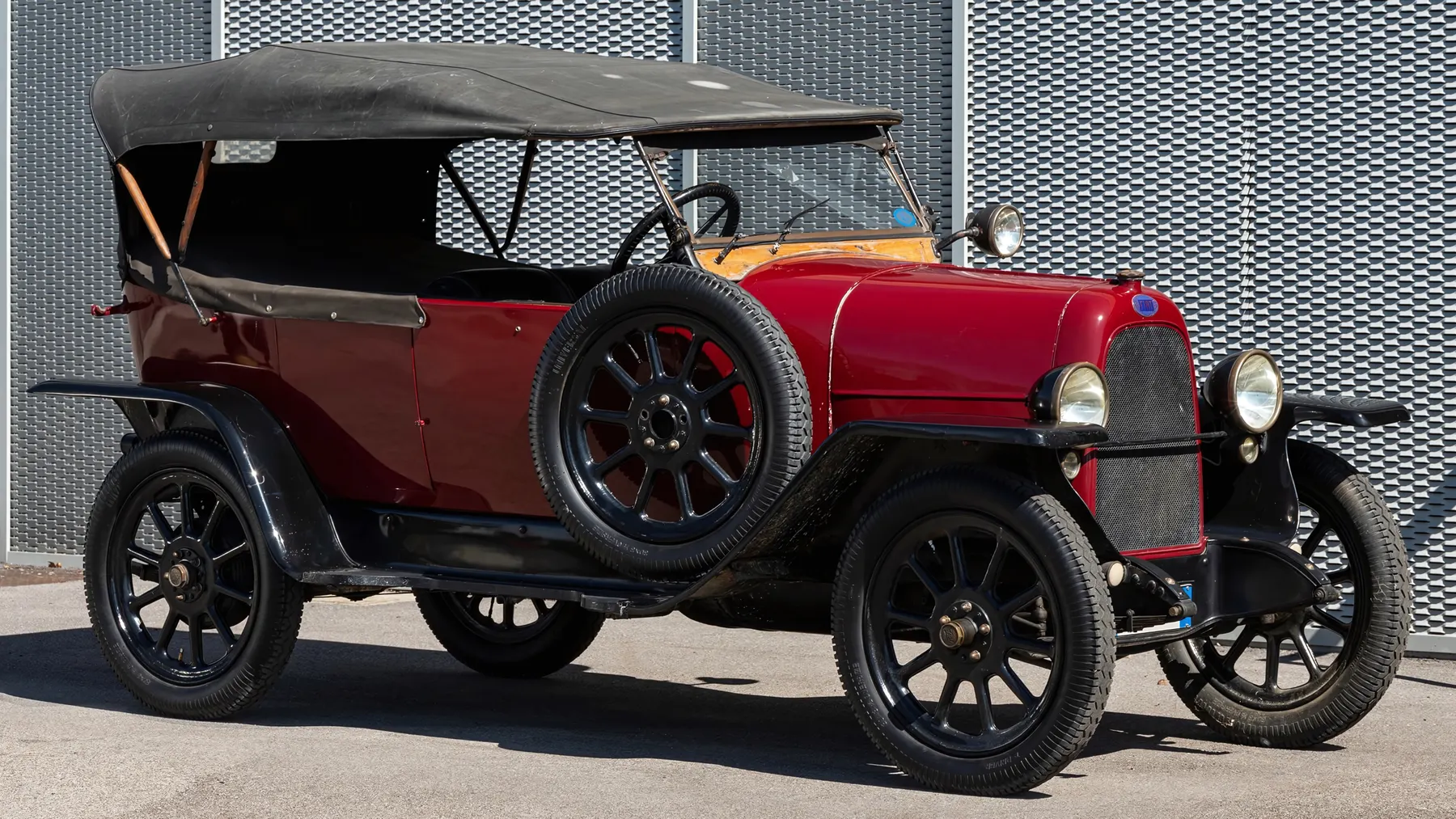
Export markets did much of the heavy lifting for the 501’s commercial success. A large share of the roughly 70,000 cars built are estimated to have been shipped outside Italy, and Australia in particular became one of Fiat’s strongest overseas markets, arriving as bare chassis through agents such as Tarrant Motors and its successor, Autocar Industries, in Melbourne. There the 501 competed directly against a wave of smaller British economy cars from makers like Austin, and despite import duties under Britain’s Imperial Preference system, which penalised manufacturers outside the Empire, buyers were reportedly willing to pay the premium for a car that felt noticeably larger and more substantial than similarly priced British rivals. That willingness says as much about the gap the 501 filled in the market as any single engineering feature: it occupied a genuinely useful middle ground between costly prewar-style luxury tourers and the more marginal economy cars then emerging elsewhere in Europe.
Mechanically, the 501 was more ambitious than its unassuming looks suggested. Its 1,460cc side-valve four-cylinder engine, cast as a single monobloc unit with a bore of 65mm and a stroke of 110mm, produced a modest 23bhp at 2,600rpm, but it drove through a four-speed manual gearbox at a time when many European rivals still made do with three ratios. The engine also used a fully detachable cylinder head, unusual enough on a mass-market car of 1919 that Fiat’s own historians still single it out, together with full electric lighting and starting rather than the acetylene lamps and hand cranks still common on cheaper machinery of the day. Suspension followed the accepted formula of the period, semi-elliptic leaf springs front and rear on a simple ladder chassis with a 2,650mm wheelbase, and drive went to the rear wheels. Kerb weight depended heavily on which body a customer, or a local coachbuilder, fitted to the chassis, but ran somewhere in the region of 900 to 1,000kg for open touring coachwork, and comfortably more for a closed saloon.
Fiat sold the 501 chiefly as a rolling chassis, and much of its worldwide identity came from the coachbuilders who clothed it rather than from Fiat’s own body shop. In Britain, Italy and continental export markets, buyers could order factory-bodied four-door saloons or two- and four-door Torpedo tourers, but in markets such as Australia the chassis and engine arrived alone and were bodied locally: firms including Holden’s Motor Body Builders in Melbourne and Horwood Bagshaw in Adelaide built everything from standard open tourers to sportier two-seat roadsters onto 501 running gear, producing a car whose appearance varied enormously from one export territory to the next. Fiat itself widened the factory range from 1921 with the sportier 501 S, its power raised to around 27bhp, and the rarer 501 SS at roughly 30bhp; only around 2,600 examples of the S are thought to have left the factory, making it a genuinely uncommon sight even in period. A militarised 501 C, built for the Italian army, followed in 1923. Aftermarket tuners went further still: the Milanese specialist Eugenio Silvani sold a bolt-on overhead-valve conversion, marketed as the Superculasse, that replaced the 501’s side-valve head with a kit of gaskets, manifolds and pushrods enthusiasts could fit at home, transforming the car’s breathing and, by extension, its performance; one Silvani-headed 501 was reportedly commissioned for an Indian Maharajah who wanted a Western car capable of handling both elegant occasions and the rough terrain of the Punjab.
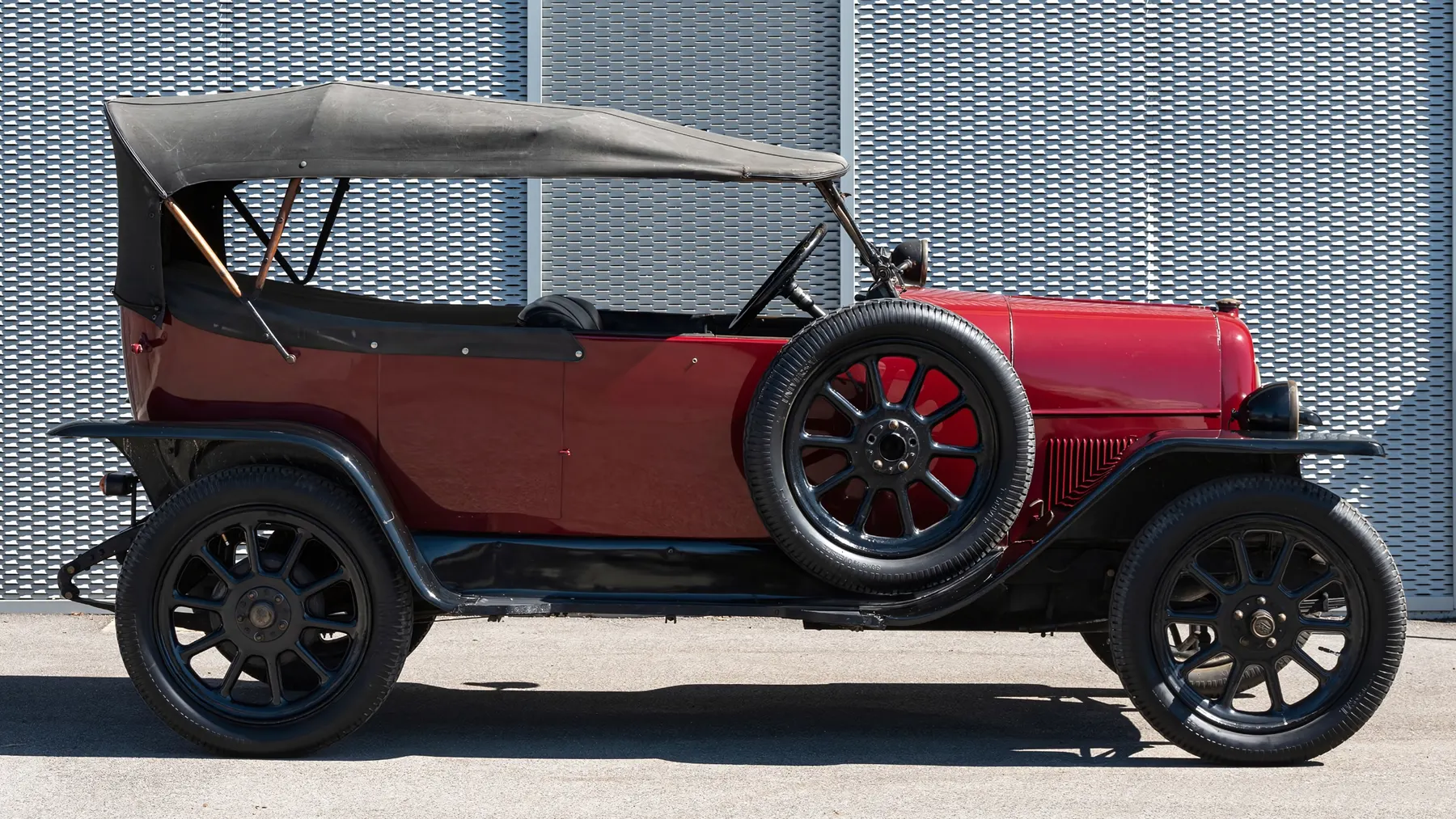
On the road, period and present-day accounts largely agree the 501 felt lively rather than ponderous for its era. Riding on tall, skinny-tyred wheels around 19 inches in diameter that kept unsprung weight relatively low, it had notably quick, direct steering by the standards of 1920s touring cars, and owners who campaign surviving examples on modern hillclimbs and rallies still describe it as eager rather than laboured, capable of tackling Alpine passes that would have troubled heavier contemporaries. That said, the side-valve engine’s low compression and modest breathing limited it to around 3,500rpm in practice, and top speed for the standard car sat in the low-to-mid forties in miles per hour; the sportier S and SS variants were quicker, though period sources disagree by a wide enough margin on exactly how much quicker that any specific figure should be treated with caution. It was, in short, a car engineered for steady, dependable cross-country touring rather than outright pace, and Fiat never pretended otherwise.
Fiat did, however, let the 501 loose in serious competition. At the 1922 Targa Florio in Sicily, already established as one of the toughest road races in Europe, works test driver Enrico Giaccone entered his own 501 as Fiat’s sole representative that year and brought it home fifth overall, winning its class outright against far more specialised competition machinery on one of the most punishing circuits of the era. That result sat alongside, rather than as part of, Fiat’s parallel and far more famous Grand Prix programme of the early 1920s, staffed by a competition engineering department the historian Michael Sedgwick once likened to a who’s who of European automotive design, a group that included Vittorio Jano and Tranquillo Zerbi, both of whom went on to shape Alfa Romeo’s and Fiat’s later racing cars. Period literature also makes a brief, tantalising reference to a twin-overhead-camshaft 501-based competition engine said to have found some success in racing, though no further detail about it has surfaced in reliable sources, and it remains one of the model’s more intriguing loose ends.
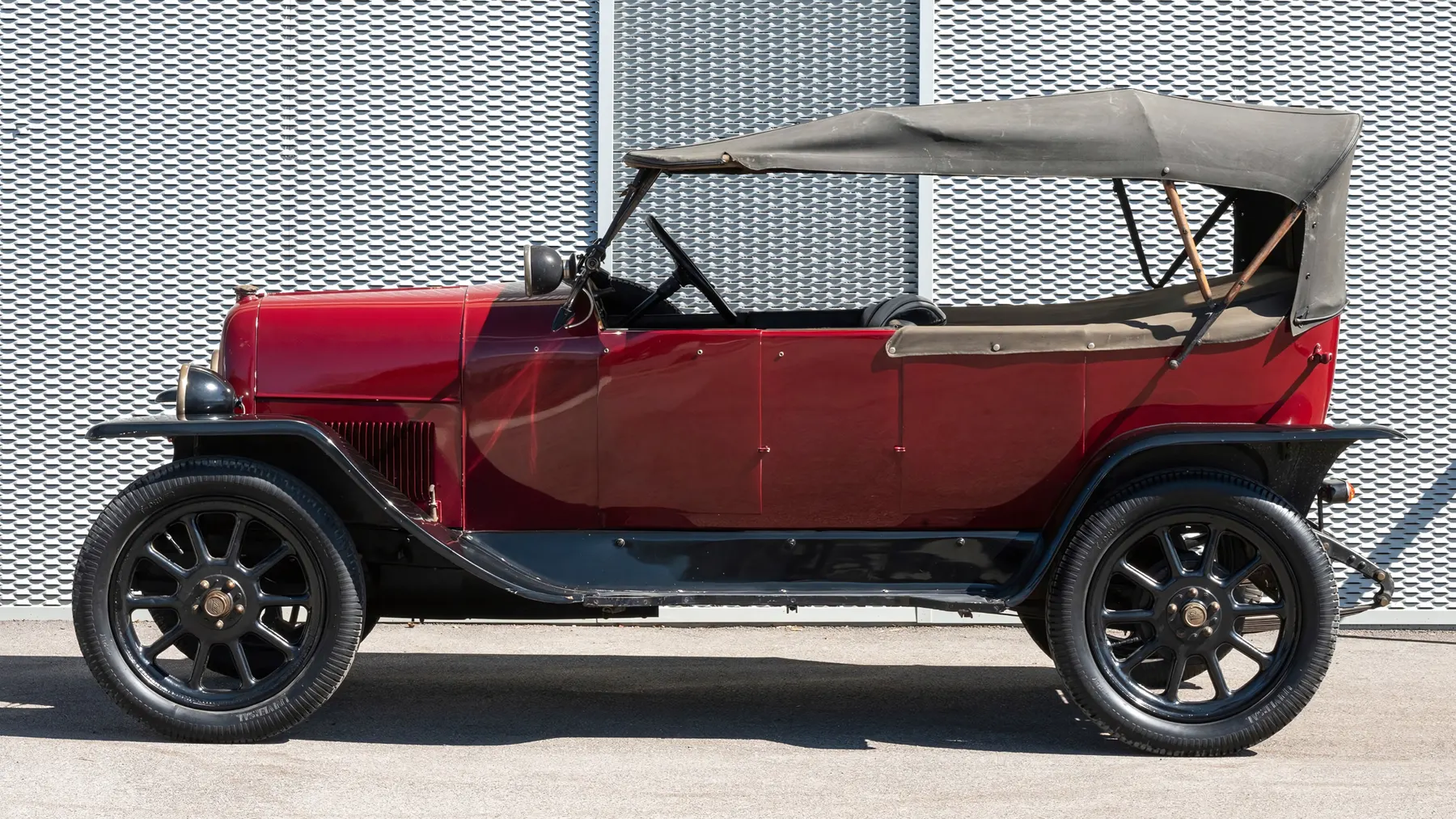
For all its genuine engineering ambition, the 501 carried real compromises that period buyers had to live with. Chief among them was its braking system: in standard specification, drums acted only on the rear wheels, operated mechanically rather than hydraulically, at exactly the moment the car was capable of the sort of brisk cross-country and mountain driving that most exposes the shortcomings of rear-only stopping power. Fiat addressed this only belatedly, making front brakes an optional extra by around 1925 and standardising them on the later 501 B chassis, in effect conceding that the original setup could not keep pace with the rest of the car. The heavy reliance on outside coachbuilders, meanwhile, meant there was no single, consistent 501 in terms of fit, finish or weight; a buyer’s experience of comfort, weatherproofing and even overall performance depended as much on whichever local body shop had clothed a particular chassis as on anything Fiat itself had engineered, which makes blanket claims about the car’s refinement difficult to sustain across the full range of surviving examples. The side-valve engine, for all its clever detachable head, was also an inherently low-revving, modestly powered unit whose ceiling would be left behind within a few years by Fiat’s own overhead-camshaft 509; owners running 501s today note that its unhardened valve seats were never designed with modern unleaded fuel in mind and require an additive to avoid excessive wear, a small but real running-cost consideration for anyone using one on the road rather than keeping it under cover. Even basic historical facts about the car remain unusually contested for a model built in such volume: reputable sources, including Fiat’s own Turin museum and independent researchers, differ on total production by tens of thousands of units, a reflection of how thinly documented Italy’s early mass-motoring era still is, and a reminder that the 501’s own place in that history has often been overshadowed by flashier later Fiats and by the company’s competition cars.
None of that stopped the 501 from doing what Fiat needed it to do. It reopened the company’s civilian order books at a critical moment, gave Fiat a competitive answer to Ford’s ambitions in Europe years before most Italian rivals had anything comparable on sale, and, as production scaled up through the early 1920s, helped fill out the vast new Lingotto works that would come to define Fiat’s manufacturing identity for decades afterward. It also set the chassis layout and much of the engineering language for the family of related Fiats that followed it through the 1920s, from the larger 505 and 510 down to the eventual 502 and 503, before the more advanced overhead-camshaft 509 rendered its side-valve architecture obsolete. Many surviving 501s today wear replacement or later coachwork, since original wood-framed hoods and canvas tops rarely lasted a century, even where the mechanically simple, over-engineered chassis and engine survived intact, and that durability is precisely why so many were rebuilt around original running gear rather than scrapped. Surviving cars remain eligible for retrospective editions of the Mille Miglia and regularly appear at vintage hillclimbs and touring events across Europe and Australia, prized less for outright performance than for the honesty of their engineering and the directness of the driving experience they still offer. It was never meant to be a glamorous car; it was meant to get Fiat, and a great many ordinary postwar families, back on the road, and on both counts it succeeded.
Technical data
Specifications
| Specification | Detail |
|---|---|
| Production | 1919–1926 |
| Designer | Carlo Cavalli (Fiat technical director) |
| Body styles | 2/4-door Torpedo tourer, 4-door saloon, plus locally coachbuilt variants worldwide |
| Engine | 1,460cc side-valve inline-four, monobloc casting |
| Bore x stroke | 65mm x 110mm |
| Power | 23bhp at 2,600rpm (base 501); c. 27bhp (501 S); c. 30bhp (501 SS) |
| Transmission | 4-speed manual, rear-wheel drive |
| Suspension | Semi-elliptic leaf springs, front and rear; solid axles |
| Brakes | Rear drums only, mechanically operated (standard); front drums optional from c. 1925, standardised on 501 B |
| Wheelbase | 2,650mm |
| Kerb weight | Approx. 900–1,000kg (open coachwork); more for closed saloon bodies |
| Top speed | Approx. 43–44mph (standard 501); higher for S/SS, figures disputed across sources |
| Production total | Estimates vary by source, roughly 46,000–70,000 units across all variants |
| Notable variants | 501 S / SS (1921–26, sporting derivatives); 501 C (1923, Italian army); 501 B (later chassis, front brakes standardised) |
Sources
- MAUTO – Museo Nazionale dell’Automobile, Torino: FIAT 501
- VeloceToday: A Look at a Rare Fiat from Down Under
- PreWarCar: Fiat marque history (Georgano, Encyclopedia of the Motorcar)
- Museums Victoria: Fiat 501, Motor Car, 1919
- Museums Victoria: Motor Car – Fiat Motors, 501 Torpedo Model with Tourer Body, 1925
- Wikipedia: Fiat 501 (context/cross-reference)
- Wikipedia: Enrico Giaccone (context/cross-reference)
- autoevolution: FIAT 501 – All Models by Year
- autoevolution: FIAT 501 S Torpedo Sport
- Museo Nicolis: Fiat 501 S Superculasse Silvani
- Classic Trader: FIAT 501 model overview
Join the discussion
Comments
Loading comments…
Leave a comment
Share a detail, memory, or perspective. Every comment is reviewed before publication.