Fiat 1500 Berlina: Italy's Aerodynamic Answer to the Chrysler Airflow
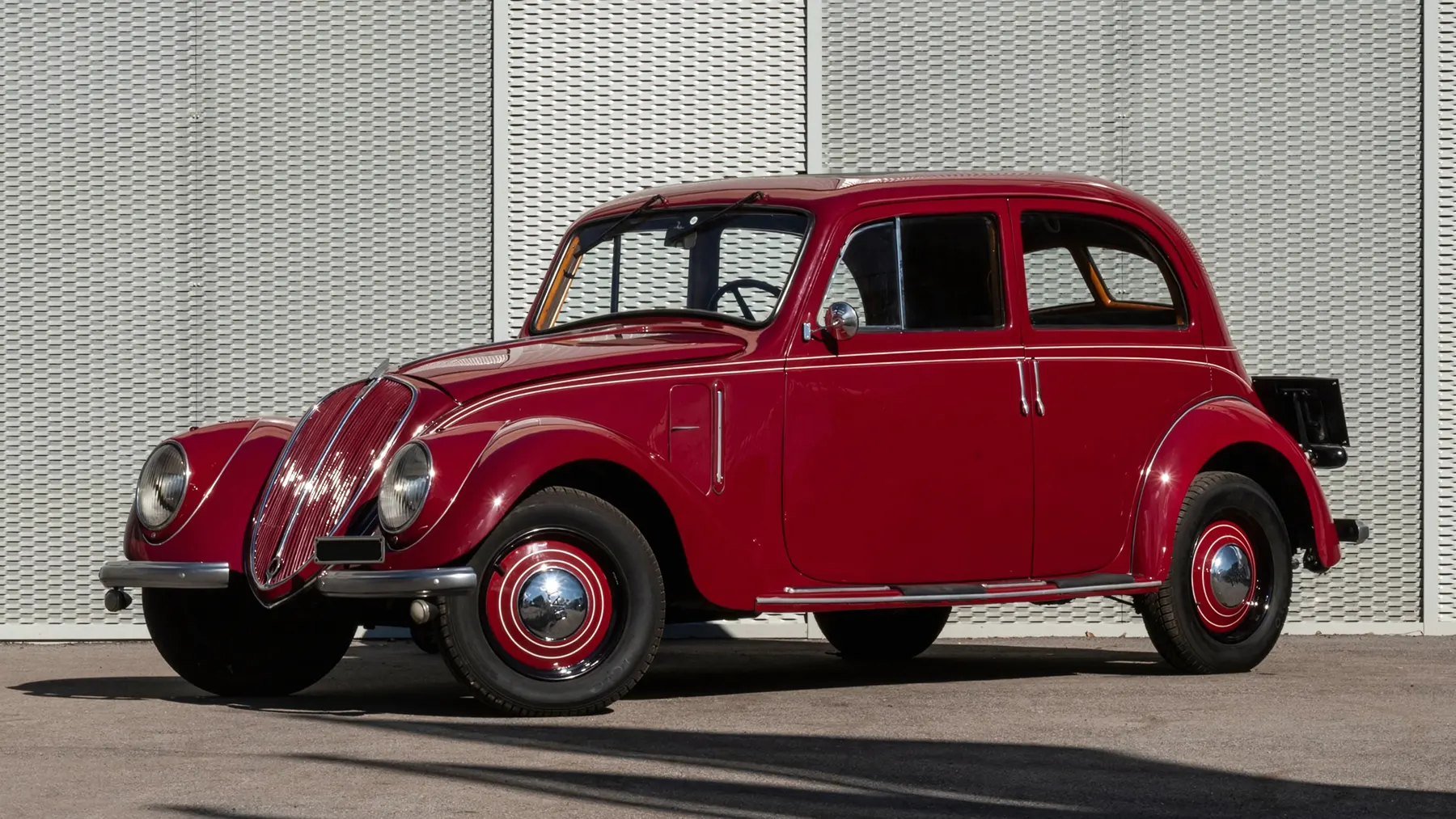
1938 Fiat 1500 Berlina

Images: Paolo Carlini / RM Sotheby's
Fiat’s 1500 arrived at the Milan motor show in November 1935 wearing a body unlike anything else built in Turin, and - unusually for the period - the mechanical package underneath had been rethought to match it. Fiat’s stylists had studied the previous year’s Chrysler Airflow, whose radical looks hadn’t been enough to save it commercially in the United States, and concluded that the fault lay in execution rather than ambition: the Airflow’s futuristic bodywork sat over mechanicals that remained, underneath, comparatively conventional. The stylist chiefly responsible for the 1500’s shape, Mario Revelli di Beaumont, working alongside engineer Rodolfo Schaeffer and under the direction of Dante Giacosa, insisted the whole car be reconsidered from the ground up rather than simply re-skinned. The result was a saloon that stayed in production for fifteen years, survived a world war, and bridged Fascist-era Italy and the postwar recovery without ever receiving the wholesale re-engineering its dramatic debut had promised.
Fiat previewed the car to the press and trade inside its Lingotto works on 5 September 1935, ahead of its full public unveiling at the Salone dell’Automobile di Milano two months later. The Lingotto plant was itself a piece of industrial theatre - a five-storey factory with a rooftop test track - and unveiling a genuinely aerodynamic saloon there suited the building’s own reputation for looking toward the future. The 1500 replaced the smaller four-cylinder Fiat 515 and was aimed at a distinctly wealthier customer than Fiat’s mass-market 508 Balilla, promoted in period advertising as “the car of silence and elegance.” That positioning was something of a gamble: Italy was mobilising for its war in Abyssinia as the 1500 reached showrooms, and the prospect of rising fuel prices made a six-cylinder engine a riskier sell for a manufacturer that depended on high-volume models to make its money. It should not be confused with the later, entirely unrelated four-cylinder Fiat 1300 and 1500 saloons Fiat launched in 1961; this earlier six-cylinder Berlina is the car that established Fiat’s aerodynamic credentials a quarter of a century before that.
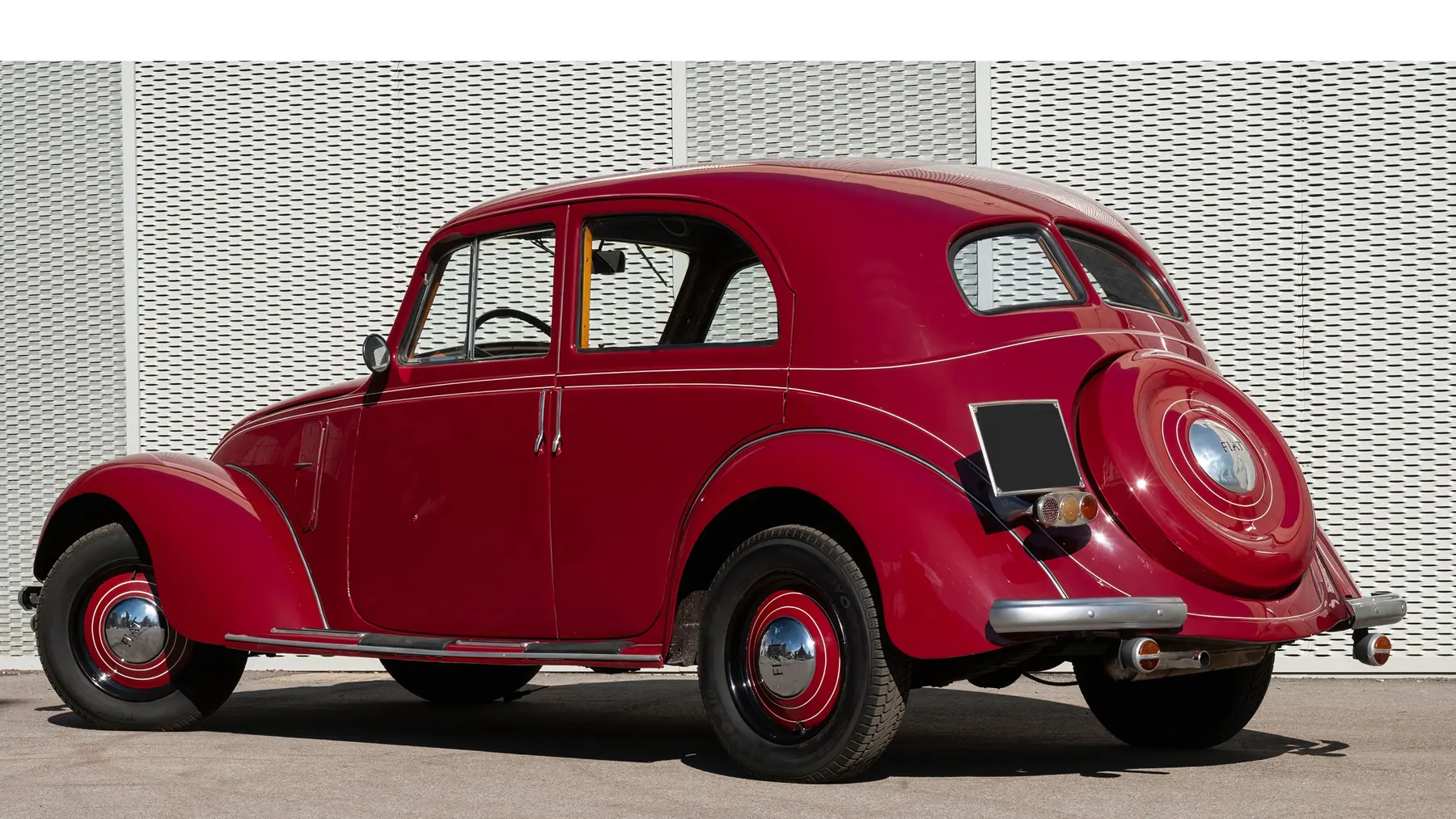
What buyers actually saw in 1935 was striking: a sloping, tapered nose, headlamps blended into the front wings rather than perched on stalks, recessed door handles, and a curving beltline that swept back into a tail with no visible boot lid at all - the luggage area was reached only by folding the rear seat forward, and the spare wheel sat in an external recess at the back of the body. Inside, the cabin was laid out with an unusual amount of thought given to legibility and driver comfort, an early application of ergonomic thinking that period commentary treated as almost as newsworthy as the exterior shape. Fiat offered just two factory body styles, a four-door pillarless saloon with rear-hinged “suicide” doors and a two-door convertible sharing the same door arrangement, but the chassis was also sold bare to independent coachbuilders. That option produced some of the era’s more charming small Italian sporting cars: Carrozzeria Touring built an aluminium-bodied 6C Berlinetta Superleggera on 1500, 1500 B, C and D chassis between 1935 and 1948, elegant enough to be likened to a scaled-down Alfa Romeo 6C, and examples of it ran in the Mille Miglia both before the war and immediately afterwards. Bertone worked the same bare chassis into cabriolets and saloons of its own, including a Trasformabile Valentino with a long, narrow radiator shield loosely inspired by contemporary American Cadillac LaSalle styling, alongside broadly similar bodies it was building at the time on Lancia Aprilia mechanicals. Those coachbuilt cars were always a side note, though; the vast majority of 1500s left the factory as sober four-door saloons bought by professionals and businessmen rather than by racers or style-conscious cabriolet buyers, and a modest run of right-hand-drive cabriolets, wearing a more contemporary vee-shaped grille, reached British showrooms around 1939 and 1940.
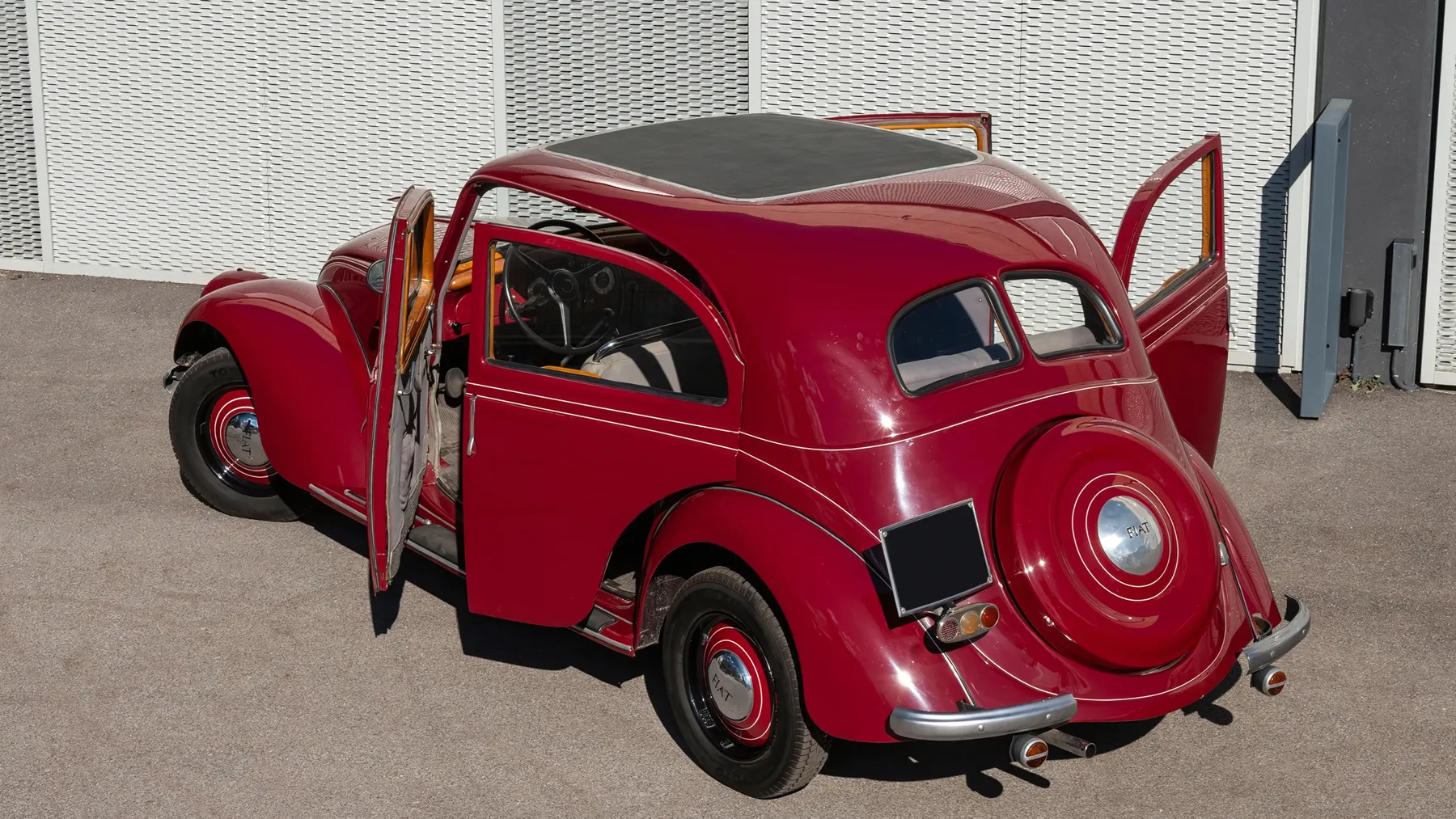
The engineering Revelli di Beaumont had pushed for really was new for Fiat. The chassis was a backbone-type frame, X-shaped in plan with a boxed central section, and it carried, for the first time on any Fiat, independent front suspension of the Dubonnet type - self-contained, oil-filled units mounted outboard of the kingpins that kept the steering gear inboard and unsprung weight low, paired with a solid rear axle on a transverse leaf spring. Braking was hydraulic on all four wheels at a time when plenty of family saloons still relied on cable or rod-operated drums, and the engine drove through a split rear differential intended specifically to damp out driveline vibration. Underneath the modern skin, in other words, the 1500 really had been reworked rather than merely restyled - though Fiat kept development costs down by deriving the new six-cylinder engine’s core dimensions, a 65mm bore and 75mm stroke, from the four-cylinder unit already fitted to the 508 Balilla.
That 1,493cc overhead-valve six ran an 8:1 compression ratio and produced a genuinely modest amount of power: sources place the figure anywhere between roughly 43 and 46bhp at 4,400rpm, depending on the model year and which contemporary or later account is consulted, driving through a four-speed gearbox with synchromesh on the top two ratios. Top speed for the original 1500 - retrospectively labelled the 1500 A once later series existed - was around 71mph. Period and specialist assessments both single out refinement as the car’s real strength: it was smooth and quiet up to around 70mph, with road holding that contemporary commentary rated well above the class average, largely down to that Dubonnet front end. What it plainly was not, by most accounts, was quick. Classic & Sports Car’s own verdict on the model is blunt: for outright acceleration, buyers were better off with Fiat’s own smaller, lighter four-cylinder 1100 (the 508 C). That is a genuinely telling criticism - two extra cylinders and a substantial price premium bought smoothness and refinement, but the 1500’s larger, heavier body ate into whatever power advantage the six-cylinder engine offered, so the car never rewarded its buyers with performance to match its badge.
Several other compromises reveal themselves under closer inspection. The Dubonnet front suspension that gave the 1500 its comfortable ride and reduced unsprung weight was, as a type, notoriously unforgiving of neglect: its oil-filled, self-contained units demanded exacting maintenance, and any seal failure quickly degraded both ride quality and durability - quite possibly why Fiat abandoned the layout altogether for conventional double wishbones when it revised the car in 1948. The absence of any external boot lid until the very last 1500 E of 1949 was a real everyday inconvenience for a car pitched at exactly the kind of professional buyer who might reasonably expect to load luggage without folding the rear seat forward each time, and the pillarless body - suicide doors front and rear, no fixed centre pillar - was less structurally rigid than a conventional saloon shell of the period, whatever its stylistic appeal. And although the 1500’s bodywork looked every bit as advanced as anything Lancia was building in the same years, the chassis beneath it remained a separate, body-on-frame structure for the model’s entire fifteen-year life; Fiat’s own successor, the 1400 of 1950, finally moved to unitary construction, and rivals such as the Lancia Aprilia - offering broadly comparable power from a markedly lighter unitary body - showed just how much performance a heavier, more traditional structure was quietly giving away.
Fiat revised the car four times without ever touching that fundamental layout. The 1500 B of 1939 brought stronger brakes and moved the handbrake from the rear-axle drums to a band brake acting on the transmission, but was otherwise nearly indistinguishable from the original. The 1500 C followed in 1940 with a taller, more upright “musone” grille borrowed from the flagship Fiat 2800, dropping the wing-mounted headlamp treatment and narrowing the range to the four-door saloon alone; production of this version was interrupted by the war and resumed largely unchanged once hostilities ended. The 1500 D, shown at the 1948 Turin Motor Show alongside an updated 1100 B and the 500 B Giardiniera, finally replaced the Dubonnet front end with double wishbones, added a twin-choke Weber 30 DCR carburettor and a higher 6.2:1 compression ratio, and lifted output to around 46bhp and top speed to roughly 75mph; something over 2,800 were built in a run lasting barely a year. The final 1500 E, launched at the 1949 Fiera del Levante in Bari alongside a similarly updated 1100 E, at last gave the car an external boot lid - the spare wheel moved inside it - reshaped the tail into proper three-box saloon proportions, fitted a one-piece rear screen, added synchromesh to second gear, and relocated the gearchange to a steering-column stalk; around 1,700 were built before the whole line was retired in 1950. Total production across all five series is generally put at somewhere around 46,000 cars over the model’s fifteen years, though figures for individual production windows vary between sources depending on exactly which derivative and which years are being counted.
Contemporaries clearly understood the 1500 as the car that came to define its segment. The Bianchi S9, launched just a year earlier in 1934, is described by marque historians as having competed in a market segment dominated by Fiat’s six-cylinder saloon, and the Lancia Aprilia that replaced the Augusta in 1937 is remembered the same way. That the Aprilia arrived with its own wind-tunnel-honed body and a drag coefficient of around 0.47 - genuinely advanced for the period - says something about how quickly the 1500’s aerodynamic pitch became the standard the rest of the Italian industry had to answer. It is worth remembering, too, that Fiat’s own range had been resolutely conventional right up until the 1500 arrived; the Ardita 518 saloon, only two years its senior, was styled with none of the same ambition, which makes the 1500’s leap look more dramatic in hindsight than it perhaps felt at the time.
Set against the commercial failure of the Chrysler Airflow that helped inspire it, the Fiat 1500’s real achievement was proving that a European mid-size manufacturer could sell genuinely aerodynamic styling to a conservative buying public without frightening it off. It belongs, in that sense, alongside the American Cord 810 and the Czechoslovak Tatra 87 as one of the era’s rare examples of a streamlined car that also sold in meaningful numbers rather than remaining a technical curiosity, and its fifteen years on sale, war interruption included, speak clearly enough to how well that bet paid off. But the car also shows its age candidly on closer study: a body that looked startlingly modern in 1935 was still being sold, on a separate chassis and with only incremental mechanical revision, as late as 1950, by which point Fiat’s own 1400 had already turned it into a survivor from another automotive era rather than a genuine rival to the newest saloons on Italian roads. That combination - a genuinely bold debut followed by a long, largely unchanged retirement - is what makes the 1500 worth remembering: not as a sports car, and not as an outright technical triumph, but as the moment Fiat proved that looking toward the future and building conservatively underneath it were not, commercially, mutually exclusive.
Sources
- Fiat 1500 (1935) - Wikipedia
- FIAT 1500 (1936-44) - Classic & Sports Car
- 1937 Fiat 1500 A Berlina, Monaco 2016 - RM Sotheby’s
- L’affusolata Fiat 1500 compie 90 anni - Ruoteclassiche
- Fiat 1500, Streamline all’italiana - Ruoteclassiche
- Fiat 1500 Barchetta 6C - Fiat
- Fiat 1500 - Enginerebuilding.eu
- Dubonnet suspension - Wikipedia
- 1939 Fiat 1500 6C Berlinetta Superleggera (Carrozzeria Touring) - Barnebys
- 1935 Bianchi S9 - Classic Driver Market
- Lancia Aprilia - Wikipedia
- Fiat 1300 and 1500 - Wikipedia
Join the discussion
Comments
Loading comments…
Leave a comment
Share a detail, memory, or perspective. Every comment is reviewed before publication.