Bugatti Type 57 Monoposto: The Racing Legend Molsheim Never Built
1935 Bugatti Type 57 Monoposto

Images: Motorcar Studios / RM Sotheby's
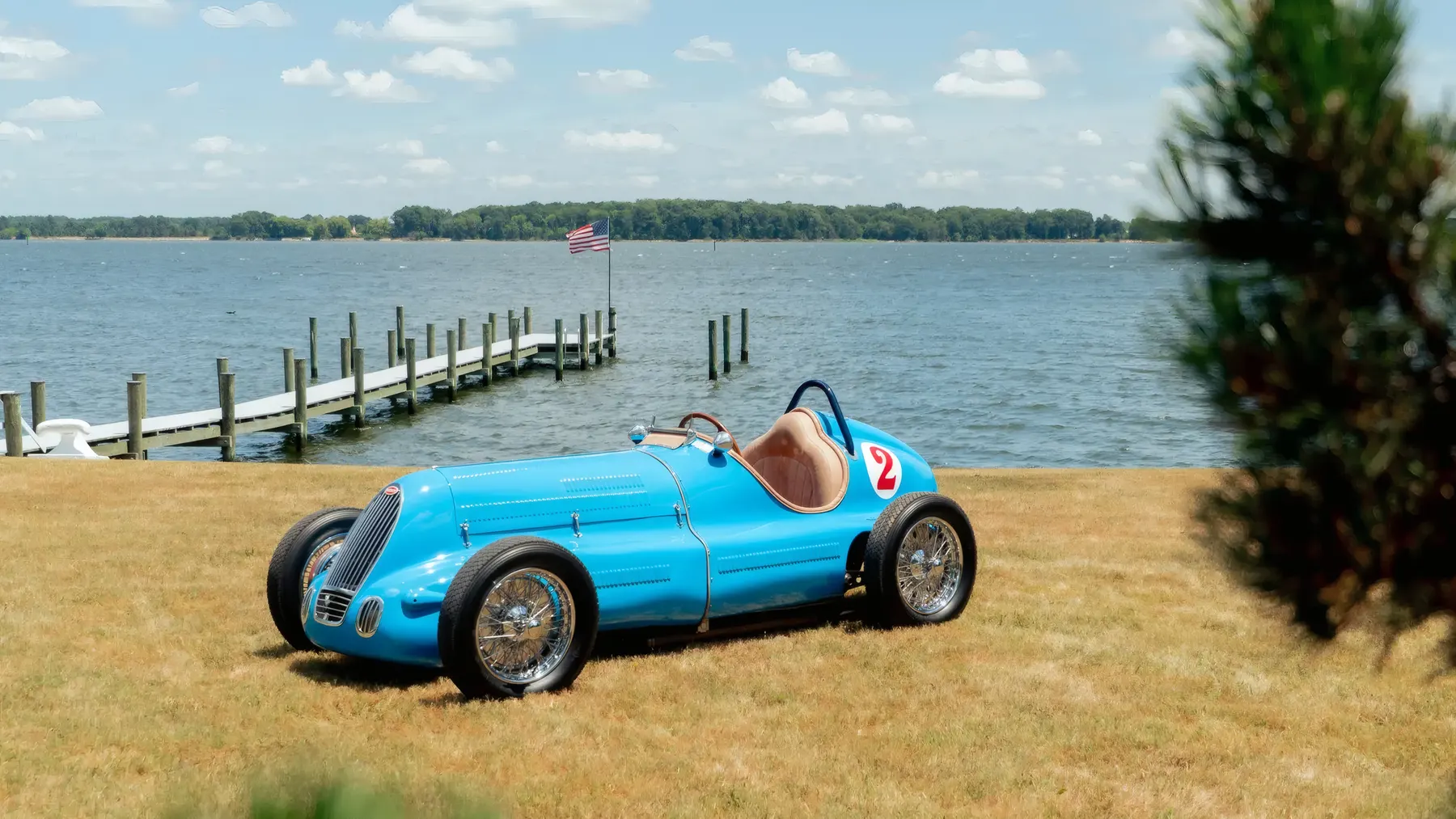
Ettore Bugatti never sanctioned a Type 57 monoposto. No chassis card at Molsheim carries the designation, no factory photograph shows a single-seat Type 57 on a start line, and no period road test so much as mentions one. And yet the name persists, attached for decades now to a small and evolving family of single-seat specials built from genuine Type 57 mechanical components and dressed in the unmistakable narrow-tailed silhouette of a very different, far rarer Bugatti: the works Grand Prix monoposto that actually existed. Making sense of the Type 57 Monoposto means untangling two stories at once - the real single-seat Bugatti the factory built exactly once, and the tribute cars enthusiasts have been constructing in its memory ever since.
That real car began life in 1933 as a Type 59, the final and most elegant expression of Bugatti’s classic Grand Prix lineage stretching back to the Type 35. Riding on piano-wire wheels and sprung by sophisticated de Ram shock absorbers, the Type 59 was fitted originally with a supercharged straight-eight of 2.8 litres, later enlarged to 3.3 litres, and while it was never dominant against the newer generation of German silver-arrow teams, it remained a serious Grand Prix contender through the mid-1930s. One surviving Type 59 chassis kept evolving after the factory withdrew its full works team. In 1936 it received an entirely new engine, catalogued as the Type 50B despite sharing little beyond a name with the Type 50 road car: a bespoke supercharged straight-eight with an aluminium block, steel cylinder liners and a bronze head, raced at various points in 4.7-litre, 4.5-litre and eventually 3-litre form as regulations changed. Fitted into that reworked Type 59 chassis, it became, by most accounts, the first genuinely single-seat car Bugatti had ever built.
Its most famous outing came in July 1939, when Jean Bugatti brought the car, by then known as the Type 59/50B, to the inaugural international meeting at the newly opened Prescott hillclimb in Gloucestershire, and entrusted it to works driver Jean-Pierre Wimille, fresh from winning his second Le Mans 24 Hours the previous month. Fitted with twin rear wheels specially for the climb, the car carried, by contemporary account, without doubt the most powerful engine the factory had ever built, and was so wide at the back in that configuration that it could not use the hill’s return road. Wimille clocked 47.50 seconds on his first run and improved to 46.69 seconds on his second, enough for second place behind Raymond Mays’s ERA at 46.14 seconds. Jean Bugatti wrote to the organisers afterwards, apologising for bringing an unsuitably large car to such a tight little hill, and promising to return the following year with something smaller.
He never got the chance. Barely a fortnight later, on 11 August 1939, Jean Bugatti was killed testing an entirely different car - the Type 57C-based “Tank” that had just won Le Mans - after swerving to avoid a cyclist on a closed public road near Duppigheim and crashing into a tree at the age of thirty. The works monoposto he had driven to Prescott ran only once more, in a minor postwar event in Paris in 1945, before being retained by the factory and eventually passing, unrestored and essentially untouched, into the Schlumpf brothers’ collection. It remains there today at the Cité de l’Automobile in Mulhouse, frozen more or less in the specification it wore at Prescott: a genuine single-seat works Bugatti that will, in all likelihood, never turn a competitive lap again.
That permanence is precisely what created the vacuum the Type 57 Monoposto fills. A genuine ex-works Bugatti Grand Prix chassis is not a thing anyone can simply go and buy; what does exist in relative abundance, by prewar standards, is the Type 57 itself - Bugatti’s high-volume grand touring chassis of 1934 to 1940, built for wealthy road-going clients rather than works drivers. Depending on how the later S, SC and C derivatives are counted, sources place total production of the Type 57 family anywhere from roughly 630 to 710 cars, powered by a 3,257cc twin-cam straight-eight with a 72mm bore and 100mm stroke. It was a genuinely clever design for its class, using a train of spur gears at the rear of the block, with fibre-toothed camshaft gears specifically chosen to quiet the valvetrain, rather than the bevel-gear drive Bugatti had used on earlier twin-cam efforts. In standard road trim it produced around 135bhp and a genuine 95mph, riding on a 3,302mm wheelbase with a 1,349mm track and weighing close to 950kg. It is, in short, a smooth, honestly engineered grand touring chassis and engine, and nothing whatsoever like the works Grand Prix car it has since been asked to imitate.
The Type 57 line was not entirely divorced from competition itself, which perhaps explains why its parts have proven such willing donors for this kind of project. A shortened, lowered derivative known as the Type 57S - “Surbaissé”, meaning lowered - used dry-sump lubrication and a relocated rear axle to drop the car’s stance dramatically, with only around 43 built. From that chassis came the 57G, nicknamed “Tank” for its enclosed, aerodynamic magnesium-alloy bodywork, which won the 1937 Le Mans 24 Hours in the hands of Jean-Pierre Wimille and Robert Benoist. A second Tank, based on the supercharged 57C and producing around 160bhp, repeated the win in 1939 with Wimille sharing driving duties with Pierre Veyron. There is a certain neatness, then, in the fact that a Type 57 family Wimille himself drove to Le Mans victory twice has become the donor of choice for cars built in tribute to his single-seat Grand Prix outing at Prescott that same year - even if the touring-derived Tank and the works monoposto could hardly have been more different machines under the skin.
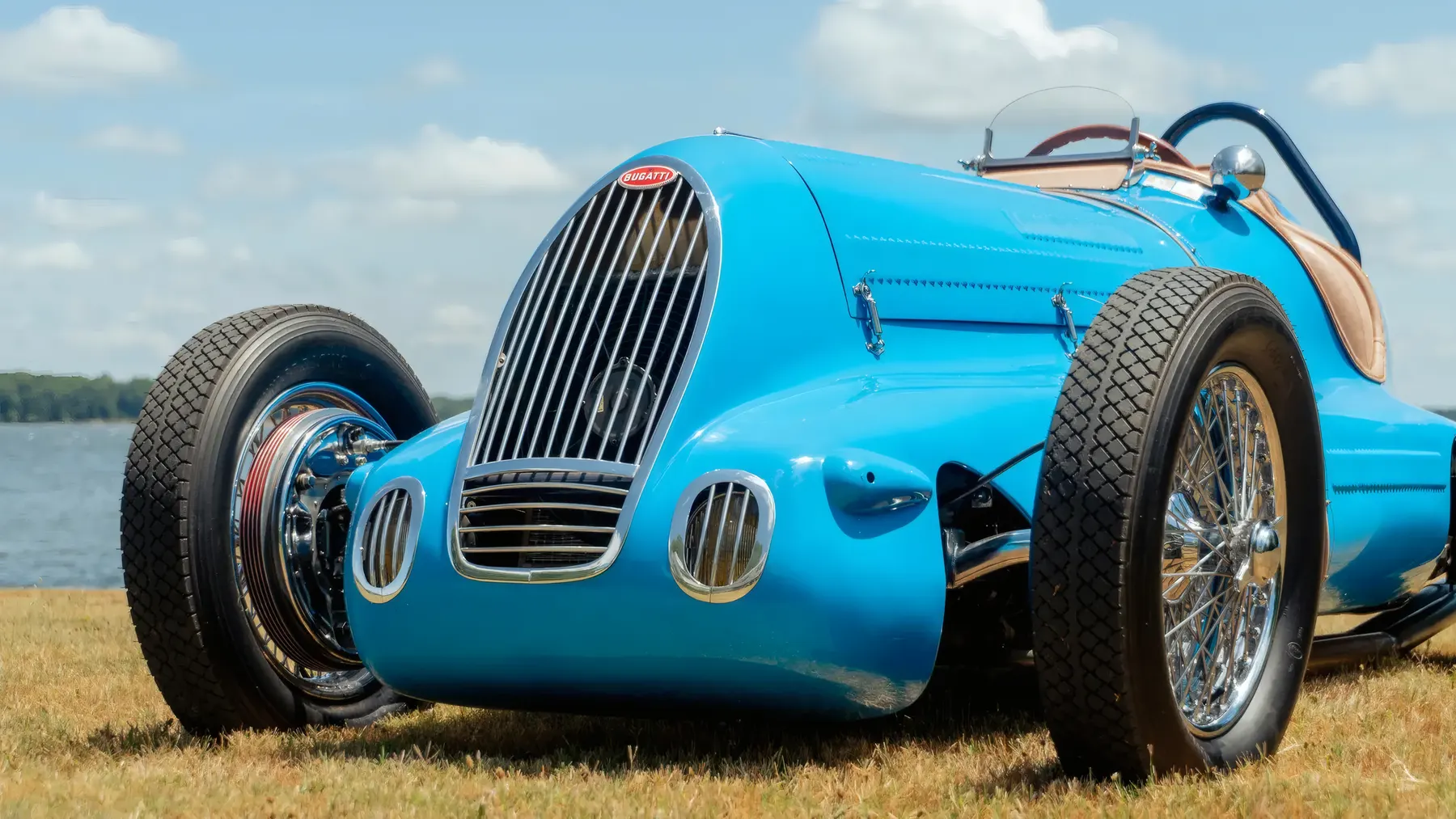
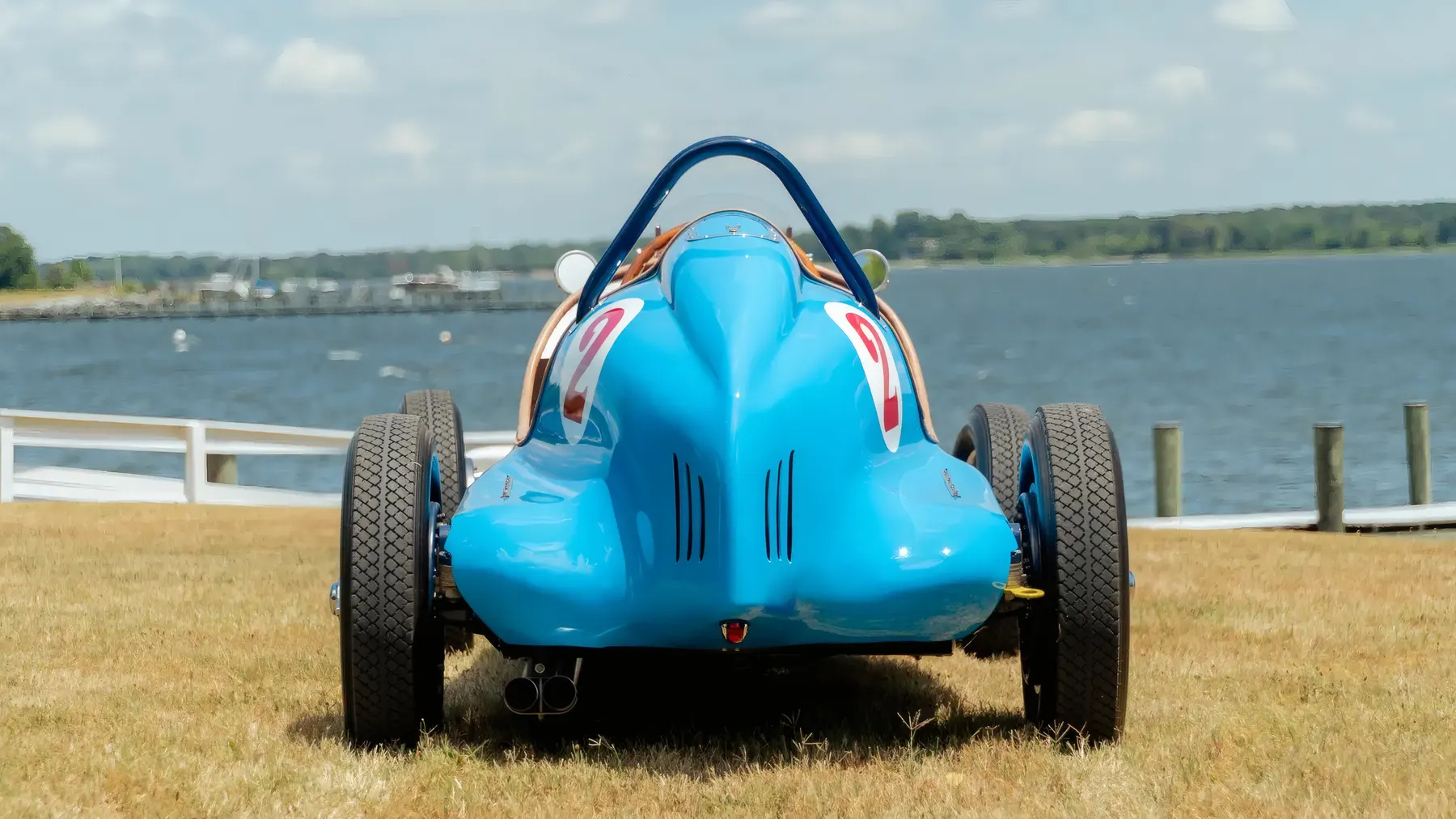
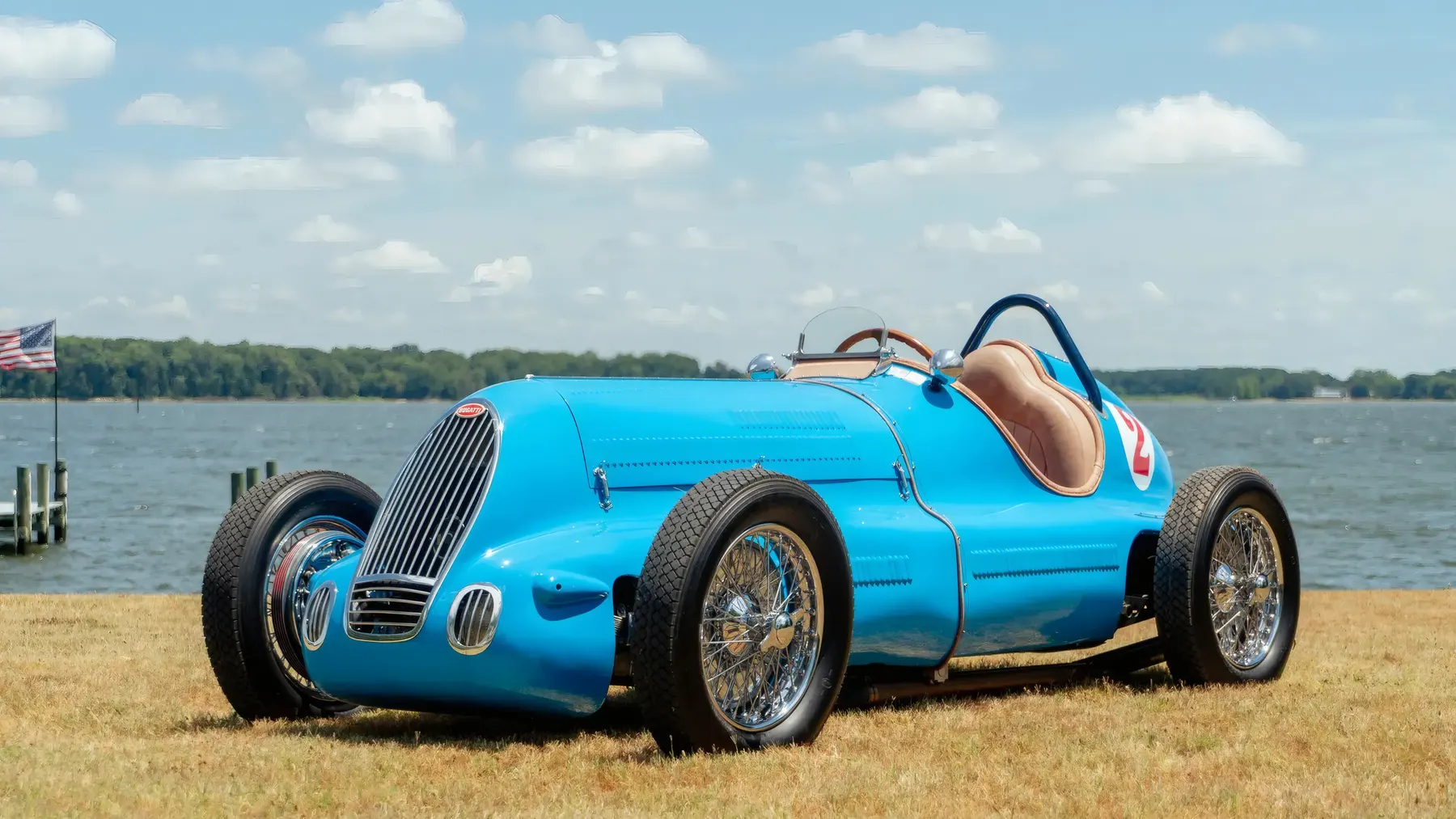
Building a Type 57 Monoposto, then, has generally meant starting with genuine Type 57 running gear - an engine and frame sourced from a road car or assembled from period-correct spares - and reshaping it in the visual image of the Wimille car. Frames have commonly been shortened, later Type 57 hydraulic brakes fitted in place of the original cable-operated drums, and the standard single Solex carburettor swapped for a bank of four in pursuit of sharper throttle response, though verified power outputs for any individual build are rarely published beyond specialist restoration files. More than one example has additionally been fitted with twin rear wheels, deliberately echoing the works car’s own Prescott specification. The single-seat aluminium bodywork itself has typically been the work of specialist coachbuilders and restorers operating decades after the war rather than anyone at Molsheim, following the profile of the Wimille car as closely as available photographs allow, since no factory drawing exists for a Type 57 in this configuration - because, of course, none was ever meant to be built.
What results, by every account of those who have raced one, is a genuinely visceral slice of vintage motoring: an exposed cockpit set low behind a long bonnet, a torque-rich straight-eight that pulls cleanly and audibly through a manual gearbox rather than needing to be revved hard for effect, and none of the weather protection, luggage space or passenger accommodation that defined the Type 57 in its intended form. There is no windscreen worth the name, no door to climb through, and precious little bodywork between driver and road beyond the aluminium tub itself. It offers something close to the theatre of prewar Grand Prix driving - narrow tyres, minimal weight over the front axle, a seating position dictated purely by mechanical packaging rather than comfort - wrapped around a docile, well-mannered touring engine that, in period, never had to survive an actual Grand Prix at all, and drives more sweetly for it at moderate speeds than a genuinely stressed racing unit ever would.
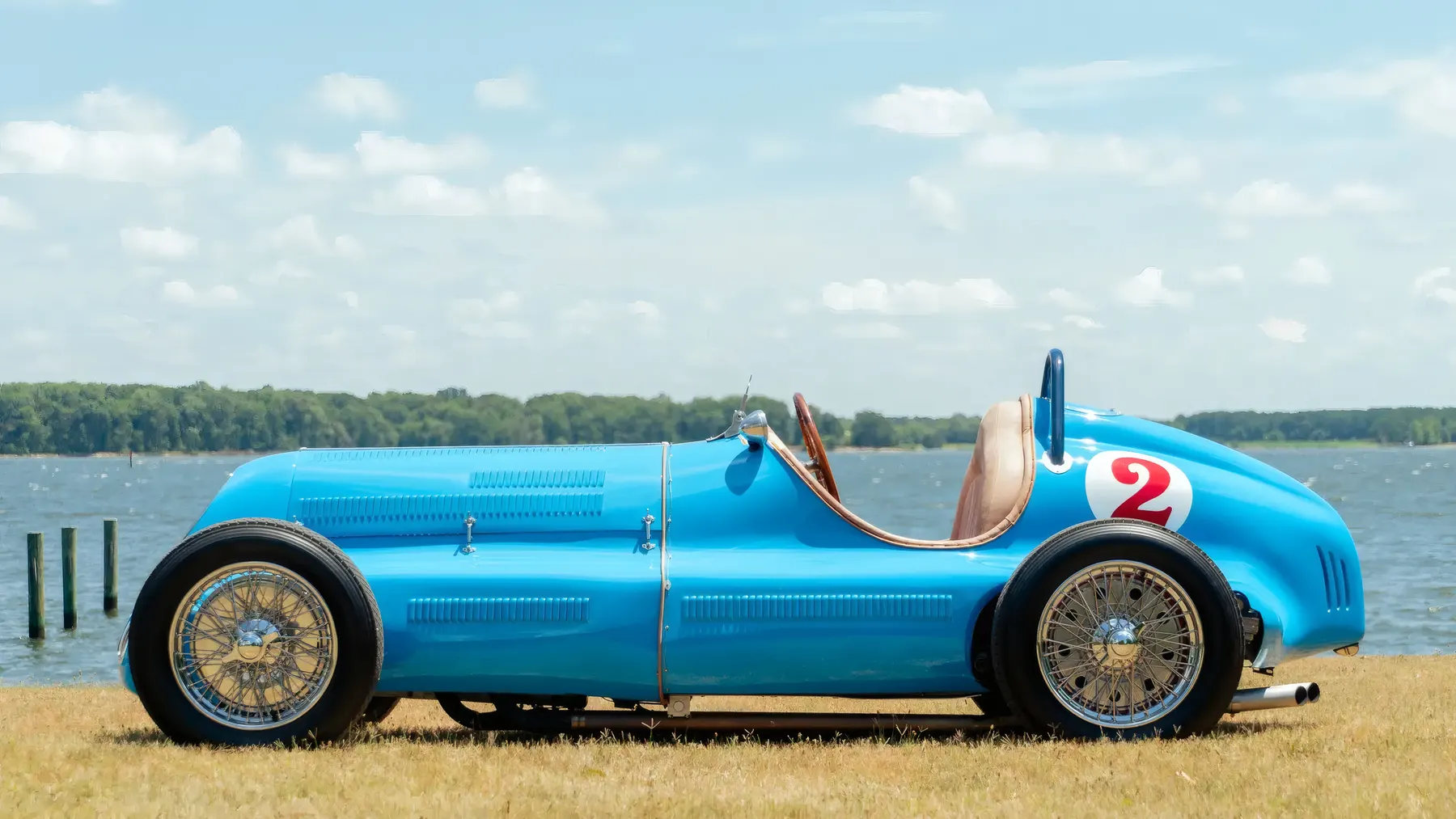
That gap between theatre and substance is the honest starting point for any real assessment of the Type 57 Monoposto, and it cuts in several directions at once. Most fundamentally, these are not period racing cars in any sense a Bugatti historian would recognise; they are later constructions assembled around genuine components, and the exact identity and completeness of those components is not always fully documented - auction paperwork for one such car openly describes its donor frame as being “of unknown identity,” which matters enormously in a collecting world otherwise built on chassis-by-chassis provenance. Second, the underlying Type 57 chassis was never engineered for open-wheel competition in the first place: it carries solid axles and leaf springs front and rear and drum brakes even in later hydraulic form, with none of the de Ram shock absorbers, double-reduction rear axle or lightweight piano-wire wheels that made the genuine Type 59-derived car a serious Grand Prix proposition in period. A Type 57 Monoposto, however sharp it may feel on a hillclimb today, is fundamentally a touring-car chassis wearing a racing car’s silhouette, and its roadholding at the limit reflects that heritage rather than disguising it. Third, the naturally aspirated Type 57 engine, whatever tuning has been applied, is a different order of machine entirely from the supercharged Type 50B unit that powered the genuine works monoposto; contemporary reports called that engine the most powerful the factory had ever built, and no four-carburettor road-car conversion closes a gap of that size. Commercially, the result sits in an awkward middle ground: thoroughly enjoyable and genuinely usable, but valued by the market at a small fraction of what an authenticated prewar Grand Prix Bugatti commands - which is itself the clearest evidence of how the trade distinguishes a heartfelt evocation from the genuine article.
That distinction shows up plainly at auction. When one such car crossed the block at a major American sale in August 2024, it made $263,200 - a healthy sum for a well-sorted vintage racer, and proof these specials have a genuine following among collectors who would rather campaign a Bugatti at Laguna Seca or a European hillclimb than trailer one to a concours lawn, but nowhere near the seven- or eight-figure territory occupied by genuine period single-seaters or the finest road-going 57S and SC variants. Within the wider Bugatti community, reception has broadly followed that split: warmly regarded as usable, mechanically honest vintage racers built around real Le Mans-era engineering, but rarely mistaken for, or marketed as, anything Molsheim itself actually built.
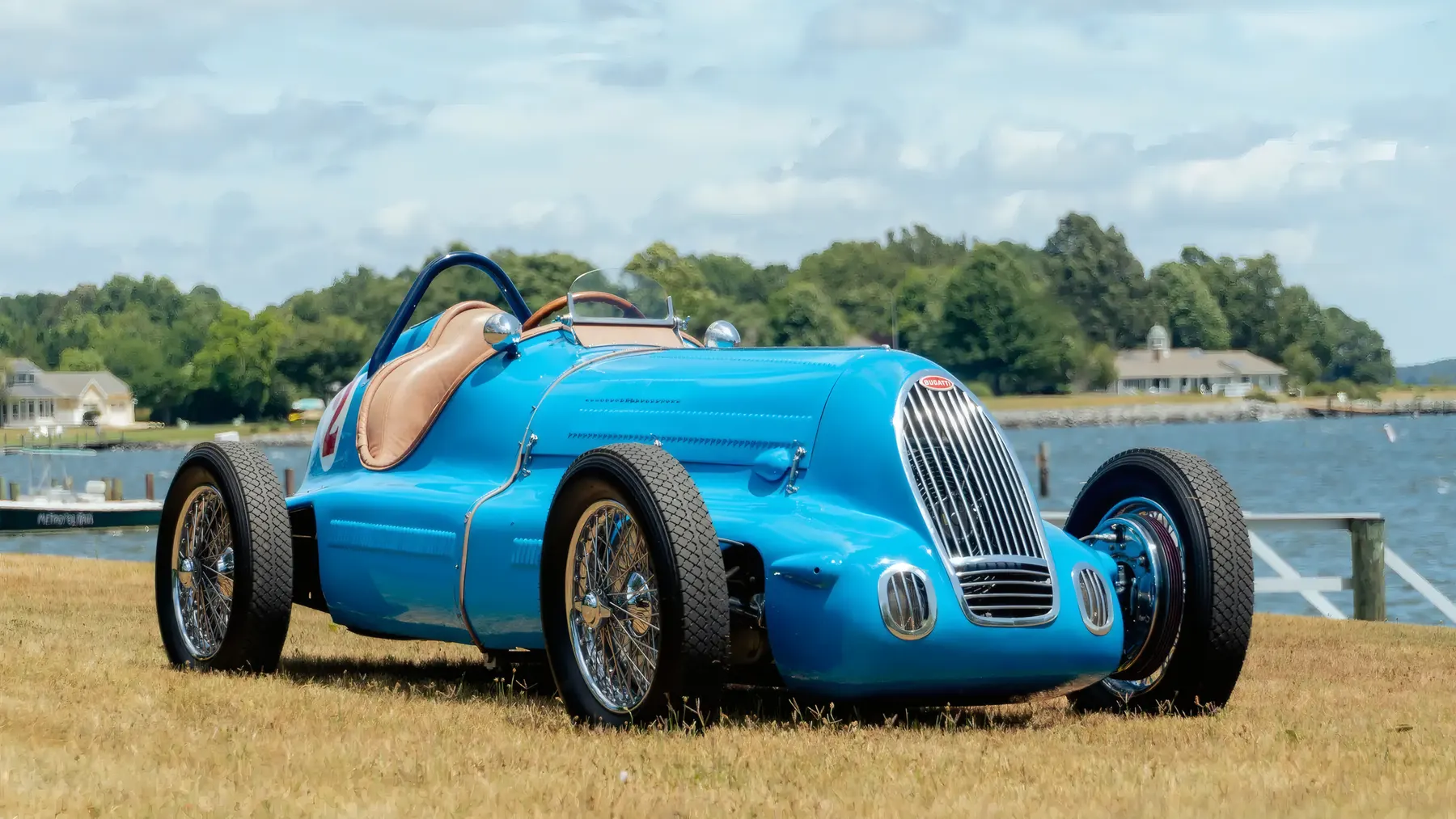
The Type 57 Monoposto, then, is less a model in the conventional sense than a kind of memorial - a way of keeping the visual and mechanical idea of Bugatti’s only true works single-seater alive and driveable at a moment when the genuine car has been sitting essentially motionless in a French museum since a Gloucestershire hillclimb in the summer before its creator died testing something else entirely. It says as much about the enduring pull of Molsheim’s Grand Prix history as it does about any individual car: enough enthusiasts have wanted to feel something close to what Wimille felt at Prescott that they have spent the better part of a century building it themselves, out of whatever genuine Bugatti parts they could find.
Technical data
Performance Specifications
| Type 57 (road-going donor basis) | Type 59/50B (genuine works monoposto) | |
|---|---|---|
| Years relevant | 1934–1940 (Type 57 family) | 1933 as Type 59; re-engined 1936; raced to 1939 |
| Production | Sources vary: approx. 630–710 across the Type 57 family (see editorial notes) | One car; never a series production model |
| Engine | 3,257cc DOHC straight-eight, 72mm x 100mm bore/stroke, naturally aspirated | Type 50B supercharged straight-eight; raced at 4.7-litre, 4.5-litre and 3-litre displacements at different points |
| Power (stock road car) | ~135bhp | No verified bhp figure sourced; period accounts describe it as the most powerful engine the factory had built* |
| Top speed (stock road car) | ~95mph | Not sourced |
| Wheelbase | 3,302mm | Not sourced (derived from shortened Type 59 chassis) |
| Track | 1,349mm | Not sourced |
| Kerb weight | ~950kg | Not sourced |
| Brakes | Cable-operated drums pre-1938; Lockheed hydraulic drums from 1938 | Cable-operated drums (retained traditional Bugatti solid-axle layout) |
| Notable competition history | Type 57G/57C “Tank” derivatives won Le Mans in 1937 and 1939 | 2nd place, 1939 Prescott International Hillclimb (Wimille), 46.69 sec |
| Current status | Multiple surviving road cars; tribute “monoposto” specials built from donor components since at least the 1960s–80s | Preserved unrestored in the Cité de l’Automobile (Schlumpf Collection), Mulhouse |
Sources
- Bugatti Type 57 - Wikipedia
- Jean Bugatti - Wikipedia
- 1935 Bugatti Type 57 Monoposto, Monterey 2024 - RM Sotheby’s
- 1935 Bugatti Type 57 - Type 57 Monoposto - Classic Driver Market
- Bugatti Type 57 - Conceptcarz
- Bugatti Type 57 - Model Information - Conceptcarz
- Completely Original Works Type 59/50B Bugatti Makes Historic Return to Prescott After 80 Years - The Bugatti Trust
- Works Type 59/50B Bugatti Makes Historic Return to Prescott After 80 Years - PreWarCar
- A World-Famous Bugatti Returns to Prescott - 80 Years On! - Petrolicious
- Bugatti 59/50B Makes Prescott Comeback After 80 Years - Classic & Sports Car
- Works 59/50B Bugatti Returning to Prescott After 80 Years - Motor Sport Magazine
- Bugatti’s Last Grand Prix Racer - Vanderbilt Cup Races
- The Bugatti Factory Team Car - 1933 Bugatti Type 59 - Bonhams
Join the discussion
Comments
Loading comments…
Leave a comment
Share a detail, memory, or perspective. Every comment is reviewed before publication.