Pegaso Z-102 Berlinetta Series II by Saoutchik: Spain's Ferrari Rival
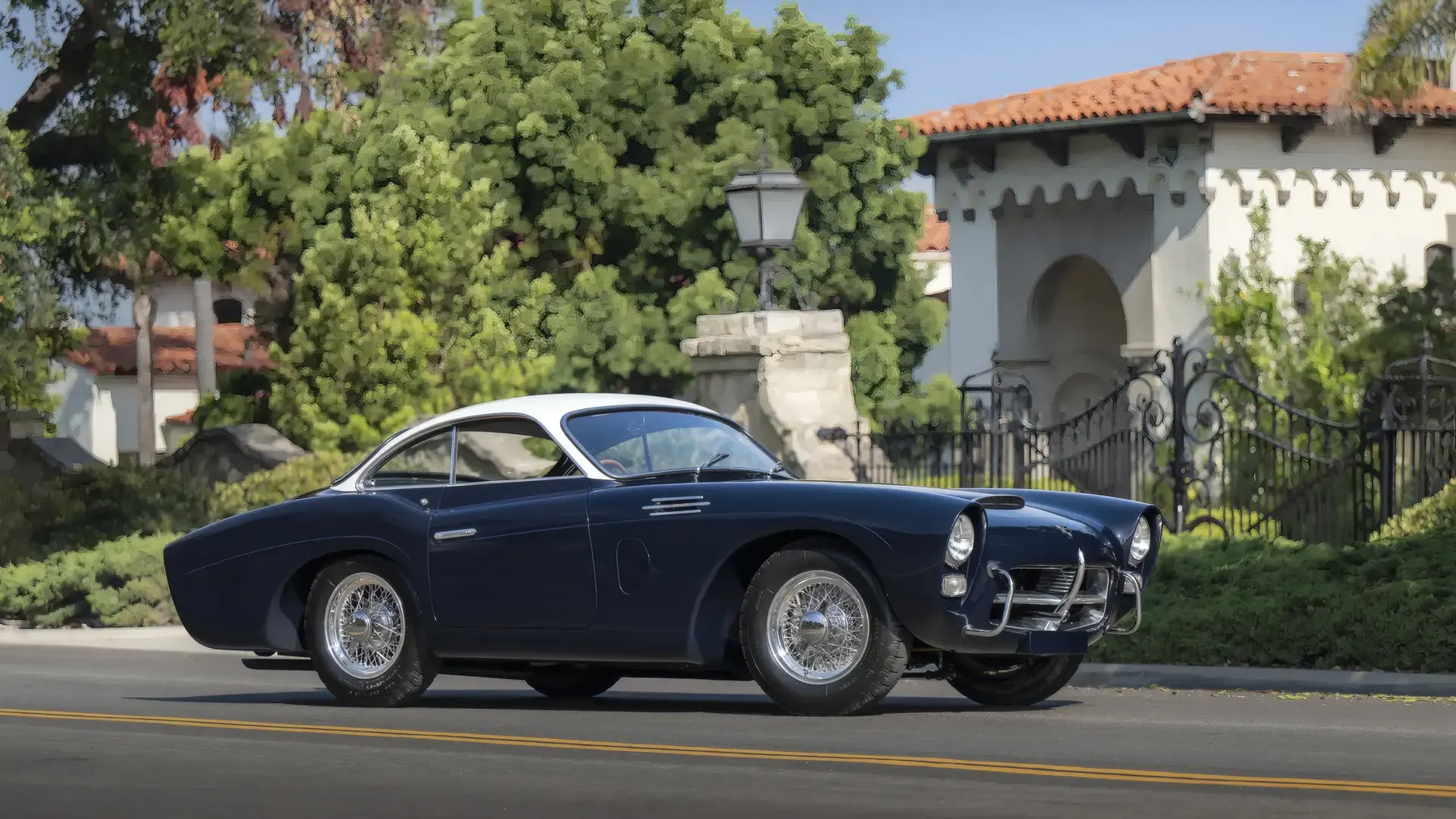
1954 Pegaso Z-102 Berlinetta Series II by Saoutchik

Images: Robin Adams / RM Sotheby's
Enzo Ferrari blamed Wifredo Ricart for getting him pushed out of Alfa Romeo in the late 1930s, and when Ricart resurfaced after the war as chief engineer of a Spanish state-owned truck manufacturer, he built a sports car that seemed engineered specifically to make his old rival regret it. The result, sanctioned at the highest levels of Franco’s government and built inside the former Hispano-Suiza works in Barcelona, ran to four gear-driven camshafts, desmodromic valve gear on some engines, a five-speed transaxle mounted behind the differential, and a rear suspension layout borrowed from Ricart’s own Alfa Romeo Grand Prix car. None of it was aimed at a mainstream buyer. It was aimed, quite specifically, at Maranello.
The company behind it, Empresa Nacional de Autocamiones S.A., or ENASA, was formed in 1946 out of the wreckage of Hispano-Suiza’s and Fiat’s Spanish automotive operations, with heavy trucks and buses as its actual business. Ricart, previously Alfa Romeo’s chief engineer for special projects and the man behind the flat-twelve, rear-engined Tipo 512 Grand Prix car, was installed as ENASA’s technical director. Building an uncompromising, cost-no-object sports car under the Pegaso name served two purposes at once: it would demonstrate to the world that a defeated, isolated postwar Spain could produce advanced automotive engineering, and it would give ENASA’s own workforce a project sophisticated enough to sharpen their skills before returning to trucks. The Z-102 debuted as a pair of prototypes, coupé and cabriolet, at the October 1951 Paris Motor Show, wearing steel bodywork of ENASA’s own in-house design.
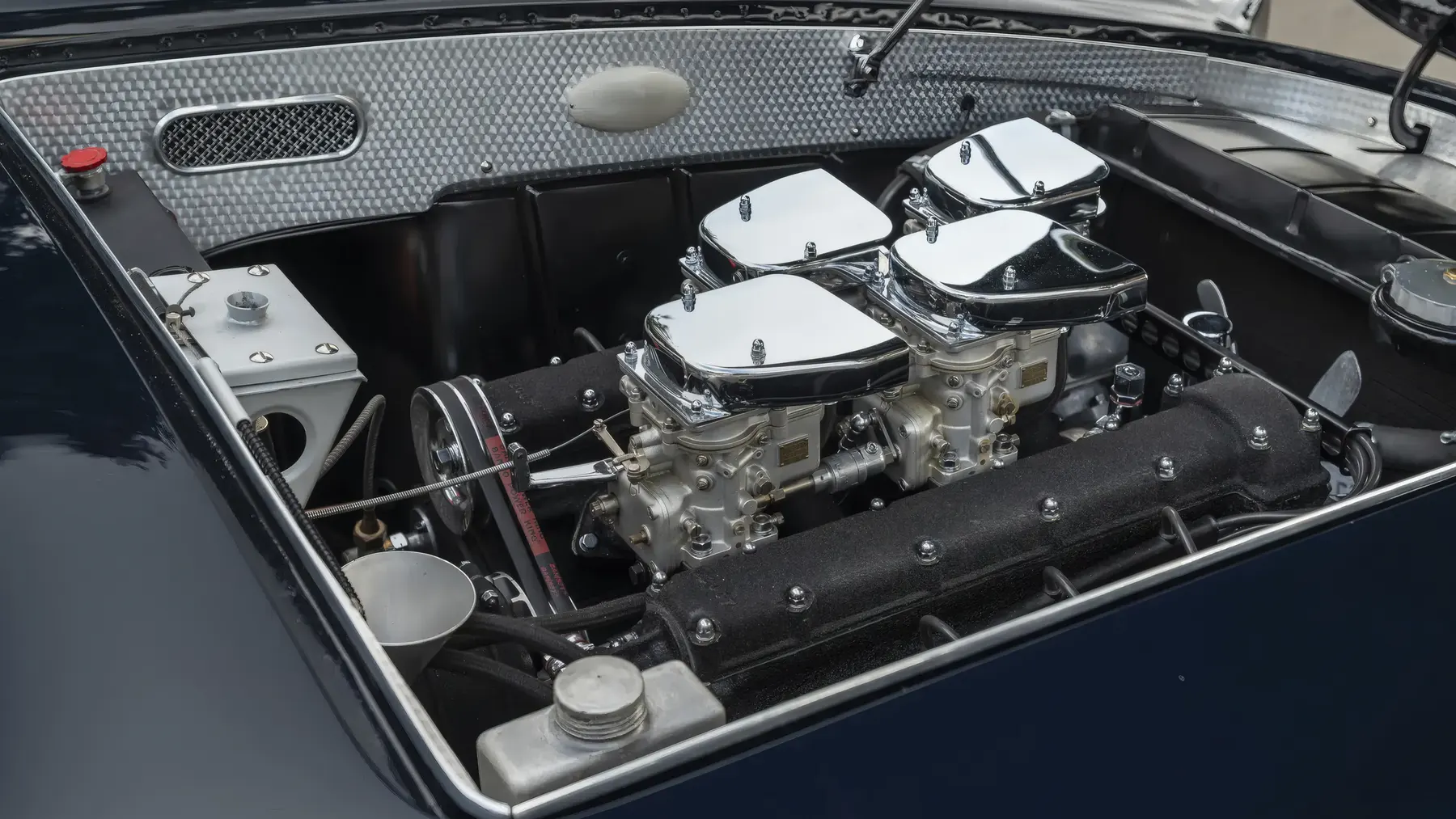
At the heart of the car was a genuinely exotic all-alloy 90-degree V8, its four overhead camshafts driven by gears rather than the chains originally planned, with hemispherical combustion chambers, sodium-cooled exhaust valves, bucket-type cam followers, dry-sump lubrication and a Bosch magneto rather than the more practical ignition coils of the day. The oversquare design started out at 2,472cc and grew through 2,816cc to a later 3,178cc as Pegaso chased more power. Ricart was notoriously reluctant to release official output figures, and the numbers that survive vary considerably by source and by specification: the original 2.5-litre engine is generally put at around 165bhp, while the 2.8-litre unit fitted with dual twin-choke Weber carburettors and an 8.1:1 compression ratio, as used on a number of Series II Berlinettas, is documented by specialist sources at roughly 195bhp. Supercharged competition and record-attempt engines went further still, with period estimates around 225bhp for the most highly tuned version, though some later compilations cite considerably higher figures for extreme competition specification that were not consistently corroborated in the research for this piece and should be treated with real caution. The V8 reportedly spun to 9,000rpm on the test bench before its power curve flattened, though road cars were fitted with an electric cutout closer to 6,000rpm for self-preservation. Carburetion ranged from a single Weber for touring use through twin carburettors for amateur competition to a full set of four 36DCF3 Webers for outright racing tune, a setup that must have been a nightmare to keep synchronised.
The chassis matched the engine’s ambition. A pressed-steel structure was built up from welded rectangular box sections with lightening holes cut into the main rails, carrying double-wishbone independent front suspension on longitudinal torsion bars and a de Dion rear axle on transverse torsion bars, with long radius arms running back to a fulcrum point at the extreme tail - a layout that echoed the suspension geometry of Ricart’s earlier Alfa Romeo 512. The five-speed gearbox sat behind the differential in an unusual reverse transaxle arrangement, complete with its own separate lubrication system, pump, filter and dipstick, and a dogleg shift pattern with first gear over to the right and fourth and fifth nearest the driver. A ZF-type limited-slip differential was one of the very few bought-in components on an otherwise Spanish-engineered car, and the propshaft was precision-drilled through its centre so that metered oil could reach the universal joints while it spun at engine speed. Braking came from large light-alloy drums, the rears mounted inboard, worked through Lockheed hydraulics with twin master cylinders, while steering used an 11-joint worm-and-wheel system with ratios ranging from a leisurely 2.5 turns lock-to-lock to a genuinely quick 1.7.
Pegaso’s own first attempt at bodywork did the engineering few favours. The steel prototype coupé was heavy-looking and slab-sided, criticised at the time as resembling little more than a scaled-up tin toy, and it did nothing to flatter the sophistication underneath. Stung by the reaction, Ricart turned to outside coachbuilders. In 1952 he reached out to Carlo Anderloni, an old acquaintance from his Alfa Romeo days, and the resulting commission to Carrozzeria Touring of Milan produced what became the more resolved, definitive Pegaso look. Alongside Touring, Ricart also brought in Jacques Saoutchik of Neuilly-sur-Seine, hoping a well-connected French coachbuilder might help crack the French market. Saoutchik, a Russian-emigré cabinetmaker who had founded his firm in 1906, had made his name in the 1930s with flamboyant work for Hispano-Suiza, Mercedes-Benz and Bucciali, and continued after the war with dramatic coupés on the Talbot-Lago T26 Sport chassis - extravagant enough in places to earn the firm the nickname “Viollet-le-Duc,” after the equally theatrical French Gothic Revival architect. By the early 1950s Saoutchik’s business was struggling badly, and the Pegaso commission arrived as something close to a lifeline. It would prove to be the coachbuilder’s last major contract; the firm closed its doors roughly a year after finishing its final Pegaso.
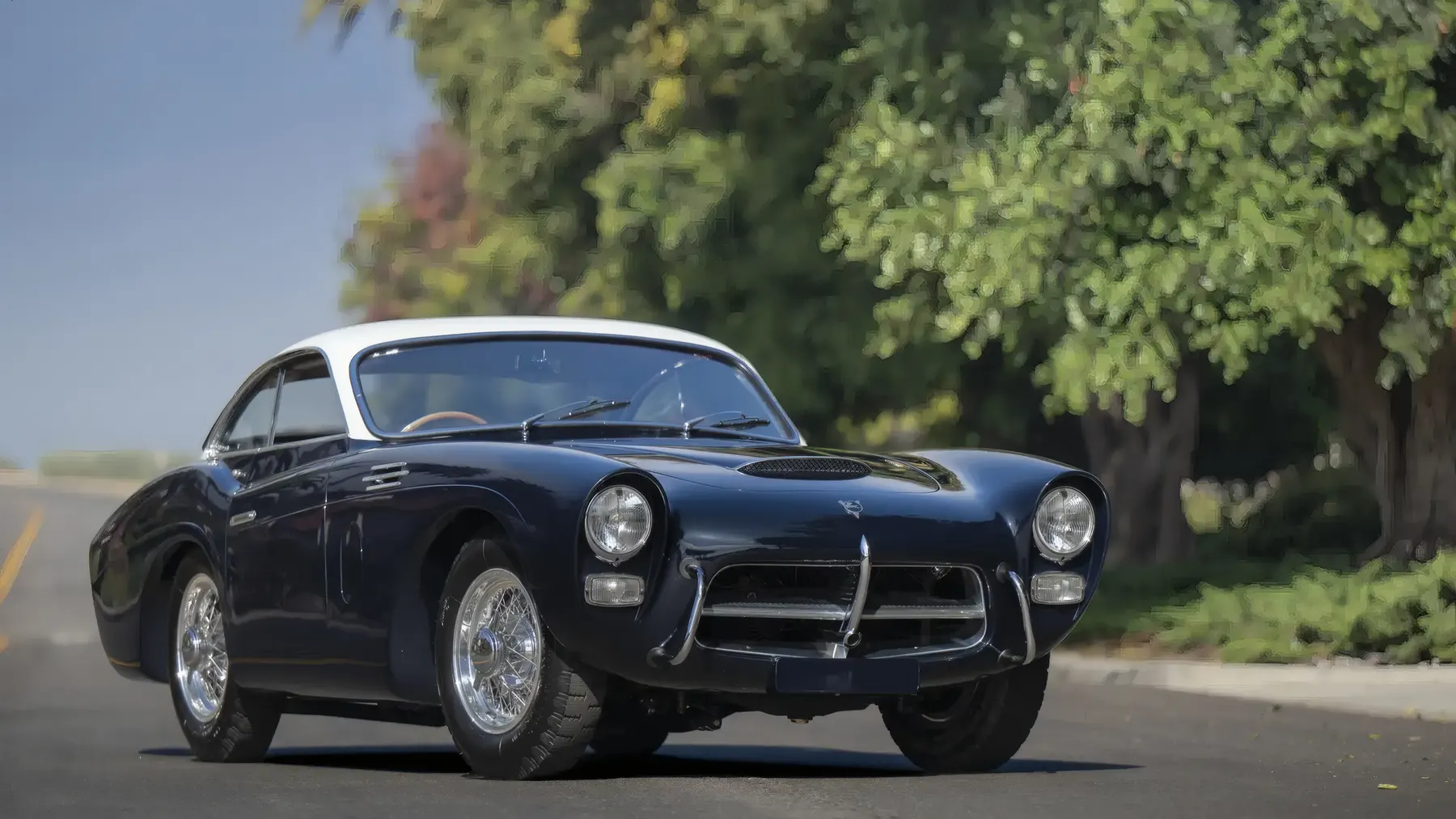
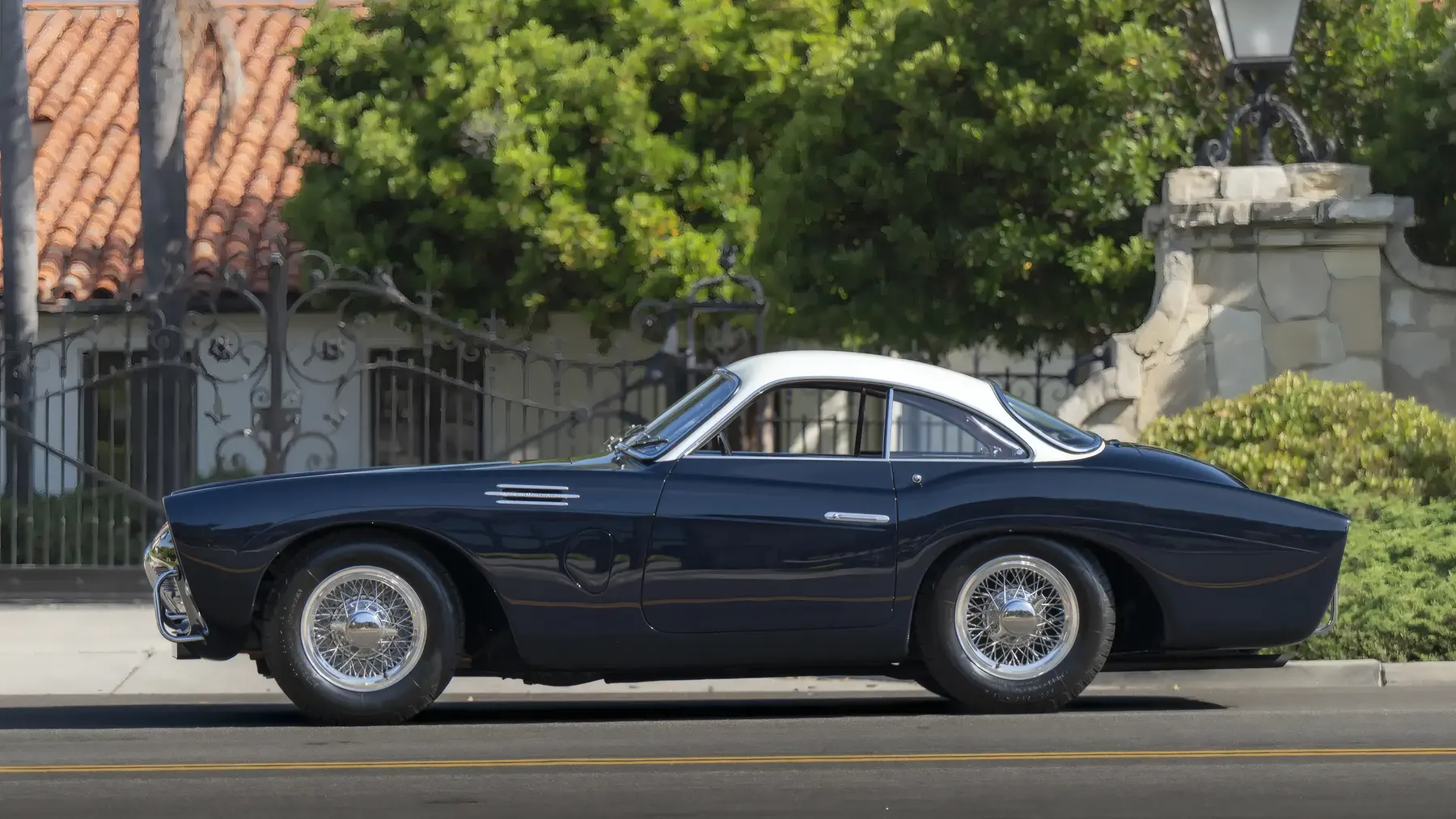
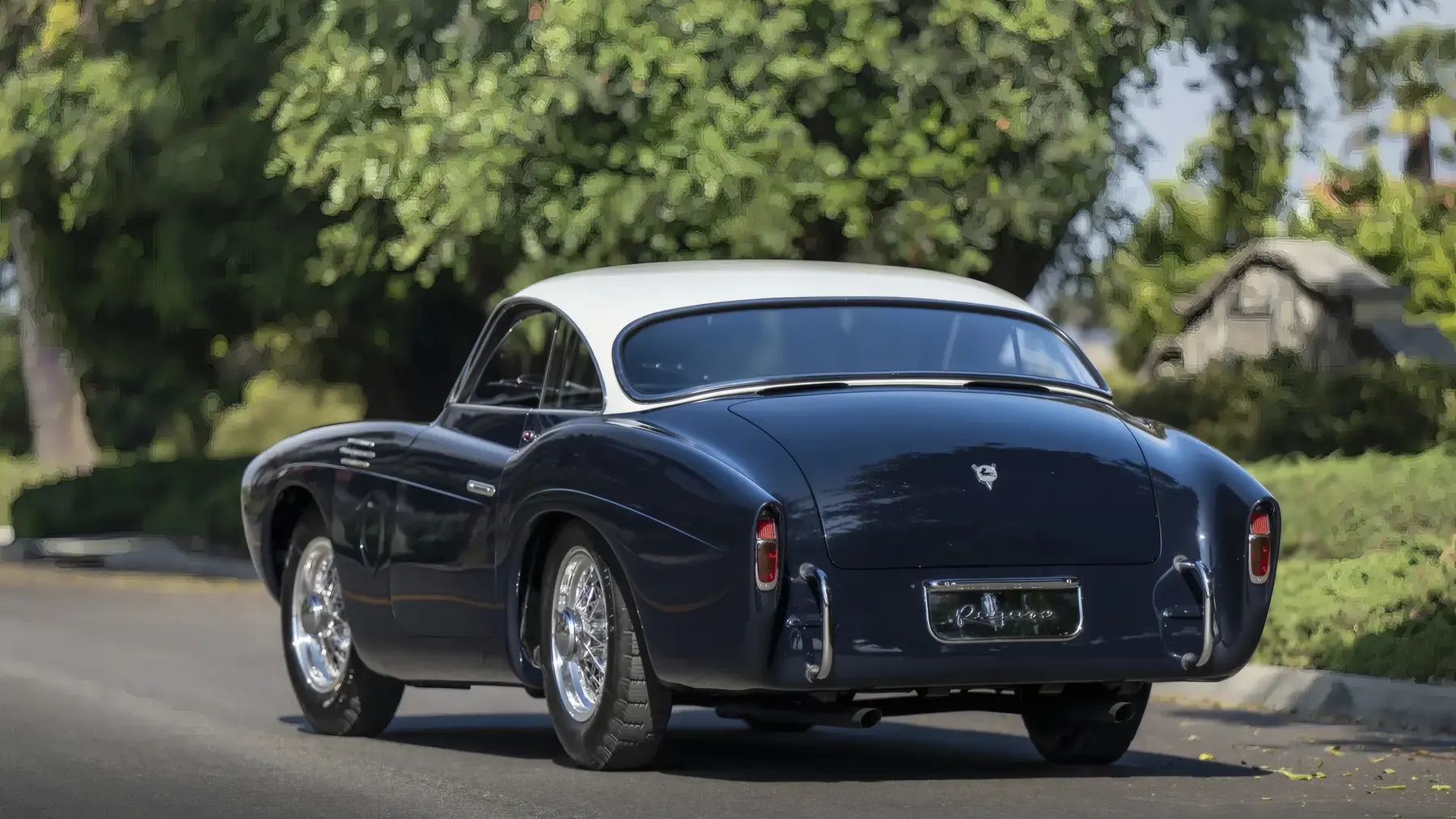
Saoutchik bodied 18 Z-102 chassis in total between 1952 and 1954, across two distinct series in both open and closed forms, and it is these cars - rather than the more common Touring- and Enasa-bodied Z-102s - that collectors and specialists generally regard as the most desirable of the breed. Of the 18, seven were Series II Berlinettas, six of them left-hand drive, and roughly five are believed to survive today. Where the First Series cars carried heavier detailing and more pronounced fin curvature, the Series II Berlinetta smoothed the shape out: a lower roofline, less emphatic curvature through the rear fenders, and more open, less cluttered wheel arches. The signature elements remained unmistakably Saoutchik - dramatically curved front fenders forming hooded arches over round Marchal headlamps, square fog lamps set inside a teardrop-shaped surround, a perforated aluminium grille let into the bonnet scoop, restrained but beautifully finished chrome and polished-aluminium brightwork, and concealed “pocket” door handles. Because every Saoutchik body was effectively hand-built to order, no two cars were quite identical, and the finest expression of the shape - sometimes referred to under the BS2 designation - carried a lower, even sleeker roofline than the rest of the run. All of it sat on the standard Z-102 chassis, with a wheelbase of roughly 92 inches (about 2,340mm) - some 250mm shorter than a contemporary Jaguar XK120’s, which gave the car a short, stubby stance and a correspondingly tight, sometimes nervous feel on rougher roads.
None of this came cheap. A Berlinetta commanded around 410,000 pesetas, with the open Super Sport spider only slightly less at 395,000 pesetas, and the order book ran to genuine cost-no-object options: fuel tanks of 26, 43 or 55 gallons, air conditioning, a radio, fitted luggage. These were among the most expensive cars sold anywhere in Europe at the time, and the numbers show it: of a total Z-102 production run that sources place at somewhere between 83 and 86 chassis, the overwhelming majority - 77 cars - stayed in Spain. France, the very market Ricart had hoped the Saoutchik relationship would open up, absorbed just three of the cars, while the United States, despite extensive contemporary press coverage, took only two.
The Autocar’s chief road tester, Gordon Wilkins, drove an early prototype in 1951 and came away praising steering that felt light and accurate. That reputation didn’t survive contact with more cars or more testers. Later road tests, and the small number of people who have driven surviving examples since, describe genuinely heavy steering effort, along with a clutch and brakes that both demand real physical strength to operate. Combined with the dogleg shift pattern and a beautifully trimmed but tightly packaged cockpit - low seats with one-piece aluminium backrests, pleated leather, padded sides - the overall effect was a car built to reward a strong, committed driver rather than one designed for effortless grand touring.
For all its engineering ambition, the Z-102’s reputation in period was decidedly mixed, and its flaws were not superficial. Despite switching to aluminium coachwork after the disappointing steel prototypes, contemporary accounts still describe the cars as heavy for their size, and that showed up starkly on track: entered in the 1952 Monaco Grand Prix, run that year as a sports-car race, the Z-102s proved too heavy and were hampered by brakes that couldn’t cope with the car’s mass and speed, and were withdrawn before the results meant anything. Outings to Le Mans and the Carrera Panamericana went worse, ending in the death of factory test driver Joaquín Palacio and doing little to build the international racing credibility Ricart badly wanted to validate the engineering. The extravagant specification that makes the Z-102 so fascinating on paper - gear-driven quad camshafts, desmodromic valves on some engines, an independently lubricated transaxle, a propshaft drilled through its own centre to feed the universal joints - also made the car complex and expensive to maintain by the standards of any 1950s sports car, and Ricart’s persistent refusal to publish consistent power figures hints at a company more focused on demonstrating technical bravado than on the unglamorous work of quality control and customer support. Commercially, the project never came close to paying for itself. At 410,000 pesetas for a Berlinetta, the Z-102 was priced far beyond ordinary reach, and even the coachbuilder relationships meant to unlock new export markets underdelivered badly, with only three Saoutchik cars ever finding buyers in France and just two selling in the United States. None of that makes the Z-102 bad engineering. It makes it heavy, temperamental, commercially unsustainable engineering - which is a separate problem, and a real one.
The picture wasn’t universally bleak. In private hands at home, Pegasos reportedly proved genuinely competitive in domestic Spanish events, and a supercharged, Touring-bodied Z-102 driven by Celso Fernández set a string of official speed records at Jabbeke in Belgium, confirming that the underlying engineering, whatever its packaging around a racetrack, was not hollow. But that validation never scaled into sustained international competition success or the sales volumes Ricart needed. By 1956 the project was effectively finished in spirit, even as the last cars trickled out through 1958; sources differ on the exact final tally, putting total Z-102 production somewhere between 83 and 86 chassis across every body style and coachbuilder combined. ENASA’s attempted successor, the Z-103, tried to cut costs with simpler, larger-displacement pushrod engines in 3.9-, 4.5- and 4.7-litre sizes, and found even less success - only three were ever built, bringing Pegaso’s entire sports-car adventure to a close.
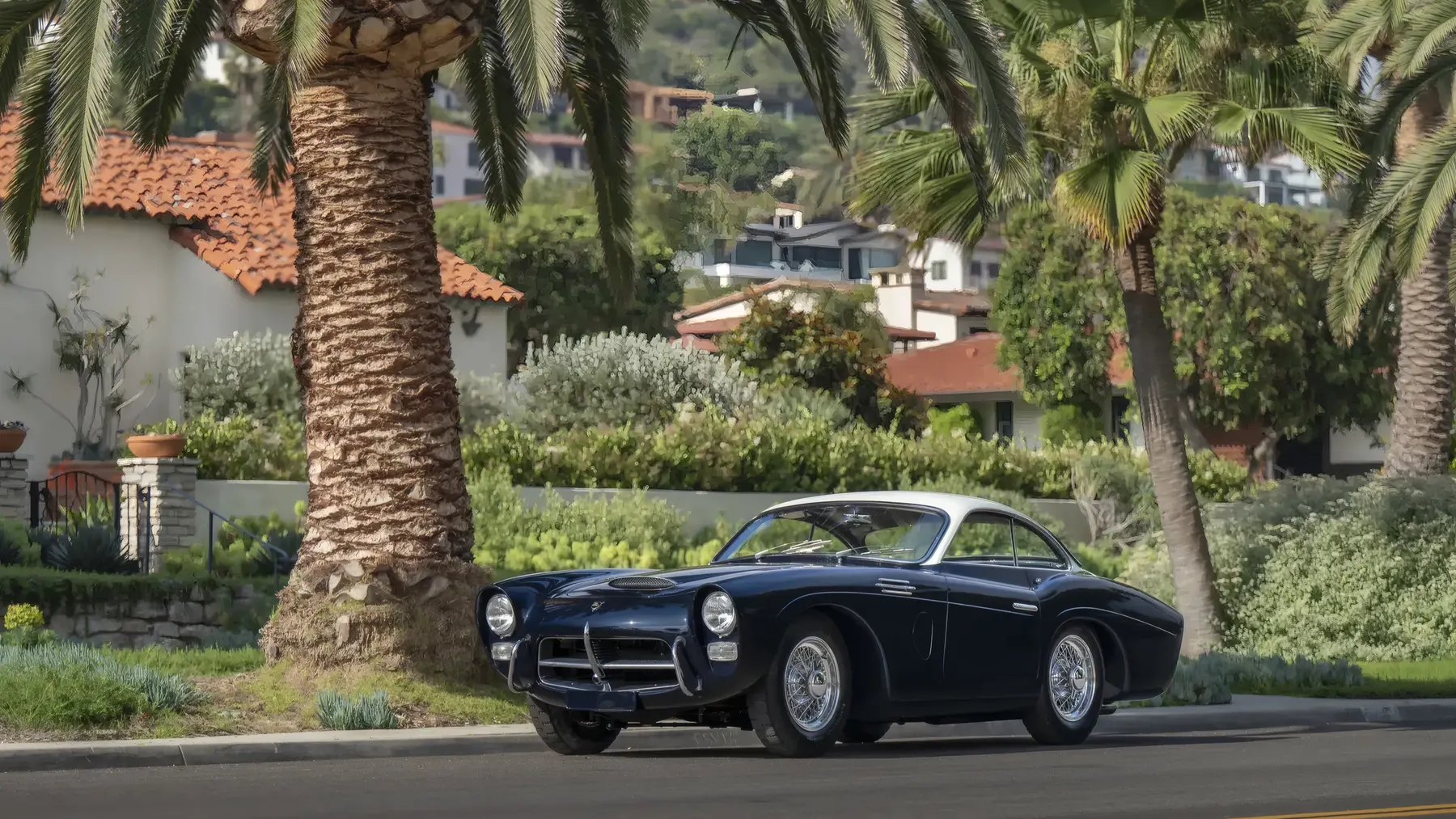
What’s left of all that ambition today sits almost entirely in what the project represented rather than what it achieved commercially. A state-owned truck manufacturer built, for a handful of years, one of the most technically uncompromising sports cars in the world, with engineering detail more commonly associated with contemporary Grand Prix machinery, and wrapped a share of that output in coachwork from a century-old French atelier making its very last major statement before closing for good. Among specialists, the Saoutchik-bodied Series II Berlinetta - with its lower roofline and cleaner surfacing over the heavier First Series cars - is generally regarded as the most fully resolved expression of what Ricart’s engineers and Saoutchik’s craftsmen were reaching for together. It was a car built by people trying to prove a point rather than sell a product in volume, and on that specific, narrow measure - proving a Spanish factory better known for lorries could out-engineer Ferrari on paper - it succeeded, even where the sales ledger never did.
Technical data
Specifications
| Engine variant | Displacement | Configuration | Power (claimed) | Notes |
|---|---|---|---|---|
| Z-102 (early/prototype) | 2,472cc | DOHC alloy V8, gear-driven camshafts, dry sump | ~165bhp* | Original prototype and early production specification |
| Z-102, 2.8-litre (typical Series II Berlinetta engine) | 2,816cc | Quad-cam alloy V8, dual twin-choke Weber carburettors, 8.1:1 compression | ~195bhp* | Documented for at least one Saoutchik-bodied Series II Berlinetta; output varied car to car |
| Z-102 BS, supercharged competition/record spec | 2,816cc–3,178cc | Alloy V8 with Roots-type supercharger(s) | ~225bhp*† | Used for record-attempt and competition cars, not standard road-going Berlinettas |
| Chassis (all Z-102 variants) | — | Pressed-steel chassis, 5-speed transaxle, de Dion rear | — | Wheelbase approx. 2,340mm (92in) |
| Top speed, supercharged record car | — | — | 151mph | Cited as the fastest production car in the world at the time |
| Top speed, standard road-going cars | — | — | approx. 120mph | Naturally aspirated cars, including most Saoutchik Berlinettas |
Sources
- Pegaso Z-102: born to fly - Classic & Sports Car
- 1954 Pegaso Z-102 Series II Berlinetta by Saoutchik - RM Sotheby’s, New York 2013
- 1954 Pegaso Z-102 Berlinetta Series II by Saoutchik - RM Sotheby’s, Monterey 2016
- 1954 Pegaso Z-102 Berlinetta Series II by Saoutchik - RM Sotheby’s, Monterey 2017
- 1952 Pegaso Z-102 by ENASA - RM Sotheby’s, Arizona 2023
- 1954 Pegaso Z-102 Saoutchik Berlinetta Series II - Broad Arrow Auctions, The Amelia 2024
- A 1954 Pegaso Z-102 in Photos - Robb Report
- Pegaso Z-102: A rare example of a “Spanish Ferrari” - Classic Motorsports
- 1952 Pegaso Z102 Series II Touring Coupe - Audrain Automobile Museum
- 1954 Pegaso Z-102 Cabriolet - Sports Car Market
- Pegaso Z-102 - Wikipedia
Join the discussion
Comments
Loading comments…
Leave a comment
Share a detail, memory, or perspective. Every comment is reviewed before publication.