Jaguar XK 150 3.4 FHC: The Grand Tourer the E-Type Left in the Shadows
1958 Jaguar XK 150 3.4-Litre Fixed Head Coupe

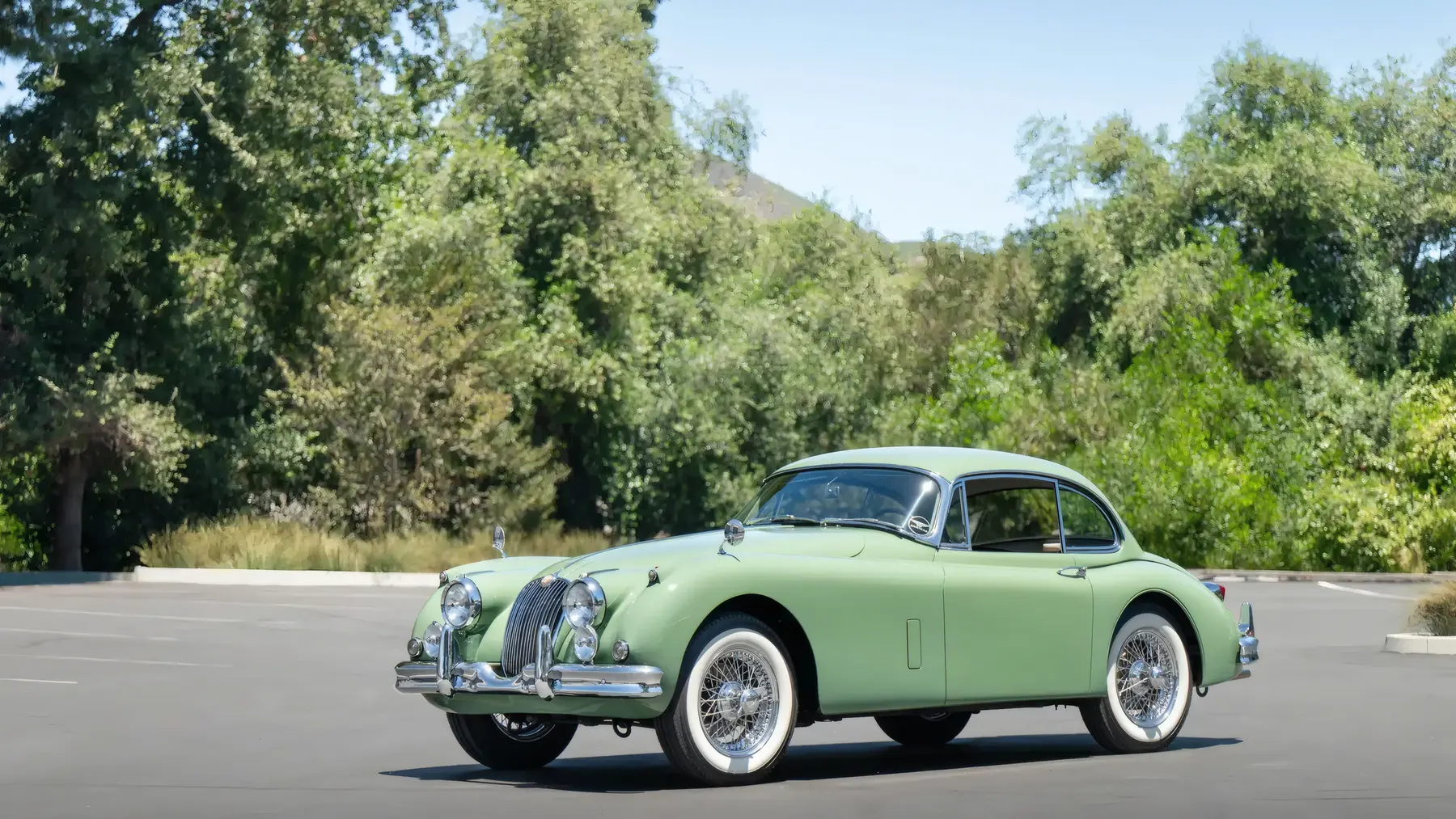
The Jaguar XK 150 arrived in 1957 carrying a difficult inheritance. The XK 120 that had launched in 1948 was a sensation - slippery, fast, and genuinely beautiful in a way that stopped traffic in both senses - and by the time Jaguar’s third iteration of that car reached the showroom, the lineage was nearly a decade old. Jaguar’s answer was to refine rather than replace: to widen the body, raise the waistline, add proper winding windows, and sand down the rawness until something approaching a grand tourer emerged. The result polarised its contemporary audience and still generates quiet argument among XK collectors today. For those who wanted to drive from London to the south of France in something approaching adult comfort, the XK 150 3.4-litre Fixed Head Coupé was exactly the right tool. For those who still mourned the lean urgency of the original 120, it was evidence that Jaguar had lost its nerve.
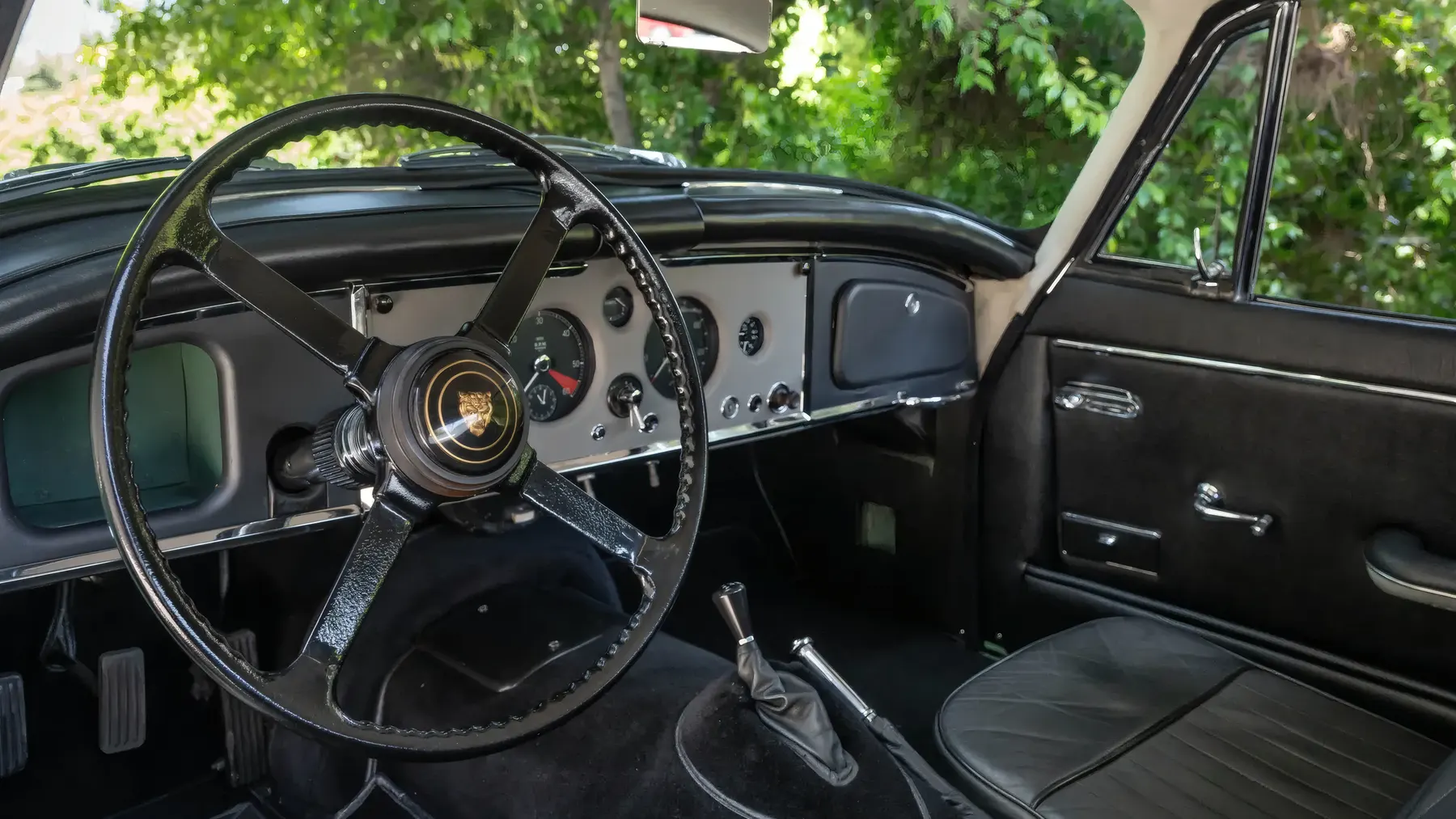
That tension - between sporting aspiration and civilised execution - defines the car entirely. The Fixed Head Coupé was always the most composed variant in the XK 150 range, more settled than the Drophead Coupé and far more enclosed than the open roadster that arrived in 1958. It was a genuine two-seater with useful luggage space, proper wind-up glass windows in place of the XK 120’s side curtains, a one-piece curved windscreen replacing the divided glass of the XK 140, and an interior that had finally grown into something a full-sized adult could use without compressing himself into the door panel. Compared to the XK 140 FHC it superseded, the cabin gained noticeable headroom and shoulder room, the dashboard was restyled with a padded top rail, and the instruments were grouped more sensibly ahead of the driver. None of that sounds remarkable now, but in the context of British sports car cabins of the mid-1950s, the XK 150 FHC felt close to luxury.
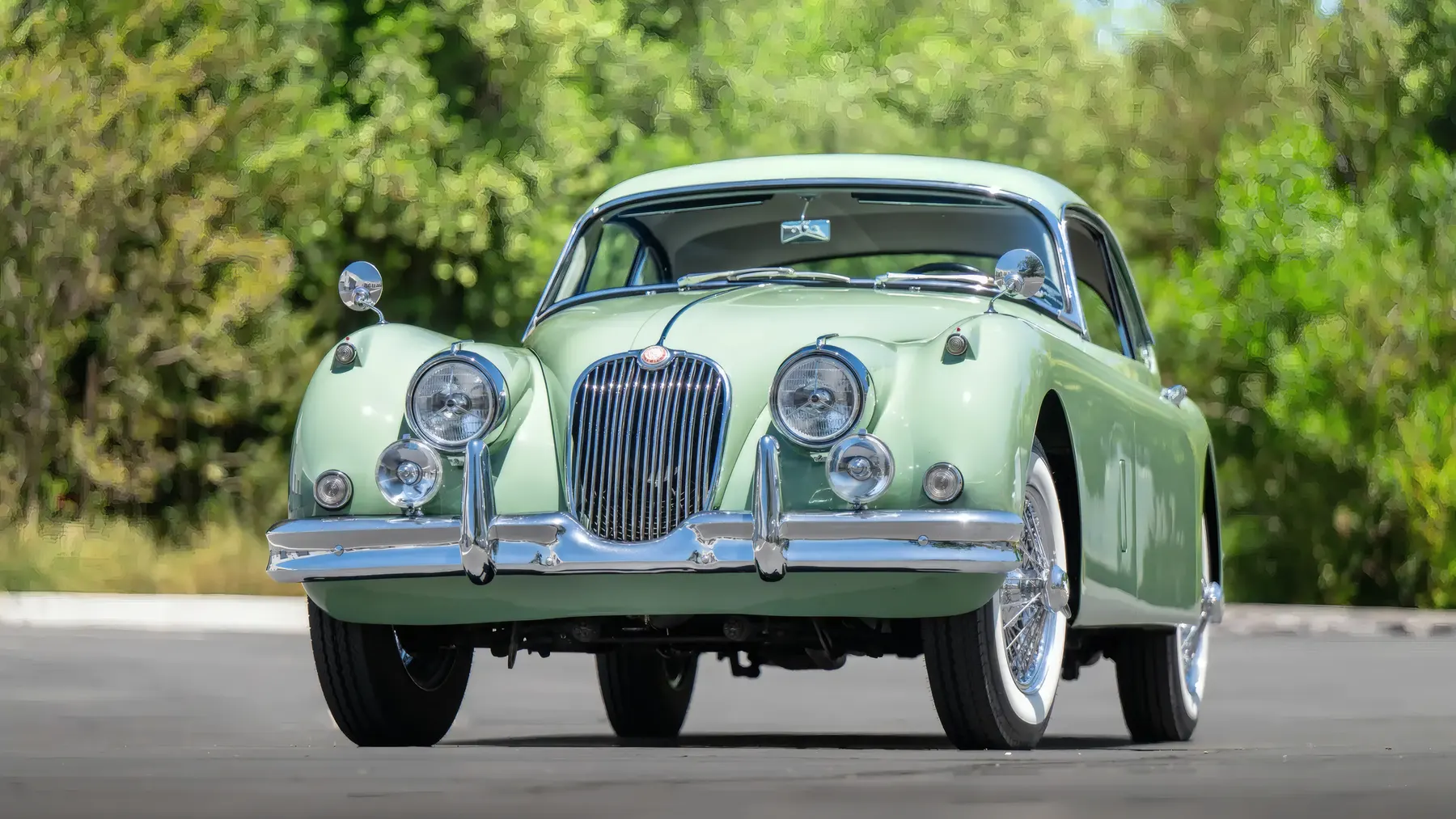
The engine beneath that more rounded bonnet was the XK twin-cam straight-six that had already made Jaguar’s reputation on road and track. Displacing 3,442cc, with twin overhead camshafts driven by a duplex chain, it was the product of pre-war thinking by William Heynes, Walter Hassan, and Claude Baily - yet it had proved so capable that Jaguar ran a direct descendant in the C-Types and D-Types that won Le Mans five times between 1951 and 1957. In the standard XK 150 3.4 tune, the engine produced around 190 bhp at 5,500 rpm. The Special Equipment specification lifted that to approximately 210 bhp through a revised compression ratio, altered camshaft timing, and improved twin SU carburettor arrangement. Above both sat the 3.4 S-type - fitted with the straight-port cylinder head, three 2-inch SU carburettors, and around 250 bhp - a transformation that turned the XK 150 into a different proposition altogether. The S’s existence matters even when discussing the standard car, because it illustrates just how much the XK engine still had in reserve when Jaguar chose to apply it properly.
In standard 3.4 trim, the engine offered a torque curve that felt broad and tractable by the standards of its era, pulling crisply from low revs in a way that rewarded the measured progress a grand tourer demands rather than the rev-it-and-hang-on approach a lightweight sports car invites. The XK six was never a high-strung screamer; it was a long-stroke, undersquare unit that built power steadily, the exhaust note deepening from a subdued burble at town speeds to a properly resonant bellow above 4,000 rpm. A 0–60 mph time in the region of 8.5 seconds was plausible in period for the standard 3.4 FHC, with the SE specification trimming that to somewhere around 7.4–7.8 seconds. A genuine top speed in the 120–124 mph bracket for the standard car, and nearer 130 mph for the SE, completed a performance picture that was competitive in 1957 for a car of this weight and refinement - though the weight caveat matters enormously.
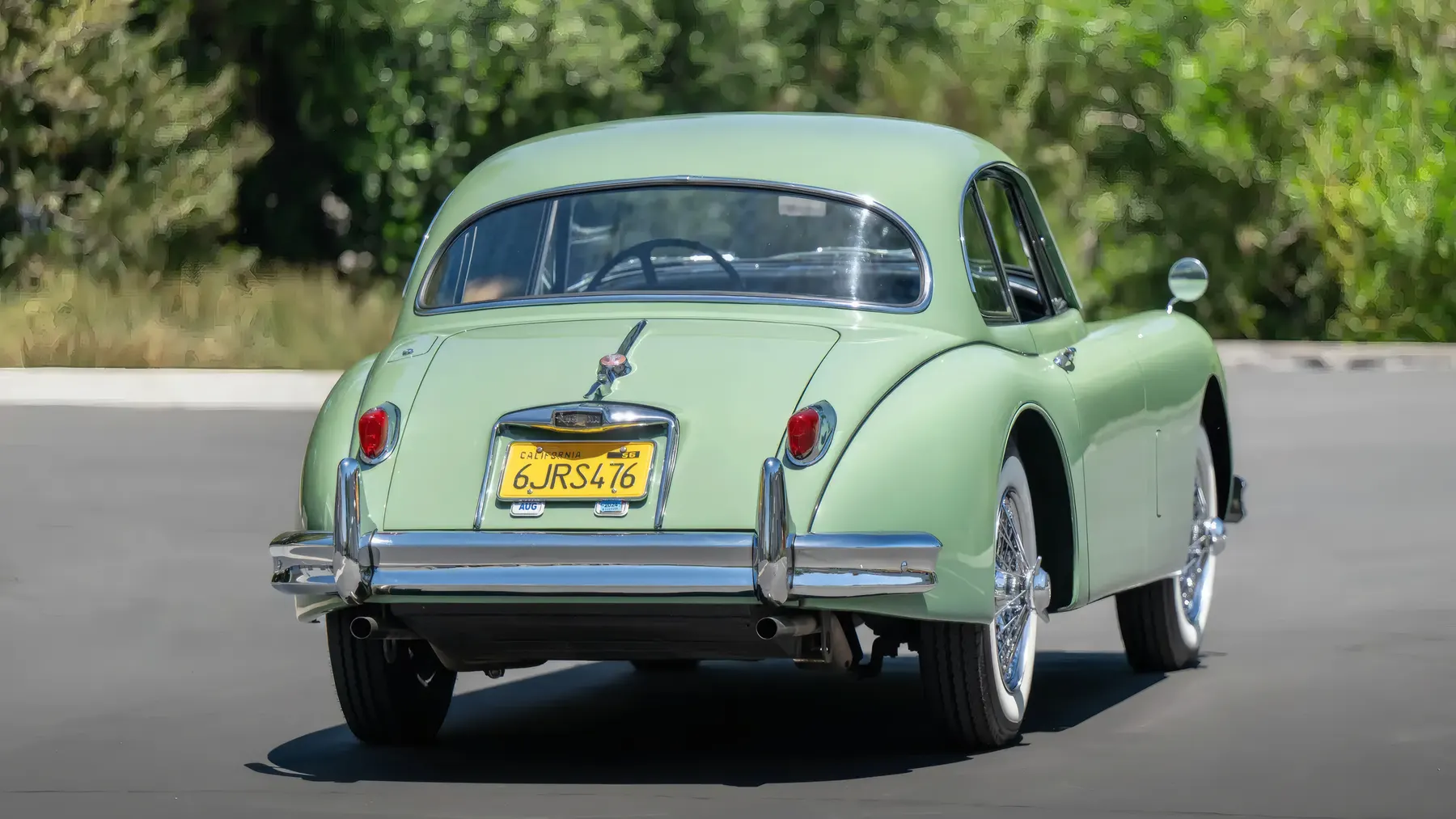
The XK 150 had grown heavy relative to its ancestors, and the Fixed Head Coupé was the heaviest body variant. In road trim the FHC came in at approximately 1,490 kg - heavier than the original XK 120 by a significant margin, and noticeably more than the XK 140 it replaced. The XK 120, particularly in its early lightweight aluminium-bodied form, carried closer to 1,270 kg and had a lively, almost nervous quality at speed that the 150 simply could not reproduce. In standard 3.4 tune, the power-to-weight ratio fell short of the earlier car’s promise, and period road tests were clear-eyed about this: the XK 150 was quicker, more refined, and considerably better-equipped, but the sense of effortless performance that the XK 120 projected - the impression that it could always go faster if asked - had diminished. Buyers hoping for meaningful progress over the XK 140 on a straight performance basis had legitimate cause for disappointment.
The gearbox added another layer of period character, though character is perhaps too kind a word for what the Moss four-speed unit delivered in everyday use. Synchromesh was weak on the lower ratios, requiring double-declutching for clean downchanges if the driver wished to avoid the grinding protest that emerged when the gearbox was hurried. An optional Borg-Warner automatic was available, and a significant proportion of American buyers - who purchased XK 150s in considerable numbers - specified it willingly. The automatic suited the car’s grand touring temperament and effectively concealed one of its mechanical weaknesses, but it removed the remaining thread of driver involvement from the XK experience. Neither the laborious manual nor the slightly detached automatic was fully satisfying. Jaguar would not offer an all-synchromesh close-ratio gearbox until the E-Type, and by 1957 the Moss unit’s limitations were already becoming anachronistic by the standards of the more progressive Continental competition.
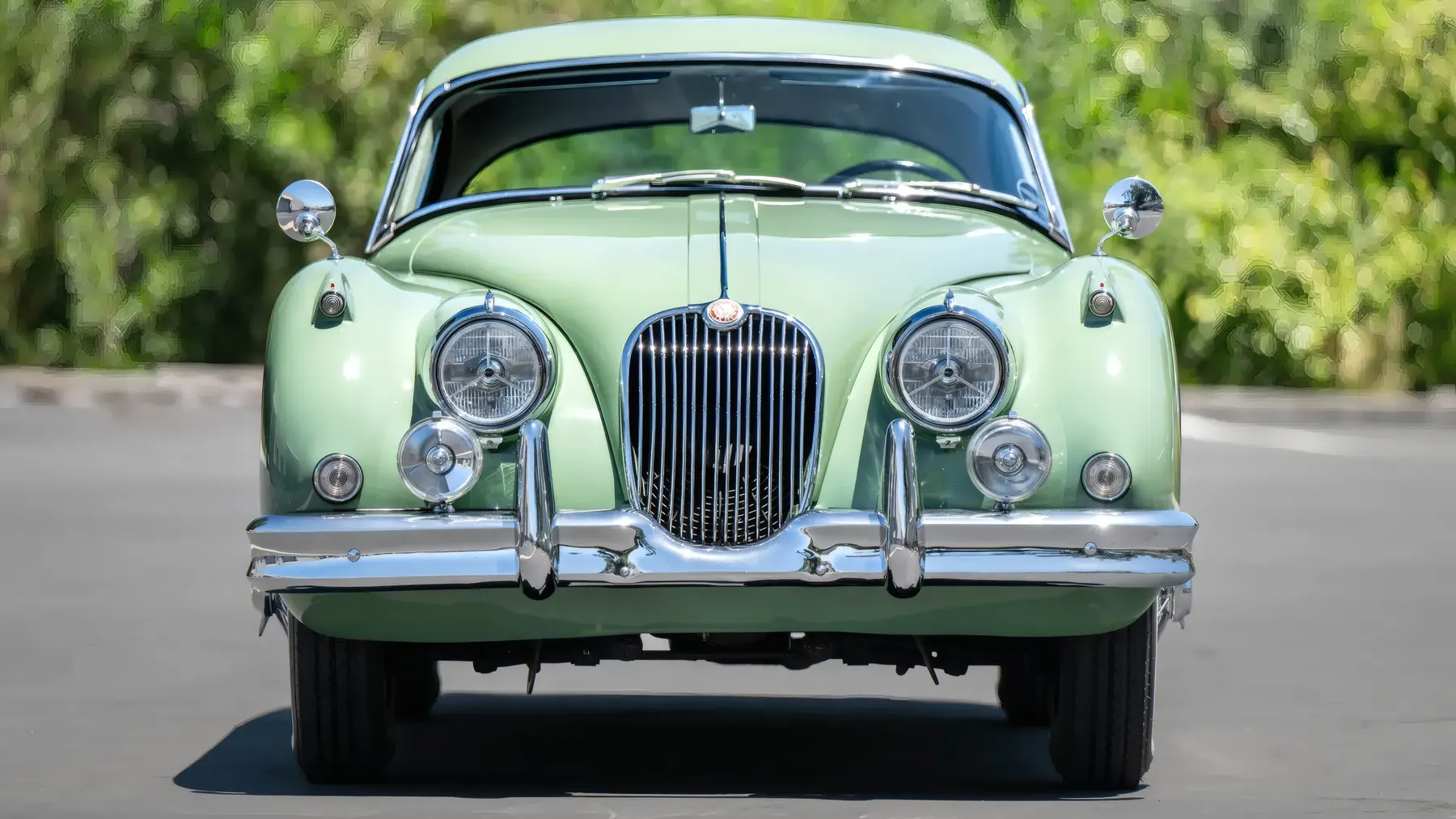
Where the XK 150 made a genuinely significant advance over every car it competed with was in its braking system. Dunlop disc brakes fitted as standard to all four wheels - across the entire range from launch - put the XK 150 ahead of virtually every production rival for stopping ability and fade resistance. This was not a gimmick or a performance specification applied to the top model only; it was standard equipment at every level, on what was ostensibly a road-going touring machine. The discs resisted fade through prolonged high-speed descents in a way that drums simply could not, and the pedal feel was more progressive and consistent under repeated hard application. For a car capable of sustained high cruising speeds on the continental routes that were opening across Europe in the late 1950s, that braking ability was a genuine safety argument as much as a performance one. The XK 150 could stop as efficiently as it went, which in 1957 was a meaningful claim.
The steering was less celebrated. Jaguar retained the Burman recirculating ball system rather than moving to rack and pinion - a transition that would come only with the E-Type - and the XK 150’s helm had a soft, slightly indefinite quality through the straight-ahead position that frustrated those who wanted precision feedback. Body roll in corners was more pronounced than the car’s sporting pretensions suggested it should be, and while the independent front suspension worked well in isolation, the live rear axle on semi-elliptic springs limited what the chassis could ultimately achieve. On smooth, fast roads - the long, flowing routes where the Fixed Head Coupé was most obviously at home - these limitations barely registered. The ride quality was excellent for its era, and the body’s rigidity gave the cabin a settled, secure quality that the open cars could not match. On tighter secondary roads, asked to change direction quickly, the chassis showed its age: the suspension geometry was fundamentally that of a car designed in the mid-1940s, and the additional mass of the 150 made those limitations more evident than they had been in the earlier XK cars.
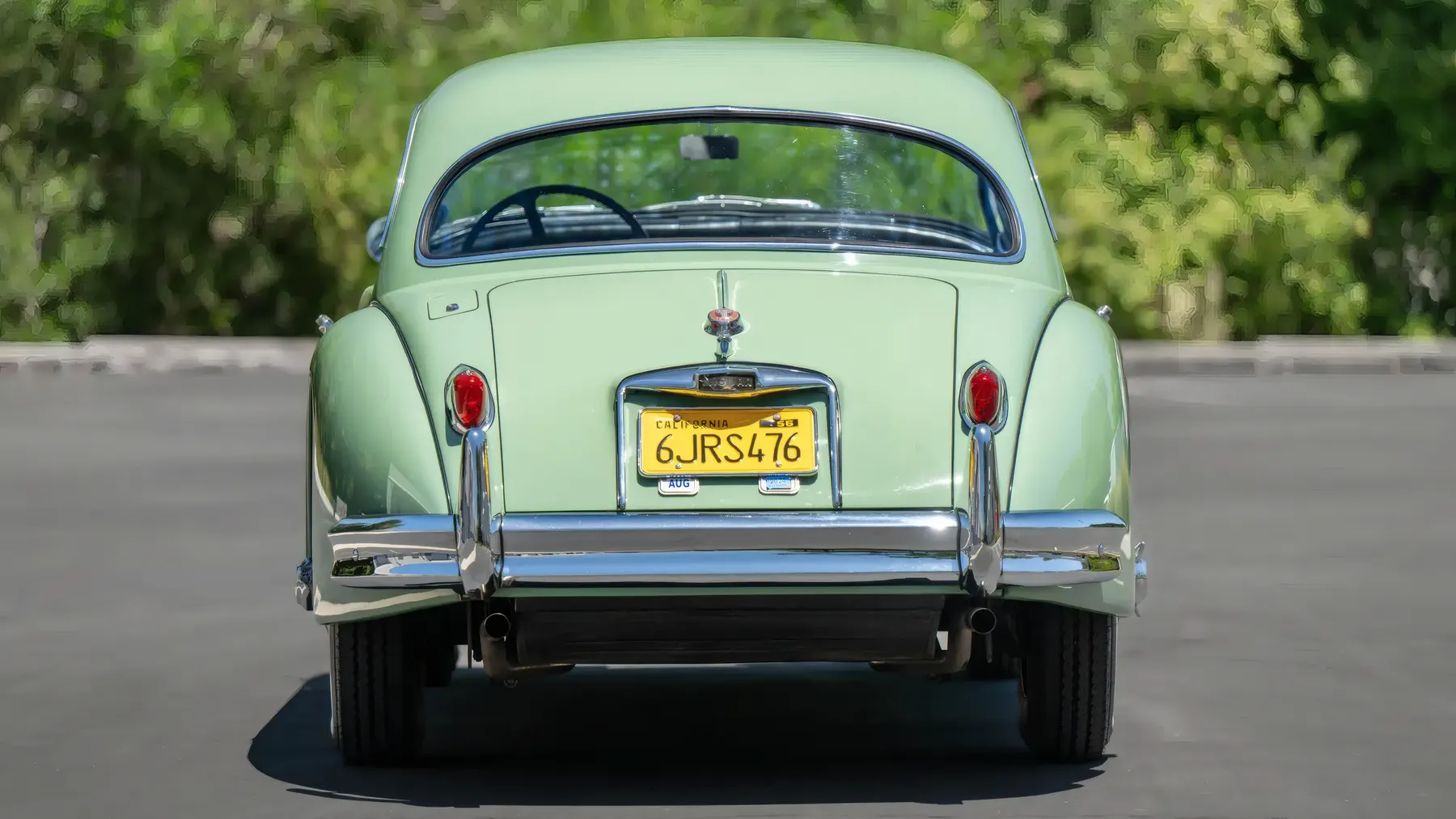
The design attracted mixed contemporary responses, and it has never quite achieved the uncomplicated admiration that surrounds the original XK 120. William Lyons reshaped the body with the economy of line that characterised all his work, widening the bonnet, raising the sills, and fitting a substantially larger rear window to the FHC than had appeared on the 140. The one-piece curved windscreen gave the coupé a cleaner, more modern appearance, and the rounded rear haunches were more substantial and considered than on the previous car. But the higher waistline and more enclosed cabin - necessary concessions to interior space and weather protection - robbed the car of the taut, tensile quality that made the XK 120 look as though it were moving when standing still. The XK 150 FHC looks comfortable rather than urgent, well-dressed rather than predatory. Whether that reads as a flaw or a feature depends entirely on what the viewer expected the car to be, and in 1957 there were buyers on both sides of that argument.
In American markets, where the XK range had consistently sold well and where the standard 3.4 specification found the majority of its buyers, the XK 150 FHC was understood correctly as an accessible grand touring machine - something positioned against the upper tier of European GT production rather than against domestic American performance cars, which were already pursuing a very different definition of speed. Period road tests on both sides of the Atlantic noted the car’s performance-per-pound value with some consistency. It was not cheap, but it offered braking and cruising ability that more expensive rivals found difficult to challenge in period.
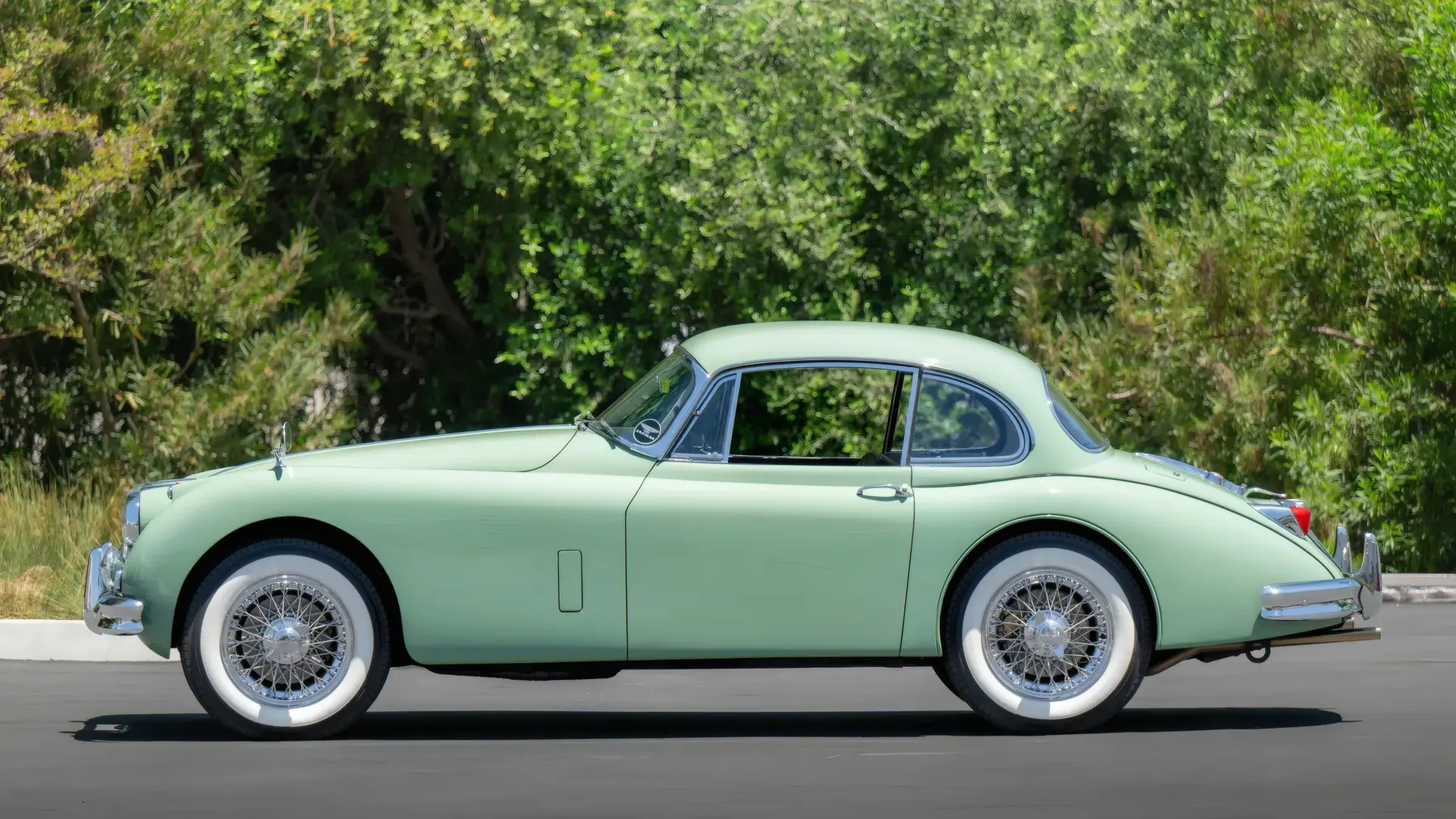
By 1959, Jaguar expanded the engine range to include the 3.8-litre XK unit, producing around 220 bhp in standard form and 265 bhp in S-type configuration. The 3.8 S-type FHC is the variant that tends to command the strongest collector attention and the highest auction valuations today, and with some justification - the combination of the wider engine and the straight-port head produced a performance envelope that could legitimately embarrass far more expensive cars. But the 3.4 FHC, particularly in SE specification, represents the XK 150’s most coherent expression. It offered enough power to make the most of the chassis without pushing the limits of the suspension and gearbox into uncomfortable relief, and it delivered the car’s grand touring character in its most honest form. The XK 150 3.4 Fixed Head Coupé closed its production run in 1961, replaced not by an evolution but by the E-Type - a car that arrived at roughly the same price and made almost the entire previous generation of British GT machinery feel instantly dated. That the comparison was so direct and so brutal said less about the XK 150’s shortcomings than it did about the E-Type’s extraordinary achievement, but the timing was unfortunate nonetheless.
What the Fixed Head Coupé 3.4 actually represented, stripped of its successor’s shadow, was a highly capable, genuinely fast touring machine built around one of the great post-war engines in a body that prioritised livability without abandoning performance - and equipped with brakes that were, for a few years, the best offered on any production car at any price. It was built for those who drove seriously rather than sportingly, who understood the distinction between speed and haste. The XK 120 had proved that Jaguar could build a fast car. The XK 150 Fixed Head Coupé proved it could build a good one.
Join the discussion
Comments
Loading comments…
Leave a comment
Share a detail, memory, or perspective. Every comment is reviewed before publication.