Aston Martin DB5 Convertible: The Open-Top Grand Tourer That Never Needed a Name
1965 Aston Martin DB5 Convertible

Images: Simon Clay / RM Sotheby's
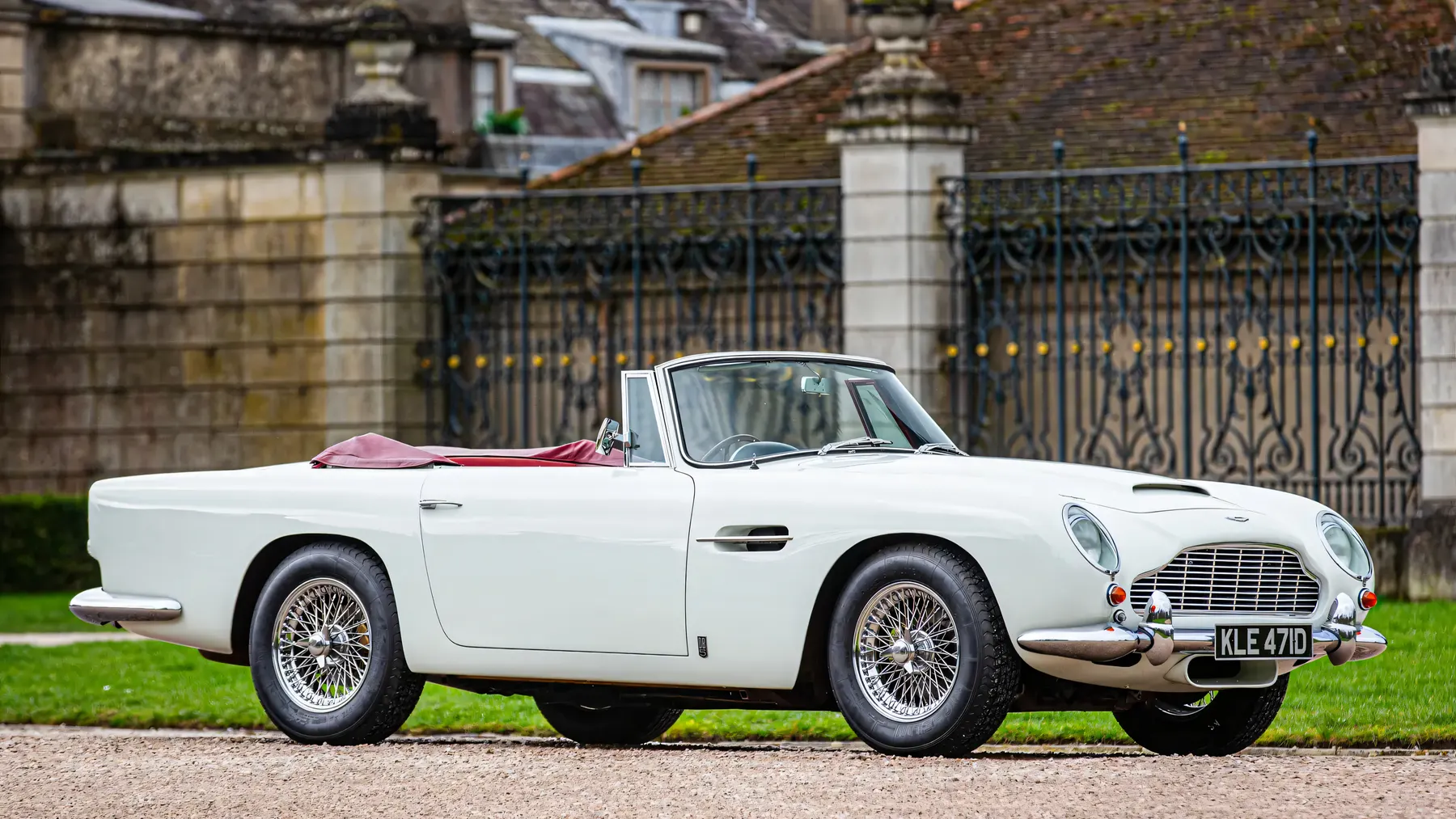
The most exclusive version of the world’s most famous grand tourer had no special name. While the DB5 coupé was acquiring its immortal association with James Bond across two consecutive films, the open-top variant was being quietly hand-built at Newport Pagnell for a clientele that required no encouragement from a fictional secret agent. It was called, simply, the Convertible - no Volante designation, no special badging, no marketing apparatus beyond the car itself. That the Volante name would eventually arrive only in 1965, attached to a transitional model built on the final thirty-seven DB5 chassis with DB6-style trim details, is an oddity that speaks to how unremarkable Aston Martin considered the open body style at the time, even as it was producing one of the most beautiful cars the factory ever made.
The DB5 arrived in September 1963 as a carefully considered evolution of the DB4 rather than a clean-sheet design. At its heart was a 3,995cc twin-overhead-camshaft straight-six of all-alloy construction, the work of Aston Martin’s chief engineer Tadek Marek, who enlarged the DB4’s 3.7-litre unit by taking the bore out to 96mm and extending the stroke to 92mm for a total displacement gain of 325cc over its predecessor. This was not primarily an exercise in raw power. The standard engine’s 282bhp at 5,500rpm, fed through three SU carburettors, was a figure treated with some caution even in period - later commentators have characterised it as probably optimistic - and the engine’s principal gain over the DB4 was in torque delivery and mechanical composure rather than headline output. What the extra capacity gave was spread and tractability; the engine became more authoritative at low speeds and more composed at the top of its range. A Vantage option followed in 1964, replacing the SU carburettors with three Weber 45 DCOE instruments and revising the camshaft profiles. Period sources disagree on the output, with figures ranging between 314bhp and 325bhp at 5,750rpm; the higher number may reflect marketing optimism, and contemporary analysis suggests the lower end of that range is the more credible figure.
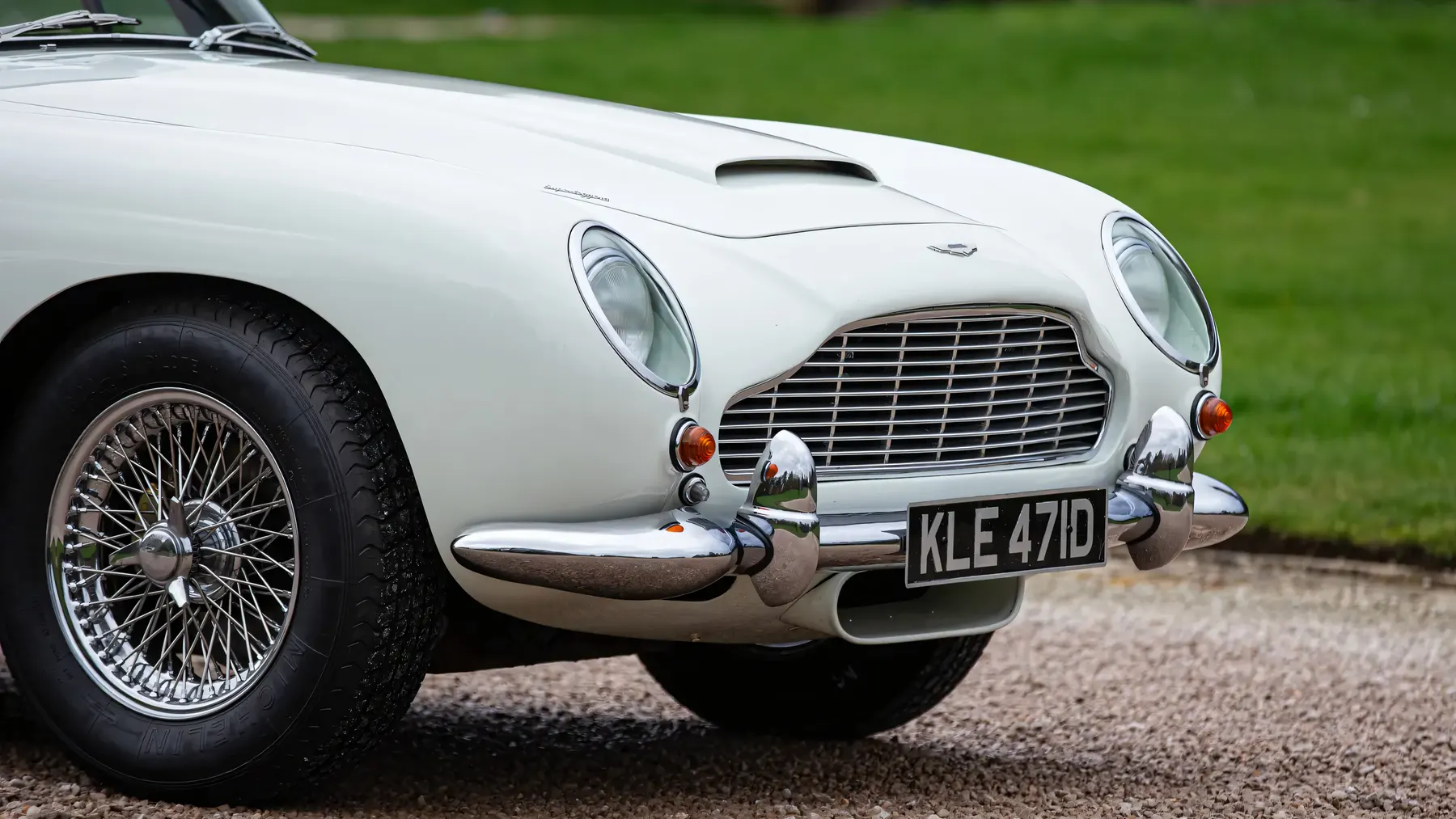
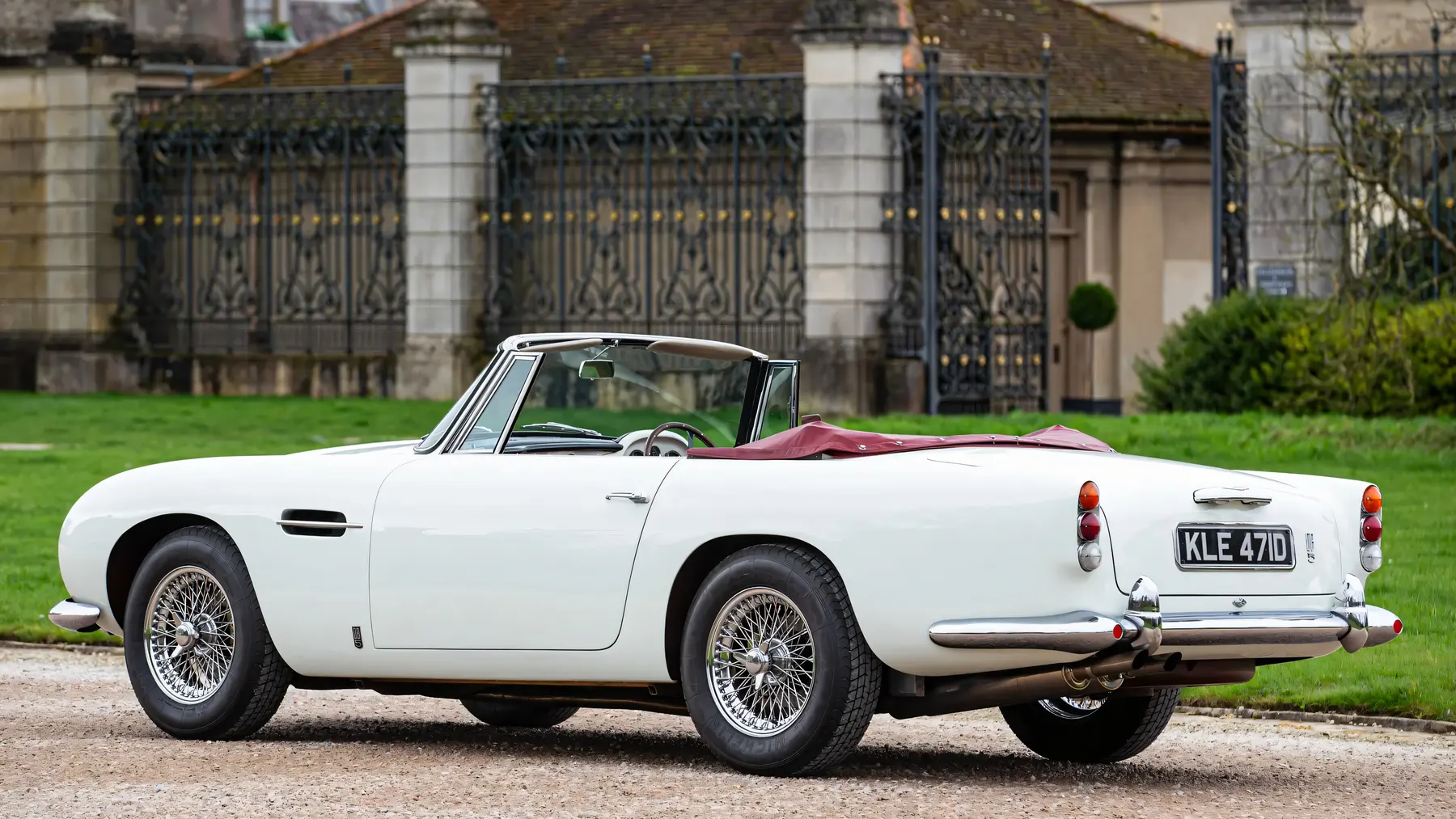
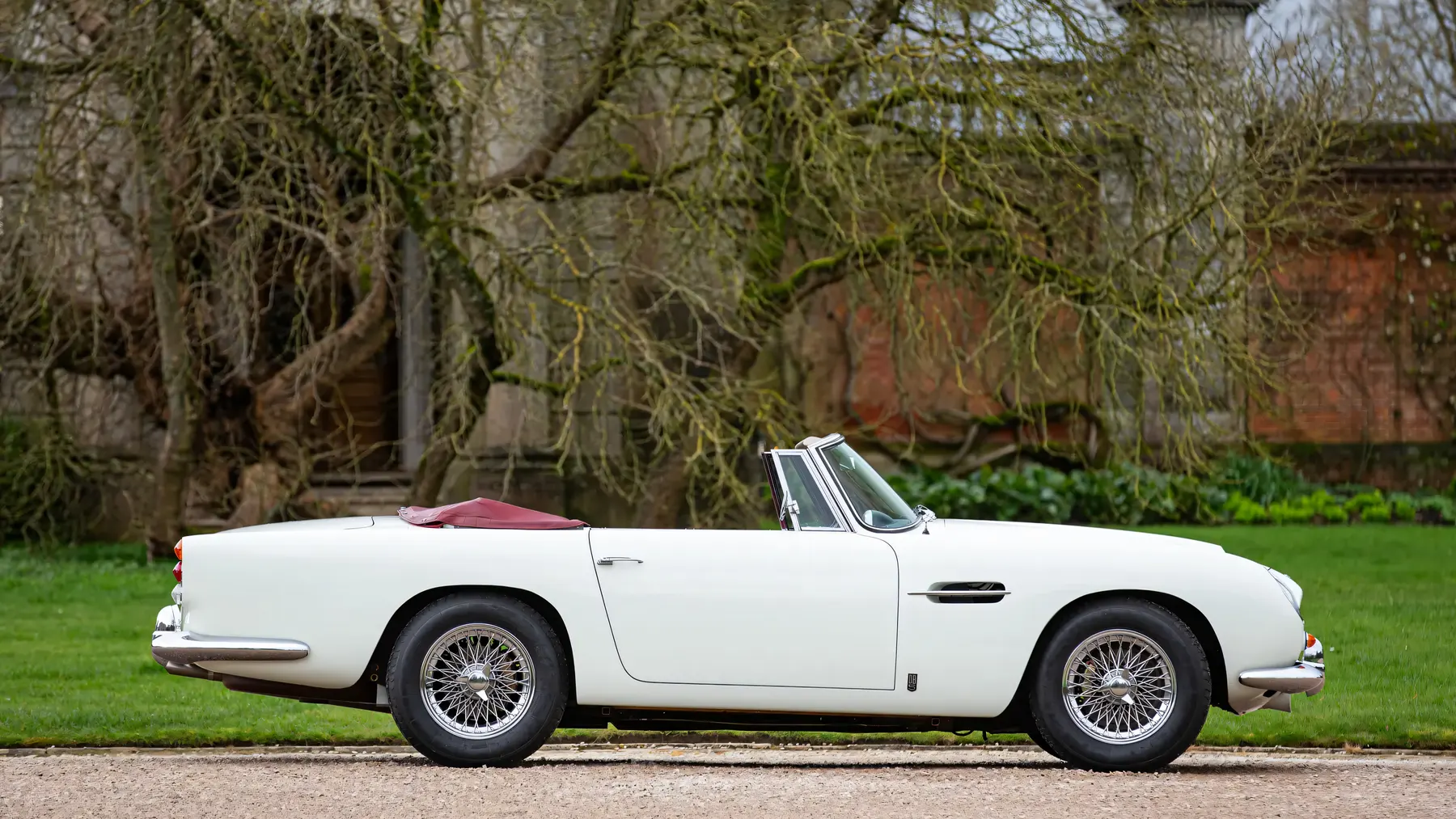
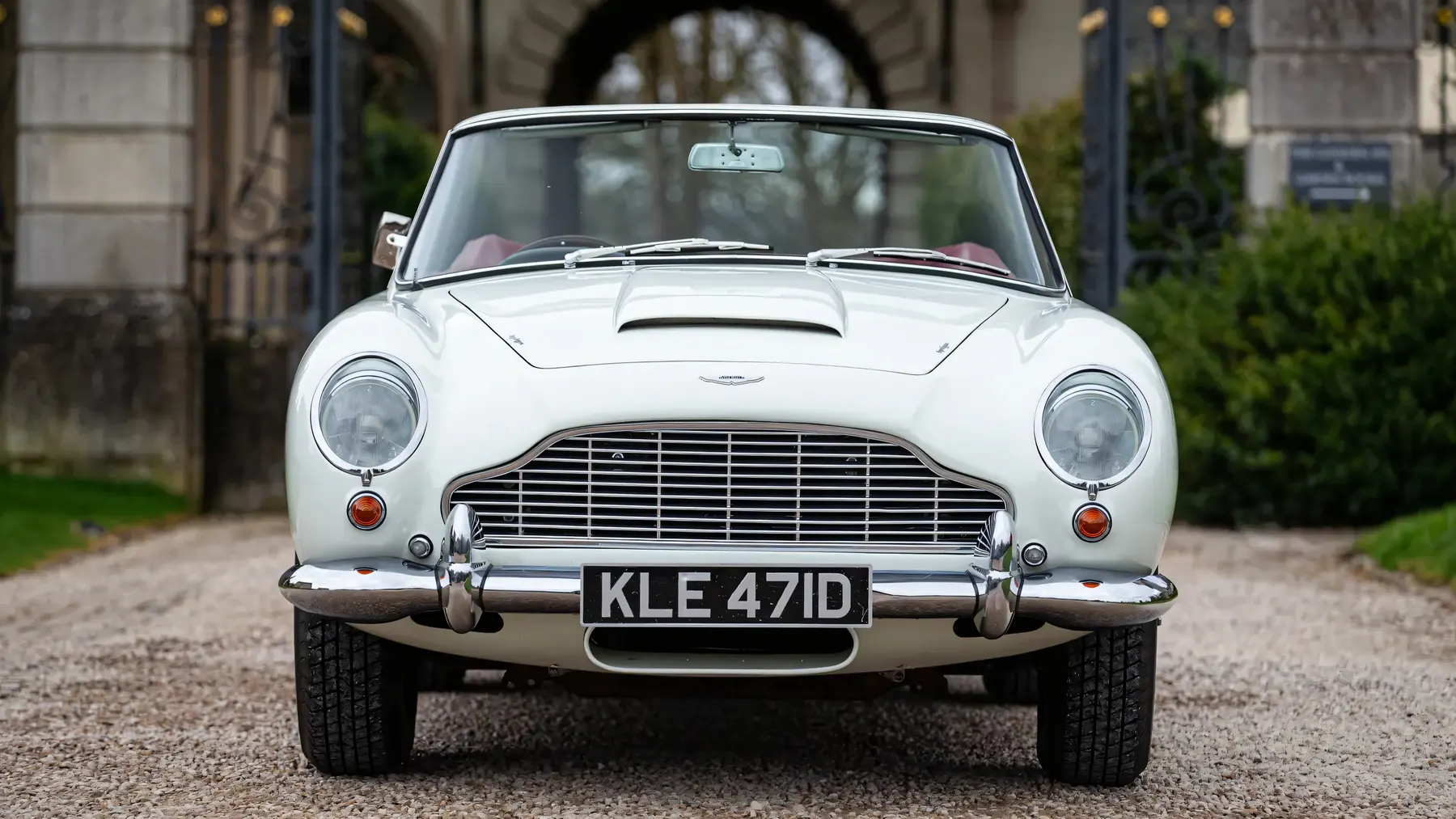
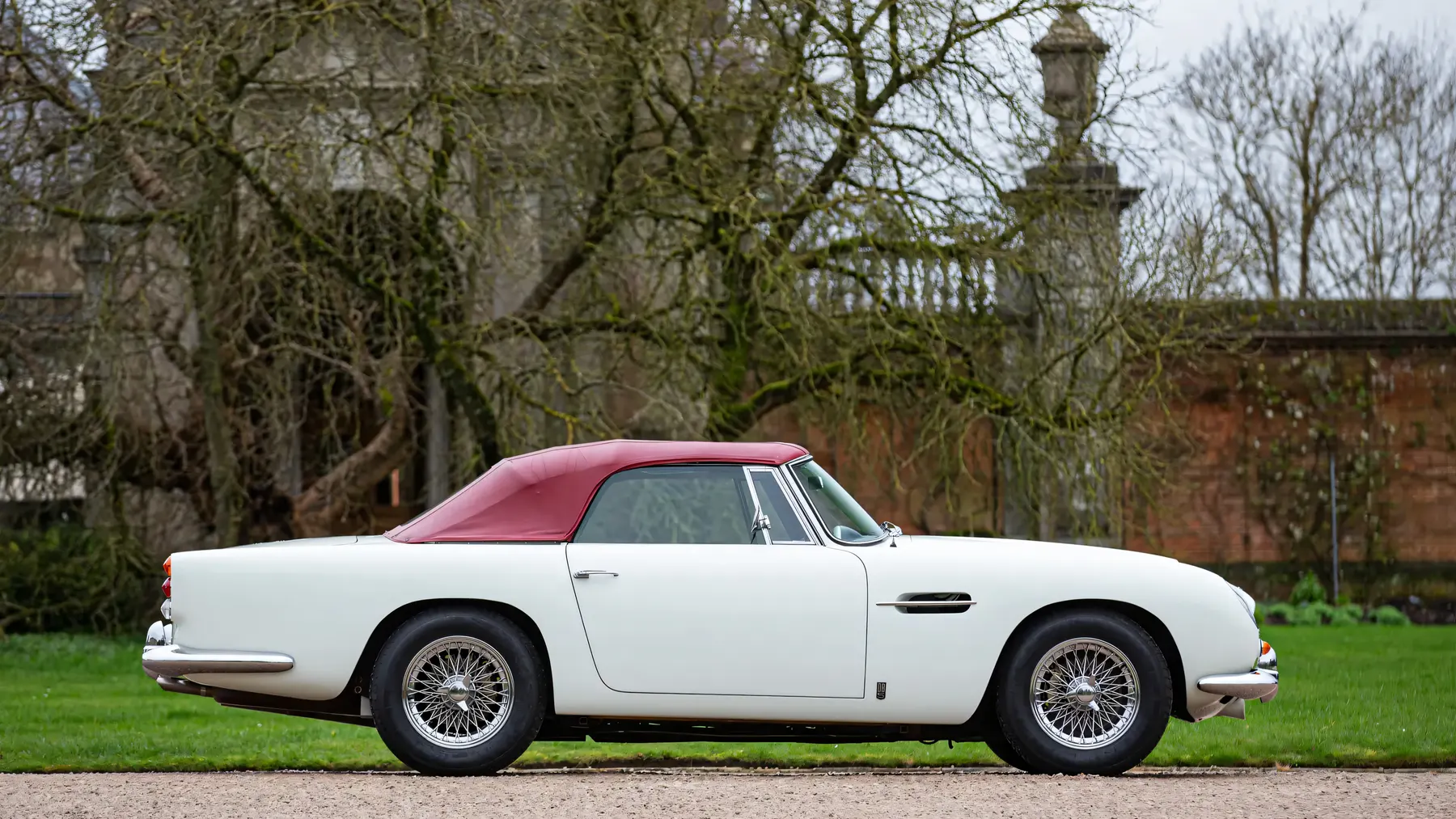
The body was the work of Carrozzeria Touring Superleggera of Milan, with the DB5’s styling credited to designer Federico Formenti - a relationship traceable directly from the DB4. Touring’s Superleggera method involved hand-forming aluminium panels over a skeleton of lightweight steel tubes, each completed car carrying a Superleggera badge on the bonnet. On the coupé, this produced something close to a perfect shape for the era: a long, tapered bonnet, sculpted flanks with shallow side vents, fully enclosed headlights behind perspex covers, and a fastback roofline of uncommon elegance. The Convertible carried everything forward from the windscreen, substituting a manually operated hood for the fixed roofline and a body-coloured dashboard in keeping with the tradition Aston Martin had established with the DB4 Convertible. The hood line, even when raised, retained a degree of visual discipline rarely achieved in British open cars of the period. The interior maintained the pleated seat trim of the standard car - a detail that would quietly distinguish surviving examples from the later DB6, whose seats featured distinctive V-stitching - while the instrumentation occupied a broad, curved binnacle ahead of the driver, presenting an array of Smiths gauges in a layout that prioritised legibility over modernist simplicity. Full leather trim, wool pile carpet, electric windows, and an optional air-conditioning system completed a specification befitting the clientele at whom the car was aimed.
The Convertible’s restricted production - 123 examples over two years, against around 899 coupés and 12 Shooting Brakes built during the same period - was not primarily the result of constrained demand. It reflected the genuine disruption that open-body production caused at Newport Pagnell, where the factory was already running near capacity on the standard car. The additional rigidity requirements, the revised fuel arrangement, and the substantially more complex rear bodywork all required accommodation in a manufacturing environment built around a fixed-roof car. To create space for the optional air-conditioning system, Aston Martin relocated the fuel tanks to mountings within the rear wings, a solution carried over from the DB4 Convertible that brought total capacity to 19 gallons. A removable steel hard top was listed as a rare factory option, fitted by Works Service prior to customer delivery, transforming the car’s character without altering its registration. The UK launch price of £4,490 placed the Convertible modestly above the saloon’s £4,175 - a premium that barely reflected the manufacturing complexity involved.
The £4,490 price also positioned the car carefully within the contemporary luxury GT market. The Jaguar E-Type Roadster offered a compelling performance argument at substantially lower cost, but it was emphatically a sports car rather than a grand tourer, sacrificing interior civility and long-distance ease for dynamic sharpness. Ferrari’s contemporary open cars occupied a similar luxury register to the Aston but at considerably greater cost and with the added complications of left-hand-drive ownership in Britain. The Aston Martin DB5 Convertible sat between these alternatives: more sporting than a Bentley, more refined than an E-Type, more attainable than an Italian exotica. For the small number of buyers who arrived at Newport Pagnell with a cheque and an open-air preference, there was nothing else in the British market that genuinely matched it for the breadth of what it offered.
The gearbox situation deserves some explanation in its own right. Aston’s own David Brown four-speed overdrive unit, fitted to the earliest cars, proved fragile enough in service that it was progressively replaced during the production run by a ZF-sourced five-speed unit, which soon became standard. The early David Brown box had been a known weakness even in the DB4, and its presence in a flagship car at this price level was an acknowledged failing; most surviving examples carry the ZF whether original-fit or later-retrofitted. A Borg-Warner three-speed automatic was also available, with the DG variant replaced by the Model 8 type in the final production months. Period enthusiasm for the automatic option has not survived the car’s elevation to collector status, and automatic-specification cars are actively disadvantaged in the current market. The clutch supplier changed during the run from Borg & Beck to Laycock - a minor but indicative example of the continuous running refinement that Newport Pagnell applied throughout production.
Aston Martin’s claimed performance for the standard DB5 was a top speed in the vicinity of 145mph - figures range between 143mph and 148mph across the sources consulted - and a 0-60mph time of 8.0 seconds. Both numbers were impressive for a luxury grand tourer in 1963, and neither was quite as clean-cut as the factory suggested. Kerb weight ran to approximately 1,468kg, substantially heavier than the DB4 Vantage the DB5 replaced in character, and the Convertible’s additional structural reinforcement added marginally to that figure. These cars were designed to be cruised rather than hustled. The standard engine’s 8.0-second 0-60 claim was rapid for its context, but the DB5 rewarded measured progress and offered a quality of effortless high-speed travel - across the Continent at the kind of speeds that were then still theoretically legal - that few contemporary cars could match for breadth of capability. The Vantage engine raised the ceiling meaningfully, though Hagerty notes it did so at some cost to flexibility and low-end torque; the Weber-fed unit was a different animal at high revs but demanded more from its driver in urban and low-speed conditions than the SU-equipped standard car. Twelve DB5 Convertibles were fitted with factory Vantage specification.
The weaknesses, examined without the filtering lens of mythology, are more material than the car’s current reputation tends to acknowledge. The live rear axle - located by parallel trailing links and a Watt’s linkage, perfectly conventional for the period - was already behind the engineering frontier when the DB5 was introduced. Jaguar’s E-Type had demonstrated fully independent rear suspension two years earlier, and its absence in the DB5 was a compromise rooted in time-to-market requirements and cost control rather than any genuine engineering preference. The axle behaved predictably in normal driving but imposed a ceiling on dynamic precision that no amount of tuning entirely removed, and it made itself known in a way that genuinely independent rear suspension never would. The early David Brown gearbox was a significant fault at this price point, a weakness the factory effectively acknowledged by switching to the ZF unit mid-run. Standard engine power outputs have been questioned consistently by subsequent analysis, and the 0-60 figure, while impressive in context, depended on test conditions that the factory’s numbers did not always replicate when independent hands took the wheel. The car was not cheap to operate even when new; the engine’s appetite for careful maintenance, the complexity of the Superleggera body structure, and the cost of correct parts meant that ownership demanded financial resources well beyond the purchase price. Prospective buyers sourcing examples today are advised to engage a specialist pre-purchase, since the cars have typically been restored at least once in sixty years and the quality of that work varies considerably.
The transition out of production was gradual in the manner of a factory that had not fully finished with its own tooling. When the DB6 coupé replaced the DB5 in late 1965 - featuring a lengthened 2,540mm wheelbase, a Kammback tail for aerodynamic stability, and DB6 split bumpers - Aston Martin continued building open cars on the final thirty-seven DB5 chassis. These cars received the DB6’s front and rear bumpers and Triumph TR4 rear lights, but rode on the same 2,489mm wheelbase as the original DB5 Convertible. The “Short Chassis” designation arose not from any shortening of the DB5 platform but from comparison with the new, longer DB6 that surrounded them in the showroom. They were the first Aston Martins to carry the Volante name, a designation that would endure for decades and come to define an entire strand of the marque’s open-car identity, passing through the DB6 Volante, the V8 Volante, and on into the modern era. The Short Chassis Volante production ran from October 1965 to October 1966.
For collectors, the precise number of left-hand-drive examples among the 123 DB5 Convertibles remains an unresolved question in the published record. Wikipedia records nineteen; specialist marque sources suggest a higher figure. What is consistent across all authoritative sources is that the open car was never made in numbers approaching its coupé sibling, that factory Vantage specification among the convertibles was extremely rare, and that the James Bond films - which gave the saloon its enduring global celebrity across multiple decades - featured no convertible example. That absence has, over time, allowed the DB5 Convertible’s reputation to rest entirely on its own qualities rather than borrowed association: the Touring Superleggera body in its most resolved form, the Tadek Marek engine at the point where refinement and capacity were finally in balance, and the craftsmanship of Newport Pagnell in its mid-1960s period of maximum ambition. The car that the factory made somewhat reluctantly, in numbers it found inconvenient, turns out to need the least external justification of any DB5 that was built.
Sources
- Wikipedia - Aston Martin DB5
- Wikipedia - Aston Martin DB6
- Supercar Nostalgia - Aston Martin DB5 Guide
- Carwow - Aston Martin DB5 Review & Buyers Guide (1963–1966)
- Hagerty Valuation Tools - 1963 Aston Martin DB5
- Hagerty Valuation Tools - 1964 Aston Martin DB5
- AstonMartins.com - DB5 Convertible
- Aston Martin Owners Club - DB5 Buying Guide (1963–1965)
- Classicmobilia - Aston Martin DB5 Convertible: The Whole Story
Join the discussion
Comments
Loading comments…
Leave a comment
Share a detail, memory, or perspective. Every comment is reviewed before publication.