McLaren-Elva Mark 1A: The Racer Built From Photographs, Not Plans
1965 McLaren-Elva Mark 1A

Images: Tim Salix / RM Sotheby's
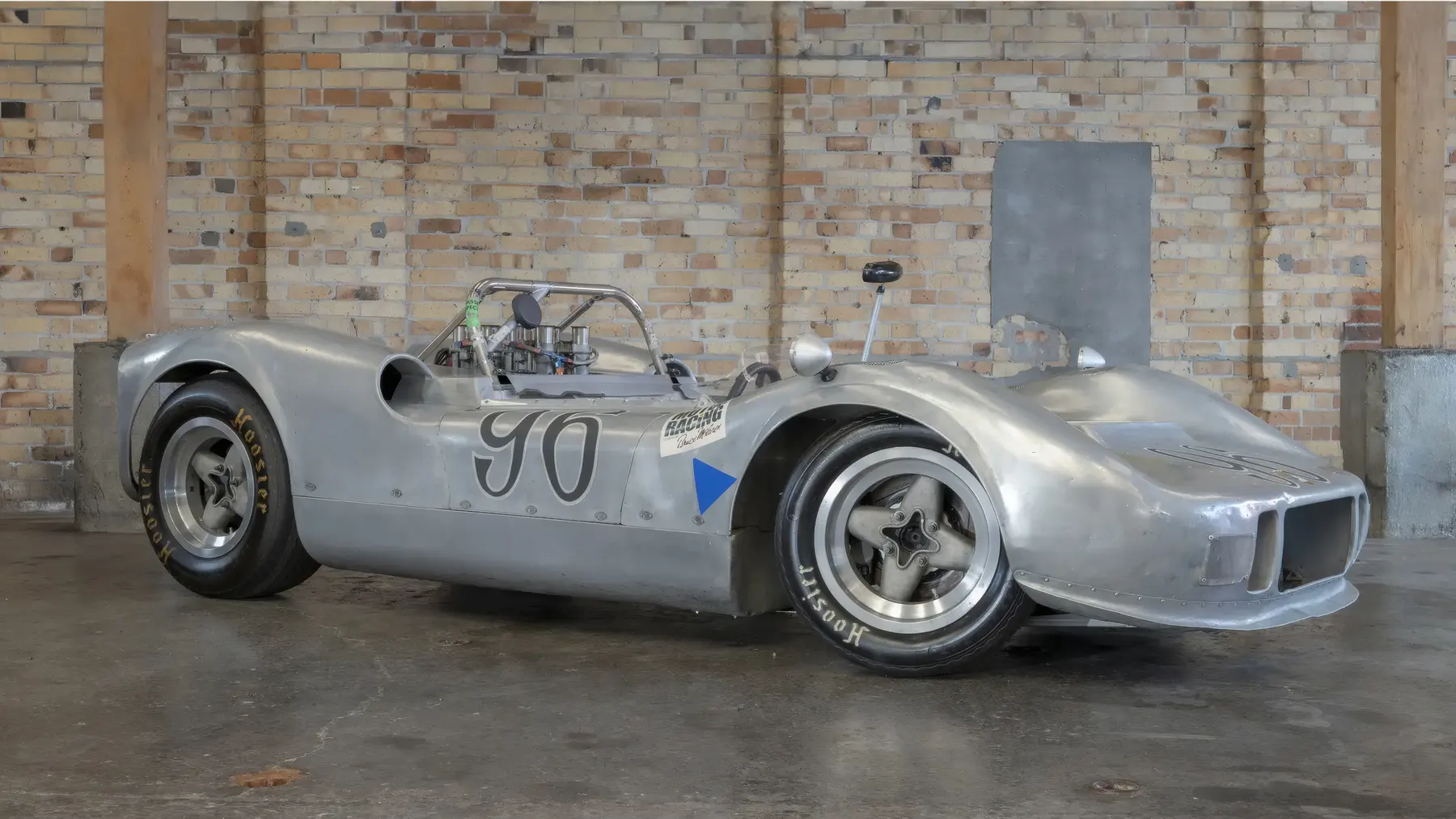
When Elva’s small workshop crew sat down in late 1964 to build the first customer copy of Bruce McLaren’s new sports-racer, they had no engineering drawings to work from, only a stack of photographs, because the sole existing car was busy racing on the other side of the Atlantic and McLaren himself had never got around to formalising its design on paper. That improvisational, seat-of-the-pants beginning tells you almost everything about the McLaren-Elva Mark 1A: a car born of urgency and opportunism rather than a considered product plan, yet one that set in motion the most successful sports-racing dynasty of its era.
Bruce McLaren’s route to building his own sports-racers began, fittingly, with someone else’s car. In 1963 he stepped out from under Cooper’s wing, for whom he still drove in Formula One, and founded Bruce McLaren Motor Racing with Teddy Mayer after Cooper’s management balked at properly funding a Tasman Series campaign. The following year McLaren bought the Zerex Special, a Formula One Cooper T53 that American racer Roger Penske had already converted into an outlaw sports-racer to exploit the FIA’s loosely policed Appendix C regulations. Renamed the Cooper-Oldsmobile once McLaren’s mechanics, Tyler Alexander and Wally Wilmott, stiffened its chassis and swapped its Coventry Climax four-cylinder for a Traco-tuned, 3.5-litre aluminium Oldsmobile V8, the car won first time out at Mosport Park in June 1964. The lesson wasn’t lost on McLaren: a lightweight spaceframe wrapped around a comparatively humble but well-sorted American V8 could embarrass far more exotic machinery in the sports-racing category then coalescing under the FIA’s new Group 7 rules.
Group 7 was, by the standards of the day, wonderfully permissive. Beyond rudimentary bodywork, lighting and two-seat cockpit requirements, there was almost nothing to restrict engine capacity, chassis construction or aerodynamics, and no need to build the numbers required for GT homologation. It was exactly the kind of loophole a small, cash-strapped constructor could exploit, and it would shortly spawn the Canadian-American Challenge Cup, or Can-Am, the series that turned unrestricted sports-racing into one of the best-paid, most technically extreme forms of motorsport of the late 1960s. McLaren, watching the category take shape, wanted in early.
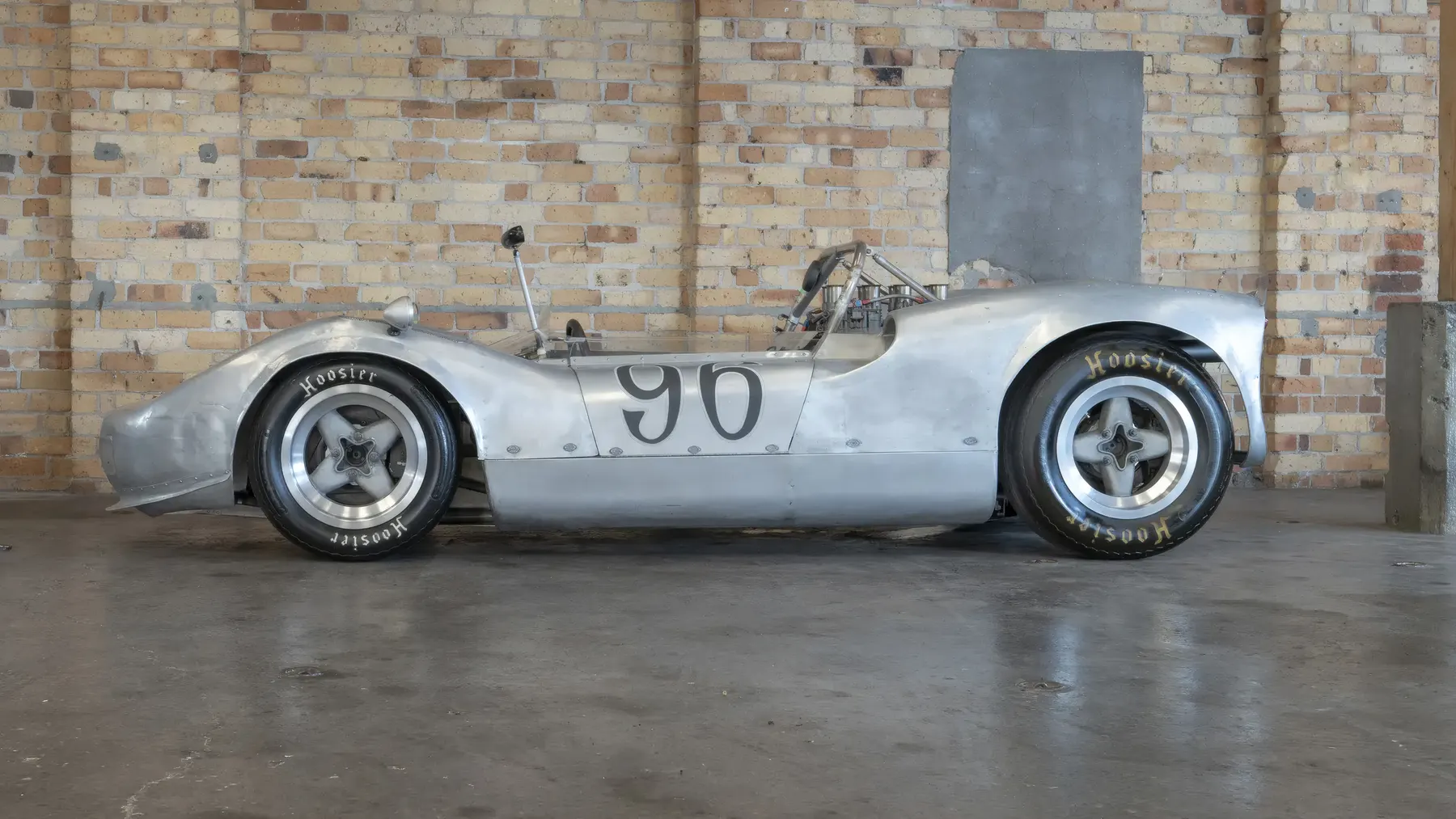
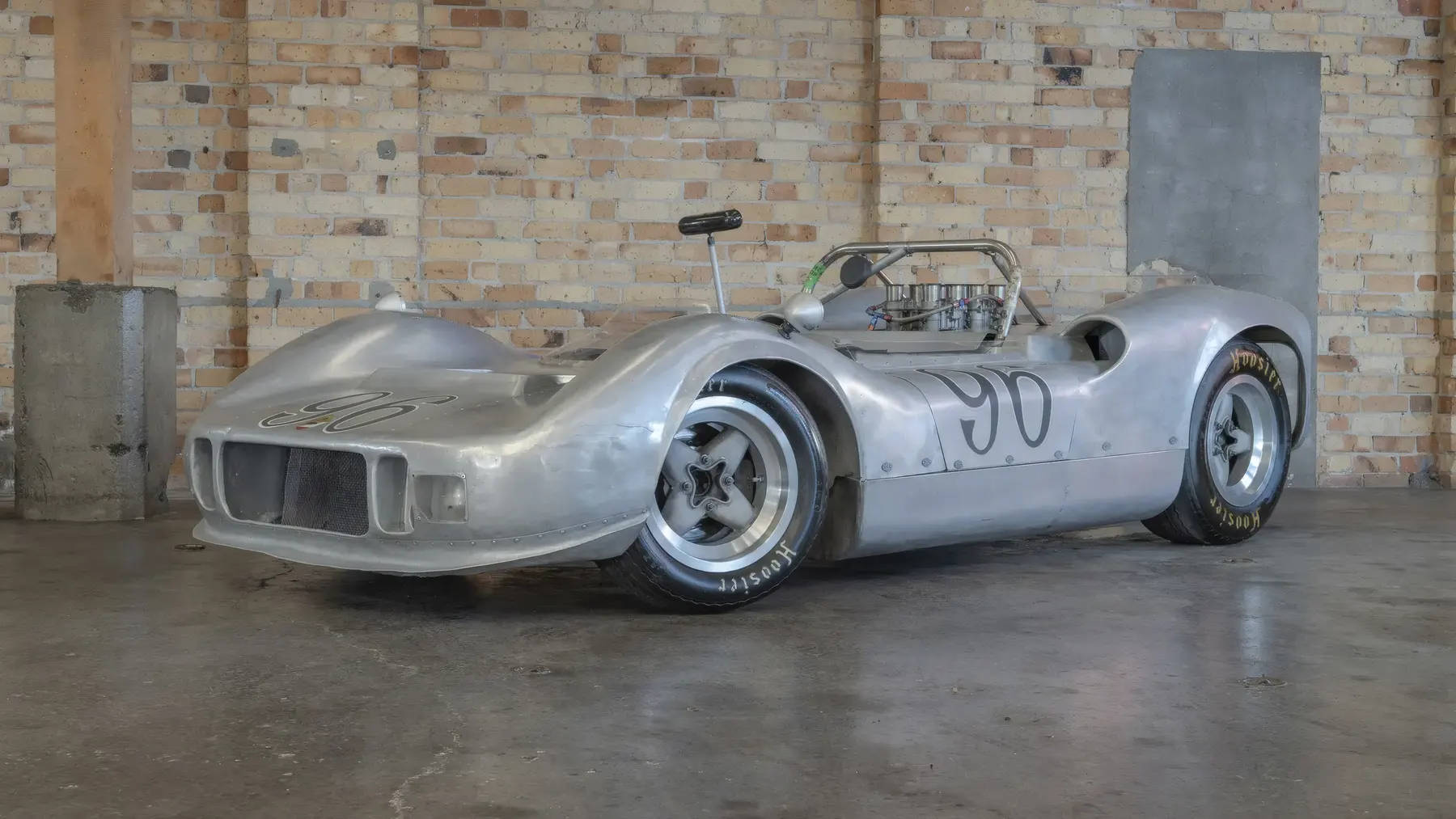
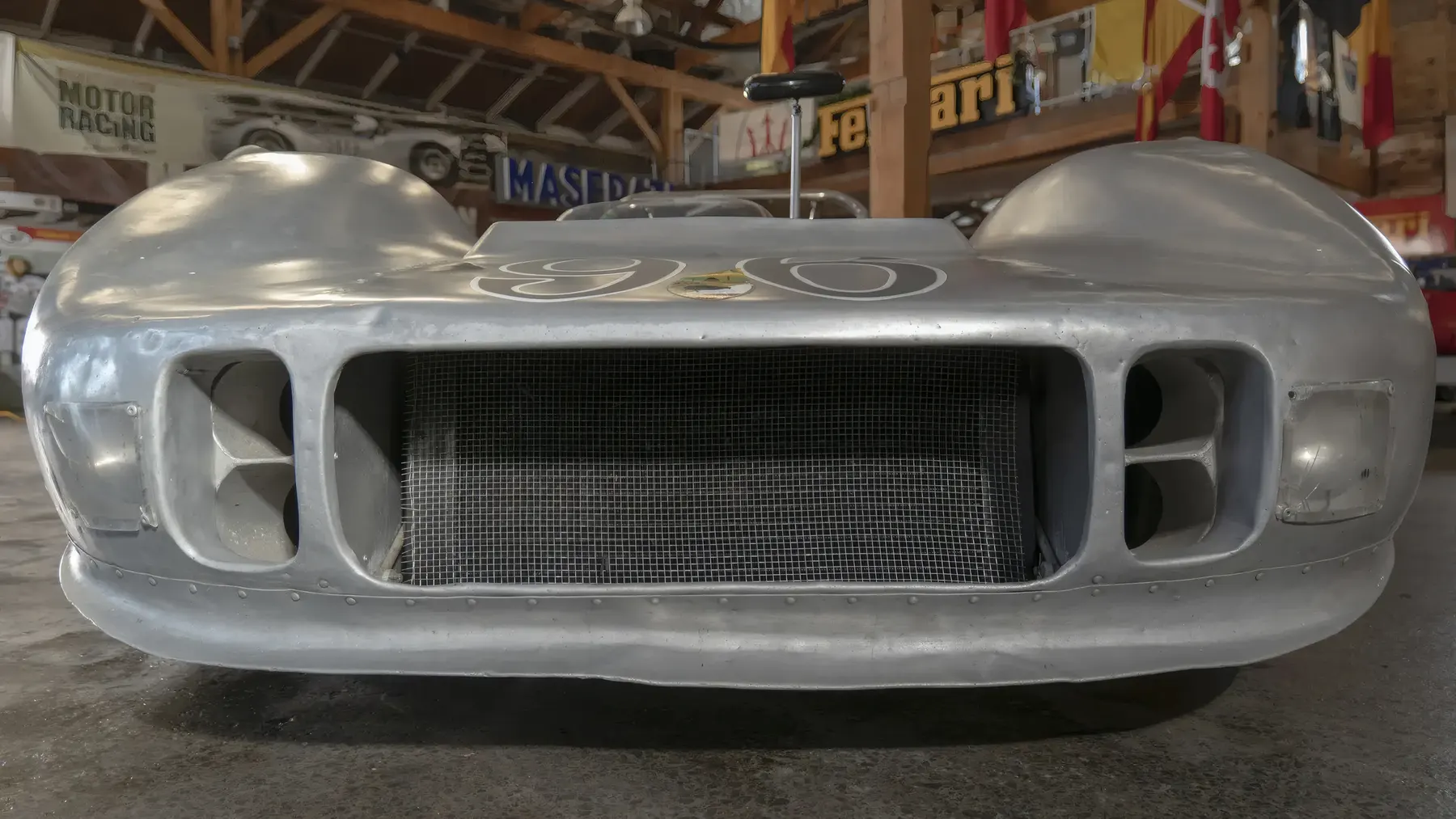
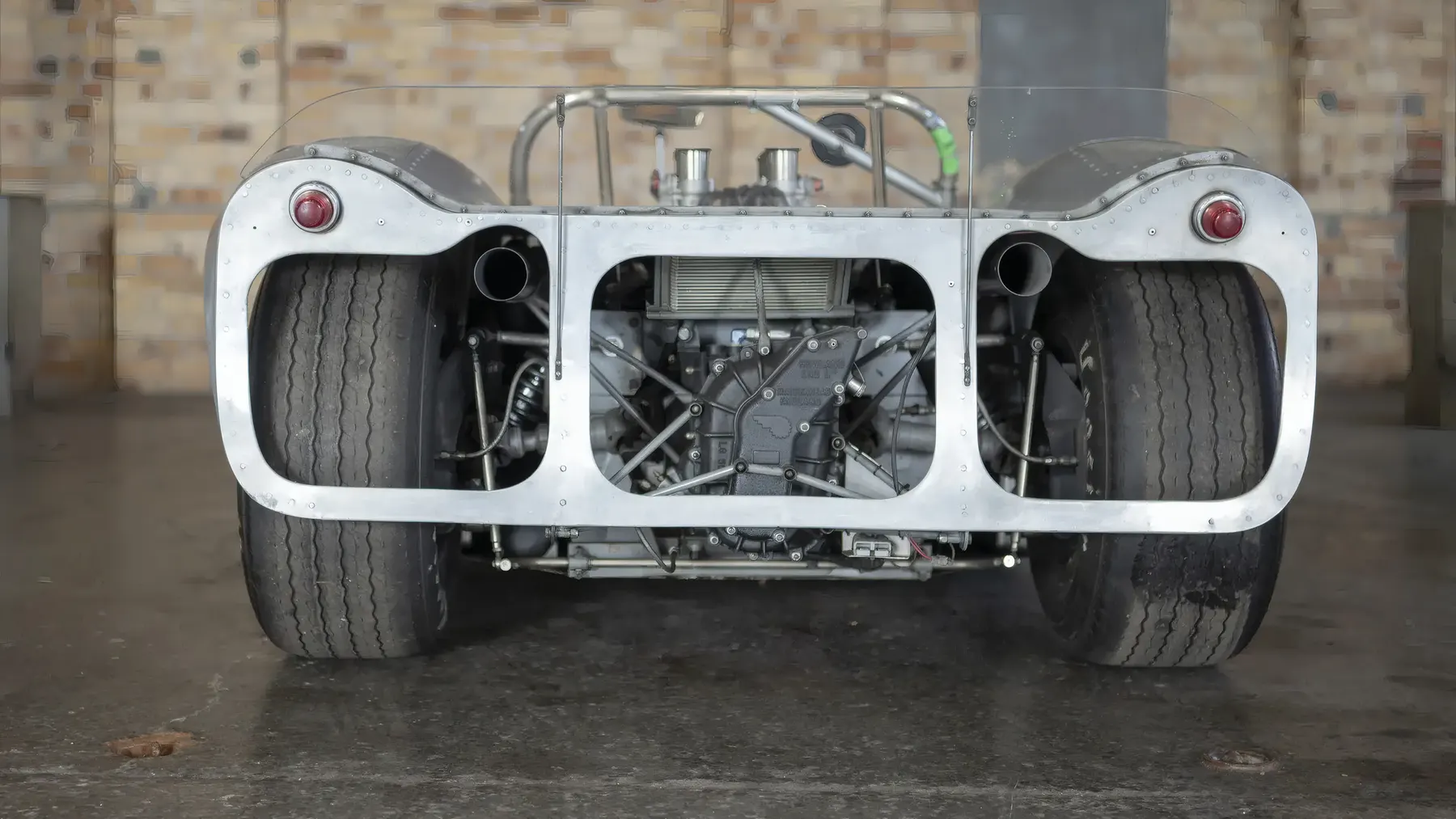
Buoyed by the Cooper-Oldsmobile’s form, McLaren’s small Feltham workshop set about designing a purpose-built successor of its own, internally designated the M1 and later distinguished as the M1A once derivatives arrived. The result was a multi-tubular spaceframe of round and square mild-steel tube, its three main chassis members doing double duty as oil and water feed pipes to the front-mounted radiator, stiffened with bonded-in magnesium-alloy sheet panels. Independent suspension used double wishbones at the front and reversed lower wishbones, a single top link and parallel radius rods at the rear, all controlled by adjustable coil-over dampers, with Girling disc brakes at each corner and rack-and-pinion steering. Stylist Tony Hilder drew a low, pointed nose that ducted air both to the front-mounted radiator, exhausting through the top of the bonnet ahead of the windscreen, and to the front brakes, with further intakes ahead of each rear wheelarch feeding the rear brakes. Early cars ran on Cooper-sourced wheels, uprights and steering arms before the definitive four-spoke cast-alloy wheels, credited to Owen Maddock, became standard fitment. Power came once again from Traco’s Oldsmobile V8, now enlarged to 4.5 litres and, breathing through four twin-choke Weber carburettors, producing around 310 bhp, sent to the rear wheels through a Hewland four-speed transaxle.
McLaren drove the finished car to its competition debut at Mosport in September 1964, and although a throttle-linkage failure dropped him to third place, he broke the circuit’s sports-car lap record no fewer than seven times over the weekend chasing Jim Hall’s Chaparral. A strong run through the remainder of that first North American season, including a runner-up finish at the Nassau Speed Week behind Roger Penske, confirmed McLaren had built a genuinely quick car. It was quick enough, in fact, that private customers started asking to buy one.
McLaren’s tiny team, already stretched running a European single-seater programme alongside its fledgling American sports-car campaign, had neither the capacity nor the inclination to become a production manufacturer. A deal was struck instead with Frank Nichols, founder of Elva Cars, whose firm had by then been absorbed into Peter Agg’s Trojan Group after an earlier financial collapse. Trojan would build customer versions of the M1 under the Elva name, sold and marketed as the McLaren-Elva. It is this production run, launched at the London Racing Car Show in January 1965, that period paperwork and later collectors and auction houses have referred to variously as the McLaren-Elva Mark I and the McLaren-Elva Mark 1A, terms used more or less interchangeably to distinguish it from the works-built M1 prototypes and from the Mark II and Mark III customer cars, based on the later M1B and M1C, that followed through 1966 and 1967. Roughly two dozen Elva-built customer examples left Trojan’s works, alongside a small number, commonly put at two or three, that McLaren’s own team had built in-house, for a total production run generally placed in the high twenties, though sources differ slightly on the exact tally, as is common with low-volume, hand-finished racing-car manufacturing of this period.
It was into this rushed arrangement that Hilder and Elva’s small crew found themselves reverse-engineering a production racing car from photographs alone, since the only finished M1 was away racing in America when the customer version needed designing. When McLaren returned and inspected the result, he was unimpressed and ordered a string of detail changes before the definitive production specification was signed off. Customers who then placed their orders could specify the standard Traco-Oldsmobile V8, but Chevrolet and Ford alternatives were also fitted according to individual teams’ preferences and whatever engines they already knew how to rebuild, which meant no two examples of the Mark 1A were ever quite identical under the skin. This was less a finished, homologated production model in the modern sense than a licensed kit of parts for well-funded amateurs to complete however best suited their programme.
That market was specific and unambiguous: wealthy amateur and semi-professional racers competing in SCCA and USRRC events through 1965, and in the inaugural Can-Am Challenge Cup from 1966. The car was never intended for the road and carried none of the compromises that GT racers of the period had to accept in the name of homologation. Customer Mark 1As were campaigned widely across both series, generally acquitting themselves respectably in the midfield and occasionally troubling the podium, though outright victories against the strongest works opposition were rare. It was a car built to let a capable privateer be competitive, not to guarantee that he would win.
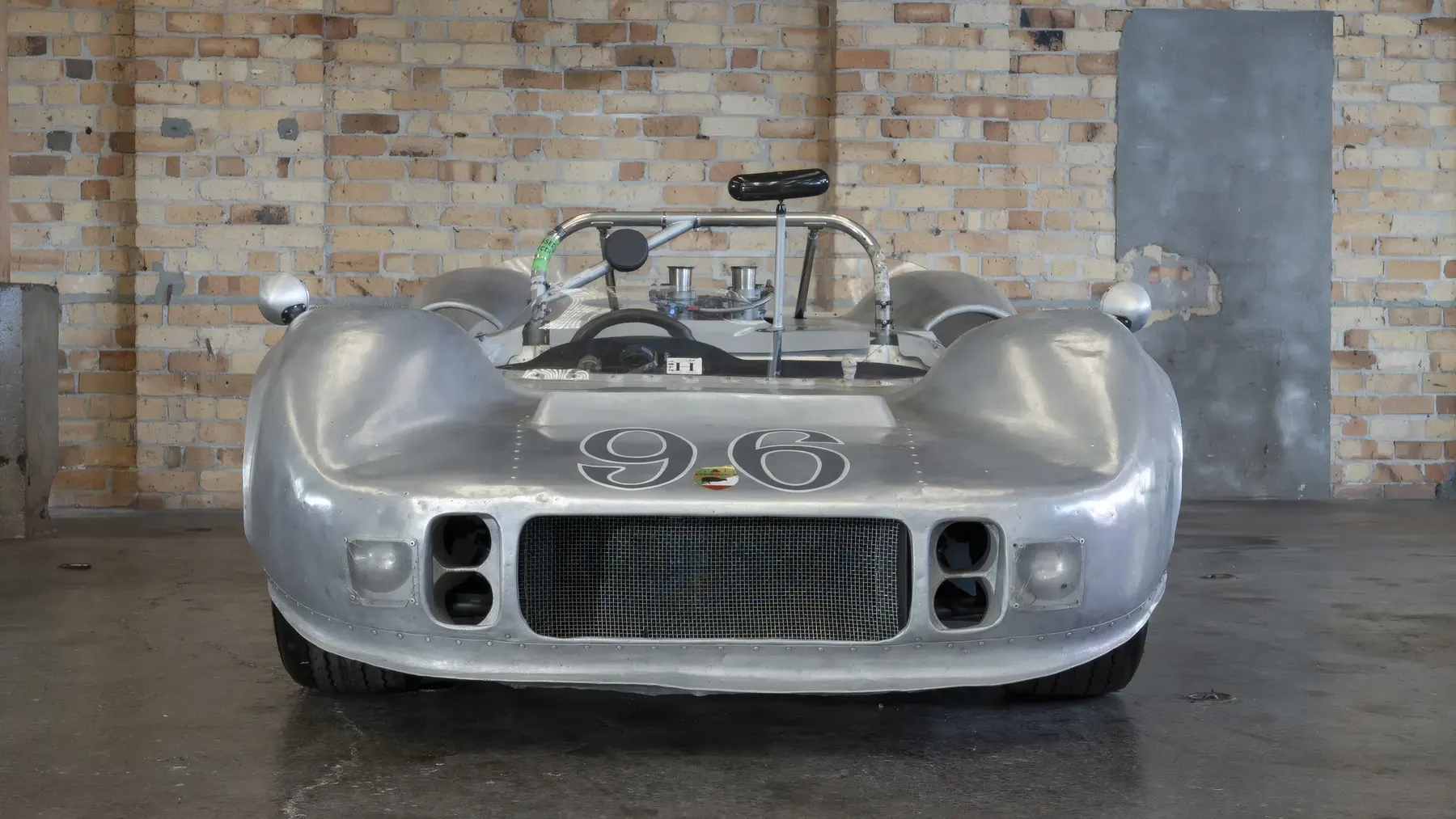
On paper, the Mark 1A’s figures were startling for something aimed at private owners rather than a works team. McLaren used the works development car to lap Goodwood in 1 minute 21.6 seconds, over three seconds quicker than his own outright sports-car lap record set at a Tourist Trophy meeting, and around four-tenths faster than the outright circuit lap record then held by Graham Hill in a Formula One BRM. An unfaired sports-racer with a pushrod V8 out-cornering a contemporary Grand Prix car was exactly the kind of statement Group 7’s near-total absence of technical restriction was designed to produce, and it did more than any advertisement to convince prospective customers that a McLaren-Elva was worth the outlay. Specialist sources describe a car that rewarded commitment: with a kerb weight variously put at anywhere from roughly 550 to 830 kilograms, depending on engine choice, equipment and which account you trust, and up to 310 bhp from the standard Oldsmobile unit, the power-to-weight ratio on offer was something few road-derived sports cars of the mid-1960s could approach.
It was not, however, an especially forgiving machine as delivered, and this deserves dwelling on because the Mark 1A’s giant-slaying reputation can obscure some real shortcomings. Several owners who raced the car in period complained about aerodynamic instability at speed; more than one privateer found the standard body generated enough lift at the rear that they commissioned locally-built replacement bodywork in an attempt to cure it, effectively re-engineering the aerodynamics themselves rather than relying on anything McLaren or Elva had validated at the factory. Restorers who later returned original Elva-built examples to the track found the as-built suspension setup could produce a genuinely harsh, fatiguing ride, eventually traced in at least one case to excessive spring rates and incorrect steering geometry baked into the original specification; once corrected, the handling became far more predictable, if still inclined towards oversteer at the limit. On the competitive front, the standard 4.5-litre Traco-Oldsmobile, though a strong unit for its size, was already looking undernourished within a couple of seasons: as Can-Am progressed and rivals such as the Lola T70 arrived with 5.5- and 6.0-litre Chevrolet V8s, customers found themselves giving away significant horsepower unless they too swapped to the heavier Chevrolet alternative, which brought its own weight and cooling compromises. Reliability in period racing was patchy rather than poor, with the throttle-linkage, cooling and transmission failures typical of most low-volume specials of the era, and because the production cars were essentially assembled to each customer’s own specification rather than to one validated blueprint, quality and finish varied noticeably from chassis to chassis. None of this makes the Mark 1A a bad car by the standards of its category, but it was very much a starting point rather than a finished product, and the customer cars’ racing record, solid midfield running and occasional podiums rather than outright wins against the strongest opposition, reflects that honestly.
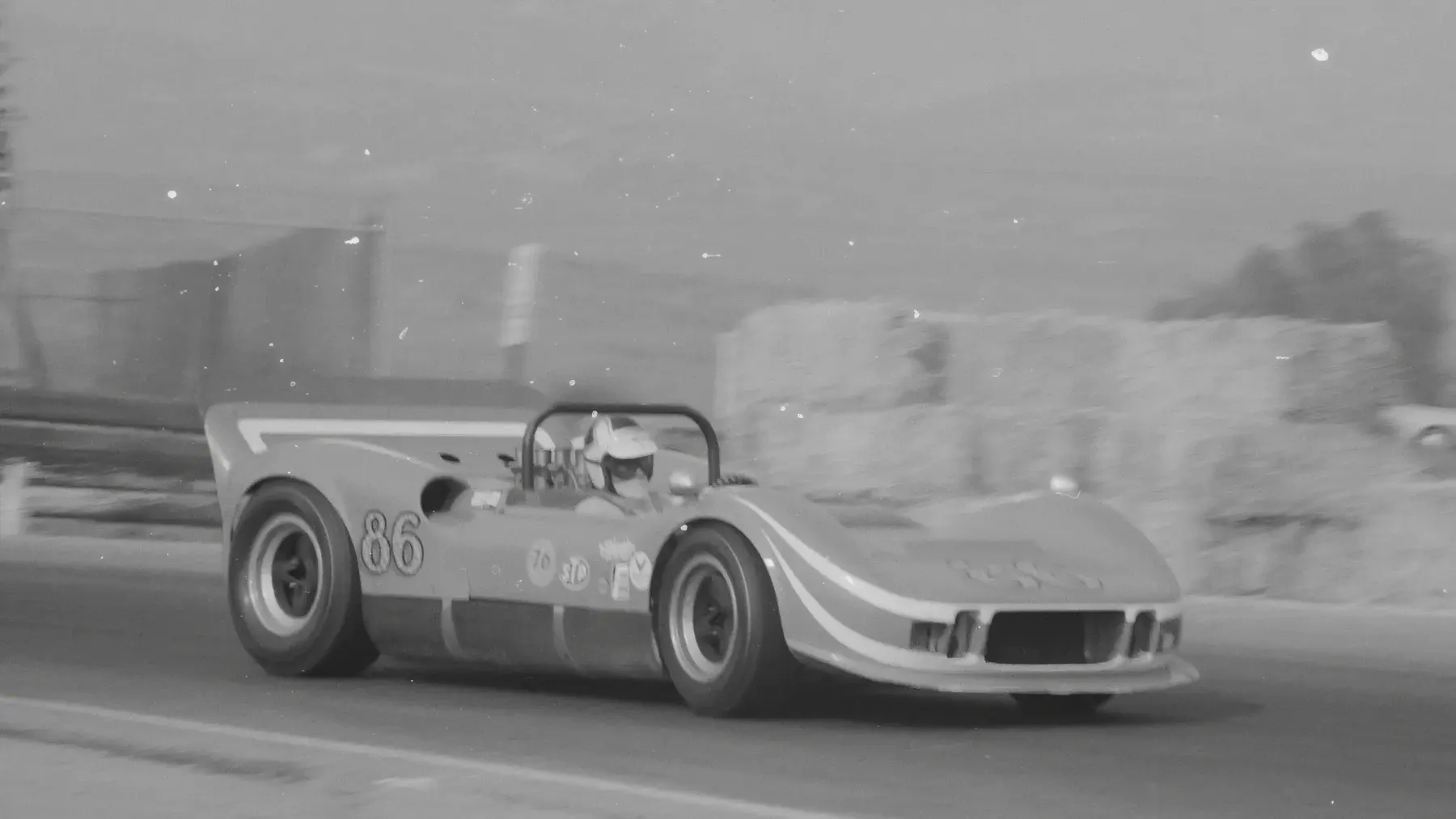
None of it diminished the car’s importance, either. The Mark 1A was the machine that proved Bruce McLaren could design and sell a competitive racing product independent of Cooper, and the lessons learned building it, chassis architecture, the merits of American V8 power in a lightweight British frame, and the commercial value of a customer-racing programme in funding further development, fed directly into the M1B and M1C that followed, and from there into the works M6A and M8 cars with which McLaren won five consecutive Can-Am Constructors’ Championships between 1967 and 1971, a run so dominant it became known as the Bruce and Denny Show. The Mark 1A has a small foothold in popular culture too: one example reportedly appeared on screen driven by Elvis Presley in the 1966 film Spinout. More than half a century on, surviving Mark 1A chassis remain eligible for, and are actively campaigned at, historic events including the Goodwood Revival and the Monterey Historics, and McLaren itself paid direct homage to the car in 2020, offering an M1A-themed specification of its modern Elva Ultimate Series speedster finished in the black bodywork, silver striping and number 4 that Bruce McLaren carried in period.
What makes the McLaren-Elva Mark 1A worth understanding today isn’t really its outright competitiveness, which was always going to be eclipsed within a couple of seasons by cars with more cubic inches and bigger budgets behind them. It’s that this slightly rough-edged, built-from-photographs customer racer captured, better than almost anything else from the period, the exact moment a Grand Prix driver decided he could also be a constructor, and turned out to be right.
Sources
- RM Sotheby’s: 1965 McLaren-Elva Mark 1A
- Conceptcarz: 1965 McLaren M1A
- Supercars.net: 1964 McLaren M1A
- Wikipedia: McLaren M1A
- The Motorhood (New Zealand Classic Car): CanAm McLaren, 1965 McLaren-Elva MkI (M1A)
- Goodwood Road & Racing: This McLaren M1A is a 551kg V8 rocket ship
- Historic Auto Group: 1967 McLaren Elva
- Autoblog: McLaren Elva M1A Theme by MSO channels Bruce McLaren’s 1964 race car
- Motorious: McLaren’s Racing Heritage Highlighted by Iconic M1A’s Historic Journey
- McLaren Racing: Heritage and Honours
- McLaren Automotive: McLaren Elva
Join the discussion
Comments
Loading comments…
Leave a comment
Share a detail, memory, or perspective. Every comment is reviewed before publication.