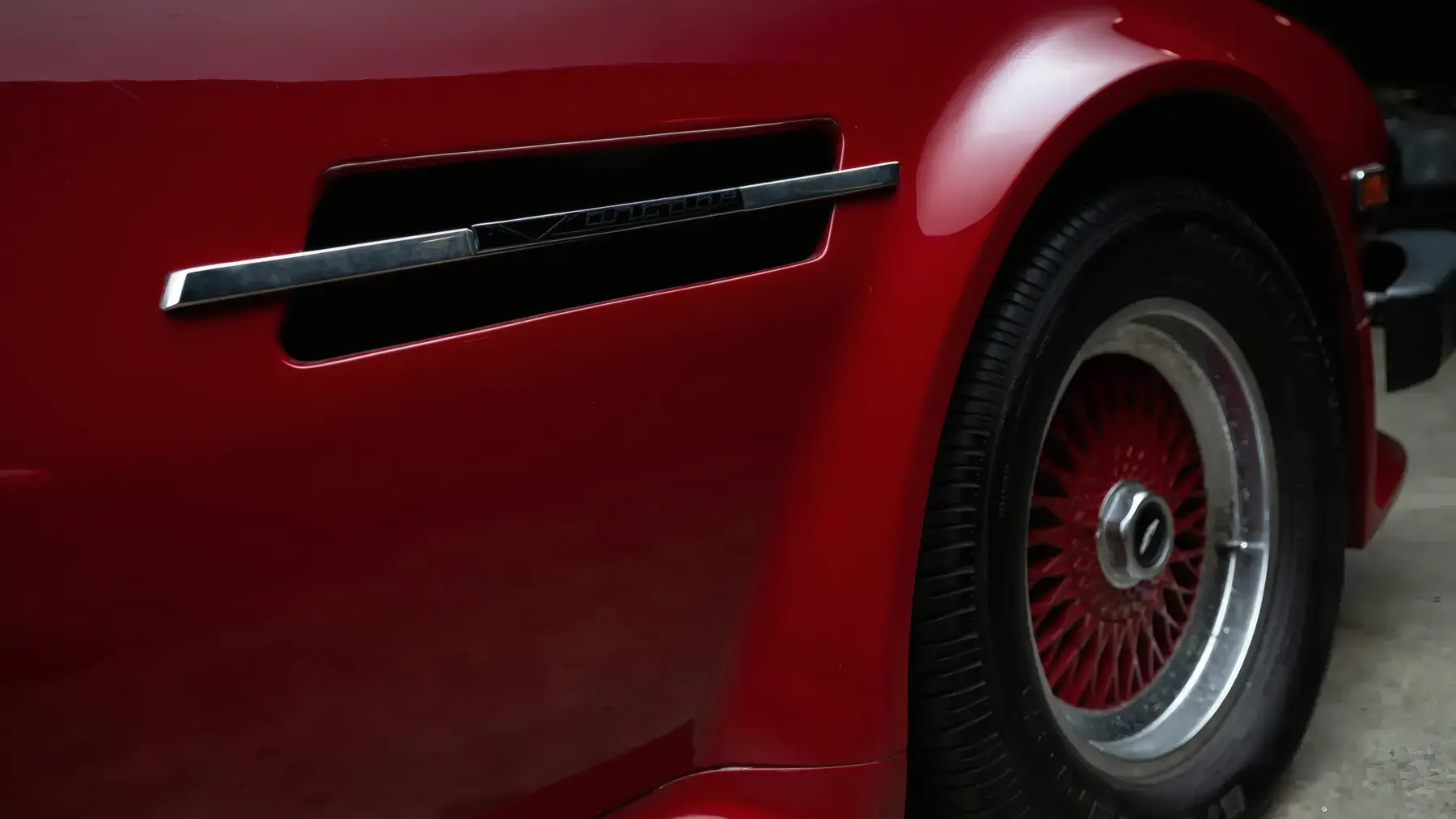
1989 Aston Martin V8 Vantage Volante
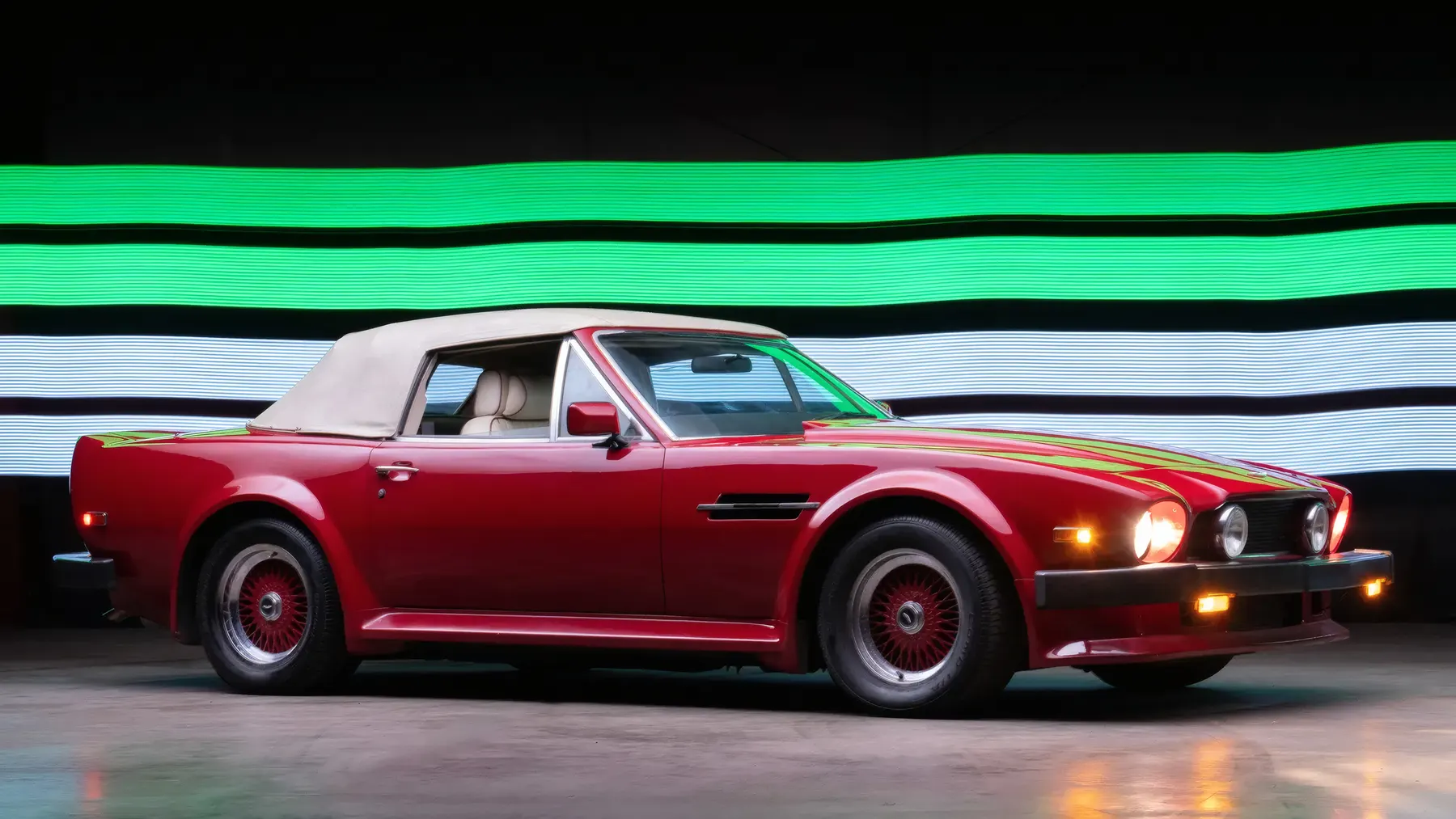
Aston Martin V8 Vantage Volante: The Hand-Built British Supercar That Refused to Compromise
The problem with the Vantage Volante isn’t one of speed, or beauty, or ambition - it’s one of contradiction. Newport Pagnell, 1986: Aston Martin’s craftsmen are hand-building what is simultaneously a luxury drophead cruiser and a genuine supercar, sewing leather around a car that could embarrass a Ferrari in a straight line, yet would rather glide down a French motorway with the hood furled and the exhaust note settling into something rich and unhurried. The V8 Vantage Volante is a car that refuses to resolve this tension, and that refusal is precisely where its character lives.
To understand what the Vantage Volante is, you first need to understand what came before it. Tadek Marek’s 5,340cc twin-cam V8 - an engine of hand-built, all-aluminium construction - had been powering Aston Martins since the DBS V8 of 1969. By 1977, when Aston Martin announced the V8 Vantage with revised camshafts, enlarged inlet valves, new inlet manifolds, and a bigger air-box, the engine’s potential was made dramatically public: output jumped by a claimed 40%, and the resulting car was described as Britain’s first true supercar, capable of 170 mph in saloon form. The Volante - Aston’s traditional designation for open coachwork - had been offered on the standard V8 since 1977, but it wasn’t until 1986 that the factory committed fully to a true open-air Vantage.
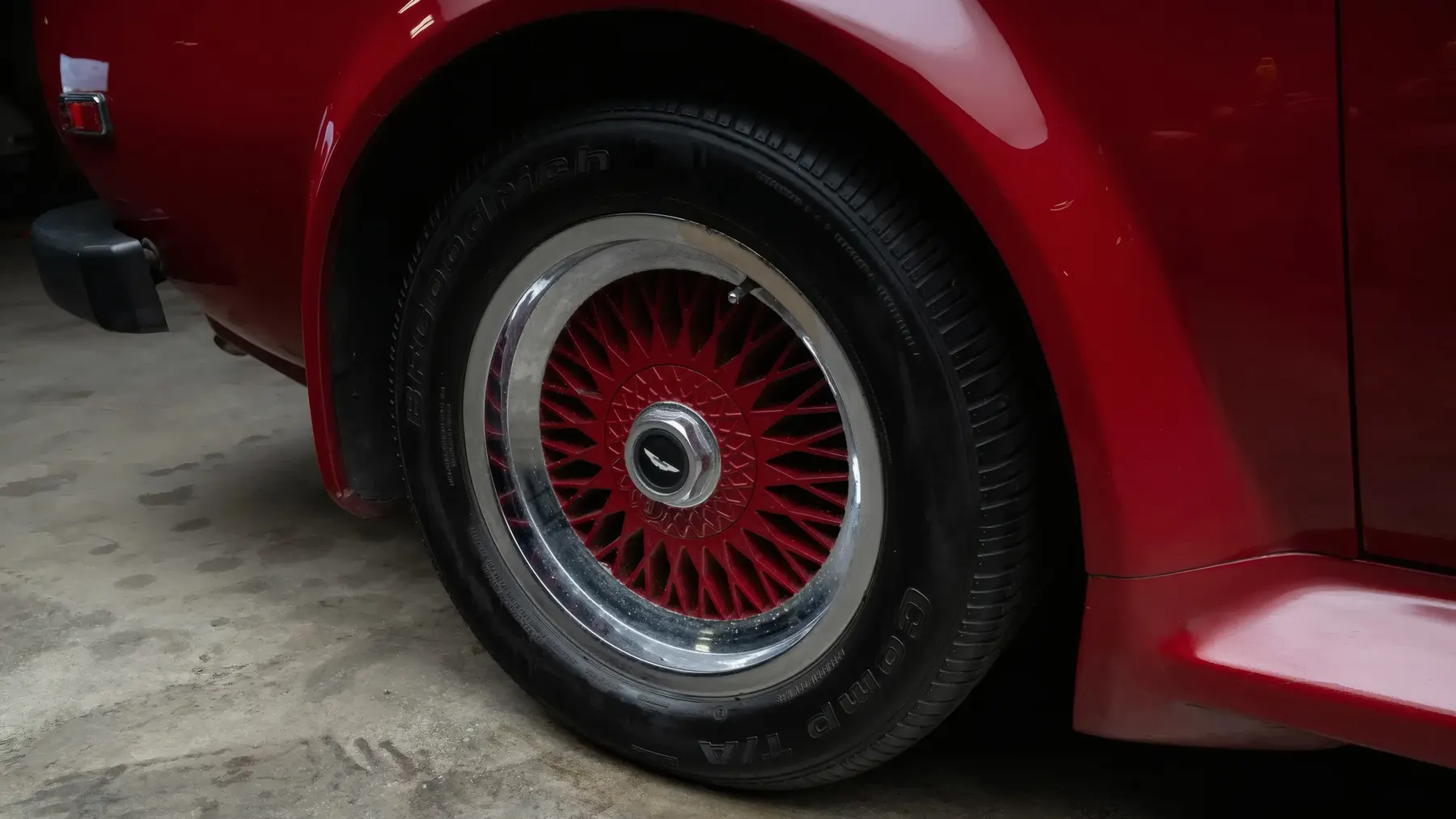
That commitment produced something unmistakable. The true V8 Vantage Volante, shown first at the 1986 Birmingham Motor Show, was not simply a Volante with a more powerful engine dropped in. It announced itself visually with a purpose that the standard Volante never attempted: a massive front air dam sitting low and wide, aggressively flared wheel arches, sills that swelled out over the road surface with the confidence of a car that had genuinely nothing to prove, and a distinctive flip tail at the rear. These styling elements were unique to the Vantage Volante - with very few exceptions, they were never applied to the closed Vantage - making the convertible visually distinct from its sibling in a way that ran counter to normal automotive logic. Usually, the convertible is the softer, more compromised sibling. Here, it wore the most aggressive suit of clothes in the entire range.
Under that flared skin, the 5,341cc V8 produced 400 bhp at 6,000 rpm, with a bore of 100mm and stroke of 85mm, driving the rear wheels through a five-speed manual gearbox. The car sat on a 2,610mm wheelbase, measured 4,674mm in length and 1,880mm in width, and weighed enough to remind you constantly that this was a grand tourer wearing performance car clothing rather than a lightweight sports car. Top speed in standard form was in the region of 164 mph - genuinely remarkable for a convertible of this size and weight - with 0-60 mph dispatched in approximately 5.3 seconds. Against the Ferrari Testarossa and the Lamborghini Countach of the era, those numbers were competitive, particularly given that the Aston could seat four in genuine comfort and be driven in everyday conditions without the mechanical fussiness that afflicted its Italian rivals.
For those who found 400 bhp insufficient - and Aston Martin’s clientele included people for whom this was a realistic concern - the factory offered the 580 X-Pack as a Works Service conversion. The X-Pack engine brought output to 432 bhp at 6,200 rpm, with 536 Nm of peak torque at 5,100 rpm, sharpening the 0-60 mph time to 5.2 seconds and extending the top speed to 163 mph - a slight reduction from the standard car’s claimed maximum, reflecting the aerodynamic penalties that an open convertible body cannot entirely escape. A further rarity sits above even the X-Pack: a handful of Vantage Volantes built to a specification informally known as the Prince of Wales edition, representing the most discreet and desirable variant in the range, where the visual aggression of the standard Vantage Volante gave way to a cleaner, more classically proportioned body wearing the same mechanical substance beneath it.
The Zagato connection added another dimension to the V8 Vantage story during this period. Announced in 1985 and launched for sale in 1986, a limited edition Vantage Zagato revived the partnership with the Italian coachbuilder that had produced some of the most striking Astons of the early 1960s. Only 50 saloons and 37 Volante versions were built, with most of the Volantes using the 585-series fuel injection engine - giving the Zagato Volante a different mechanical character from the carburetted Vantage Volante, one oriented more toward refinement than outright muscular delivery.
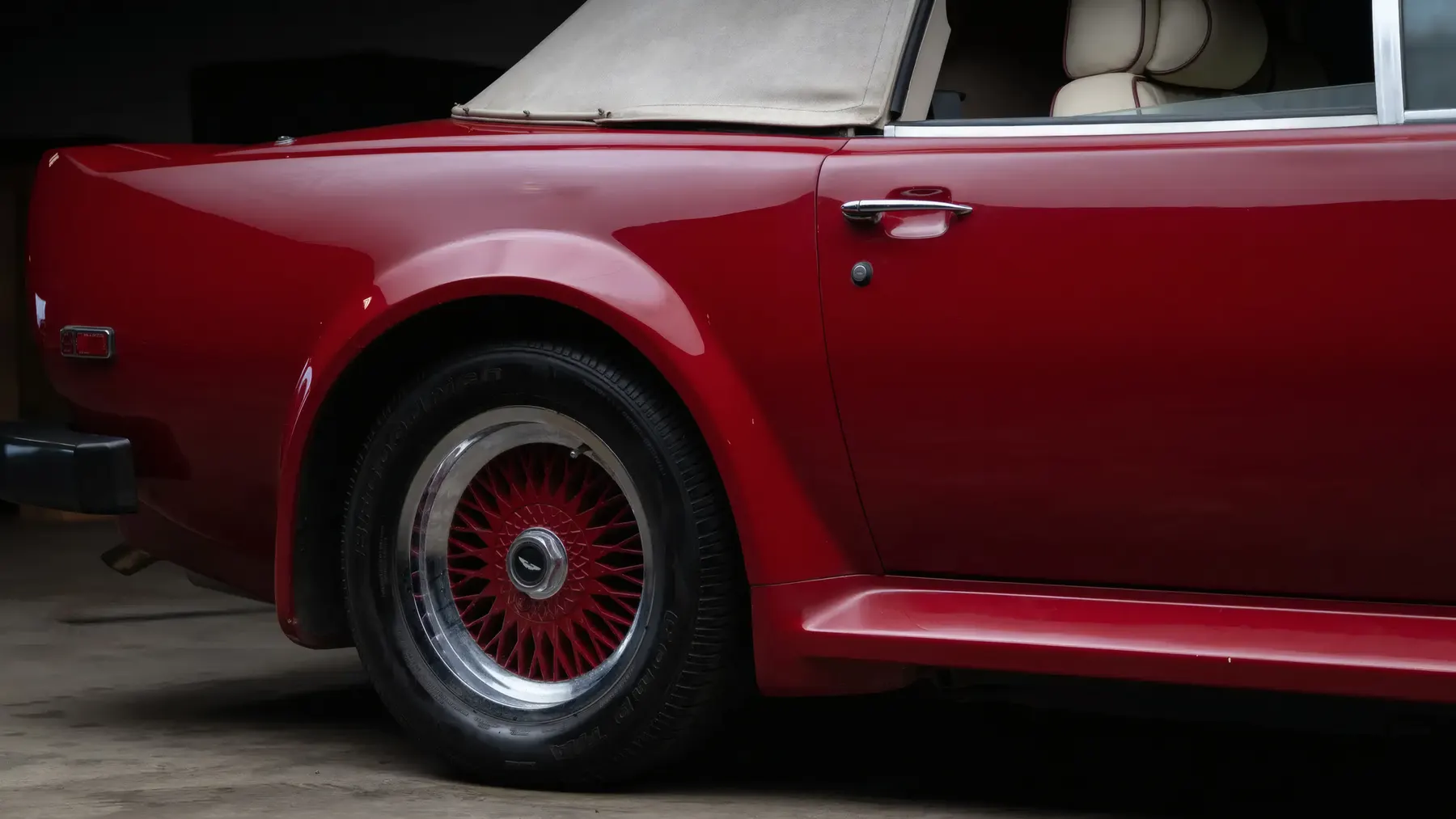
On the road, the Vantage Volante demanded respect rather than rewarding impulsiveness. The front-engined, rear-wheel-drive configuration and the car’s considerable mass meant that pushing it toward its limits required competence and commitment; the steering - rack and pinion - was accurate but communicated through a weight and deliberateness that was very different from the precision of a Porsche 911 of the same era. What the Vantage Volante delivered instead was a particular kind of theatre: the V8’s growl building toward a proper roar through a wide-open throttle, the scuttle flex that convertibles of this generation were never quite free of, the sensation of sitting inside something that had been assembled by hand over 1,200 man-hours with an attention to hide and wood and metal that no production line could replicate. These were cars built one at a time, at Newport Pagnell, by people who understood them as individual objects rather than manufacturing units.
The drawbacks were real and not trivial. The Vantage Volante’s open structure introduced rigidity compromises that the closed Vantage didn’t suffer. Body flex was perceptible over broken surfaces, the convertible top mechanism was manual and required effort, and the hood, when lowered, consumed luggage space that wasn’t generous to begin with. The Chrysler-sourced Torqueflite automatic gearbox, offered as an alternative to the five-speed manual in some market specifications, diluted the car’s sporting intentions without fully compensating with the smoothness that an automatic can theoretically provide. Fuel consumption was heroic in the wrong direction. And the car’s sheer width - those flared arches are not merely visual theatre, they were necessary to cover tyres of appropriate section - made it a commitment to park in the real world.
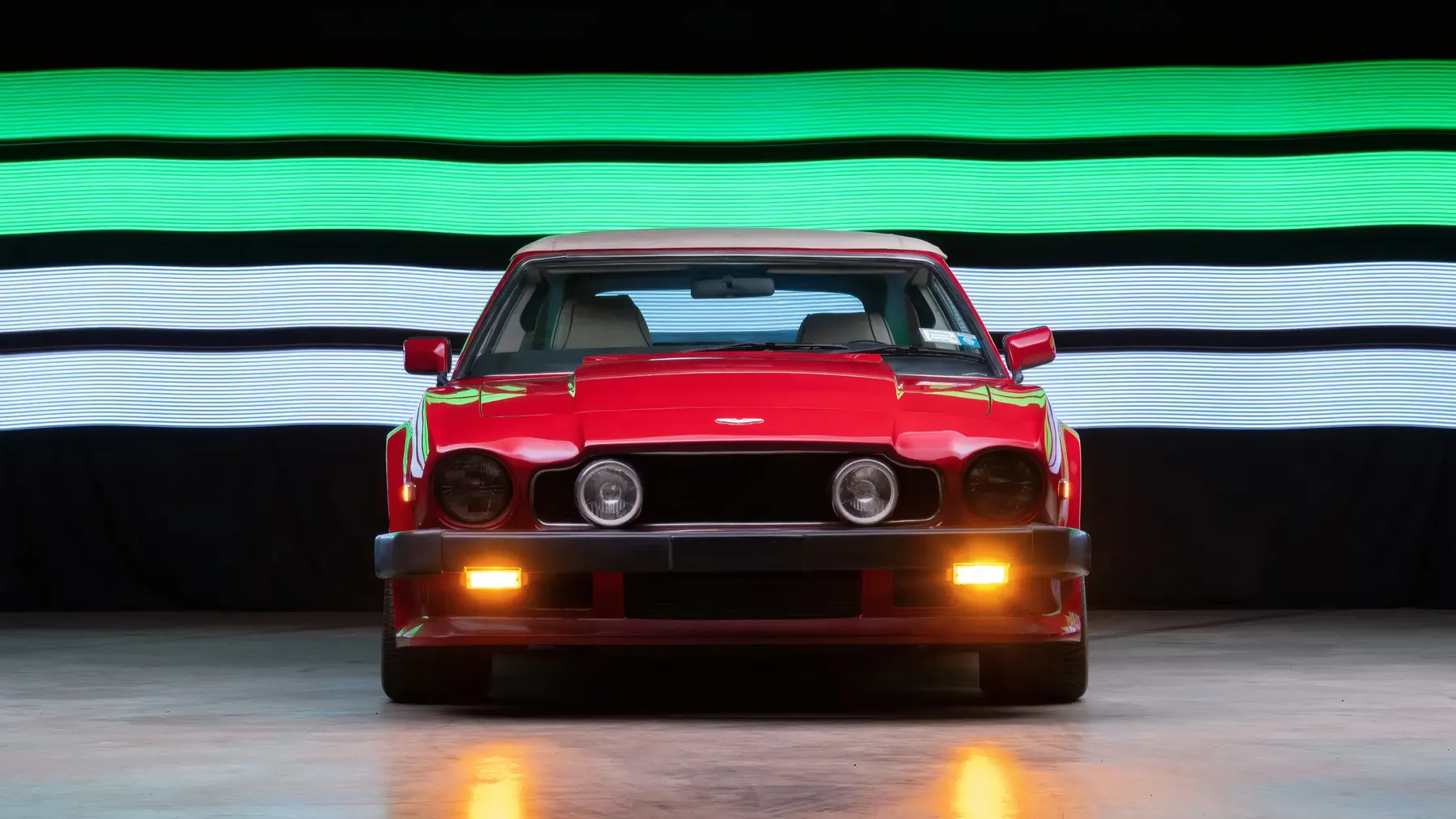
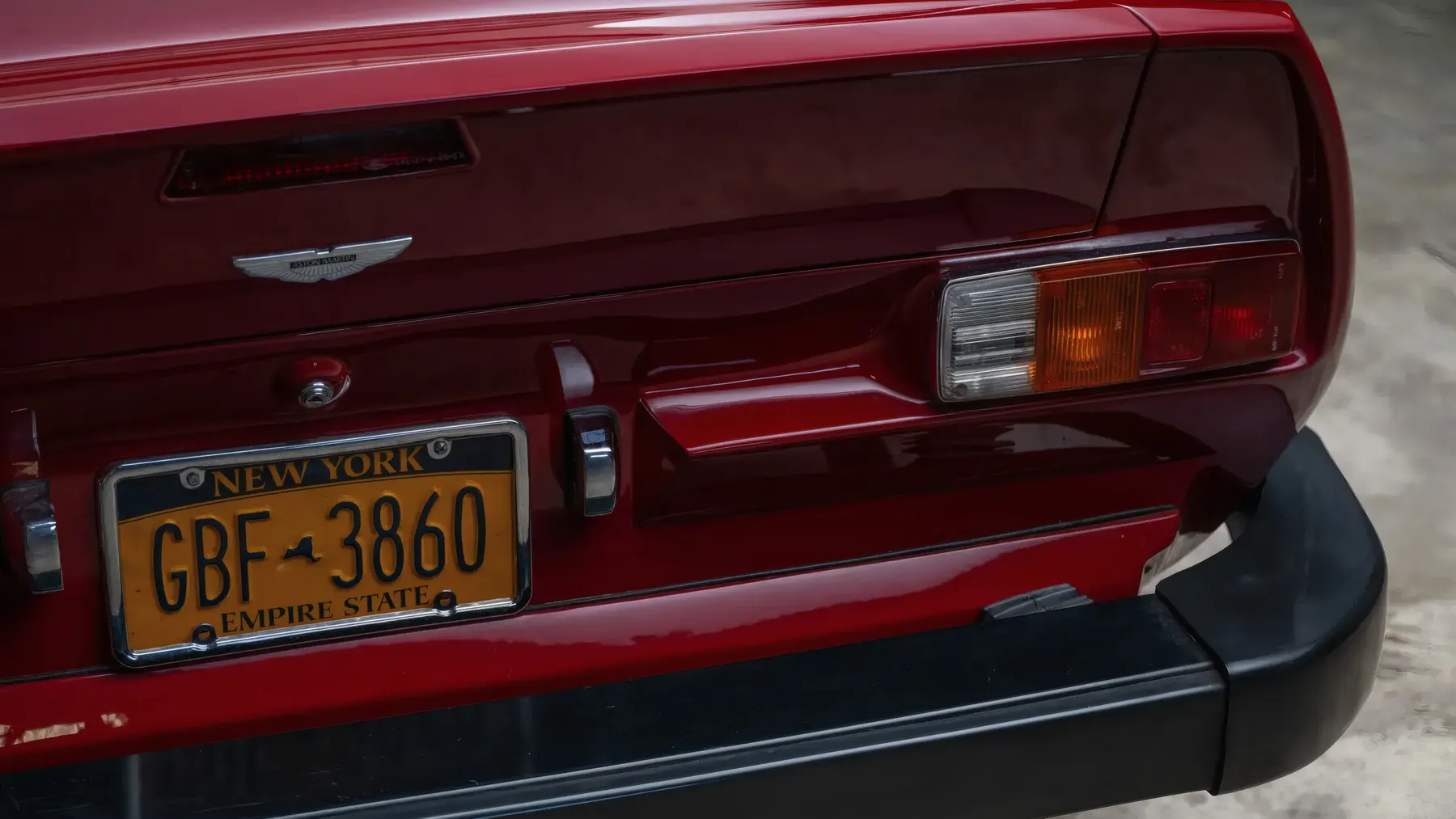
Production ran from 1986 to 1989, with 192 right-hand-drive examples built alongside 56 US-specification cars with different engine calibration to meet American emissions regulations. The numbers are small enough to make any surviving Vantage Volante genuinely rare - small enough that the model occupies a specific and precious place in the collector market, where late X-Pack examples represent the highest expression of a development arc that stretched across nearly two decades of continuous V8 production. By the time production ended and the Virage arrived to replace it, the V8 Vantage Volante had become something more than a car: it was the final, loudest statement from a lineage that traced its roots to the 1958 DB4, hand-built in England, stubbornly analogue, indifferent to the automotive compromises that made more rational cars easier to live with and less interesting to remember.
The reception has only grown warmer with distance. Critics who found the car crude by continental supercar standards missed the point in the same way that critics of handmade furniture miss the point about machine-made equivalents: the value is in the making as much as in the object. Today, the V8 Vantage Volante - particularly in Vantage specification, particularly with the X-Pack, particularly in right-hand drive - is regarded as one of the great British performance cars of its era, a machine that combined genuine supercar performance with convertible freedom and the particular, irreproducible character of a hand-built car from Newport Pagnell at the height of its craft.