Spyker C8 Laviolette: The Dutch Coachbuilt Coupé Powered by an Audi V8
2008 Spyker C8 Laviolette

Images: Robin Adams / RM Sotheby's
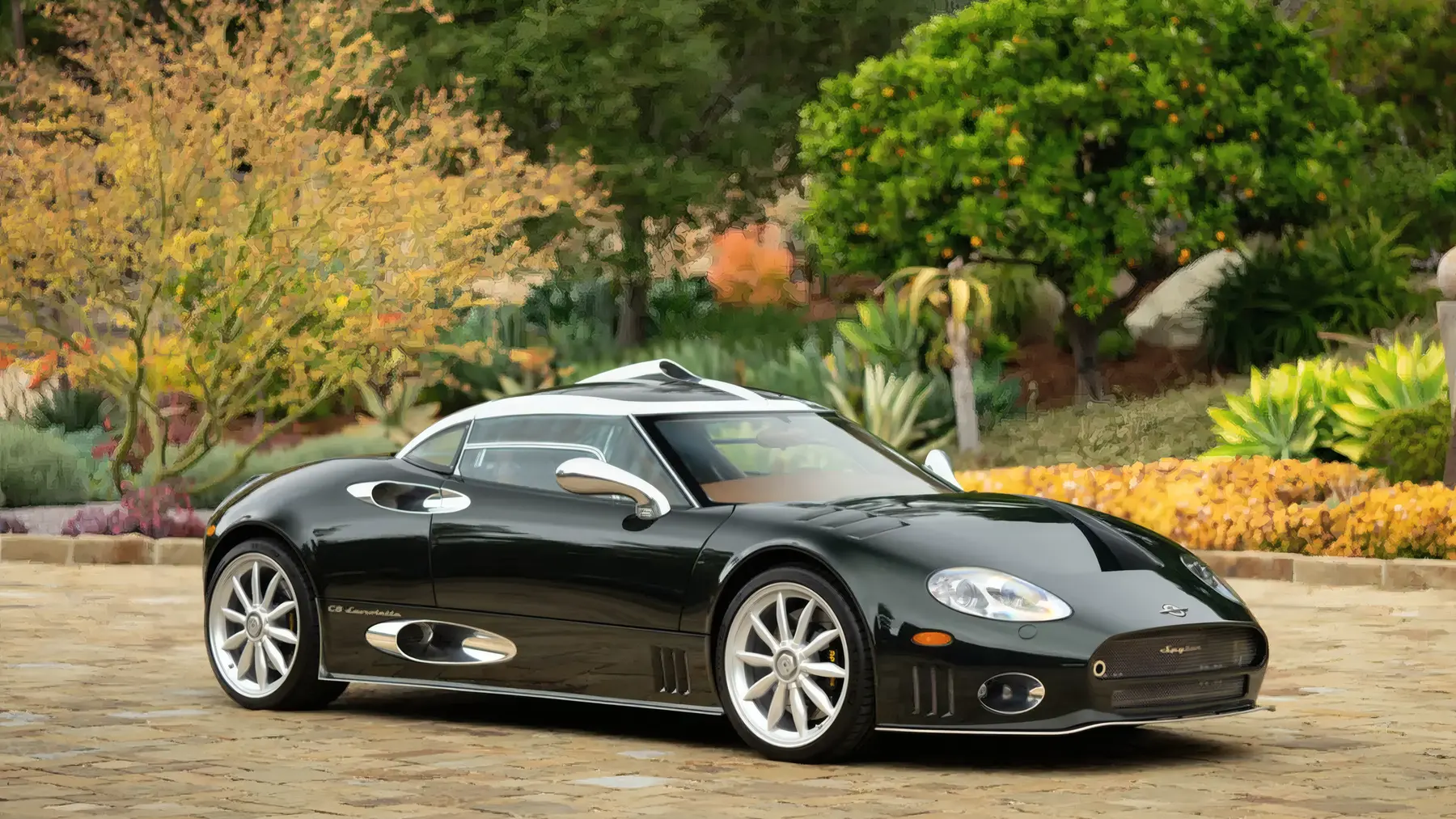
Before the 4.2-litre V8 behind your shoulders even fires, the Spyker C8 Laviolette makes you perform a small ceremony: open the glovebox, find the ignition key tucked behind the owner’s manual, turn it, then close the glovebox again so the ordinary Audi key disappears from sight, lift a hinged red cover over a toggle switch, and only then press the starter button. It is theatre worthy of a fighter jet’s pre-flight checklist, and it captures, better than any spec sheet, what Spyker was trying to sell with the Laviolette: the sense that beneath the hand-formed aluminium bodywork and the glass canopy roof sat something engineered from first principles, when in fact the drivetrain came largely from Ingolstadt. That tension between bespoke Dutch coachbuilding and borrowed German mechanicals defined the car, for better and for worse, throughout its production life.
The Spyker name did not begin with supercars. It began as a Rotterdam carriage and coachbuilding firm run by blacksmith brothers Hendrik-Jan and Jacobus Spijker (the old Dutch spelling was phased out in 1903), who moved into motor manufacturing at the turn of the twentieth century and proved themselves considerably better engineers than businessmen. Their 1903 60 HP introduced four-wheel brakes and four-wheel drive on a straight-six chassis years before either became commonplace, while an 18 HP model shone on the 1907 Peking-to-Paris rally. Aviation manufacture followed, and the marque’s propeller-and-wheel badge and its Latin motto date from this era. Hendrik-Jan’s death in the sinking of the ferry SS Berlin, which also killed 127 other passengers, removed the more commercially minded of the two brothers, and after years of mergers and financial turmoil the original firm was gone by the end of the 1920s, having built an estimated 2,500 cars in total. The name then lay dormant for roughly seventy years until a young Dutch town-and-country planner, Maarten de Bruijn, hand-built a rough-edged, Audi-powered, mid-engined two-seater called the Silvestris V8 in a garden shed and showed it at the 1999 Goodwood Festival of Speed. Industrialist and classic-car collector Victor Muller saw it there, bought in, and together the pair turned the Silvestris into a production-ready car: the C8 Spyder, unveiled at the Birmingham Motor Show in October 2000.
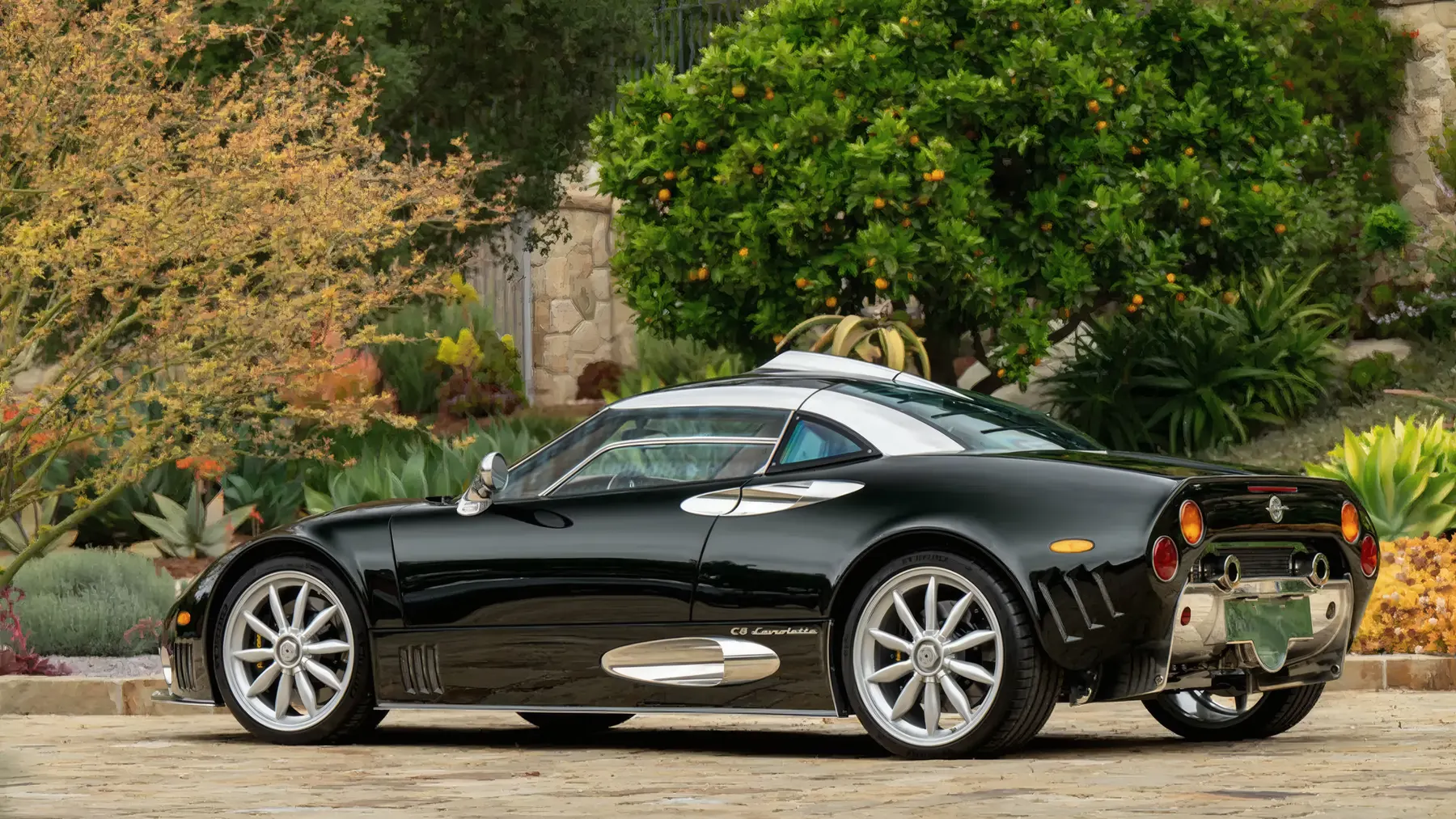
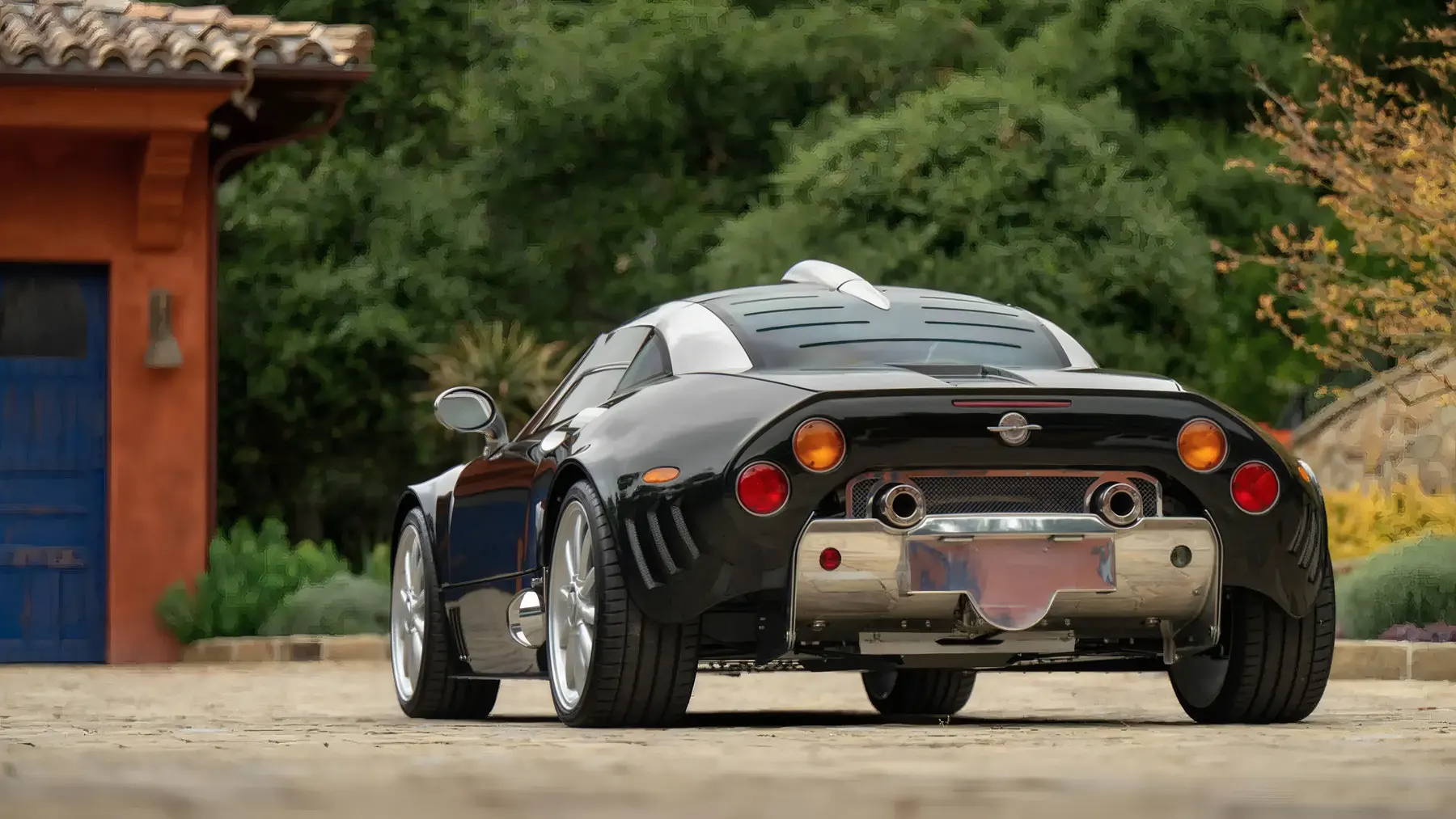
The Silvestris’ 3.6-litre Audi V8 and 265 bhp gave way, in the production C8 Spyder, to a larger 4.2-litre unit, but the low, mid-engined silhouette and the aviation references carried straight over. Barely four months after the Spyder’s debut, Spyker showed a fixed-roof coupé version at the Amsterdam AutoRAI show in February 2001. It was named the Laviolette, after Joseph Valentin Laviolette, the Belgian engineer who had developed the original Spyker company’s early race and record-breaking cars, including the 60 HP said to be the world’s first six-cylinder four-wheel-drive car. Where the Spyder used a soft or optional hard top, the Laviolette employed a fixed, two-piece glass canopy with an integrated, functional air intake feeding cool air into the engine bay - a design both reviewers and Spyker’s own marketing repeatedly likened to a fighter jet’s cockpit hood. It was, in effect, the first proper C8 coupé, and its polished aluminium header rail and glasshouse gave the car a lower, longer visual stance than the open Spyder, while a small opening rear deck behind the glass provided just enough space for a weekend bag.
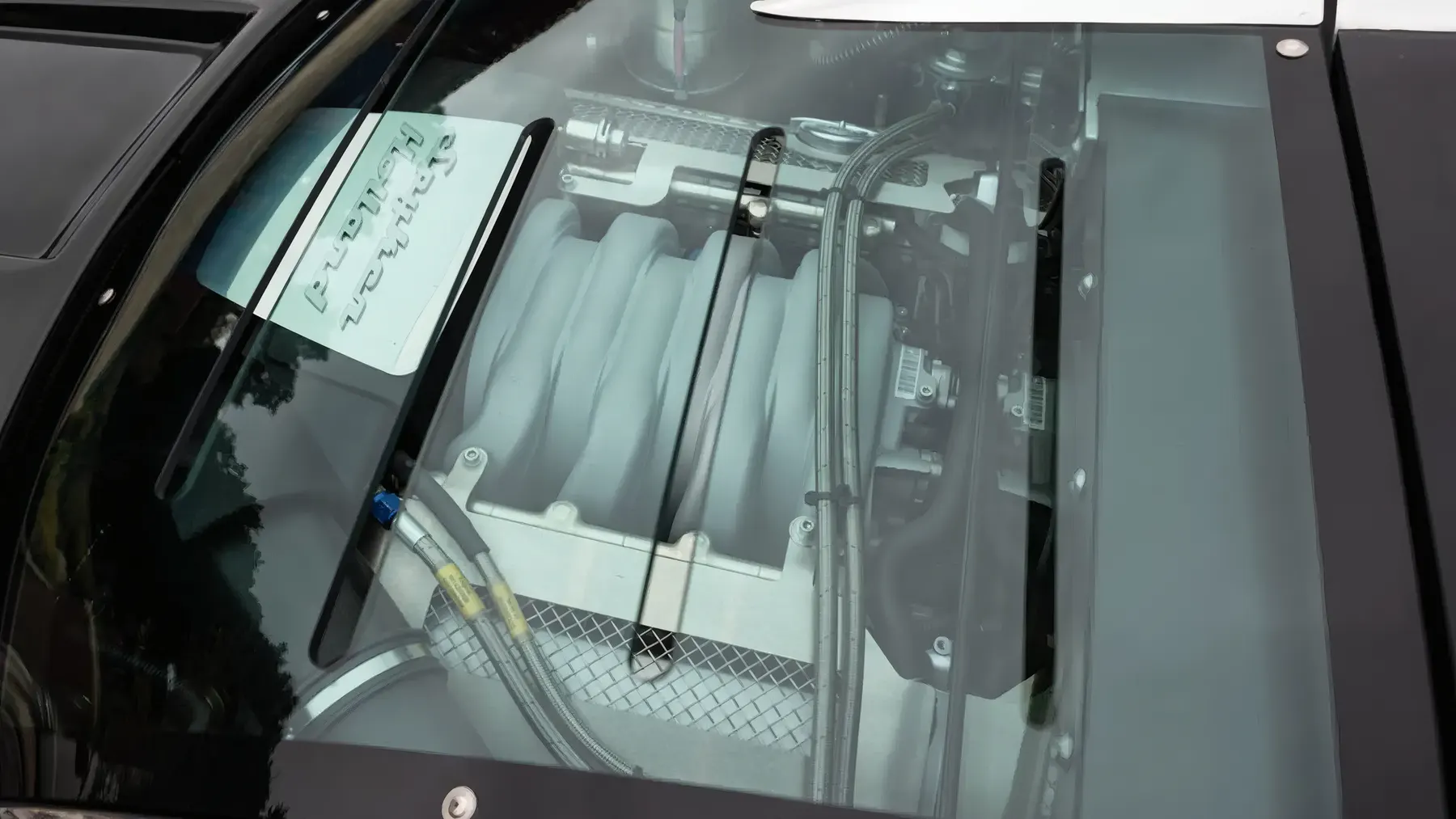
Underneath the coachwork, the Laviolette shared its short-wheelbase aluminium spaceframe chassis and running gear with the Spyder. Body panels were hand-formed in aluminium, initially with the help of British and Dutch specialists before Spyker turned to the German coachbuilder Karmann for much of the aluminium bodywork, and the car had a kerb weight of around 1,275 kg - respectably light for a hand-built GT of its size. Power came from a naturally aspirated, 90-degree Audi V8 of 4,172cc, a five-valve-per-cylinder, DOHC design related to the unit fitted in contemporary Audi RS models, producing 400 bhp and 354 lb-ft of torque at 3,500 rpm. Despite its Audi origins, the engine drove only the rear wheels through a six-speed Getrag manual gearbox - Spyker felt no need for the quattro four-wheel-drive system fitted to the same engine in Audi’s own cars - and the factory quoted a 0–60 mph time of 4.5 seconds and a top speed of around 186 mph. Suspension was double wishbones front and rear with adjustable, inboard-mounted Koni dampers offering a choice of “comfort” and “competition” settings, while braking used 356 mm front and 330 mm rear ventilated discs gripped by six-piston front and four-piston rear AP Racing calipers. Standard wheels were 18-inch forged ATS alloys, with 19-inch magnesium “Aeroblade” wheels - their propeller-shaped spokes doubling as brake-cooling ducts - offered as a striking, expensive option.
Inside, Spyker leaned hard into its aviation heritage without much restraint. The dashboard and centre console were finished in engine-turned aluminium, the gear linkage was left fully exposed beside the driver’s right hip, and toggle switches modelled on early aircraft cockpits controlled minor functions. Leather trim came from the Hulshof Royal Dutch Tanneries, and buyers could specify a four-blade propeller-shaped steering wheel - a conventional airbag-equipped wheel was also offered - or even a dashboard clock developed with the Swiss watchmaker Chronoswiss. The glovebox-and-toggle starting ritual described above became something of a Spyker trademark across the range, unapologetically theatrical, and either charmed or exhausted owners depending on their tolerance for showmanship.
Spyker kept the Laviolette in production, largely unchanged mechanically, through a turbulent decade for the company. At the 2008 Geneva Motor Show it introduced a long-wheelbase Laviolette alongside the original, stretching the wheelbase from 2,575 mm to 2,675 mm to answer owners who wanted a roomier cabin, while carrying over the same naturally aspirated 4.2-litre V8. A more evocative variant followed in 2009: the Laviolette LM85, a road-legal homage to Spyker’s Le Mans GT racing programme, limited to 24 examples to mark the 24 Hours of Le Mans and finished only in a two-tone Burnt Almond Orange and Gun Metal livery drawn from the racer’s colours. Rather than gaining power, the LM85 kept the standard 400 bhp V8; its appeal lay in the livery, the details, and the connection to the marque’s competition history rather than in outright pace.
That competition history was itself a mixed one. Spyker’s first purpose-built racer, the Double 12R, used an unrelated 4.0-litre Mader-BMW V8 rather than the road car’s Audi unit and debuted at the 2001 Frankfurt show, but the bare-aluminium car was never fully homologated for GT racing and was forced to compete under weight penalties and tighter air restrictors; after a crash-shortened debut at the 2002 Sebring 12 Hours and an appearance at the 2003 Le Mans 24 Hours, the programme was abandoned after two seasons. Spyker returned to sportscar racing in 2005 with a properly homologated C8 Spyder GT2-R, notable as the first open-cockpit car to contest top-level GT racing since the days of the Shelby Cobra Daytona; despite competing against factory-backed Porsche and Ferrari efforts, it collected podium finishes, gained a hardtop in its second season to cut drag, and swapped some aluminium components for carbon fibre to save weight. In 2008 a Laviolette-based GT2-R succeeded the Spyder racer and made its debut at that year’s 24 Hours of Le Mans using a 4.0-litre racing derivative of the road engine - the very car the LM85 was built to commemorate.
On the road, or ideally a circuit, the Laviolette turned out to be less of an outright supercar than a very rapid, deeply involving grand tourer. The Audi V8 proved remarkably tractable, happy to trickle along at low speed in top gear or be worked hard toward its 7,500 rpm redline, and the electrically assisted steering, though geared for a supercar-sized turning circle, was praised as direct and beautifully weighted. The Getrag gearbox’s exposed linkage was more than decoration: road testers found the throw almost sequential in its shortness, and the clutch and brake pedal - the latter working the AP Racing calipers through barely an inch of travel before reaching maximum stopping power - offered genuine motor-racing feedback. A limited-slip differential kept the power manageable, letting drivers use the torque without unwanted torque steer or tail-happiness unless deliberately provoked, and unusually deep-but-narrow A-pillars preserved sightlines through corners that thinner, wider pillars would have blocked.
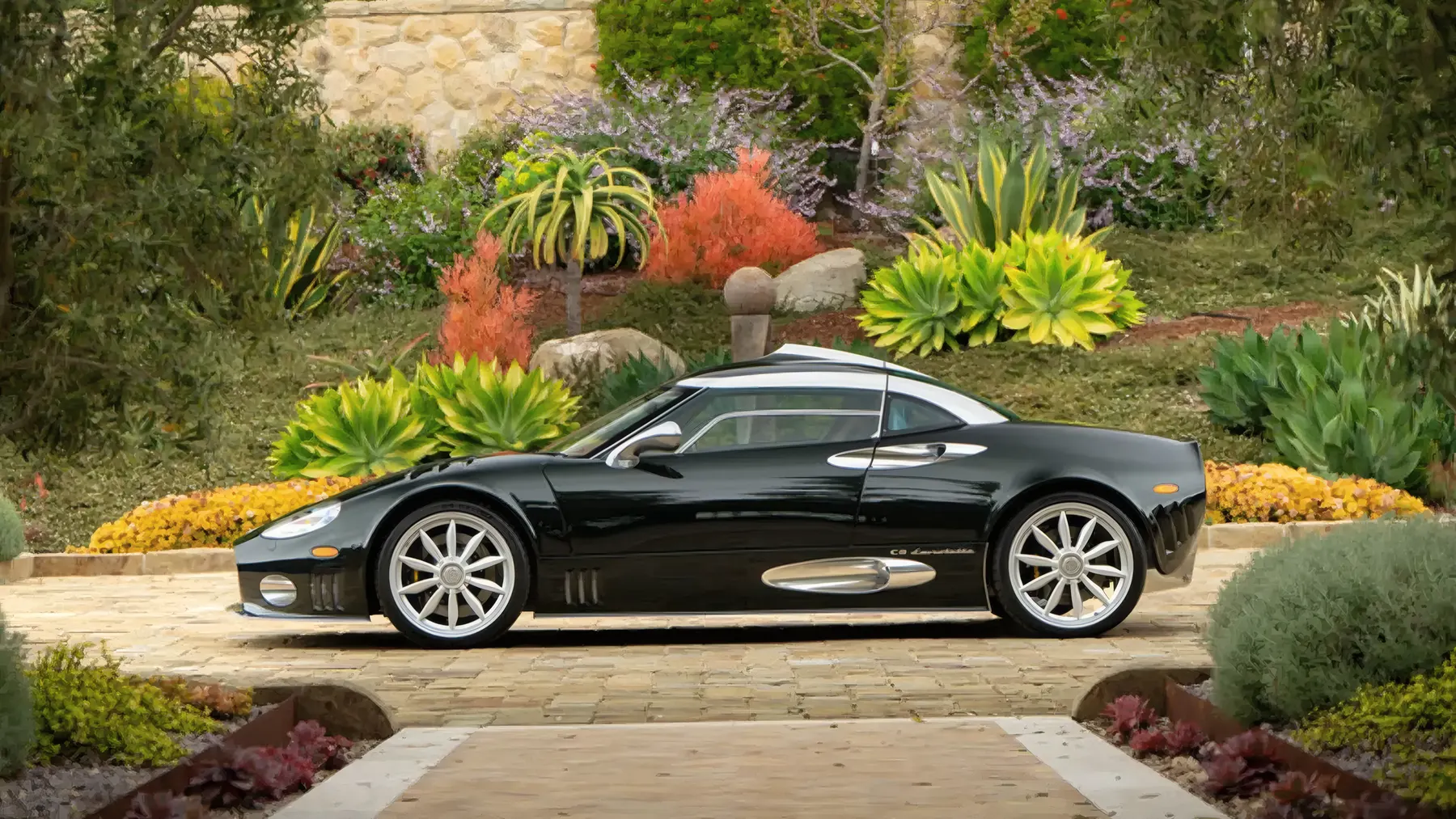
For all that engineering charm, the Laviolette had real and specific shortcomings that went beyond mere quirks. Outward visibility was genuinely compromised: the steeply raked windscreen and shallow rear glass left drivers with, by one contemporary road tester’s estimate, barely a third of a usable rear-view mirror image, a real liability in a low, wide car with poor sightlines to begin with. The cabin’s handcrafted feel could also be undone in an instant by details lifted straight from the parts bin - the bonnet- and boot-release buttons set into the door jamb, for instance, were illustrated with a generic saloon-car icon that had nothing to do with the Spyker sitting around them, a jarring reminder that beneath the aviation theatre sat a great deal of ordinary switchgear. The aesthetic itself divided opinion rather than uniting it: the combination of orange-stitched leather, acres of Alcantara, engine-turned aluminium and aircraft-style toggles struck some testers as overwhelming rather than luxurious. Practically, the rear track ran about 180 mm wider than the front - useful for outright grip, but flagged by contemporary road testers as a real hazard on narrow, width-restricted roads - while the opening rear deck offered barely enough space for a weekend bag, and the turning circle was wider than the car’s compact footprint suggested it should be. Perhaps the biggest structural weakness, though, was financial rather than mechanical. Spyker’s capital reserves shrank steadily through the mid-2000s, prompting growing scrutiny in the Dutch press; in the same period the company bought, then within a year resold, the struggling Midland Formula 1 team, and it took a fresh capital injection in December 2007 to save the carmaker from collapse. More than once during the Laviolette’s production run, customers who had already ordered and paid for cars found them left unfinished simply because Spyker lacked the money to buy parts. For anyone actually trying to buy, finish, or later service a Laviolette, that institutional fragility was every bit as real a flaw as any switchgear detail or blind spot, and it left the model - however well engineered underneath - permanently associated with a manufacturer that struggled to reliably deliver on its own ambition.
None of this made the Laviolette a commercial success in conventional terms. Spyker’s annual sales across its entire range never reached three figures; even in its best year, 2006, output stayed just short of 100 cars, and one specialist estimate for total production of the whole C8 family - Spyder, Laviolette, Double 12 and their descendants combined - runs to only a few hundred cars in all. Wikipedia’s model history separately puts production of the original short-wheelbase Laviolette specifically at 55 examples, a figure that should be treated as indicative rather than definitive given how little independently verified production data survives for such a low-volume manufacturer. Positioned against established rivals from Porsche, Ferrari and Maserati, the Laviolette occupied an unusual middle ground: not fast enough, in outright terms, to trouble contemporary supercars, but far more expensive and far rarer than any GT car built to a price. It found a niche instead among buyers drawn to its exclusivity, its hand-finished detailing and its unusual, aviation-flavoured personality - buyers who were as likely to bring the car to concours events like Villa d’Este and Pebble Beach as to a racetrack. It has also turned up periodically on screen, including in Basic Instinct 2 and Fast & Furious 6, exposure that did more for Spyker’s name recognition than for its balance sheet.
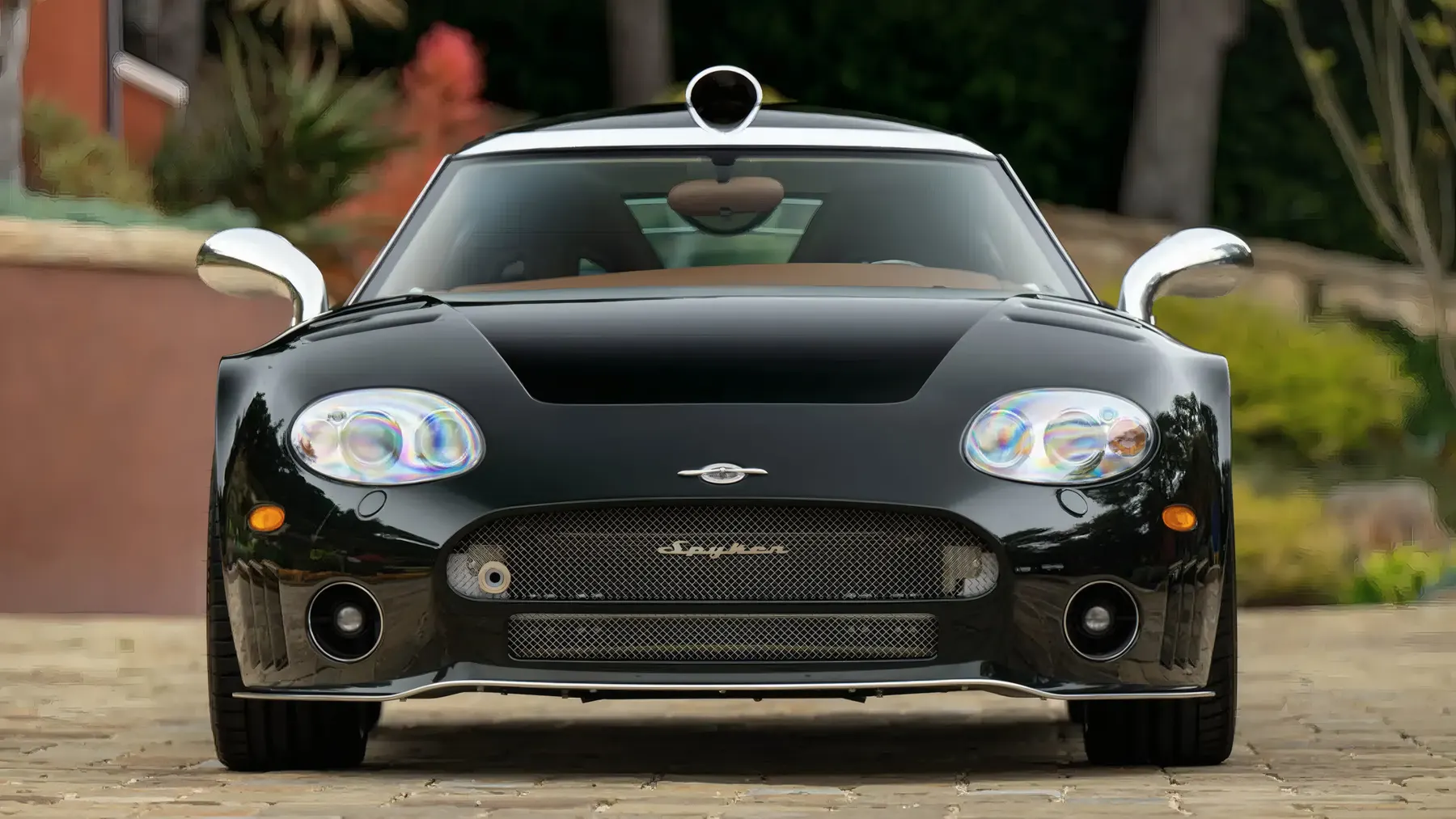
The Laviolette was succeeded in 2009 by the second-generation C8 Aileron, a longer, wider car that kept the same Audi V8 but softened some of the original’s rough edges, and the silhouette it established continued, in modified form, through the Preliator more than a decade later. What the Laviolette actually demonstrated had less to do with any single technical achievement than with showing that a resurrected, century-old Dutch coachbuilder could put a genuinely well-detailed, aluminium-bodied grand tourer into limited production using proprietary German mechanicals rather than developing everything from scratch - and, in the same breath, how difficult that ambition is to sustain without the balance sheet of an established manufacturer behind it. Today the car sits at an odd but appealing intersection of automotive history: too obscure to be a household name, too well engineered and characterful to dismiss as a mere curiosity, and rare enough that most enthusiasts who admire it have never actually driven one.
Technical data
Performance Specifications - Spyker C8 Laviolette (original short-wheelbase, 2001–2009)
| Specification | Detail |
|---|---|
| Production | 2001–2009 (short-wheelbase); long-wheelbase variant added 2008; LM85 special edition from 2009, limited to 24 cars |
| Body style | 2-door, mid-engine, fixed-roof coupé with glass canopy |
| Construction | Aluminium spaceframe chassis; hand-formed aluminium body panels |
| Engine | 4,172cc naturally aspirated 90° V8 (Audi-sourced), DOHC, 40-valve, electronic fuel injection |
| Power | 400 bhp, peak at approximately 6,500–6,800 rpm* |
| Torque | 354 lb-ft at 3,500 rpm |
| Transmission | 6-speed Getrag manual, rear-wheel drive |
| 0–60 mph | 4.5 sec (manufacturer figure) |
| Top speed | approx. 186 mph |
| Kerb weight | approx. 1,275 kg† |
| Wheelbase | 2,575 mm (SWB); 2,675 mm (LWB, from 2008) |
| Length / width / height | 4,185 mm / 1,880 mm / 1,245 mm |
| Front / rear track | 1,400 mm / 1,580 mm |
| Brakes (F/R) | 356 mm / 330 mm ventilated discs; 6-piston / 4-piston AP Racing calipers |
| Wheels | 18-in forged ATS alloy standard; 19-in magnesium “Aeroblade” optional |
| Laviolette (SWB) production total | approx. 55 cars‡ |
Join the discussion
Comments
Loading comments…
Leave a comment
Share a detail, memory, or perspective. Every comment is reviewed before publication.