Nissan GT-R NISMO: How Nissan's Race Division Reengineered Godzilla
2016 Nissan GT-R NISMO

Images: Maximilian Vogl / RM Sotheby's
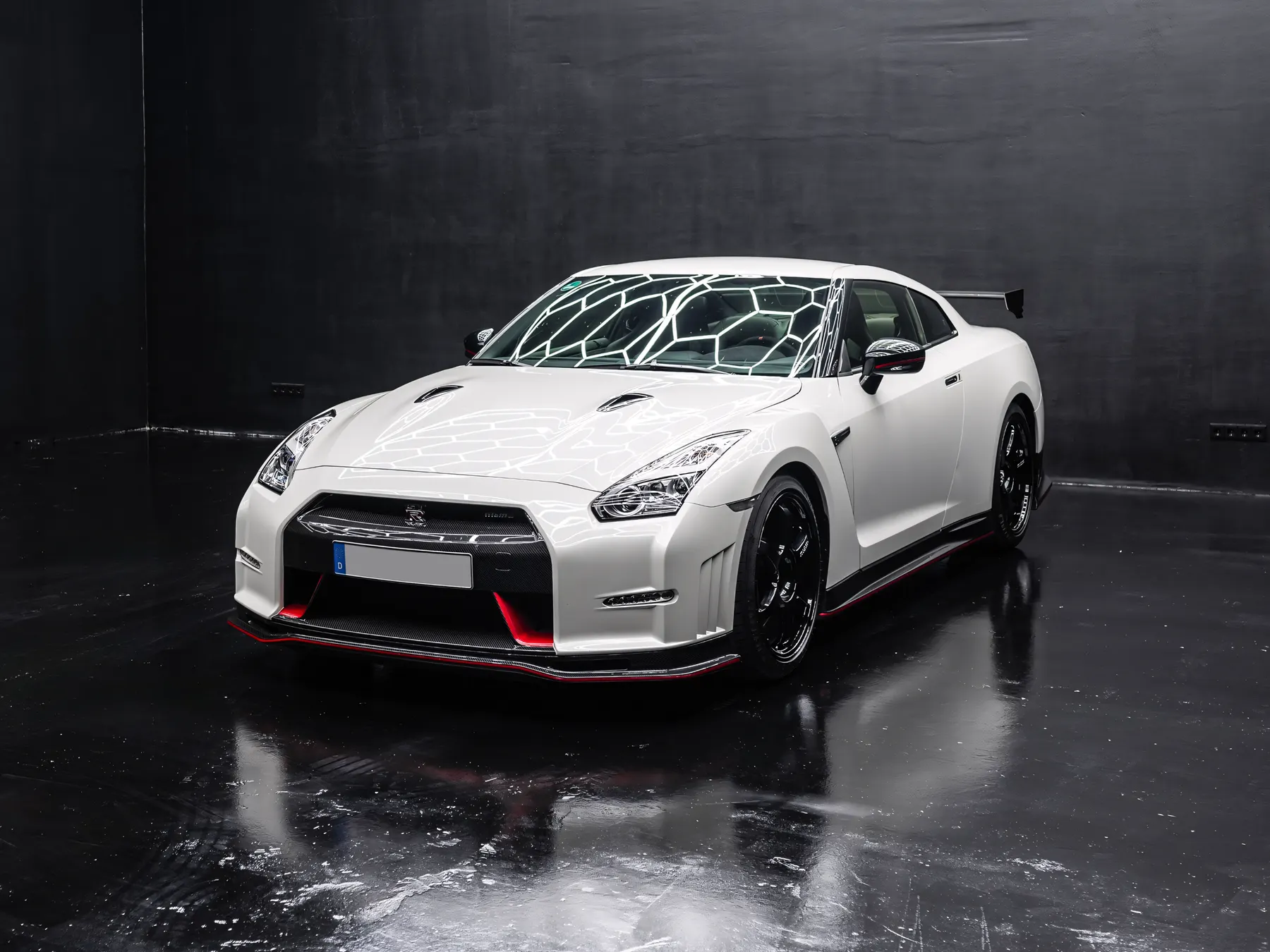
Nissan’s motorsport skunkworks spent the better part of three decades building race cars for other people’s benefit - touring cars, GT machines, Super GT prototypes - before the parent company finally handed NISMO the keys to build a road car wearing its own badge as the headline act rather than an accessory pack. When that car arrived in November 2013 as the GT-R NISMO, it treated the assignment less like a trim exercise and more like a homologation project for a race programme that, strictly speaking, didn’t need one: a flagship engineered by people who spend their working lives at circuits like the Nürburgring and in the Japanese Super GT paddock, then asked to also cope with a school run.
The GT-R nameplate carries baggage that predates the NISMO variant by more than two decades. The Godzilla nickname so often applied loosely to every GT-R that has worn the badge actually belongs to one specific car: the R32-generation Skyline GT-R, which Australian magazine Wheels first branded “Godzilla” on its July 1989 cover in anticipation of the car’s dominance of the Australian Touring Car Championship, a reputation the R32 duly earned by winning the 1991 Bathurst 1000 and running roughshod over the local touring car establishment. The R35 generation that the NISMO variant belongs to broke from that Skyline lineage entirely when it launched in 2007, becoming the first GT-R sold as a standalone global model rather than a hot version of a Japanese saloon, and it inherited the Godzilla name by association rather than by right.
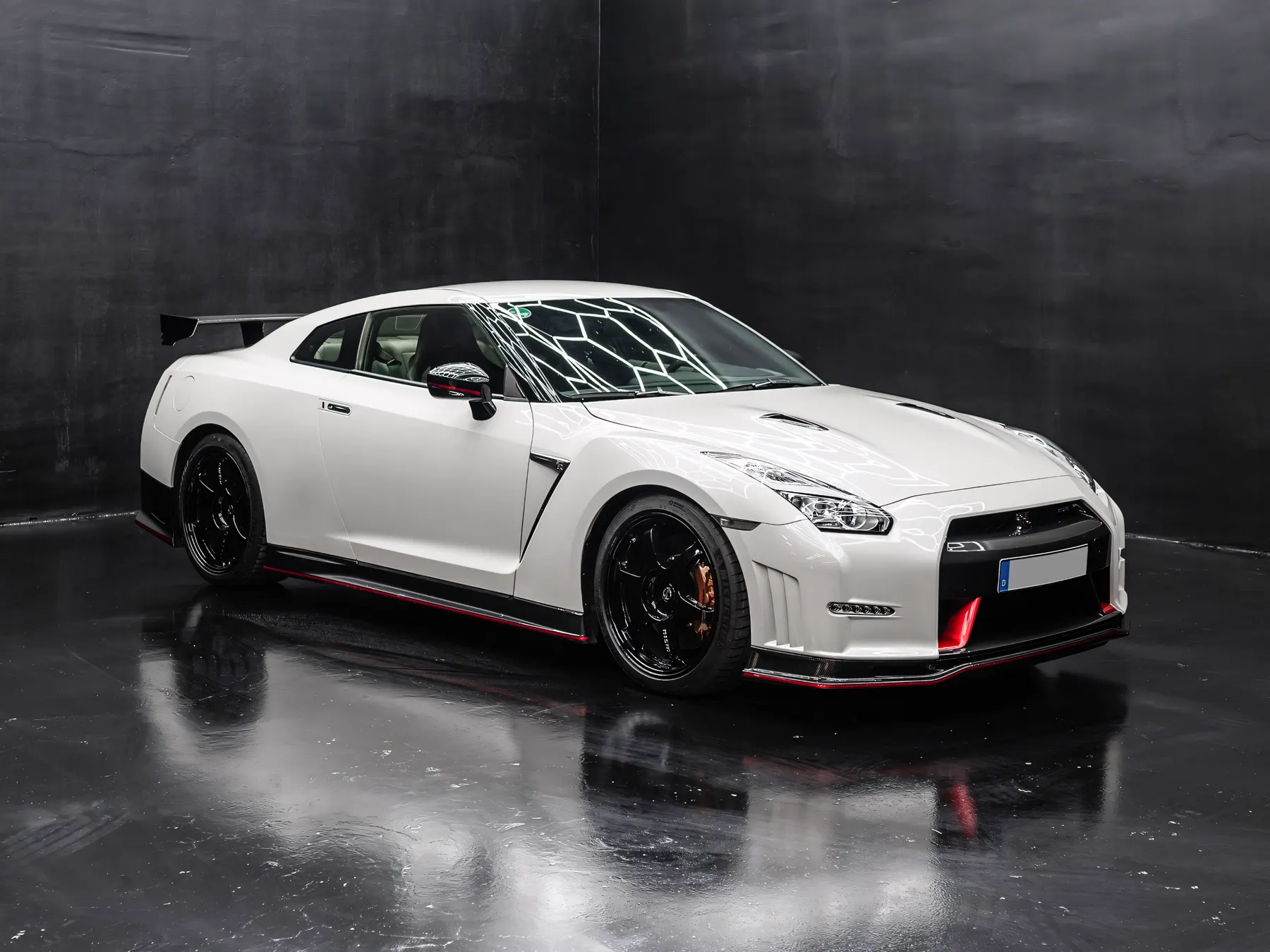
By the time NISMO’s own version arrived, the standard R35 GT-R had already spent six years building a reputation as a car that could out-accelerate genuine exotics using a comparatively modest twin-turbocharged V6, a dual-clutch transaxle and a sophisticated all-wheel-drive system with a rear-mounted transmission - hardware that struck some early critics as overly synthetic and tech-laden rather than viscerally engaging, even as it won plenty of admirers for the scale of performance it unlocked. NISMO’s job was to take that formula somewhere the standard car couldn’t follow. The result, revealed at the Nürburgring, was pitched by Nissan as the fastest GT-R yet, and the company backed the claim with a Nordschleife lap of 7 minutes 8.679 seconds, driven by factory test and racing driver Michael Krumm, which Nissan described as a lap record for a volume production car. The GT-R NISMO went on sale in Japan in February 2014, followed by the US and Europe later that year as a 2015 model, priced from $149,990 before options and destination charges.
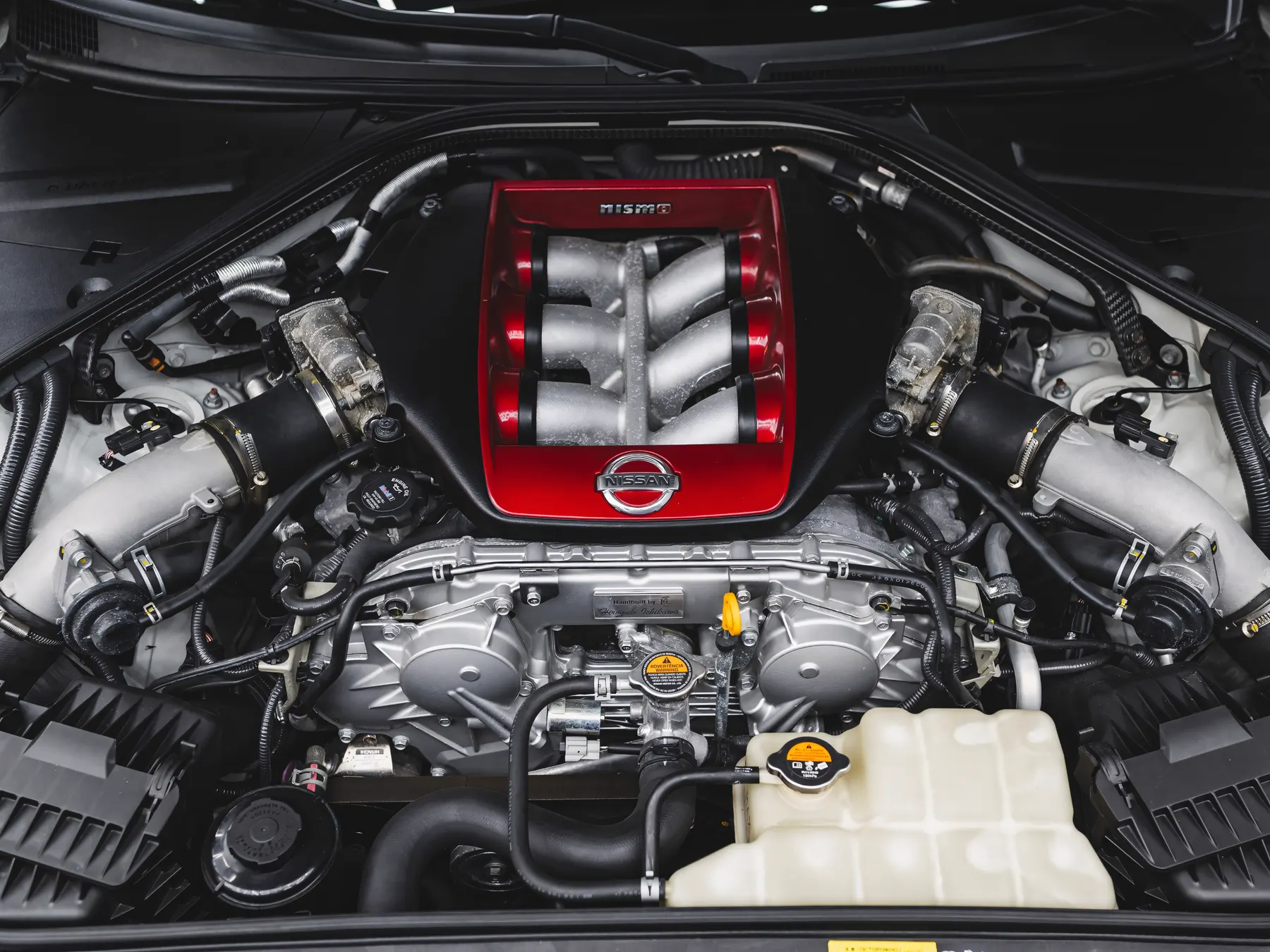
At the heart of every GT-R NISMO sits the VR38DETT, a 3.8-litre twin-turbocharged V6 that Nissan has hand-assembled since the platform’s 2007 debut, with each engine built from start to finish by one of a small number of specially trained technicians rather than on an automated line. In NISMO tune the engine produces 592bhp at 6,800rpm and 481 lb-ft of torque between 3,600 and 5,600rpm, though American marketing materials have periodically rounded the power figure up to a flat 600 horsepower. The gains over the standard car come chiefly from larger, higher-flow turbochargers borrowed directly from Nissan’s GT3 racing programme, along with cylinder-by-cylinder ignition timing control and an uprated fuel pump. Drive goes through a six-speed dual-clutch transaxle and Nissan’s ATTESA E-TS all-wheel-drive system, which actively varies the torque split between the axles rather than relying on a fixed ratio.
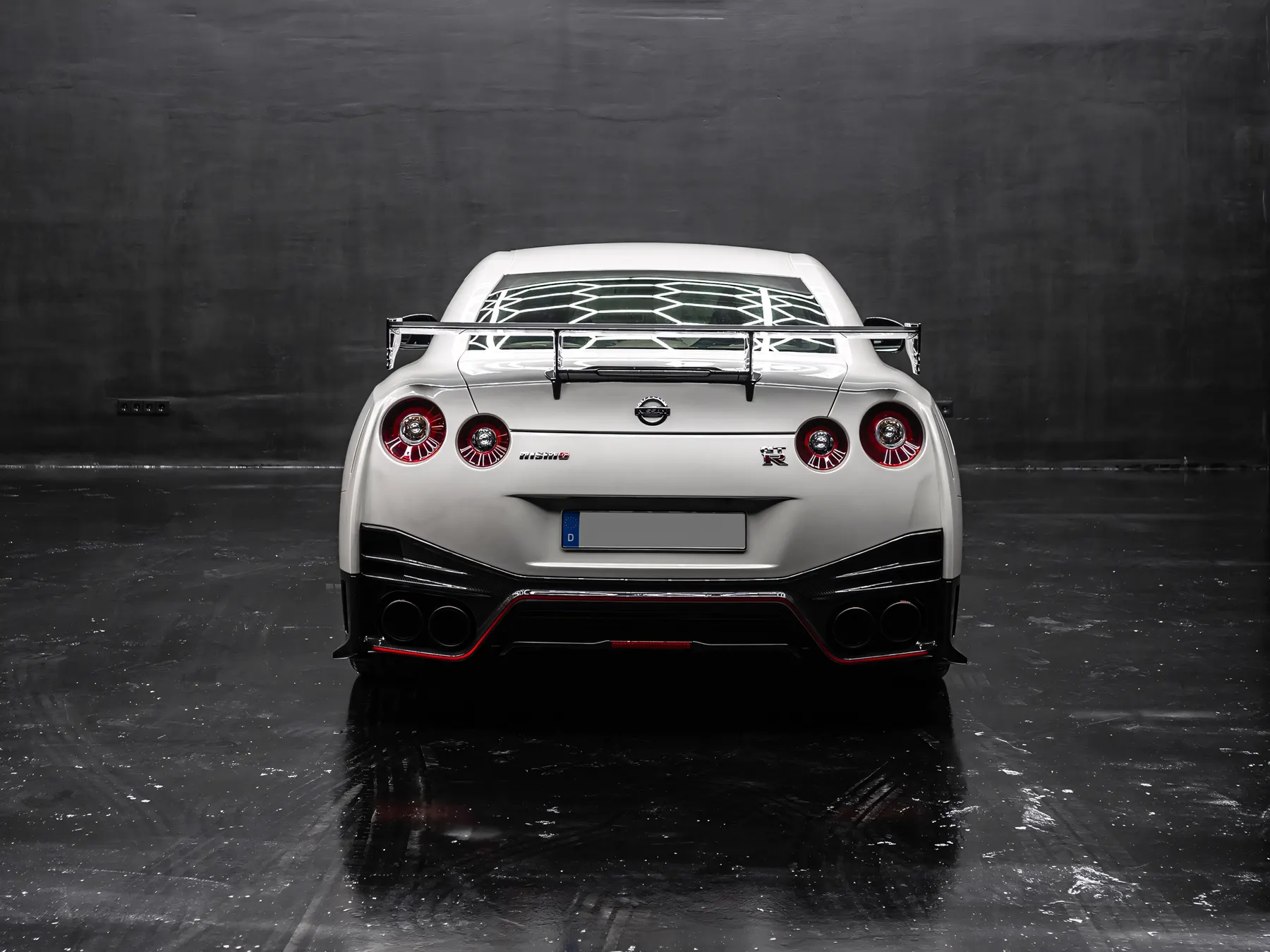
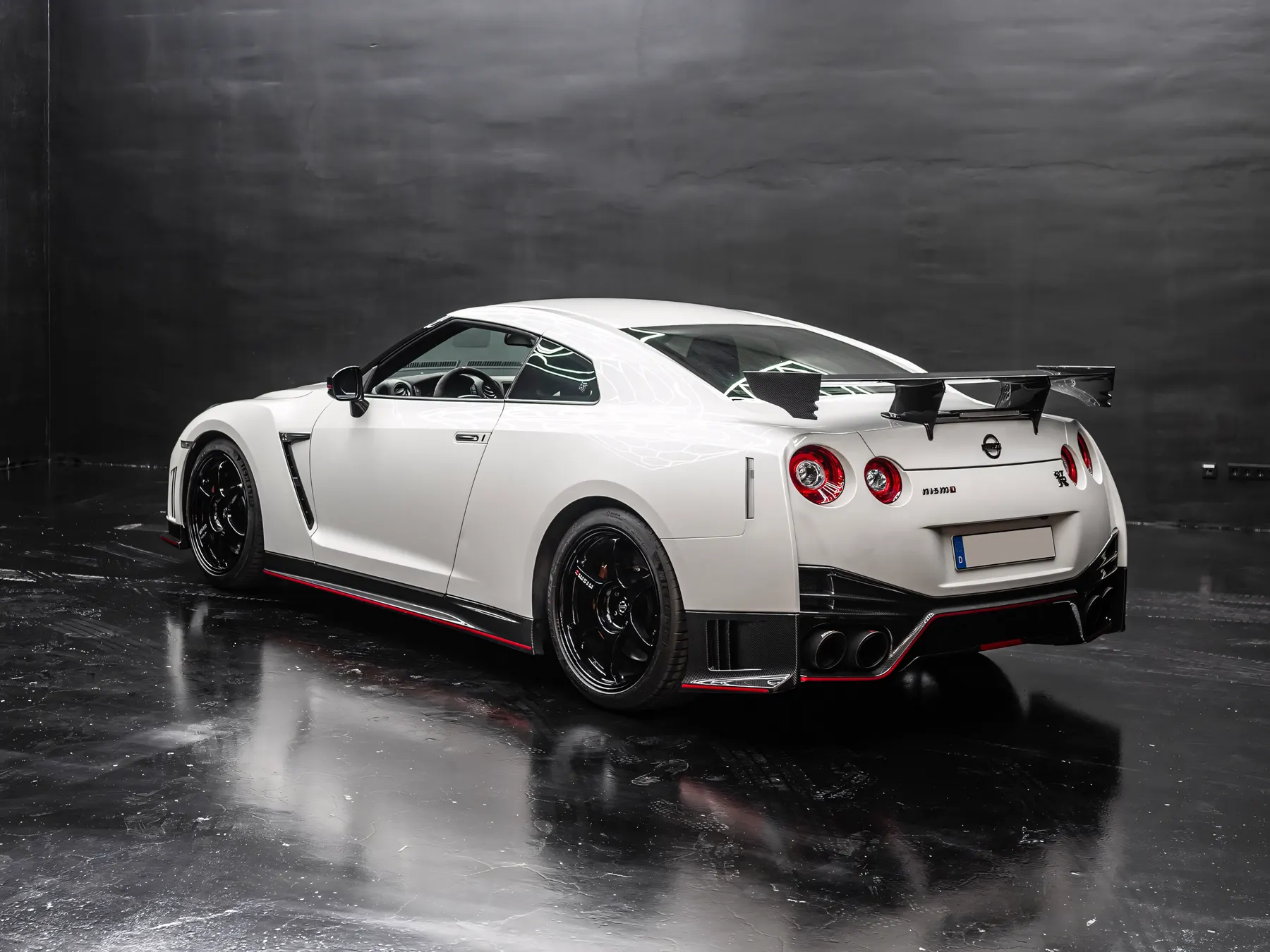
The changes that separate a GT-R NISMO from a standard car go well beyond the engine bay. Carbon-fibre panels - bonnet, roof, front bumper, front fenders and rear spoiler on later cars - trim a meaningful amount of weight, with Nissan at one point claiming the carbon components alone saved around 65kg, though the finished car’s overall weight advantage over a standard GT-R has generally been more modest once uprated brakes, stickier tyres and additional aerodynamic hardware are factored back in; specialist British road testers have put later cars at around 1,703kg, with earlier NISMO versions closer to 1,720kg. Carbon-ceramic brakes cut further unsprung weight, and Dunlop developed a tyre specifically for the model, in 255/40 ZR20 front and 285/35 ZR20 rear sizes. Custom-tuned Bilstein DampTronic dampers, retuned springs and revised front suspension geometry - including links designed to increase castor under cornering load - round out a chassis package aimed squarely at circuit use, while the aerodynamic addenda generate roughly 100kg of additional downforce at 186mph without moving the drag coefficient away from the standard car’s 0.26. For owners wanting to go further still, Nissan also sold a dealer-fitted NISMO N Attack Package, developed from the time-attack programme NISMO ran at the Nürburgring, adding further aerodynamic and suspension hardware plus full bucket seats for drivers chasing lap times over comfort.
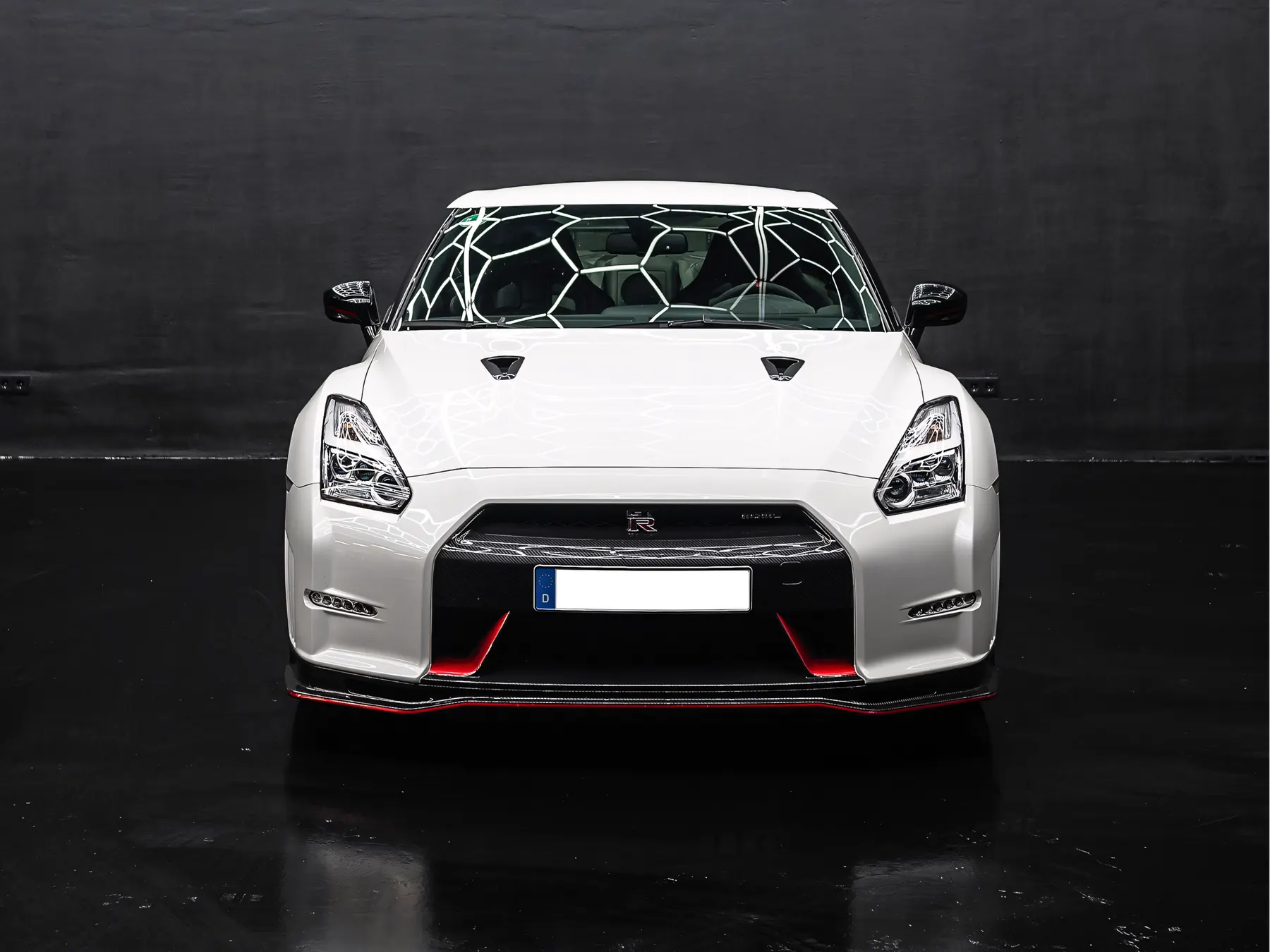
Nissan treated the GT-R NISMO less as a fixed product than an ongoing development programme, updating it substantially several times across more than a decade on sale rather than replacing it outright with a new generation. The most significant refresh arrived for 2017, bringing a reshaped front end with an enlarged V-motion grille, a carbon-fibre front bumper built up from overlapped sheet layers with add-on canards, and a strengthened bonnet designed to resist aerodynamic deformation at high speed. The stiffer, reinforced body that came with this update let NISMO’s engineers retune the dampers, springs and anti-roll bars, and Nissan quoted a two per cent improvement in the car’s benchmark slalom test as a result. Inside, a redesigned dashboard cut the number of switches on the centre stack from 27 to just 11, a genuine ergonomic improvement over the button-heavy layout of the original car. US pricing climbed to $176,500 for the refreshed model. A further update arrived for the GT-R’s 50th anniversary in 2019, bringing turbochargers taken directly from the contemporary GT3 race car rather than a road-tuned derivative - a change Nissan said improved spool-up response by around 20 per cent without adding outright power - plus further carbon-fibre bodywork that trimmed additional weight. By 2020, the NISMO’s US price had risen to $210,000, a roughly 40 per cent increase over the original 2015 sticker for what remained, at its core, the same platform and engine architecture, refined incrementally rather than replaced outright. The final substantial mechanical update, for the 2024 model year, added a front limited-slip differential and a redesigned rear wing with swan-neck mounts and roughly 10 per cent more surface area, alongside revised front and rear aerodynamic elements.
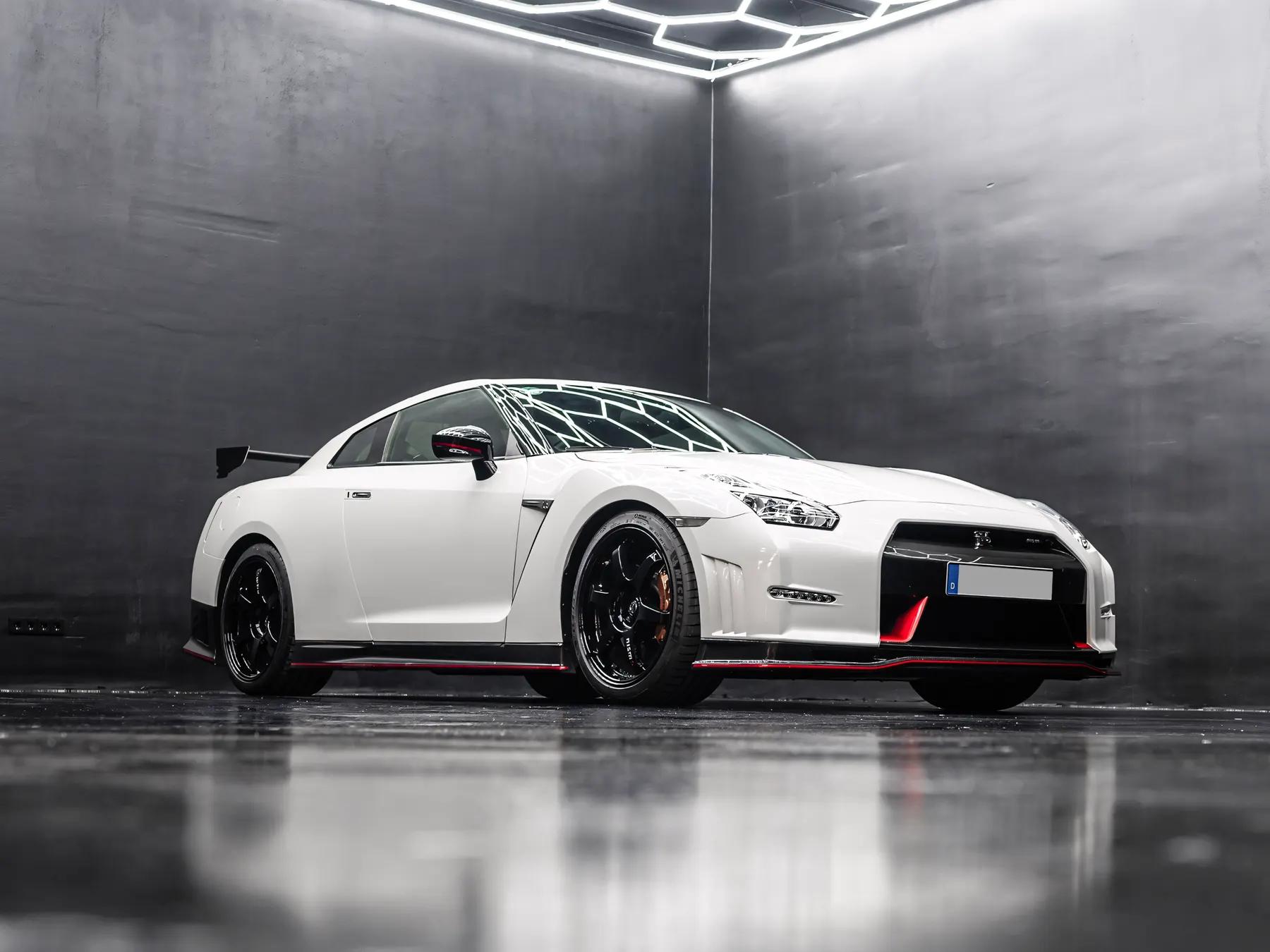
To drive, the GT-R NISMO trades on a very different set of sensations to the polished, electronically mediated experience offered by rivals such as the Porsche 911 Turbo or McLaren’s V8 range. British magazine evo, which tracked the R35 through its entire production run, described the Nismo’s ride as punishing even by the standards of a hardcore road car, while praising the body control that punishing suspension tune delivers - a car that feels happiest being driven hard on demanding, three-dimensional roads rather than cruised. Top Gear’s testers made a similar point, noting that the car doesn’t envelop its driver in the reassuring, flattering way that more modern rivals do; instead it demands commitment, rewarding drivers willing to work for its performance rather than simply granting it. Turbo lag, largely engineered out of newer rivals, remains a deliberate part of the NISMO’s character, adding drama to a car that several reviewers noted feels fast and theatrical even at modest, everyday speeds.
That theatre doesn’t extend to every part of the experience, and the GT-R NISMO’s flaws are neither minor nor easily waved away as charm. Its cabin technology aged conspicuously over the model’s long run: reviewers testing cars well into the 2020s described the built-in navigation system as looking and feeling like hardware from a much earlier era, wrapped in Alcantara and leather that couldn’t fully disguise a cheap-feeling plastic surround around the touchscreen. The rear seats, meanwhile, are usable only in the loosest sense - large enough to suggest genuine four-seat practicality but too cramped for real adult passengers, prompting more than one reviewer to question why Nissan didn’t simply delete them and bank the weight saving on a car this focused on lightness elsewhere. Running costs compound the practicality problem: fuel consumption, insurance and servicing all sit well above what buyers of superficially similar money would pay for a more mainstream performance coupe, and the GT-R’s dual-clutch transmission has a documented history of solenoid clogging that can cause rough or delayed shifts if the fluid isn’t changed proactively - a genuine mechanical weak point on a car whose reputation rests heavily on its drivetrain sophistication. The nameplate’s relationship with warranty coverage also carries some historical baggage: Nissan’s original 2008–2009 GT-R was the subject of a class-action lawsuit after owners found that using the factory-fitted launch control feature could destroy the transmission, with Nissan initially declining to cover the resulting repairs under warranty before settling the case. That controversy predates the NISMO variant by several years and Nissan has long since addressed the underlying software, but it lingered as a reputational shadow over a nameplate that has always asked buyers to trust unusually complex mechanical systems. Perhaps most tellingly, the price climbed by roughly 40 per cent between 2015 and 2020 while the fundamental architecture stayed the same, a trajectory that drew criticism that Nissan was extracting maximum value from a design it had stopped meaningfully replacing rather than genuinely reinventing the car generation to generation.
Positioned against its rivals, the GT-R NISMO’s case shifted considerably over its production life. At its original $149,990 asking price it undercut or matched cars like the Porsche 911 Turbo while offering comparable or superior straight-line performance, a genuine value proposition for a car built with motorsport-grade componentry. By the time the price had climbed past $200,000, it found itself compared more directly with cars like the Acura NSX and Audi R8 V10 Performance - rivals that generally offered more contemporary cabin technology and, in the NSX’s case, hybrid sophistication the GT-R never adopted. The NISMO’s advantage by this stage of its life was less about outright value and more about a specific character: a raw, motorsport-adjacent driving experience increasingly rare among flagship performance cars from mainstream manufacturers.
The GT-R NISMO’s connection to actual racing wasn’t just marketing language. Nissan’s factory and factory-supported teams campaigned GT-R NISMO GT3 cars in international GT racing, including at the Nürburgring 24 Hours, using aerodynamic packages developed alongside the road car, while a separate GT-R NISMO GT500 competed in Japan’s Super GT championship. Nissan explicitly credited the road-going NISMO’s aerodynamic development to lessons learned from its Super GT programme, and the turbocharger hardware fitted to later road cars came directly from the GT3 effort rather than being merely inspired by it - a rare case of a manufacturer’s flagship street car sharing genuine hardware, not just styling cues, with its competition programme.
Nissan finally closed the book on the R35 generation in 2025, eighteen years after the platform’s 2007 debut and just over a decade after the NISMO variant joined the range. Regulatory pressure, rather than any drop in demand, forced the issue: emissions rules pushed the car out of Europe and, eventually, the United States after the 2024 model year, while noise and crash-safety regulations closed other markets earlier still. Japan, the car’s final market, continued taking orders until early 2025, with production ending that summer. Across all trims and its full eighteen-year run, Nissan built approximately 48,000 examples of the R35 GT-R, a relatively small number for a nameplate with such outsized cultural reach, and the company has confirmed a successor is planned, though it remains undecided on whether that car will use a hybrid or fully electric powertrain, with a gap of unspecified length expected before it arrives.
The GT-R NISMO occupies a fairly rare position in the modern performance-car landscape: a flagship variant built not by a specialist boutique but by a mainstream manufacturer’s own motorsport division, running components pulled from an active competition programme rather than developed solely for a press release. It was never the most sophisticated car in its class, and by the end of its life it wasn’t remotely the best value proposition - but across more than a decade of incremental, occasionally stubborn refinement, it remained one of the most honestly race-derived road cars any major manufacturer has sold, dated cabin, cramped rear seats and all.
Technical data
Specifications
| Specification | Detail |
|---|---|
| Engine | 3.8-litre twin-turbocharged V6 (VR38DETT), hand-assembled |
| Power | 592bhp @ 6,800rpm* |
| Torque | 481 lb-ft @ 3,600–5,600rpm |
| Transmission | 6-speed dual-clutch transaxle |
| Drive | All-wheel drive (ATTESA E-TS) |
| 0–62mph | 2.8 seconds† |
| Top speed | 196mph |
| Kerb weight | c. 1,700–1,720kg‡ |
| Production span (NISMO variant) | 2014–2025 |
| Launch price (US) | $149,990 (2015); risen to $210,000 by 2020 |
Sources
- Nissan Global Newsroom: Revealed – Nissan GT-R NISMO
- Nissan USA Newsroom: Nissan GT-R NISMO Revealed
- Nissan Europe Newsroom: Nissan GT-R NISMO World’s Fastest Volume Production Car Around the “Green Hell”
- Nissan USA Newsroom: Nissan Announces U.S. Pricing for 2015 GT-R NISMO
- Nissan USA Newsroom: The 2017 Nissan GT-R NISMO Takes the New GT-R to the Next Level
- Nissan Europe Newsroom: The 2017 Nissan GT-R NISMO Takes Everything About the New GT-R to the Next Level
- Kelley Blue Book: 2017 Nissan GT-R Nismo Arrives and Opens at $176,585
- Supercars.net: 2020 Nissan GT-R Nismo – Guide, History, Specifications, Performance
- CarBuzz: 2020 Nissan GT-R NISMO Pricing, Photos & Specs
- Business Wire / Nissan: 2024 Nissan GT-R Receives Updated Aerodynamics, T-spec Special Edition and Heritage Paint Options
- evo: Nissan GT-R Nismo (R35, 2014–2025) Review
- evo: Nissan GT-R Review – Prices, Specs and 0–60 Time
- Top Gear: Nissan GT-R NISMO Review
- Goodwood Road & Racing: Goodwood Test – 2021 Nissan GT-R Nismo Review
- Edmunds: 2016 Nissan GT-R Review & Ratings
- Kelley Blue Book: 2015 Nissan GT-R Price, Value, Depreciation & Reviews
- The Car Connection: 2015 Nissan GT-R Review, Ratings, Specs, Prices, and Photos
- What Car?: Nissan GT-R Review
- Transmission: Nissan GT-R Nismo Sets a 7:08.679 Lap Time of the Nürburgring
- TopSpeed: 2015 Nissan GT-R Nismo
- Carscoops: New 2015 Nissan GT-R NISMO with 592hp Priced from $149,900
- Car Throttle: 4 Cool New Things on the 2017 Nissan GT-R Nismo
- Automotive World: Nissan to Offer the NISMO N Attack Package for Nissan GT-R NISMO (R35) in the U.S.
- Nissan USA Newsroom: Nissan Exhibits NISMO N Attack Package for GT-R NISMO at Tokyo Auto Salon
- Motor Authority: Regulations Killed the Nissan GT-R
- Motor Authority: Nissan Stops Taking R35 GT-R Orders
- Nissan Global Newsroom: Nissan Bids Fond Farewell to R35 GT-R as Final Vehicle Rolls Off the Line
- Motor1: This Is the Last Nissan GT-R R35
- 8020 Automotive: Common Nissan GT-R VR38DETT Engine Problems – Reliability
- Jalopnik: This Is Nissan’s GT-R Launch-Control Warranty Settlement
- The Drive: Nissan GT-R Driver Blows Up Transmission Showing Off Launch Control on a Cold Start
- Motor Authority: Why the Nissan GT-R Is Known as Godzilla
Join the discussion
Comments
Loading comments…
Leave a comment
Share a detail, memory, or perspective. Every comment is reviewed before publication.