Nissan GT-R50 by Italdesign: Godzilla's Million-Dollar Coachbuilt Alter Ego
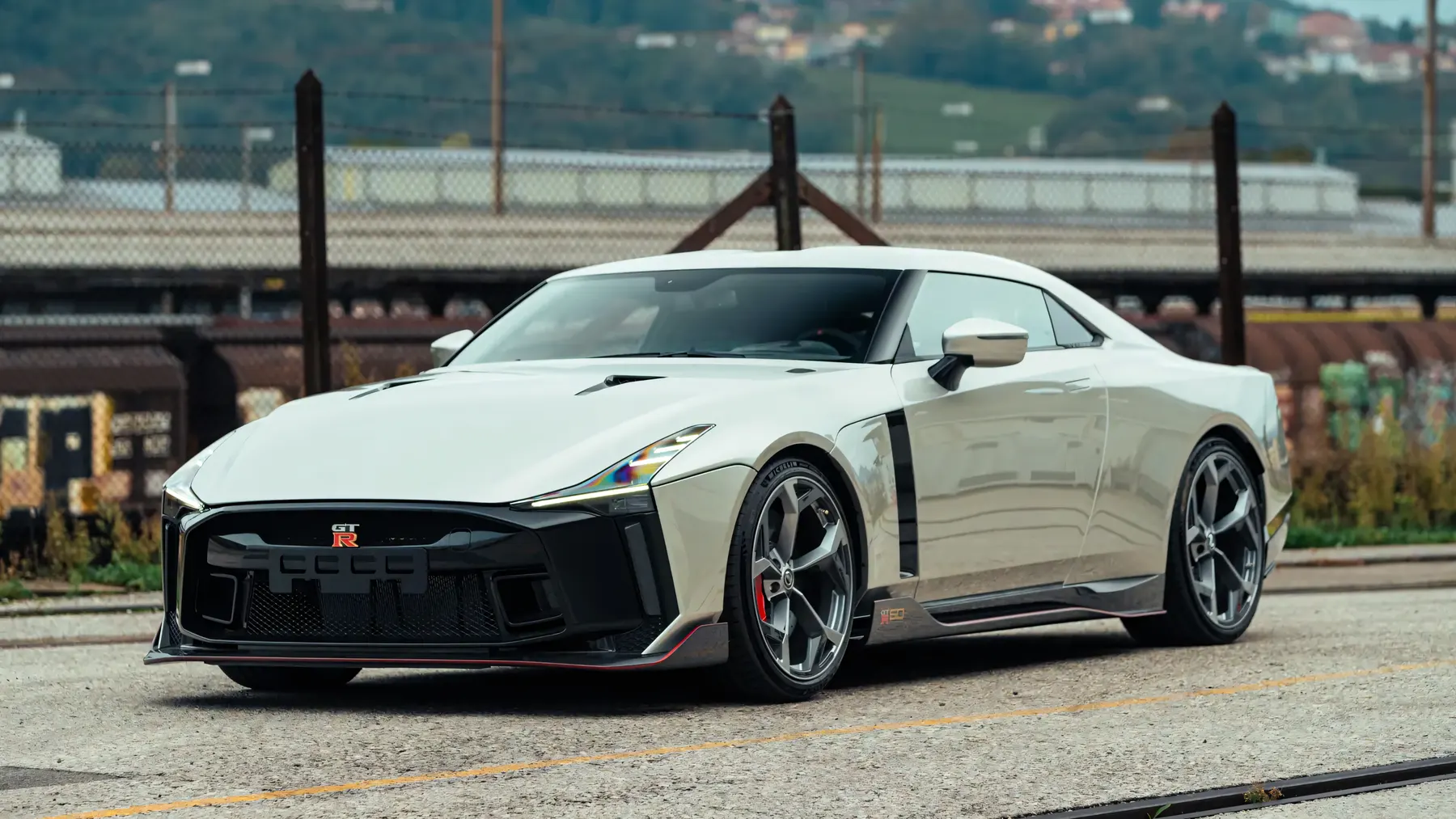
2021 Nissan GT-R50 by Italdesign

Images: Vecchio / RM Sotheby's
Nissan spent five decades selling the GT-R on democratised speed - the idea that outrunning a Ferrari or a Porsche shouldn’t require a six-figure budget, an Italian address, or a badge with a coat of arms on it. The GT-R50 by Italdesign takes that entire premise and runs it backwards. It is a GT-R rebuilt largely by hand in Turin, wrapped in bespoke bodywork, and sold to fifty buyers for roughly ten times the price of the car it started life as. For a nameplate built on being the everyman’s supercar-killer, that is a genuinely strange place to end up.
The car exists because two round-number anniversaries collided. Italdesign, the storied Turin design and engineering house founded by Giorgetto Giugiaro and responsible for shapes as varied as the Lotus Esprit and the DeLorean DMC-12, turned fifty in 2018. The following year would mark half a century since the GT-R nameplate first appeared on a Nissan Skyline. To mark both occasions, the two companies undertook their first joint project, and the resulting prototype made its world debut at the Goodwood Festival of Speed in July 2018, driven up the hillclimb by Nissan’s factory GT3 racers Lucas Ordóñez and Alex Buncombe. Nissan’s design boss at the time, Alfonso Albaisa, described the brief as building a GT-R with every usual constraint removed, then actually finishing it rather than leaving it as a rendering. Italdesign developed, engineered and built the car; the exterior and interior design came from teams at Nissan Design Europe in London and Nissan Design America.
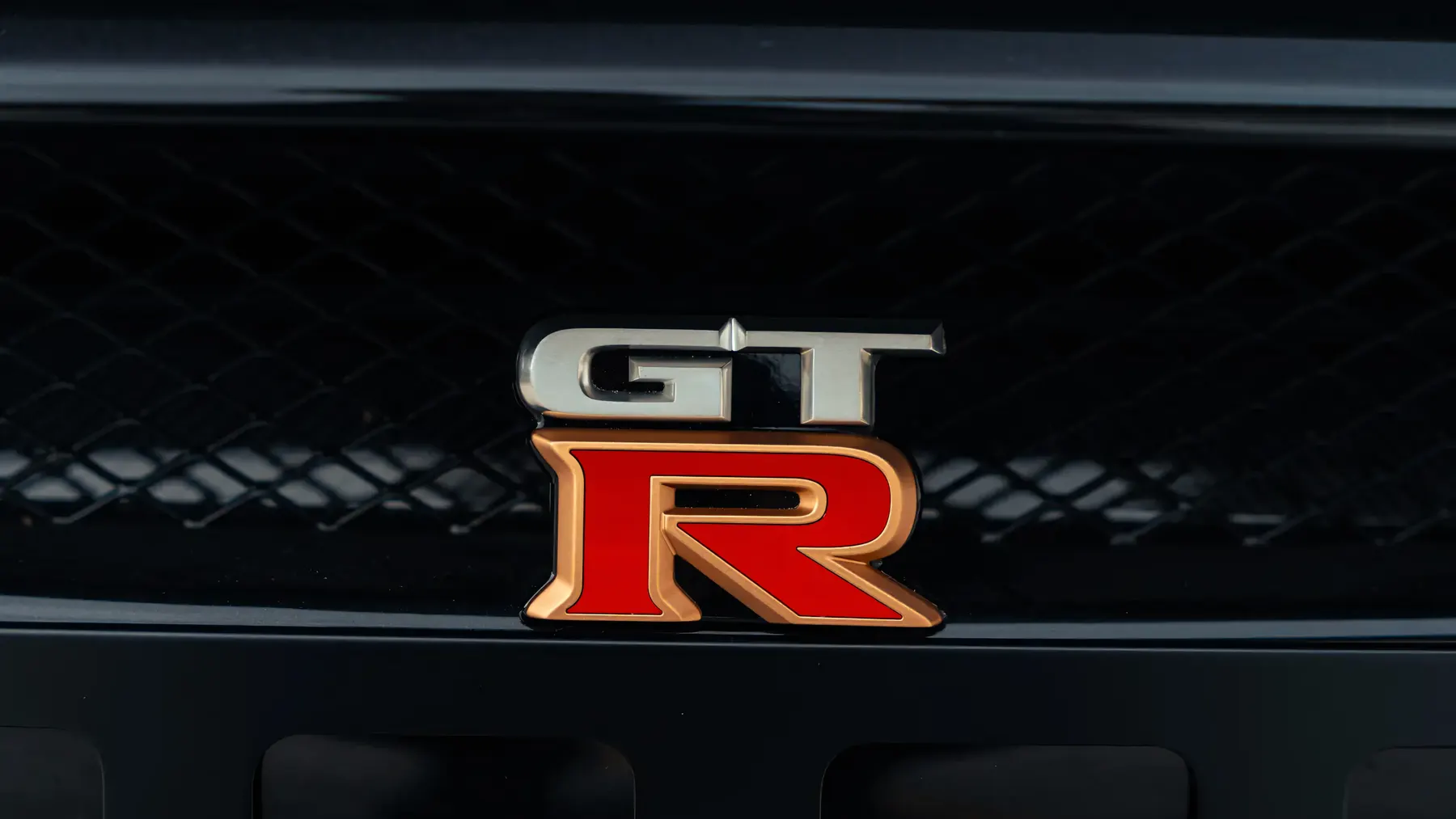
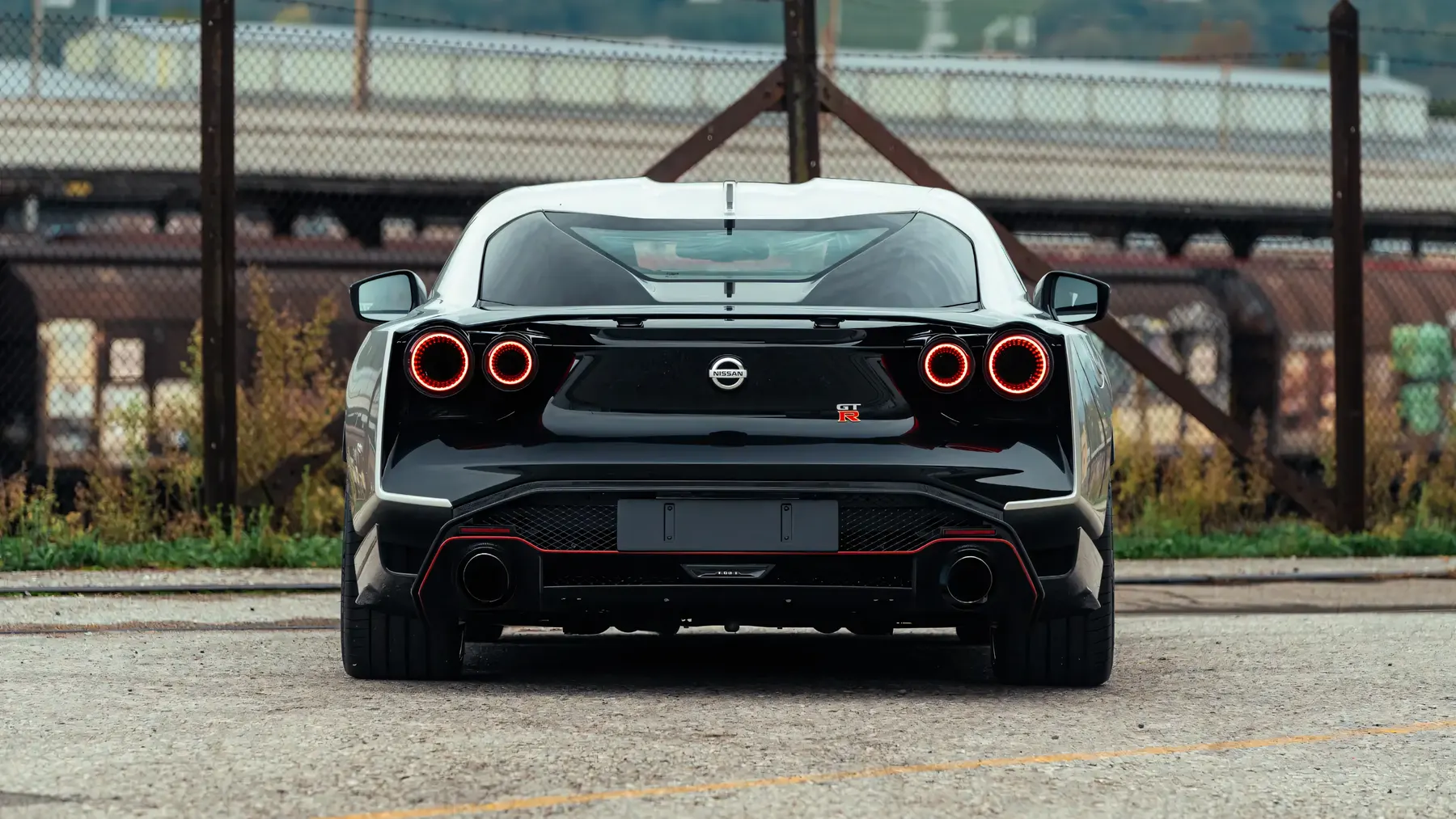
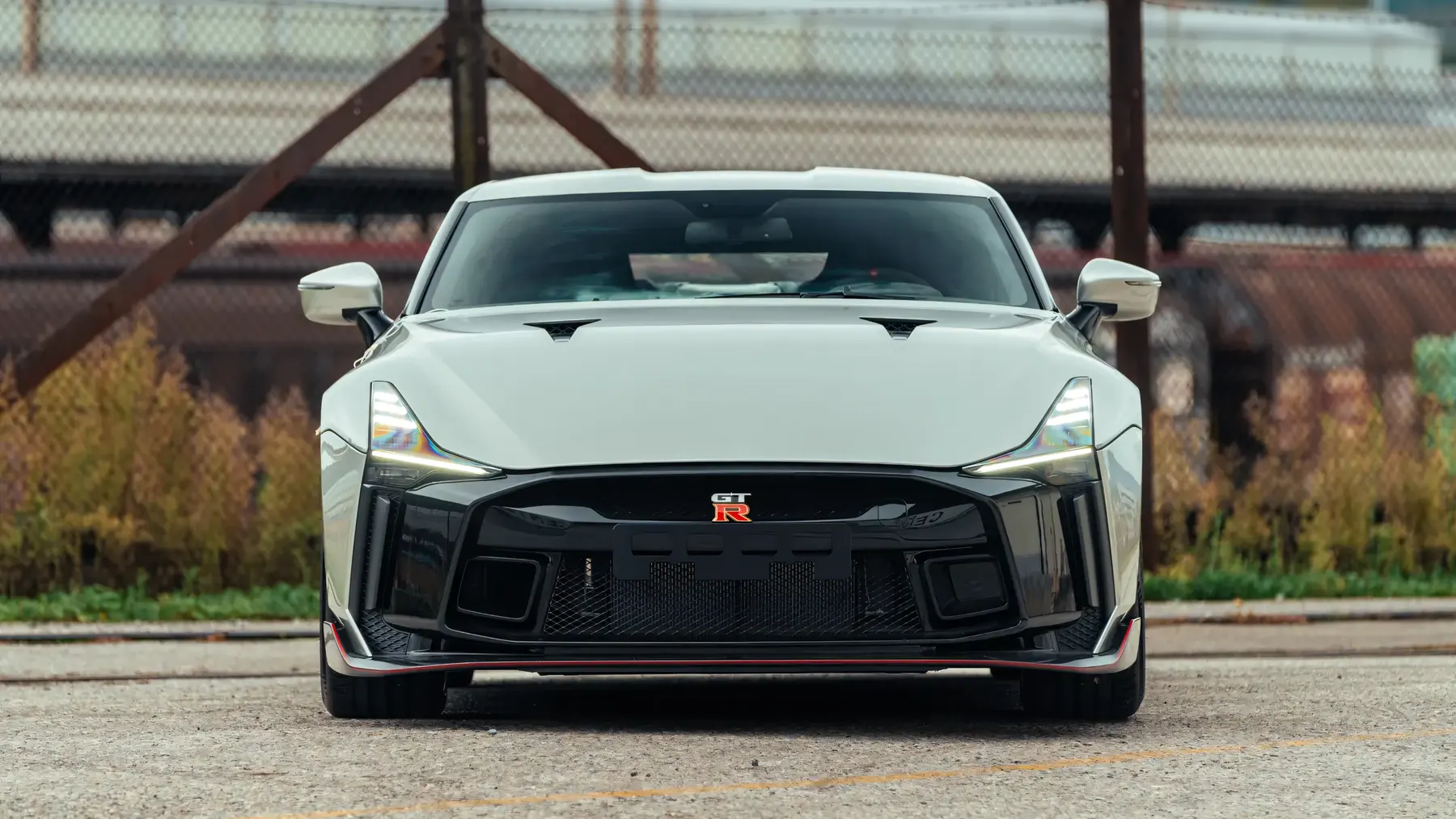
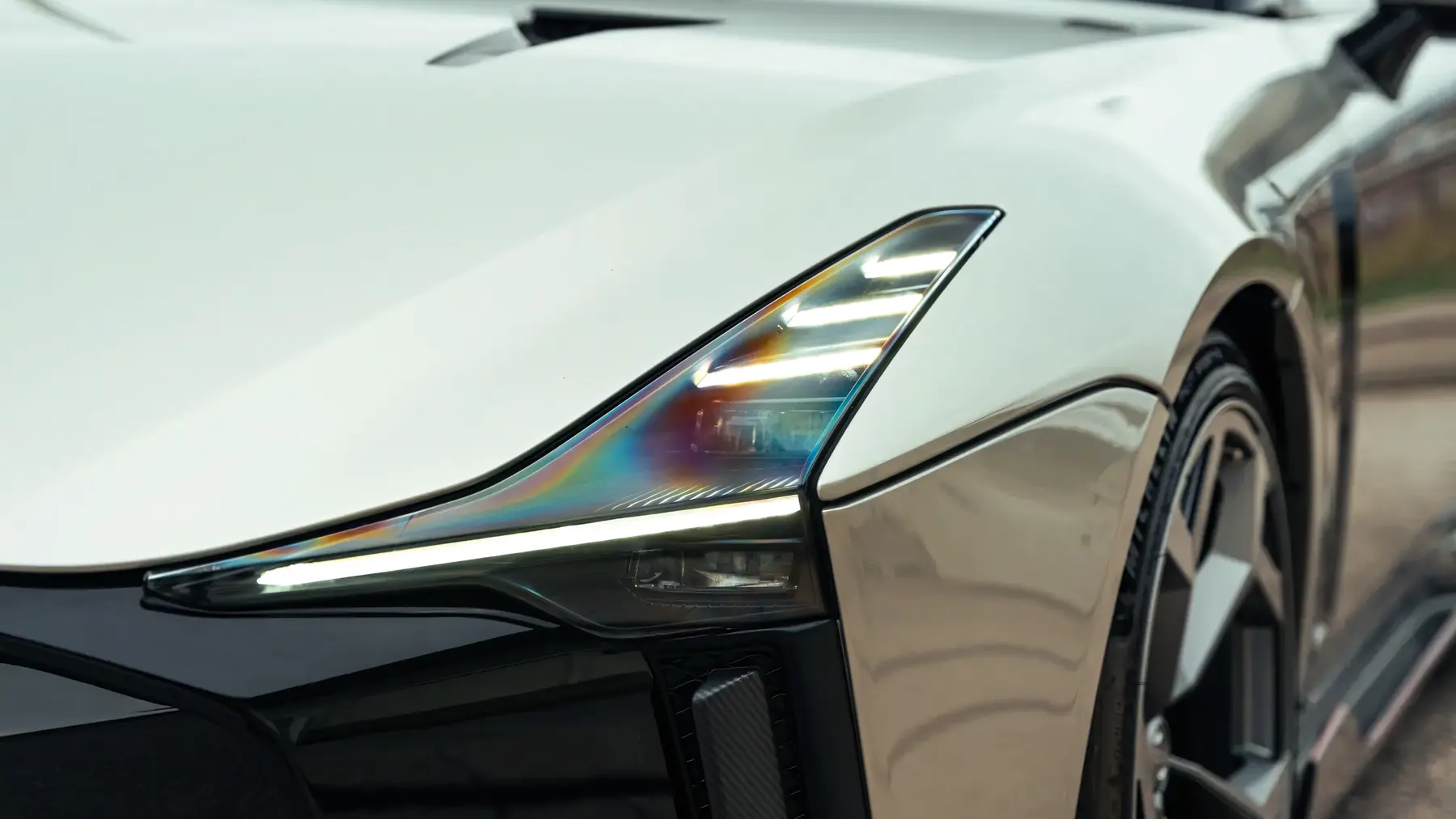
Italdesign didn’t simply restyle a GT-R NISMO donor car; it re-sculpted the whole silhouette. The roofline was lowered by 54mm and reprofiled with a dipped centre section and slightly raised outer edges, a shape that owes more to touring-car aerodynamics than to any road car Nissan has built. The bonnet grew a more pronounced power bulge, thin LED headlight strips stretched from the wheel arch almost to the outer intakes, and the GT-R’s signature “samurai blade” cooling vents behind the front wheels were enlarged and picked out in gold. That gold theme ran throughout - a deliberate nod to Japanese craft traditions - resurfacing around reworked round tail-lights rendered as hollow, “floating” rings rather than the standard car’s solid lenses, mounted beneath a large adjustable rear wing on twin uprights. Custom 21-inch carbon-fibre wheels and a visibly widened track gave the car a stance no regular GT-R, even the hardcore NISMO, could match. Inside, black Alcantara and fine Italian leather trimmed the seats, two different carbon-fibre finishes covered the console and door panels, and gold accents echoed the exterior on switchgear styled closer to a racing car’s than to the standard GT-R’s fairly ordinary cabin.
None of that bodywork was there to disguise a car that couldn’t back it up. NISMO, drawing on its experience developing the GT-R’s GT3 race programme, reworked the hand-assembled 3.8-litre twin-turbocharged VR38DETT V6 with larger, competition-specification turbochargers and intercoolers, a heavy-duty crankshaft, reinforced pistons and connecting rods, high-flow piston oil jets, revised camshaft profiles and higher-flow fuel injectors. Reported outputs vary slightly by source, landing between roughly 710 and 712 bhp, alongside a torque figure of 575 lb-ft that is corroborated far more consistently across manufacturer and press sources. That power reaches all four wheels through a reinforced six-speed dual-clutch transaxle with strengthened driveshafts and differentials. A Bilstein continuously adjustable damping system, uprated Brembo brakes with six-piston front and four-piston rear callipers, and 21-inch wheels wrapped in Michelin Pilot Super Sport tyres - 255-section at the front, 285-section at the rear - round out a mechanical package built to match the visual drama, rather than merely wear it.
The Goodwood car was explicitly a prototype, its production future contingent on how the public and press reacted to it. Reception was evidently strong enough: by December 2018, Nissan had confirmed a run limited to no more than fifty cars, opened an official order book, and set pricing at €990,000 before tax and options - a figure that translated, depending on the exchange rate and the date of the report, into anything from roughly £885,000 in the UK to a little over $1.1 million in the United States. Deliveries were originally pencilled in for 2019 and 2020. They arrived rather later than that. Italdesign’s chief executive, Jörg Astalosch, later explained that the planned Geneva Motor Show unveiling had to be scrapped and production paused during the early stages of the Covid-19 pandemic. The first production example wasn’t shown publicly until May 2020, revealed at Italdesign’s own Tazio Nuvolari test track near Turin, and confirmed customer deliveries didn’t begin until late 2020 and into 2021 - prompting more than one outlet to joke that, by the time it actually existed, the car ought to have been renamed the GT-R51.
Buying one was closer to commissioning a piece of furniture than configuring a car online. Once the order book opened, customers worked directly with Italdesign to choose their own colour combinations, interior trim and, where budgets allowed, race-inspired liveries drawn from the GT-R’s own competition history, rather than picking from a fixed options list. Each car was then hand-assembled at Italdesign’s facility in Moncalieri, on the outskirts of Turin, rather than on Nissan’s regular production line. In the years either side of the production reveal, the GT-R50 also did the rounds of the kind of stages a normal GT-R never sees: it appeared at the New York International Auto Show, toured through Dubai’s Autodrome, sat on display at Nissan Crossing in Tokyo’s Ginza district, and was invited as part of Nissan’s presence at the Rolex Monterey Motorsports Reunion, run alongside genuine competition machinery such as the BRE Datsun 510 and the GTP ZX-Turbo. That itinerary said as much about the car’s intended role as any of its mechanical specification: this was a halo piece meant to be seen at the events wealthy collectors already attend, not a limited-run performance special sold quietly through Nissan’s usual dealer network.
What stands out is that neither company treated the GT-R50 as too precious to actually use. Top Gear was handed cars for genuine road trips rather than static photo calls - threading the original prototype through Manhattan traffic past the Flatiron Building and the World Trade Center memorial, and later taking a production example onto the high banking of Dover International Speedway. Journalists who drove it came away struck less by outright pace, since the underlying GT-R NISMO platform was already a known quantity for brutal, turbocharged, all-wheel-drive acceleration, than by how distinct the experience felt from any ordinary production supercar. One writer for The Drive, sampling an early prototype, called it the best looking Datsun in decades, a considerable compliment given how blunt and unglamorous the standard R35’s styling had always been considered. Top Gear’s own verdict leaned the same way: that the GT-R50 felt closer to old-school coachbuilding than to a typical limited-edition special, a familiar and well-proven mechanical package wrapped in something genuinely bespoke rather than a shrink-wrapped marketing exercise.
That authenticity came with real costs, though, and not just the financial kind. Drivers close to two metres tall found the lowered roofline ate noticeably into headroom, and with it, outward visibility - a genuine ergonomic trade-off traced directly back to the car’s single most dramatic visual feature. The bigger issue was one of positioning. The GT-R’s fifty-year identity had been built on delivering a huge proportion of exotic-car performance without an exotic-car price tag; asking buyers for roughly ten times the cost of a standard GT-R NISMO for a car that remained, beneath the new panels, built on the same R35 architecture already well over a decade old sat awkwardly against that legacy, and contemporary reporting on the car’s pricing made much the same point. The long gap between the 2018 reveal and 2020-2021 customer deliveries compounded the awkwardness: a project timed deliberately to land on the GT-R’s fiftieth anniversary ended up reaching most owners roughly two years after that milestone had passed. Nor did the car sell out in a rush. As late as February 2021, with the production version already revealed and deliveries underway, Italdesign and Nissan were still confirming that build slots remained available - a modest but telling sign that seven-figure pricing on a heavily reworked existing model gave pause even to wealthy GT-R enthusiasts.
None of that erases what the GT-R50 actually achieved. It gave Nissan’s design and engineering teams licence to answer, in metal rather than renderings, the question of what a GT-R could look like with every usual packaging and cost constraint removed. It gave Italdesign - a firm that has quietly shaped more production cars over the decades than almost any studio in history - a rare high-profile stage to show that traditional coachbuilding, built by hand rather than rendered digitally, still had a place alongside the wave of low-volume specials then emerging from Aston Martin, Bentley, and others chasing the same bespoke, ultra-wealthy clientele. Whether it changes how Nissan approaches the GT-R’s eventual successor remains an open question. What it did, immediately, was put a fifty-year-old nameplate built on value back in front of crowds at Goodwood and on Dover’s high banking with a level of visual ambition the regular production car had never been allowed to explore. For fifty owners, the combination of heritage, hand-built exclusivity, and unmistakably GT-R substance underneath was evidently worth the price of admission; for the model line’s wider reputation, the GT-R50 remains a fascinating, slightly uncomfortable footnote - proof that even a car famous for democratising speed can, on request, be turned into precisely the kind of exclusive plaything it was originally built to make redundant.
Technical data
Specifications
| Specification | 2018 Prototype | 2020–2021 Production |
|---|---|---|
| Engine | 3.8-litre twin-turbo V6, VR38DETT, hand-assembled | 3.8-litre twin-turbo V6, VR38DETT, hand-assembled |
| Power | ~710–712 bhp (reported range) | ~710–712 bhp (reported range) |
| Torque | 575 lb-ft | 575 lb-ft |
| Gearbox | 6-speed dual-clutch, reinforced | 6-speed dual-clutch, reinforced |
| Drive | All-wheel drive | All-wheel drive |
| Brakes | Brembo, 6-piston front / 4-piston rear | Brembo, 6-piston front / 4-piston rear |
| Wheels | 21-inch carbon-fibre | 21-inch carbon-fibre |
| Tyres | Michelin Pilot Super Sport, 255-section front / 285-section rear | Michelin Pilot Super Sport, 255-section front / 285-section rear |
| Suspension | Bilstein continuously adjustable dampers | Bilstein continuously adjustable dampers |
| Roofline | Lowered 54mm vs donor GT-R NISMO | Lowered 54mm vs donor GT-R NISMO |
| Base price | Est. €900,000 (pre-production estimate) | Confirmed €990,000 before tax and options |
| Production | One-off show prototype | Limited to 50 units, hand-built in Moncalieri, Italy |
| Debut / delivery | Goodwood Festival of Speed, July 2018 | First production example shown May 2020; deliveries from late 2020 into 2021 |
Sources
- GT-R 50 by Italdesign - Italdesign official project page
- Exclusive Nissan GT-R50 by Italdesign set for world debut at Goodwood - Italdesign
- Nissan GT-R50 by Italdesign debuts at Goodwood Festival of Speed - Nissan Global Newsroom
- Nissan GT-R50 by Italdesign production design confirmed - Nissan USA Newsroom
- Nissan GT-R50 by Italdesign confirmed for production with $1.1M price tag - Motor Authority
- First production example of $1.1M Nissan GT-R50 by Italdesign revealed - Motor Authority
- Nissan GT-R50 By Italdesign Finally Being Delivered To Customers - Motor1
- Production 2021 Nissan GT-R50 By Italdesign Finally Makes Its Debut - Carscoops
- Nissan’s Ultra-Limited GT-R50 by Italdesign Will Officially Launch in 2020 - Hypebeast
- Nissan Unveils First Production Example of GT-R50 by Italdesign - Hypebeast
- https://www.topgear.com/car-news/supercars/nissan-has-built-stunning-711bhp-gt-r-italdesign|Nissan
- This is the production-spec Nissan GT-R50 Italdesign - Top Gear
- The Nissan GT-R 50 by ItalDesign finally actually exists - Top Gear
- Can you road trip the £1million Nissan GT-R50? - Top Gear
- Up close with the Italdesign Nissan GT-R 50 - Top Gear
- Driving the 720-HP Nissan GT-R50 by Italdesign Prototype - The Drive
- Nissan, Italdesign Debut The Million-Dollar GT-R50 - Petrolicious
- GT-R50 - Nissan News USA
Join the discussion
Comments
Loading comments…
Leave a comment
Share a detail, memory, or perspective. Every comment is reviewed before publication.