Aston Martin V12 Vantage Roadster (AM6): Turbo Arrives as the V12 Departs
2023 Aston Martin V12 Vantage Roadster
%3A%20Turbo%20Arrives%20as%20the%20V12%20Departs%20%7C%20Motor%20Archive)
Images: Maximilian Vogl / RM Sotheby's
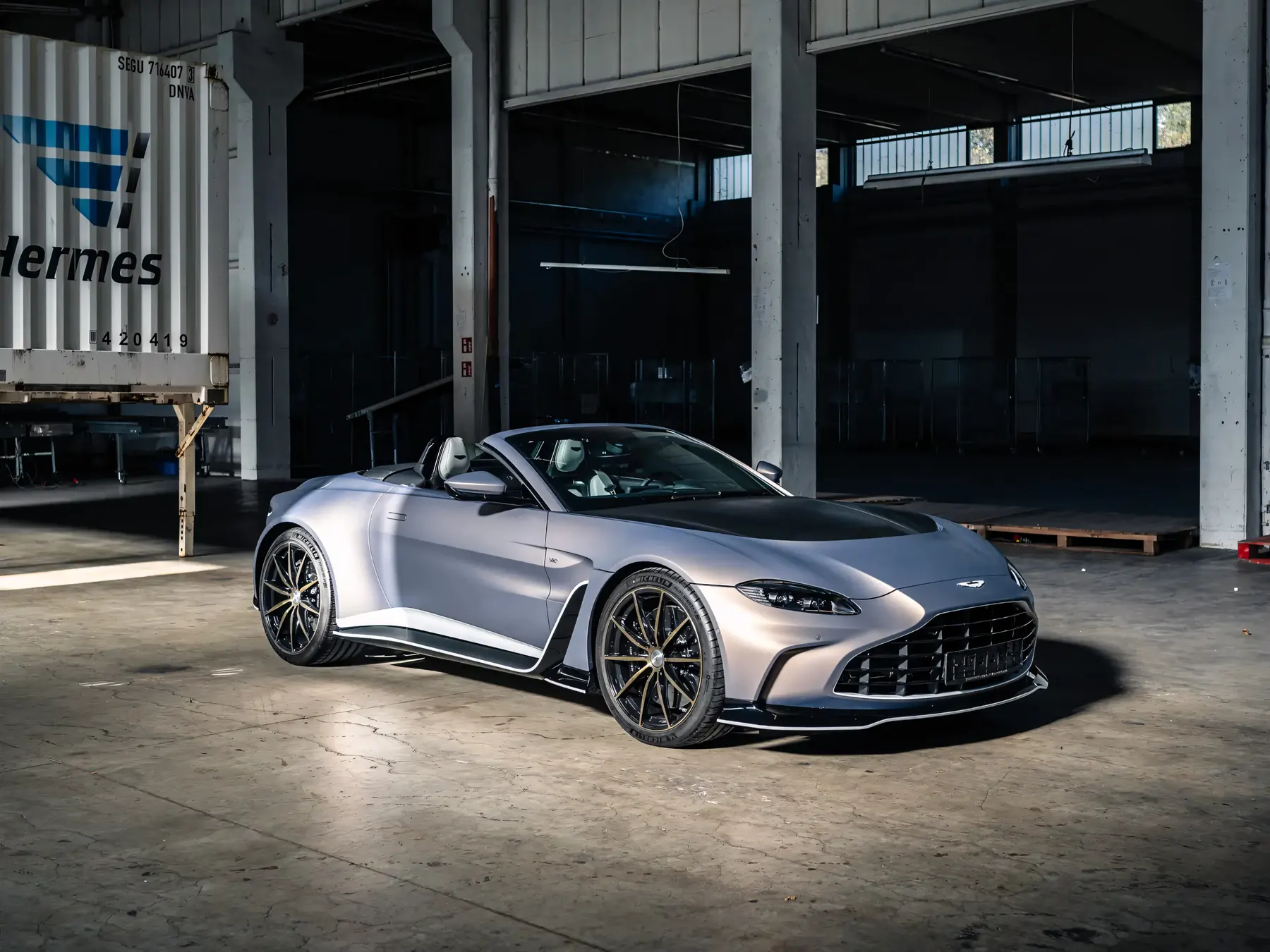
Aston Martin built its reputation on the idea that a great engine’s character matters more than clinical efficiency, and nowhere was that philosophy tested more directly than in the decision to turbocharge the V12 Vantage just as the company prepared to retire the engine altogether. The Roadster version of that car, revealed at the Pebble Beach Concours d’Elegance in August 2022, existed for barely two years, sold out before a single customer had driven one, and represented something that had never happened before in the model’s history: a V12 Vantage convertible built around forced induction rather than a naturally aspirated engine. It was also, by Aston Martin’s own account, the last V12-engined Vantage the company would ever build.
To understand why that mattered, it helps to trace where the idea of a V12 Vantage came from in the first place. Aston’s original small sports car, the the 2005-generation V8 Vantage, was never designed around a twelve-cylinder engine, but a 2007 concept stuffed a 6.0-litre naturally aspirated V12 into the compact body anyway, and the reaction convinced Aston to put it into production. The first V12 Vantage arrived in 2009 with 510bhp and a 190mph top speed, and within two months of going on sale it had already won its class at the Nürburgring 24 Hours. A racing GT3 version followed in 2012 and went on to take four British GT Championship titles over a seven-season career, while the road car evolved through the 565bhp V12 Vantage S of 2013, the 100-unit GT12 track special of 2015, and the manual-gearbox AMR of 2017. A naturally aspirated V12 Vantage Roadster joined the range in 2012, later updated to V12 Vantage S Roadster specification with 565bhp on offer from 2014. By any measure it was one of the most charismatic small sports cars Aston Martin had ever built, and when the underlying VH-era platform was finally retired in 2017 after twelve years and two dozen variants, it left a considerable void.
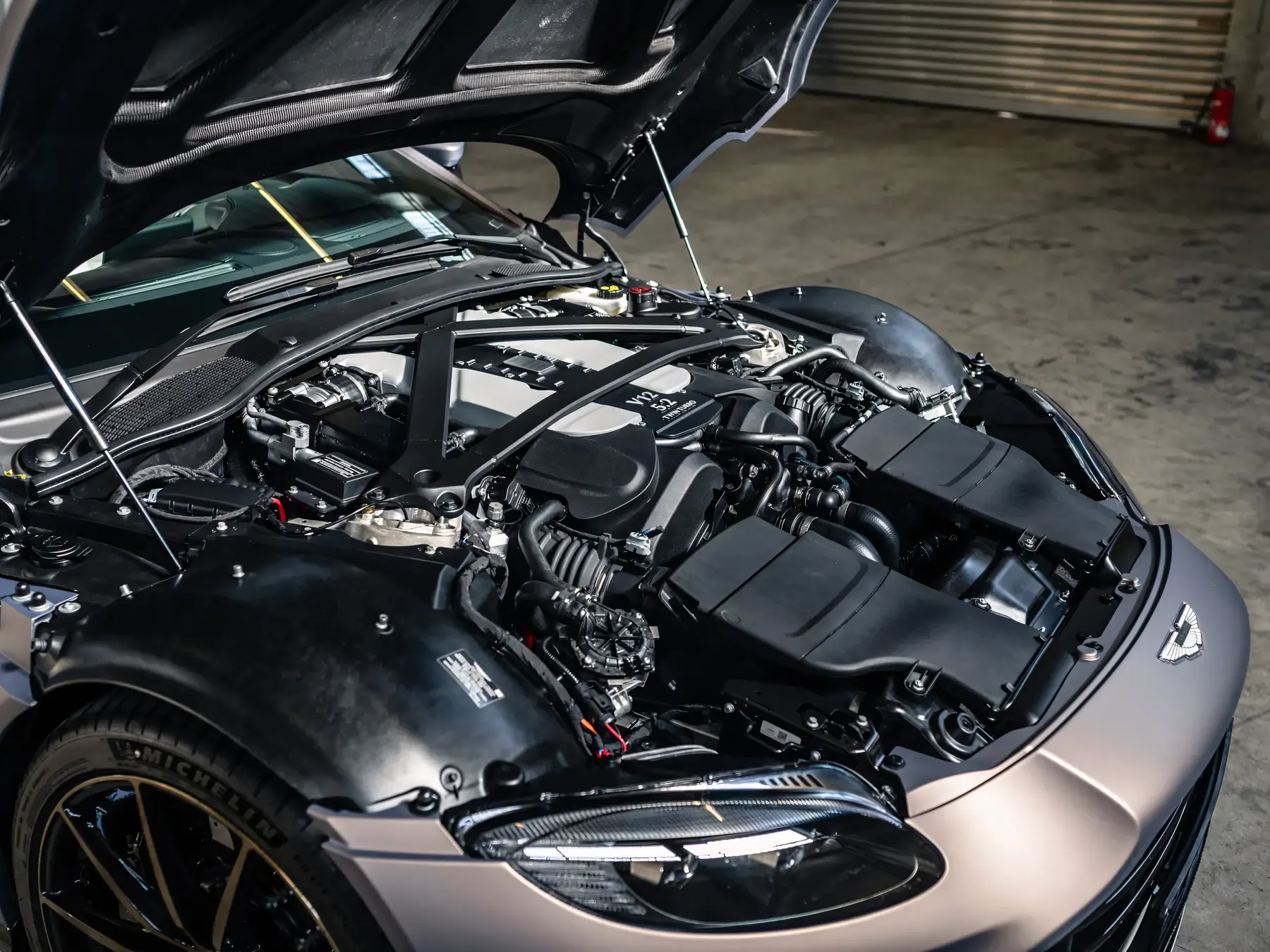
Its replacement, the Vantage that arrived in 2018 and which Aston’s engineers referred to internally as the AM6, shared roughly 30 per cent of its bonded-aluminium platform with the contemporary DB11 while claiming the rest as bespoke. At launch it came only with a Mercedes-AMG-sourced 4.0-litre twin-turbo V8 producing 503bhp, and for four years Aston gave no indication that a V12 version was coming. That changed in December 2021, when the company confirmed a V12 Vantage was in development, and the finished car was unveiled in March 2022 as a 333-unit, sold-out-on-announcement run-out special. It used the AE31, Aston’s own 5.2-litre twin-turbocharged V12, which had already done service in the DB11 and, in a more highly strung 715bhp state of tune, the DBS Superleggera. Shoehorning that engine into the smaller Vantage came with a genuine engineering trade-off: the eight-speed ZF automatic gearbox fitted to the V12 Vantage is the transaxle-mounted unit from the V8 car, not the more robust unit used behind the DBS’s engine, and it could not be asked to handle anything like the DBS’s 664lb-ft. As a result, peak torque in the Vantage application was capped at 555lb-ft, a meaningful step down from what the same basic engine produces elsewhere in Aston’s range, even as peak power held at 690bhp.
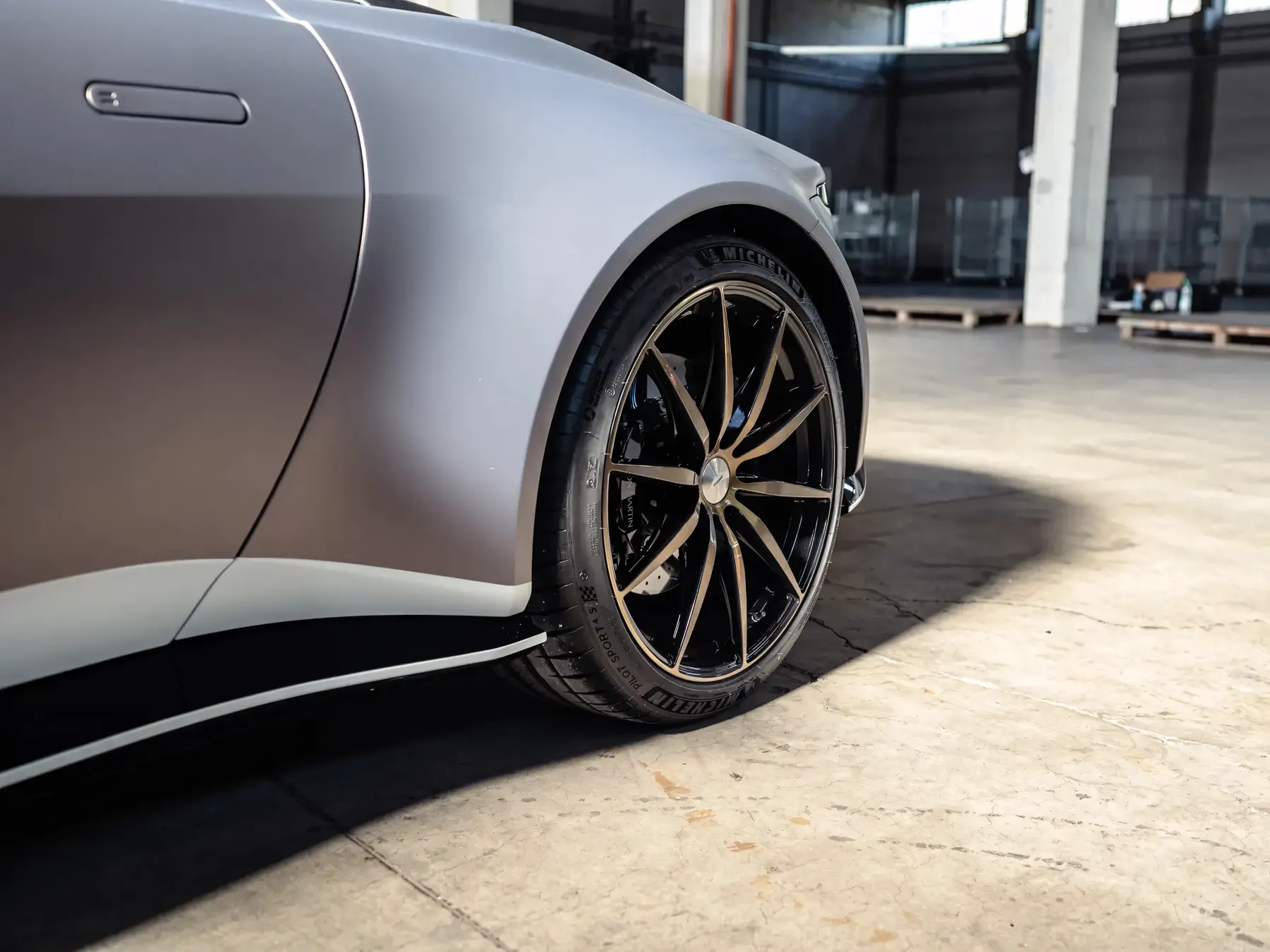
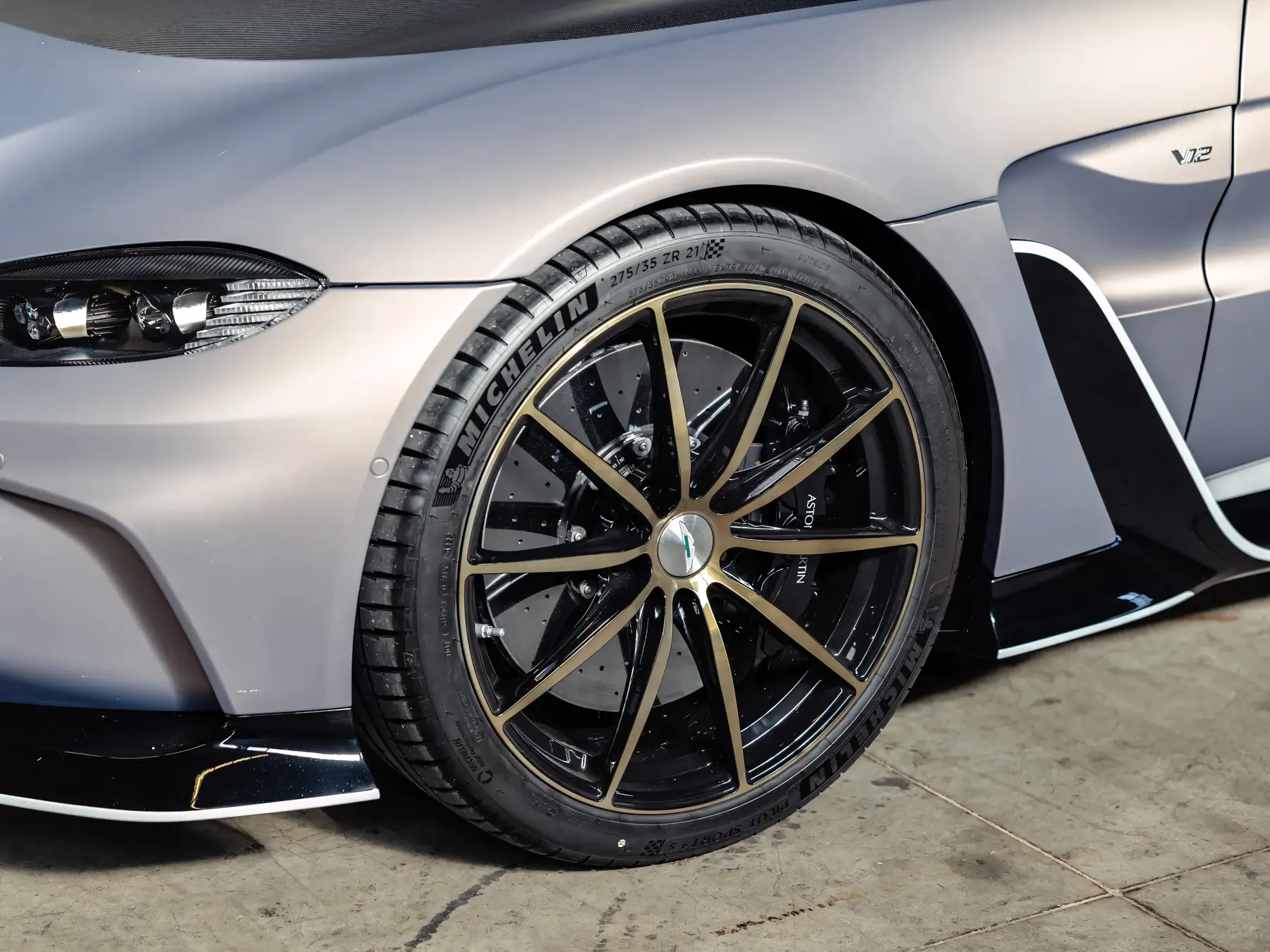
Wrapping that powertrain into the Vantage’s comparatively tight dimensions required more than a straightforward engine swap. The car gained a 40mm wider track, front and rear shear panels and a rear strut brace to stiffen the structure, springs and anti-roll bars uprated by as much as 50 per cent at the rear, and new adaptive dampers tuned specifically for the V12 car across Sport, Sport+ and Track settings. Carbon-ceramic brakes became standard fitment - 410mm discs with six-piston calipers at the front, 360mm discs with four-piston calipers at the rear - trimming around 23kg of unsprung weight compared with steel discs and engineered to resist fade up to 800°C. Aston’s weight-saving efforts extended to a bespoke stainless-steel exhaust some 7.2kg lighter than the standard car’s, an optional carbon-fibre bucket seat that cut a further 7.3kg, and extensive use of carbon-fibre body panels for the bonnet, front bumper, fenders and sills. Twenty-one-inch alloy wheels were standard, wearing wide Michelin Pilot Sport 4S tyres - 275-section at the front and a substantial 315-section at the rear - with a lighter forged wheel option shaving a further 8kg of unsprung mass. The result, in coupé form, was a claimed kerb weight of 1,795kg, a 0–62mph time of 3.5 seconds and a top speed of exactly 200mph, with an optional rear wing helping generate around 204kg of downforce at that speed; Aston’s own later Roadster literature quoted a slightly higher 216kg figure for its own optional wing set-up, a discrepancy period sources never fully reconciled and which likely comes down to differing test conditions or body-specific aero tuning rather than any single definitive number.
The Roadster followed the coupé to market five months later, and it filled a gap that had existed since the previous, naturally aspirated open-top V12 Vantage went out of production in 2018. Limited to 249 examples against the coupé’s 333, it carried over the coupé’s wider track, structural bracing, carbon-ceramic brakes and 690bhp/555lb-ft powertrain essentially unchanged, with production beginning in the autumn of 2022 and first deliveries following before the year was out. Styling differences were deliberately understated: the standard car deleted the coupé’s rear wing (with the option to specify it back), while a restyled front end carried around 25 per cent more grille area than the V8-powered Vantage to help feed the bigger engine. Aston claimed the car still produced meaningful downforce even without the wing, describing figures in the region of ten times that of a standard-issue Vantage Roadster. A fabric roof, rather than a folding hard-top, kept weight in check and could be raised or lowered in around 6.7 seconds, while the boot shrank to a modest 200 litres - usable for a weekend bag or two, but a clear reminder of the packaging compromises that come with a folding roof mechanism sitting where a rear seat or larger boot might otherwise go. Aston never published an official kerb weight for the Roadster, but independent estimates put it in the region of 60kg heavier than the coupé, which would be consistent with the extra structure typically needed to compensate for the loss of a fixed roof.
On the road, the Roadster’s case for itself starts with sheer theatre. A 690bhp, rear-driven, roofless V12 is a rare thing in any era, let alone one increasingly dominated by hybrid assistance and downsized turbo engines, and even with its torque capped relative to its DBS-engined cousin, the Vantage still has more than enough shove to feel genuinely alarming in the mid-range. The structural work done to compensate for the missing roof pays off in a car that, by convertible standards, resists scuttle shake and body flex impressively well, and the carbon-ceramic brakes and sharpened steering rack give it real precision when pushed hard on a good road or track.
It is also, by most contemporary press accounts, a demonstrably flawed car to actually live with, and those flaws are worth naming rather than waving away as part of its character. Independent road testers who drove the coupé - mechanically identical to the Roadster in its powertrain, chassis hardware and damper tuning - were consistently critical of the ride, describing it as unyielding in all three of its drive modes rather than merely firm in the sportiest setting, with one prominent British title noting that it never felt calm or comfortable regardless of which mode was selected. That stiffness translated into pronounced tyre roar on typical give-and-take roads, and into steering that felt heavier and less delicate than buyers had come to expect from Aston Martin’s more recent cars. The eight-speed automatic gearbox, adapted rather than purpose-built for this application, was repeatedly described as slower to respond than the dual-clutch transmissions offered by direct rivals from Porsche, Ferrari and Lamborghini. Even the exhaust note, arguably the single most important ingredient in any send-off V12, drew criticism for sounding comparatively muted and unremarkable in a car explicitly positioned as the emotional full stop on a fifteen-year engine story. The optional carbon-fibre seats, while genuinely lighter, were found to be poorly suited to anything beyond short journeys and awkward to climb in and out of, undermining one of the car’s own headline weight-saving measures. Fuel economy and emissions were predictably poor for what remained, on paper, a usable road car - contemporary testing returned real-world economy in the mid-teens for miles per gallon, with official CO2 output in the region of 315g/km - and the car’s ambiguous positioning drew perhaps the sharpest criticism of all: too firm and too vocal to work as a relaxed grand tourer, yet not focused or communicative enough at the limit to be taken entirely seriously as a track-honed sports car either. For a flagship model built to send off Aston’s V12 in style, landing between those two stools mattered; buyers spending flagship money were arguably owed a car that nailed one brief decisively rather than compromised on both.
None of which stopped either body style selling out immediately, at prices reported in period at around £260,000 to £285,000 for the coupé and believed to be in the region of £300,000 for the Roadster - territory that put it in loose competition with cars like the Ferrari 812 Superfast at one extreme and a Porsche 911 GT3 at the other, despite sharing relatively little dynamic DNA with either. That instant sell-out says less about the car’s all-round polish than about the strength of Aston’s collector base and the enduring appeal of a naturally characterful, unashamedly excessive V12 in an era when most rivals were moving toward electrification or downsizing. Aston’s own Q by Aston Martin personalisation division offered buyers an essentially open colour and trim palette on top of the standard specification, reinforcing the sense that this was as much a bespoke, semi-collectible commission as a conventional catalogue order, with sill plaques on each car noting its place within the 249-strong production run. Even reviewers who found real fault with how the car rode and sounded tended to conclude that they would still miss it once it was gone, framing it less as a car built to be judged on conventional merit and more as a deliberate, knowing piece of theatre for buyers who understood exactly what they were getting.
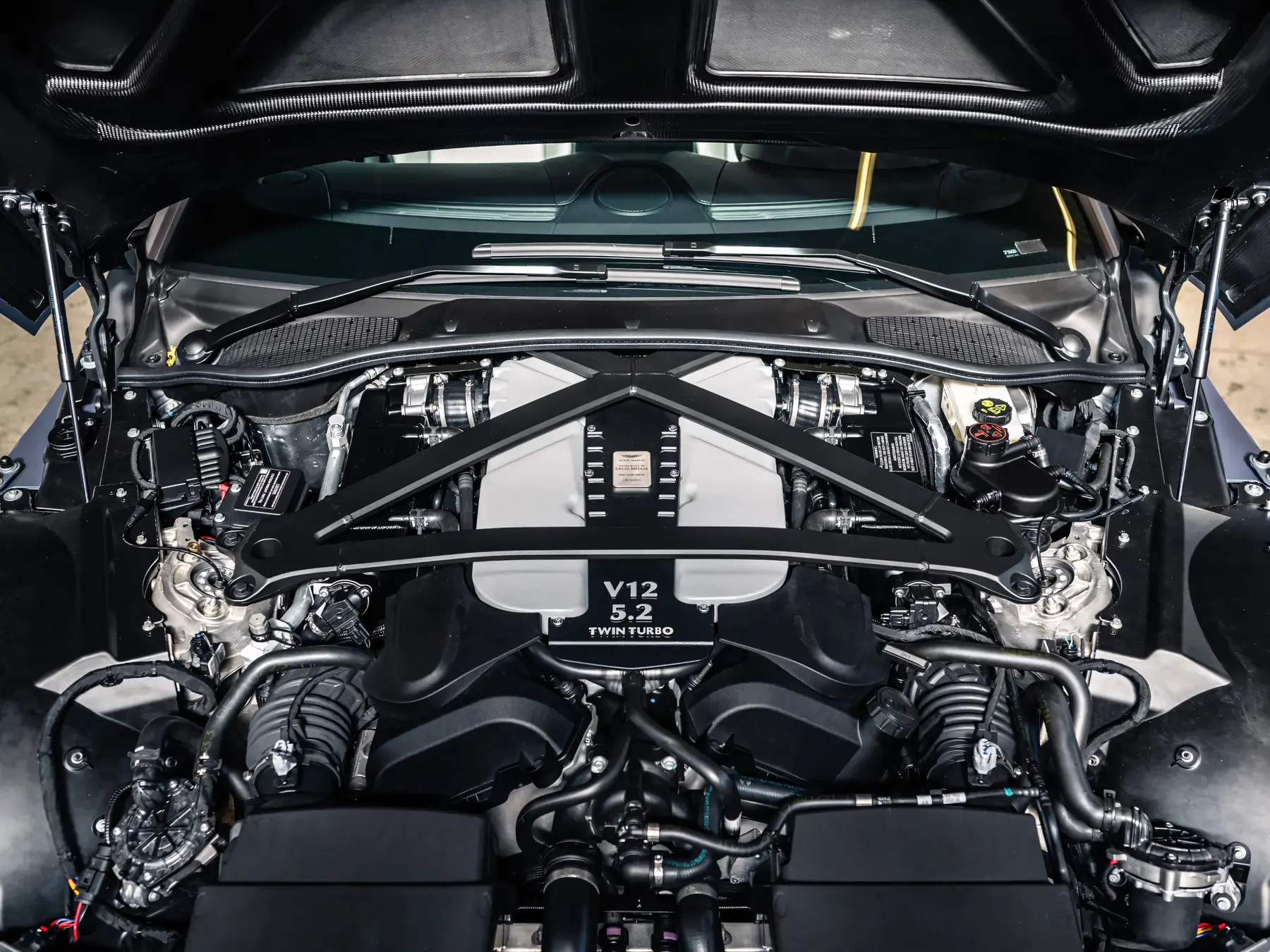
That theatrical quality is really the point of the V12 Vantage Roadster’s place in Aston Martin’s story. It closes a loop that opened with a 2007 concept nobody had asked for: fifteen years of naturally aspirated V12 Vantage drama, distilled at the very end into a single, deliberately compromised, turbocharged convertible built in numbers small enough to guarantee its status as a curiosity rather than a common sight. Aston’s subsequent Vantage generations have gone back to enhanced V8 power exclusively, making this both the only turbocharged V12 Vantage Roadster ever built and, for now at least, the last V12-engined Vantage of any kind - a genuinely unusual position for a single model to occupy, and one that gives the car a significance well beyond its flawed but memorable driving experience.
Sources
- Aston Martin - V12 Roadster official model page
- Auto Express - New Aston Martin V12 Vantage 2022 review
- evo - Aston Martin V12 Vantage (2022–2023) review
- Top Gear - Aston Martin V12 Vantage review
- Autocar - Aston Martin V12 Vantage Roadster is hardcore 690bhp drop-top
- Wikipedia - Aston Martin Vantage (2018/AM6)
- Aston Martin Heritage Trust - Aston Martin Vantage (AM6, 2018) Cutaway
- Prestige & Performance Car - Aston Martin Vantage (AM6) model guide
- Aston Martins.com - VH Architecture
- Stratstone - Aston Martin introduces the Vantage V12 Roadster
- Wikipedia - Aston Martin DBS Superleggera
- Aston Martins.com - DBS Superleggera Coupe
Join the discussion
Comments
Loading comments…
Leave a comment
Share a detail, memory, or perspective. Every comment is reviewed before publication.