The Sunbeam Tiger "Monster": Built From a Wrecked Le Mans Racer
1964 Sunbeam Tiger "Monster" Racecar

Images: Theodore W. Pieper / RM Sotheby's
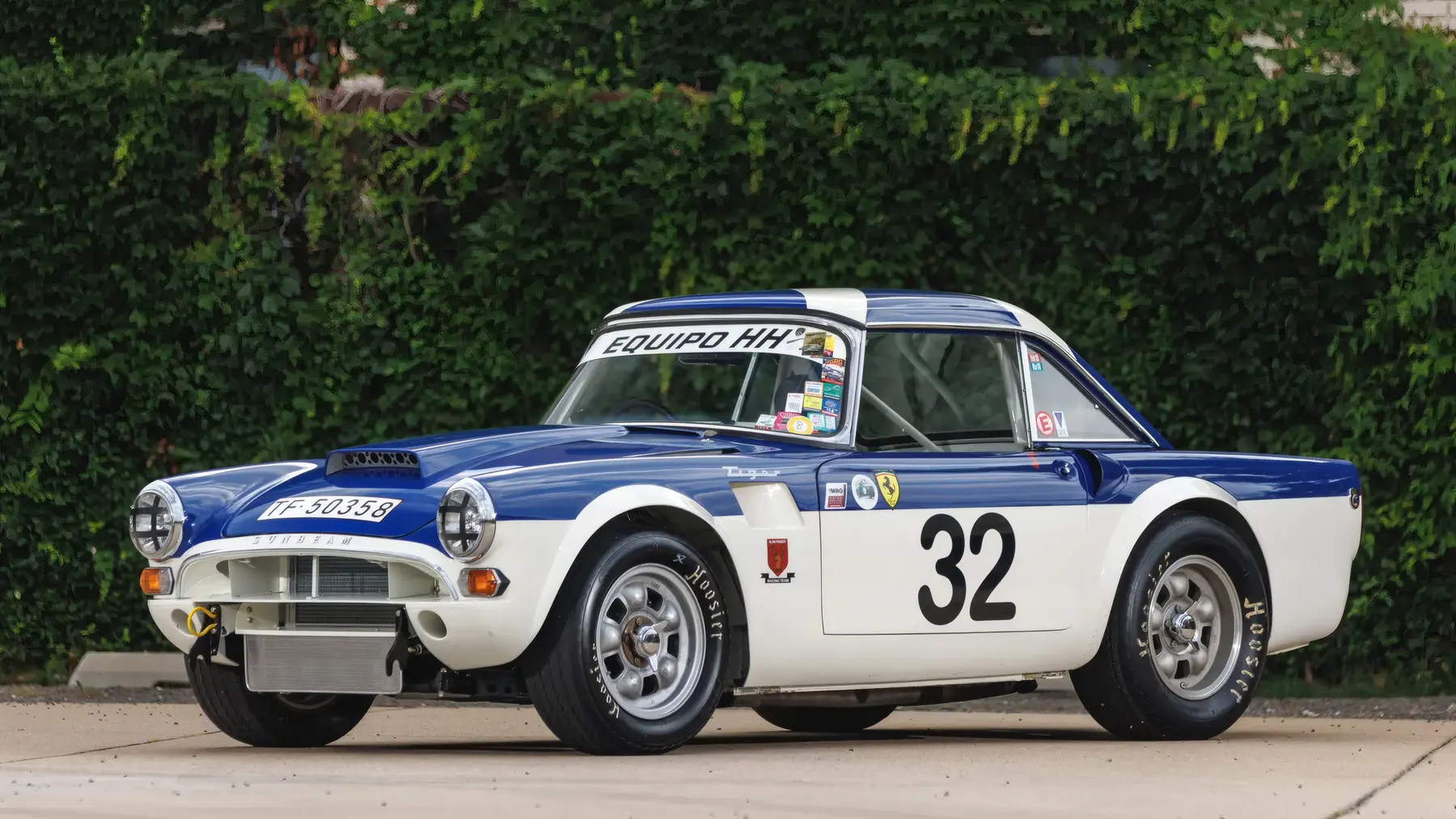
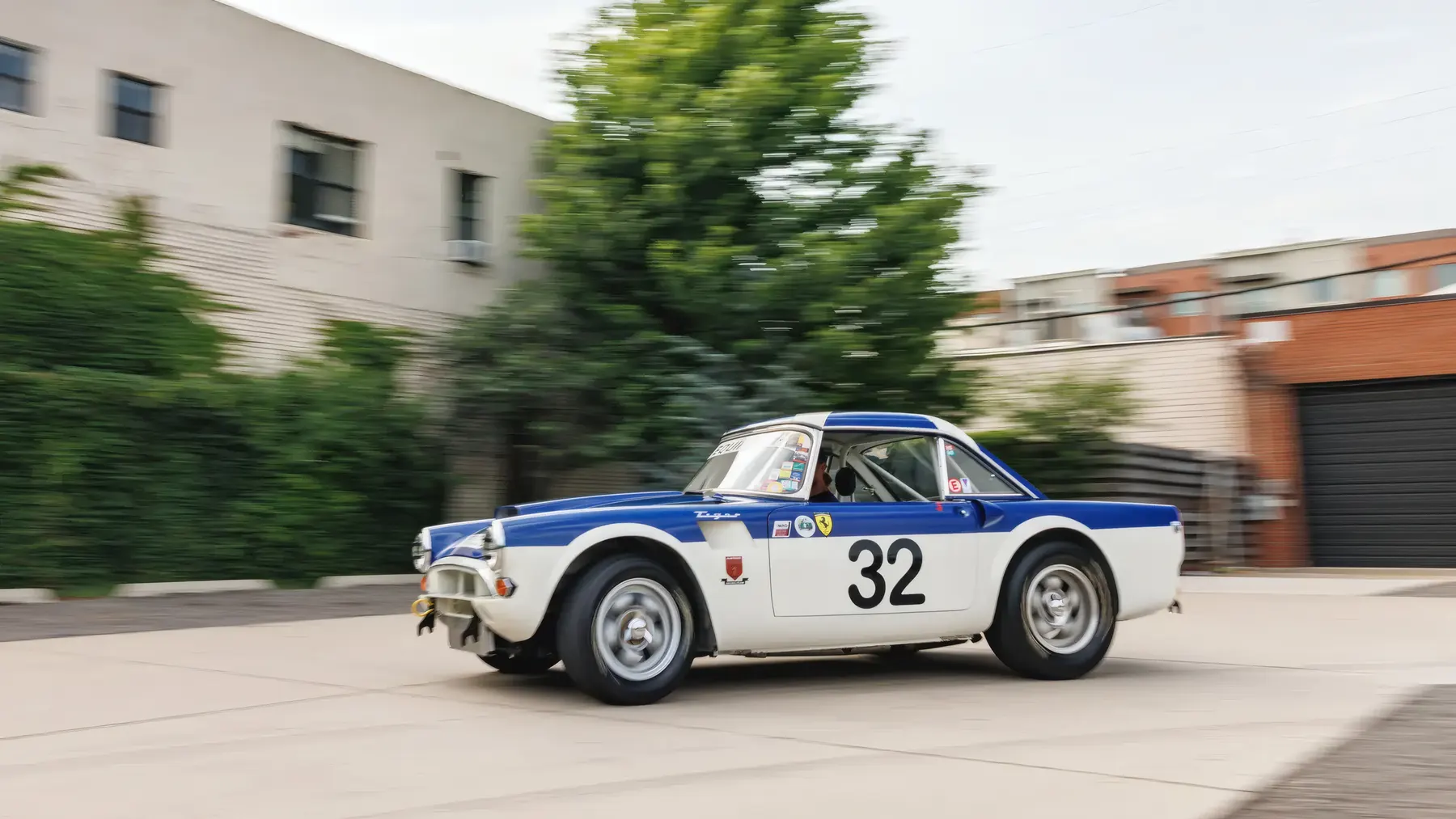
Few racing specials owe their existence quite so literally to cannibalism as the Sunbeam Tiger known across British club-racing paddocks as the Monster. Built for the 1966 season by the Kent-based Alan Fraser Racing team, it was not so much constructed as assembled - its aluminium doors, bonnet and boot lid, along with its rear suspension, stripped straight off a genuine works Le Mans competition car and grafted onto a standard production shell. That kind of resourceful, slightly ruthless recycling was normal practice in 1960s British privateer racing, but it also captures something essential about the Tiger nameplate itself: a car that existed, from its very first prototype, as an exercise in stuffing more engine than the chassis was ever really meant to hold.
The Sunbeam Tiger began life as a solution to a problem Rootes Group couldn’t otherwise afford to fix. Its Sunbeam Alpine roadster, launched in 1959, needed more performance to compete in export markets, particularly America, but Rootes had neither a suitable big-capacity engine of its own nor the money to develop one; an approach to Ferrari about redesigning the Alpine’s four-cylinder came to nothing. The idea that eventually stuck came from Formula 1 champion Jack Brabham, who suggested dropping a Ford V8 into the Alpine’s engine bay. Ian Garrad, Rootes’ West Coast sales manager in America, took the idea to his neighbour Carroll Shelby, fresh from doing precisely the same trick to the AC Cobra. Ken Miles built a rough running prototype from a spare Alpine, a Ford V8 and a shoestring budget in about a week, proving the concept was possible; Shelby then built a more polished version, provisionally called the Thunderbolt, which so impressed Lord Rootes on a test drive that he rang Henry Ford II directly to secure engine supply. The car, renamed Tiger after Sunbeam’s own 1920s land-speed-record machine, reached production in June 1964, built not by Shelby’s American operation as he’d hoped, but by Jensen at West Bromwich, with Shelby paid a royalty on every car instead.
Squeezing the Ford V8 into a bay designed around the Alpine’s four-cylinder was tighter than anyone anticipated. Shelby himself likened the fit to shoehorning, and Jensen’s production line reportedly had to use a sledgehammer to persuade part of an already-painted bulkhead out of the way so the engine could be slid home. The compromises that resulted stayed with every Tiger built. The left bank of spark plugs could only be reached through a hole cut in the firewall and normally plugged with a rubber bung; the oil filter had to be relocated up behind the alternator because there was no room left for it in its usual spot; the spare wheel, which fouled the new Panhard rod fitted to better locate the live rear axle, was turned on its side and hidden beneath a false boot floor. None of this made the Tiger unreliable exactly, but it made it a car designed around an engine it was never meant to carry - the kind of packaging compromise a Cobra, engineered from the ground up around its V8, never had to deal with. Yet the engineering wasn’t purely compromise: despite carrying nearly twice the horsepower of the four-cylinder Alpine it was based on, the Tiger gained only around 20 percent in kerb weight, and Rootes’ engineers kept the front-to-rear weight distribution close to the Alpine’s own, at roughly 52/48. Contemporary road testers were largely won over by the result, one well-known British motoring magazine concluding in 1965 that few pairings of American V8 and British chassis had ever worked as well together.
In its original Mark I form the Tiger’s 260-cubic-inch (4.3-litre) Ford V8 produced a modest 164 bhp, enough for a 0–60 mph time of around 8.6 seconds and a top speed of roughly 120 mph - brisk for a mid-1960s British roadster, but hardly the outright monster its later racing namesake would suggest. Dealers offered tuning kits pushing output to around 245 bhp, and contemporary testers noted that above 60 mph the extra pace became genuinely noticeable - and genuinely troublesome, since the standard suspension and cross-ply tyres had been tuned around the stock engine and struggled to cope with the added performance. The Mark II, built only in the Tiger’s final year and fitted with the larger 289-cubic-inch (4.7-litre) engine, sharpened the 0–60 time to around 7.5 seconds and top speed to about 122 mph, but only 633 were made, sold almost exclusively in America bar a handful of right-hand-drive cars supplied to the Metropolitan Police for pursuit work. Across both versions, Rootes and Jensen built a little over 7,000 Tigers between 1964 and 1967 - respectable for a low-volume specialist roadster, but nowhere near Rootes’ original hope of selling 3,000 a year.
Racing was part of the Tiger’s story from early on, and not always a flattering part. For the 1964 24 Hours of Le Mans, Rootes’ competition department commissioned three purpose-built racing Tigers, fitted with elegant but structurally conventional steel-monocoque fastback coupe bodies built by Lister - the same firm behind the Lister-Jaguar sports racers. Two of the three cars were entered in the race itself. At just over 1,180 kg they were only around 30 kg heavier than a road-going Tiger, but still nearly 270 kg heavier than the winning Ferrari that year. One ran as high as 18th place and was clocked at over 160 mph on the Mulsanne Straight, evidence the package had real pace. But the engines, prepared in a hurry by Shelby’s operation, had not been properly developed: one car suffered a piston failure after three hours, the other a broken crankshaft, and neither finished. Shelby later refunded Rootes the development costs - a rare and pointed admission that the works effort simply hadn’t been ready in time. All three Le Mans cars survived the experience, and one of them, registered ADU 180B and driven at the race by Peter Proctor and Jimmy Blumer, would go on to have a second life that led directly to the Monster.
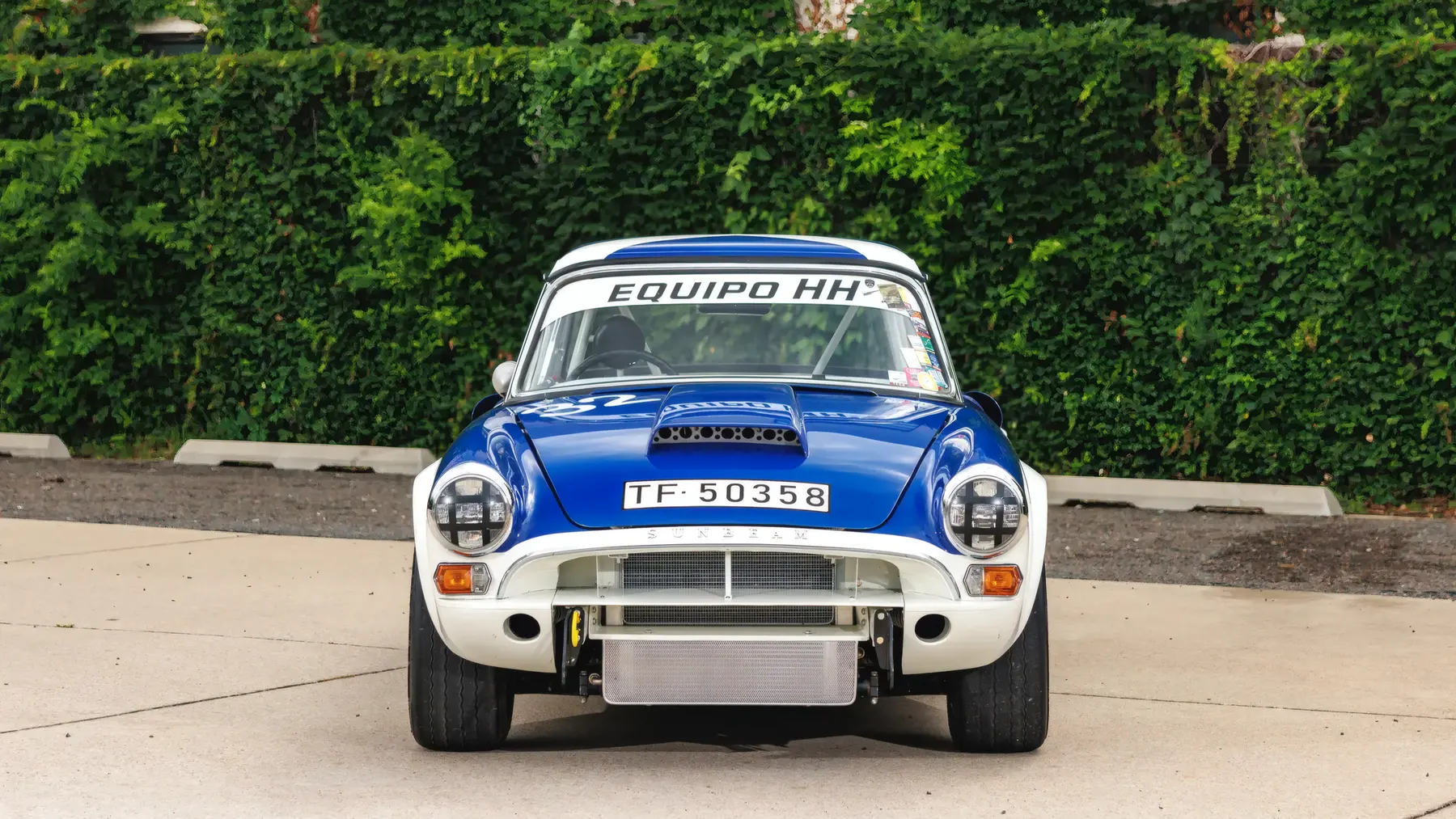
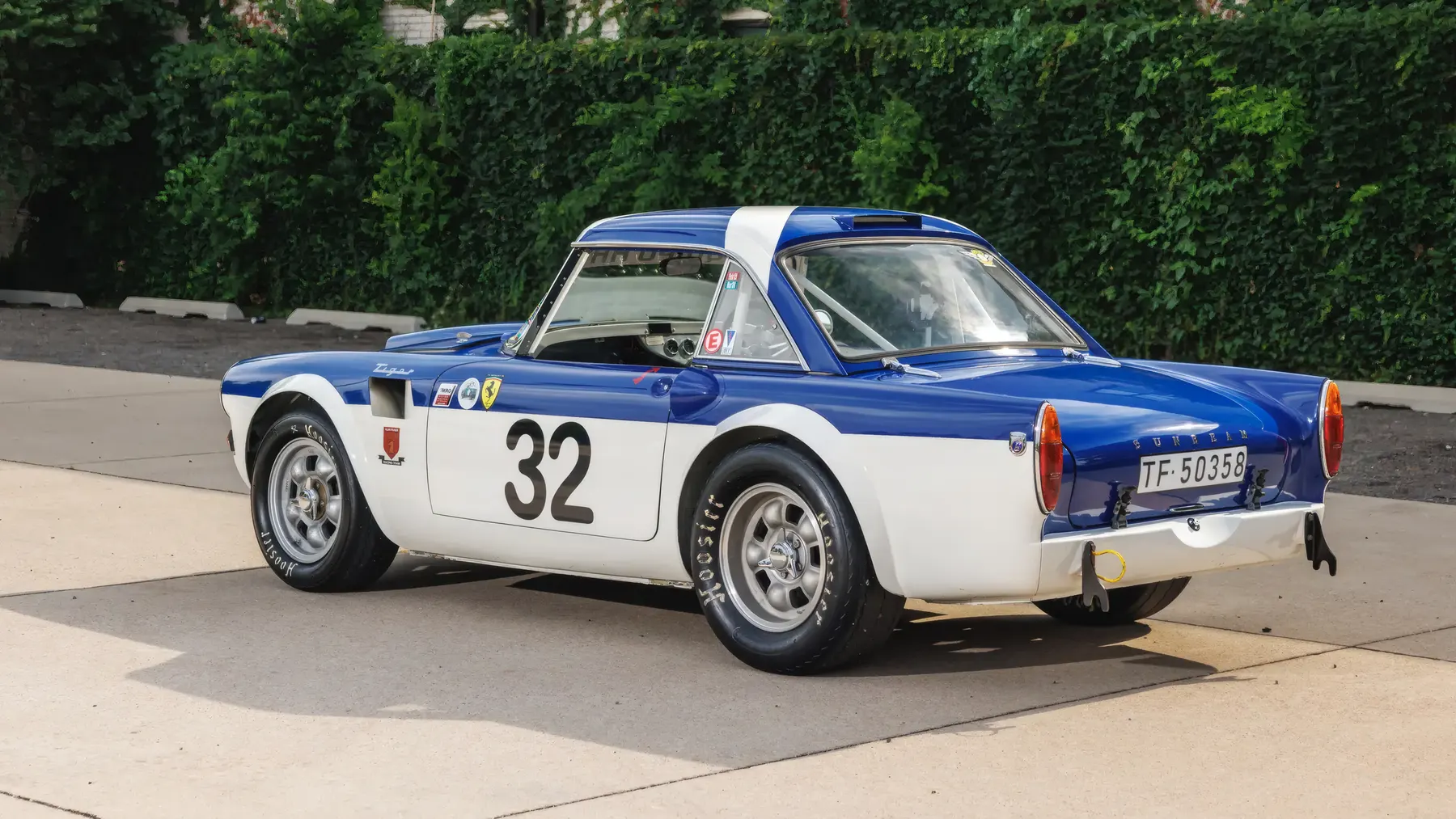
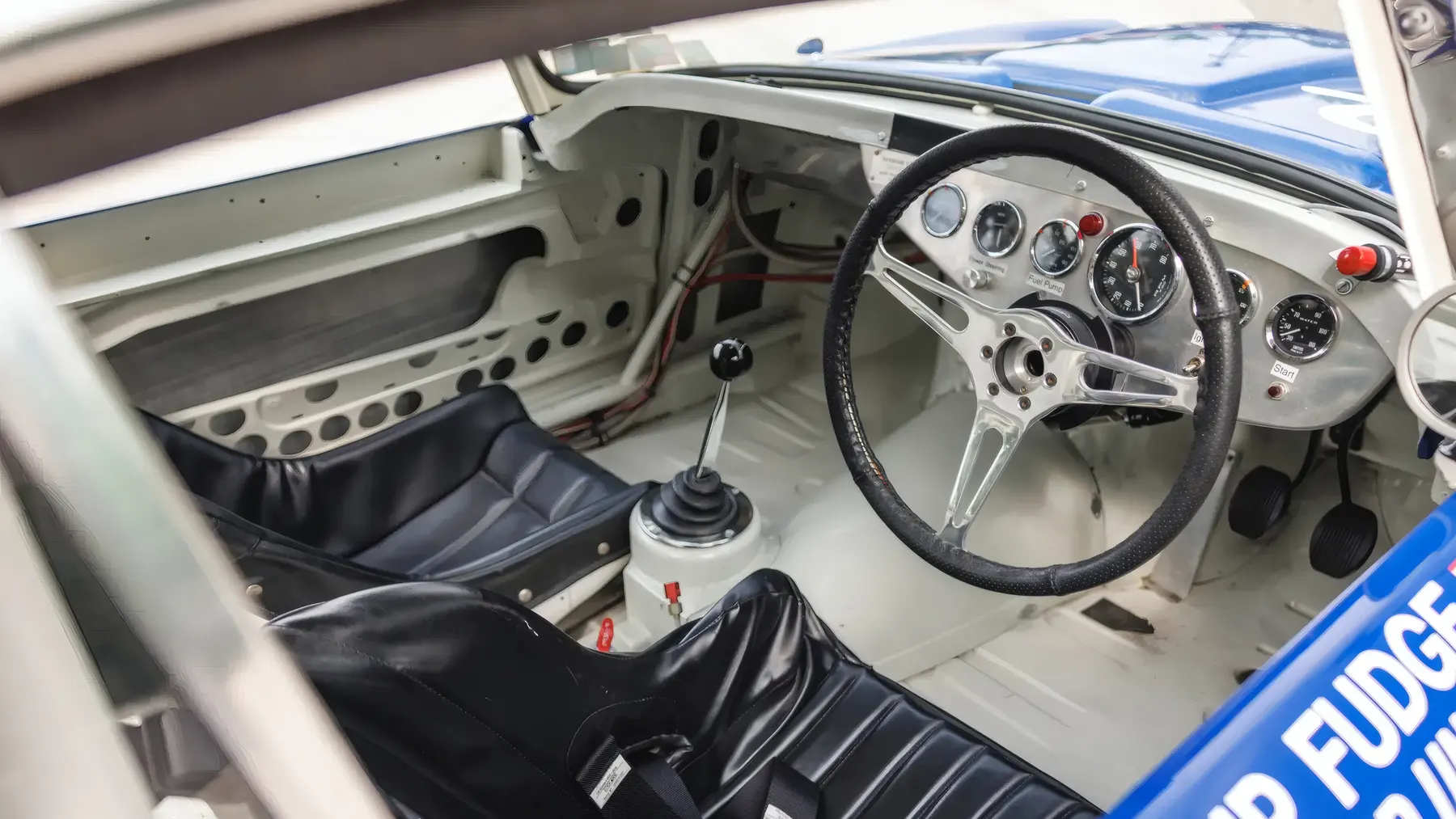
After Le Mans, ADU 180B passed into the hands of Bernard Unett, a Rootes development engineer and factory test driver, who campaigned it through the 1965 Autosport Trophy series with real success - by most accounts winning around 11 of the roughly 20 races he entered, with the car reportedly uprated along the way to a 289-cubic-inch engine on four twin-choke Weber carburettors. Unett continued to race the Lister coupe into the early part of 1966, before Alan Fraser, who by then held the Rootes-backed contract to run the marque’s club-racing programme for the season, proposed building Unett a fresh car rather than continuing to campaign the increasingly worn Le Mans veteran. Rather than start from nothing, Fraser’s team stripped the Lister coupe of its lightweight aluminium doors, bonnet and boot lid, along with its rear suspension, and transplanted them onto a standard 1965 Tiger shell. Dunlop magnesium wheels went on behind newly flared wings, the front bumper was deleted in favour of an exposed oil cooler, and an aluminium hardtop was commissioned to finish the car off. What emerged, powered by a highly strung small-block Ford V8 on Weber carburettors - sources disagree on whether it initially displaced 260 or 289 cubic inches, itself a reflection of how loosely documented a one-off privateer special from this era tends to be - was ferociously fast by the standards of British club racing, and quickly earned its nickname.
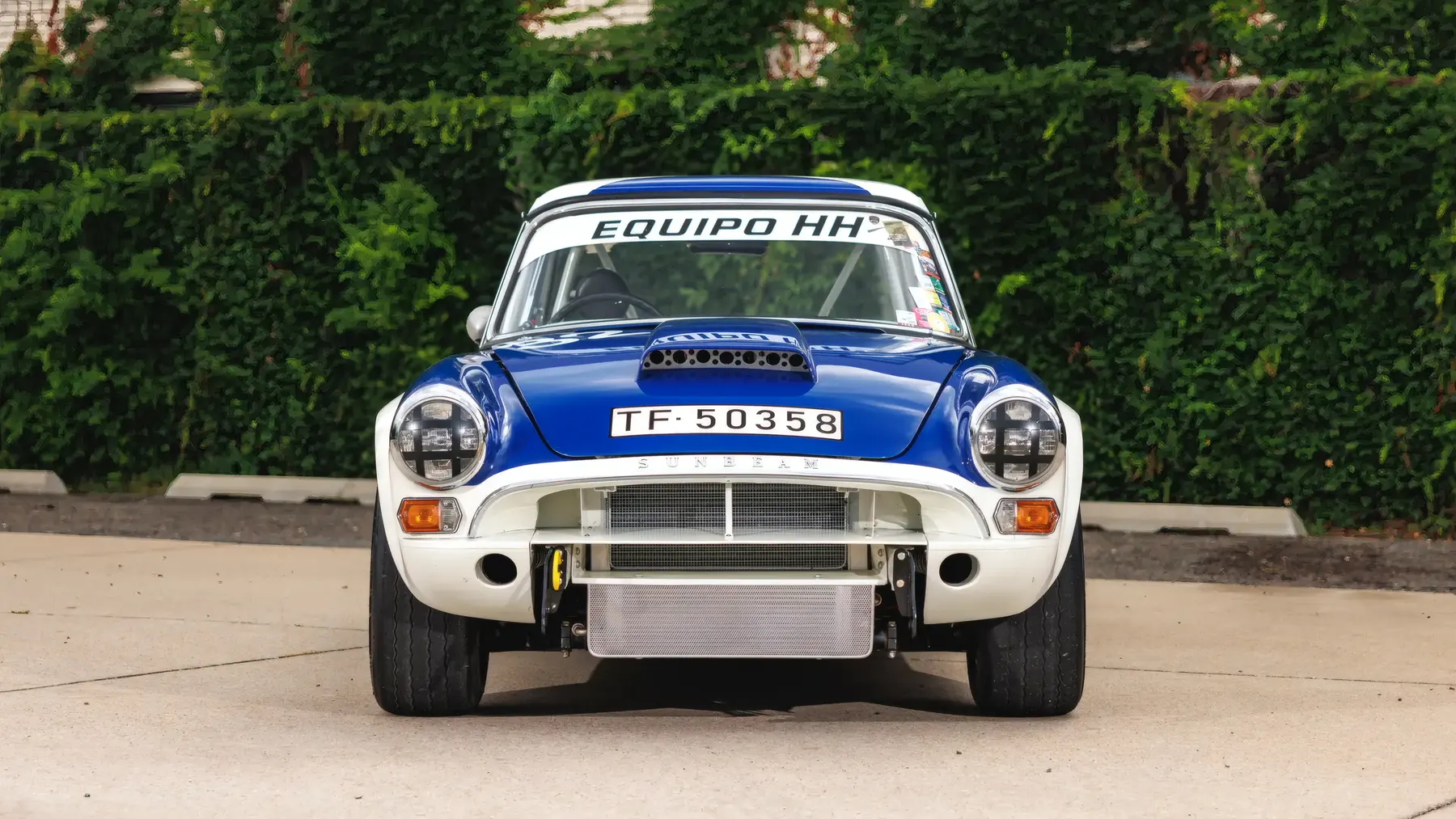
The Monster made good on its name in 1966. Running in UK club events that single home season, it helped Unett finish first in class and a close second overall in both the Autosport Championship and the Freddie Dixon Trophy, narrowly missing the outright title in each. It was, by any reasonable measure, one of the more effective privateer specials to emerge from the Tiger’s short competition life - quick enough to trouble better-funded opposition, and visually distinctive enough, with its bumperless nose, flared wings and hardtop, that it stood apart from both standard-bodied road Tigers and the works-liveried Group 3 cars racing alongside it. Its front-line British career, however, lasted only that one season; the car continued to appear at a handful of events over the following couple of years before its competitive life shifted overseas to Spain’s Canary Islands, well away from the UK club-racing scene that had made its name. Decades later, restored and returned to historic competition, it earned FIA Historic Technical Passport recognition and has since reappeared at revival meetings including Goodwood - evidence that a well-built privateer special can outlast the works cars its parts were originally borrowed from.
This success on home soil should be set against the Tiger’s wider competition record, which is a more mixed story and worth telling honestly rather than glossing over. Rootes entered the road car in European rallying with some early promise - a clean sweep of the top three places at the 1964 Geneva Rally, a fourth overall at the 1965 Monte Carlo Rally that was the best result achieved that year by any front-engined, rear-wheel-drive car - but a low, 130 mm-ground-clearance sports car was never going to suit the rough, unmade stages that increasingly defined European rallying by the mid-1960s. By the 1966 Acropolis Rally it was obvious the Tiger had been outgrown by the sport it was competing in, and Rootes withdrew it from rallying soon after; one of its own drivers described it, not unfairly, as an outdated leviathan for the job. On the drag strip the story was rather better - the Tiger held an American Hot Rod Association class record over the quarter-mile for two years, at a speed around 108 mph - but that only underlines how much better suited the car was to short, straight-line efforts than to sustained punishment over rough terrain. On the SCCA scene in America, Tigers ran competitively without ever dominating: Shelby’s own competition car raced in the Pacific Coast Division’s B Production class, a later privateer entry took third in that division in 1965, and a Tiger driven by Peter Boulton and Jim Latta finished twelfth overall and first in the small GT class at that year’s Daytona Continental. Solid results, but never quite the outright dominance the Cobra was achieving in the same period with a similar formula.
The Tiger’s production life ended for reasons that had nothing to do with the car’s ability and everything to do with corporate politics. Chrysler’s growing stake in Rootes through the mid-1960s put an American manufacturer in charge of a British sports car built around a rival American engine, which was never going to last. Chrysler’s own small-block V8 wouldn’t fit under the Tiger’s bonnet without serious surgery, and its big-block unit, while it had the correct front-mounted distributor layout, was simply too large. Rather than solve the problem, Chrysler ordered production wound down once Rootes’ remaining stock of Ford engines ran out; the last Tiger left Jensen’s West Bromwich line in June 1967, after barely three years on sale. It is a reminder that even a genuinely well-liked, well-reviewed car can be killed off by an ownership change that has nothing to do with engineering merit - and it left the Tiger’s competition history, the Monster included, as something that played out almost entirely within a narrow, three-year window.
What the Monster represents, in the end, is the unglamorous, improvisational side of a nameplate more often remembered for its glossier moments - the American advertising campaigns, the film and television cameos, the factory rally cars in works livery. It was built by a small team on a limited budget, out of parts scavenged from a car that had itself been a well-intentioned failure at Le Mans, and it went faster and further in national club racing than either its donor or most of its factory-backed contemporaries managed. That trade-off - one significant piece of Tiger history cannibalised to help create another - sits at the heart of why the Monster still draws attention at historic meetings today. It is a working demonstration of how 1960s privateer racing actually functioned, stripped of any pretence that these cars were precious even when, as in this case, part of their fabric had already raced at Le Mans.
Technical data
Specifications
| Specification | Sunbeam Tiger Mark I (road, 1964–67) | Sunbeam Tiger Mark II (road, 1967) | “Monster” club racer (built 1966) |
|---|---|---|---|
| Production | 6,450 built | 633 built | One-off |
| Engine | 260 cu in (4.3-litre) Ford V8 | 289 cu in (4.7-litre) Ford V8 | Ford small-block V8; sources vary between 260 cu in (4.3L) and 289 cu in (4.7L)* |
| Carburetion | Single 2-barrel Ford carburettor | Single 2-barrel Ford carburettor | Twin-choke Weber carburettors; number reported variously as two or four* |
| Power | 164 bhp @ 4,400 rpm | Not officially published | “In excess of 300 bhp” per a period specialist account (unconfirmed)* |
| 0–60 mph | ≈8.6 sec | ≈7.5 sec | Not recorded in sourced material |
| Top speed | ≈120 mph | ≈122 mph | Not recorded in sourced material |
| Kerb weight | 1,203 kg | Not stated in sourced material | Not recorded in sourced material |
| Gearbox | 4-speed manual | 4-speed manual | 4-speed manual |
| Wheels | 4.5 in (110 mm) steel discs | 4.5 in (110 mm) steel discs | Dunlop magnesium alloy |
Join the discussion
Comments
Loading comments…
Leave a comment
Share a detail, memory, or perspective. Every comment is reviewed before publication.