Cizeta V16T: The Transverse V16 Supercar That Nearly Rewrote the Rules
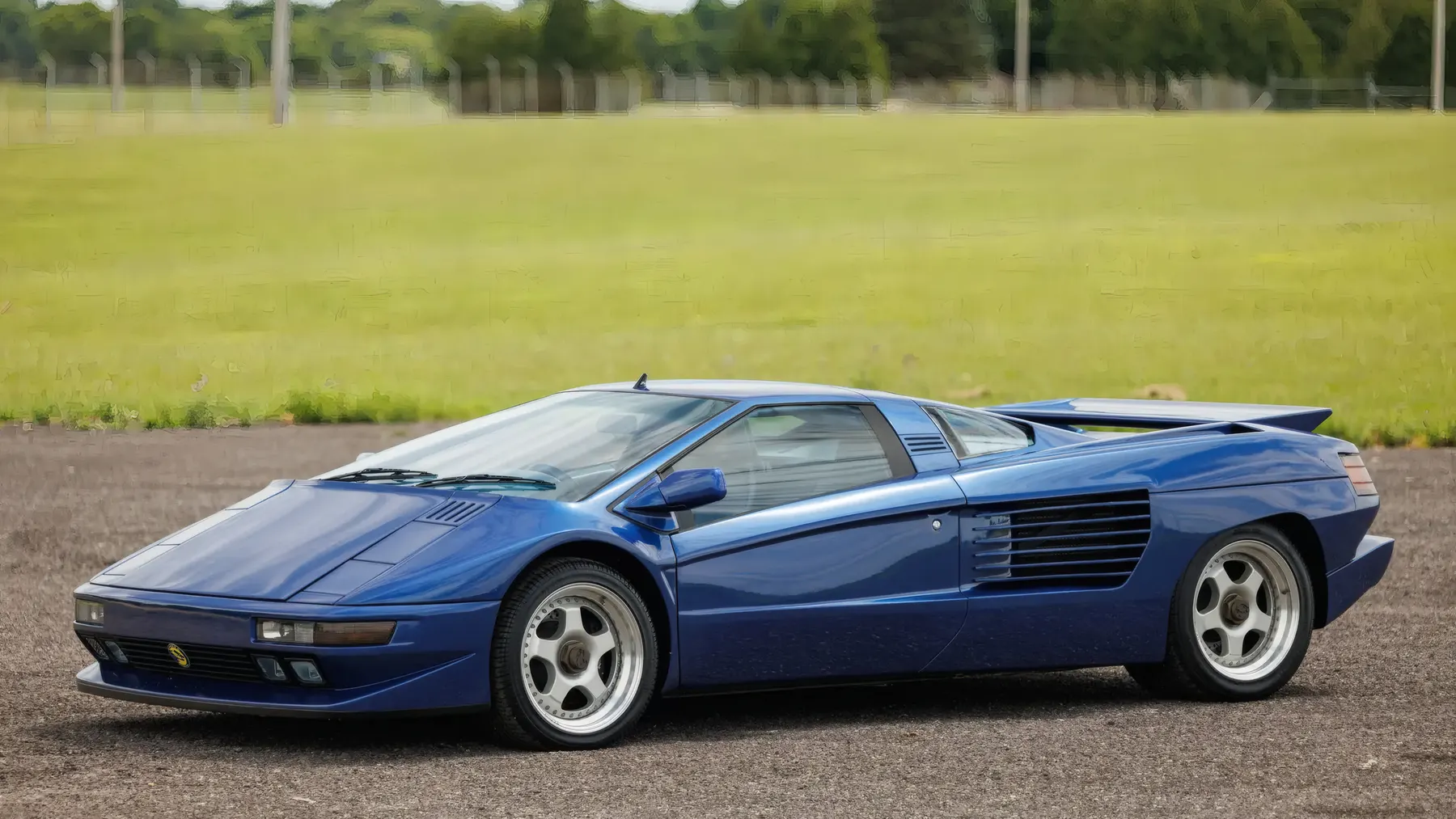
1993 Cizeta V16T

Images: David Bush / RM Sotheby's
Fitting a V16 engine transversely into a mid-mounted supercar is not a commercial decision. It is an engineering declaration, the product of a very specific belief that sixteen cylinders are inherently better than twelve, that a transverse layout is inherently more interesting than a conventional longitudinal one, and that the packaging consequences - in this case, a body 2,052mm wide - are a problem to be solved rather than a reason for compromise. Claudio Zampolli held all of these beliefs simultaneously, which is why the Cizeta V16T exists at all, and also why barely a dozen were ever completed.
Zampolli had spent two decades at the glamorous edge of the Los Angeles exotic car world. He had started at Lamborghini’s Modena factory as a test driver and engineer in his twenties, emigrated to California as part of Lamborghini’s effort to establish an American dealer network, and eventually built his own business servicing Italian exotica for the wealthy and celebrated. His client list included rock musicians and film stars whose Ferraris and Lamborghinis required his particular expertise; Eddie Van Halen is reported to have said that the engine sound in Van Halen’s ‘Panama’ came from a Miura Zampolli had worked on. His real ambition, however, was building something with his own initials on it. ‘Cizeta’ is the Italian pronunciation of C.Z. - Claudio Zampolli.
The project needed external funding, and it arrived in the form of Giorgio Moroder, the Oscar-winning music producer behind ‘I Feel Love’ and the Top Gun soundtrack, a long-time Countach owner and customer at Zampolli’s shop. Moroder took a fifty-per-cent stake and the car initially carried his name: the full title was Cizeta-Moroder V16T. History records that Sylvester Stallone was the first investor approached for the venture, and photographs reportedly exist of a ‘Cizeta-Stallone’ engine cover before the arrangement fell through. Moroder proved the more committed partner, at least initially. All customer cars, however, would be badged simply as Cizeta V16T. The team assembled in Modena and set to work.
The personnel were a concentrated extract of Lamborghini’s engineering tradition. Oliviero Pedrazzi served as chief engineer and led the design of the V16. Achille Bevini and Ianose Bronzatti handled suspension and chassis. Giancarlo Guerra - a craftsman who had previously built the body of the Ferrari 250 GTO at Scaglietti and later developed economical manufacturing methods for the Lamborghini Countach’s chassis - was tasked with constructing the first cars by hand. The project was, in effect, a continuation of Modena’s traditional cottage-industry supercar culture under new letterhead.
The engine is the Cizeta’s heart, its justification, and its most technically singular feature. Pedrazzi’s V16 was constructed by joining two Lamborghini Urraco-derived 90-degree DOHC V8s on a single bespoke aluminium casting, sharing a common block but retaining separate cylinder heads and crankshafts, with power extracted from the centre of the assembly via a transverse primary drive. The resulting unit displaces 5,995cc, breathes through 64 valves across four cylinder heads, employs eight overhead camshafts, uses twin timing chains, and is fed by two Bosch K-Jetronic fuel injection systems - one for each V8 ‘half’. Claimed output was 540 bhp at 8,000 rpm with a redline at a genuinely arresting 9,000 rpm, and 400 lb-ft of torque at 6,000 rpm. Reviewers who heard the engine at full chat described the sound as moving from a complex mechanical hum into something approaching a controlled detonation - the acoustic complexity of eight camshafts and sixty-four valves spinning simultaneously is not easily replicated. The ‘T’ in the model name refers not to the cylinder arrangement but to the T-shaped drivetrain layout: power exits the centre of the transverse engine and travels through a longitudinal ZF five-speed manual transaxle to the rear wheels, an arrangement Zampolli acknowledged as inspired by the Miura.
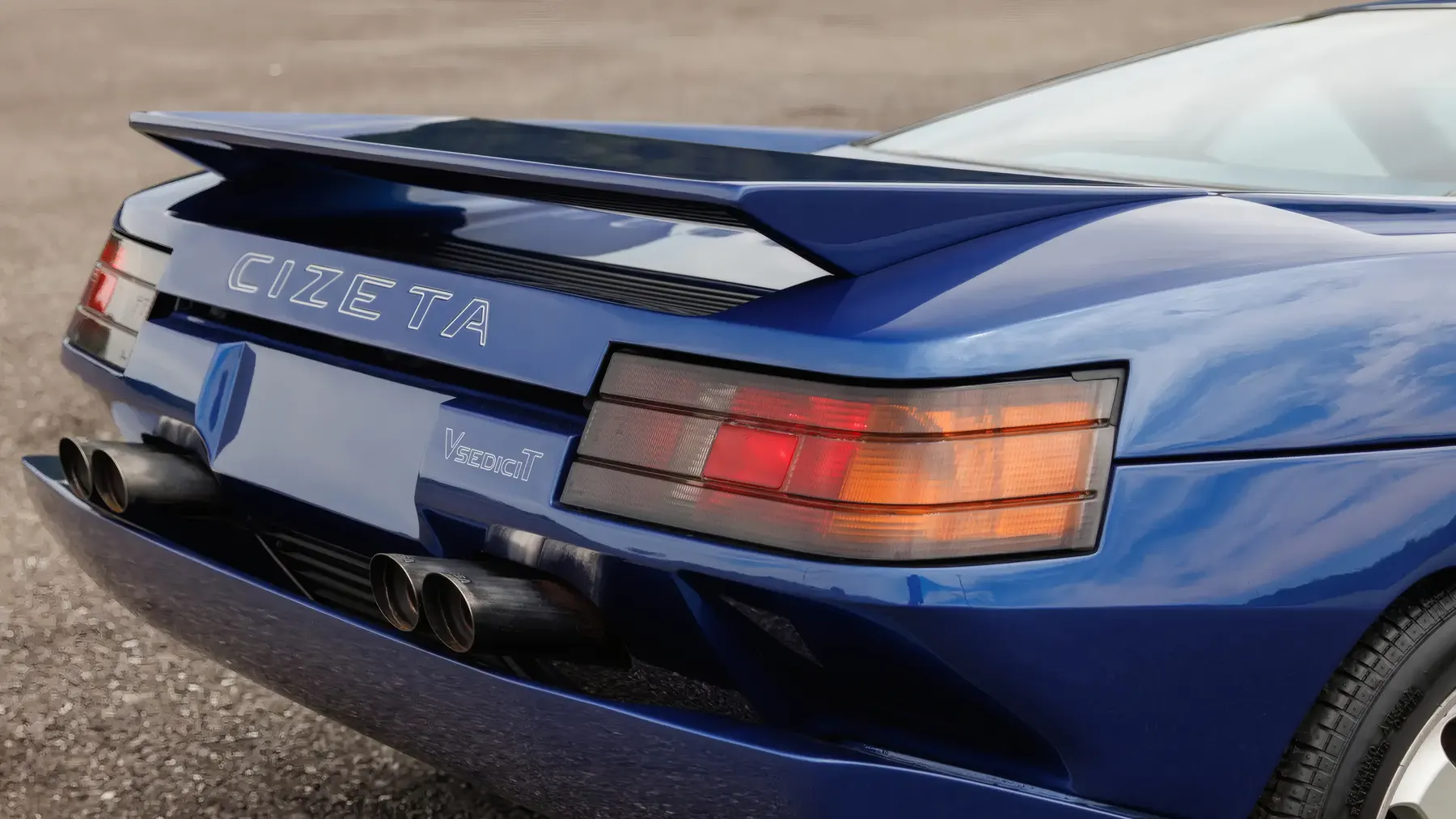
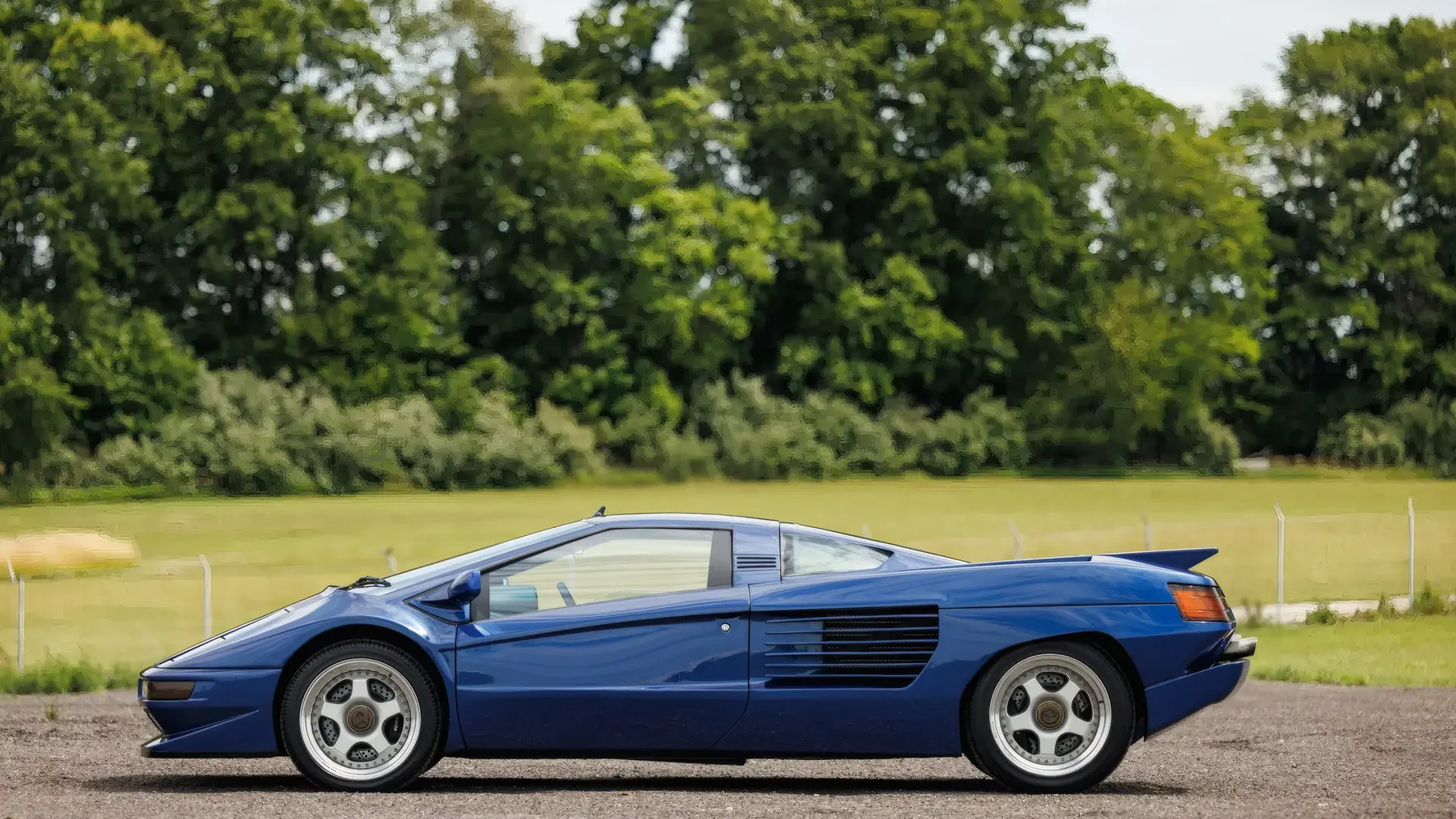
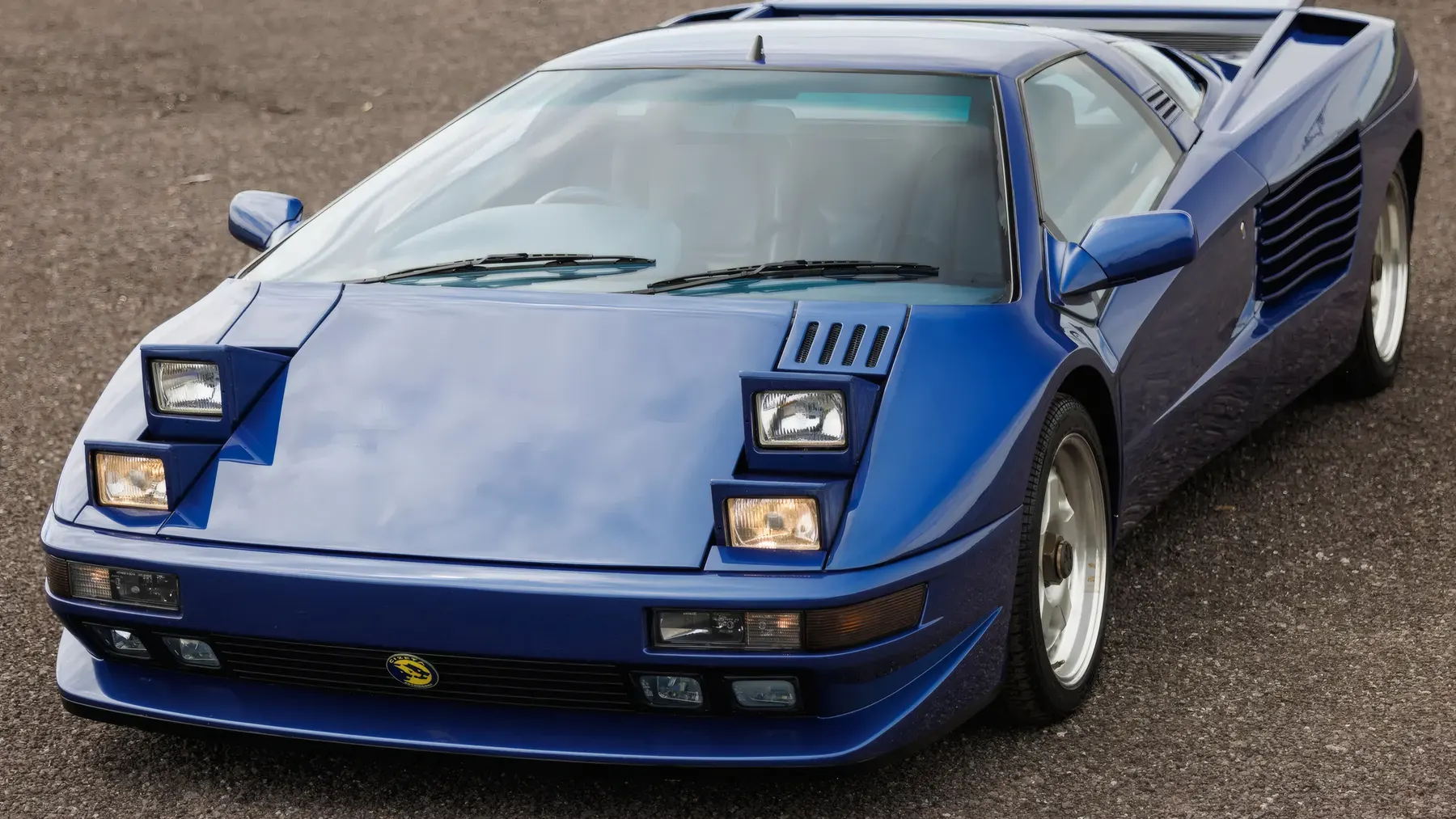
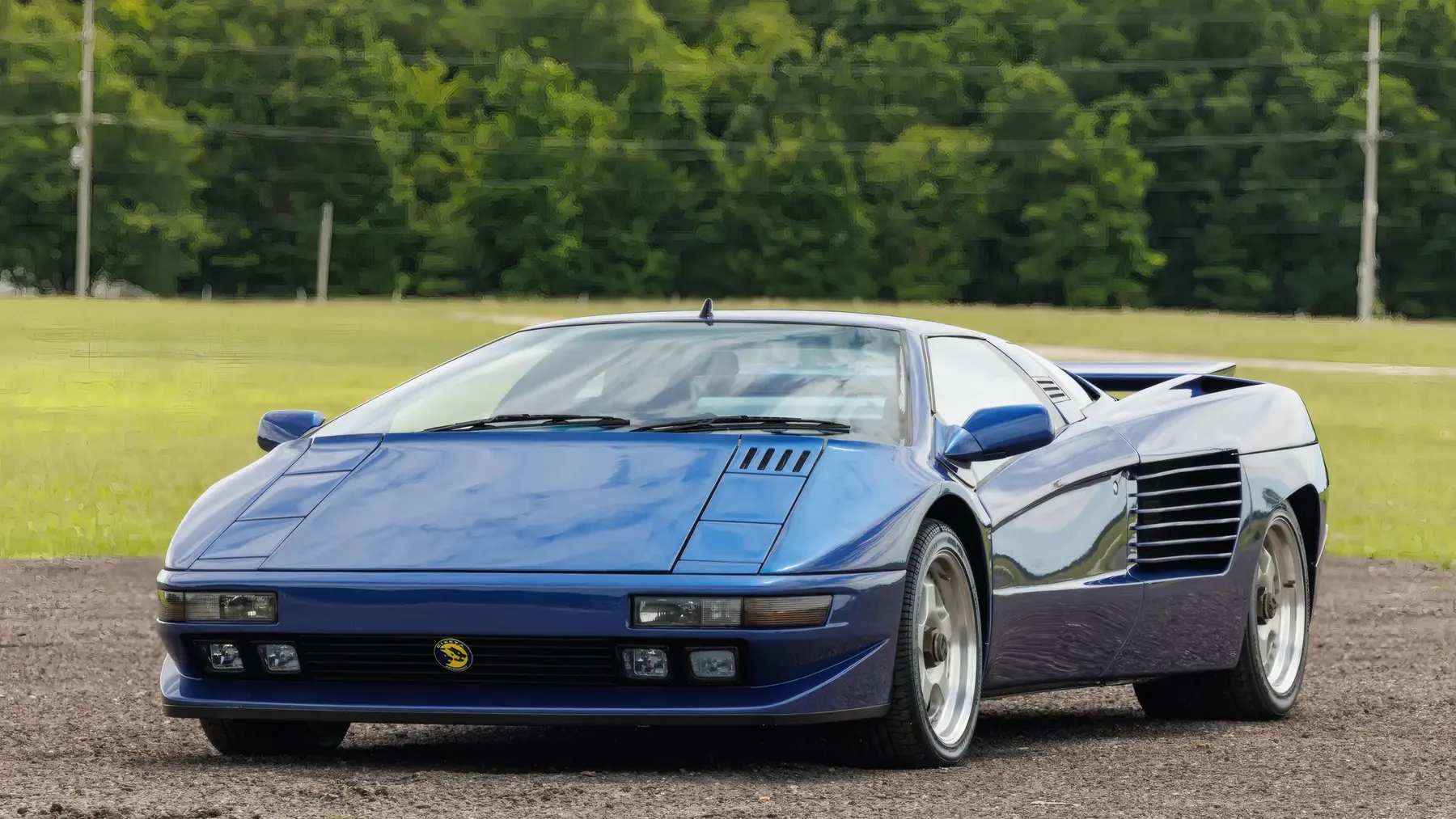
At its widest, the engine assembly spans roughly 1.5 metres, which is why the Cizeta measures 2,052mm across its flanks - wider than a Ferrari Testarossa, wider than the Lamborghini Aventador that would arrive a generation later. The bodywork that wraps this breadth was the work of Marcello Gandini, designed in close collaboration with Zampolli. The front of the car - the cab-forward stance, the plunging sill-line, the blunt wedge of the nose - is substantially the design Gandini had intended for the Lamborghini Diablo before Chrysler’s 1987 acquisition of Lamborghini led to significant modification of his original concept. The rear, which Zampolli felt did not meet the Cizeta’s requirements as Gandini originally drew it, was reworked to reflect considerably more of Zampolli’s own influence. The result is a part-collaboration whose proportions carry a slightly different character front to rear, the sharper Gandini nose and the heavier Zampolli tail not quite entirely resolved into a unified whole. Bodywork was hand-formed aluminium over a chrome-molybdenum steel space frame, produced by Guerra and his team with Modenese craft that few larger manufacturers could have equalled in execution. Among the Cizeta’s more distinctive design choices: four pop-up headlights arranged in stacked vertical pairs on each side - a feature that appears on no other production car. The rear light clusters, by some contrast, were sourced directly from the Alpine A610, an oddly economical touch on a machine that commanded six-figure sums.
The suspension followed race-car practice throughout. Double wishbones front and rear, with Koni spring-damper units mounted inboard at the rear and actuated via bellcranks from the hub carriers - 250mm inboard of the rear wheels. Brembo-sourced drilled and slotted disc brakes at all four corners operated via twin-pot calipers. OZ Racing two-piece cast alloy wheels in 17-inch diameter, wearing Pirelli P Zero rubber - 245/40 up front and a substantial 335/35 at the rear - completed the contact patch. A notable absence from the specification was ABS: Zampolli actively wanted it, but Bosch quoted more than the project’s budget could accommodate. Four-wheel drive and forced induction were also explicitly rejected - the former on grounds of weight and packaging complexity, the latter because it blunted throttle response in ways Zampolli found unacceptable.
The prototype was unveiled publicly in Los Angeles in December 1988 - narrowly ahead of the Lamborghini Diablo’s own debut and arriving at the height of the late-1980s supercar boom. Jay Leno presided over the reveal event. The car subsequently appeared on the cover of Car magazine in January 1989, and attracted considerable press interest alongside serious initial orders. By the time deliveries began in early 1991, the Cizeta’s asking price had settled at around $300,000 - with UK sources citing figures closer to $400,000.
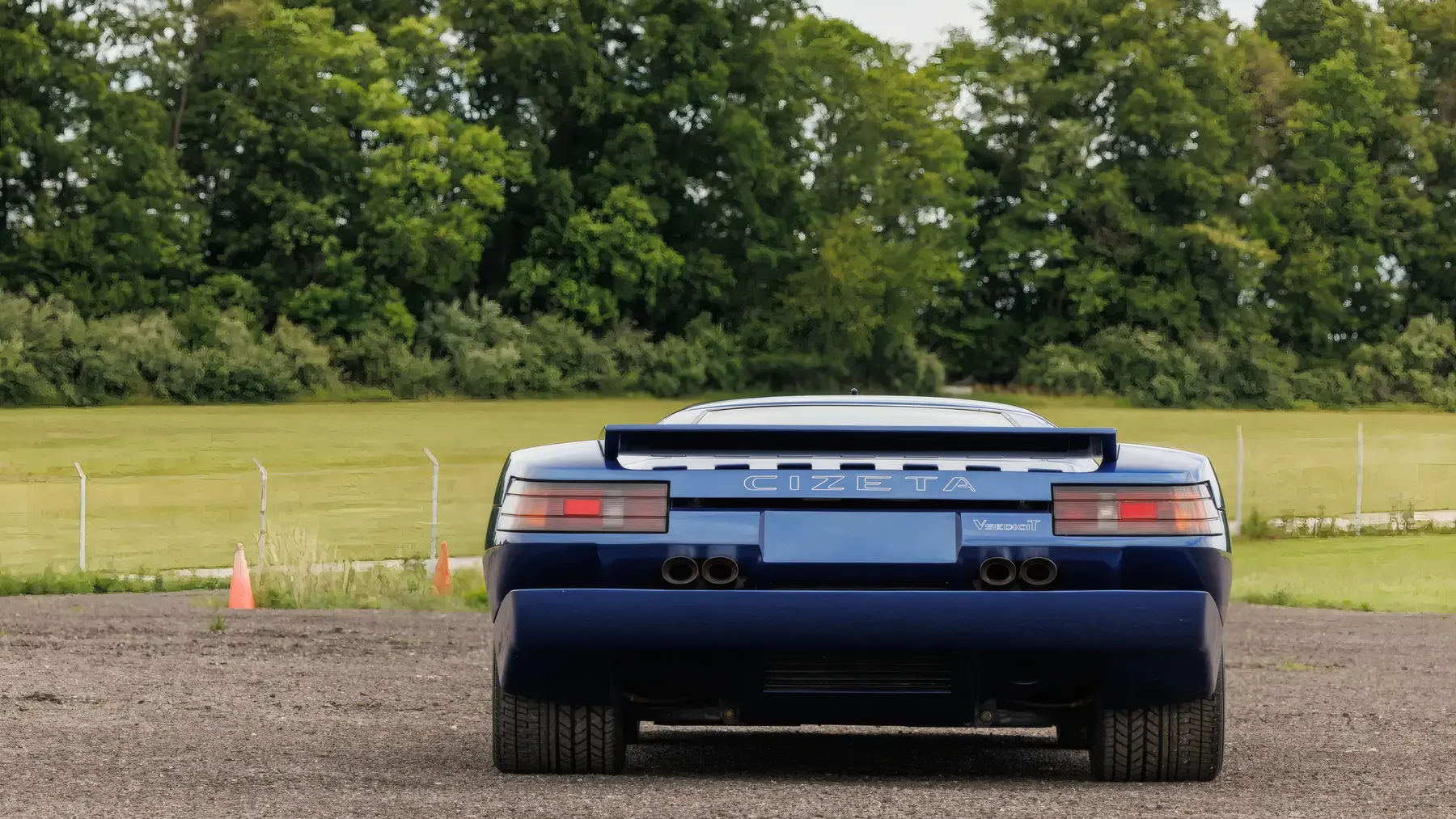
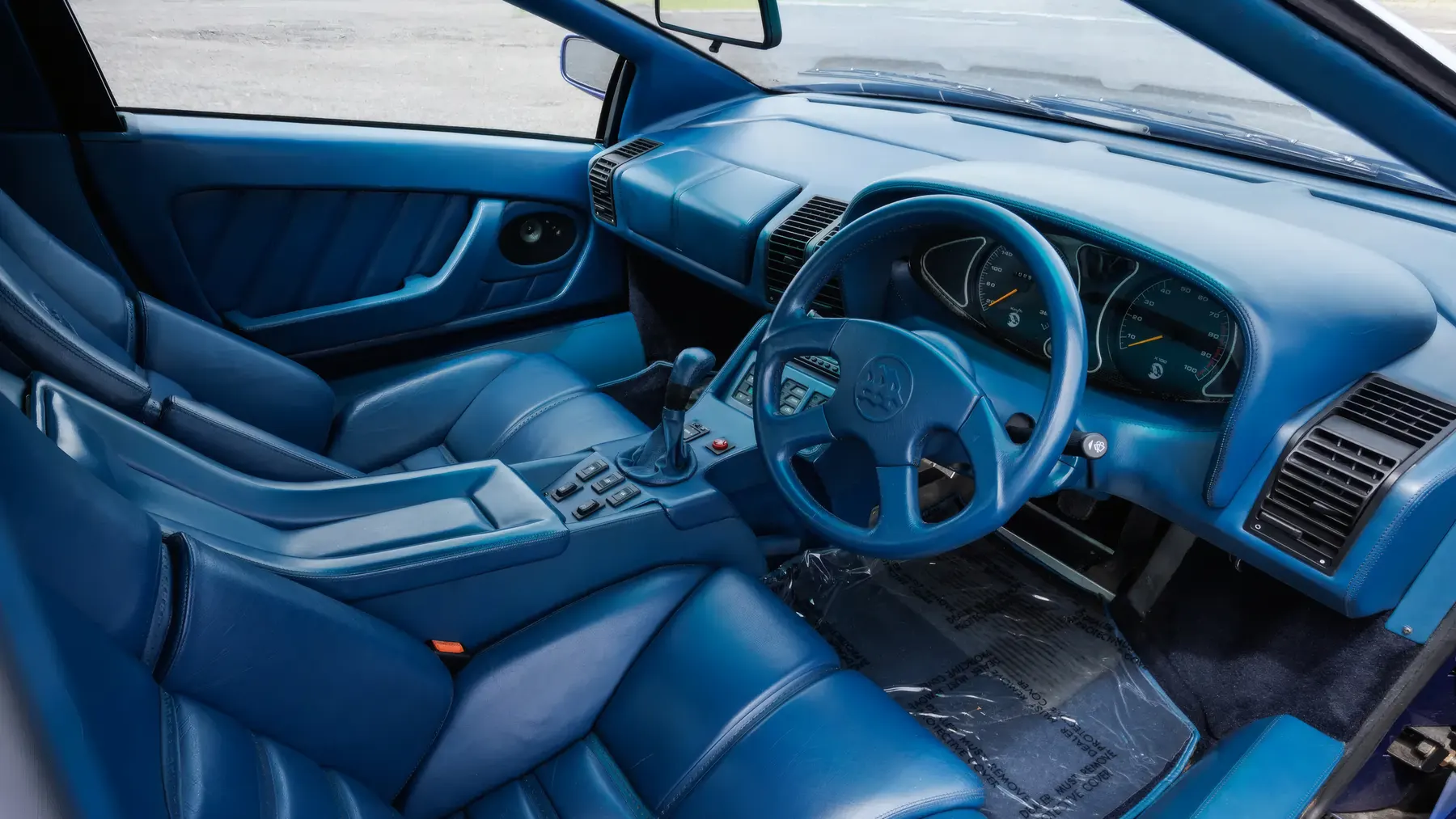
The Cizeta’s weaknesses, however, were real and consequential enough to be confronted plainly. The prototype’s documented kerb weight was 1,701 kg - well above Zampolli’s stated production target of 1,406 kg and a significant handicap for a car whose aerodynamics had never been verified in a wind tunnel. The performance claims of 204 mph and approximately 4.4 seconds to 60 mph were stated by Cizeta but were never independently verified through an instrumented test by a major publication in controlled conditions. Whether the car achieves those figures in production trim remains unconfirmed. The interior was by general consensus a disappointment relative to the exterior drama and the asking price: period reviewers noted that it felt no more luxurious than some of the better contemporary kit cars, with materials and ergonomics that failed to reflect the ambition of the engineering beneath. Most critically, the Cizeta was never made compliant with United States safety and emissions regulations, which effectively closed the single largest potential supercar market to a car conceived and partially designed in Los Angeles.
The Moroder partnership did not survive contact with these commercial realities. Frustrated by the pace of production and the uncompromising cost of Zampolli’s methods, Moroder privately approached Porsche engineers about substituting fiberglass body panels, and eventually proposed replacing the bespoke V16 with a BMW engine to reduce cost and accelerate assembly. These suggestions were irreconcilable with Zampolli’s vision; the partnership dissolved, Moroder retained the original prototype, and the Cizeta name continued alone, diminished by the loss of both capital and profile. The timing of the subsequent production years was catastrophic. The 1990 US recession and the collapse of Japan’s financial bubble the following year eliminated much of the Asian demand that had been Cizeta’s most credible market outside Europe. The Lamborghini Diablo, launched in 1990 at roughly half the Cizeta’s price and with the commercial infrastructure of a larger manufacturer supporting it, absorbed many of the potential buyers who might otherwise have been tempted by something more extreme. By 1995, around eight cars including the prototype had been completed in Modena - well short of any commercially viable target. Operations shifted to Fountain Valley, California, and Zampolli went through personal bankruptcy.
Production continued in fragments. Two further coupes and one roadster were completed between 1999 and 2003. The roadster, known as the Cizeta Fenice TTJ Spyder, was built to a special order from a Japanese customer and displayed at Concorso Italiano in Monterey. Zampolli maintained as late as 2018 that the V16T remained theoretically available to order, though no further examples are known to have been built after the 2003 convertible. He died in July 2021, aged 82. Total production across all years runs to between nine and eleven cars depending on which sources and which completions one counts, and of those a notable number found their way to the remarkable collection assembled by the Brunei Royal Family.
The original Moroder prototype, restored to running condition by Californian specialists Canepa, was sold at auction in January 2022. The V16T’s broader legacy resists easy summary. It was not a commercial success by any measure, and its specific engineering ambition - a transverse production V16 - has been followed by no other manufacturer before or since. But it was real: a functioning sixteen-cylinder engine built by hand in small numbers by a determined team of engineers, clothed in a body that bore a direct genetic link to one of Gandini’s most consequential unbuilt designs. When asked in 2018 what he was working on in his Fountain Valley workshop, Zampolli’s answer was characteristically uncomplicated. A V16 engine, he replied. What else would he be working on?
Join the discussion
Comments
Loading comments…
Leave a comment
Share a detail, memory, or perspective. Every comment is reviewed before publication.