The Vector M12: America's Most Confused Supercar Finally Makes Sense
1996 Vector M12

Images: Zach Brehl / RM Sotheby's
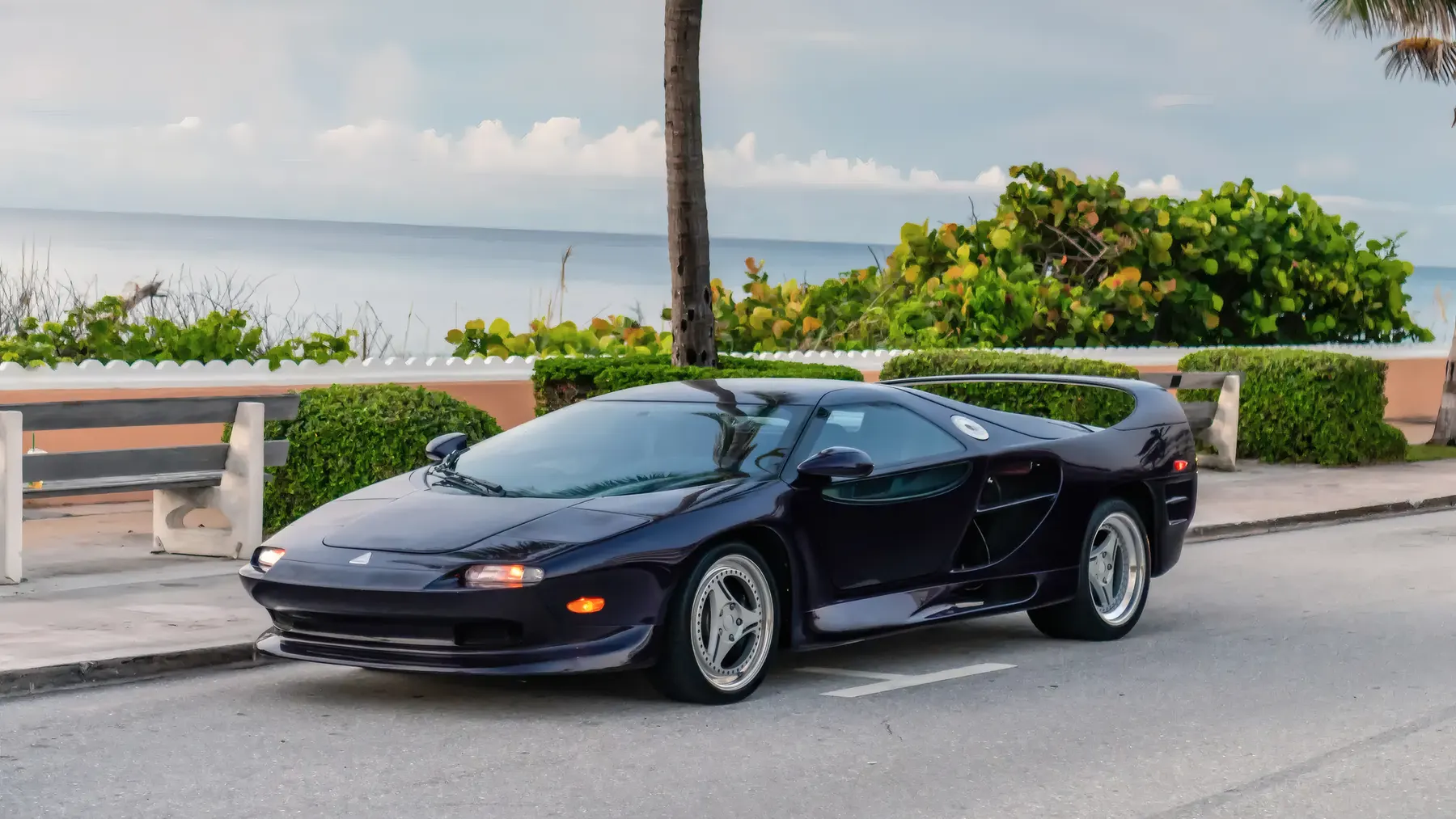
The letter change tells you everything. Every car Jerry Wiegert built or designed wore a “W” - for Wiegert - and the notation was both a naming convention and a declaration of authorship. When Megatech, the Indonesian conglomerate that staged a hostile takeover of Vector Aeromotive in 1993, unveiled their first production car from the company in 1995, it was called the M12. The M stood for Megatech. That single letter swap - removing the founder’s initial and replacing it with the acquirer’s - is the most honest statement the Vector M12 ever made about what it actually was: not a continuation of the original American supercar dream, but something stranger, more compromised, and in its own way more fascinating.
Vector’s story before the takeover is one of perpetually deferred ambition. Gerald Wiegert had been building and showing outrageous wedge-shaped supercars since the early 1970s, and the company finally made production cars with the twin-turbocharged W8, which began deliveries in 1989. Only seventeen W8s were ever built, but the car’s aerospace-inspired cockpit, its preposterous claimed power outputs from the Rodeck V8, and its sheer visual lunacy gave it genuine cult status. The intended successor, the WX-3, was revealed at the 1993 Geneva Motor Show in both coupe and roadster forms with twin-turbo V8s offering between 600 and a claimed 1,200 bhp depending on specification. It looked extraordinary. It never reached production.
What killed it was the Megatech takeover. Wiegert was removed as CEO, refused to continue as chief designer, and then won back the design copyrights for the WX-3 through litigation - which meant Megatech couldn’t simply build the car Wiegert had conceived. The new management relocated Vector’s operations from California to Jacksonville, Florida, co-locating with Lamborghini North America. And this geographical fact is where the M12’s strange identity crystallises: in 1994, Megatech had also purchased Lamborghini from Chrysler, acquiring the Sant’Agata brand for approximately $40 million. Vector and Lamborghini were now under the same Indonesian umbrella, and the most obvious solution to the problem of needing a new Vector was to build one around the platform of the Lamborghini Diablo.
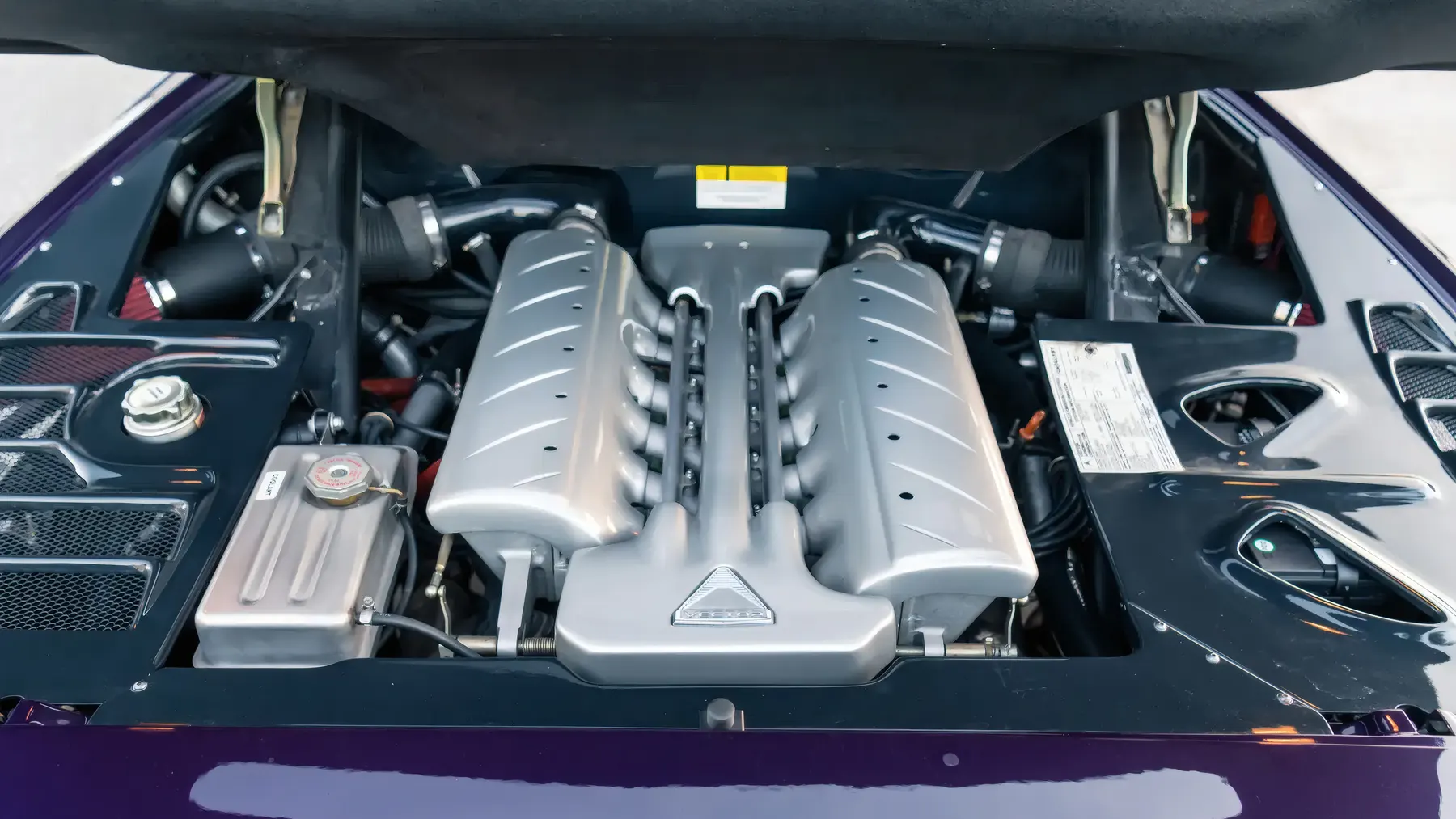
The engineering logic was pragmatic if not inspiring. Megatech had access to the Diablo’s tubular steel spaceframe chassis, its Bizzarrini-lineage 5.7-litre V12, its ZF five-speed manual transaxle, its suspension geometry, its Brembo braking hardware, and its pop-up headlights. All of it found its way into the M12, albeit on a chassis stretched beyond the Diablo’s wheelbase of 2,650mm to 2,700mm to accommodate the body Vector needed. The engine was repositioned slightly, mounted longitudinally with the gearbox behind it rather than in front as in the Lamborghini, which shifted the cockpit forward relative to the AWX-3 layout and gave the finished car its characteristic long tail. The V12 itself produced 492 bhp - figures vary very slightly across period sources, which consistently cluster around this number - and 425 lb-ft of torque. Outputs that in isolation sounded impressive, but carried an immediate problem: they were essentially identical to what the Diablo already offered, in a car that cost significantly more to develop and manufacture with less engineering pedigree behind its bodywork.
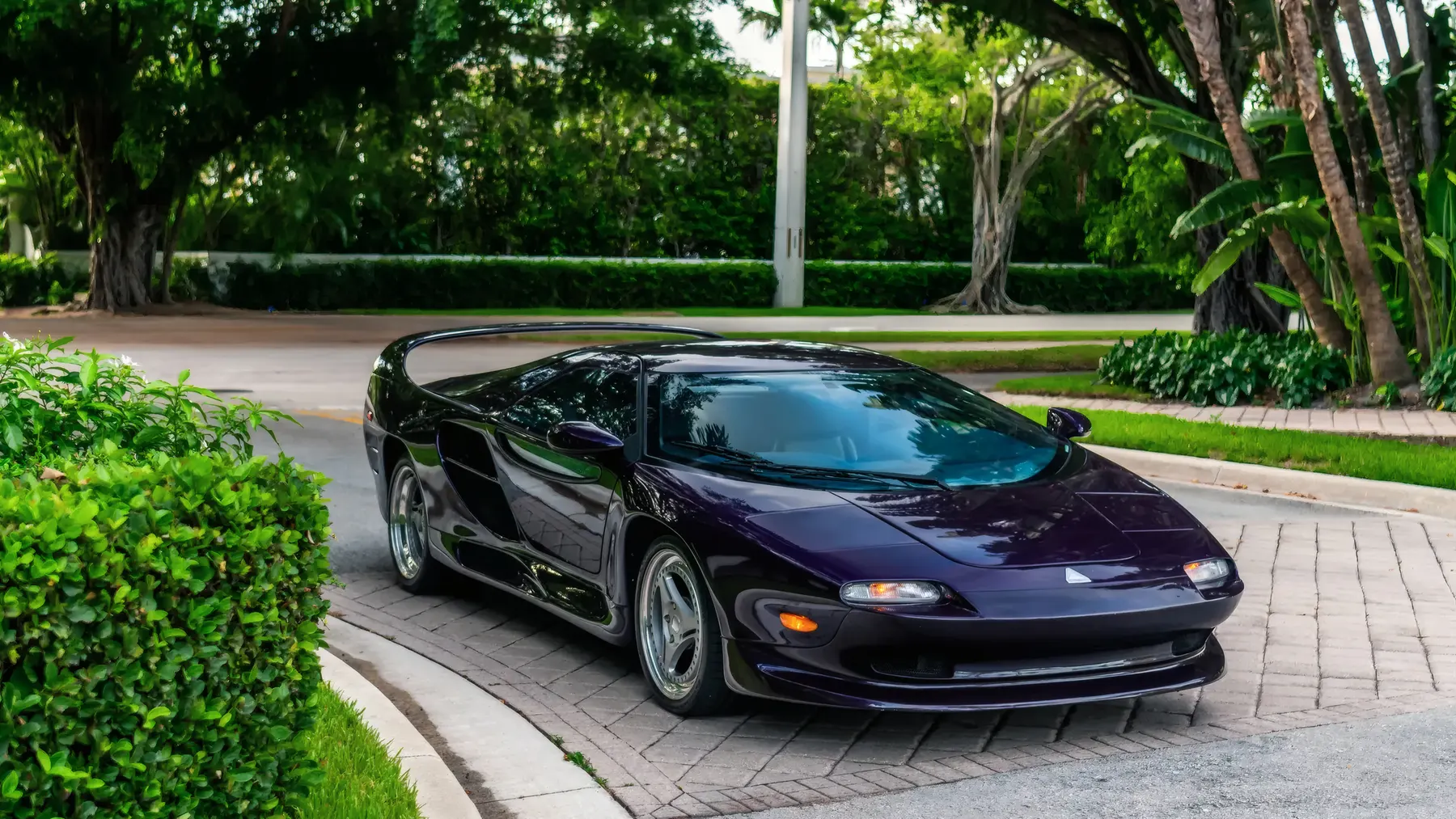
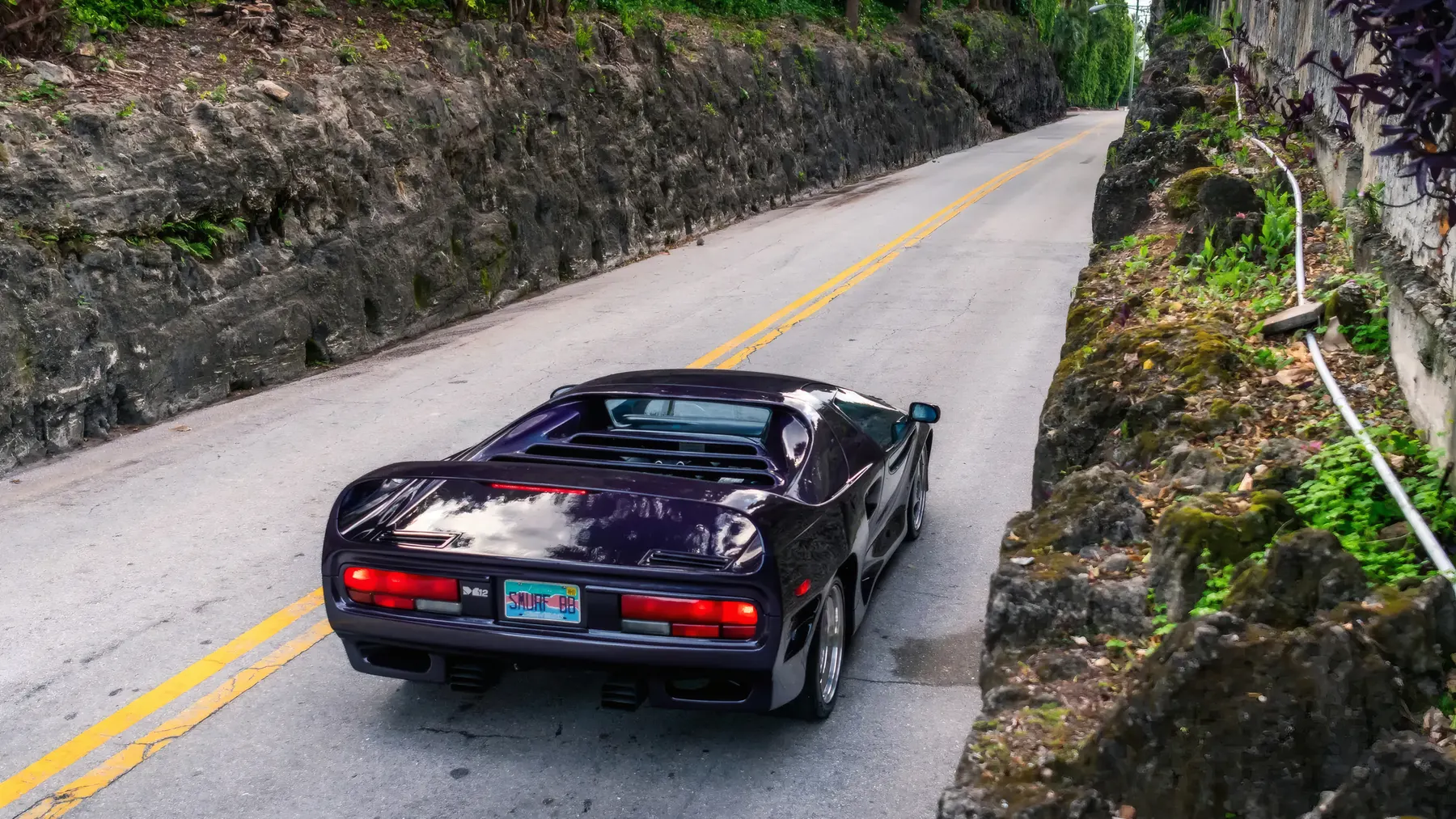
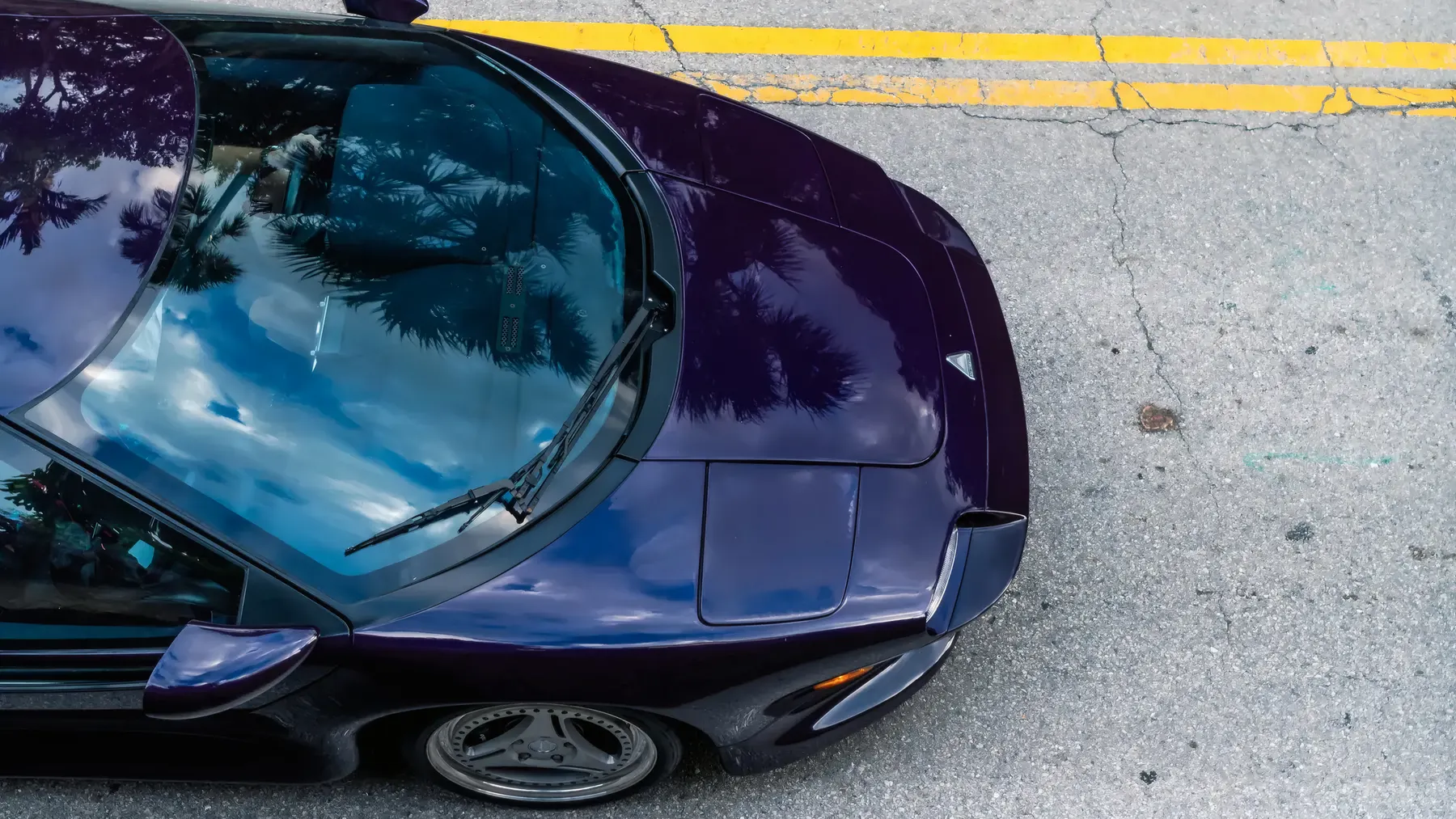
For the design of that bodywork, Megatech hired Peter Stevens, one of the most credentialled stylists in the supercar world at the time. Stevens had penned the Jaguar XJR-15 and the Lotus Esprit S4, and crucially had served as chief designer at McLaren Cars where he was responsible for the exterior of the F1. His brief for the M12 was to create a body that loosely referenced the stillborn WX-3 - whose design Wiegert now legally controlled - without directly copying it, mounted over the elongated Diablo chassis. It was a brief that would have tested any designer. The long tail demanded by the chassis and drivetrain gave the car a rear-heavy visual proportion that Stevens could moderate but not fully resolve: the compact front end, with its curved windscreen and low nose, is genuinely striking, while the back section, rising over an enormous powertrain bay to a prominent rear spoiler, has the ungainly effect of a car that was designed from the waist forward and then simply extended. Scissor doors and an extremely low 1,130mm roofline maintained the visual drama, and at first glance from the front quarters, the M12 looks every bit the American exotic. Walk around to the back and the proportional problem becomes harder to ignore.
On paper, and on the road in isolation, the M12 could justify its asking price of $184,000 to $189,000. The 0–60 mph sprint took approximately 4.8 seconds, the top speed sat around 189 mph, and the naturally aspirated V12 - that same engine whose character has powered countless Lamborghini supercars - gave the car an operatic soundtrack that the turbocharged W8, for all its drama, could not match. The ZF five-speed manual used a dog-leg first gear pattern, shared with the original Ford GT40’s transaxle architecture, which gave confident, mechanical gearchanges that suited the car’s mechanical character. Rear-wheel drive, mid-engine, and genuinely fast by any reasonable measure of the mid-1990s. Had the M12 existed in a vacuum, the verdict might have been more generous.
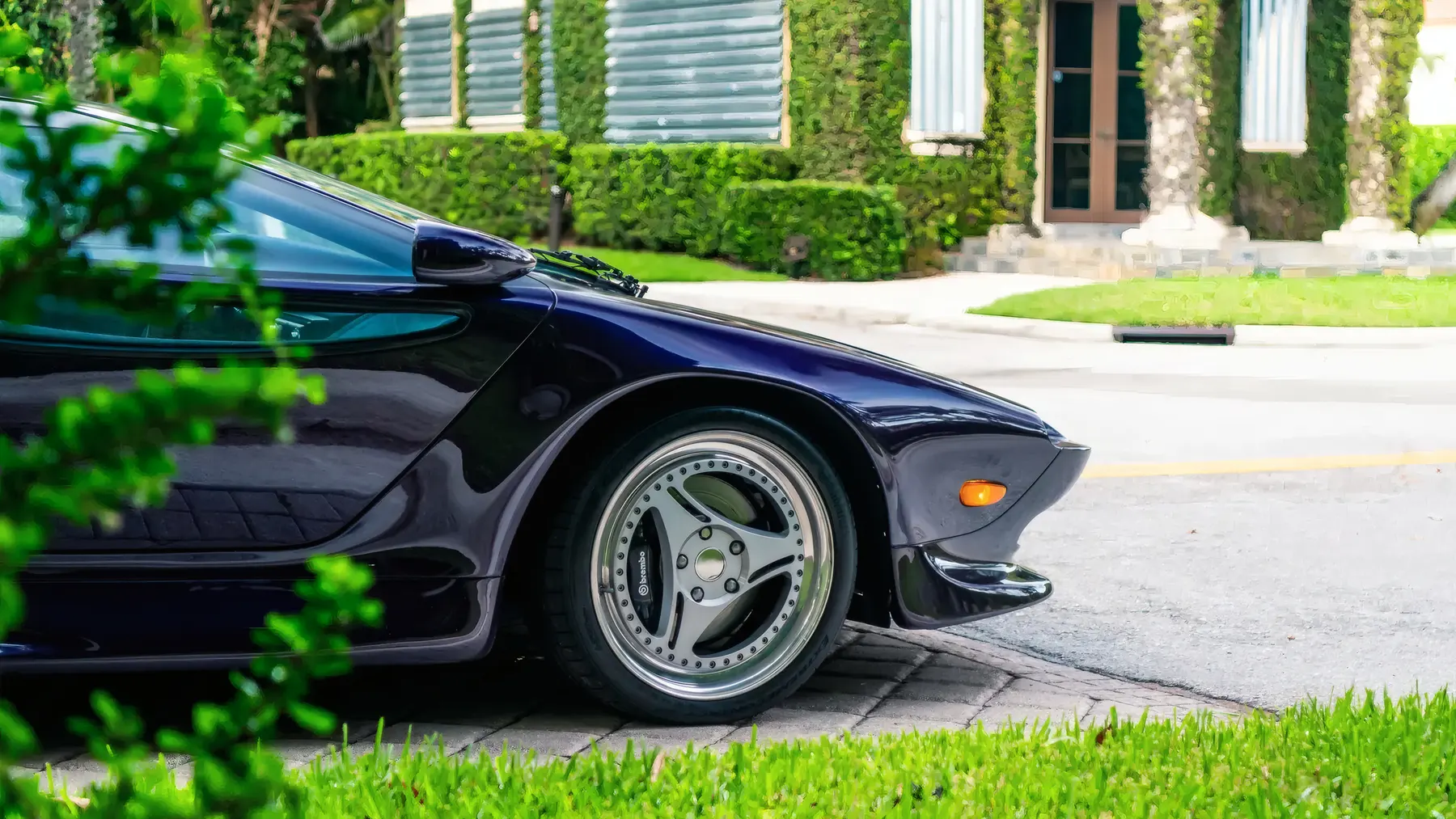
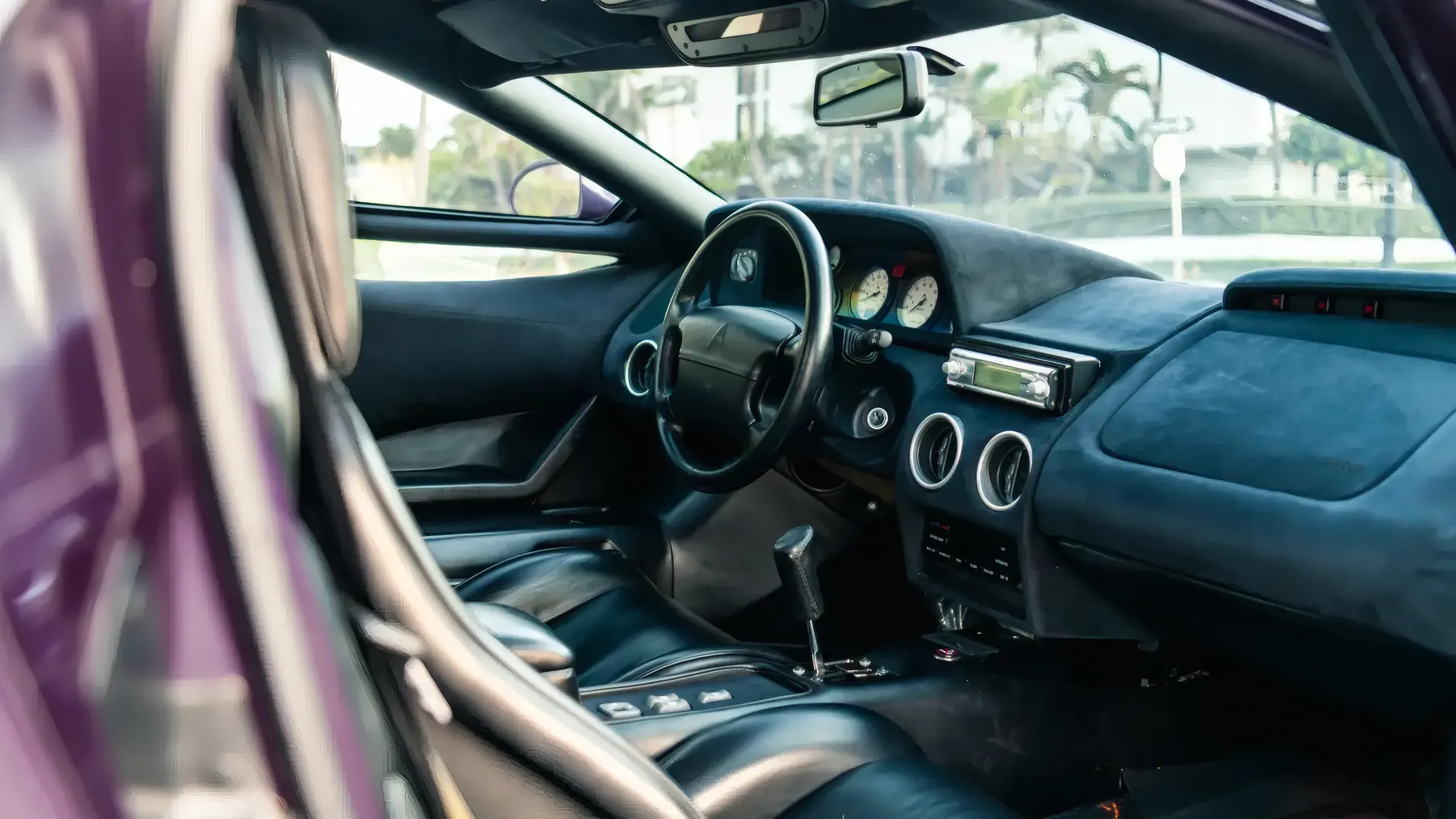
The problem was context. The Diablo, from which the M12 borrowed its entire mechanical package, was also on sale - and in direct comparison the M12 came off badly in almost every dimension that mattered to a buyer spending that kind of money. It was slower to sixty by approximately 0.7 seconds and fell short of the Diablo’s top speed by around fifteen miles per hour. It weighed 1,633 kg, and despite the Diablo chassis underneath it, the Florida-built body was constructed entirely from fiberglass and composite rather than the aluminium that gave the Lamborghini its structure, which raised questions about long-term rigidity and crash behaviour. The interior, stripped of the W8’s famous aircraft-cockpit drama, was derivative of the Diablo’s cabin and less well executed. Small but telling details revealed where the corners had been cut: the rear light clusters were sourced from the Vauxhall Cavalier and the front indicators from the Mazda MX-5 - functional parts, recognisable to anyone who looked closely enough, on a car charging nearly $190,000. Build quality was inconsistent, with panel gaps and interior trim fitment that would not have passed muster at any European supercar manufacturer. Autoweek, one of the most respected American automotive publications, tested the M12 and delivered a verdict that has followed the car ever since: it was, in the publication’s assessment, the worst car Autoweek had ever tested.
The motorsport attempt in 1998 underlined the car’s unreliability under sustained stress. One pre-production M12 chassis was converted to race specification by the IMSA team American Spirit Racing, creating the M12 ASR GT2. Equipped with race-specification suspension, a large front airdam, and a revised rear spoiler, the car was entered in the 1998 12 Hours of Sebring - a circuit notorious for surface roughness capable of exposing any structural weakness. Driven by Bill Eagle and Dorsey Schroeder, the M12 ASR GT2 qualified 33rd of 48 entries and retired from the race after sixteen laps. The mechanical problems that halted the car at Sebring were symptomatic of the issues that plagued the road cars, and no further motorsport programme followed. The converted race car was subsequently rebuilt by Megatech into the SRV8 prototype, which replaced the Lamborghini V12 with an American V8 and was intended to preview a next-generation Vector. It never made it into production either.
The end came when Megatech ran out of money to pay Lamborghini for engines. By 1998 the Indonesian conglomerate had sold Lamborghini to the Volkswagen Group’s Audi division - a sale that cut off the M12’s engine supply not through any acrimony but simply through the legal reality of new ownership and unpaid invoices. Seventeen cars in total, including the pre-production and prototype units, represent the complete run. Wiegert eventually succeeded in recovering the Vector assets through further litigation, and spent the remainder of his life attempting to revive the marque with a new design. He passed away in early 2021 without a successor entering production.
The Vector M12 appears in Gran Turismo 2, which for many people of a certain age is their first encounter with the car. That game presence is oddly appropriate: the M12 was always more convincing on a screen than in a showroom. As a collector object today it occupies a curious position - too rare and historically significant to be dismissed, too compromised in its origins and execution to be celebrated without qualification. It was an American name on an Italian chassis, styled by a British designer, financed by Indonesian capital, and ultimately terminated by a German acquisition. What it was not, despite the badge, was a Vector in anything other than name. That tension between what it claimed to be and what it actually was gives the M12 its peculiar afterlife: a supercar whose story is almost entirely told by what it wasn’t allowed to become.
Sources
- Wikipedia - Vector M12
- Silodrome - America’s Forgotten (Lamborghini-Based) Supercar: The Vector M12
- AutoEvolution - 25 Years Ago, Vector Revealed the M12
- Motor1 - You Can Buy This Vector M12 With Lamborghini Diablo Engine
- The Truth About Cars - Rare Rides: The 1996 Vector M12 (Part II)
- CarBuzz - Be Cooler Than Any Lamborghini Owner With This Vector M12
- HotCars - 10 Things Everyone Forgot About The Vector M12
- Wikipedia - Peter Stevens (car designer)
Join the discussion
Comments
Loading comments…
Leave a comment
Share a detail, memory, or perspective. Every comment is reviewed before publication.