Vector Avtech WX-3: The American Supercar That Should Have Beaten the McLaren F1
1993 Vector Avtech WX-3 Prototype

Images: Zach Brehl / RM Sotheby's
The world learned of the Vector Avtech WX-3’s death in the cruellest possible way. In March 1993, while Gerald Wiegert stood on the Geneva Motor Show stand presenting his most ambitious machine to the international press - engine installed, power claimed at 1,000 bhp, price announced at $765,000 - his own board of directors were back in California meeting to remove him from the company he had built over two decades from nothing. The car was extraordinary. The situation was farcical. And that tension between audacious engineering ambition and chaotic corporate reality is inseparable from every carbon fibre panel of the WX-3.
Wiegert - known alternately as Gerald or Jerry depending on the source - had founded what would become Vector Aeromotive in 1971 in Hollywood under the name Vehicle Design Force, after studying at the Art Center College of Design in Los Angeles and completing an internship at General Motors’ Technical Center. His stated aim was explicit and enormous: to build an American supercar that would surpass anything produced in Europe, using aerospace materials and engineering principles borrowed from military aviation. The W2 prototype appeared by 1979, a twin-turbocharged, 5.7-litre Chevrolet small-block V8 machine claimed to produce around 600 bhp, which Wiegert drove for hundreds of thousands of kilometres demonstrating to prospective investors and press. What finally emerged as production-ready in 1989 was the W8, a genuinely radical proposition: a mid-engined monocoque built from aluminium honeycomb bonded with epoxy and riveted with approximately 5,000 aircraft-grade fasteners, clothed in carbon fibre and Kevlar body panels, and powered by a twin-turbocharged 6.0-litre Rodeck V8 rated at 625 bhp. Seventeen customer cars were built at around $448,000 apiece before the company entered financial crisis in 1993. Despite its imperfections - overheating was a chronic and documented problem, caused by inadequate ventilation apertures in the wedge bodywork - the W8 had established that Vector was not simply another California fantasy. It was a real car, built in real numbers, capable of genuinely exceptional performance.
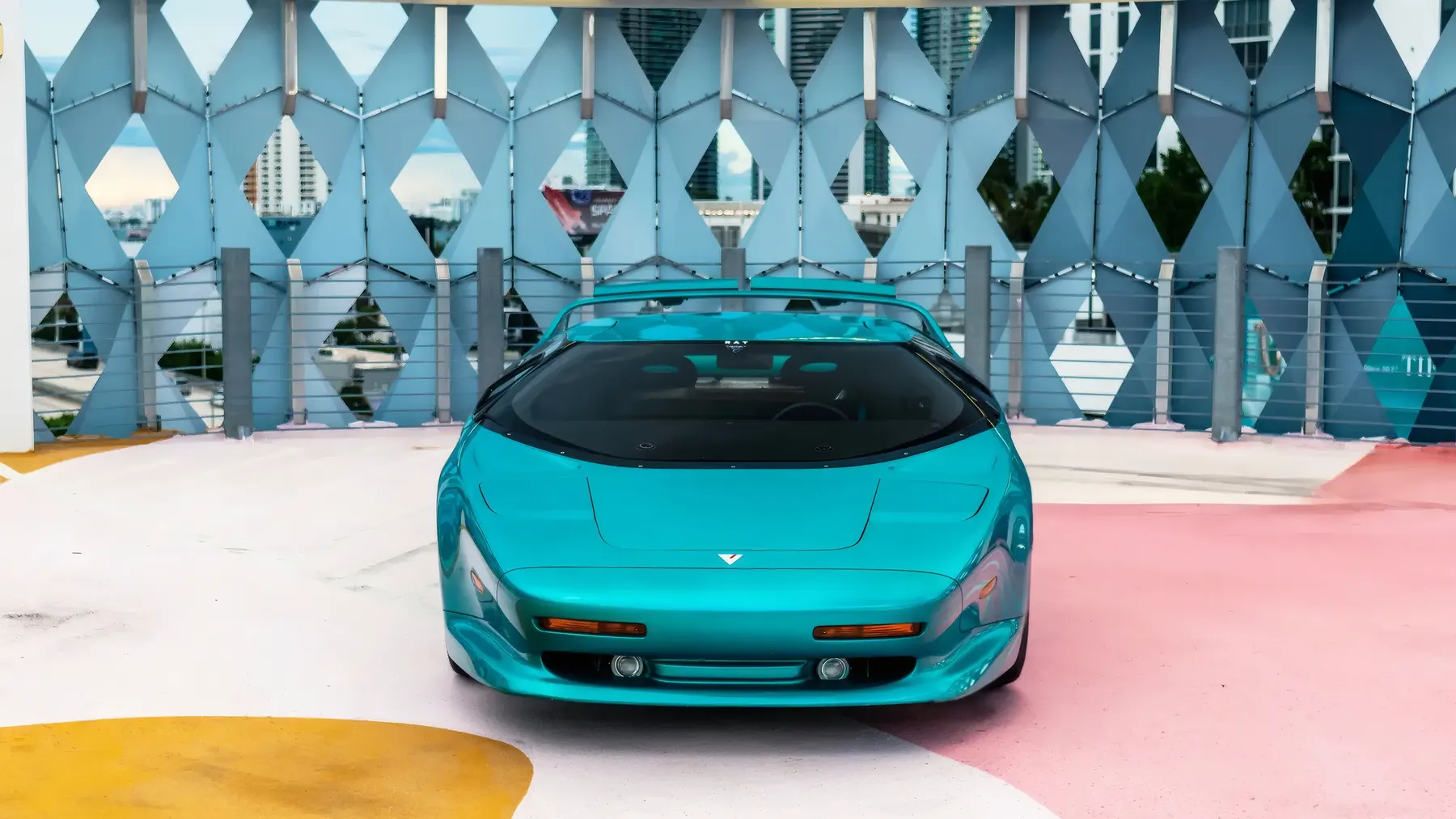
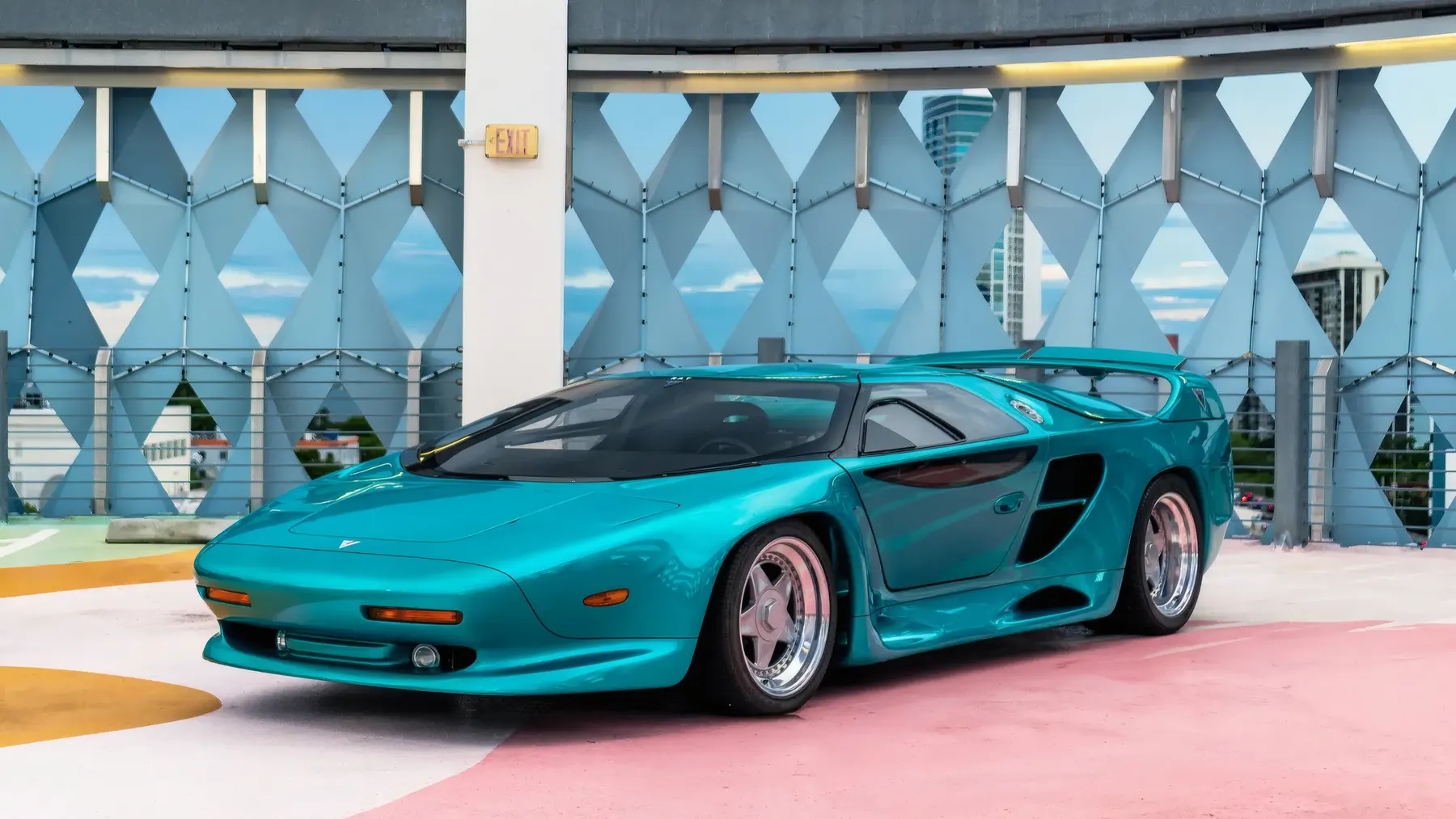
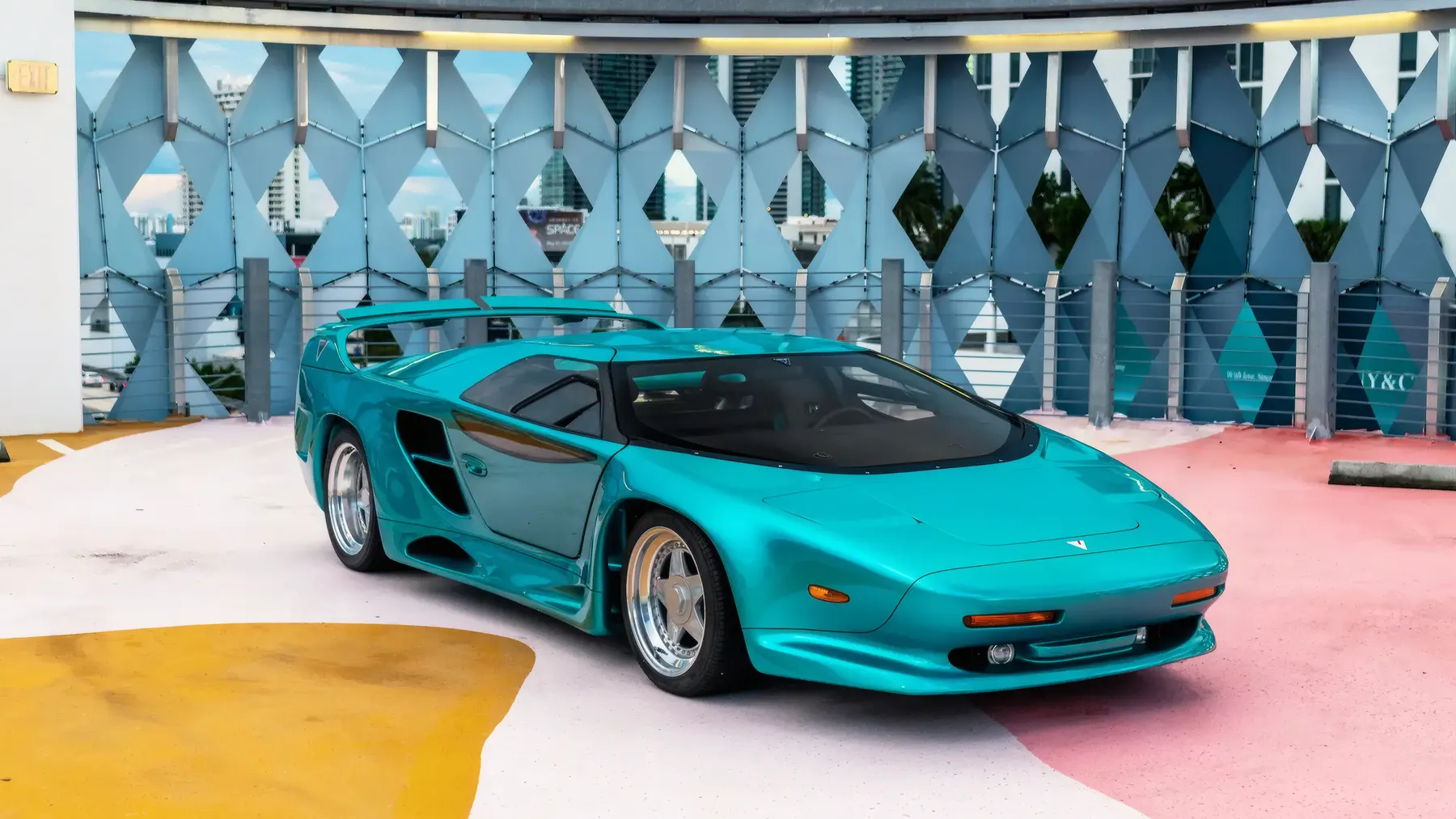
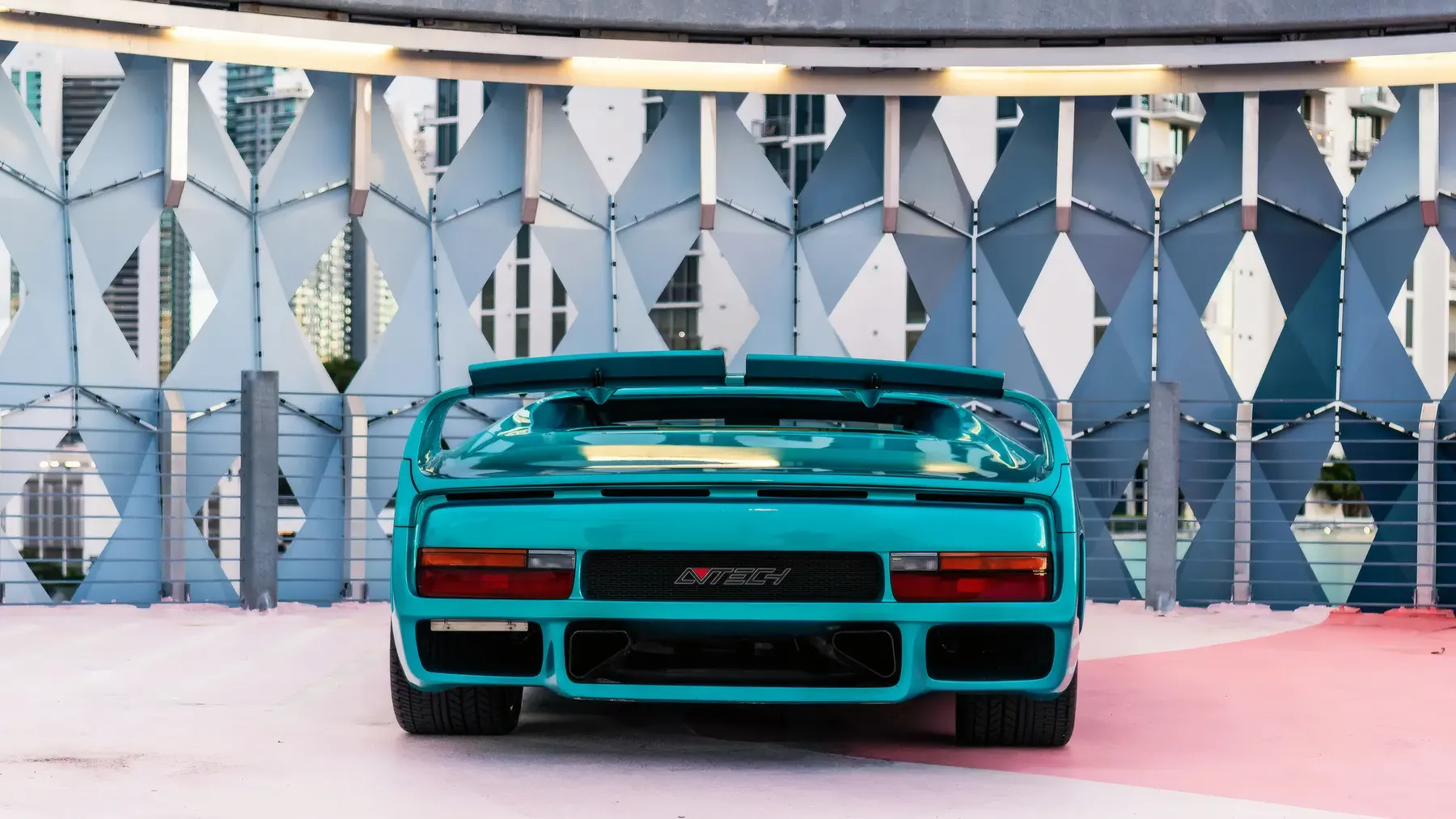
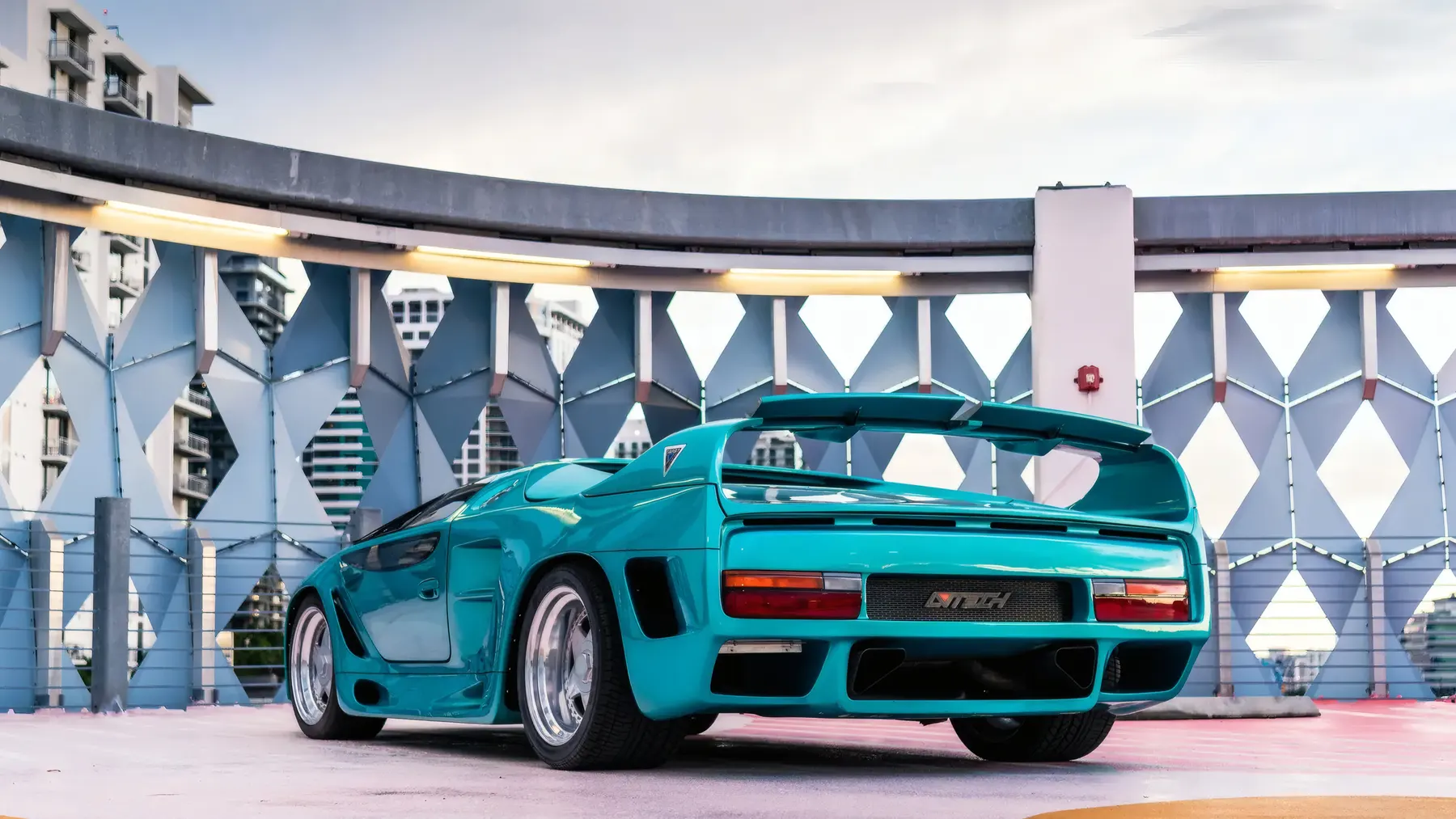
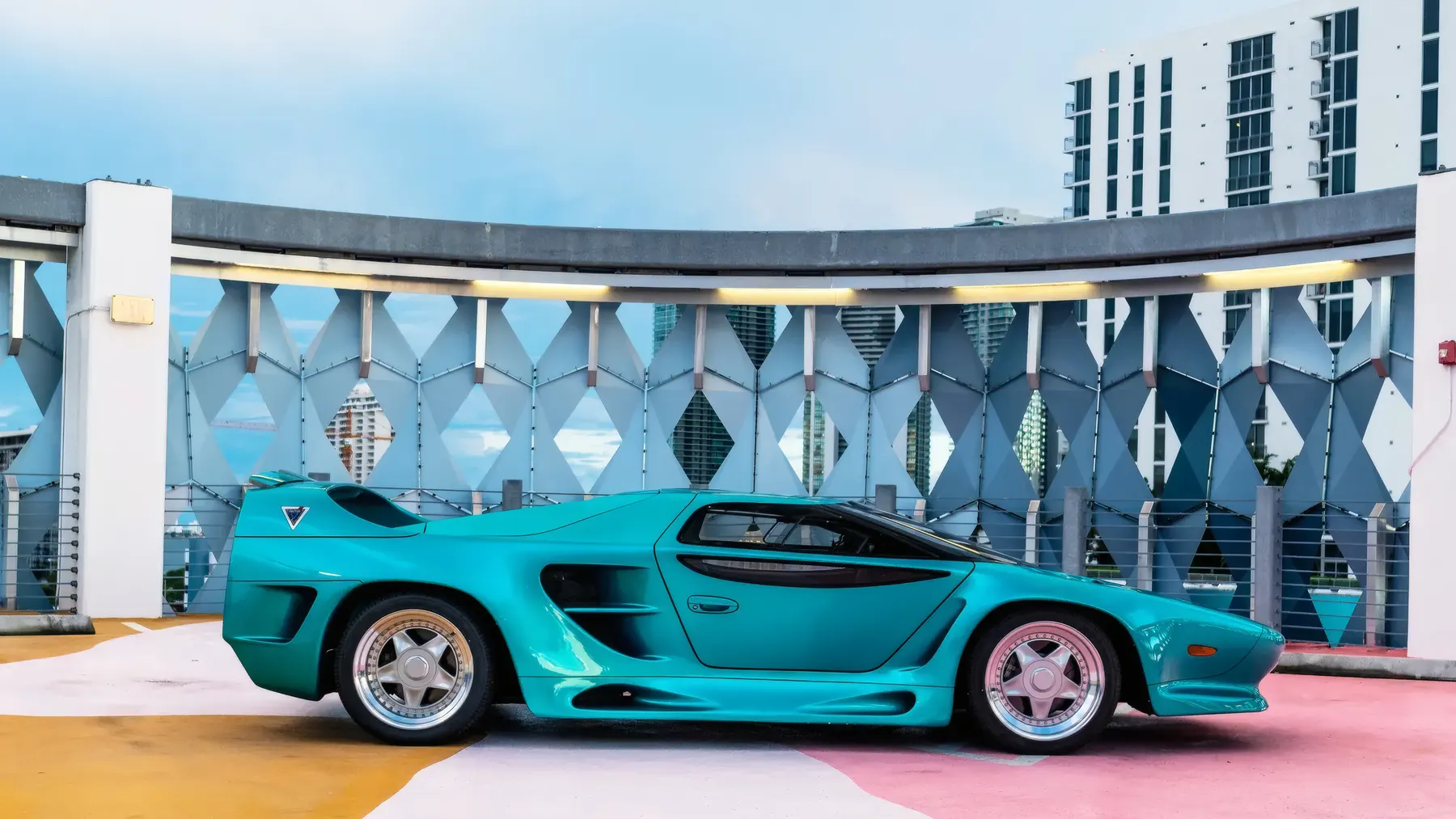
The WX-3 was conceived as the car the W8 had proved Vector could reach for. Wiegert revealed it first at the 1992 Geneva Motor Show - also showing it that year at the New York International Auto Show - initially as a non-running but fully trimmed display model finished in silver. The name decoded as “Avtech” (standing for Aviation Aerospace Technology) Wiegert Experimental, third generation. It shared fundamental architecture with the W8: an aluminium honeycomb monocoque with carbon fibre, Kevlar, and a full integrated roll cage, running independent suspension at both ends with four-wheel disc brakes. The bodywork retained the unmistakable Vector design identity - the low-slung wedge silhouette, the deliberately confrontational proportions, pop-up headlamps, and the scissor doors that opened skyward - but softened the most extreme surface angles into something fractionally more European in character without abandoning the fighter-jet theatrics. Scissor doors swung upward as on the W8. Side windows slid horizontally rather than winding, saving mass and mechanical complexity. Triangular mirrors were integrated into the A-pillars. At the rear, a large wing carried two moveable flaps offering at least the suggestion of active aerodynamic management.
Inside, the WX-3 was simultaneously more refined and more peculiar than its predecessor. The cockpit retained the aerospace instrument philosophy of the W8 in a more ordered form, with billet-machined switches and a conventionally arranged layout rather than the pure chaos of toggle-switch fighter-jet theatre that characterised the earlier car. The seating arrangement, however, was anything but conventional: the coupe prototype placed three occupants across a bench upholstered in black leather with teal trim, a configuration derived from an export option on certain W8 variants. Vector stated that production cars would have used conventional bucket seats, but in prototype form the bench survived, lending the WX-3 an eccentric character more consistent with a grand tourer than a 248 mph supercar.
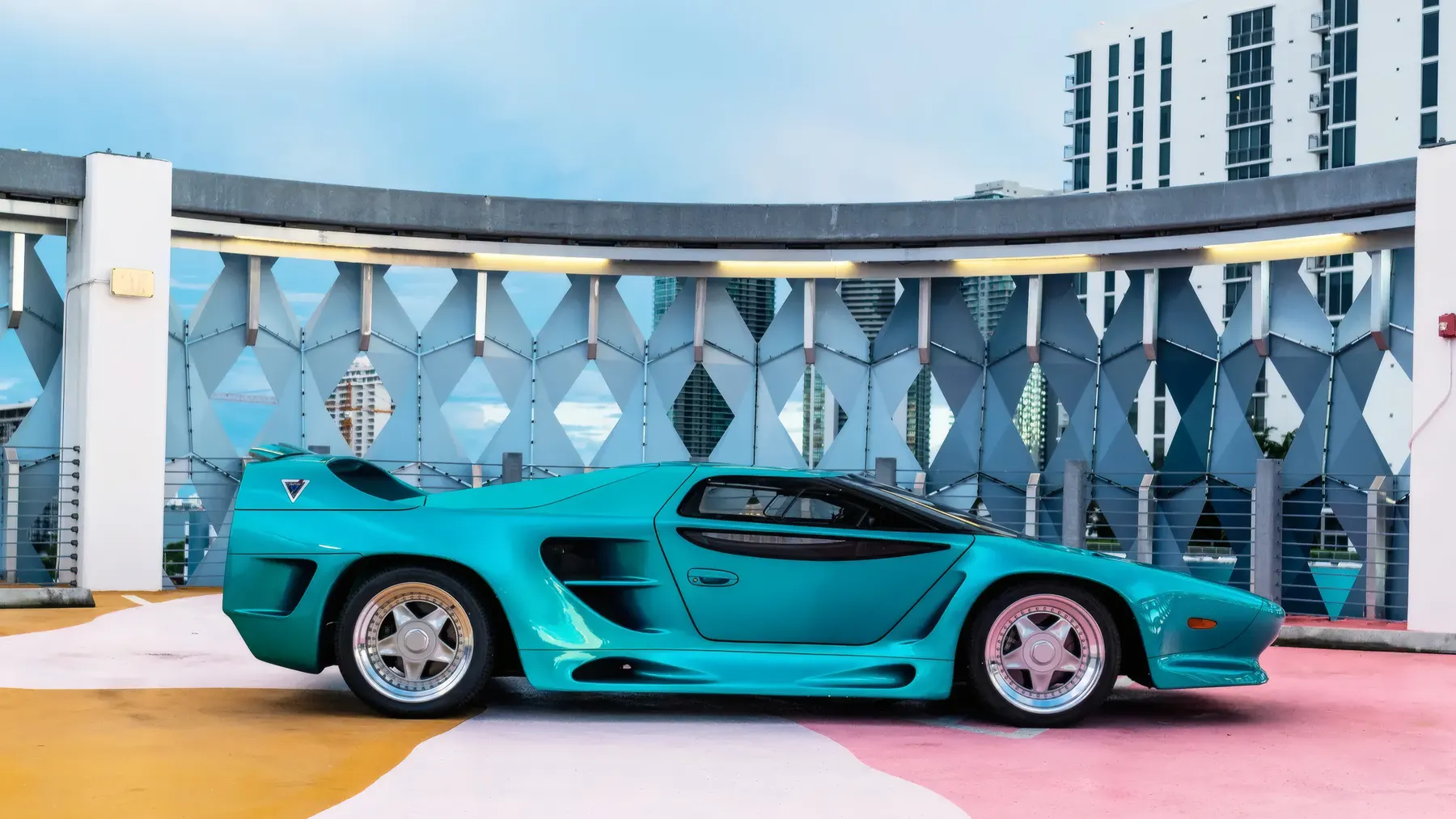
A year after the silver Geneva debut, Wiegert returned with the completed WX-3 - repainted in the Brilliant Aquamarine that echoed the corporate colours of his Aquajet jet-ski sideline - and alongside it the WX-3R, an open roadster variant in Amethyst Purple with a lower roofline, modified side windows that blended flush with the panoramic windscreen, and a revised tail. The roadster carried the 6.0-litre V8 from the W8 production cars; the coupe prototype received a 7.0-litre version of the same resleevable Rodeck racing block, fitted with an improved dual-plenum and revised throttle-body intake in place of the Corvette-derived system used on production W8s. Vector’s manufacturer-rated figure for the prototype engine was 1,000 bhp, with a claimed theoretical maximum of 1,200 bhp in the highest planned state of tune. Announced performance for the coupe - 0 to 60 mph in 3.3 seconds, top speed of 248 mph - was presented without independent verification. The production target price at Geneva 1993 was $765,000. Former Road & Track editor John Dinkel praised the completed car as without peer among its contemporaries, and the WX-3 attracted substantial coverage in period publications including Car Styling, Performance Cars, and the New York Times, as well as television appearances on the Australian technology programme Beyond 2000 and an episode of the American crime drama Burke’s Law.
Those power and performance figures require honest scrutiny, because they represent the point at which the WX-3’s compelling engineering story begins to strain credibility. A claimed 1,000 bhp from a modified racing block in a prototype was extraordinary even by standards that have since shifted considerably - in 1993, it sat in a different universe from what was independently verified in any road car. The Bugatti EB110 Super Sport, then the most technically formidable production supercar on earth, extracted around 600 bhp from four turbochargers and a bespoke 3.5-litre V12. The McLaren F1, still in development, would produce 627 bhp from a naturally aspirated 6.1-litre BMW V12. Vector never had the opportunity to subject its claims to independent testing, which is precisely why the figures have endured unchallenged. The prototype accumulated fewer than 2,625 miles in the decades since its completion - not enough to validate or refute anything.
The transmission choice is a specific and significant weakness that rarely receives the attention it deserves. Power was routed to the rear wheels via a modified General Motors Turbo-Hydramatic 425, a three-speed automatic unit borrowed from the W8 production cars. At a moment when Ferrari offered a gated five-speed manual, Porsche a six-speed, and McLaren was engineering a bespoke transmission for its own supercar project, Vector had committed its most ambitious machine to a three-speed automatic of American luxury car origin. No unit of this specification could sustain the power delivery claimed, manage heat at sustained high-speed running, or offer the control granularity a car of this pretension demanded. It was a compromise driven by cost and by the limited options available to a California startup operating with perpetual capital constraints, but it was a fundamental one that would have materially compromised the WX-3 even if the engine had matched its advertised output.
The overheating issue inherited from the W8 also casts a long shadow over the WX-3’s claims. The W8’s bodywork - with its narrow and insufficient ventilation apertures - produced documented chronic thermal management problems on the production car, a weakness that was never fully resolved during the model’s production life. One W8 delivered to the tennis player Andre Agassi overheated severely enough during a desert drive to melt the carpet above the exhaust, prompting a high-profile refund demand. The WX-3, with its broadly similar packaging philosophy and a claimed power output approaching twice that of the W8, would have faced a proportionally more severe thermal engineering challenge. It was a challenge that remained entirely untested.
Compounding all of this was a production infrastructure problem that Wiegert had effectively created for himself: according to contemporaneous accounts, he had already sold the W8’s production tooling and manufacturing facilities before the WX-3 was unveiled, leaving him without the physical means to build it even if funding had appeared. The WX-3 was, in this respect, a vision of a future that Vector could not yet actually manufacture - extraordinary in ambition, and genuinely impressive in prototype construction quality, but separated from series production by several layers of unsolved practical reality.
The corporate catastrophe that finally extinguished it unfolded with grim speed. Megatech, an Indonesian conglomerate that had acquired a controlling stake in Vector, orchestrated a board vote to remove Wiegert from his own company in early 1993 while he was in Geneva. Wiegert’s response included reportedly attempting to secure the factory physically while legal proceedings progressed, but the courts ultimately ruled against him. Through subsequent litigation, he won back the design copyrights and the two WX-3 prototypes. Megatech pressed forward with a replacement they named the Vector M12, which borrowed liberally from the WX-3’s visual language while abandoning its engineering radicalism: the M12 was powered by the Lamborghini Diablo’s 5.7-litre V12, producing 492 bhp, assembled with Megatech’s other acquisition - Lamborghini - as its mechanical donor. The M12 reached only seventeen examples before production halted in 1999. It had none of the WX-3’s technical ambition and little of its character, and it is remembered today primarily as a footnote.
Wiegert retained both prototypes, using them as promotional vehicles for his Aquajet business and periodically attempting to attract investment for a Vector revival. The coupe appeared on eBay in 2004 offered at $199,000 - a figure that reflected the car’s commercial difficulties as much as anything else - without finding a buyer. Both cars were eventually sold in 2019 to a private American collector, with the coupe subsequently receiving approximately $300,000 in restoration work carried out by Miller Motorcars of Greenwich, Connecticut, before being consigned without result at RM Sotheby’s Monterey sale in 2024 with an estimate of $1.3 to $1.5 million. Gerald Wiegert died in Los Angeles on 15 January 2021, aged 76. The WX-8 he had been developing as his final project never reached production.
What the WX-3 ultimately demonstrates about American supercar manufacturing in the early 1990s is more equivocal than its mythology suggests. The monocoque architecture was genuinely advanced, the materials specification ambitious for its time, and the design language unmistakably distinctive in a way that neither contemporaries nor successors managed to replicate. But the performance claims rested on untested assertions from a company whose previous car had never been independently verified to match its own figures, the transmission fundamentally undermined the proposed performance envelope, and the manufacturing base to build it had already been sold. What makes the WX-3 genuinely compelling - and genuinely sad - is not that Megatech killed it. It is that the obstacles between it and production were already substantial before anyone held a board vote.
Sources
- Silodrome – For Sale: The 1993 Vector Avtech WX-3 Supercar Prototype
- RM Sotheby’s – 1993 Vector Avtech WX-3 Prototype, Monterey 2024
- Wikipedia – Vector WX-3
- Wikipedia – Vector W8
- Wikipedia – Vector M12
- Wikipedia – Jerry Wiegert
- Secret Classics – Vector Avtech WX-3 & WX-3R
- Motor Authority – Jerry Wiegert, founder of Vector supercars, dead at 76
- Driven to Write – Book of the Dead: Vector
Join the discussion
Comments
Loading comments…
Leave a comment
Share a detail, memory, or perspective. Every comment is reviewed before publication.