Vector W8 Twin Turbo: The American Supercar That Took 20 Years to Arrive - and Three to Collapse
1991 Vector W8 Twin Turbo

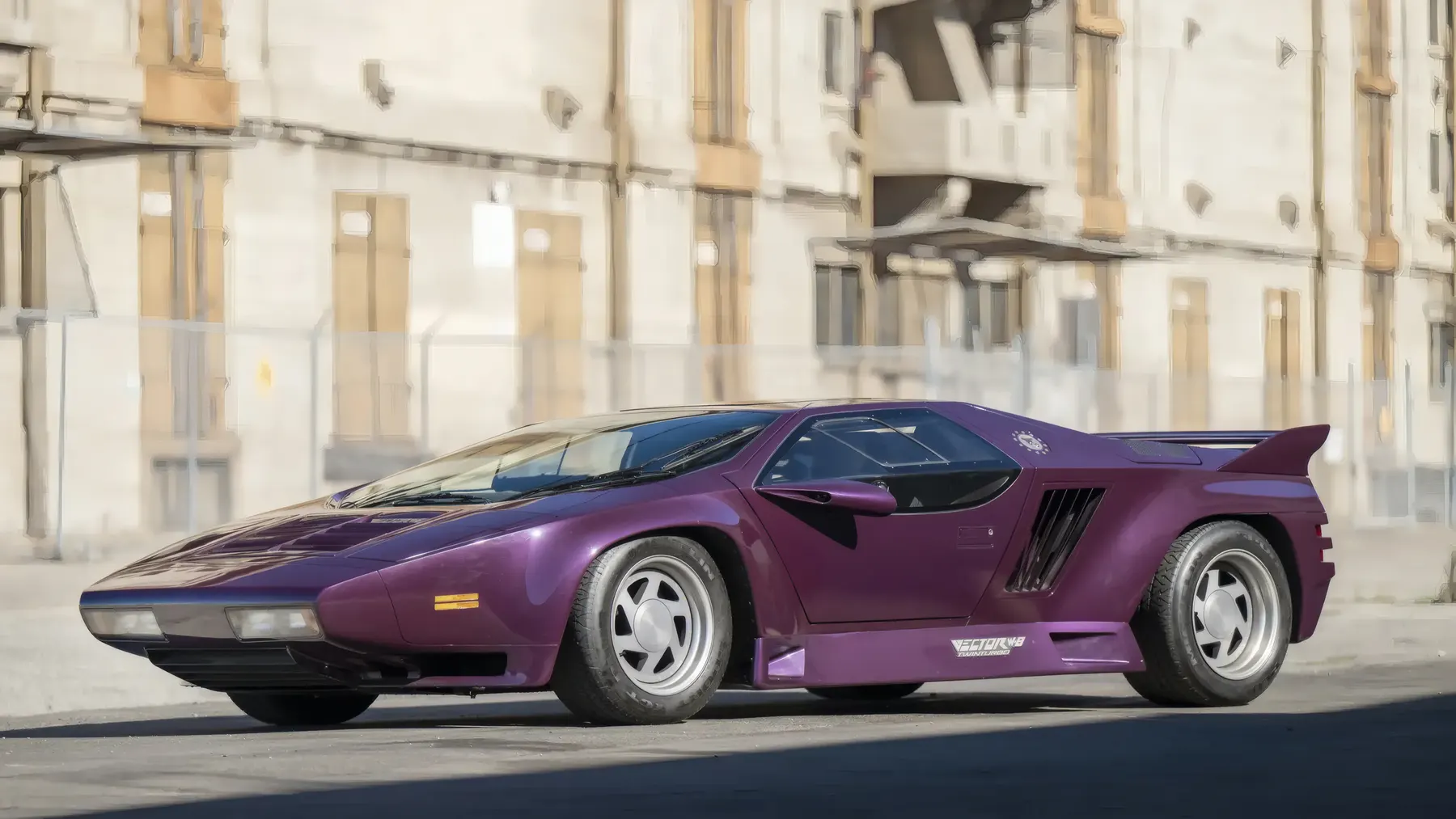
Images: Robin Adams / RM Sotheby's
When Jerry Wiegert sketched his idea for the ultimate American supercar in 1971, the competition he was aiming to destroy barely existed in its modern form. By the time the Vector W8 Twin Turbo reached its first customer in 1990 - nearly nineteen years later - Ferrari had built the F40, Porsche had produced and retired the 959 and the Acura NSX was rewriting the rulebook on what a daily-usable performance car could be. Wiegert had aimed to plant an American flag in the supercar firmament. He arrived just in time to find the ground already claimed.
That delay is the W8’s defining tragedy, and it cannot be separated from the car’s character. Everything about the Vector - the uncompromising engineering philosophy, the eye-watering production cost, the obsessive use of aerospace materials, the corporate chaos that ended it - flows from Wiegert’s refusal to cut corners or accept outside interference. He was not a trained engineer, nor a professional racing driver, nor a product of any established automotive organisation. He was a designer who had graduated from the ArtCenter College of Design in Los Angeles, spent time as a General Motors consultant, and then rejected everything GM represented by setting out to build the most technologically advanced road car on earth. In the gap between ambition and execution, a masterpiece and a disaster happened simultaneously.
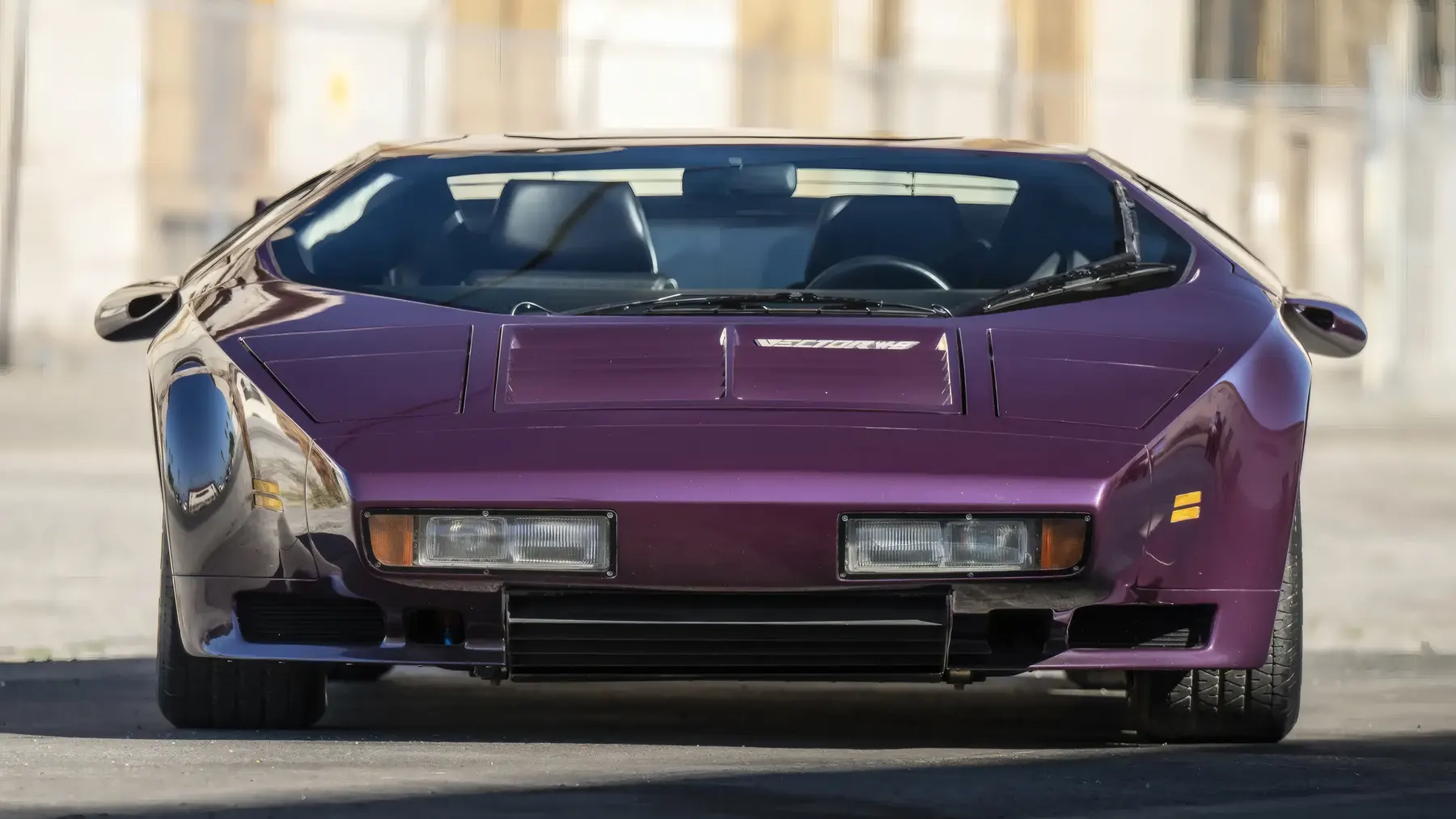
The first Vector concept appeared on the cover of Motor Trend in April 1972, beneath the caption “Vector: U.S. Challenge to Italian Styling.” The angular, wedge-shaped body wore its aeronautical influence openly. The styling drew on the same European wedge language that had produced the Alfa Romeo Carabo, the Lamborghini Countach, and the Ferrari Modulo in the late 1960s, but with a conspicuously Californian swagger - wider, lower, and more overtly aggressive. The car on that cover was essentially a fiberglass shell over a derelict Porsche chassis with no drivetrain; it looked extraordinary and was operationally nothing. Wiegert spent much of the following decade raising money, losing investors, building prototypes, and putting enormous miles on the W2 development car - often trailering it to shows because he could not afford a proper transporter.
By the late 1980s, a public offering had raised approximately fourteen million dollars, and Wiegert had grown Vector Aeromotive Corporation to 150 employees in 80,000 square feet of facilities in Wilmington, California. By the end of 1990, the first production vehicle - the W8 Twin Turbo - was finally ready for delivery.
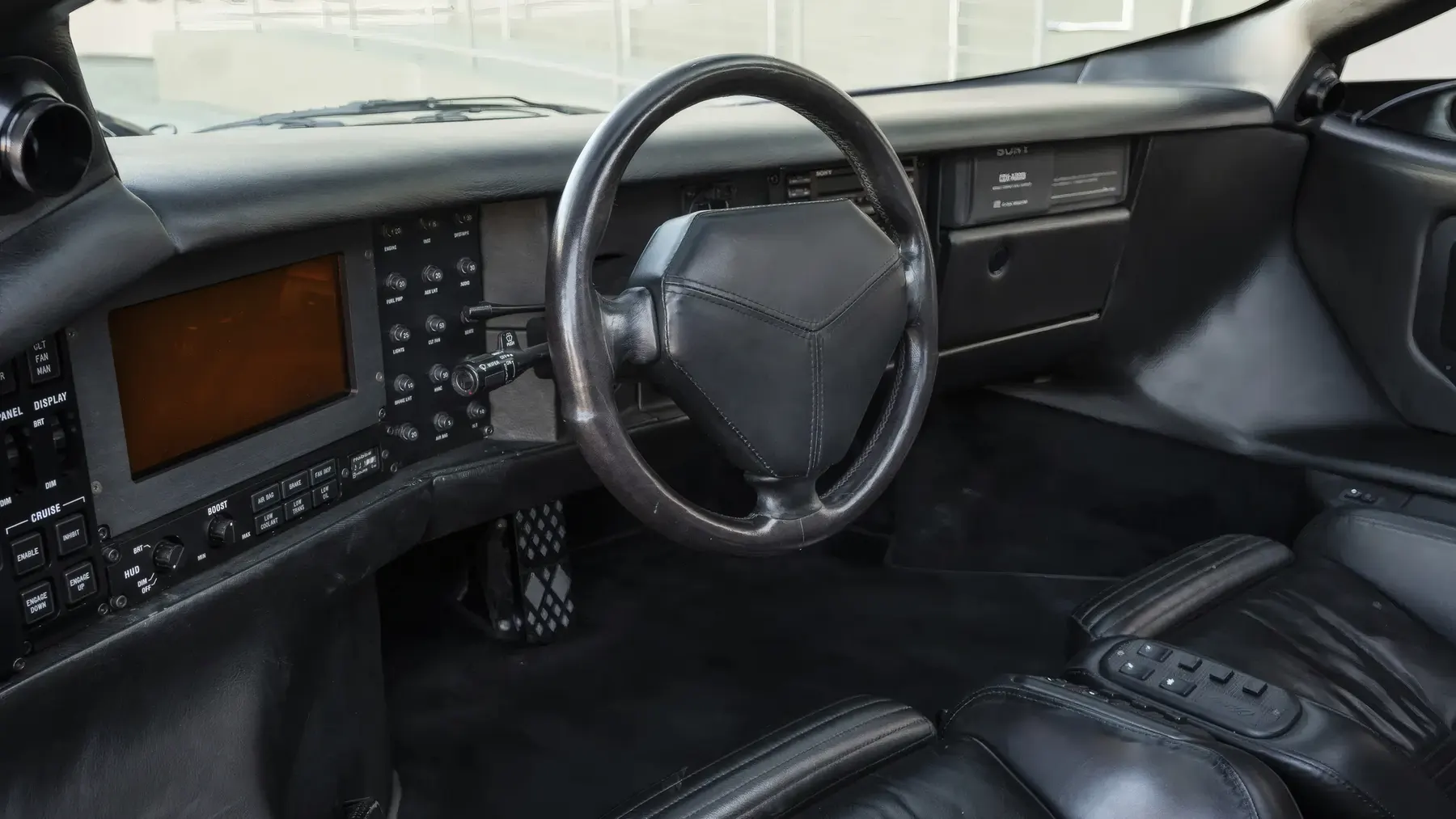
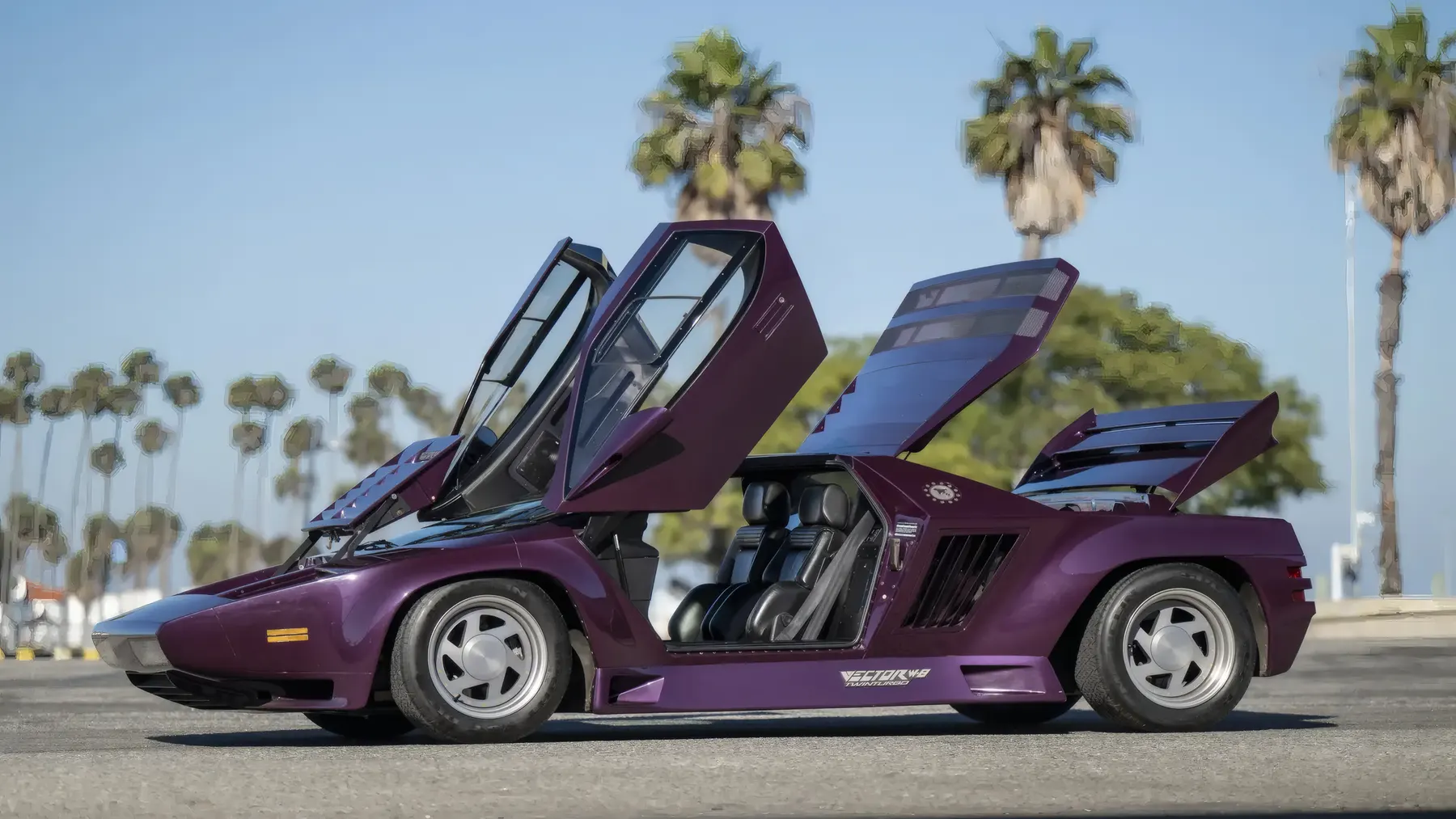
What he had built was genuinely extraordinary. The W8’s semi-aluminium monocoque was epoxy-bonded and riveted together using 5,000 aircraft-specification rivets over a honeycomb aluminium floorpan. The bodywork was carbon fibre and Kevlar - materials then far more common in military aircraft than road cars. Suspension components were aviation-certified, wiring was military-specification, fire extinguishers were fitted as standard equipment with a choice of manual or automatic actuation, and the switchgear was sourced from an F/A-18 fighter jet. The cockpit, with its electroluminescent gauges, digital readouts for speed, engine vitals and fluid pressures, and rows of toggle switches, felt less like a supercar interior and more like a briefing from a defence contractor. Even the boost pressure could be adjusted via a cockpit-mounted knob, in a range from eight to fourteen pounds per square inch. At night, drivers who glanced in their mirrors could sometimes observe the twin turbos glowing red in the engine bay behind them.
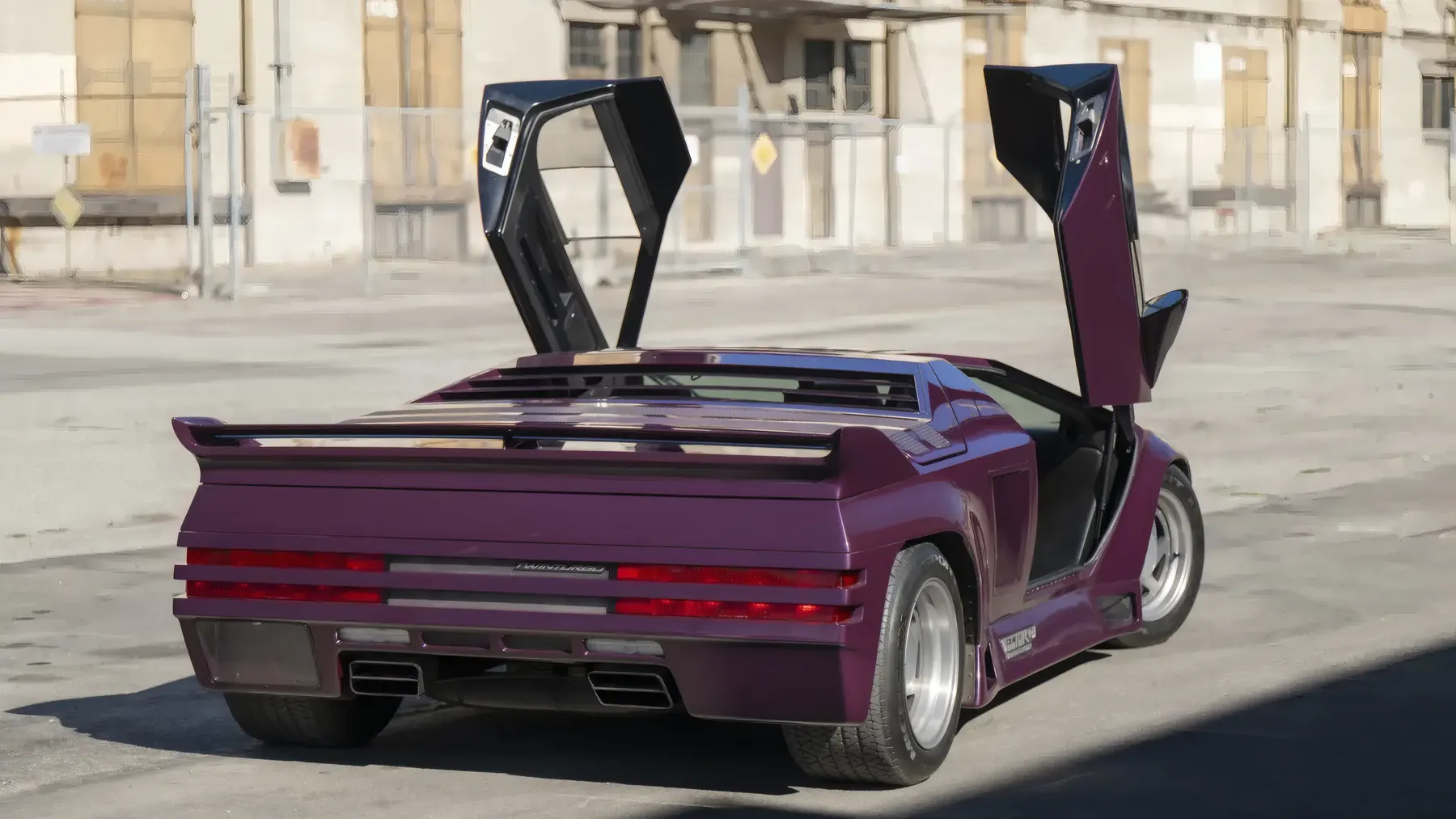
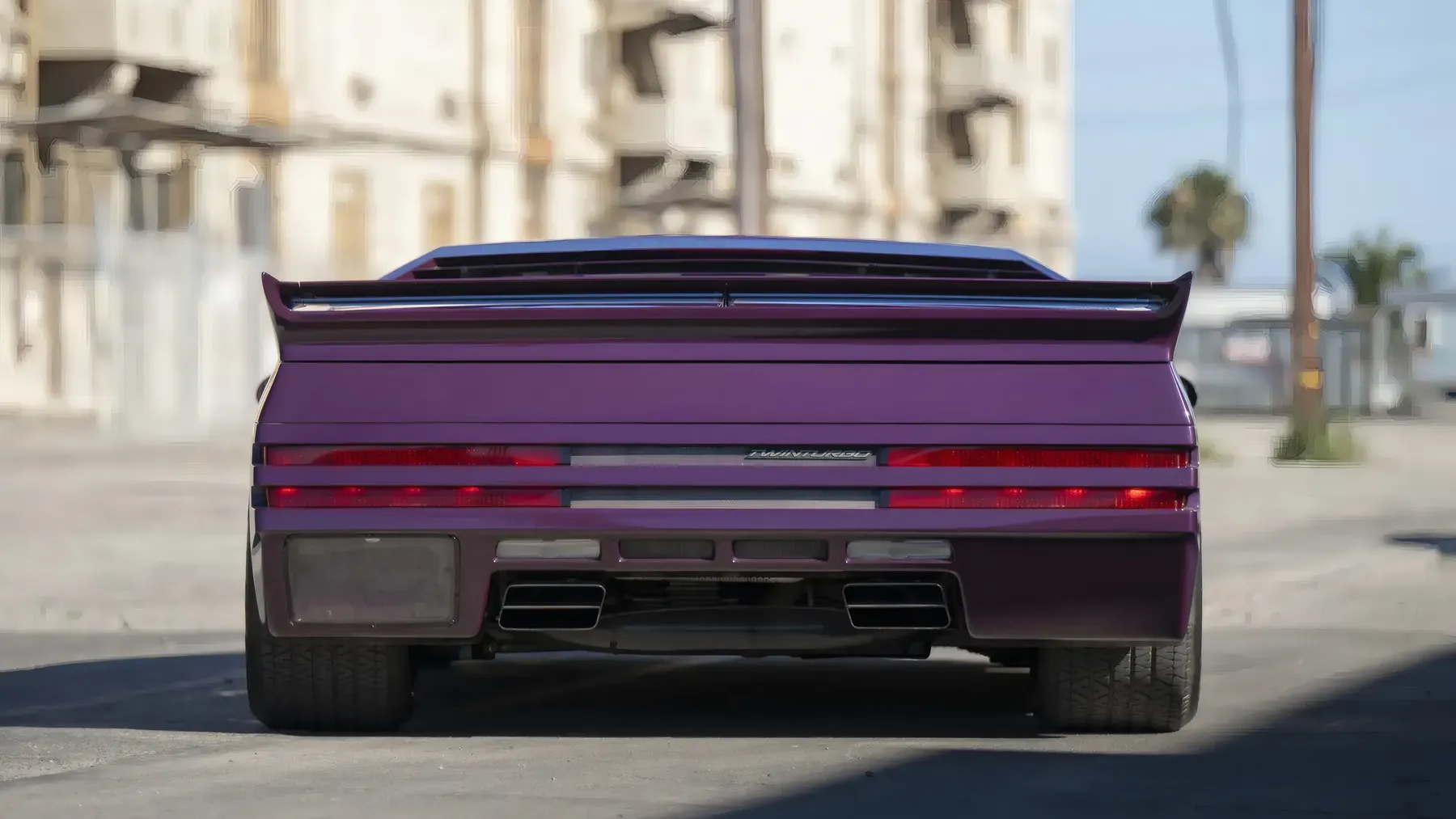
The body design evolved subtly across the short production run, so that early cars looked slightly different from later ones. Gills were eliminated, the front fascia was lowered, the air splitter sharpened, and the rear wing and mirror intakes adjusted. Production cars were also no longer fitted with the removable glass roof panel that had featured on early examples, after testing revealed significant buffeting at sustained high speeds - details that suggest a programme still being refined in the hands of customers.
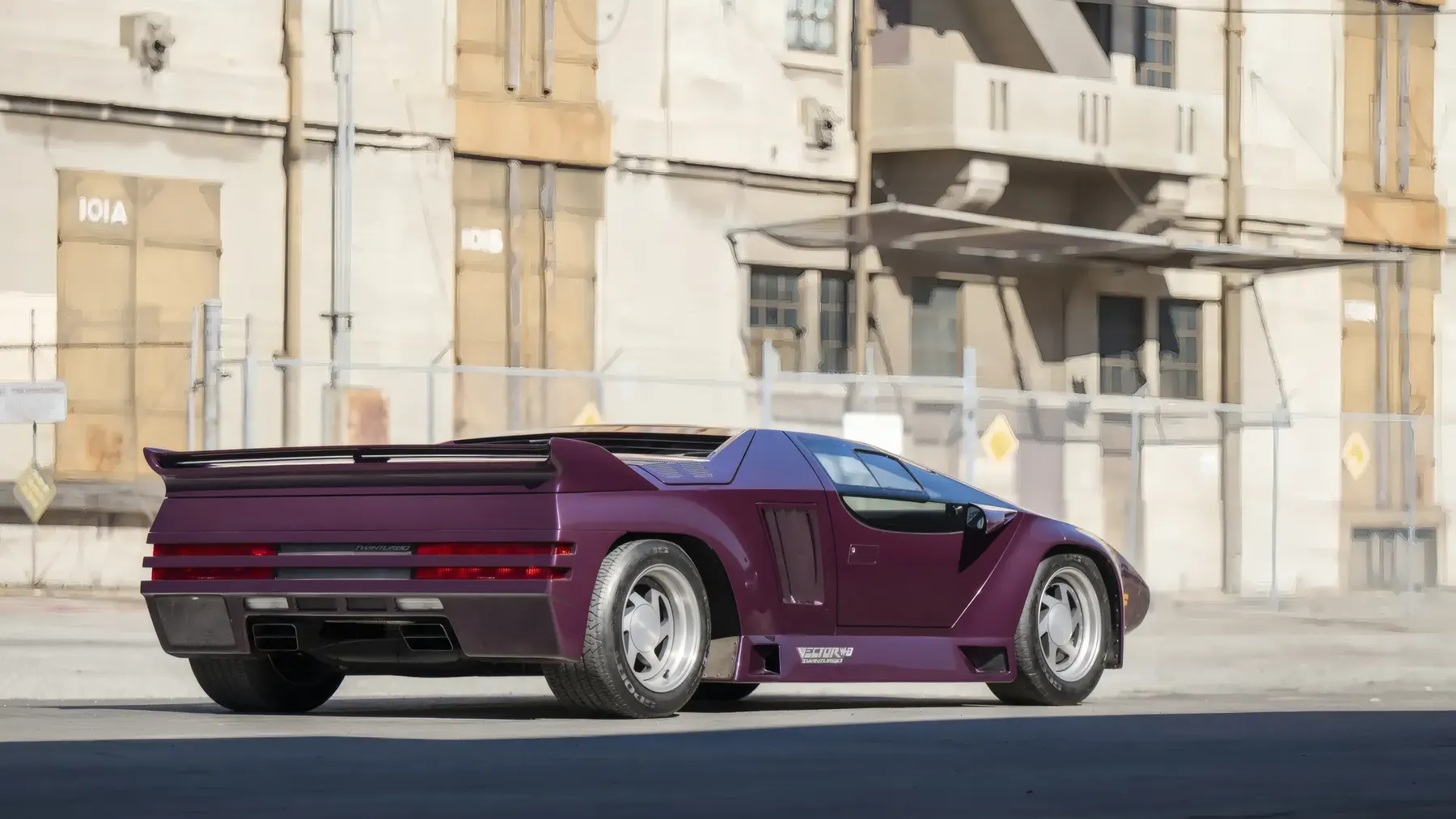
The engine sat mid-mounted and transverse - Lamborghini Miura-style - and was built to a comparably uncompromising standard. The 5,972cc 90-degree V8 used an aluminium Rodeck block, essentially the basis of a purpose-built racing drag motor. Shaver Specialties, a specialist sprint-car engine builder, assembled each unit with TRW forged pistons, a forged crankshaft, Carrillo stainless steel connecting rods, stainless steel valves, roller rocker arms, and a dry-sump oiling system with three separate oil filters and braided stainless steel hoses with anodised fittings. Two Garrett AiResearch H3 turbochargers fed a direct-port fuel injection system. The advertised output was 625bhp at 5,700rpm; torque figures vary slightly between period sources - somewhere between 630 and 649 lb-ft at 4,900rpm, the discrepancy likely reflecting different boost settings - with the driver-adjustable range extending up to 14 psi, at which point Vector’s own factory dyno reportedly recorded outputs approaching 1,200bhp. That number Wiegert was not above citing when convenient.
The performance, when the car cooperated, was extraordinary by any contemporary measure. Car and Driver, testing prototypes in early 1991, recorded 0–60 mph in 3.8 seconds and a standing quarter-mile in 12.0 seconds at 118 mph. Road & Track, in a more favourable session, achieved 0–60 mph in 4.2 seconds, a quarter-mile in 12.0 seconds at 124 mph, and a lateral acceleration figure of 0.97g on the skidpad - the highest the magazine had recorded for any road car at that time. The top speed was claimed at 218 mph, a figure Vector never had independently verified; the more extravagant claims of 242 mph cited occasionally in period material came from Vector’s own internal Bonneville testing using a detuned engine. Test driver Doug Kott of Road & Track, recalling his time behind the wheel, described the turbochargers coming onto boost as feeling like entering hyperspace.
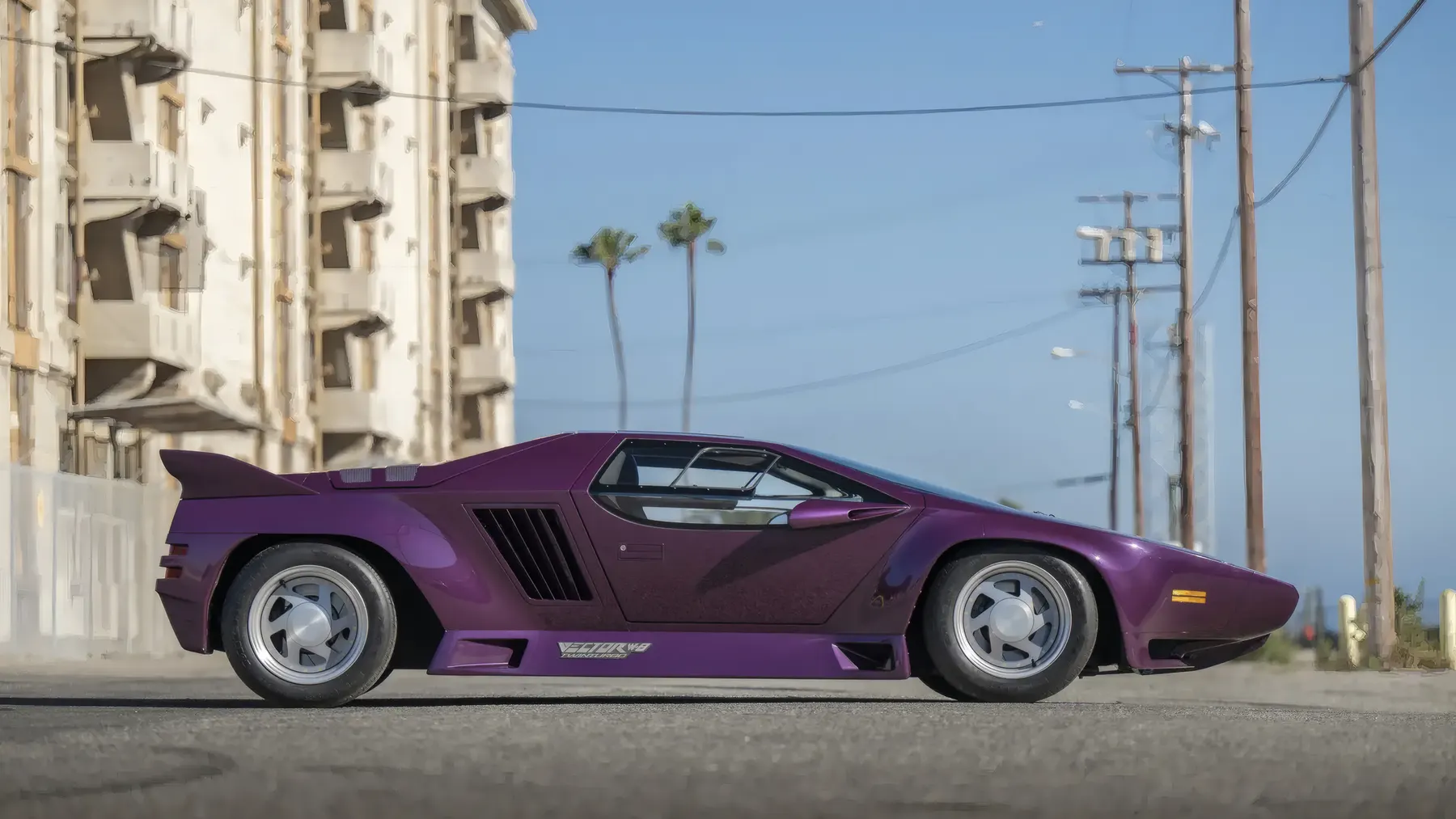
Wiegert was insistent that no luxury had been omitted, either. Recaro seats with electronic adjustment, heated cushions, and inflatable lumbar were standard. So was air conditioning, full leather trim, a Bosch hi-fi system, and power-assisted steering. The massive, seven-faceted panoramic windshield was one of the W8’s most striking design features, but under the California sun it also created a greenhouse effect that could make the cabin uncomfortably warm. Entry required lowering oneself past a substantial sill into a cockpit that sat just over a metre from the road; the scissors doors opened upward in the correct tradition. There was no centre console, a consequence of the transversely-mounted transmission that left an unusually open floor between the two occupants.
Despite a thoroughly refined component list everywhere else, there was one mechanical choice on which the W8 drew sustained criticism: the gearbox. The GM Turbo-Hydramatic 425 three-speed automatic had originally been developed in the 1960s for front-wheel-drive Oldsmobiles and Buicks. The casing was original; almost everything inside had been substantially rebuilt to handle the engine’s output, and a ratcheting mechanism allowed clutchless manual shifting. Wiegert argued that the engine’s enormous torque made additional ratios unnecessary. But a three-speed slushbox in a car priced at approaching half a million dollars, at a time when the Ferrari F40 offered a proper six-speed manual, was an extraordinarily difficult position to defend on paper - and the gearbox did not defend it on the road, either. The first of Car and Driver’s two test cars failed its transmission after completing photo runs. The second car overheated not once but four times during testing. When Csaba Csere finally managed a handful of usable passes - at three o’clock in the morning on a deserted boulevard near LAX - the transmission of that car began misbehaving too. Csere’s verdict in retrospect was candid: Wiegert was a gifted stylist who had assembled premium components without the engineering development experience to fully integrate them into a reliable whole.
The cooling system’s difficulties were more than a press-day embarrassment. When the André Agassi incident became public - the tennis star returning his W8 after the exhaust heat melted the carpet in the boot - Wiegert maintained the car had been delivered early and under instruction not to be driven until final emissions calibration was complete. Whatever the precise truth, the story circulated widely, reinforcing the impression that the W8 was being sold before it was ready. Car and Driver had been explicitly asked not to attempt any top-speed running during its test session because the car had not yet been properly validated at those speeds - and that restriction was in place while customer deliveries were already under way.
Beyond the specific mechanical failures, the W8 faced an intractable commercial problem: the extraordinary cost of building it. By 1992, the base price had risen to approximately 450,000 dollars. The company had been chronically undercapitalised from the start - Wiegert estimated his total expenditure across factory, infrastructure, and 23 completed cars at under 35 million dollars, a fraction of what Ferrari or Porsche spent on individual model programmes, and the consequence was an inability to properly develop and validate the car before putting it into customers’ hands. When Indonesian investors connected to the Megatech group offered the capital the company needed, Wiegert allowed them in. By March 1993, those investors had manoeuvred effective control away from him. His board voted to remove him. Wiegert responded by hiring armed guards, changing the factory locks, and barricading himself inside - one of the more operatic scenes in the history of any independent car manufacturer. The courts eventually ruled against him. The company relocated to Florida; the subsequent Vector M12, a Lamborghini Diablo-derived machine with almost none of the W8’s aerospace rigour, failed commercially and critically. Wiegert regained the Vector name through litigation in 1999 but the company never recovered. He died in 2021.
Seventeen customer cars and two pre-production examples were the complete output of the Vector W8 programme. That figure sits awkwardly alongside the scale of Wiegert’s claims and the genuine technical ambition behind them, but it is not the number of a fraud. The numbers the car produced in sessions where it behaved - 0.97g skidpad, sub-four-second 0–60, 12-second quarter-miles - were legitimately competitive with anything Ferrari or Porsche were selling. The materials, the structure, the aeronautical purity of the brief: these were the work of a serious mind. They were just not the work of a company that had the industrial depth, development time, or financial reserves to fully realise them.
The W8 found its widest audience not through the seventeen people who bought one but through the poster market it dominated in the late 1980s, and through the racing video games of the early 1990s where its extraordinary claimed specification made it an obvious selection. One of its owners, a Beverly Hills entrepreneur named Wil Wengert who eventually owned two examples, drove his cars extensively throughout Southern California without the reliability problems that plagued the press. His testimony suggests that the W8, properly prepared and maintained, could deliver on at least part of what Wiegert had promised - and perhaps that its press reputation was shaped more by inadequate pre-production development than by fundamental engineering failure. Collector values have climbed substantially since then, reflecting a growing recognition that the car, whatever its faults, was unlike anything else attempted by an American independent in the twentieth century. That may be the most honest summary available: not the world’s finest supercar, not a failure, but an act of automotive ambition so extreme that the gap between what it promised and what it delivered became the most interesting thing about it.
Sources
- Hagerty Media - Jerry Wiegert and the saga of the star-crossed Vector supercar (Preston Lerner, March 2019)
- Below the Radar - The story of the Vector W8 supercar (Richard Dredge)
- Wikipedia - Vector W8
- Audrain Auto Museum - 1992 Vector W8
- Jalopnik - The Vector W8 Was America’s Only True Independent 20th-Century Supercar
- ConceptCarz - 1991 Vector W8 Twin Turbo Specifications & Dimensions
Join the discussion
Comments
Loading comments…
Leave a comment
Share a detail, memory, or perspective. Every comment is reviewed before publication.