Porsche 356 A 1600 Convertible D by Drauz: The Speedster's Rare Fill-In
1959 Porsche 356 A 1600 Convertible D by Drauz

Images: Motorcar Studios / RM Sotheby's
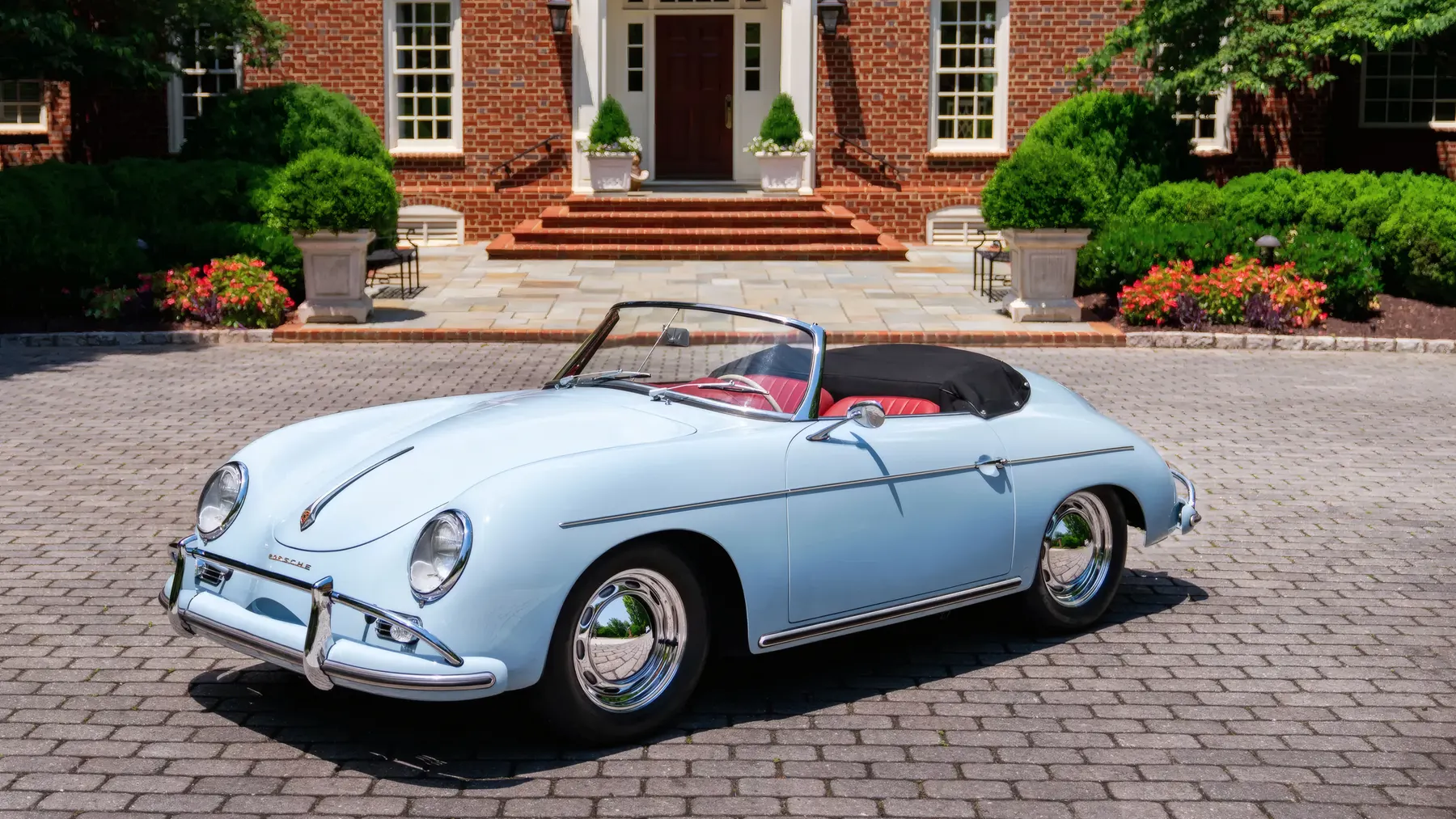
In the summer of 1958, Porsche had a body-supply problem it could not solve with its usual partners. Reutter, the Zuffenhausen coachbuilder that clothed the great majority of 356s, was running flat out just keeping pace with coupé and cabriolet orders, and Karmann was committed elsewhere. So when Porsche needed a body for a new open model, it turned to a firm it had never used before: Karosseriewerke Drauz of Heilbronn, a coachbuilder whose bread-and-butter business was pressing out sedan shells for Ford’s West German Taunus line and van bodies for Ford and DKW. Founded in 1900 by Gustav Drauz and Rudolf Leopold, the company had built bodies for Daimler, NSU, Adler and Fiat over the decades, but it had never built a sports car body before, let alone one for Porsche. What emerged from that arrangement, produced for a single model year and effectively forgotten by the wider public ever since, has become one of the most quietly coveted 356 variants of all: the 356 A 1600 Convertible D.
The car existed to fix a problem of Porsche’s own making. The 356 Speedster, introduced in 1954 largely at the urging of American importer Max Hoffman, had been designed as a stripped-out, low-cost weekend racer for the booming Californian sports car scene: bucket seats, a low chopped windscreen, removable side curtains instead of wind-up glass, and a minimal top that was more a formality than genuine weather protection. It worked brilliantly as a competition tool and a cheap way into Porsche ownership, but outside the US the reception was cooler, and by 1958 sales were sliding even domestically. Porsche’s own sales literature and dealer correspondence from that period acknowledged the problem directly, and the fix Porsche settled on was a new open model built specifically to smooth over the Speedster’s rough edges while a proper, more luxurious successor - the 356 B Roadster - was readied for 1960. The Convertible D, its “D” suffix simply denoting the Drauz coachwork rather than any performance designation, was conceived explicitly as that stopgap.
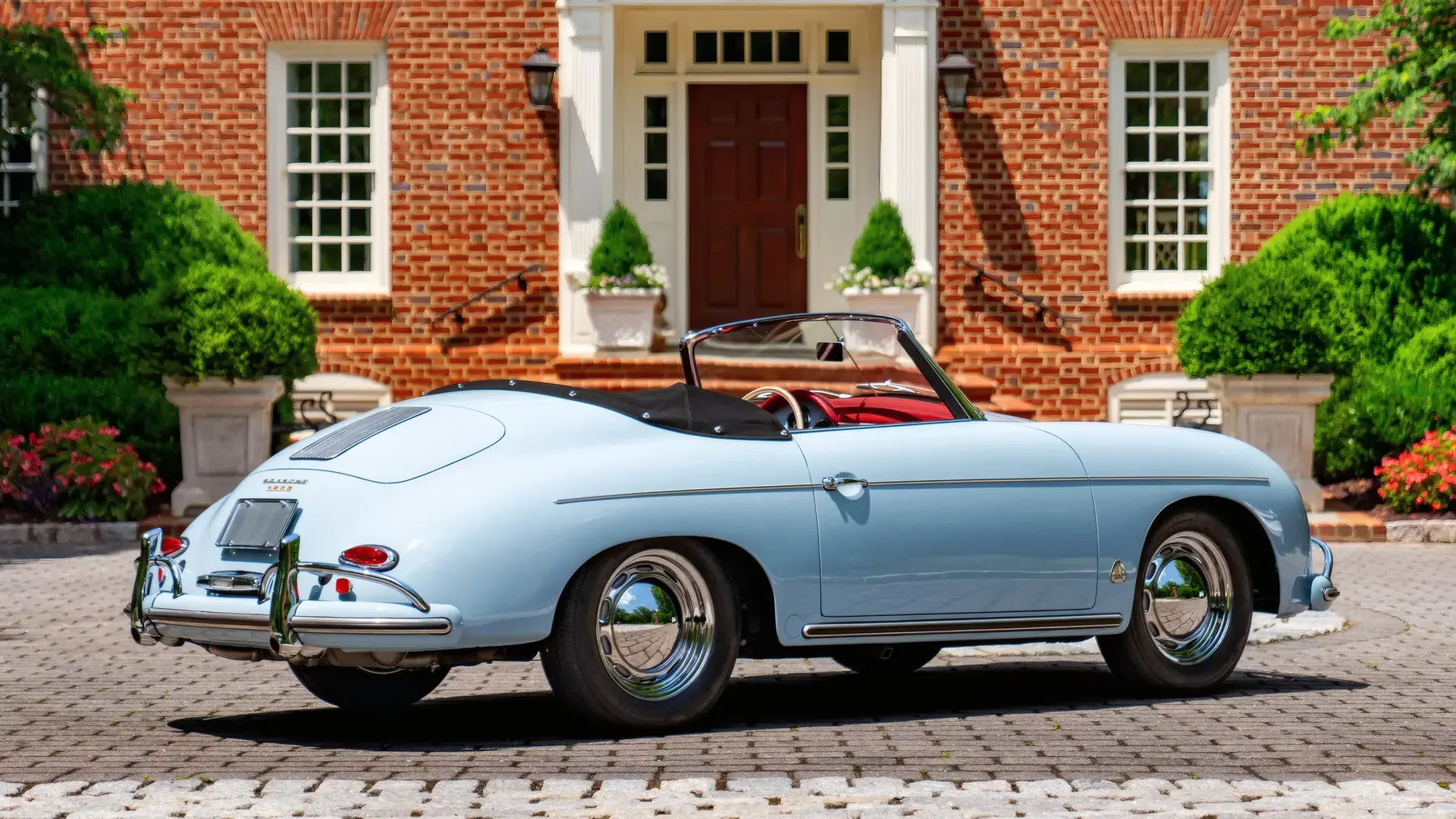
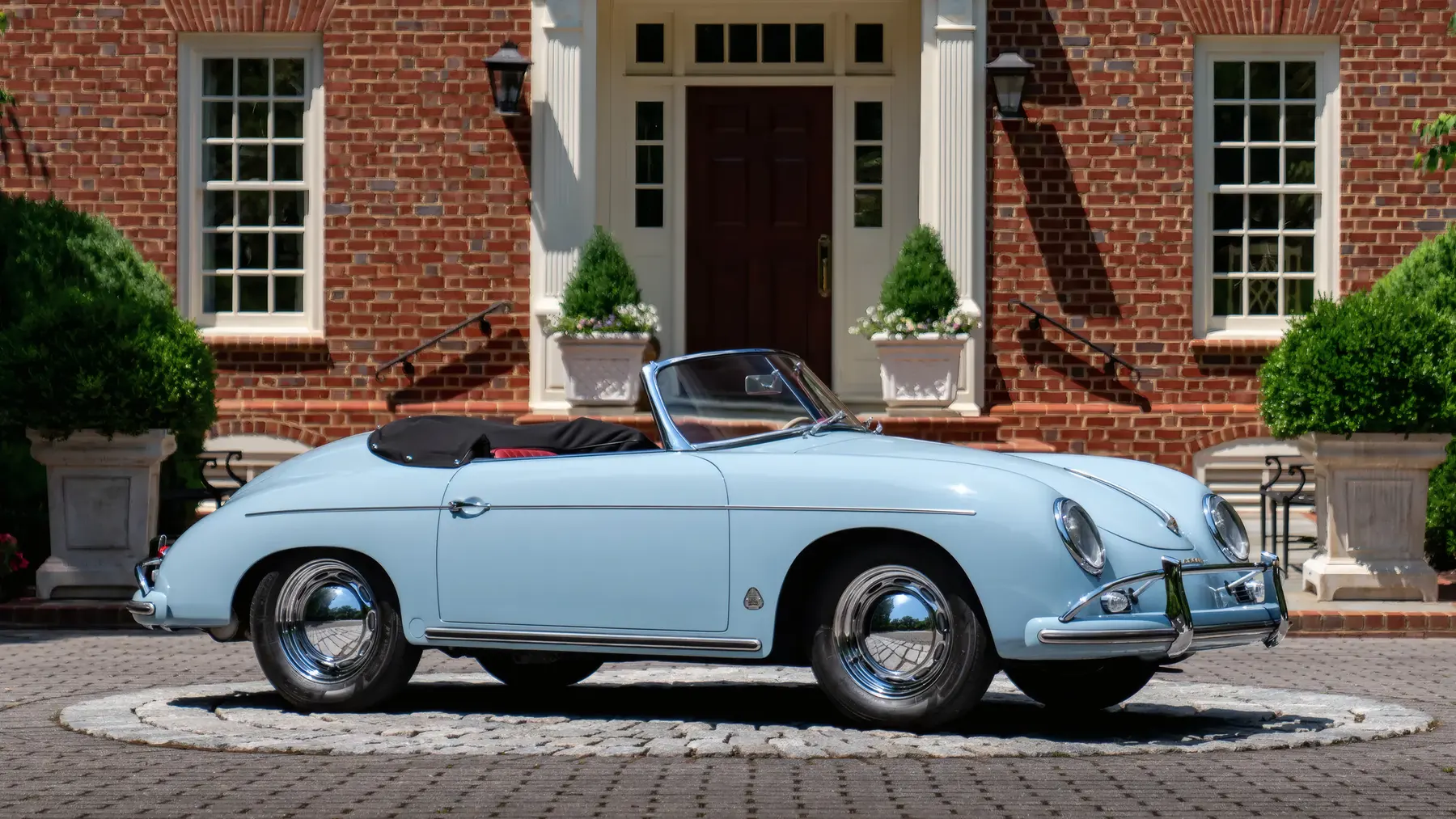
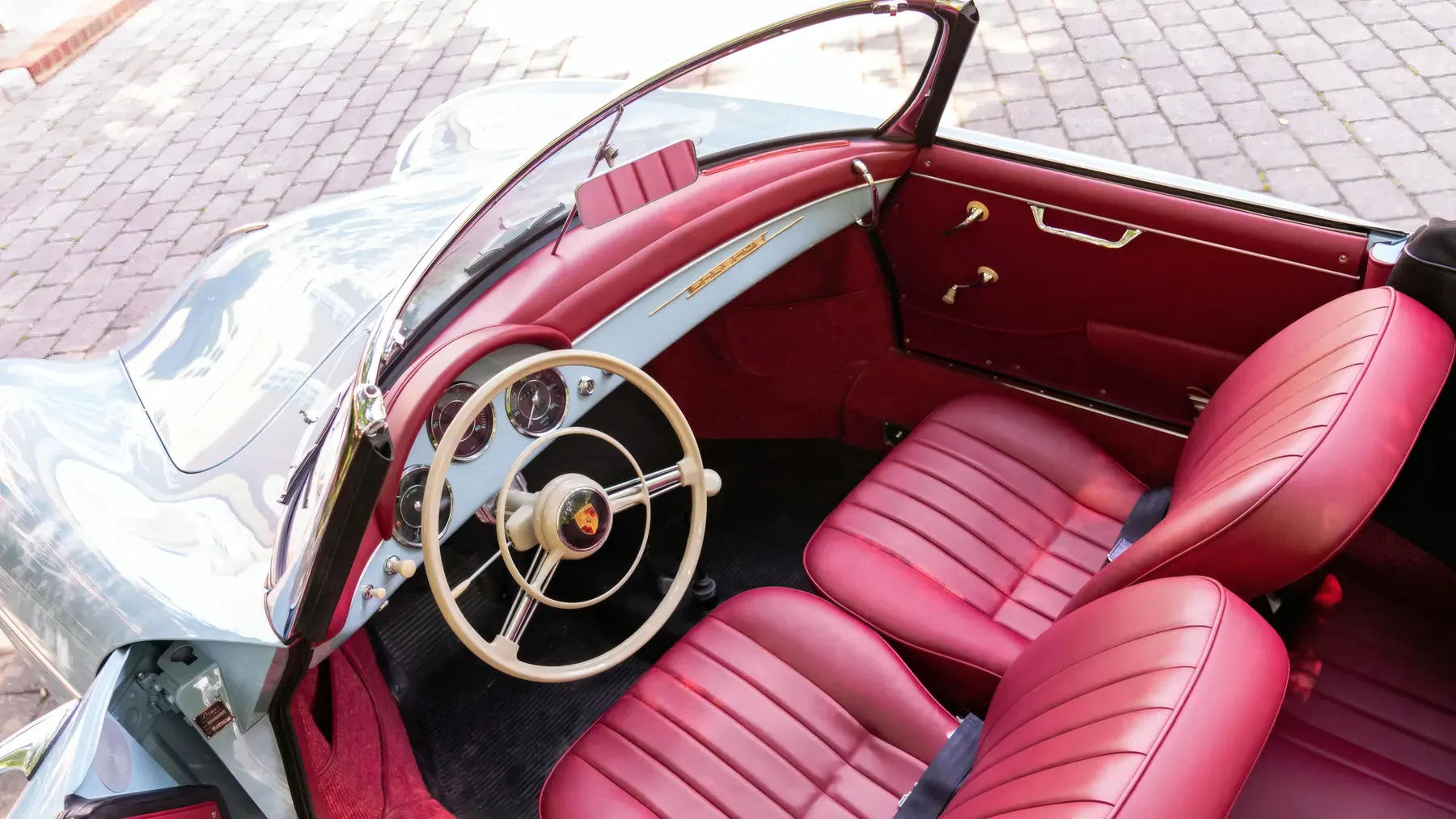
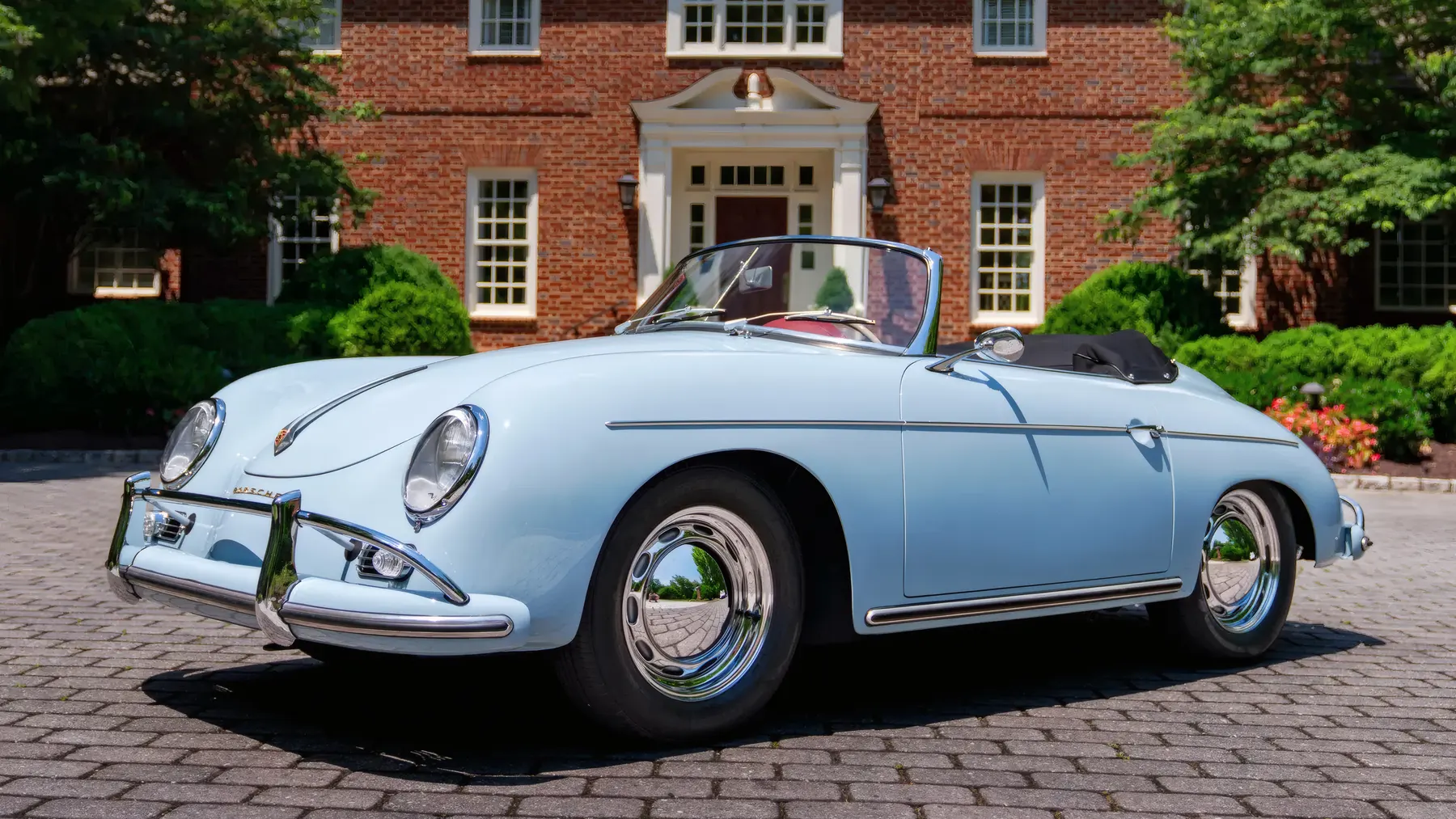
What Drauz actually changed was subtler than a new body might suggest, because the doors, floorpan and much of the lower structure carried over from the Speedster and cabriolet tooling. The windscreen was completely redesigned: taller, with a stronger chrome-plated brass frame and a better seal against the new top, and the finished car sat roughly 3.5 inches higher overall as a result. Real wind-up door glass replaced the Speedster’s flimsy snap-in side curtains, a change that alone did more for everyday usability than anything else on the options list. The folding top itself was reworked around a tubular steel frame rather than the Speedster’s simpler arrangement, gained an extra bow, and added rain gutters above the side windows - a small detail, but one that mattered to anyone who had been caught out in a Speedster during a sudden shower. The rear window grew larger again, door pockets appeared inside for the first time, and the front seats switched from the Speedster’s thinly padded competition buckets to proper coupé-style chairs, with reclining seats offered as an option rather than standard fit. Speedster script and badging disappeared from the front fenders, replaced by a small Drauz coachbuilder’s plate on the lower right fender - a quiet acknowledgment of who had actually built the thing.
Mechanically, the Convertible D was pure 356A. Buyers could specify the base 1600 engine, internally designated Type 616/1, or the more highly tuned 1600 Super, Type 616/2 - both air-cooled, overhead-valve flat-fours of 1,582cc fed by twin Solex carburettors and driving the rear wheels through a four-speed manual gearbox, hung out behind the rear axle line in the layout Porsche had inherited and refined from the Volkswagen Beetle. Suspension followed the same formula as every other 356A: independent front suspension on trailing arms and torsion bars, and Porsche’s characteristic independent rear swing-axle, also torsion-bar sprung, with drum brakes at all four corners. None of this was exotic even by 1959 standards - Porsche was still, at heart, refining VW-derived running gear rather than starting from a clean sheet - but the combination of a light, taut body and communicative, unassisted steering gave the car a directness that period road testers clearly valued. A four-cam Carrera engine could theoretically be ordered too, but almost nobody did: of the roughly 1,330 Convertible Ds Drauz built, only two left the factory with the exotic and expensive Carrera unit under the decklid, according to the Convertible D Registry’s research into factory production records.
One detail illustrates just how much of a stopgap the Convertible D really was. According to a Porsche factory service bulletin dated January 1959 and preserved in specialist 356 literature, the new fully synchronised Type 716 gearbox was rolled out across the rest of the 356A range that month - with a single, explicit exception carved out for Convertible D cars destined for the United States, which continued to be fitted with the older Type 644 transmission and its US-tuned gear ratios. In other words, buyers of Porsche’s newest, more expensive open model in its largest market were, for a period, given an older gearbox than customers buying a standard coupé. It is a small thing, invisible on a spec sheet that simply says “four-speed manual,” but it is a genuine and specific compromise, and it is entirely in keeping with a car that was, by design, a stopgap assembled from a mix of carried-over and updated parts rather than a from-scratch replacement for the Speedster.
Contemporary reaction bore that duality out. Road & Track tested the car in April 1959 under the headline “Porsche D,” describing it as a car made more desirable and, pointedly, more expensive than before, and noting that it was luxuriously equipped for something costing close to $4,000 - a substantial jump from the Speedster’s original list price of around $2,995. The magazine came away impressed, concluding that the Convertible D represented outstanding value within Porsche’s range, but that price increase mattered, because it undercut the very thing that had made the Speedster special in the first place. The Convertible D Registry, which has spent years cataloguing surviving cars and period documentation, notes bluntly that many Porsche purists complained loudly in 1958 about the loss of the Speedster’s minimalist, racier character - and they had a point. Wind-up windows, a taller screen and proper seats made the car easier to live with, but they also added weight and cost to a formula whose appeal had partly rested on being cheap, light and unpretentious.
That tension between refinement and purity runs through the Convertible D’s real shortcomings, and they are worth naming plainly rather than waved away as charming period quirks. The price increase over the Speedster eroded the car’s original value proposition at a moment when Porsche’s reputation for accessible sports-car thrills was still being built. The US-market gearbox situation described above was a genuine step backward in specification terms, however minor in daily use. Braking remained drum-only at all four corners, adequate for the car’s performance in period but a real limitation once compared with the disc brakes Porsche would introduce on the 356C only a few years later. Weather protection and cabin comfort, while improved over the Speedster’s near-absent provisions, were still modest by the standards of a proper cabriolet - this was still fundamentally a lightweight open body with a canvas top, not a weathertight touring car, and heating in air-cooled 356s of this era was famously marginal. And like every 356 of the period, the Convertible D’s complex, multi-panel unitary body construction left plenty of hidden cavities where moisture could collect, a rust vulnerability that Hagerty’s own guidance to 356 buyers still flags as the single biggest consideration when evaluating any car from this generation today. None of these were unique failings - most rivals of the era shared some combination of them - but they were real, they mattered to period owners and they still matter to anyone maintaining one of these cars now.
The other defining fact about the Convertible D is simply how briefly it existed. Drauz built the model for one model year only, 1959, with production actually spanning two calendar years - from August 1958 through September 1959 - and the Convertible D Registry’s chassis-number research puts the total at 1,331 cars, though it notes that subsequent research by marque historian Steve Heinrichs suggested the true figure may be one higher, at 1,332. Because these were hand-built, low-volume cars produced alongside Drauz’s higher-volume Ford Taunus work, they did not always leave the coachworks in strict chassis-number order, and Porsche’s own final assembly sometimes reshuffled the sequence further to accommodate factory inspection holds or special-order equipment. That combination of a short run, an unglamorous production process, and an identity sandwiched between two far more famous open 356 variants meant the Convertible D never really got the chance to build a reputation of its own in period. It was superseded for 1960 by the 356 B Roadster, built on the new T5 body and offering similar open-air style with a more finished, upmarket feel; a final, tiny run of T6-bodied Roadsters, switched to Belgian coachbuilder D’Ieteren Frères after Drauz’s involvement ended, closed out the lineage in 1962 at just 248 cars before Porsche abandoned the “budget open” 356 concept altogether in favor of its standard Cabriolet line.
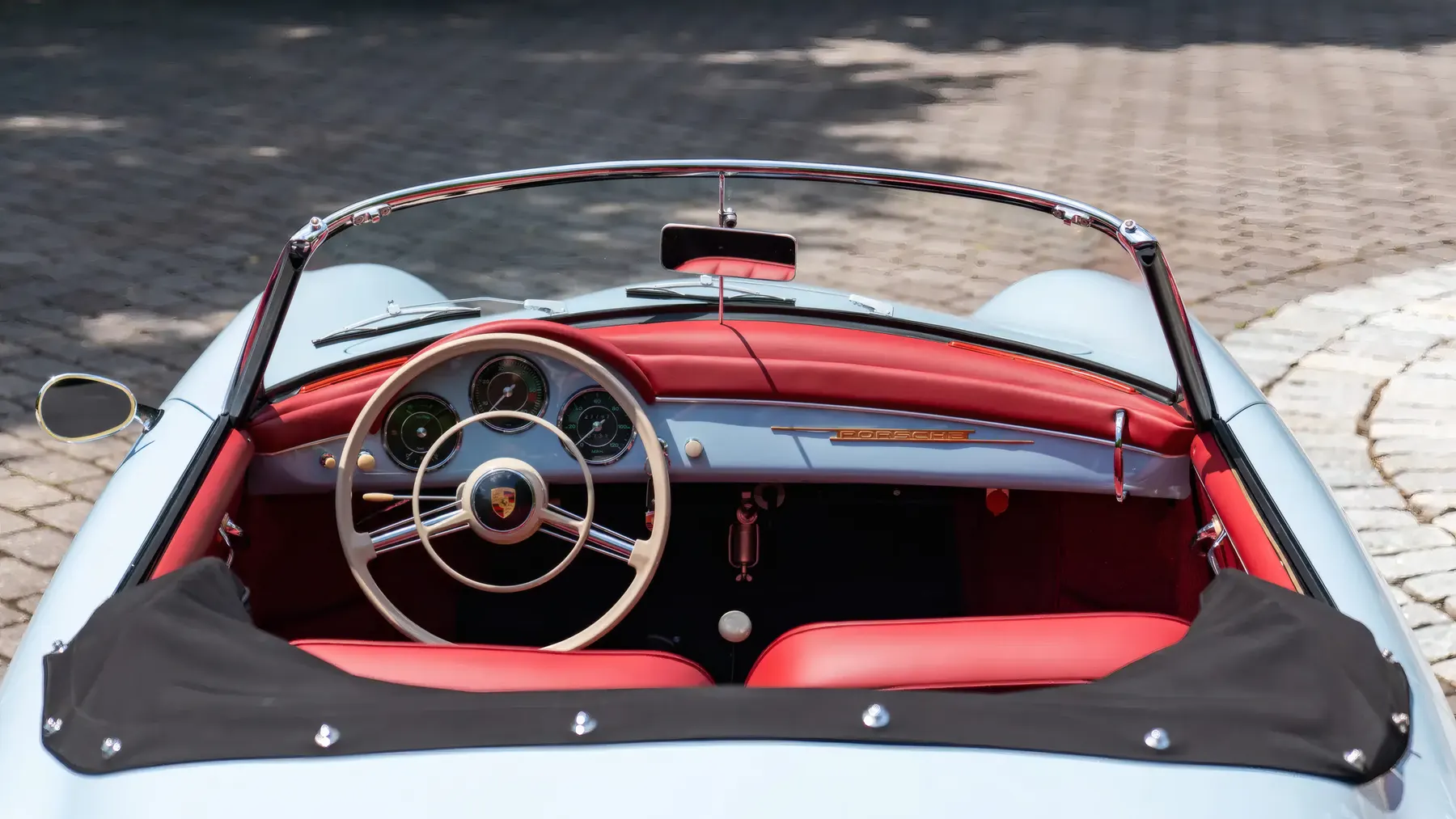
That obscurity is precisely why the Convertible D matters to collectors now. It occupies an unusually specific niche: meaningfully more usable than a Speedster, thanks to real windows, a better top and proper seats, yet far scarcer than the 356 B Roadster that replaced it, and built in a single, tightly documented model year that gives it a clean, self-contained story. It is, in effect, the connoisseur’s answer to Speedster mania - a car that keeps the same low, sloping beltline and open-top character while being genuinely easier to drive to dinner. The irony, as the Convertible D Registry points out, is that the Speedster, Convertible D and Roadster were all considered the least desirable, least expensive 356 body styles in period specifically because they lacked the weather protection and comfort of a proper coupé or cabriolet; today those same models, headed by the four-cam Carreras and the 550 Spyder, sit at the top of the 356 collector hierarchy.
None of that collector-market status changes what the car actually was when new: a fast, honest, slightly compromised solution to a specific production and marketing problem, built by a company that had never made a sports car before and would never make one again. That is not a story of a masterpiece engineered from first principles. It is a story of a manufacturer under commercial pressure making a pragmatic call, farming out coachwork to a sedan-body specialist, and ending up - almost by accident - with a car that captured the outgoing Speedster’s low-slung charm while quietly fixing most of the complaints leveled against it. The Convertible D’s significance was never really about outright performance or technical innovation. It was about Porsche, barely a decade into building cars under its own name, demonstrating that it could listen to a market it had misjudged and respond within a single model year - even if the resulting car was, by its own design, never meant to last much longer than that.
Sources
- Convertible D Registry – 356A History
- Convertible D Registry – Road & Track Road Test
- Convertible D Registry – Production Numbers
- RM Sotheby’s – 1959 Porsche 356 A 1600 Convertible D by Drauz, Monterey 2024
- RM Sotheby’s – 1959 Porsche 356 A 1600 Super Convertible D by Drauz, The Don Davis Collection
- Elferspot – Porsche 356 A 1600 Super Convertible D 1959
- Sotheby’s – Connoisseur’s Convertible: Subtle Differences Make the 356 A Convertible D the Porschephile’s Pick
- Stuttcars – Porsche 356 B 1600 Super 90 (1959–1963)
- Stuttcars – Porsche 356 Buyer’s Guide
- DerWhite’s Little Known Facts About 356 Porsches
- Hagerty Valuation Tools – 1958 Porsche 356A 1600 Super
- Silodrome – Porsche 356 A 1600 Convertible D by Drauz
Join the discussion
Comments
Loading comments…
Leave a comment
Share a detail, memory, or perspective. Every comment is reviewed before publication.