Citroën DS3 WRC: How a Smaller, Twitchier Car Kept Citroën Winning
2011 Citroën DS3 WRC

Images: Kevin Van Campenhout / RM Sotheby's
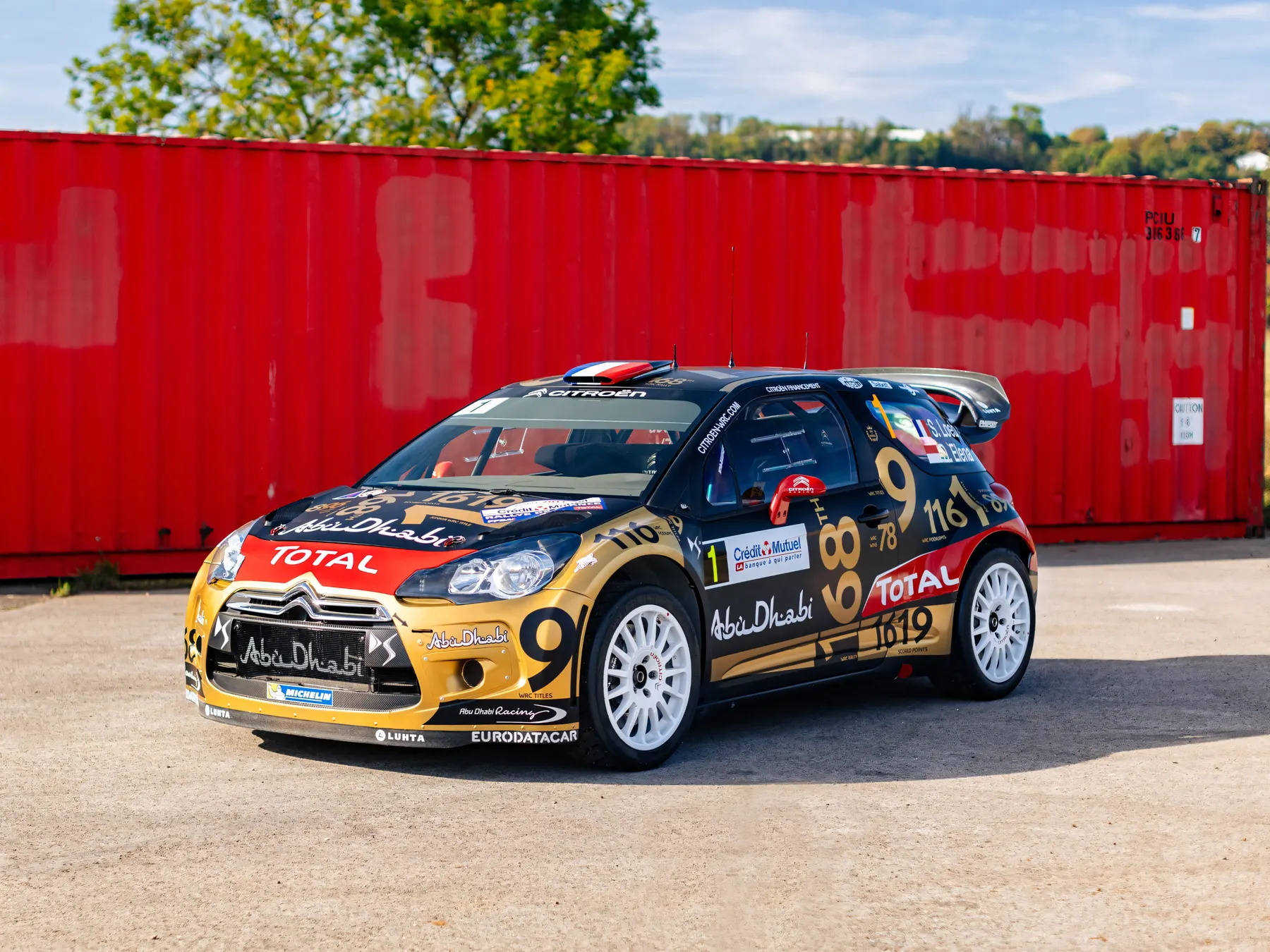
Sébastien Loeb had won six consecutive world titles in a car built around a two-litre engine and an electronically managed centre differential, so when Citroën handed him a shorter, front-engined turbocharged newcomer for 2011, even rallying’s most successful driver had to relearn parts of his craft. The Citroën DS3 WRC wasn’t an evolution of the all-conquering C4 WRC it replaced; it was a forced reinvention, the product of a rewritten World Rally Car rulebook that shrank engines to 1.6 litres, outlawed the sophisticated centre differentials that had defined the previous generation, and pushed manufacturers toward smaller, cheaper road cars as a homologation base. Ahead of the car’s debut, Loeb himself acknowledged that its shorter wheelbase made it noticeably sharper through slow corners but also less settled at speed than the C4 it replaced - a fair summary of the trade-off Citroën’s engineers had accepted in chasing the new rules.
Underneath the DS3 road car’s stubby, two-tone bodywork sat an engine that, for the first time under the new regulations, owed nothing to a production block; the rules no longer required a World Rally Car’s engine to share its cylinder architecture with a road-going unit. The result was a 1,598cc turbocharged four drawn from the PSA/BMW joint-venture “Prince” engine family - the same base architecture found in the Mini Cooper S road car, an ironic link given Mini fielded a rival World Rally Car of its own - running double overhead camshafts, BMW-derived Valvetronic-style variable valve timing and direct injection through a mandatory 33mm turbo restrictor. It officially produced 300 bhp at 6,000 rpm but only 258 lb-ft of torque at 3,250 rpm - a substantial drop from the roughly 419 lb-ft the outgoing C4 WRC’s two-litre engine had produced. Combined with the ban on centre differentials, which left the DS3 WRC dependent on a ZF limited-slip front differential and a mechanical rear unit rather than the driver-adjustable systems of the C4, the car had noticeably less low-end shove to disguise any traction shortfall. Drive passed through a 184mm cerametallic twin-disc clutch to a Sadev six-speed sequential gearbox that, in a cost-driven quirk of the 2011 regulations, had to be shifted via a conventional floor-mounted lever rather than steering-column paddles. At 1,200 kg and 3,948mm long on a 2,461mm wheelbase, it was around 270mm shorter than its predecessor, with a track widened by roughly 20mm to help compensate. Only around twenty examples of the DS3 WRC were ever built, the minimum needed to satisfy FIA homologation rules - a reminder of how far removed this hand-built competition machinery was from the mass-produced supermini whose silhouette it borrowed.
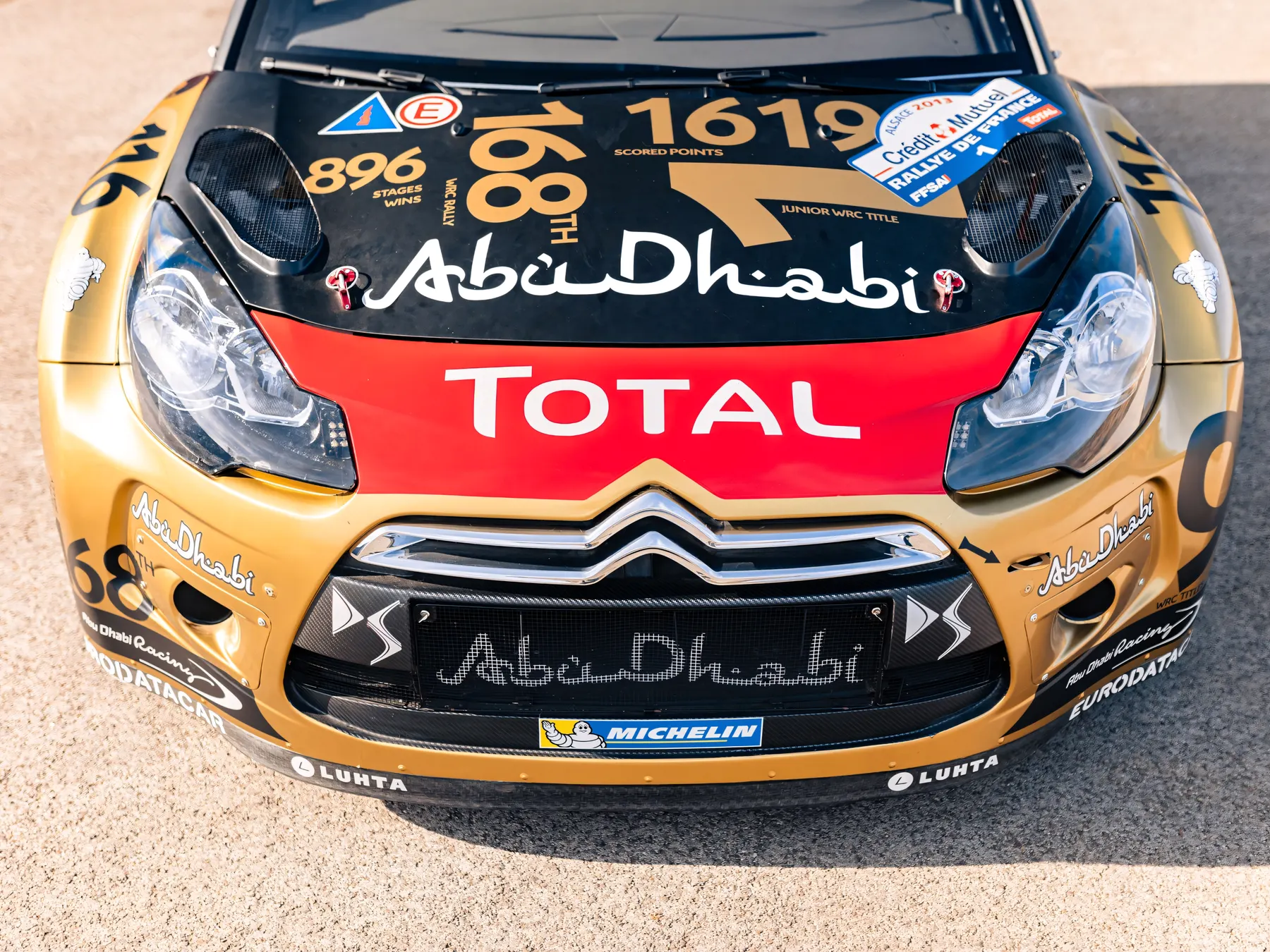
Citroën dressed the competition car in the DS3 road car’s contrasting-roof, chrome-trimmed styling, a look that never entirely shook off the polarising reputation of the underlying supermini; one long-running rally statistics archive rated the road car’s design as unattractive and judged the rally version only a modest improvement. Underneath the bodywork the engineering was tighter and more purposeful, with a reinforced steel monocoque, a welded roll cage, and MacPherson-strut front suspension running three-way adjustable dampers - a compact, focused package built to extract the most from a smaller car.
The DS3 WRC’s competitive debut, at the ice-and-snow Rally Sweden in February 2011, was underwhelming: Ford’s new Fiesta RS WRC swept the top three positions, with Ogier fourth, privateer Petter Solberg fifth and Loeb only sixth. The car found its feet almost immediately afterwards. Loeb took its maiden win at the next round, Rally México, and Ogier - promoted to a full works seat after a year of development driving - followed up with back-to-back victories in Portugal and Jordan. By season’s end the two Frenchmen had combined for ten wins between them, Ogier adding Greece, Germany and France to his tally while Loeb added Italy, Argentina, Finland and Spain to his. Their relationship soured across the season, coming to a head at the Acropolis Rally, where Ogier was accused of deliberately slowing on the Saturday to force Loeb to sweep loose gravel from the road ahead of him the following day, and again in Germany, where Citroën imposed team orders to protect Loeb’s championship position. Loeb held on for his seventh straight drivers’ title and Citroën’s manufacturers’ crown, but the season also cost Ogier his seat: he was released by Citroën that November and had signed with Volkswagen within days.
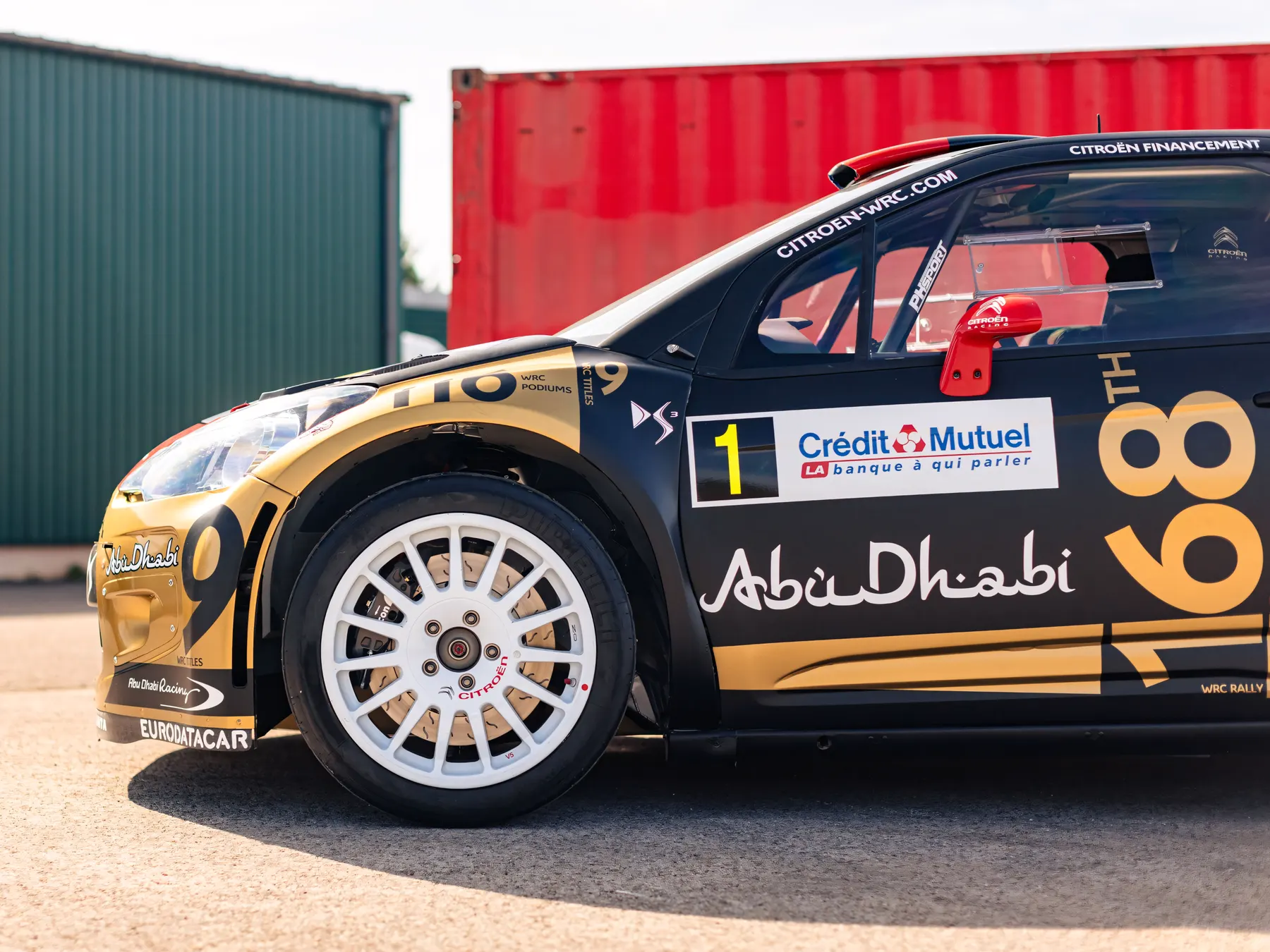
With Ogier gone and Mikko Hirvonen arriving from Ford as Loeb’s new team-mate, 2012 turned out to be the DS3 WRC’s high-water mark. Loeb won nine of thirteen rounds to claim a ninth consecutive drivers’ title, while Citroën’s manufacturers’ tally climbed to 453 points, comfortably enough to beat Ford by 144. Autosport recognised the car’s dominance with its Rally Car of the Year award for 2012. It would prove to be the last title Citroën has won in the World Rally Championship.
The DS3 WRC underpinned a surprisingly broad slice of the WRC entry list beyond the factory two-car effort, too. Privateer and satellite squads ran the car from its first season, including Petter Solberg’s own team and the Qatar World Rally Team, which fielded Nasser Al-Attiyah; the Citroën Junior World Rally Team gave a young Thierry Neuville his first taste of top-flight machinery in 2012. Robert Kubica, rebuilding his career after the rallying crash that ended his Formula One prospects, competed in a works-run DS3 WRC in 2013 - one of several unusual footnotes in the car’s entry lists.
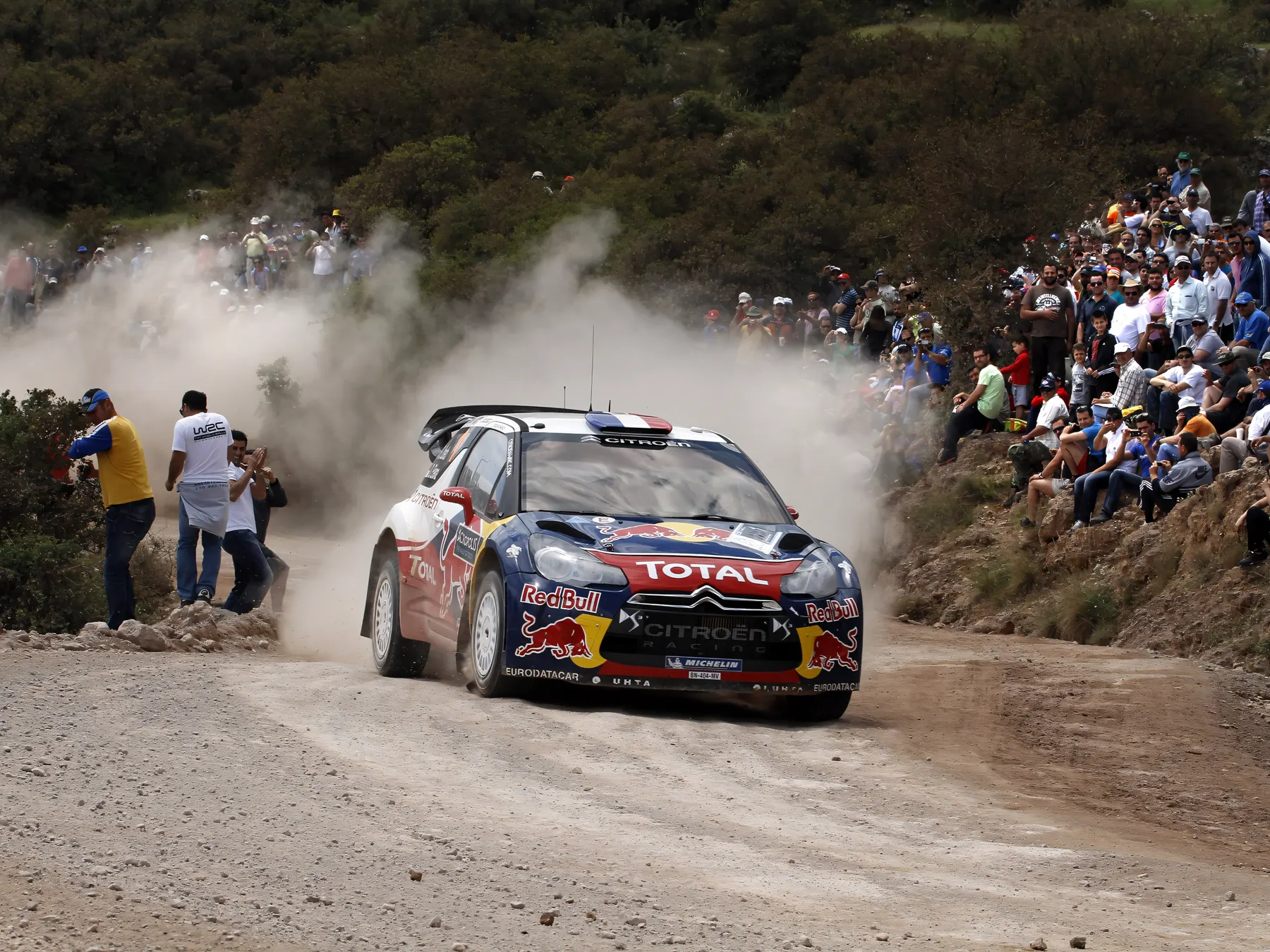
Volkswagen’s arrival in 2013, with Ogier now driving a clean-sheet Polo R WRC backed by a manufacturer budget Citroën couldn’t match, exposed how quickly a regulatory generation could be overtaken once a determined new rival joined it. Citroën’s response was a scaled-back campaign rather than a fight: a semi-retired Loeb contested only four rounds, winning two of them, Monte Carlo and Argentina, Hirvonen led the team to fourth in the drivers’ standings without a single victory, and Dani Sordo’s win in Germany was the only other DS3 WRC success of the year. Volkswagen won both titles at a canter in its debut season and would not lose another WRC title for as long as it competed.
For all its trophy cabinet, the DS3 WRC carried real compromises that a highlight reel of ten-win seasons tends to obscure. The loss of the centre differential and the accompanying fall in torque left the car with noticeably less margin for error than the C4 WRC on loose, low-grip gravel, a shortcoming serious enough that Citroën’s own engineers spent much of 2015 reworking the front cradle and rear axle geometry specifically to fix it - a tacit admission, four years into the car’s life, that its original set-up demanded more of ordinary drivers than it should have. The cost-driven switch to a floor-mounted gear lever for 2011 was a similar step backwards in useability from the paddle-shift C4 WRC, not reversed until the car’s late-life revisions. Reliability could bite, too: Hirvonen retired from a podium fight at the 2013 Rally Argentina with an electrical fault, a reminder that even a cost-capped competition car wasn’t immune to gremlins. And Citroën’s competitive response to Volkswagen’s arrival was itself a weakness - rather than mount a genuine development fight, the team scaled back to a part-season programme for its lead driver and never again finished higher than second in the manufacturers’ standings, effectively conceding the championship for the DS3 WRC’s remaining seasons.
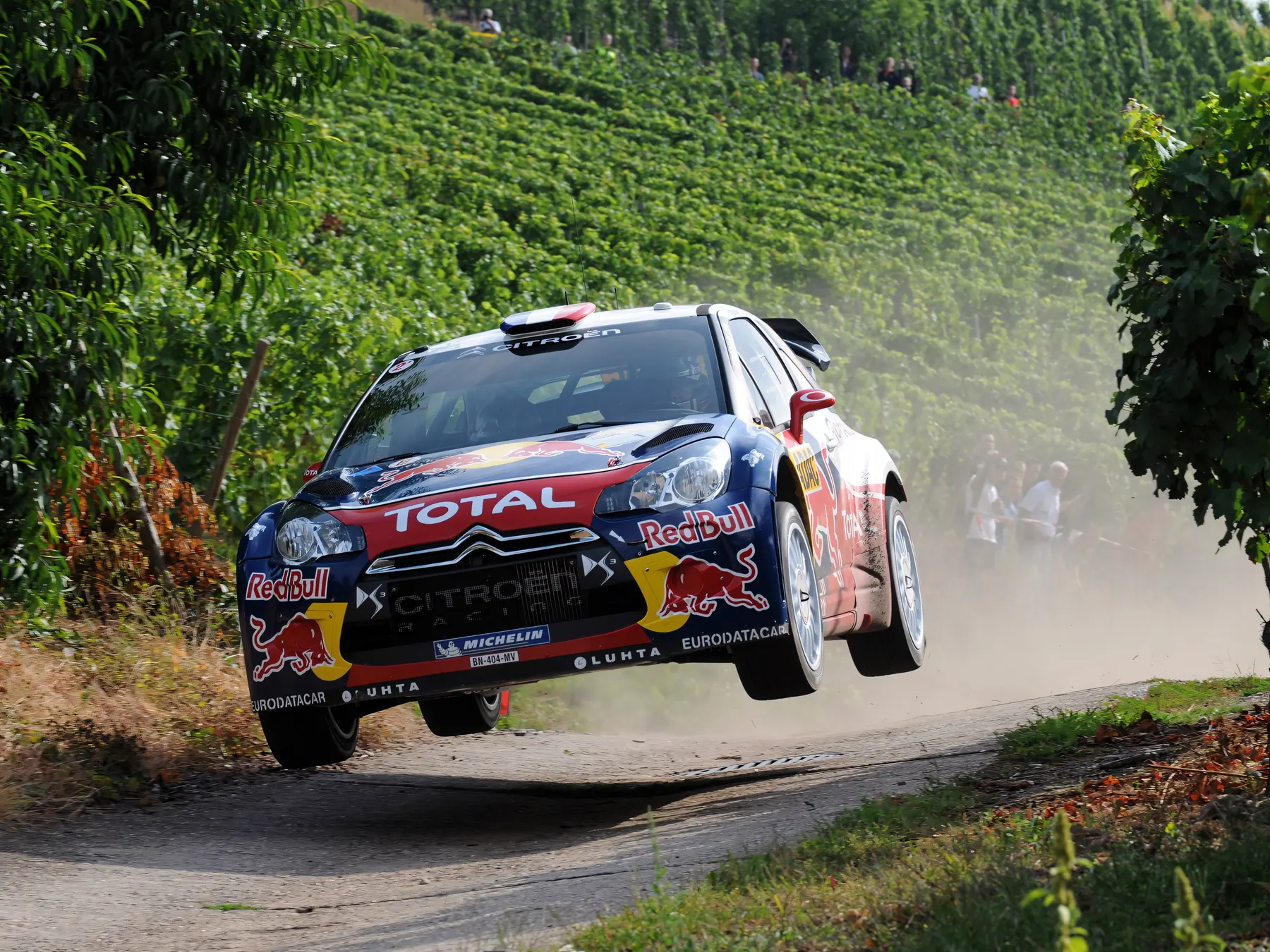
Citroën never again fielded a full multi-car works assault with the DS3 WRC. The team finished second in the 2014 manufacturers’ championship without a single win, and that October confirmed it would step back from full-time WRC competition at the end of 2015 to concentrate on developing a successor. Even so, the car kept evolving: for 2015 Citroën fitted a revised engine block, developed alongside its WTCC touring car programme, aimed at giving the unit a fuller, more usable torque curve, alongside new cradle and rear axle geometry intended to improve traction and make the car feel more instinctive - changes Loeb himself found made the engine easier to drive, with more torque available low in the rev range. Steering-wheel paddle shifters, absent since the cost-conscious 2011 debut, returned around the same time. Kris Meeke gave the car its first win in nearly two years at Rally Argentina in 2015, and the DS3 WRC’s competitive life ended on a genuine high in 2016, when Meeke won Rally Portugal and then Rally Finland, the latter victory including a new record for the fastest average speed of any round in WRC history, at 78.7mph. By then the car was being run largely as a bridge and development mule while Citroën readied the C3 WRC for a full-time return in 2017.
The DS3 WRC also spawned a family of customer cars that extended its reach well beyond the top flight. In October 2012 Citroën introduced the DS3 RRC, a detuned version for WRC-2, the European Rally Championship and various regional series, with power cut from 300 bhp to 275 bhp, smaller bumper air intakes, a rear wing brought into line with Super 2000 rules, and smaller, non-water-cooled brakes for tarmac events. The RRC was superseded in 2014 by the Citroën DS3 R5, homologated that April after roughly 8,000 km of testing and built around a related 1.6-litre turbo engine producing 280 bhp and 295 lb-ft of torque, driving all four wheels permanently through a five-speed sequential gearbox and self-locking differentials - a car aimed squarely at the R5 customer category that would go on to define grassroots and WRC-2 rallying for the following decade. A related R3-category car, the DS3 R3T, gave junior and national-level competitors a smaller step into the same rally-bred design language; French driver Sébastien Chardonnet won the 2012 WRC-3 title with one.
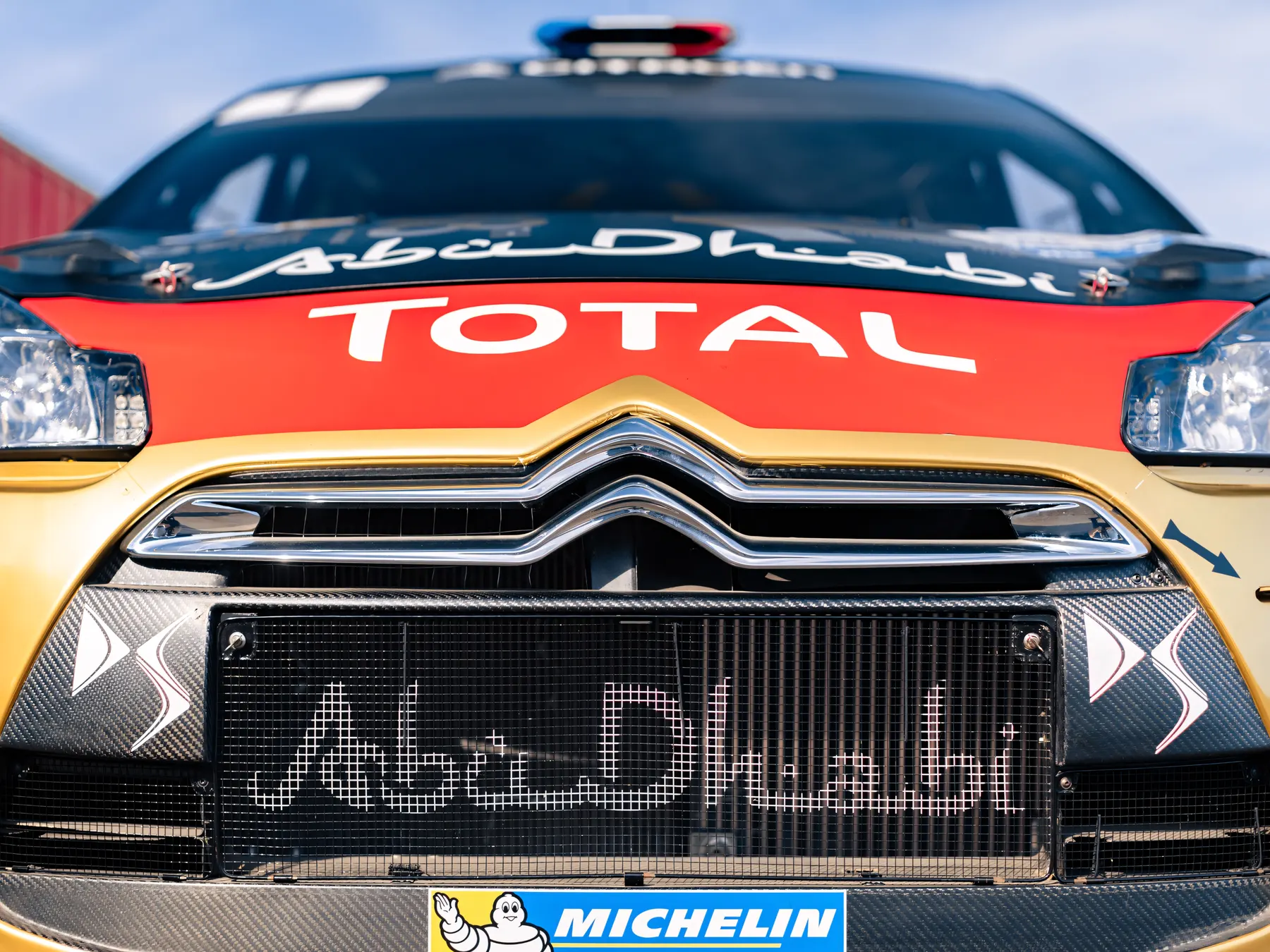
Judged purely on results, the DS3 WRC’s record - two manufacturers’ titles, two drivers’ titles, and 26 outright wins from 67 works entries - sits comfortably alongside anything Citroën achieved with the Xsara or C4 before it, and it closed out an era in which the marque claimed eight manufacturers’ titles across three different rally cars. But its story is really two acts stitched together: an opening chapter in which it continued Citroën’s rally dynasty almost without interruption, and a longer, quieter second half in which a car that never fundamentally changed at its core found itself outpaced by a rival built for the same rulebook with fresher ideas and a bigger budget. That it could still win rallies in 2016, five years after its debut and against Volkswagen’s all-conquering Polo R WRC and a new-generation Hyundai i20 WRC, says as much about Citroën’s late-life engineering fixes as it does about the fundamental soundness of the car built in 2010. It remains the last Citroën to win a world rally title outright, a distinction that still frames how the marque’s rallying programme of the following decade is remembered.
Sources
- Citroën DS3 WRC – Wikipedia
- Citroën DS3 WRC – WRC.com
- Citroen DS3 WRC (2011) – Racing Cars Technical Database
- Citroen DS3 WRC – juwra.com WRC Archive
- Citroën DS3 R5 – Wikipedia
- Citroën C3 WRC – Wikipedia
- Sébastien Ogier – Wikipedia
- The Battle That Spared the WRC – DirtFish
- Your Favorite World Rally Car #3: Volkswagen Polo R WRC – DirtFish
- 2013 World Rally Championship – Wikipedia
- Citroen Racing Withdraws From WRC Over Sebastien Ogier’s Exit – autoevolution
- The 2015 Innovations of the Citroën DS3 WRC – Greenbird Racing
- Citroen Reveals DS3 WRC Car – Top Gear
- Citroen DS3 WRC – Mission Accomplished, Ready for Retirement – Snaplap
Join the discussion
Comments
Loading comments…
Leave a comment
Share a detail, memory, or perspective. Every comment is reviewed before publication.