Peugeot 3008 DKR: The Two-Wheel-Drive Racer That Ruled the Dakar
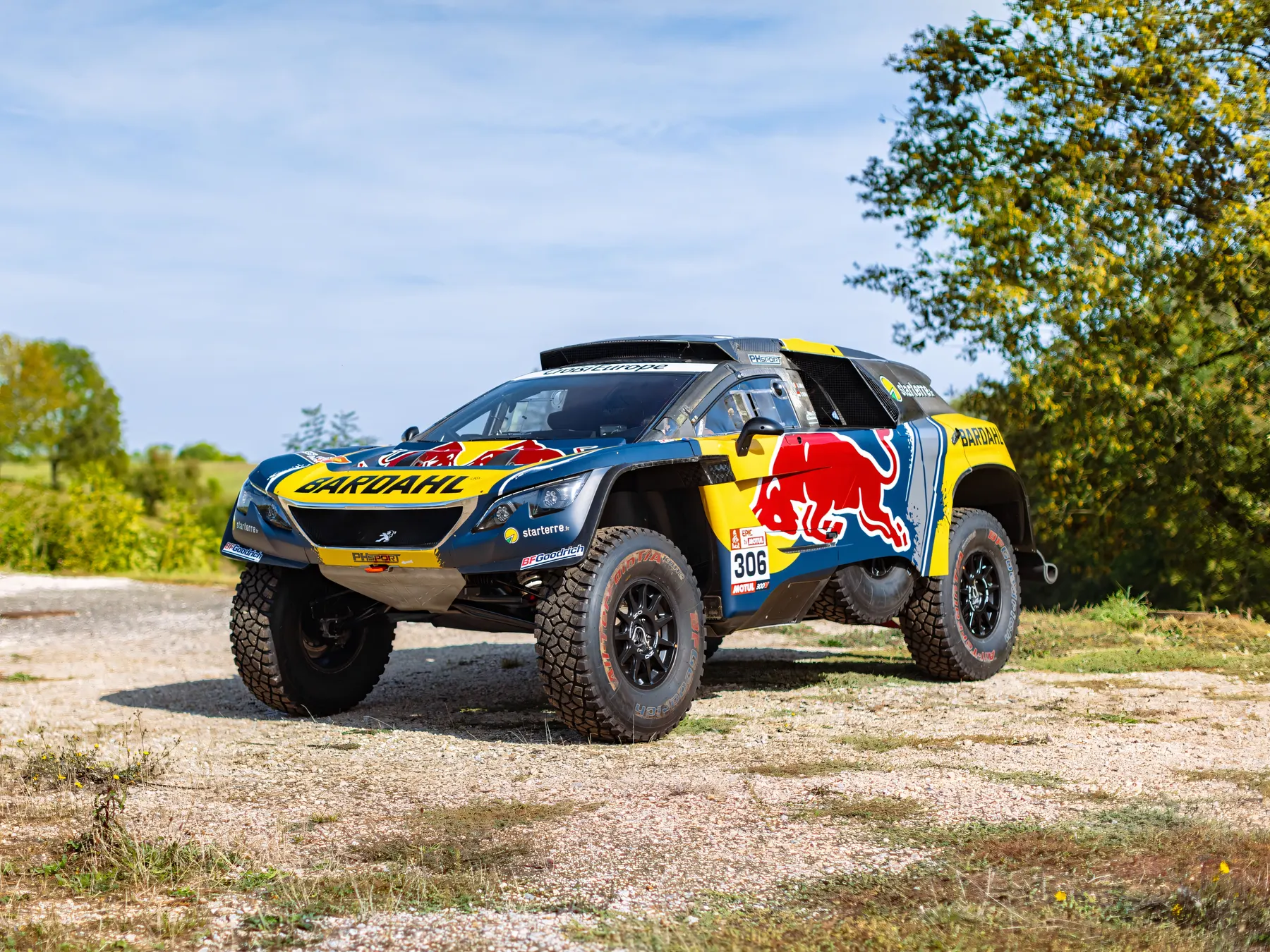
2017 Peugeot 3008 DKR

Images: Kevin Van Campenhout / RM Sotheby's
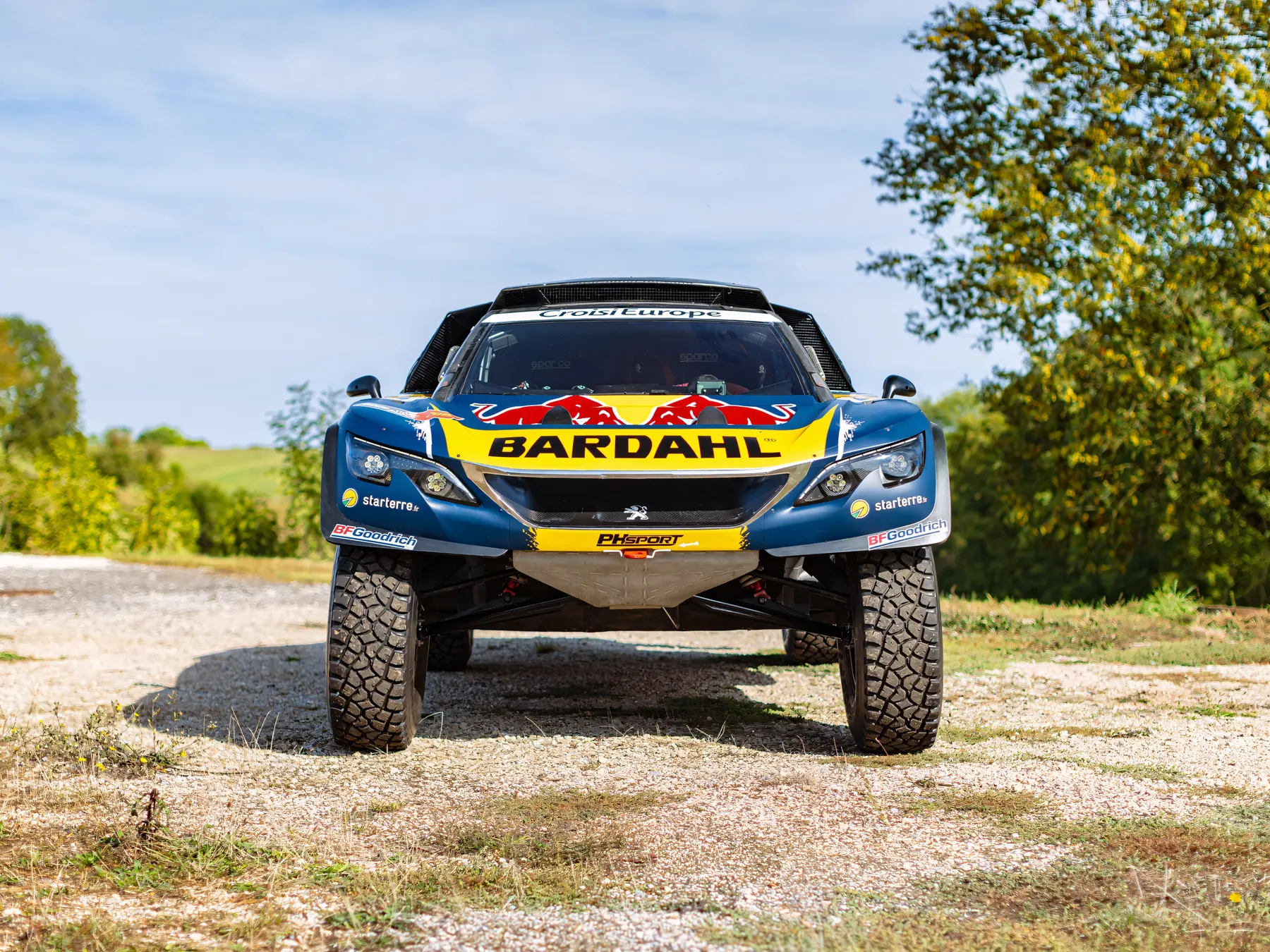
When Peugeot Sport set out to build a Dakar contender wearing the face of the new 3008 crossover, the marketing logic was straightforward enough: give the brand’s flagship SUV a rugged, desert-conquering halo car to launch alongside it. What actually emerged from the Vélizy workshops was something far more contrarian than a badge-engineering exercise. Beneath panels shaped to echo the road car’s grille and headlamps sat a bespoke tubular spaceframe, a mid-mounted twin-turbo diesel V6, and, most perversely of all for a machine entered in the world’s toughest off-road endurance event, drive sent to only two wheels. The Peugeot 3008 DKR did not merely compete at the Dakar Rally through 2017 and 2018; it dominated the event, and it did so by deliberately refusing to build a four-wheel-drive car in a discipline built around four-wheel drive.
Peugeot’s relationship with the Dakar ran deep long before the 3008 name entered the picture. The marque won the event four years in a row between 1987 and 1990 with its 205 T16 Grand Raid and 405 T16 Grand Raid buggies, machines built from the leftover expertise of the banned Group B rally programme. Then Peugeot left the event entirely for a quarter of a century. When it returned in 2015, the comeback car was the 2008 DKR - a two-wheel-drive prototype styled to resemble Peugeot’s small crossover but engineered from a clean sheet - fielded by a driver line-up that read like a rally raid hall of fame: Stéphane Peterhansel, Cyril Despres and Carlos Sainz, with nine-time World Rally champion Sébastien Loeb joining a year later.
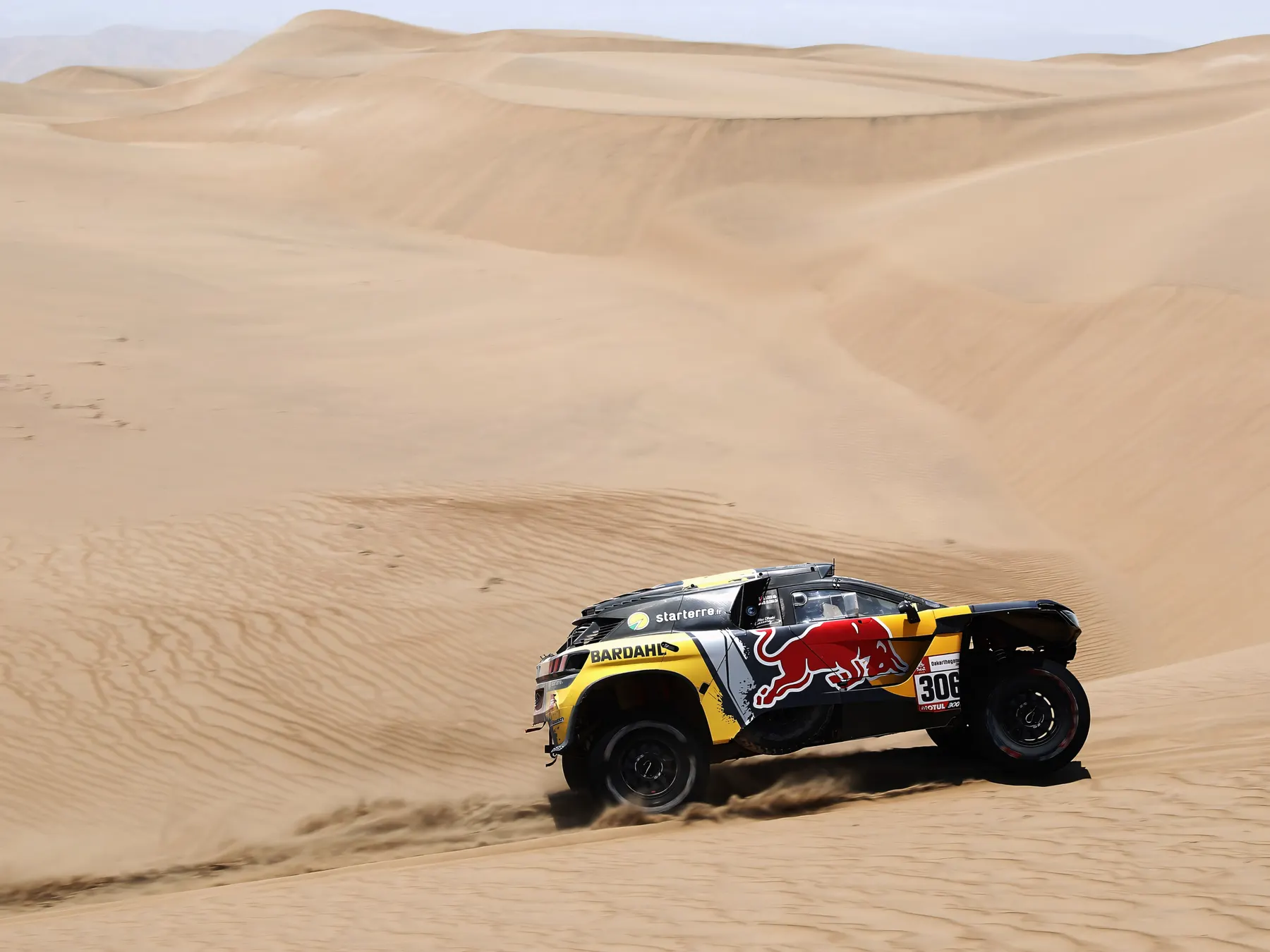
The reasoning behind the two-wheel-drive layout was not stubbornness; it was a calculated reading of the rulebook. Under Dakar’s cross-country regulations, two-wheel-drive prototypes were permitted a significantly lower minimum weight than their four-wheel-drive rivals, along with larger wheels and tyres and considerably more suspension travel - Peugeot’s engineers quoted figures approaching 460mm of wheel travel against roughly 250mm for the four-wheel-drive opposition. The 2WD cars could also run a system allowing drivers to adjust tyre pressure on the move, a genuine time-saver on stages that flipped between rock and soft sand within a few kilometres. Peugeot Sport’s technical team argued that a lighter, longer-travel two-wheel-drive buggy would out-run heavier four-wheel-drive trucks over the demanding, dune-heavy terrain that increasingly defined the post-Africa, South American editions of the rally. It was an unconventional bet for a manufacturer with no recent cross-country pedigree, and it took visible nerve to commit to it publicly before a single competitive kilometre had been driven.
That bet did not pay off immediately, and this is worth stating plainly rather than glossing over: the 2008 DKR’s Dakar debut in January 2015 was genuinely underwhelming. Carlos Sainz crashed out during stage five, and Peterhansel - the eventual lead finisher for the team - trailed home outside the top ten. Peugeot Sport’s own director admitted afterwards that the results were “not really satisfactory,” and Peterhansel conceded the car simply “lacked some oomph.” The team had prioritised reliability over outright pace in its pre-event testing, a reasonable call for a manufacturer’s first Dakar campaign in 25 years, but it meant the 2008 DKR arrived at its first real test undercooked as a race-winning tool. Over the following year, Peugeot reworked cooling, weight distribution, suspension geometry and overall reliability, and the difference showed: the revised car won the 2016 Dakar outright with Peterhansel and Jean-Paul Cottret, delivering Peugeot’s first victory at the event since 1990 and - by most contemporary accounts - the first outright win for a two-wheel-drive car at the Dakar in many years. It was also, by some margin, no easy ride for the crews: cockpit temperatures inside the closed, roll-caged shell reportedly climbed as high as 60 degrees Celsius during 12-hour stage days, forcing Peugeot to keep refining the air-conditioning system it had only recently added.
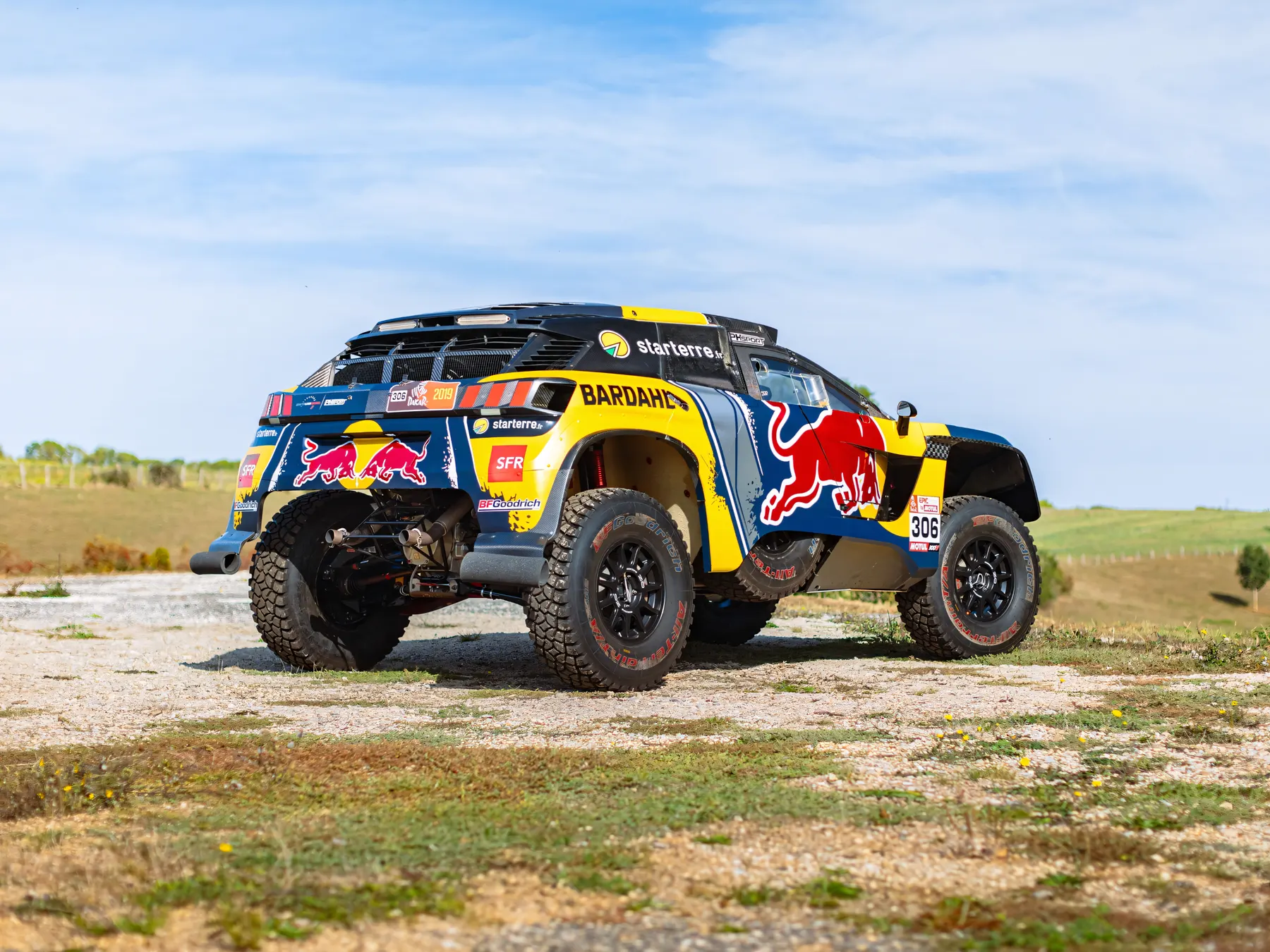
The 3008 DKR proper arrived for the 2017 season as a deliberate evolution rather than a reinvention, timed to coincide with the launch of Peugeot’s new 3008 SUV. Peugeot’s senior exterior designer, Sébastien Criquet, styled the DKR’s nose, grille and tail-light graphics to mirror the road car explicitly - by his own account, the closest thing to a dream job for a car designer, seeing a production shape translated straight into a competition context. Underneath that skin-deep resemblance, the mechanical package carried over almost unchanged from the winning 2008 DKR: a full tubular steel spaceframe chassis with an integrated roll cage, carbon-fibre composite body panels, double-wishbone suspension front and rear, and a mid-mounted 3.0-litre PSA HDi twin-turbocharged diesel V6 producing in the region of 340bhp and roughly 590 lb-ft of torque, sent through a six-speed sequential gearbox to the rear wheels alone. Top speed was quoted at around 124mph, a genuinely startling number for a vehicle also expected to crawl over dunes and pick a line through boulder fields. New for 2017 was a tighter turbo air restrictor, cut from 39mm to 38mm under revised regulations, which cost the engine roughly 20bhp at the top end but, according to Peugeot’s engineers, pushed peak torque lower into the rev range and made the car easier and, in places, faster to drive despite the reduced headline power figure.
On its competitive debut, the 3008 DKR delivered a result few manufacturers ever achieve at Dakar: a clean sweep of the top three positions, with Peterhansel and Cottret taking the overall win, Loeb and Daniel Elena second, and Despres and David Castera third. It was not a flawless campaign even so. Loeb, who posted the fastest stage time on five of the ten car-category specials, lost around 26 minutes to an engine issue on day four that proved decisive to the final order, and teammate Sainz rolled his car and became stuck in a ravine late on the same stage, ending his rally early - an uncomfortable reminder, even in a dominant year, that the DKR’s reliability under real racing stress was not absolute. Peterhansel’s win took his overall Dakar victory tally, motorcycles and cars combined, to thirteen.
Peugeot’s dominance did not go unchallenged politically. By mid-2017, rival teams and the FIA’s cross-country commission were pushing for regulatory changes that would equalise the playing field between two-wheel-drive buggies like the 3008 DKR and their four-wheel-drive competitors, effectively legislating away the weight and suspension-travel advantages Peugeot had exploited so effectively. Team principal Bruno Famin responded bluntly that Peugeot would walk away from the Dakar altogether if such a change went through, stating the team only entered events it had a genuine chance of winning. That the sport’s governing bodies felt compelled to intervene at all is itself a telling verdict on the concept: the 3008 DKR’s success rested as much on a cleverly exploited regulatory loophole as on pure engineering brilliance, and once other competitors and rule-makers caught on, the format’s days were numbered. Few, if any, factory teams have since invested in a purpose-built two-wheel-drive Dakar prototype along the same lines; the raid-buggy landscape reverted overwhelmingly to four-wheel drive in the years that followed.
For 2018, Peugeot answered the growing competition - and, implicitly, its own critics - with the 3008 DKR Maxi, a wider, more stable evolution rather than an all-new design. Engineers widened the suspension track by roughly 200mm in total, adding new upper and lower wishbones, front and rear track-rod ends and driveshafts to suit, while fitting a substantial 400-litre fuel tank to cope with longer stages between service points. Loeb, who gave the Maxi its competitive debut on that year’s Silk Way Rally, reported the wider car felt noticeably more planted and confidence-inspiring at speed, with less tendency to roll under load - but he also volunteered, candidly, that the extra width made the car more cumbersome through tight, technical sections, conceding that this territory still favoured the four-wheel-drive opposition. It is a rare and useful admission from a factory driver: even at its most developed, the two-wheel-drive concept traded away genuine agility in the slower, twistier going in exchange for stability and speed everywhere else, and that trade-off never fully disappeared.
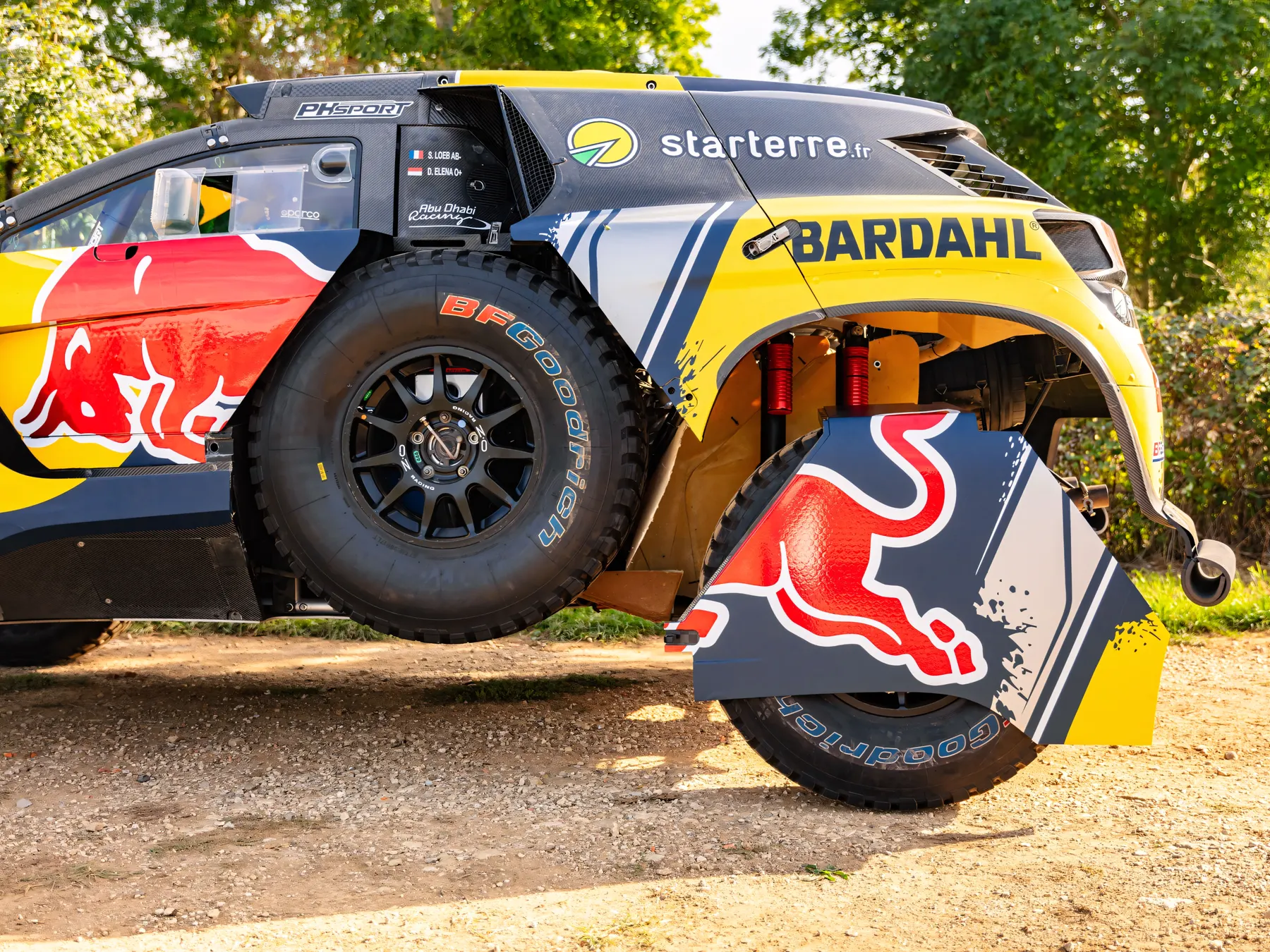
The Maxi’s Dakar campaign, following more than 18,000km of testing across Morocco, Portugal and France, delivered Peugeot’s third consecutive victory: Carlos Sainz and Lucas Cruz crossed the finish in Córdoba 43 minutes clear of Nasser Al-Attiyah’s Toyota Hilux, with the team claiming seven stage wins from the thirteen contested. Peterhansel, chasing a fourth straight title, instead finished fourth after swerving to avoid a stationary quad bike on stage 13 and striking a hidden rock, wrecking his car’s rear suspension and costing well over an hour. It was, in other words, a hard-fought win rather than a procession, and a reminder that even the most dominant Dakar cars remain hostage to a single unlucky moment on a single stage. Crucially, Peugeot had already announced months earlier, in October 2017, that this would be its final Dakar as a factory effort - a decision driven partly by its unresolved dispute over the incoming rule changes and partly by a broader corporate pivot: the brand also withdrew its factory World Rallycross programme at the end of the same season to redirect resources toward electrification. The 3008 DKR Maxi therefore retired at, or very near, its competitive peak, never given the chance to defend its crown against a levelled rulebook.
The model’s story did not end entirely there. In 2019, Loeb returned to the Dakar in a privately run 3008 DKR entered by PH Sport, using an earlier, non-widened 2017-specification chassis rather than a Maxi, since Peugeot chose not to release its wide-body cars into private hands. It was a modest coda for a car that, at its factory peak, had been close to unbeatable - and a small illustration of how tightly Peugeot controlled its most successful hardware even after walking away from the programme that built it.
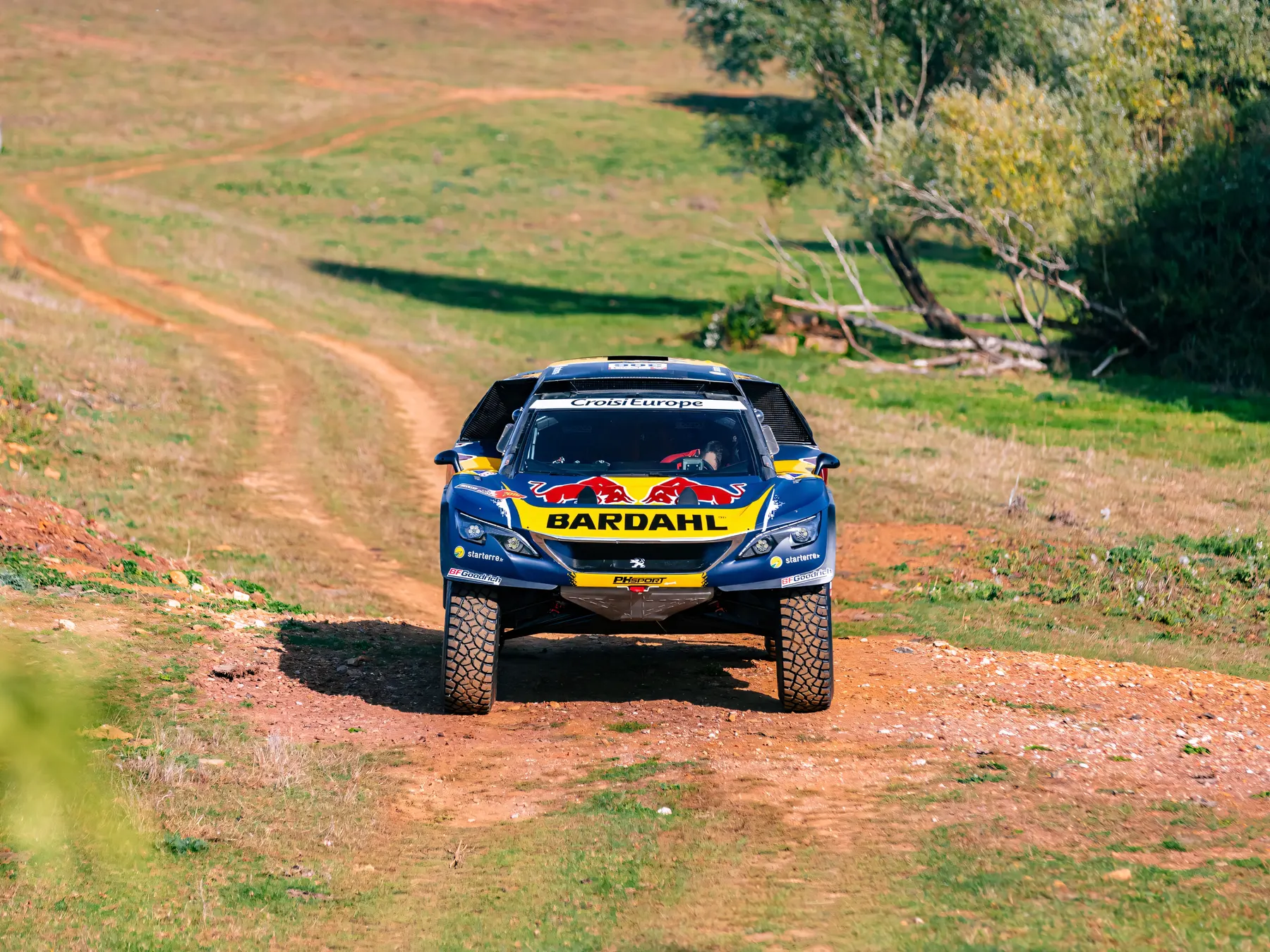
Judged purely as a piece of desert-racing engineering, the 3008 DKR was a triumph of lateral thinking: a manufacturer read a rulebook more carefully than its rivals, built a genuinely bespoke competition prototype rather than a lightly modified 4x4, and won three Dakars in a row with it. Judged more broadly, its legacy is more complicated than the results alone suggest. Its road-car resemblance was cosmetic rather than substantive - headlight and grille shapes borrowed for showroom effect, with nothing else meaningfully shared - which makes the “SUV that conquered the Dakar” framing feel, on close inspection, like a marketing narrative layered onto what was really a dedicated, ground-up racing prototype. Its defining engineering advantage turned out to be a regulatory anomaly rather than a durable technical template, one that governing bodies moved swiftly to close once Peugeot had proven how exploitable it was, and which few subsequent programmes have chosen to revisit. Even at its best, drivers openly acknowledged it gave up genuine agility in tight, technical terrain to its four-wheel-drive rivals, and its debut season showed that Peugeot’s engineering pedigree in circuit and rallying disciplines did not automatically translate into cross-country reliability or pace. None of that erases what the 3008 DKR achieved on the stages that mattered most - three consecutive Dakar victories against increasingly determined opposition is a genuinely rare feat - but it is a car whose dominance was as much a product of shrewd rules-reading and factory resource as of any timeless mechanical breakthrough, and Peugeot itself seemed to sense as much when it chose to leave the sport on its own terms rather than fight a fairer fight the following year.
Technical data
Performance Specifications
| Specification | Detail |
|---|---|
| Production / competition years | 2017–2018 (factory); successor to 2008 DKR, 2015–2016 |
| Class | Dakar Rally raid prototype, FIA T1 category |
| Layout | Rear-wheel drive (2WD), mid-mounted engine |
| Chassis | Tubular steel spaceframe with integrated roll cage; carbon-fibre composite body panels |
| Engine | 3.0-litre PSA HDi twin-turbocharged V6 diesel |
| Power | approx. 340bhp (varied by season; 2017 restrictor change cost roughly 20bhp versus the preceding car) |
| Torque | approx. 590 lb-ft |
| Transmission | 6-speed sequential manual |
| Top speed | approx. 124mph |
| Suspension | Double wishbone, front and rear; up to approx. 460mm travel (2WD regulatory allowance) |
| Wheelbase* | approx. 3,000mm |
| Length* | approx. 4,312mm |
| Width* | approx. 2,400mm (3008 DKR Maxi, widened by approx. 200mm over the standard 2017 car) |
| Height* | approx. 1,799mm |
| Fuel tank* | approx. 400 litres (3008 DKR Maxi) |
| Kerb weight | Not reliably available for the 3008 DKR itself; the related 2008 DKR was reported at approx. 1,280kg by a single French specialist source |
Technical data
Dakar Rally results, Peugeot factory effort
| Year | Car | Result |
|---|---|---|
| 2015 | 2008 DKR | No overall podium; Peterhansel led the team home outside the top ten; Sainz retired |
| 2016 | 2008 DKR (revised) | 1st - Peterhansel/Cottret |
| 2017 | 3008 DKR | 1st, 2nd, 3rd - Peterhansel/Cottret, Loeb/Elena, Despres/Castera |
| 2018 | 3008 DKR Maxi | 1st - Sainz/Cruz, 43 minutes clear; Peterhansel finished 4th |
Sources
- Autosport – “Peugeot admits 2008 DKR was ‘rough’ on Dakar Rally comeback”
- Top Gear – “Up close with the Peugeot 2008 DKR”
- Engineering.com – “The Peugeot 2008 DKR: A Bold, Technical Rally Car Gamble”
- AutoHebdo – “Dakar: The Technical Sheet of the Peugeot 2008 DKR”
- World Rally Blog – “Peugeot Unveils 2008 DKR Tech Specs”
- PistonHeads – “Peugeot 3008 DKR revealed”
- Auto Express – “Sandblaster: New Peugeot 3008 DKR gears up for 2017 Dakar rally”
- New Atlas – “Peugeot ups the Dakar ante with all-new 3008 DKR”
- InsideHook – “Why Peugeot and Red Bull’s 3008 DKR Is a Great Rally Car”
- Motor Authority – “1-2-3 finish for Peugeot in 2017 Dakar rally”
- Autosport – “Peugeot says it will quit Dakar Rally if rules change”
- Autosport – “Peugeot reveals new 3008DKR Maxi for 2018 Dakar Rally”
- TopSpeed – “2018 Peugeot 3008 DKR Maxi”
- Peugeot Sport / Stellantis Media – “Carlos Sainz, Lucas Cruz and their Peugeot 3008DKR Maxi triumph on a Dakar Rally that makes history”
- Autosport – “Peugeot Dakar programme to stop after 2018 rally”
- Carsales.com.au – “Motorsport: Peugeot 3008 rules in Dakar”
- Motorpad – “Dakar 2018: vince Carlos Sainz con la Peugeot 3008 DKR Maxi”
- Whanganui Chronicle (via PressReader) – “Loeb set for fourth try at Dakar Rally”
Join the discussion
Comments
Loading comments…
Leave a comment
Share a detail, memory, or perspective. Every comment is reviewed before publication.