Bentley R-Type Continental: The Fastback Bentley Once Called Mark VII
1952 Bentley R-Type Continental Fastback Sports Saloon by H.J. Mulliner





Images: Simon Clay / RM Sotheby's
Inside Rolls-Royce’s Crewe drawing office in the early 1950s, the car that became the Bentley R-Type Continental was filed under a name it would never officially carry. Engineers’ chassis cards described the project simply as “Bentley 7”, and in-house conversation referred to it as the Mark VII - a designation Jaguar had already claimed for its own new saloon by the time Bentley’s car reached production, forcing a rename to R-Type instead. That small bureaucratic collision says something about how the Continental came into being: not as a clean-sheet sports car, but as a dramatically lighter, faster, more aerodynamic body wrapped around mechanicals inherited almost wholesale from Bentley’s conventional R-Type saloon. It was Rolls-Royce management’s answer to a question that had hung over Bentley since the 1931 takeover - whether a marque now controlled by a company synonymous with hushed restraint could still build something recognisably sporting.
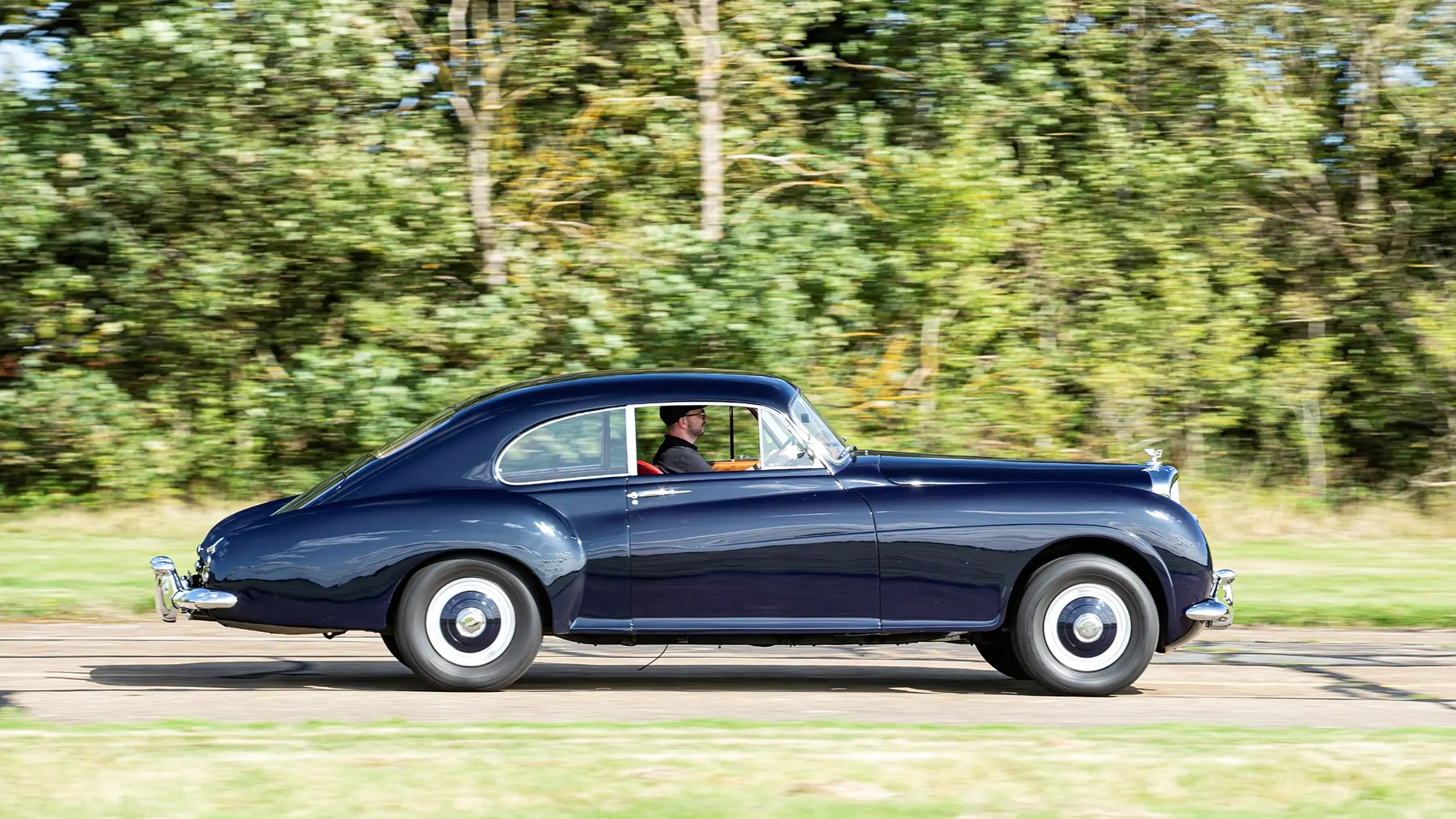
The brief handed to engineer Ivan Evernden was specific and, for the era, extremely demanding: a four-seat body weighing no more than around 1,730kg, capable of a top speed some 20 per cent higher than the standard Mark VI/R-Type saloon - in practice, around 120mph. Reaching that figure exposed a problem nobody had fully solved before: in the early 1950s, only a handful of tyres could withstand sustained speeds above 115mph, and those were rated for weights no greater than roughly 435kg per corner. The Jaguar XK120 could exploit that tyre technology because it was small and light by nature; doing the same with a car the size of a Bentley meant attacking weight and drag simultaneously. Stylist John Blatchley shaped quarter-scale models that were tested in Rolls-Royce’s own wind tunnel, refining a fastback profile calculated to reach the target speed. The resulting shape carried echoes of Bentley’s own prewar aerodynamic experiments, including the Georges Paulin-styled Corniche prototype lost during the Second World War, and of the lightweight “Embiricos” Bentley special that had competed at Le Mans in the years just after the war; some historians have also pointed to parallel Italian coachwork of the same period as a further influence, though accounts differ on how much weight to give that connection.

H.J. Mulliner built the production bodywork in aluminium over the R-Type’s chassis, and the resulting car was meaningfully lighter than the standard steel saloon - estimates of the exact saving vary from source to source, generally somewhere between 135kg and 225kg, but the direction was clear and the effect was transformative. Under the bonnet sat a mildly reworked version of the R-Type’s existing inlet-over-exhaust “F-head” straight six, an iron-block, aluminium-head unit displacing 4,566cc. A higher compression ratio and a freer-breathing exhaust system were said to add around 25bhp over the standard saloon engine, though - in keeping with Rolls-Royce and Bentley’s long-standing habit of never publishing an official power figure - the true output was left to outside observers to estimate. Independent assessments at the time put it at somewhere around 150-160bhp. From July 1954, the engine grew to 4,887cc with a higher 7.8:1 compression ratio, and the same reluctance to quote a number persisted even as estimates crept up toward the 170bhp mark. It is a curious gap in the record for a car otherwise so thoroughly documented: even now, there is no verified factory horsepower figure to cite, only a consensus built from decades of contemporary road tests and specialist analysis.

Drive went through a four-speed manual gearbox with a right-hand floor-mounted lever regardless of a given car’s steering side - an arrangement some drivers unfamiliar with the layout found genuinely disorientating on first acquaintance - or, increasingly as production wore on, through General Motors’ four-speed Hydramatic automatic, offered from 1953 and eventually specified more often than the manual. A tall final drive of around 3.07:1 gave an overdriven top gear good for roughly 28mph per 1,000rpm, which let the Continental cruise at a genuine 100mph with the engine barely working, and which contributed enormously to the sensation, remarked upon by nearly every period road tester, of covering ground with almost contemptuous ease. The chassis beneath carried over the R-Type’s independent front suspension of coil springs and wishbones, but stuck with a live rear axle on semi-elliptic leaf springs - sound, well-proven engineering, but conventional even by the standards of 1952, and a slightly awkward companion to the car’s otherwise forward-looking aerodynamic ambitions. Steering was by cam and roller, entirely unassisted, and stopping power came from 12.25-inch drum brakes, hydraulic at the front and mechanically operated at the rear through a Rolls-Royce-developed gearbox-driven servo that period testers praised for its consistency and resistance to fade.
On the road, the figures bore out the ambition. Top speed was never officially quoted, but contemporary and later assessments have consistently placed it at around 117 to 120mph, making the Continental the fastest genuine four-seater in production anywhere in the world. Zero to 60mph arrived in around 13.2 to 13.5 seconds - not dramatically quicker than the standard saloon at low speeds, since the Continental gained barely two-tenths of a second to 50mph over the ordinary Mark VI, but the gap widened enormously beyond that point, with the lighter, slipperier Continental reportedly capable of reaching 100mph in around 36 seconds from rest. Autocar’s road testers, driving in Belgium in 1952 because Britain’s fuel at the time was too low-octane for the compression ratio involved, found themselves extending their usual test tables to accommodate a car that could exceed 80mph in second gear and 100mph in third. It was this in-gear urgency, as much as outright top speed, that convinced contemporary critics they were driving something genuinely new.

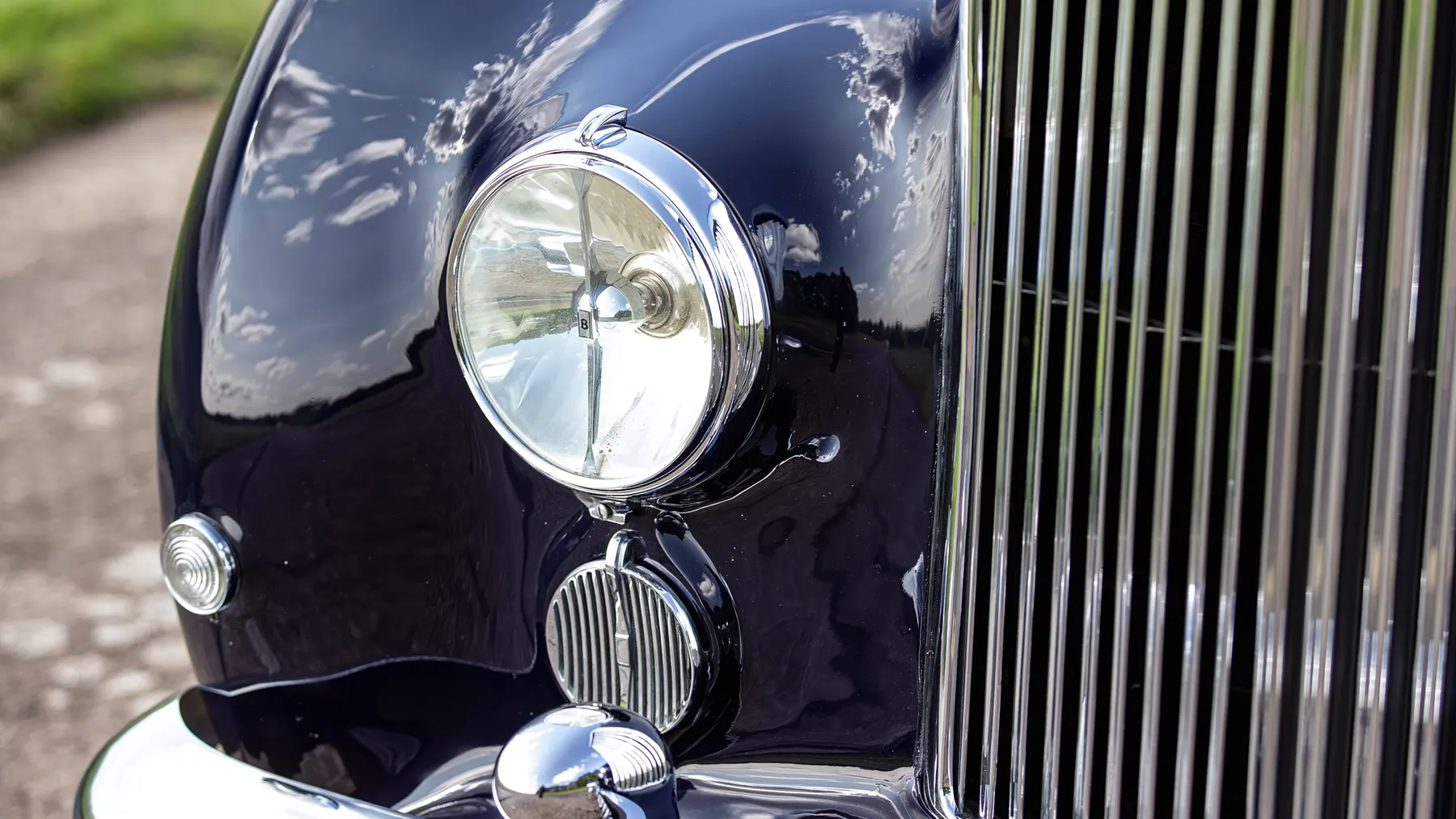
Bodywork was overwhelmingly the preserve of H.J. Mulliner, whose fastback coupé, closely following the original prototype’s lines, clothed around 192 of the roughly 208 cars built in total - 207 production examples plus the original prototype. From the spring of 1954, buyers could specify coachwork from elsewhere: Park Ward of London built a handful, five or six depending on the source, including a later drophead coupé; Franay of Paris built five; Graber of Switzerland built three, one of which was later reworked by another coachbuilder; and Pininfarina built a single example with an unmistakably Italian roofline. Because each of these bodies was made to individual order, no two Continentals were ever quite identical: buyers chose between lightweight bucket seats or heavier “touring” chairs, manual or automatic transmission, special instrumentation, and optional spats over the rear wheel arches. Production was organised into lettered series, A through E, tracking the car’s gradual evolution - the engine enlargement, a later switch to a one-piece windscreen, and detail changes to the wings and roofline among them.
None of this came cheaply. The Continental launched in 1952 at a shade under £7,000 and had risen past £7,600 by the end of the run in 1955, a sum that, depending on the year, could buy a substantial house with land in the English Home Counties several times over. It was, by a wide margin, one of the most expensive production cars in the world, sold as a bare rolling chassis to be finished by the coachbuilder of the buyer’s choosing. Despite a name and marketing angle aimed squarely at Continental grand touring, and an early emphasis on export sales at a time when Britain badly needed foreign currency, the majority of cars actually built were right-hand drive for the home market, with only a minority specified for left-hand-drive export use. Contemporary reception bordered on the euphoric: Autocar’s own writers reached for the language of magic carpets to describe its high-speed cruising manners, and racing driver Raymond Mays, writing in the same publication in October 1953, argued that in acceleration, braking, cornering and general responsiveness the Continental matched, and in places bettered, the racing cars of the day - a remarkable claim for a car explicitly built and marketed as a road-going tourer rather than a competition machine, and buyers were in fact required to undertake never to race theirs.
That reputation, though, rests alongside some real and specific compromises that a purely celebratory account would gloss over. The unassisted cam-and-roller steering that felt so precise and communicative at speed became genuinely heavy, slow work in town or when parking, undermining some of the effortlessness the car was supposed to represent at any pace. That same beautiful fastback roofline created a substantial rear blind spot, making manoeuvring and reversing a real chore rather than a minor quirk. Underneath the sophisticated independent front end sat a live rear axle on leaf springs - perfectly sound, well-understood engineering, but plainly conventional, even old-fashioned, and a curious match for a car sold on its aerodynamic and weight-saving credentials elsewhere. The drum brakes, whatever their period reputation for consistency, demand a deliberate, respectful driving style that anyone used to modern discs would find limiting, and within a decade or so they were already outdated technology by the standards of the wider industry. Fuel consumption was heavy by any measure, commonly cited in the high teens on the Imperial gallon and worse under hard use, a running cost that mattered little to the car’s original wealthy owners but one that still defines the practicalities of ownership today. The extraordinary price, meanwhile, kept the Continental’s influence largely symbolic rather than commercial: it never came close to the volumes achieved by cheaper, genuinely sporting contemporaries such as the Jaguar XK120, which offered similar outright pace for a fraction of the outlay. And because every body was hand-formed by whichever coachbuilder had been chosen, finish and detail quality varied meaningfully from car to car - part of the bespoke appeal at the time, but a genuine complication for owners today, given how scarce original panels, trim and specialist coachbuilding skills have become.
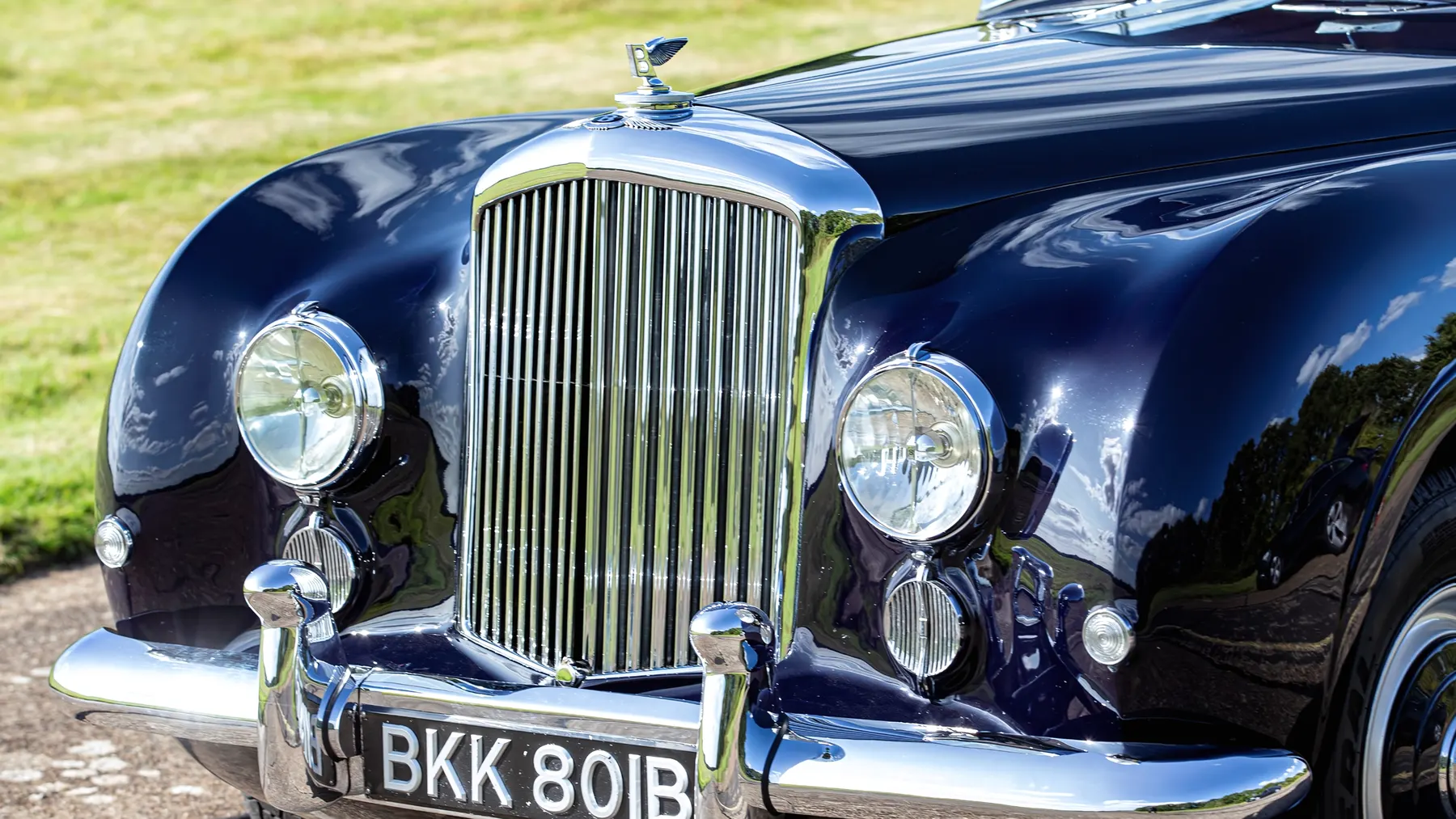
The R-Type Continental was replaced in 1955 by the S-Type Continental, which continued the coachbuilt tradition on Bentley’s new S-series chassis and, on the later S2 Continental, addressed the steering criticism directly by adopting power assistance. The “Continental” name persisted through Bentley’s range for decades afterward, and the R-Type’s fastback silhouette was deliberately referenced by Bentley’s own designers when the Continental R arrived in 1991 and again when the volume-selling Continental GT launched in 2003, a direct visual lineage acknowledged in the company’s own presentation of both cars. Today the R-Type Continental is widely regarded as among the most significant British cars of the postwar era, prized as much for what it represented as for how it drove: proof that a fundamentally conventional set of prewar-derived engineering ideas, applied with enough discipline to weight, aerodynamics and detail, could still feel genuinely radical. There is something fitting in the fact that Rolls-Royce never once put a number on how much power it made. The Continental’s real achievement was never a figure on a spec sheet; it was making the largest, most expensive four-seater in the world feel, once rolling, like something altogether smaller, lighter and more urgent than it had any right to be.
Technical data
Performance Specifications
| Specification | Detail |
|---|---|
| Production years | 1952-1955 |
| Body | Two-door fastback sports saloon, aluminium coachwork over separate steel chassis |
| Engine | Iron-block, aluminium-head, inlet-over-exhaust “F-head” straight-six; twin SU carburettors |
| Displacement | 4,566cc (1952 to July 1954); 4,887cc (July 1954 to 1955) |
| Power | Never officially quoted by the factory; independently estimated at approx. 150-160bhp (4,566cc) rising to approx. 170-173bhp (4,887cc, 7.8:1 compression) |
| Torque | Not officially quoted; no reliably corroborated figure available |
| Transmission | 4-speed manual, right-hand floor change (standard, early cars); 4-speed GM Hydramatic automatic (optional from 1953, increasingly common) |
| Final drive | Approx. 3.07:1 |
| Front suspension | Independent, coil springs, wishbones, anti-roll bar |
| Rear suspension | Live axle, semi-elliptic leaf springs, driver-adjustable ride control |
| Steering | Cam and roller, unassisted |
| Brakes | 12.25in (311mm) drums; hydraulic front, mechanical rear via gearbox-driven servo |
| Length | Approx. 5,235-5,255mm |
| Width | Approx. 1,816mm |
| Height | Approx. 1,600-1,670mm (coachwork-dependent) |
| Wheelbase | 3,048mm |
| Kerb weight | Approx. 1,650-1,750kg (varies by source, specification and dry/kerb basis) |
| 0-60mph | Approx. 13.2-13.5 seconds |
| Top speed | Approx. 117-120mph (never officially quoted) |
| Fuel economy | Approx. 16-20mpg (Imperial), specification and driving-style dependent |
| Production total | 207 production cars plus the original prototype (208 total); approx. 192 by H.J. Mulliner, 5-6 by Park Ward, 5 by Franay, 3 by Graber, 1 by Pininfarina |
| Price new | Approx. £6,928 at 1952 launch, rising to over £7,600 by 1955 |
Sources
- RM Sotheby’s Private Sales: 1954 Bentley R-Type Continental Fastback Sports Saloon
- RM Sotheby’s: 1952 Bentley R-Type Continental, London 2012
- RM Sotheby’s: 1955 Bentley R-Type Continental, The Andrews Collection
- RM Sotheby’s: 1955 Bentley R-Type Continental Coupé by Franay, Villa d’Este 2011
- Classics World: Bentley R-Type Continental Road Test
- Classic & Sports Car: Bentley R-type Continental - Elegance in Excelsis
- Classic & Sports Car: Bentley Continentals - Style, Speed and Luxury
- Classic & Sports Car: Bentley at 100 - R-type Continental vs Continental R
- Bonhams: 1954 Bentley R-Type Continental Fastback Sports Saloon
- Wikipedia: Bentley R Type
- Wikipedia: Bentley Continental
- Conceptcarz: Bentley R Type and Continental Model Information
- Hagerty Valuation Tools: 1952 Bentley R-Type Continental
- Petrolicious: Driving a Bentley R-Type Is Exaltation
- Classic Driver Magazine: Continental Travel - Driving the Legendary R Type Bentley
Join the discussion
Comments
Loading comments…
Leave a comment
Share a detail, memory, or perspective. Every comment is reviewed before publication.