Maserati Mistral 3.5 Spyder: The Rarest Home for Maserati's GP Six
1965 Maserati Mistral 3.5 Spyder

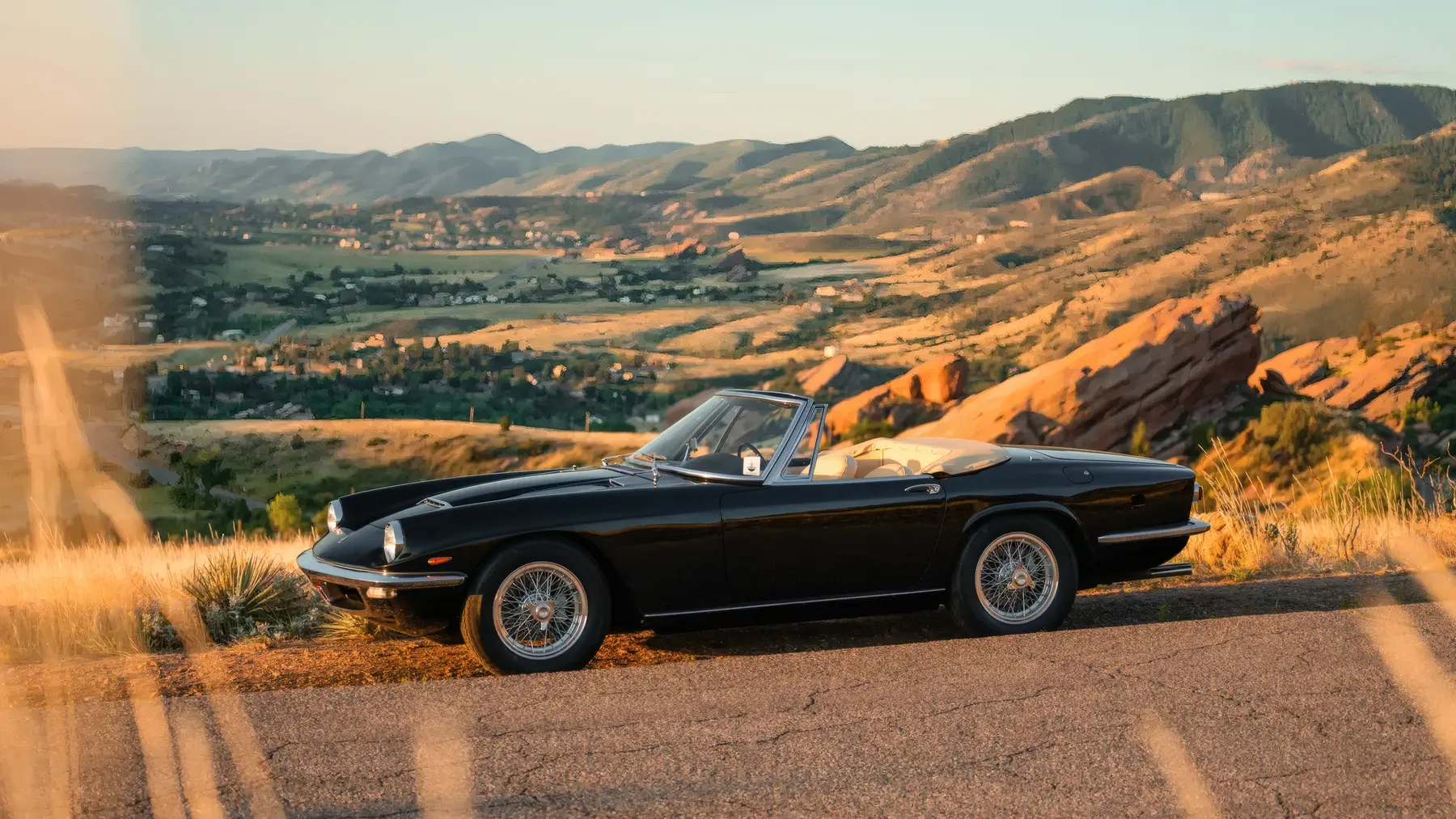
Images: Corey Davis / RM Sotheby's
When Maserati unveiled the open-topped Mistral at the Geneva show in March 1964, it fitted the newest body it had ever built around the oldest engine it had left. The 3.5-litre twin-cam straight six under that long aluminium bonnet was not a purpose-built unit for the car at all; it was the outgoing 3500 GT and Sebring motor, a road-going descendant of the twin-cam six that had carried Maserati’s 250F to the 1957 world championship and powered the 300S sports-racers of the mid-1950s. Within two years Maserati had already enlarged the engine twice, to 3.7 and then 4.0 litres, which left the original 3.5-litre Spyder as something rather unusual: the purest mechanical link back to Maserati’s grand prix era, and also the rarest, shortest-lived, and quickest-superseded version of a car that only ever sold in small numbers to begin with.
The Mistral itself was Maserati’s replacement for the ageing 3500 GT, first shown as a closed coupé at the Turin motor show in November 1963, styled by Pietro Frua and built by Carrozzeria Maggiora. It was the first in a run of Maserati road cars named after winds, a naming convention the factory would keep for decades afterwards. The open Spyder followed only months later, adapted from Frua’s original coupé shape by Giovanni Michelotti and built not by Maggiora but by Carrozzeria Vignale in Turin, a division of labour that gave the two body styles subtly different construction despite their close family resemblance. Maserati’s habit of accommodating individual customer requests on essentially bespoke, low-volume cars meant that detail specification could vary between examples; there are documented cases of buyers asking for styling touches, such as the front-wing air vents used elsewhere in the range, that were not part of the Spyder’s standard specification and had to be added to order.
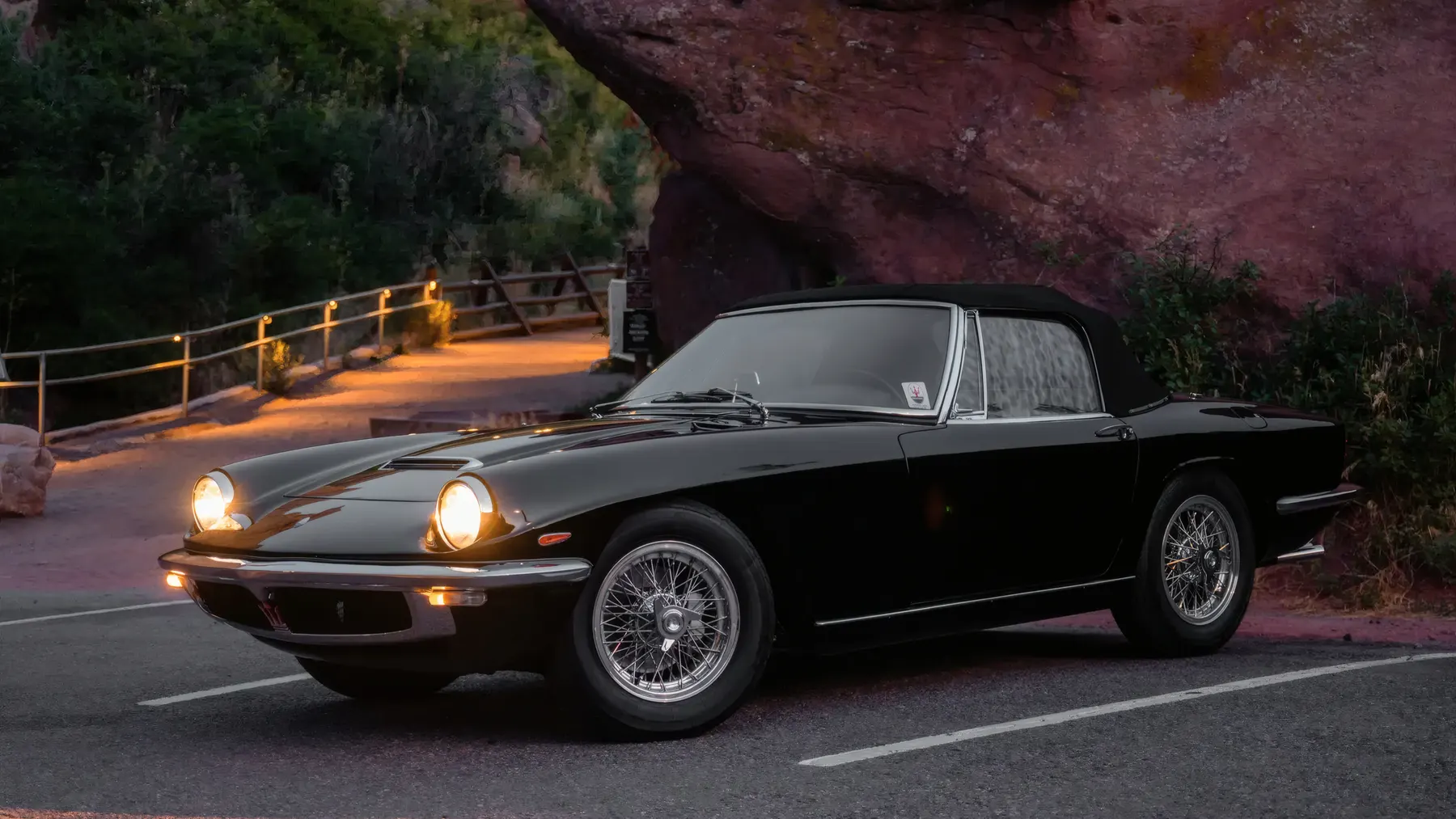
At the Spyder’s introduction, the only engine available was that carried-over 3,485cc unit, related to the 350S racing car and shared, with detail differences, with the run-out 3500 GTI and Sebring models. It was a twin-spark, double overhead camshaft straight six with an aluminium block, cast-iron cylinder liners, aluminium heads, and hemispherical combustion chambers, running a bore and stroke of 86mm by 100mm. Fuel came from a Lucas mechanical indirect injection system, a technology largely unfamiliar to Italian manufacturers at the time. In this form the engine produced 235 bhp at 5,500rpm, driving through a five-speed ZF gearbox to a live rear axle. Maserati’s own literature and most enthusiast sources agree closely on that power figure; torque is far less well documented, and period specification sheets for the 3.5 rarely quoted a figure at all. The later 3.7-litre engine is commonly quoted at around 253 lb-ft, so a reasonable estimate for the 3.5, scaled down proportionally, would put it somewhere in the region of 210 to 220 lb-ft - an informed approximation rather than a documented factory figure.
The rest of the underpinnings followed conventional Maserati GT practice for the period: a box-section tubular chassis, independent front suspension on coil springs, a live rear axle on semi-elliptic leaf springs, and four-wheel disc brakes, riding on Borrani wire wheels originally shod with Pirelli Cinturato tyres. What made the Mistral feel quick for its power output was its relatively short 2,400mm wheelbase and compact overall size, close to 4.5 metres long. Kerb weight for the 3.5-engined Spyder specifically is not consistently documented across reliable sources; published figures for the wider Mistral range vary by a considerable margin depending on the source and on whether a given car left the factory with steel or aluminium outer panels, and no single authoritative document ties a precise figure to the 3.5 alone. What is well documented is the car’s relative lightness: contemporary accounts note that the shorter-wheelbase Mistral weighed around 200kg less than the related Sebring saloon-coupé, sharpening performance without any change to the underlying mechanical specification. Top speed is similarly uncertain for the 3.5 in isolation - the later, more powerful 3.7 and 4.0-litre cars are reliably quoted at around 140 to 145mph, while the lighter but less powerful 3.5 was very rarely tested independently, so any figure for it should be treated as an estimate rather than a confirmed result.
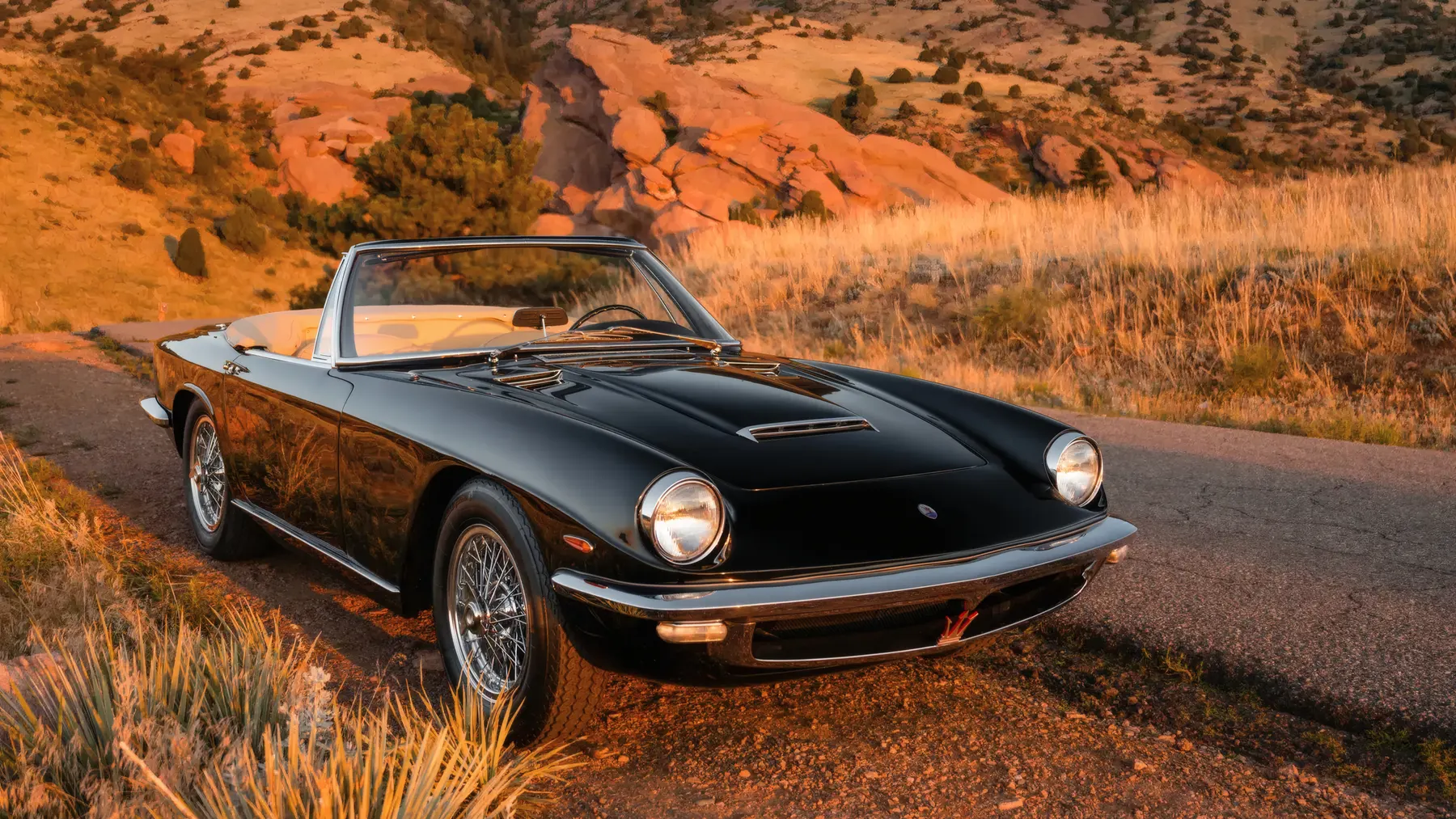
Visually, the Spyder kept the sharknose grille and crisp, Kamm-tailed profile that made Frua’s coupé one of the most admired shapes of his career, but it necessarily lost the coupé’s signature feature: a wraparound glass tailgate that gave the closed car an almost fastback silhouette. In its place the Spyder used a conventional boot lid, appropriate to its role as an open car rather than a shooting-brake-adjacent GT. Bodies were predominantly steel, with the bonnet, doors, and boot lid in aluminium to save weight where it mattered most, and a very rare factory aluminium hardtop was offered as an option; that hardtop, while functional, is generally regarded among marque specialists as the design’s weakest element, its heavier, more architectural rear buttresses sitting awkwardly against the delicacy of the rest of the car. The earliest 3.5-litre cars carried their own unique detail, too: a dashboard fitted with Jaeger instruments and chrome surrounds, distinct from the layout used on later 3.7 and 4.0-litre Spyders - a small but genuine point of differentiation for anyone shopping specifically for an early car.
Period road tests of the Mistral, conducted mostly on the later and more powerful engines, described unassisted steering that was heavy at parking speeds but accurate and strongly self-centring once underway, along with a five-speed ZF gearbox that testers found precise and satisfying to use, even if, by mid-1960s standards, a fifth ratio was more luxury than necessity. The straight six’s exhaust note, rising to a hard, mechanical howl above roughly 3,500rpm, is repeatedly cited by owners as one of the car’s defining pleasures, distinct in character from the V12 wail of its Ferrari rivals. The live rear axle behaved predictably in ordinary road use but, according to anecdotal accounts from those who drove or rode in Mistrals in period competition and demonstration use, could become distinctly tail-happy when pushed hard, a trait consistent with its nose-heavy weight distribution and unsophisticated rear suspension. This was never a car developed with circuit ambitions in mind, and it showed: gentleman racers of the period generally preferred lighter, better-balanced rivals from Ferrari and Aston Martin when outright competition was the goal.
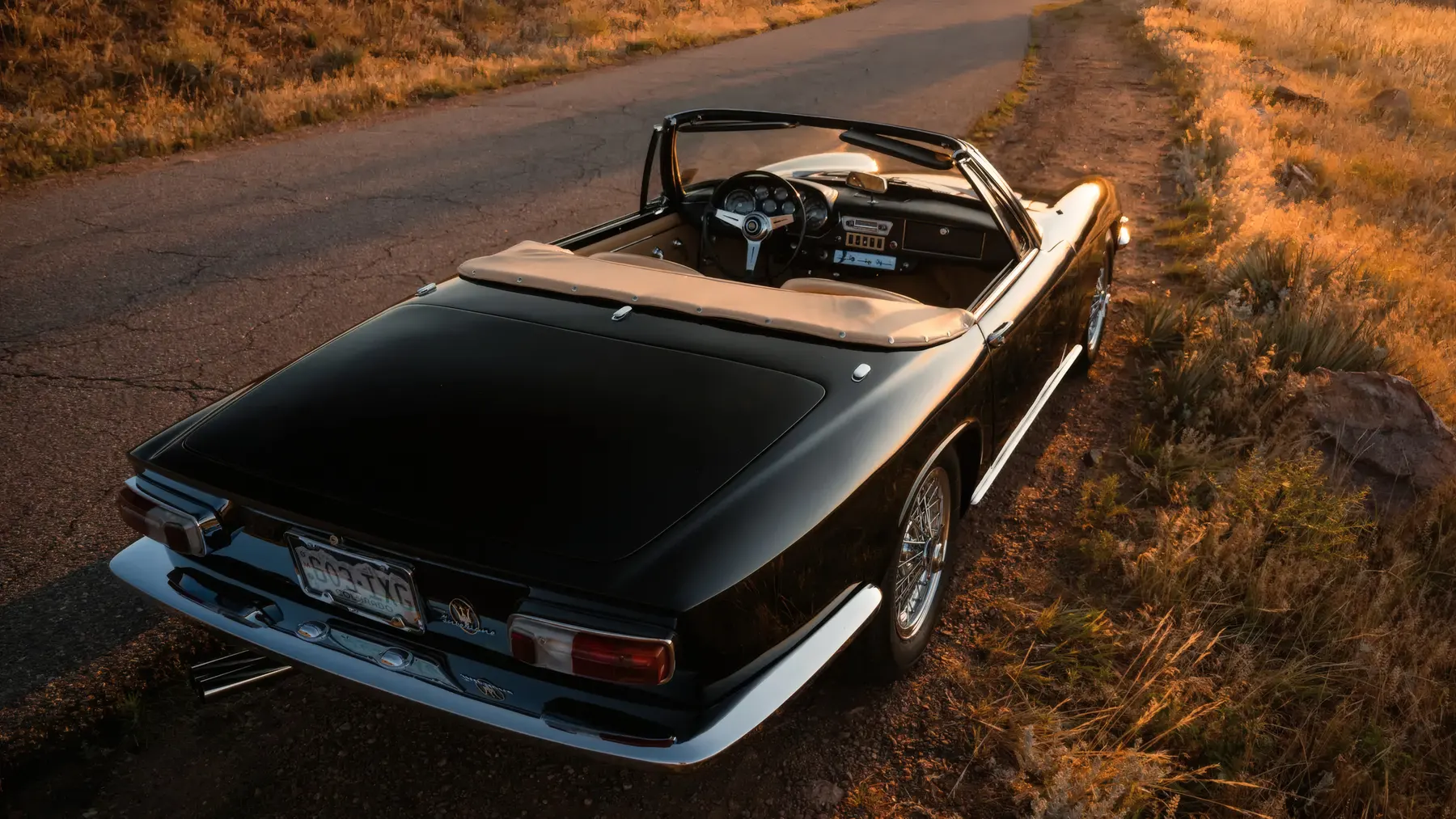
For all its charm, the 3.5 Spyder carries genuine, well-documented weaknesses that go beyond generic classic-car caveats. Its Lucas mechanical fuel injection, innovative when new, proved troublesome in service on both the 3.5 and 3.7-litre engines; specialists and valuation guides consistently flag intermittent injection problems on these earlier cars, an issue substantially resolved only with the later 4.0-litre engine, and a number of surviving 3.5 and 3.7 examples have since been converted to triple Weber carburettors specifically to sidestep it. The bodywork, steel or aluminium-panelled, is prone to rust in the wheel wells, the chassis frame, and around the base of the windscreen, a legacy of 1960s Italian rustproofing standards that has claimed a significant number of cars over the decades. Mechanically the Mistral was already somewhat old-fashioned when new: its live rear axle on leaf springs compared unfavourably with the independent rear suspension used by direct rivals such as the Ferrari 275 GTS, and its straight six, however characterful, could not match the outright pace or prestige of a Ferrari V12 in the eyes of contemporary buyers - a gap that widened further once Maserati’s own more modern, Giugiaro-styled Ghibli arrived in 1966 and drew sales away from the Mistral almost immediately. Parts and specialist labour for a low-volume, hand-built car like this remain expensive and difficult to source even today, and owners who have taken on full restorations describe the process as slow and costly, running into six figures when done properly. None of this makes the 3.5 Spyder any less interesting; it does mean that anyone drawn to its rarity should go in with clear eyes about what ownership actually involves.
Total Mistral Spyder production across all three engines came to roughly 124 cars, itself a fraction of the more than 800 coupés built over the model’s run, and the 3.5-litre engine accounted for the smallest slice of that already small total. Reliable sources disagree on the precise number: some put it at 27, others - including a documented marque-historian account - at closer to a dozen. Either figure confirms the same basic point, that the 3.5 Spyder was already a rarity by the time Maserati stopped fitting the engine, superseded first by the 3.7 and then the 4.0-litre cars that most buyers, and most road testers, actually experienced. The Mistral as a whole holds a specific place in Maserati’s history as the last road car to use the company’s twin-spark straight six, a direct engineering thread back to the marque’s grand prix and sports-racing programmes of the 1950s that ended here, before Maserati moved on to V8-powered cars like the Ghibli and Indy.
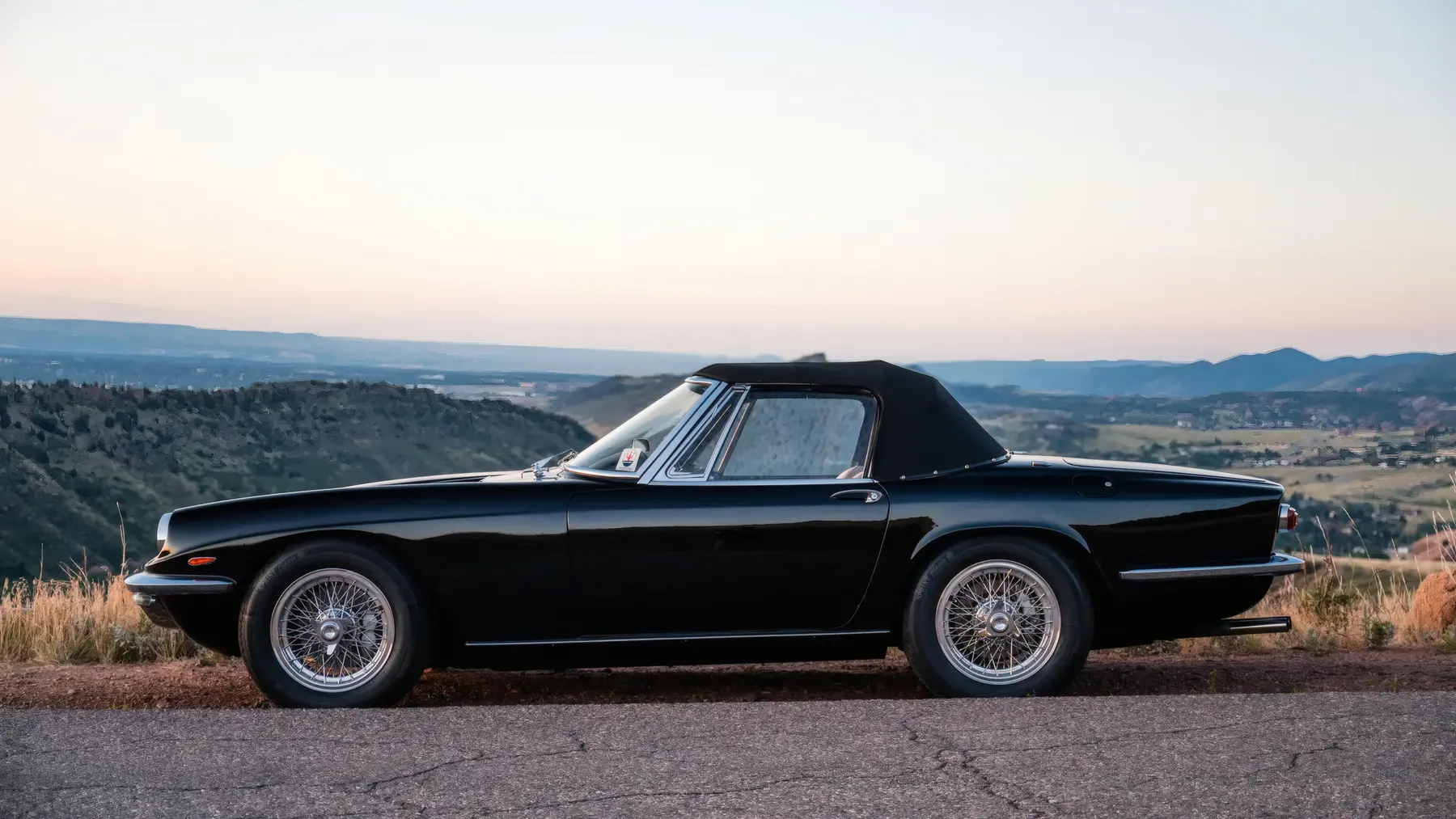
That transitional status is precisely what gives the 3.5 Spyder its appeal today. It was never the fastest Mistral, never the version road testers reached for, and never the one Maserati itself pushed hardest once faster alternatives existed. What it offers instead is a more direct, less diluted connection to the engine family that once carried Maserati to a world championship, wrapped in one of Pietro Frua’s most admired shapes and finished, in its earliest examples, with details unique to that first, brief production run. For collectors who value mechanical lineage over outright numbers, that combination of scarcity, history, and character is worth more than the extra horsepower the later cars offered.
Sources
- Maserati Official Classic Cars Archive: Mistral Spyder
- Maserati Mistral - Wikipedia
- Maserati 3500 GT - Wikipedia
- Mistral Spyder - Classiche Masters
- Maserati Mistral Spyder - Scuderia Azzurra
- 1966 Maserati Mistral 3.7 Spyder - Classic Driver Market
- Maserati Mistral Spyder - Secret Classics
- 1965 Maserati Mistral 3.5L - Hagerty Valuation Tools
- Maserati Mistral (1963–1970) Review - Honest John Classics
- Your Classic: Maserati Mistral - Classic & Sports Car
- Vintage R&T Driving Impressions: 1968 Maserati Mistral - Curbside Classic
- Racing Maserati Mistral? - The Nostalgia Forum, Autosport Forums (enthusiast discussion)
- 1964 Maserati Mistral 3.5 Spider - Gooding & Christie’s
- 1965 Maserati Mistral 3.5 Spyder - RM Sotheby’s, Monterey 2024
- 1964 Maserati Mistral - conceptcarz
Join the discussion
Comments
Loading comments…
Leave a comment
Share a detail, memory, or perspective. Every comment is reviewed before publication.